
American Experts
Connect for media, speaking, professional opportunities & more.
Need Election Day Experts? We've Got 'Em!
As voters head to the polls, University of Rochester political scientists James Druckman and Gerald Gamm are available to help journalists make sense of the results — and what they could mean for American democracy, Congress, political parties, and the polarized electorate. James Druckman: Understanding partisanship and the American electorate Druckman is a leading scholar of political partisanship and its effects on American democracy. He can help reporters interpret voter behavior, identify emerging trends, and understand what election results reveal about the deepening divide between Democrats and Republicans. His 2024 book, Partisan Hostility and American Democracy: Explaining Political Divisions and When They Matter (University of Chicago Press), has been called a “stand out” among the scholarship examining political division. New York Times columnist Thomas Edsall has highlighted Druckman among the political scientists “working on getting us to hate one another less.” Druckman is available for interviews before, during, and after Election Day to discuss voting trends, partisan dynamics, and the implications for American democracy. Connect with him by clicking on his profile. Gerald Gamm: What election results mean for Congress and governing A political scientist and historian, Gamm studies American politics, political development, legislatures, political parties, and state and local government. His expertise is particularly relevant to questions about the balance of power in Congress and statehouses, how political parties respond to shifting electoral fortunes, and what election outcomes mean for governing. Gamm is a co-author of Steering the Senate (Cambridge University Press, 2025), a study of institutional leadership and capacity on Capitol Hill that has been described as “essential reading” for anyone concerned about the future of congressional leadership. He is available for interviews before, during, and after Election Day to provide context on emerging political trends, election outcomes, and their implications for Congress and the broader political landscape. Connect with Gamm by clicking on his profile.




Reported Iranian Threats Prompt U.S. Embassy Precautions
Reported threats against American personnel are prompting new precautions at U.S. diplomatic posts in the Middle East. The State Department is reducing staffing at embassies in Jordan, Lebanon, Qatar and the United Arab Emirates following intelligence warnings about increased Iranian efforts to target Americans. The embassies remain open under restricted operations, and the staffing changes differ from the ordered departure of nonessential personnel and families from Saudi Arabia. The precautions underscore the challenges of maintaining a diplomatic presence during a regional conflict. Embassies support communication with foreign governments, assist American citizens and provide information that helps guide U.S. policy. Reducing staff can limit personnel’s exposure to danger, but it also requires officials to reassess which activities can safely continue. Reported threats involving Iran-backed Houthi militants add another layer of complexity to those security decisions. The developments also raise questions about how Washington can protect its personnel while preserving channels for negotiation. U.S. officials have denied that the staffing reductions are connected to potential new American and Israeli strikes against Iran. The precautions nevertheless illustrate how intelligence warnings can affect diplomatic operations before an attack occurs—and how regional tensions can place Americans serving abroad at risk.


Inflation Puts Household Budgets—and Candidates—Under Pressure
Inflation is keeping affordability at the center of American life as voters prepare for the November 3 midterm elections. Consumer prices rose 3.7% over the year ending in September, with gasoline and other everyday expenses adding pressure to household budgets. For families already adjusting their spending, persistent price increases can mean difficult decisions about groceries, transportation and discretionary purchases. Those pressures also create political challenges. President Donald Trump and Republican candidates are defending their economic record, while Democrats argue that the administration’s policies have made everyday life more expensive. Tariffs and energy disruptions associated with the Iran conflict have become central points of debate. Although growth and employment remain important measures of economic performance, voters often judge the economy through the expenses they encounter most frequently. The debate highlights a distinction that can become lost in campaign messaging: slowing inflation means prices are rising more slowly, rather than returning to earlier levels. Families may continue feeling financial strain even when economic indicators improve. As candidates offer competing solutions, the larger question is which policies can improve purchasing power while supporting employment and economic stability. The election will test how strongly Americans connect those daily financial pressures to the leaders seeking their votes.


Is Government Corruption Becoming a Defining Issue in the Midterm Elections?
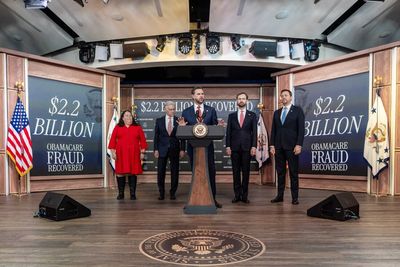
With the U.S. midterm elections just days away, concerns about government corruption are emerging as an important issue for voters, raising questions about how Americans define corruption, whom they hold responsible and how those perceptions could influence their decisions at the ballot box. In an Oct. 26 interview featured on NPR's All Things Considered, Ray La Raja, professor of political science at the University of Massachusetts Amherst and co-director of the UMass Amherst Poll, discussed growing public concern about corruption and the competing political narratives surrounding the Trump administration's efforts to combat fraud. The segment, The Trump Administration Is Taking on Fraud Ahead of the Midterm Elections, reported by NPR's Emily Feng, examined President Donald Trump and Vice President JD Vance's efforts to make government fraud and abuse a central policy focus ahead of the elections. La Raja, who surveyed Americans about corruption in September, found widespread concern about the issue, consistent with other national polling showing that nearly nine in ten Americans are worried about government corruption. "I believe this is pretty much off the charts," La Raja told NPR, emphasizing the extent of public concern. He also highlighted the connection between corruption and the economic issues that traditionally motivate voters."But it's especially powerful when people are already upset about the issue that usually motivates voters, and that's the economy." View his profile His research reveals important differences in how Democrats and Republicans perceive the problem. While Democrats overwhelmingly identify the presidency as a source of corruption, Republicans tend to view corruption as a more systemic problem involving government bureaucracy and fraudulent claims against federal programs. His research offers valuable insight into how political messaging, public trust, economic anxiety and partisan perceptions intersect during a consequential election. An expert in American politics, elections, polling, political parties, campaign finance and political reform, La Raja brings extensive research experience to questions about voter attitudes, democratic accountability and the forces influencing political participation. With the midterm elections approaching on Tuesday, Nov. 3, Ray La Raja is available to speak with journalists seeking expert analysis of government corruption, voter concerns, political messaging, public opinion and the issues shaping the 2026 elections. To arrange an interview with La Raja, click on his ExpertFile profile below.



Could Artificial Intelligence Improve a Country's Credit Rating? New Research Says Yes
Artificial intelligence is already transforming industries, reshaping labour markets and changing how governments deliver services. Now, new research suggests AI development may also influence something far less obvious: a country's ability to secure favourable credit ratings and access lower-cost capital. A study co-authored by Lance Y. Hunter, PhD, a professor at Augusta University, and Glen Biglaiser, PhD, Regents Professor at the University of North Texas, finds a significant positive relationship between national AI development and sovereign bond ratings. Published in the International Area Studies Review, the research examines sovereign bond ratings across 101 countries between 2020 and 2023, using ratings from Moody's and Standard & Poor's alongside measures of national AI readiness. Lance Hunter, PhD, is a political science professor at Augusta University whose expertise in political behavior, elections and political communication makes him a valuable resource for journalists covering the growing influence of artificial intelligence on American politics. View his profile AI and Economic Confidence The researchers found that countries with more advanced AI capabilities generally received higher sovereign bond ratings, even after accounting for a range of economic, political and social factors. Their analysis suggests AI development may strengthen national economies by increasing productivity, improving government efficiency and supporting economic growth. These improvements can contribute to stronger public finances and greater confidence in a government's ability to repay its debts. The findings have potentially significant implications for governments seeking to attract investment, finance infrastructure and reduce borrowing costs. Government Efficiency Matters One of the study's most notable findings concerns the relationship between AI development and government effectiveness. Using statistical mediation analysis, the researchers found that government effectiveness accounted for 32.2% of the relationship between AI development and Standard & Poor's ratings and 26.1% of the relationship with Moody's ratings. The research also identified national income and gross savings as contributing factors, reinforcing the connection between technological development, economic performance and sovereign creditworthiness. The findings suggest that national AI strategies may have financial implications extending beyond innovation and industrial competitiveness. Opportunities and Risks The researchers also caution that AI's economic benefits are not guaranteed. While greater adoption can increase productivity and improve public services, poorly managed implementation could contribute to job displacement, inequality and economic instability. Their findings underscore the importance of responsible AI development, particularly policies that support workers while encouraging technological innovation. The study, Artificial Intelligence Development and Sovereign Bond Ratings, offers a new perspective on how emerging technologies may influence international finance and government borrowing. As governments worldwide increase investments in artificial intelligence, Hunter's research raises important questions about whether technological readiness could become an increasingly influential consideration in assessments of national economic strength. Lance Y. Hunter, PhD, is available to provide expert insight into the relationship between artificial intelligence, government effectiveness, sovereign debt, international political economy and the economic implications of emerging technologies. To connect with Dr. Hunter for an interview or learn more about his research, visit his profile below.



Augusta University Researchers Uncover New Clues to Dangerous Pregnancy Complication
(From left) Jessica Faulkner, PhD, Champa Woodham, MD, Mona Elgazzaz, PhD, and Safia Ogbi (research manager in Faulkner’s lab) A significant discovery by researchers at Augusta University's Medical College of Georgia is shedding new light on preeclampsia, a potentially life-threatening pregnancy complication affecting an estimated 2% to 8% of pregnancies worldwide. Published in Arteriosclerosis, Thrombosis, and Vascular Biology, the research reveals that a protein commonly used to assess preeclampsia risk may also contribute directly to the disease by triggering excess production of the hormone leptin. The discovery establishes a previously unknown connection between two biological markers long associated with preeclampsia and could help researchers identify new approaches to treatment. Jessica L. Faulkner, PhD, associate professor in the Department of Physiology at the Medical College of Georgia and the study's lead author, explained the importance of the findings. “Preeclampsia patients have elevated levels of both sFlt-1 and leptin, but the relationship between those two factors has remained unclear. Our findings show that sFlt-1 directly increases leptin production and suggest that leptin may be an important link between placental dysfunction and the cardiovascular complications of the disease.” Using human placental tissue, cultured cells and animal models, the research team demonstrated that elevated levels of sFlt-1 increase leptin production, contributing to the blood vessel dysfunction characteristic of preeclampsia. When researchers blocked leptin signaling in pregnant mice, much of that dysfunction was reversed. The research was made possible through collaboration between Faulkner's laboratory and the Medical College of Georgia's Maternal-Fetal Medicine program, led by Champa Woodham, MD. Woodham emphasized the importance of connecting laboratory discoveries with clinical care. “Preeclampsia remains one of the most challenging conditions we manage in maternal-fetal medicine because patients can progress from appearing clinically stable to becoming critically ill very quickly. What makes this research particularly exciting is that it takes sFlt-1, a biomarker we are already using clinically to help assess a patient’s risk and gives us a deeper understanding of how it may actually contribute to the disease process.” Mona Elgazzaz, MD, PhD, a postdoctoral fellow in Faulkner's laboratory and the study's first author, highlighted the potential treatment implications. “Uncovering the crosstalk between sFlt-1 and leptin is crucial because it introduces new potential targets for treating preeclampsia by modulating the proteins that regulate leptin production.” The findings are especially significant because current treatment options remain limited, with delivery of the placenta remaining the only definitive cure. Although additional research is needed before these discoveries can translate into clinical treatments, the findings offer a promising new direction for understanding and potentially treating a condition that continues to threaten maternal and infant health worldwide. The study was supported by the National Institutes of Health and the American Heart Association. For journalists covering maternal health, pregnancy complications, cardiovascular disease and emerging medical research, Augusta University's research team offers important expertise on the science behind preeclampsia and the potential implications of this discovery. To learn more or arrange an interview with the researchers, contact AU's External Communications Team mediarelations@augusta.edu to arrange an interview today.
What Marco Rubio's Speech on Ancient Greece Reveals About Leadership, Business and America's Future
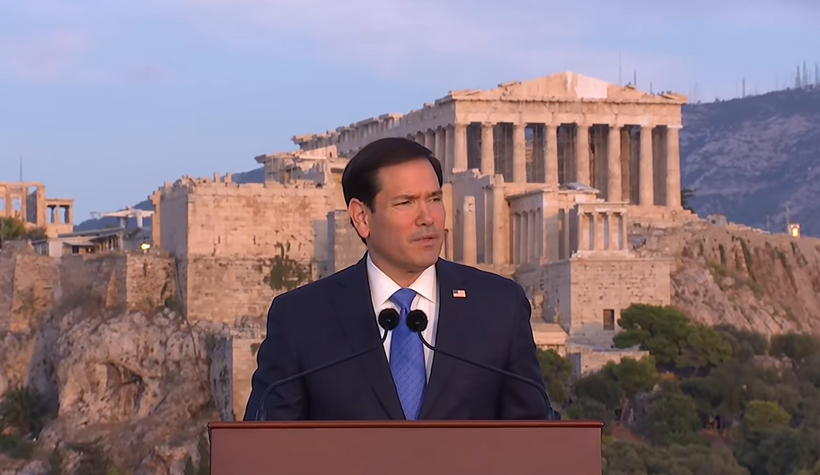
What can ancient Greece teach modern America about leadership, economic success and the future of business? That question is at the center of a recent commentary by Rick Franza, PhD, professor at Augusta University's James M. Hull College of Business, published in Augusta Business Daily earlier this month. In his article, "Marco Rubio's Look Back to Move Us Forward: What He Nailed and What He Missed," Franza examines a speech delivered by U.S. Secretary of State Marco Rubio in Athens, Greece, and considers its implications for American businesses, leadership and international relations. Franza explores Rubio's emphasis on ambition, competition, innovation and risk-taking, connecting these themes to the characteristics that have historically contributed to economic development and business success. He also identifies two important considerations he believes deserved greater attention: the role of morality and ethics in leadership and the importance of international trade to economic prosperity. "I am not saying we should be driven by greed and vanity, but rather be willing to continue to strive rather than waiting for others to catch up." Franza's commentary offers a perspective on how lessons from history can inform contemporary discussions about business leadership, economic policy and America's relationships with its international partners. As political and economic debates continue, Franza can help journalists explore the intersection of government policy, business competitiveness, ethical leadership and international commerce. If you're interested in speaking with Dr. Rick Franza about business leadership, economic policy, international trade and the relationship between politics and business, simply click on his profile to arrange an interview today.


Are Small-Dollar Political Donations Making American Politics More Divisive?
Small-dollar political donations have long been celebrated as a way to reduce the influence of wealthy contributors and give ordinary Americans a greater voice in elections. But new research suggests that the growing influence of these donors may also be contributing to political polarization and rewarding candidates who generate attention rather than build consensus. In an article published in The Atlantic, titled Small-Dollar Campaign Donors Are Hurting the Political System, journalist Idrees Kahloon examines how the explosion of grassroots political fundraising has changed American campaigns, drawing attention to research challenging the assumption that small donations necessarily produce healthier democratic outcomes. Among the researchers examining this trend is Ray La Raja, professor of political science and co-director of the UMass Amherst Poll at the University of Massachusetts Amherst. View his profile La Raja is co-author, with Zachary Albert of Brandeis University, of the 2026 book Small Donors in US Politics: Myth and Reality, which examines who contributes to political campaigns, what motivates their donations and how their growing influence affects elections and political representation. Their research finds that small-dollar donors are often more politically engaged, more partisan and more ideologically committed than the average voter. While these contributions can broaden participation in campaign financing, they can also encourage candidates to pursue national attention and emotionally charged fundraising appeals rather than focus on local concerns or legislative compromise. The findings raise important questions about whether the growing influence of small donors is strengthening political representation or creating new incentives for polarization. The issue is particularly relevant ahead of the 2026 midterm elections, as candidates and political parties compete for campaign contributions in an increasingly nationalized fundraising environment. La Raja's work also examines the role of political parties in campaign finance and whether reforms designed to reduce the influence of large donors have produced unintended consequences. With campaign fundraising, political polarization and democratic accountability increasingly connected, La Raja offers journalists a research-based perspective on one of the less understood forces shaping American elections. If you're interested in speaking with Ray La Raja about campaign finance, small-dollar political donations, political polarization, election reform and the influence of money on American democracy, simply click on his profile to arrange an interview today.

Turning Back the Clocks: Does Daylight Saving Time Affect Our Mental Health?
As millions of Americans prepare to turn their clocks back on Nov. 1, questions about the impact of daylight saving time on sleep, mood and mental health are once again coming into focus. Research from Augusta University offers important insights into that relationship. Published in the American Journal of Emergency Medicine, the study, "Effects of Seasonality and Daylight Savings Time on Emergency Department Visits for Mental Health Disorders," examined nearly 140,000 emergency department visits at Augusta University Medical Center between January 2013 and October 2015. Researchers found that while mental health-related emergency visits increased during certain seasons, particularly among patients with depressive disorders, there was no statistically significant increase associated with daylight saving time changes. The findings challenge common assumptions about the relationship between changing clocks and mental health emergencies, while highlighting the complexity of seasonal influences on psychiatric conditions. The research also raises important questions about how hospitals anticipate mental health emergencies, allocate resources and respond to changing patient needs. Two Augusta University Experts Available for Media Interviews: William Vaughn McCall, MD, a psychiatrist and researcher at the Medical College of Georgia at Augusta University, was a co-author of the study. His extensive research on depression, insomnia and sleep disorders provides additional expertise on how disrupted sleep and changes in circadian rhythms can affect mental health. Vahé Heboyan, PhD, Director of the Health and Behavioral Economics Research Lab and Program Director of the PhD in Applied Health Sciences at Augusta University, is a co-author of the study. His expertise provides an important perspective on healthcare utilization, patient behaviour, health economics and the operational challenges facing emergency departments. As daylight saving time approaches, both experts can help journalists explore what the research reveals, what remains uncertain and how seasonal changes may influence mental health and healthcare delivery. If you're interested in speaking with Dr. Vahé Heboyan or Dr. William Vaughn McCall about daylight saving time, depression, seasonal mental health patterns, sleep disorders and emergency healthcare utilization, contact AU's External Communications Team mediarelations@augusta.edu to arrange an interview today.

When Seeing Is No Longer Believing: AI Deepfakes Are Changing Political Advertising
As artificial intelligence becomes increasingly sophisticated, distinguishing authentic political messages from fabricated content is becoming a growing challenge for voters, journalists and election officials. AI-generated videos, images and audio can now convincingly portray political candidates saying or doing things that never happened. With the November midterm elections approaching, the technology is raising important questions about misinformation, political persuasion and public trust. The issue was recently highlighted in an Oct. 13 WRDW News report, Real or Fake? Deepfakes Flood Georgia Political Ads, featuring Augusta University's Lance Hunter, PhD. The report examined the growing presence of AI-generated political advertising, including a fabricated video involving Georgia Senator Jon Ossoff, and the challenges associated with identifying and regulating this material. A New Challenge for Political Communication Hunter explained how artificial intelligence is fundamentally changing the way political content can be created and distributed. "Artificial intelligence can really increase the persuasiveness, the amount of content it can create." Unlike traditional political advertising, AI-generated content can create seemingly authentic footage of events that never occurred. "What makes this different is the ability to actually show someone doing something that they did not do." The technology raises important questions about how voters evaluate political information, whether existing regulations provide adequate protections and how campaigns may use artificial intelligence in future elections. Lance Hunter, PhD, is a political science professor at Augusta University whose expertise in political behaviour, elections and political communication makes him a valuable resource for journalists covering the growing influence of artificial intelligence on American politics. View his profile An Emerging Story With National Implications While the WRDW report focused on Georgia, the implications extend well beyond one state or election. As AI-generated political content becomes more accessible and convincing, journalists are increasingly examining several important questions: How can voters distinguish authentic political content from AI-generated misinformation? What influence could deepfakes have on public opinion and voter confidence? Should political campaigns be required to disclose their use of artificial intelligence? How can election officials and policymakers respond as the technology evolves? These are emerging issues at the intersection of political science, technology, public policy and democratic participation. As news organizations continue examining AI-generated campaign advertising, election misinformation and the future of political communication, Hunter can provide expert analysis of the challenges facing voters and the broader implications for democracy. If you're interested in speaking with Dr. Lance Hunter about AI deepfakes, political advertising, election misinformation, voter behaviour and the impact of emerging technologies on democracy, simply click on his profile to arrange an interview today.