
business Experts
Connect for media, speaking, professional opportunities & more.

White House Pushes Back on Calls for Broader AI Safety Guardrails
As calls grow from technology leaders, researchers and lawmakers for stronger artificial intelligence safety rules, the White House is signaling a different priority: keeping the United States at the forefront of AI innovation. The administration has pushed back on proposals that could slow development or create sweeping federal approval requirements for new models, arguing that excessive regulation could weaken America’s competitive position—especially against China. That does not mean the administration is ignoring AI-related risks. Its approach emphasizes national security, cybersecurity and enforcement against criminal misuse of AI. Recent White House action has encouraged voluntary collaboration between government and AI developers to assess the cyber capabilities of advanced models, protect critical infrastructure and strengthen defenses against malicious actors. But the framework specifically avoids mandatory licensing or government preclearance before companies develop or release new AI systems. The debate raises important questions for business leaders, policymakers and the public: How can innovation move quickly without sacrificing security, privacy and public trust? And where should responsibility rest—within individual companies, through voluntary government-industry partnerships or through enforceable federal safeguards?


MEDIA RELEASE: 2026 CAA EV Circuit: EVs go the distance, but charging, efficiency and costs vary
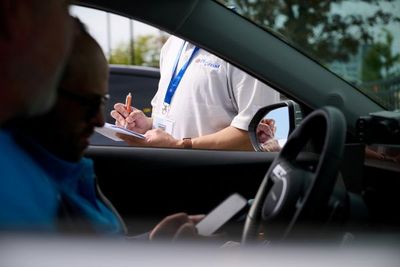
The question for Canadians considering an EV may no longer be how far it can go, but how efficiently it uses energy, how quickly it charges and how much it costs to recharge. Results from the 2026 CAA EV Circuit found significant differences across vehicles in all three areas. “Range anxiety has long dominated the conversation about electric vehicles, but these results suggest the discussion can shift to more personalized considerations for drivers,” says Kaitlynn Furse, director, corporate communications, CAA Manitoba. “For many of today’s EVs, the question is becoming less about whether you can complete a trip and more about how efficiently you can make it, where you will charge, how long charging will take, and what it will cost.” All 22 electric vehicles participating in the CAA EV Circuit completed the same 230-kilometre route without needing to charge, including the vehicle with the shortest advertised range. A 15-minute charging test was completed at the end to capture further data. The route started in Blue Mountain, ON and ended in Vaughan, ON. On average, the vehicles used only 40 per cent of their battery charge over the route. EVs demonstrate a significant energy-efficiency advantage over traditional gasoline-powered vehicles The electric vehicles in the Circuit used the energy equivalent of approximately two litres of gasoline per 100 kilometres. By comparison, the average Canadian passenger vehicle consumes roughly eight to 10 litres of gasoline per 100 kilometres. Energy consumption among the participating EVs ranged from 11.43 kilowatt-hours per 100 kilometres to 28.91 kilowatt-hours per 100 kilometres, illustrating the variation among vehicle sizes, weights and designs. A more efficient EV generally requires less electricity to travel the same distance, which can contribute to lower charging costs and less time spent charging. A notable finding was that the vehicles in the September 2026 CAA EV Circuit consumed approximately 40 per cent less energy, on average, than the vehicles evaluated during the February 2025 CAA EV Winter Test. While the tests were conducted under different conditions and with different vehicles, the difference highlights the significant impact that temperature can have on EV efficiency. A short charging stop can meaningfully extend a trip When it comes to charging experience, during the standardized 15-minute charging session, participating vehicles added an average of 110 kilometres of displayed range. Almost two-thirds of the vehicles added at least 100 kilometres, demonstrating that a brief charging stop can provide a meaningful boost during a longer journey. Results differed significantly among vehicles. The displayed driving range added during the 15-minute session varied from 58 kilometres to 178 kilometres. Charging performance can be affected by the vehicle, charger, battery temperature, battery state of charge and conditions at the time of charging. These results also highlight the effect of Canadian climate variations. Vehicles tested in the September 2026 CAA EV Circuit added approximately 15 per cent more displayed range during the charging session than the group evaluated during CAA’s 2025 EV Winter Test. “For Canadians planning longer drives, knowing a vehicle’s total range is only part of the equation,” continues Furse. “Drivers should also understand how their vehicle charges and recognize that the number of kilometres added during a stop can change depending on the vehicle and the charging conditions.” Public fast-charging costs are not the same for every EV The Circuit found that the average cost of a 15-minute charging session at the public fast chargers used in the test was $13.45, but individual vehicle results ranged from $7.28 to $24.39. All vehicles were charged at Tesla charging stations to ensure a consistent charging experience, so it is important to note that Teslas receive preferred pricing at Tesla charging stations. The test was designed to reflect a higher-cost road-trip charging scenario, using premium public fast chargers operating at full capacity. It does not represent the typical cost of powering an EV. CAA’s National EV Driver Survey found that public fast charging accounts for only eight to 18 per cent of charging, meaning most EV drivers generally charge under lower-cost circumstances like at home or work. “Just as Canadians compare fuel economy when buying a gasoline-powered vehicle, they should compare energy efficiency and charging performance when considering an EV,” says Furse. “Where and how often someone expects to charge can make a substantial difference to their experience and road-trip costs.” Complete vehicle findings and additional information about the 2026 CAA EV Circuit are available at 2026 CAA EV Circuit: Complete Vehicle Findings -30- About the CAA EV Circuit The CAA EV Circuit was conducted on September 16, 2026, with 22 electric vehicles travelling the same 230-kilometre route from Blue Mountain to Vaughan, Ontario, across city streets, rural roads and highways. Using a neutral data-driven methodology, all vehicles followed the same route, operated under consistent settings and participated in a standardized charging session. Performance data was collected throughout the drive and validated by CAA’s business intelligence and automotive experts. Data Snapshot Most kilometres gained in a 15-minute charging session Lucid Gravity, 178 km Hyundai IONIQ 5, 136 km Mercedes-Benz CLA with EQ Technology, 135 km Cadillac LYRIQ, 131 km Nissan LEAF, 126 km Least kilometres gained in a 15-minute charging session Lucid Air, 58 km Chevrolet Equinox EV, 71 km Chevrolet Silverado EV, 80 km GMC HUMMER EV SUV, 90 km Tesla Model Y, 97 km Lowest cost per 100 kms of charge added Tesla Model 3, $7.28 Tesla Model Y, $8.23 Nissan LEAF, $10.13 Kia EV4, $10.25 Hyundai IONIQ 5, $10.68 Highest cost per 100 kms of charge added GMC HUMMER EV SUV, $24.39 Chevrolet Silverado EV, $19.05 Rivian R1T, $17.85 Tesla Cybertruck, $15.61 Volkswagen ID. Buzz, $15.48 Lowest energy consumption (kWh/100 km) Toyota bZ 11.43 kWh Tesla Model Y 11.81 kWh Tesla Model 3 11.85 kWh Kia EV4 11.89 kWh Nissan LEAF 12.48 kWh Highest energy consumption (kWh/100 km) Lucid Gravity 28.91 kWh GMC HUMMER EV SUV 23.55 kWh Tesla Cybertruck 23.41 kWh Rivian R1T 19.96 kWh Cadillac LYRIQ 19.1 kWh


MEDIA RELEASE: 2026 CAA EV Circuit: EVs go the distance, but charging, efficiency and costs vary
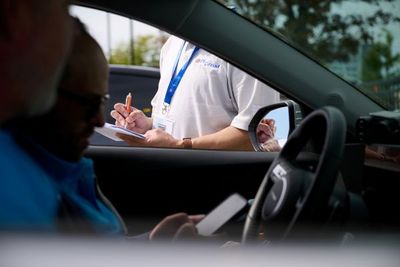
The question for Canadians considering an EV may no longer be how far it can go, but how efficiently it uses energy, how quickly it charges and how much it costs to recharge. Results from the 2026 CAA EV Circuit found significant differences across vehicles in all three areas. “Range anxiety has long dominated the conversation about electric vehicles, but these results suggest the discussion can shift to more personalized considerations for drivers,” says Kaitlynn Furse, director, corporate communications, CAA South Central Ontario. “For many of today’s EVs, the question is becoming less about whether you can complete a trip and more about how efficiently you can make it, where you will charge, how long charging will take, and what it will cost.” All 22 electric vehicles participating in the CAA EV Circuit completed the same 230-kilometre route without needing to charge, including the vehicle with the shortest advertised range. A 15-minute charging test was completed at the end to capture further data. The route started in Blue Mountain, ON and ended in Vaughan, ON. On average, the vehicles used only 40 per cent of their battery charge over the route. EVs demonstrate a significant energy-efficiency advantage over traditional gasoline-powered vehicles The electric vehicles in the Circuit used the energy equivalent of approximately two litres of gasoline per 100 kilometres. By comparison, the average Canadian passenger vehicle consumes roughly eight to 10 litres of gasoline per 100 kilometres. Energy consumption among the participating EVs ranged from 11.43 kilowatt-hours per 100 kilometres to 28.91 kilowatt-hours per 100 kilometres, illustrating the variation among vehicle sizes, weights and designs. A more efficient EV generally requires less electricity to travel the same distance, which can contribute to lower charging costs and less time spent charging. A notable finding was that the vehicles in the September 2026 CAA EV Circuit consumed approximately 40 per cent less energy, on average, than the vehicles evaluated during the February 2025 CAA EV Winter Test. While the tests were conducted under different conditions and with different vehicles, the difference highlights the significant impact that temperature can have on EV efficiency. A short charging stop can meaningfully extend a trip When it comes to charging experience, during the standardized 15-minute charging session, participating vehicles added an average of 110 kilometres of displayed range. Almost two-thirds of the vehicles added at least 100 kilometres, demonstrating that a brief charging stop can provide a meaningful boost during a longer journey. Results differed significantly among vehicles. The displayed driving range added during the 15-minute session varied from 58 kilometres to 178 kilometres. Charging performance can be affected by the vehicle, charger, battery temperature, battery state of charge and conditions at the time of charging. These results also highlight the effect of Canadian climate variations. Vehicles tested in the September 2026 CAA EV Circuit added approximately 15 per cent more displayed range during the charging session than the group evaluated during CAA’s 2025 EV Winter Test. “For Canadians planning longer drives, knowing a vehicle’s total range is only part of the equation,” continues Furse. “Drivers should also understand how their vehicle charges and recognize that the number of kilometres added during a stop can change depending on the vehicle and the charging conditions.” Public fast-charging costs are not the same for every EV The Circuit found that the average cost of a 15-minute charging session at the public fast chargers used in the test was $13.45, but individual vehicle results ranged from $7.28 to $24.39. All vehicles were charged at Tesla charging stations to ensure a consistent charging experience, so it is important to note that Teslas receive preferred pricing at Tesla charging stations. The test was designed to reflect a higher-cost road-trip charging scenario, using premium public fast chargers operating at full capacity. It does not represent the typical cost of powering an EV. CAA’s National EV Driver Survey found that public fast charging accounts for only eight to 18 per cent of charging, meaning most EV drivers generally charge under lower-cost circumstances like at home or work. “Just as Canadians compare fuel economy when buying a gasoline-powered vehicle, they should compare energy efficiency and charging performance when considering an EV,” says Furse. “Where and how often someone expects to charge can make a substantial difference to their experience and road-trip costs.” Complete vehicle findings and additional information about the 2026 CAA EV Circuit are available at 2026 CAA EV Circuit: Complete Vehicle Findings -30- About the CAA EV Circuit The CAA EV Circuit was conducted on September 16, 2026, with 22 electric vehicles travelling the same 230-kilometre route from Blue Mountain to Vaughan, Ontario, across city streets, rural roads and highways. Using a neutral data-driven methodology, all vehicles followed the same route, operated under consistent settings and participated in a standardized charging session. Performance data was collected throughout the drive and validated by CAA’s business intelligence and automotive experts. Data Snapshot Most kilometres gained in a 15-minute charging session Lucid Gravity, 178 km Hyundai IONIQ 5, 136 km Mercedes-Benz CLA with EQ Technology, 135 km Cadillac LYRIQ, 131 km Nissan LEAF, 126 km Least kilometres gained in a 15-minute charging session Lucid Air, 58 km Chevrolet Equinox EV, 71 km Chevrolet Silverado EV, 80 km GMC HUMMER EV SUV, 90 km Tesla Model Y, 97 km Lowest cost per 100 kms of charge added Tesla Model 3, $7.28 Tesla Model Y, $8.23 Nissan LEAF, $10.13 Kia EV4, $10.25 Hyundai IONIQ 5, $10.68 Highest cost per 100 kms of charge added GMC HUMMER EV SUV, $24.39 Chevrolet Silverado EV, $19.05 Rivian R1T, $17.85 Tesla Cybertruck, $15.61 Volkswagen ID. Buzz, $15.48 Lowest energy consumption (kWh/100 km) Toyota bZ 11.43 kWh Tesla Model Y 11.81 kWh Tesla Model 3 11.85 kWh Kia EV4 11.89 kWh Nissan LEAF 12.48 kWh Highest energy consumption (kWh/100 km) Lucid Gravity 28.91 kWh GMC HUMMER EV SUV 23.55 kWh Tesla Cybertruck 23.41 kWh Rivian R1T 19.96 kWh Cadillac LYRIQ 19.1 kWh

From the Pump to the Bond Market: Why Rising Oil Prices Matter for Borrowing Costs
From the Pump to the Bond Market: Why Rising Oil Prices Matter for Borrowing Costs Rising oil prices are often felt first at the gas pump, but their effects can quickly extend to the broader economy. As higher costs for gasoline, diesel and jet fuel work their way through transportation, manufacturing and food production, investors are increasingly concerned that inflation could remain elevated longer than expected. That concern is helping push Treasury yields higher. When investors expect inflation to erode the future value of fixed-income returns, they typically demand higher yields on government bonds. The result can be a ripple effect across the economy: mortgage rates, auto loans, credit-card rates and business borrowing costs may all remain high or move higher. This is an important second stage of the oil-price story. The first concern is the direct impact on consumers and businesses as energy costs rise. The next concern is whether those higher costs become embedded in the economy, causing inflation expectations to increase and making it more difficult for the Federal Reserve to ease interest rates. For policymakers, the dilemma is clear. Raising or maintaining higher interest rates can help slow inflation, but it also makes borrowing more expensive for families, businesses and the federal government. If high energy prices persist, the Federal Reserve may face added pressure to prioritize inflation control even as consumers and employers feel the effects of tighter financial conditions. The issue is also global. Oil markets respond quickly to geopolitical instability and supply disruptions, while Treasury yields influence borrowing and investment decisions far beyond the United States. Together, high energy prices and rising yields can become a powerful test of economic resilience—affecting household budgets today and financial decisions for months to come.



More Than a Long Weekend: Why Labor Day Still Matters in America
For millions of Americans, Labor Day means the unofficial end of summer , a final long weekend before schools are back in full swing and the fall routine takes over. But behind the barbecues, travel and end-of-summer sales is a holiday rooted in the history of American workers and the transformation of the workplace. Observed on the first Monday in September, Labor Day recognizes the social and economic achievements of American workers. Its origins date to the labor movement of the late 19th century, with the first Labor Day celebration held in New York City on September 5, 1882. In 1894, it became a federal holiday. More than 130 years later, Labor Day remains an opportunity to look at the role work plays in American life, particularly at a time when the workplace itself is undergoing enormous change. Artificial intelligence and automation are reshaping jobs and industries. Remote and hybrid work have changed where and how millions of people work. Employers continue to navigate workforce shortages, recruitment and retention, while workers are reconsidering expectations around compensation, flexibility, benefits and work-life balance. Labor Day can also open the door to broader conversations about the American labor movement, organized labor, workplace protections, wages and the economic contribution of workers. For journalists, that makes the holiday much more than a date on the calendar. It's a timely opportunity to explore both how work in America has changed and where it is heading next. Experts across economics, business, labor relations, history, human resources, public policy and emerging technology can provide valuable perspective on Labor Day and the changing American workplace. Journalists covering Labor Day and looking for expert perspective on the history of the holiday, labor and employment, workplace trends, organized labor, artificial intelligence and the future of work can connect with experts directly through ExpertFile profiles below:


Elevated Interest Rates in the United States
Interest rates in the United States remain elevated, with the Federal Reserve holding its benchmark rate near its highest level in more than two decades as of late summer 2026. The Fed’s stance reflects its effort to fully tame inflation, which has cooled significantly from its 2022 peak but still shows pockets of persistence in areas like housing and services. Higher borrowing costs continue to ripple through the economy: mortgages remain expensive, business loans are harder to justify, and consumers face steeper rates on credit cards and auto financing. The broader economy is feeling the strain. Growth has slowed as companies delay expansion, hiring becomes more cautious, and households pull back on discretionary spending. At the same time, elevated rates have strengthened the dollar and helped stabilize inflation expectations, giving policymakers confidence that price pressures are gradually easing. The result is a mixed landscape — one where the labor market is steady but no longer surging, investment is cooling, and many sectors are waiting for clearer signals about when rate cuts might begin.

Parenting Your Parents: When Did I Become the Adult?
My mother used to take her cordless phone with her when she went out for lunch. One day I finally asked why. “Well, I might need to make a phone call,” she explained. I said it was a cordless phone, not a cell phone, and that it only worked in her house. She looked at me with a completely blank expression. I tried again. She listened politely, though I’m still not entirely convinced she believed me. Her smile never reached her eyes. Then there were the calls for technical support. Mom would phone because she couldn’t get the television to work, and I would patiently walk her through using the remote. Press the button at the top. Nothing. The red button. I don’t have a red button. Twenty minutes later, it finally occurred to me to ask what she was holding. Her cell phone. We laughed about these things, and they were funny. They still are. But something else was happening that neither of us wanted to acknowledge. Slowly, I was becoming the person who worried about my mother, checked on things, and occasionally told her what she should or shouldn’t do. In other words, I was parenting my parent, though I’m quite sure she would have objected to that job description. This stage of life brings plenty of drama and absolutely no instructions. No pre-retirement class, no baby shower, and, disappointingly, no one arrives with useful equipment. You just wake up one day and realize you are telling the woman who once taught you to cross the street that she might not be safe driving at night. The Driving Dilemma Few conversations test family diplomacy quite like asking a parent whether they should still be driving, and I sometimes wish my MBA program offered a course on it. They will tell you they are excellent drivers. The garbage cans, curbs, garage door and passenger-side mirror may tell a slightly different story. Driving means independence: spontaneous trips to the grocery store, visits with friends, appointments, and the simple freedom to go somewhere without asking anyone. I learned that there is a difference between what makes me nervous or impatient and what is actually unsafe. Getting lost in a familiar neighbourhood, repeatedly hitting things, missing signals, or becoming confused behind the wheel are very different. Canadian Automobile Association (CAA) offers a useful senior driving resource and assessment toolkit that can help older drivers and their families assess driving ability, changing skills, and ways to adapt. I like the idea of introducing objective information into the discussion. It may go over better than announcing that the children have held a meeting and voted Mom or Dad off the highway. Technology: Funny Until It Wasn’t Technology gave my mother and I some of our funniest moments. The cordless phone going to lunch and the cell phone masquerading as the television remote were classics. Often, my first instinct was to grab the device causing the problem and fix it myself. That solved the problem quickly, but it didn’t help her the next time. Writing down a few steps, simplifying them, and repeating them, sometimes many times, worked better. A checklist taped beside the television could save both of us a lot of grief. Confusion about phones, email, texting and social media could leave her vulnerable to fraud, too. Today’s scams are sophisticated enough that none of us should be too smug about spotting them. I tried to establish a simple habit with Mom: if something looks strange, urgent, frightening or too good to be true, stop and check with someone before clicking, paying or sharing information. I wanted Mom to enjoy technology and stay connected, not be afraid of it. The trick was adding a few guardrails without wrapping the entire Internet in yellow caution tape. The Great Grocery Store Standoff I am a bit of a health nut, which made counselling my mother about nutrition particularly ironic, since I come by it honestly. Mom was the original health-food nut. We called her the wheat-germ fanatic. Wheat germ came onto the scene in the 70s, and as far as Mom was concerned, there was no food that couldn’t be improved with a generous helping. There were four of us kids, and we tolerated a lot in the name of good health, but we finally drew the line when the spaghetti sauce became so chewy from wheat germ that we couldn’t eat it. Then there was powdered milk. We didn’t always have a blender, so it didn’t mix particularly well. We called it clumpy milk. Fast-forward a few decades, and there I was, the daughter of the wheat germ fanatic, lecturing my mother on fruits, vegetables, protein and regular meals. She had her own standards too. Anyone caught buttering bread in her kitchen got a quick lesson in technique, right to the crust, she would say, watching closely until you got every corner. Mom understood healthy eating just fine. What had changed was her ability to manage it, and keeping food safe had become harder. Her freezer became so full that she eventually secured the door with bungee cords. Bungee cords have many legitimate uses, but appliance repair isn’t one of them. The door sometimes didn’t close properly, and food would spoil. Mom periodically complained about what she called her “morning flu,” and I began to wonder whether it had less to do with a virus and more to do with whatever archaeological specimen she had defrosted for dinner. The comedy had a serious side too. Health Canada’s food-safety guidance for adults 60 and over explains that older adults may be more vulnerable to serious complications from foodborne illness and offers practical advice on storage, leftovers and safer food choices (Health Canada, 2025). It also notes that you can’t always tell whether food is safe by its look, smell or taste. Mom’s standard was somewhat simpler: “It looks fine.” She also loved giving food away. I would leave her house carrying freezer-burned shrimp, a grey object that may once have been beef, and mystery packages from an unknown decade. Eventually, I told my brothers to stop arguing and accept everything Mom offered. Smile, say thank you, and take it home. What happened between her front door and our dinner plates was our business. I didn’t have to win every argument. Sometimes a workaround did more than another lecture and helped Mom keep some control over her own life. Then There Was Dad My dad presented a different set of challenges. He had a stroke at 66 that left him with no mobility on his left side and very limited speech. His understanding was fine, but getting words out was difficult. However, there were two words he could say particularly well: “beer” and “Susie.” I’m not sure what it says about me that I made the shortlist, but I’ve always taken it as a compliment. Communication could be frustrating for both of us because Dad knew exactly what he wanted to say, even when he couldn’t express it. He liked wearing the same clothes repeatedly, sometimes long after the stains on the front suggested it was time to change. Telling your father that he needs a clean shirt or a bath requires a particular kind of diplomacy that even graduate school does not teach. Helping the man who once looked after you with something as personal as bathing is strange and tender in equal measure. You want to protect his dignity, but you also can’t pretend hygiene doesn’t matter. I found it worked better when I didn’t turn it into a debate. I could make it part of the day, help where he needed it, and move on. It wasn’t always graceful. Sometimes he was annoyed. Sometimes I was. We figured it out, and his toenails were trimmed. Dad also developed a dessert philosophy I have never been able to disprove. He insisted on eating dessert first. When I suggested he might want to eat his dinner before dessert, his reasoning was simple: “Well, I can’t be sure I’ll make it to dessert, so I’m going to eat it first.” Fair enough, Dad. Have the pie. When the Funny Stuff Stops Being Funny This is the uncomfortable part of parenting your parents. One forgotten lunch may mean nothing. Regularly forgetting to eat is different. One confused encounter with a television remote is hilarious. Increasing confusion across several areas of daily life deserves attention. I found it more useful to look for patterns than to panic over every incident. With Mom, we tried using checklists on the fridge and Meals on Wheels. Then I would arrive to find six or seven meals sitting uneaten in the refrigerator, starting to spoil. Getting help didn’t mean I could stop paying attention. We had solved one problem, but not necessarily the whole problem. It helps to know you are not the only family trying to figure this out. It is easy to assume that if Mom or Dad won’t listen to our brilliant advice, we must be doing something wrong. Our parents are still adults. They don’t suddenly become compliant just because they reach a certain age. I had to learn when to push, when to seek help, when to quietly remove the questionable shrimp, and, perhaps hardest of all, when to keep my mouth shut. I Would Take It All Back Both of my parents are gone now, and time has reshaped how I remember those years. There were days when I was exasperated and frustrated, sometimes to tears. I worried. We argued. I wondered why they wouldn’t listen and whether I was helping or simply making everyone miserable. Watching the people you love lose pieces of their independence is hard, and trying to help without taking over can be even harder. Now I would give almost anything to have some of those moments back. I’d happily explain the television remote again. I’d take another package of freezer-burned shrimp without complaint. I’d negotiate another bath with Dad, let him wear the questionable shirt for one more day, and watch him eat his dessert first. If you are in the middle of parenting your own parents, I don’t have a perfect formula for you. Pay attention when something feels different, protect their safety without forgetting their dignity, and pick the battles that really matter enough to let the rest go. And laugh with them whenever you can, because some of this really is funny, even when it is also difficult and sad. At the time, I often thought I was dealing with problems that needed fixing. Looking back, I can see something else, too. Those frustrating, ridiculous, worrying little moments were also time spent with my mom and dad. I didn’t know how much I would miss them until there were no more remotes to explain, desserts to debate, or mystery packages to remove from the freezer. I’d take the whole messy job back in a heartbeat. Even the clumpy milk. Warmly, Sue This is Part 1. I have a Part 2 that covers what nobody wants to talk about at dinner: who gets power of attorney, how you divide the work with siblings without a family blow-up, whether Mom or Dad should stay in their own home, and what all of this does to the person doing the parenting. I promise there is less shrimp in that one. My Book is Available for Pre-Order I hope you will consider pre-ordering a copy of Your Retirement Reset for you, a friend or loved one. It's available September 29, 2026 published by ECW Press - You can now order at Indigo or Amazon. And if you love supporting Canadian booksellers, please also check with your local independent bookstore. Most can easily order it for you.


King Tide Season Starts This Week. What They Reveal About Florida's Flooding Future
South Florida's king tide season begins this week, giving residents and communities a predictable chance to see how high tides interact with streets, stormwater systems and other infrastructure. King tides, also known as high-tide flooding, are amplified by sea levels rising globally combined with local conditions such as wind and changing coastlines. High-tide flooding already occurs multiple times a year in South Florida and is predicted to increase in frequency and severity as seas continue to rise. The South Florida Water Management District expects six periods of elevated tides in 2026: Aug. 11–14, Sept. 8–15, Sept. 24–Oct. 15, Oct. 22–Nov. 12, Nov. 22–29 and Dec. 22–27. The highest predicted flooding days of the year could occur near the Oct. 27 full moon, although the amount of flooding will depend on conditions at the time, including rainfall, wind and local drainage. “King tides are a predictable natural event, but they also provide a preview of the challenges Florida’s coastal communities may face during extreme weather events as seas continue to rise,” said Serena Hoermann, Ph.D., director of Florida Atlantic University’s Center for Urban and Environmental Solutions and assistant research professor in the School of Environmental, Coastal, and Ocean Sustainability. “They give communities an opportunity to plan for resilient infrastructure as these conditions become more frequent.” Hoermann said there are four things Floridians should be aware of during king tides: 1. Where water collects King tides can reveal flood vulnerabilities that may not be obvious under normal conditions. Residents can pay attention to where water collects along roads, near storm drains, in yards and in low-lying areas, as well as how long it remains, and how it affects everyday activities such as commuting, going to school and running errands. Because king tide flooding involves repetitive contact with saltwater, its corrosive effects can damage roads, vehicles, landscaping and other property and infrastructure. Those observations can help identify vulnerabilities and places where flooding could become more disruptive during heavier rainfall or tropical weather. 2. What happens when high tides meet heavy rain An elevated tide can become more consequential when it coincides with heavy rainfall — more than 3 inches in a day — which can occur during tropical storms, hurricanes or even strong daily showers typical during the summer months. When water levels are already high, stormwater systems may have more difficulty moving additional water away from streets and neighborhoods, potentially leaving flooded areas underwater longer. The same is true when winds push water toward the coast. Local wind conditions can make the difference between relatively minor water accumulation and more significant flooding. 3. How infrastructure responds King tides highlight the importance of decisions made long before flooding occurs. Hoermann said communities should account for future flood risk when deciding where to build housing and roads, how to design stormwater systems and how to protect wetlands and other natural buffers. Building codes can also help ensure new development is designed with future conditions in mind. That kind of long-term planning can be difficult to visualize, particularly when future conditions may look very different from what residents see today. 4. The cost of flooding A single flooding event may cost less than a typical insurance deductible, but repeated events add up. Hoermann said the cumulative costs can include lost business for shops, reduced mobility for seniors, delays for first responders and health risks from standing water. Planning for higher water now, she said, is generally less costly than retrofitting neighborhoods or addressing damage after chronic flooding sets in. In the meantime, Hoermann said residents can help by maintaining green space that gives water somewhere to drain, checking city and county websites for information on local flooding, and supporting development and building codes that account for future flood risk. Dr. Serena Hoermann and FAU's Center for Urban and Environmental Solutions are tracking how king tides signal Florida's flooding future, research that's shaping smarter, more resilient infrastructure planning. If you're a member of the media covering this story, connect with her by clicking her icon below.


AU Hosts Congressional Hearing on 'Building an AI-Ready America'
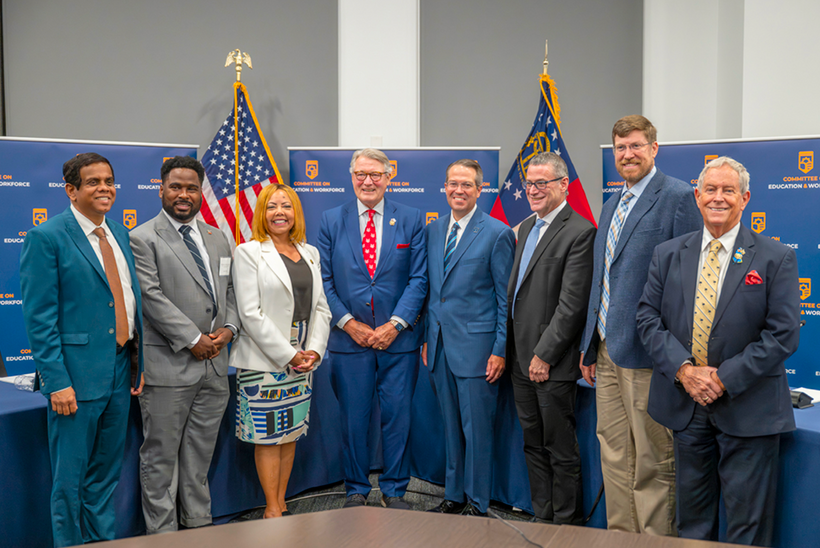
The U.S. House Committee on Education and Workforce held its first artificial intelligence field hearing of the year, titled "Building an AI-Ready America: How AI Is Creating Opportunities Across America's Workforce," at the Georgia Cyber Center at Augusta University on July 24. U.S. Rep. Rick W. Allen, who represents Georgia's 12th District and chairs the committee's Subcommittee on Health, Employment, Labor, and Pensions, chaired the hearing. He was joined by U.S. Rep. Joe Wilson of South Carolina and U.S. Rep. Lucy McBath of Georgia. Jeffery Talbert, PhD, chair of Augusta University's Department of Artificial Intelligence and Health at the Medical College of Georgia and a Georgia Research Alliance Eminent Scholar, served as one of four witnesses at the hearing. "Today, we examine how artificial intelligence, AI, is creating economic opportunities for American workers, job creators and our communities," Allen told the committee. "There's no better place to hold this hearing than right here in Augusta." Allen said the combination of the Georgia Cyber Center and Fort Gordon provides the expertise needed to discuss AI. "Fort Gordon is just a short 30-minute drive from where we currently sit," he said. "It hosts the Army Cyber Center of Excellence and is home to Army Cyber School, which trains, educates and develops the Army's Cyberspace and Electronic Warfare workforce. Every year, thousands of people leave Fort Gordon looking for work." He added that the Georgia Cyber Center "was created to meet this growing demand and drive collaboration between academia, government and industry stakeholders to equip a superior cybersecurity workforce with the skills they need." Augusta University President Russell T. Keen told the committee it was an honor for AU's Georgia Cyber Center to host the hearing. "Congressman Allen has long recognized the important role that education, innovation and workforce development play in strengthening our state and our nation," Keen said. He added that AI "will continue to change how we live, how we learn, how we work and how we solve problems," and that Augusta University "intends to lead in that transformation in ways that strengthen our workforce, advance discovery, improve lives, change lives and save lives." Talbert, who has more than 30 years of experience in biomedical informatics, has published approximately 260 times and has led more than 100 funded research projects totaling more than $130 million. He told the committee that in health care, AI is demonstrating its greatest value through augmentation, helping professionals "work more effectively, reducing administrative burdens, improving patient outcomes and expanding workforce capacity." He pointed to ambient documentation technology, which converts clinical conversations into draft notes clinicians review and approve, as one of the industry's most successful AI applications. "Multiple studies show these tools reduce documentation burden, after-hours work and burnout," Talbert said. "One multisystem implementation found clinician burnout fell from approximately 52 percent to 39 percent." He also cited studies showing AI-assisted breast cancer screening detecting approximately 29 percent higher cancer rates, "helping more patients benefit from earlier diagnosis and treatment." America's opportunity, Talbert said, "is not simply to adopt AI, but to lead its responsible development, education and implementation." He pointed to Augusta University's Department of AI and Health, the first of its kind in Georgia, as an example of that approach. Allen closed the hearing by cautioning against a one-size-fits-all approach to AI policy. "The needs of a family farm are not the same as those of a hospital, a manufacturing plant or a small business," he said. "Congress must pursue flexible policies that allow businesses to adopt AI in ways that best suit their industry and workforce." JagWire has the full recap of the hearing and the Augusta Chronicle, Innovation & Entrepreneurs News and Traders Union also covered the field hearing. Augusta University experts in artificial intelligence, healthcare innovation and workforce development are available for interviews. If you're covering similar stories, reach out to schedule time.


Every football game has a moment when the players jog off, the field goes dark, and everyone wants to see what the halftime show will bring. My version came without a marching band or a surprise appearance by Beyoncé. Apparently, at seventy years old and doing my MBA (Yes, this is part IV of a series, links to Part I, II and III), halftime entertainment means staring at your grades, reviewing the game film, and asking yourself one honest question: what have you actually learned? Twelve courses down. Twelve to go. I am at that exact point, catching my breath, and somewhere in the distance I can hear the crowd murmuring, "Is she going to slow down now?" Spoiler alert: no. But let me show you the film first. The first half taught me a few things I did not expect. Technology and I reached an uneasy truce. Brightspace, Carleton University’s online Learning Management system, no longer feels like a hostage negotiation. I can upload a file, format a citation, and navigate a discussion board without a quick prayer beforehand. I would not call us friends, but we can now be left alone in the same room. Group work stopped being terrifying, too, once I understood something I probably should have known after decades in business: most people, students very much included, want to do their best work with the least effort required to get there. It used to sound like an insult. Now it strikes me as the most honest description of how most of us move through life, and in a program with this much content to cover, it is less a character flaw and more a survival strategy everyone quietly agrees to. If I had to pick one night that captures the whole term, it would be the one at ten o'clock, alone in my office, wrestling with an IEEE-formatted statistics report. The references would not cooperate. The formatting seemed to have developed free will, moving when I did not ask it to and refusing to move when I did. My dog Dottie had already gone to bed, which, from her, is roughly the equivalent of a slammed door. What made that night worse was that I was still stinging from a C+ in Financial Accounting. I wish I could tell you I shrugged it off with the wisdom of a mature student. I did not. When the grade first posted, I sat with the portal open for a good ten minutes, refreshing it as though the university might suddenly announce, "Our mistake, Sue. Clearly an A." No such luck. The grade stung more than I expected, and I carried some of that venom into the next course. Somewhere between the misbehaving references and the formatting that refused to cooperate, I realized I was not actually angry at the report. I was doubting myself. That C+ had cracked open a little door I suspect we all carry somewhere inside us, the one self-doubt likes to slip through when nobody is watching. Funny how quickly one lousy grade and a badly behaved reference list can turn into a full existential crisis at 10pm on a Tuesday. Even C's get degrees I kept going anyway and eventually fixed the report. Not gracefully. Not quickly. But I fixed it, closed the laptop, and sat in the dark for a minute, oddly proud of myself over a reference list. That was when the mantra found me again. Even C's get degrees. A friend handed me that one over a year ago, and it has never let me down, mostly because it keeps reminding me that the goal was never a perfect transcript. The goal was to stay in the game. Here is the adjustment I did not see coming. Business school quietly rewired how I make decisions. Full stop. Every decision, including coursework. The MBA program has an annoying habit of asking for evidence. Apparently, "it felt like a good idea at the time" is not an accepted decision-making framework. Who knew? Decades in sales and business taught me to read people, situations, and opportunities quickly, and I still trust that instinct. I just make it work harder now. I review the evidence, clarify what I am trying to accomplish, and ask whether the decision moves me closer to it. I used to pick a vacation package the way most people do. I looked at the brochure, felt something, booked it, and occasionally arrived to discover the "ocean view" required a telescope and a great deal of optimism. I still let myself feel the brochure, but now I also run the numbers, location, reviews, and value relative to cost. Whether it fits what I am trying to accomplish on this trip, rather than the fantasy I had while sitting on my couch. It has also taught me the difference between fear and desire, which sounds very self-helpy for a business degree. Stay with me. Demons run faster than dreams. Fear is fast. Give it half a chance, and it will make the decision before desire has even found its shoes. It tells you not to take the course, introduce your self to a stranger, or book the trip. Not to have the hard conversation. Not to risk looking foolish. As we get older, fear gets clever. It learns to dress itself up as common sense: be careful, be realistic, maybe it's time to slow down, don’t risk. I am learning to ask which one is driving before I commit to anything. A trip. A course load. A conversation I have been avoiding. Somewhere in all of this, I picked up a rule I am borrowing for the rest of my life: know when to stub your toe and when to put on safety boots. Some decisions can survive a little recklessness, the kind where you bump into the coffee table, yelp, and carry on with your evening. Others need the boots laced up before you take a single step. I am also in no hurry to rush toward a tub that enters from the side, thank you very much. That purchase can wait a decade or two. Caution has its place; it just does not get to run my whole calendar yet. The competition for my attention did not step aside just because I enrolled in school. Family wants time. Travel wants planning. Fitness classes want me to learn near choreography. My retirement advocacy wants everything I have left after that, plus a little more it did not ask permission for. Juggling it all has required negotiation skills I learned from a ten-pound dog. Dottie never begs or nags. She picks the one thing she wants, plants herself by the door, and waits, calm and immovable, until it happens. Everything else in the house can carry on without her weighing in. I am trying to negotiate my own priorities the same way. Decide what matters this week. Plant myself there. Let the rest of the noise wait its turn at the door. There is a voice in me that insists I should be doing it all, all the time, at full volume. This new way of deciding has meant learning the difference between what I want and what simply keeps me busy and conveniently away from the things that matter more. If I am being truthful, some of that motion is me pushing back against getting older, trying to prove something, mostly to myself. I have not figured out the balance yet, but at least I am aware enough to keep asking the question. Retirement, as a word, comes loaded with baggage. For most people, retirement still means earned rest, a slower pace, the right to finally exhale. For me, it has meant speeding up. Saying yes to things I never had time for. Treating this next chapter like an accelerator somebody left floored. People ask me, gently and sometimes not so gently, whether I am planning to slow down. I think some of them are really asking whether it is acceptable for them to slow down, and they are hoping I will give them permission. Of course you can. But I suspect others are quietly wondering the opposite, whether they are still allowed to speed up. Again, absolutely. So here it is, freely given, however you need it. Slow down. Speed up. Do some of both and change your mind next Tuesday. Take up Pickleball, or refuse to pick up a paddle just because apparently everyone over sixty has been issued one. Retire your way, not the way the world has always been sold to you. The only permission that truly matters is the one you give yourself. I have more years behind me than ahead of me now, which strikes me as a particularly good reason not to let fear decide what I do with the ones I have left. Most of us compare ourselves to people in similar circumstances. It is useful until it convinces you there is only one correct way to do this. I have never been particularly good at conforming, and it has always clashed with most of my outfits. There is an elective I keep hoping to find in this MBA, the one that teaches that ambition and quiet contentment can share a syllabus. Have not found it yet. Would sign up in a heartbeat. So here is where I stand at the halfway mark. My average has settled at an A- (that’s a minus, not an em dash. Take that Pangram!) This grade still surprises me every time I refresh the grade portal, the same one that put me through those ten rough minutes in Financial Accounting. But the transcript is not really the story. I am not just learning finance, statistics, and marketing. I am getting better at deciding what truly deserves my time, my energy, and, increasingly, the years still ahead of me. Already using the playbook for vacations, for priorities, and for what earns a spot on my calendar and what gets quietly cut. If you are somewhere in your own halftime, take the ten minutes the C+ asked of me. Let the sting have its moment. Mine reminded me that self-doubt can show up at any age. Fortunately, so can the determination to tell it to get lost. Then get back to writing your second half. The halftime show is supposed to be the big spectacle everyone remembers, with fireworks, a surprise guest, the works. I used to think I was waiting for my own JLo and Shakira moment, a grand, glittering proof that all this effort adds up to something spectacular. I do not think that is coming, and I have made my peace with it. That spectacle belongs to somebody else's show. Mine is different. In the second half, I am just calling my own plays, one deliberate decision at a time, with a ten-pound dog refereeing from the sidelines and no patience for a false start. Not to be outdone by JLo, my MBA halftime show featured its own wardrobe malfunction. My costume never slipped on live television. Instead, I changed out of a sixty-nine-year-old outfit called Perfection and into something that fits: my own judgment, a mantra with some mileage on it, and whatever grade shows up next. All out in the open for anyone to see. Cameras can roll. So, second half. Still curious. Occasionally humbled. Considerably less afraid of a C+ than I was a few weeks ago. There is still time on the clock, and I intend to use every last minute. Don't Retire… ReWire! Sue My Book is Available for Pre-Order I hope you will consider pre-ordering a copy of Your Retirement Reset for you, a friend or loved one. It's available September 29, 2026 published by ECW Press - You can now order at Indigo or Amazon. And if you love supporting Canadian booksellers, please also check with your local independent bookstore. Most can easily order it for you.