American Experts
Connect for media, speaking, professional opportunities & more.

All this talk lately about Trump and Carney squaring off has made me reflect on matters closer to home. My living room has never quite reached the level of a televised leaders’ debate, but retirement has a way of turning minor domestic disagreements into full parliamentary sessions. And unlike politicians, you can’t call a recess and fly to Florida. For years, we’ve been sold a lovely picture of retirement. The alarm clock disappears. The kids have finally stopped treating your house like a storage locker. There are leisurely breakfasts, travel, golf, grandchildren, and coffee on the patio on a Tuesday morning simply because you can. And there is your spouse. Every. Single. Day. For many couples, this is wonderful. Even in the happiest relationships, though, somewhere around the third consecutive Tuesday morning together, a thought may quietly surface: Have you always chewed like that? We spend years trying to figure out whether we have enough money to retire. We calculate pensions, RRSPs, CPP, home equity, and how long our savings might last. We consult financial planners and make budgets. Some of us even build colour-coded spreadsheets, which I think is taking things a little far (just saying). Far fewer couples spend time figuring out how they will retire together, and that’s a different calculation altogether. Two Retirement Plans before One During our working years, most couples have something that retirement quietly removes: separation. You go to work. I go to work. You have your colleagues, routines, frustrations, and responsibilities, and I have mine. We leave each other in the morning, collect a day’s worth of stories, and come home with something to talk about. Retirement can fold two fairly independent lives into the same house and the same calendar, usually by the first Monday. Research backs this up. A German study of 2,117 couples, drawing on more than 30 years of national survey data, found that on average both partners grew more satisfied with life around retirement. The changes were also highly correlated within couples, so when one partner’s satisfaction slipped, the other’s tended to slip right along with it (Weber et al., 2021). Your retirement becomes my retirement, whether I applied for the position or not. Then come the expectations. One person has been dreaming of travelling for 20 years. The other would happily never set foot in an airport again. One wants to move, and one wants to stay. One wants to golf four days a week. The other thought retirement meant finally doing things together. One wants to help the kids financially. The other believes the kids are 43 and it may be time they gave adulthood a whirl. Even the timing can cause friction. One of you retires in June, the other has three years left before the pension kicks in, and suddenly someone is home all day reorganizing the spice drawer. Research on how couples make retirement decisions suggests that the way the call gets made, and whether both people feel they had a say, shapes how satisfied they are with retirement afterward (Szinovacz & Davey, 2005). The relationship you bring into retirement also comes along for the ride. Old patterns of closeness and conflict travel with you like carry-on luggage, and retirement simply changes the scenery around them (Davey & Szinovacz, 2004). That makes me wonder whether every couple needs two retirement plans before they have one. What does your retirement look like? What does mine look like? Where do they overlap? Those questions may matter more than whether we can afford the Viking cruise. And Then There’s Money Of course there is. Money has always had an extraordinary ability to walk into a perfectly pleasant conversation and leave with a baseball bat. In retirement it gets even more emotionally charged, because our financial psychology shifts. During our working years, another paycheque is always coming. In retirement, many of us start drawing down assets we spent decades building, which can feel completely sensible to one spouse and mildly terrifying to the other. This is where FORO, Fear of Running Out, can pull up a chair at breakfast. One partner sees $800,000 as security. The other sees the same $800,000 as a number that can only get smaller. Suddenly a $12,000 trip to Italy is carrying a lot of luggage: safety, control, mortality, and whether 93-year-old you might someday need that money. Then health can change the equation again. A spouse gets sick. Mobility changes. One person becomes a caregiver, and independence starts to slip away. Retirement plans that once looked beautifully aligned suddenly don’t, and that is a lot of change for any relationship to absorb. Apparently, Fighting Isn’t Necessarily Bad Three very different thinkers have helped me rethink the whole subject: an ancient Chinese general, a modern conflict facilitator, and a psychologist with a lab full of arguing couples. Sun Tzu’s The Art of War is about military strategy, yet one of its most enduring ideas travels surprisingly well into marriage: understand the situation, understand the other person, and don’t waste resources on battles that don’t need to be fought. Priya Parker comes at conflict from almost the opposite direction in her new book, The Art of Fighting (2026). Her work explores how conflict can strengthen relationships when people engage with it well. She calls this idea “healthy heat.” Some difficult conversations need enough heat to burn through to what actually matters. Then there is psychologist John Gottman, who studied couples over time and found something I love: happy couples don’t all fight the same way (Gottman, 1993). His research identified three stable types. Validators calmly talk their disagreements through. Avoiders would much prefer to change the subject. Volatile couples argue loudly and passionately and keep their marriages intact anyway. The couples headed for trouble were the hostile ones, along with the ones who had quietly checked out. So you and I don’t have to argue like the nice couple down the street. Thank God. They look exhausted and boring, to be frank. What seems to matter is whether we can disagree and still hold on to respect, affection, and the sense that we are on the same side. That calls for something to sit beside the retirement financial plan. The Retirement Rules of Engagement 1. Figure out what you’re really fighting about. Before digging in your heels, ask why this matters so much to each of you. The argument about selling the house may really be about losing independence. A fight over spending can be tangled up with FORO. Too much golf might be about purpose for one person and loneliness for the other. And the argument about money may have very little to do with the actual numbers. Once the real issue is on the table, at least you’re having the right argument. 2. Choose your battles. Sun Tzu would make an excellent retirement consultant. Some things matter enormously, and others really don’t. If your spouse has loaded the dishwasher incorrectly for 37 years and everyone is still alive, victory may no longer be strategically important. 3. Keep the heat healthy. Disagreement has a place in a strong relationship. Parker’s idea of healthy heat gives us permission to have uncomfortable conversations without treating the discomfort as proof that the relationship is in trouble. Say the difficult thing. Ask the awkward question. Then stay curious about the answer. 4. Remember who is sitting across from you. This is the person you chose to build a life with. Opposing counsel bills by the hour. Gottman’s research is especially useful here, because hostility and emotional disengagement are the real warning signs. Anger passes. Contempt has a nasty habit of moving into the spare room. 5. Build some mine, yours, and ours. Two people don’t need to become one organism to have a good retirement. Separate interests, friendships, and activities give each partner purpose and independence, plus fresh material for dinner conversation. Then build the shared things on purpose too: travel, grandchildren, exercise, volunteering, cottage time, date nights, or whatever makes retirement feel like ours. A little absence can still make the heart grow fonder. 6. Know when you’re stuck. If you keep having the same argument, if conversations regularly turn hostile or contemptuous, or if one of you has simply stopped engaging, outside help may be worth it. A couples therapist can untangle relationship patterns. A financial planner can put real numbers around money fears. A retirement coach can help when identity and purpose are causing friction. Sometimes the most useful person at the kitchen table is the third one. What About Grey Divorce? Grey divorce is worth a few minutes here, because ending a marriage later in life is especially hard to recover from financially, and it ripples through the whole family, right down to the grandchildren who now spend Christmas in two places. The Canadian story, however, is less dramatic than the headlines suggest, partly because so many of those headlines are American. In the United States, adults 50 and older made up 8% of all divorces in 1990 and nearly 40% in the latest figures, and their divorce rate doubled between 1990 and 2010 before levelling off (Westrick-Payne & Brown, 2024). Canada never had that boom. Statistics Canada reports that the divorce rate among Canadians aged 50 and older rose 26% between 1991 and 2006, from 4.2 to 5.3 divorces per 1,000 married people, and has since remained relatively stable (Statistics Canada, 2022). Grey divorce remains considerably less common here than divorce among younger adults, so if you’ve read that it has doubled, you were reading about Americans. Still, divorce at 65 is financially different from divorce at 35. There are fewer working years to rebuild. One household becomes two. Housing, retirement income, pensions, estate plans, and family relationships can all take a hit, and women tend to feel it most. A Statistics Canada study that tracked Canadians from their mid-50s into their 70s found that divorced women kept about 70% of their family income, compared with about 87% for women who stayed married (Mehdi, 2023). The study concluded that divorce lowers living standards in retirement more than the death of a spouse does. Till Death Do Us Part Is Longer Than It Used to Be A couple retiring in their 60s could easily have another 20 or 30 years together. That’s an extraordinary gift. It’s also a very long time to argue over the thermostat. Our health will change, our finances may shift, and our interests will wander off in directions neither of us saw coming. The people we were when we walked away from our careers won’t necessarily be the people we are at 75, 80, or 90, so our relationships need room to grow with us. So pick the battles worth fighting, bring a little healthy heat to the ones that matter, and concede the rest, especially the dishwasher. Thirty years of retirement works out to more than 1,500 Tuesdays together. It would be a shame to spend them arguing about the forks. Don’t retire. ReWire. Sue P.S. Retiring solo? Don’t get too comfortable. Many of the same issues show up with adult children, friends, and family, along with everyone’s sudden assumption that you now have all kinds of free time. I’ll tackle that one in two weeks. My Book is Available for Order: I hope you will consider ordering a copy of Your Retirement Reset for yourself, a friend, or someone you love. Published by ECW Press and is available through Indigo or Amazon and McNally Robinson. If you like supporting Canadian booksellers, check with your local independent bookstore too. Most can order it.



$787 a Month for a New Car? The Growing Cost of Getting Behind the Wheel
Buying a new car is becoming an increasingly expensive proposition for American consumers, with monthly loan payments now averaging a staggering $787. According to a recent DC News Now report, the average new-car loan is approaching $45,000, raising concerns about affordability, household debt and the long-term financial commitments consumers are making just to get behind the wheel. And the monthly loan payment is only part of the equation. Insurance premiums, maintenance, fuel and other ownership expenses can push the actual cost of driving considerably higher. For consumers already managing rising household expenses, the decision to purchase a vehicle has become increasingly complicated. Beyond the Sticker Price: What Consumers Need to Know Dr. Kashef Majid, Associate Professor of Marketing at the University of Mary Washington, has studied how consumers value hybrid and electric vehicles, including the financial and environmental motivations behind purchasing decisions. He was also named one of the 50 Best Undergraduate Business Professors of 2024 by Poets & Quants. View his profile Majid has also shared his expertise with WalletHub, offering first-pen perspective on car insurance costs, pricing fairness and the importance of making informed decisions when shopping for coverage. His insights are particularly relevant as Americans face record-high car payments, with insurance premiums adding another significant expense to the overall cost of vehicle ownership. As consumers grapple with rising costs, Majid can help explain what's driving vehicle affordability challenges, how purchasing decisions are changing and what motorists should consider before taking on substantial financial commitments. If you're interested in speaking with Dr. Kashef Majid about rising car payments, vehicle affordability, insurance costs and consumer behavior, simply click on his profile below to arrange an interview today.



Inflation and Interest Rates Put Household Budgets and Business Plans Under Pressure
For American families, inflation is felt in everyday decisions: what to buy at the grocery store, how much to spend on gas and whether a major purchase can wait. This week’s Consumer Price Index report will bring those pressures into focus as the Federal Reserve considers its next interest-rate decision. Some officials have signaled that another increase could wait until December, but stronger inflation data could strengthen the case for action at the October 27–28 meeting. The stakes extend beyond the price of everyday necessities. Higher interest rates can make credit card balances and new auto loans more expensive, adding pressure to households already managing rising living costs. Homebuyers also face difficult affordability decisions, with the average 30-year fixed mortgage rate reaching 7.40% last week. Mortgage rates respond to bond markets and inflation expectations as well as monetary policy, meaning uncertainty can affect buyers even before the Fed acts. Businesses face a similar calculation. When financing becomes more expensive, purchasing equipment, expanding operations or hiring additional employees can become harder to justify. Rising operating costs can also force companies to choose between raising prices and accepting smaller profit margins. For policymakers, the challenge is to bring inflation under control while preserving employment and economic growth. This week’s report will offer another signal about that balance—and help shape the financial decisions families and businesses make in the months ahead.


Why Polls Are a Snapshot, Not a Forecast
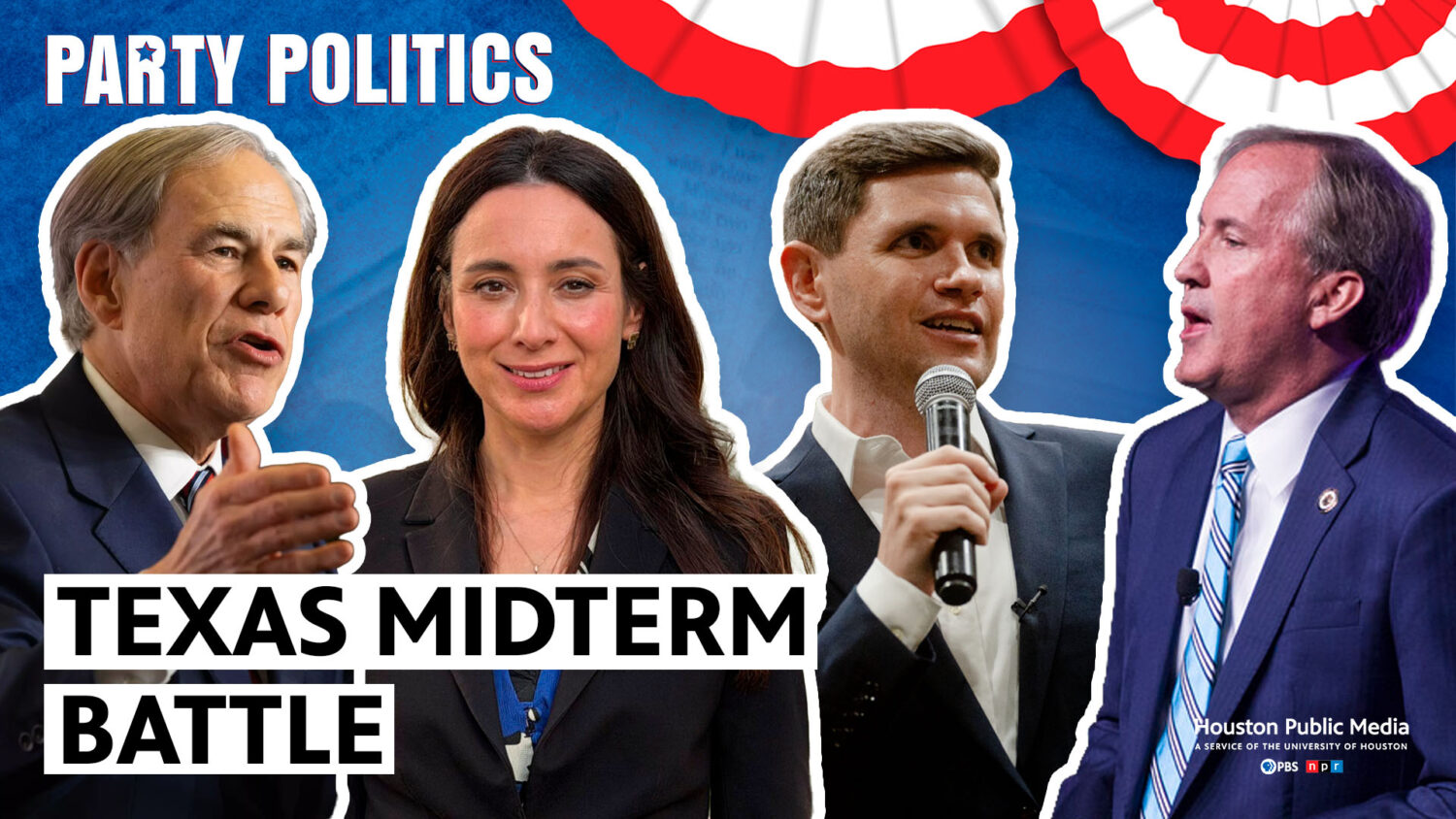
The poll numbers will keep coming between now and Election Day. Keith Gaddie wants you to ask a different question: not who's ahead, but why. Gaddie is the Hoffman Chair of the American Ideal and a professor at Texas Christian University. He says the biggest mistake people make is treating polls like a horse race. A poll is a photo, not a prediction "A poll is just a snapshot of a sample of reality at a particular point in time, and they age out really quickly." The numbers show what one group of people thinks right now. The real work, Gaddie says, is figuring out why they think that way and how it shapes the choices they make. And those opinions are often shallow. Gaddie says that "most of the time, when polling, people haven't thought about a question until you ask them, so their opinions are immediate. It is a knee-jerk reaction to the question." Noise vs. a real trend Poll movement comes from two places. One is the sample itself. Gaddie explains that "any oscillation within 4 or 5 points, if it's happening all the time, that's just from the sample. That's just noise." A real shift looks different: numbers that keep moving in the same direction over time. Don't expect many minds to change. "There are very few true undecideds. Most people are out there actually seeking information to verify prejudice that they have or preference that they have." What does move an election is a true crisis. The 2008 financial meltdown helped lock in Barack Obama's first win, and Gaddie says crises like that tend to work against the party in power. October surprises, on the other hand, are rare. Gaddie says, "They can't be engineered or manufactured." Today's fragmented media makes it harder still. He says, "You can't create a singular story that moves in one direction." Why turnout is the real story Hardcore partisans always vote. The voters in the middle turn out when something gives them a reason, and you can't predict which party they'll back. This year, Gaddie sees a signal in Texas, where more people voted in the Democratic primary than the Republican one. He says, "Primary turnout was at a record level." And in his view, high turnout usually means one thing: "When you get high turnout, you're usually voting for change." The reason, he says, is that "anger and disappointment and desire are much more powerful motives." Presidential years pull more voters because the race is national and the choices feel simple. Midterms are harder because, as Gaddie puts it, "life gets in the way." He adds: "Once you get registered, you have to work really hard to not be able to vote, even in Texas." What to watch instead of the numbers Look at how each candidate presents themselves for the job they're running for. Then compare the reality each candidate describes with the one you see. Gaddie's reminder: "only you know what that is, and we don't all see the same reality." The election isn't over when the votes are counted Gaddie also has a warning about what comes after Election Day. He says, "This election will not be over until the last lawsuit." He believes there are "procedural concerns that everyone ought to have." He points to a line from political scientist V.O. Key that he thinks captures what's at stake: "If a democratic regime is to work successfully, it must be generally agreed that contestants for power will not shoot each other and that ballots will be counted as cast." The takeaway A poll number is where the story starts, not where it ends. Turnout, timing, trust in the process and the candidates themselves will tell you far more about how this midterm plays out. Covering the midterms? Click on Keith's icon below to connect with him. He can speak to: Polling and public opinion Midterm turnout Texas and Southern politics Voting rights and redistricting Democracy and trust in elections


Expert Insight: UConn's Jennifer Dineen weighs in with her perspective on gun violence in America
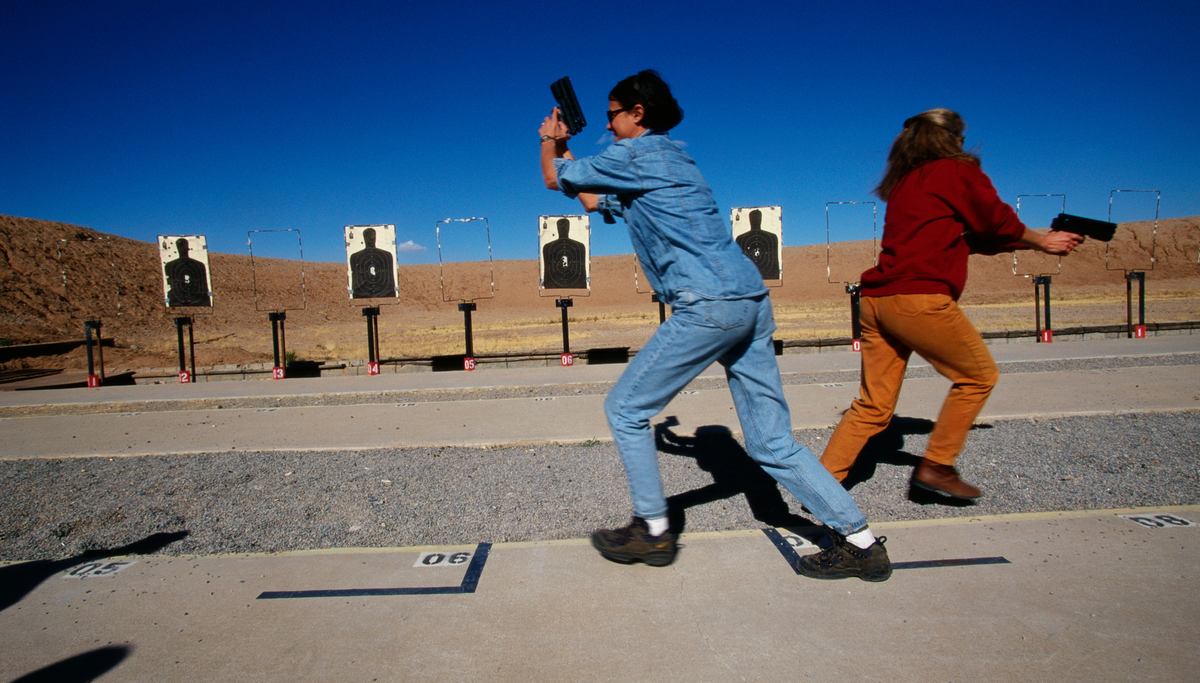
Earlier this week, UConn's Jennifer Dineen co-authored an opinion piece in Vital City where she shared a very candid expert perspective on gun violence and how too often it is only portrayed or explained from the point of view and experience of a male observer. She shares how topics like intimate partner violence, a lack of data on gun ownership by women, and the risks that pregnant women face are at best overlooked and too often simply ignored. Jennifer Dineen is a survey methodologist who focuses on stakeholder attitudes as mechanism for intervention uptake and policy change. She is an associate professor in-residence on fellowship in the Institute for Collaboration on Health, Intervention, and Policy (InCHIP) at the University of Connecticut and associate director of UConn’s Center for Advancing Research, Methods, and Scholarship (ARMS) in Gun Violence Prevention. View her profile Men are more likely victims and perpetrators of firearm injury, and men are most likely firearm owners. And so we often consider gun violence a mostly male problem. Mostly, but not only — and the way guns shape women’s lives often falls away from the conversation altogether. This issue of Vital City attempts to serve as a corrective. We ask readers to consider the unique impact and ways that women interact with or are harmed by firearms and to then consider solutions. Though American women’s firearm injury and death rates are lower than American men’s, they are much higher than women’s in other countries. And women are increasingly owners of guns, at rates that would’ve been highly surprising a generation ago. When we start to see guns through women’s eyes, the policy conversation changes. It changes the strategy considerations for preventing violence and for educating gun owners. The articles in this issue try to explain what we know about women and firearms and the knowledge gaps that still hinder our understanding. Our goal is to spark future research and data collection and to highlight what policymakers can do now as well as ultimately, finding well-tailored interventions that reduce adverse outcomes (like fear, injury and death) and promote positive outcomes (like safer firearm ownership, health and well-being). Women’s relationship with firearms is distinct from men’s Let’s begin with how women are harmed by weapons. If the classic picture of a male homicide or injury victim is a young man, shot by a stranger, what’s a female gun homicide or injury victim? Far too often, it’s someone targeted by her intimate partner. And, far too often, it’s someone pregnant. In a surprising number of cases, victims are older women. Which is not to say that women don’t get involved in street violence, both on the receiving and the giving end; they do. How women are harmed by guns Women most commonly are injured or killed by guns used by an intimate partner in the context of domestic violence. The presence of a firearm in an abusive household increases the risk of intimate partner homicide fivefold. While homicide is the worst outcome, firearms may also be used in an abusive relationship to exert coercive control; thus their presence changes the threat calculus even when never fired. Further, when women are harmed, it’s often in their own homes, which, as Erdal Tekin and Michael Ulrich detail in their articles, has implications for the interpretation of legal doctrine — a doctrine built on threats outside of the home. Homicide — primarily by firearm — leads to more maternal death (defined as the death of those who are pregnant or have recently given birth) in the U.S. than hemorrhage, hypertension and infection. Stated differently, expectant and new mothers are in greater danger from bullets than biology. Lynn Addington points out that, while there is an age gradient, women over the age of 50 are still at risk of intimate partner homicide (which may also involve the shooter dying by suicide). Finally, women may suffer from firearms due to their caregiver roles. Nelba Márquez-Greene and Zirui Song document that when children and other family members are shot, it is disproportionately women — mothers, sisters, daughters — who absorb the psychological and economic fallout. The full piece is attached above and is a must-read article for anyone interested in this important topic. And, if you're a journalist looking to know more about violence prevention, gun violence, and how it impacts women in America, then we can help. Jennifer Dineen is available to speak with media about this topic, simply click on her profile now to arrange an interview today.


Congress Buys Time: Shutdown Fight Pushed to December
When will Congress stop kicking the budget proverbial can down the road with a continuing resolution and begin addressing the issue of leading with a balanced budget? Having a balanced budget, and spending within our means should be expected of our legislators--but for decades, this has not been the case. Lawmakers from both political parties are guitly of not addressing the issue that has created several 11th-hour deals regarding the budget. While this strategy helps keep some legislators in power, it's providing no benefit to the American people. Congress has now opted to not work on this issue until December--if it even does it then. However, the deadline buys our political leaders time to get past the midterm elections, campaign for each other, and hope the American public doesn't notice. And, in doing so, we'll experience another government shutdown in December.


Texas Senate Rematch Puts Tarrant County Back in the Political Spotlight
Less than a year after Democrats flipped a Texas Senate seat in Tarrant County, the two candidates are preparing for a November rematch — this time under very different electoral circumstances. Democratic State Sen. Taylor Rehmet defeated Republican Leigh Wambsganss by 14 percentage points in a January special-election runoff for Senate District 9, a district Donald Trump carried by 17 points in the 2024 presidential election. Now Rehmet and Wambsganss will face each other again on Nov. 3, with the winner securing a full four-year term. In a recent Fort Worth Report article examining the race, Adam Schiffer, professor of political science at Texas Christian University, explains why the dynamics of a regular midterm election could be significantly different from those surrounding January's special election. Special elections typically attract lower turnout, and January's runoff featured only Rehmet and Wambsganss. This fall, Tarrant County voters will see more than 70 races on the ballot, creating a much different political environment. “Democrats are extremely energized and motivated to vote right now, and Republicans are a bit dispirited,” Schiffer told the Fort Worth Report. “So that’s the kind of thing that then can work to Rehmet’s advantage.” Professor Schiffer studies American politics, with an emphasis on the news media, elections, and public opinion. His recent work has covered the hot topics of media bias and presidential primary elections. View his profile Schiffer also points to competing forces that could influence the contest. A larger electorate and greater partisan attention could change the makeup of the voters who participate, while Democratic enthusiasm could continue to benefit Rehmet. The race provides a timely opportunity to examine broader questions about voter turnout, partisan loyalty, candidate positioning and whether the political conditions that produce a special-election upset can carry over into a midterm election. Schiffer can provide expert perspective on the Senate District 9 rematch, Tarrant County's changing political landscape, voter behavior and the role that turnout and partisan enthusiasm can play in closely watched elections. To arrange an interview today, simply click on his profile below.


Twice a year, Americans are made to gain or lose one hour of sleep to accommodate an age-old custom of dubious origins. But that may soon change. On July 14, 2026, Democrats and Republicans in the U.S. House of Representatives joined together to approve the Sunshine Protection Act, a bill that would effectively eliminate seasonal clock adjustments and institute permanent daylight saving time. Currently, this legislation is stalled in the Senate, but pressure is steadily mounting for the act’s passage before clocks once again “fall back” at the beginning of November. Amid the push, many researchers who specialize in sleep science and medicine hope Congressional lawmakers continue biding their time—and time in general—and weigh a different approach to the nation’s wakeup call conundrum. “Both the general public and the medical and scientific communities seem to largely support eliminating the practice of changing the clocks twice a year,” says Elizabeth Pantesco, PhD, assistant professor of Psychological and Brain Sciences and head of the Sleep and Heart Health Lab at Villanova University. “However, while political and public opinion often seem to slightly favor permanent daylight saving time, the sleep medicine and circadian science communities generally support permanent standard time.” As Dr. Pantesco explains, this support largely stems from experts’ understanding of circadian health. Permanent standard time would produce earlier morning light and earlier evening darkness, which is generally considered more favorable for optimizing the body’s 24-hour internal rhythms, than permanent daylight saving time. “Under permanent daylight saving time, reduced morning light and increased evening light exposure could shift the circadian clock later, while work, school and other social schedules remain fixed,” says Dr. Pantesco. “This can result in more difficulty falling asleep at night while still needing to get up at the same time in the morning, increasing the likelihood of circadian misalignment, poorer-quality sleep and shorter sleep.” Based on research and historical evidence, the consequences of this restlessness could extend far beyond bleary eyes and midday yawns. While permanent daylight saving time has never been analyzed in controlled trials, the existing literature on sleep restriction and circadian misalignment indicates that the policy change could have significant health and safety ramifications over an extended period. “Circadian misalignment and insufficient sleep have been associated with increased risks for cardiovascular and metabolic disease, as well as depression and other psychiatric outcomes. Long-term circadian disruption, particularly in research on shift work, has also been linked with certain cancers. More immediate consequences can include daytime sleepiness, impaired attention, reduced productivity and an increased risk of errors and motor vehicle crashes.” Dr. Pantesco also notes the possibility of some drawbacks with permanent standard time, which would shift an hour of daylight from evening to morning during the months currently on daylight saving time. Among the resultant pitfalls are that it could limit “opportunities for outdoor and social activities after work, affect businesses that benefit from evening activity and potentially increase risks for certain types of crime and for evening pedestrian or cyclist accidents.” Still, while the communal and societal effects of a permanent standard time have yet to be fully understood, the health benefits are strongly supported by circadian biology. As the American Academy of Sleep Medicine (AASM) contends, its institution could eliminate the chronic sleep disruption caused by seasonal clock changes while creating a “natural synchrony [optimal] for health, mood, performance and safety.” Among U.S. lawmakers, there is a contingent that wholeheartedly agrees, working to enshrine permanent standard time through a Sunshine Protection Act alternative—the Sunshine for Our Kids Act. Whether they will be able to convince their Congressional cohorts of the benefits of permanently “springing forward” over permanently “falling back” remains to be seen, however. As with most things, only time will tell.


Researchers detail why kissing bug far from home across Atlantic is an international concern
On an August morning last year, an American couple soon to embark on a European river cruise awoke in a luxury hotel in Lisbon. Staring back at them from the headboard was a bloodsucking insect. It wasn’t a mosquito. It wasn’t a bedbug.They wondered: Could it have bitten them while they slept? They’d later learn the culprit was an adult female kissing bug. More than half of all kissing bugs travel with an accomplice — a parasite called Trypanosoma cruzi. The parasite causes Chagas disease which can lead to serious heart problems. T. cruzi is transmitted through the insect’s feces rather than its bite. But how did this particular species of kissing bug, native to the southwestern U.S. and northwestern Mexico for its dry, desert-like climate, get to Portugal? That question became the centerpiece of a scientific investigation led by University of Delaware assistant professor and medical entomologist Jennifer K. Peterson and her team of Blue Hen sleuths. Their findings were recently published in the journal Parasites and Vectors. A bug’s life When the couple returned to their East Coast home, they brought the now-dead specimen with them in a jewelry box. They reached out to Peterson for identification. “When they first contacted me, I was super skeptical,” Peterson said. “My first response was, ‘Is there a Lisbon, Delaware? Because they can’t be referring to Lisbon, Portugal.’” Peterson and colleagues identified the insect as a species of kissing bug, Hospesneotomae protracta, native to the southwestern U.S. and northwestern Mexico. The insect traveled a 5,000-mile transatlantic journey. Could it have stowed away aboard a cargo shipment? Did it hitchhike in somebody’s suitcase and take an international flight? No one knows how it got to Portugal. Portugal imports hundreds of millions of dollars in U.S. agricultural products each year, and more than 2 million American tourists visit the country annually. Any number of pathways could explain its remarkable journey. “This case demonstrates they are hardy enough to survive that journey and then continue on to do what they biologically do, which is, basically, eating,” Peterson said. Six weeks after the incident, the American couple was tested for T. cruzi antibodies, which would indicate exposure to the parasite. The results showed the couple was not infected; their worries were over. But for medical entomologists like Peterson, the case was far from over. Medical entomologists in training Rather than simply presenting the case to her students, Peterson turned it into a collaborative class research project. She gave her class the basic facts and challenged students to investigate the insect’s biology, identify other hitchhiking cases and explore how the kissing bug might have reached Europe. She then combined the strongest elements of their work into one research paper. “Writing, peer review and publishing are such a huge part of being a researcher,” Peterson said. “As university academics, it’s our bread and butter. I wanted students to experience that process from beginning to end.” To Hunt Kinnaird, a UD Class of 2025 environmental science graduate and current master’s entomology student in Peterson’s lab, the case was a great experience in “digital detective work.” “Our job was to explain why this matters and investigate how the kissing bug could have traveled so far,” Kinnaird said. “I looked at global trade. It’s fascinating that either international commerce or human travel can move an insect thousands of miles beyond its natural range.” Increasing awareness The Lisbon case illustrates how easily this insect (and others) can travel across the globe. Peterson said when any insect that can transmit pathogens or parasites journeys outside of its usual range, there can be medical consequences. Especially if the insect is able to lay eggs and start an infestation. In the case of the adventurous kissing bug, it was not carrying the parasite that causes Chagas disease. The next one might. “This particular kissing bug was not infected with T. cruzi, but others could be,” Peterson said. “What we don’t want is to see kissing bug populations in places where they aren’t. Because once that takes off, they’re really tough to eliminate.” She hopes customs officials, border patrol agents and others who monitor for agricultural pests will become more familiar with kissing bugs. To speak with Peterson more about this extraordinary discovery, email mediarelations@udel.edu.


25 Years Later: How 9/11 Changed the World
On September 11, 2001, the world watched as nearly 3,000 people were killed in terrorist attacks that would become one of the defining moments of the 21st century. Twenty-five years later, 9/11 remains much more than a moment in history. Its consequences continue to shape the world we live in. The attacks transformed national security and intelligence, changed how people travel, reshaped airport and border security, and ushered in a new era of surveillance and counterterrorism. They also profoundly influenced American foreign policy, leading to wars in Afghanistan and Iraq and decades of debate about security, military intervention and America's role in the world. The effects were cultural as well as political. September 11 changed how a generation viewed safety, terrorism and global conflict. It also sparked difficult conversations about civil liberties, immigration, religious tolerance and the balance between individual freedoms and collective security. For younger generations, 9/11 is increasingly an event learned about rather than remembered. For millions of others, memories of where they were and what they saw that day remain remarkably vivid. A quarter-century later, the anniversary offers an opportunity to remember those who were lost, recognize the first responders and countless others affected by the attacks, and examine how the decisions made in their aftermath continue to influence our world. Experts in history, political science, international relations, national security, terrorism, public policy and sociology can help provide perspective on September 11, its legacy and how the world has changed 25 years later. Connect with our experts today: View all of your experts here at www.expertfile.com