Global Experts
Connect for media, speaking, professional opportunities & more.

From the Pump to the Bond Market: Why Rising Oil Prices Matter for Borrowing Costs
From the Pump to the Bond Market: Why Rising Oil Prices Matter for Borrowing Costs Rising oil prices are often felt first at the gas pump, but their effects can quickly extend to the broader economy. As higher costs for gasoline, diesel and jet fuel work their way through transportation, manufacturing and food production, investors are increasingly concerned that inflation could remain elevated longer than expected. That concern is helping push Treasury yields higher. When investors expect inflation to erode the future value of fixed-income returns, they typically demand higher yields on government bonds. The result can be a ripple effect across the economy: mortgage rates, auto loans, credit-card rates and business borrowing costs may all remain high or move higher. This is an important second stage of the oil-price story. The first concern is the direct impact on consumers and businesses as energy costs rise. The next concern is whether those higher costs become embedded in the economy, causing inflation expectations to increase and making it more difficult for the Federal Reserve to ease interest rates. For policymakers, the dilemma is clear. Raising or maintaining higher interest rates can help slow inflation, but it also makes borrowing more expensive for families, businesses and the federal government. If high energy prices persist, the Federal Reserve may face added pressure to prioritize inflation control even as consumers and employers feel the effects of tighter financial conditions. The issue is also global. Oil markets respond quickly to geopolitical instability and supply disruptions, while Treasury yields influence borrowing and investment decisions far beyond the United States. Together, high energy prices and rising yields can become a powerful test of economic resilience—affecting household budgets today and financial decisions for months to come.


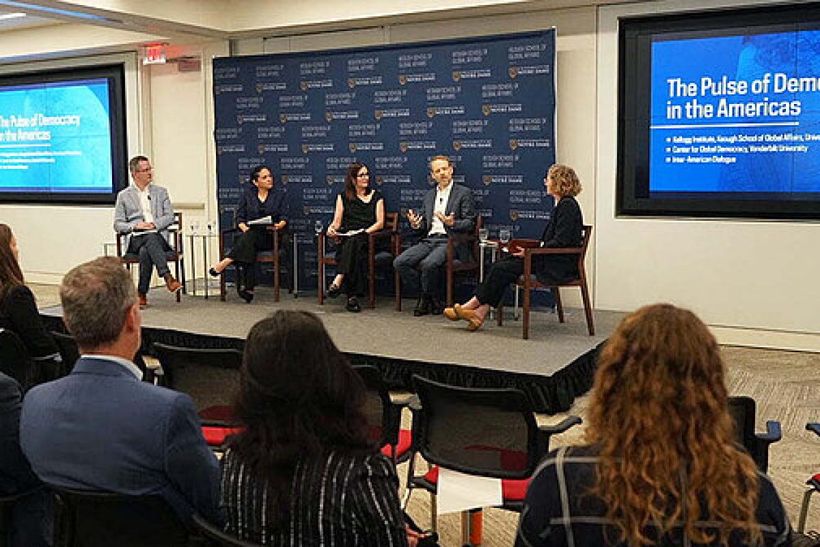
After more than a decade of erosion, support for democracy has stopped falling and begun a modest but widespread recovery across the Americas. The findings are detailed in the 2026 Pulse of Democracy, released by Vanderbilt University’s Center for Global Democracy and the Kellogg Institute, part of the University of Notre Dame’s Keough School of Global Affairs. The 2026 AmericasBarometer includes 25,282 interviews across 21 nationally representative surveys in countries across the Americas. The survey examines how citizens perceive and experience democracy and governance, including their views on democratic legitimacy, trust in institutions, corruption, citizen security, migration, political participation and government performance. This year’s study again includes the United States and Canada alongside Latin America and, for the first time, Cuba. The report finds that support for democracy increased across nearly every country surveyed between 2023 and 2026, marking the first broad regional upturn in a generation. Although citizens across much of the region report improvements in economic and physical security, they remain far less convinced that governments are honest, capable and responsive to their needs, highlighting the need to strengthen trust in government and accountability. “The modest recovery in support for democracy is real and encouraging, but it is also fragile,” said Noam Lupu, director of Vanderbilt University’s Center for Global Democracy and the Gertrude Conaway Vanderbilt Professor of Political Science. “People are reporting improvements in their economic and physical security, but they still want governments that are honest, capable and responsive.” Among the report’s key findings: About two-thirds of Latin Americans express support for democracy in 2026, up 6 percentage points from 2023. Support increased in nearly every country and across age groups and educational levels rather than being driven by any single demographic group. Substantial differences remain across countries, however, and the recovery follows nearly a decade of comparatively low democratic support. In most countries, fewer people say their national economy has worsened compared with 2023, and household food insecurity has declined from its pandemic-era peak. Still, roughly one in four people across the region report experiencing food insecurity, and improvements are unevenly distributed. The share of people who feel unsafe in their own neighborhoods has been declining steadily for nearly a decade and fell again in 2026. Crime victimization has declined only modestly, however, and substantial differences remain across countries. Citizens who experience greater economic security, less food insecurity, lower exposure to crime and fewer experiences with corruption express higher support for democracy. On average, several of these conditions improved across the region between 2023 and 2026, coinciding with the broader increase in democratic support. Everyday corruption has changed little, satisfaction with local public services remains low, and citizens’ evaluations of political leaders vary widely. The findings suggest that improvements in material conditions can bolster democratic goodwill, but persistent failures of governance and representation continue to hold it back. The share of adults reporting an intention to emigrate fell from 31 percent in 2023 to 25 percent in 2026, returning roughly to pre-pandemic levels. Improving conditions in countries of origin coincide with the decline, while migration pressures remain substantial and vary considerably across countries. “The findings offer some encouraging signs, but they also underscore the work that remains,” said Ann Mische, acting director of the Kellogg Institute and associate professor of sociology and peace studies at the University of Notre Dame. “Improving people’s daily lives matters, but strengthening democracy also requires institutions that people trust.” New data and expanded public resources Alongside the Pulse of Democracy, Vanderbilt’s Center for Global Democracy and LAPOP Lab are releasing the 2026 AmericasBarometer data and updated Data Playground, along with questionnaires, technical documentation, and other resources, free of charge. About the AmericasBarometer The AmericasBarometer is the flagship survey project of Vanderbilt University’s Center for Global Democracy and its LAPOP Lab, a global leader in comparative public opinion research. Since 2004, it has collected more than 433,000 interviews across 35 countries, creating an extensive comparative record of how citizens across the hemisphere perceive and experience democracy and governance. The surveys use nationally representative samples of voting-age adults and cover topics including democratic legitimacy, trust in institutions, corruption, citizen security, migration, political participation and government performance. About Vanderbilt University’s Center for Global Democracy The Center for Global Democracy (CGD) is Vanderbilt University’s leading social science institute dedicated to research and innovation in democratic politics. Its research examines how citizens perceive, experience, and support democracy across countries and over time. Its research portfolio includes the LAPOP Lab, a global leader in international survey research and home to the AmericasBarometer. About the Kellogg Institute The Kellogg Institute, part of the Keough School of Global Affairs at the University of Notre Dame, is a leading center for interdisciplinary research dedicated to understanding, strengthening, and renewing democracy worldwide.

From Automation to Autonomy: AI’s Next Role in the Supply Chain
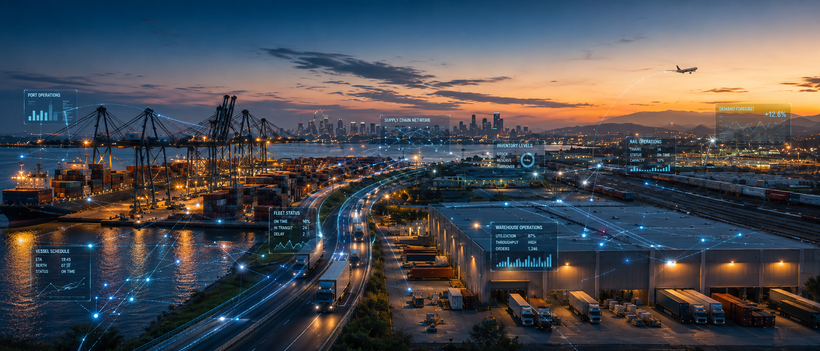
Artificial intelligence is creating new possibilities across global supply chains, but the bigger story may be how far companies are prepared to rethink the way their supply chains actually operate. A recent Financial Times article, “How AI is reshaping supply chains” looks at how AI is changing supply chain planning, logistics and decision making as organizations search for better ways to manage growing complexity and disruption. Among the experts featured is Dr. Maria Jesús Sáenz of the MIT Center for Transportation & Logistics (MIT CTL). At MIT CTL, Dr. Sáenz leads work focused on digital supply chain transformation and serves as Executive Director of the MIT Supply Chain Management master's program. Her research examines how AI and digital technologies are changing collaboration, decision making and performance across supply chains. MIT CTL has long been at the forefront of supply chain research and education, working at the intersection of industry, technology and some of the most pressing challenges facing global supply networks. Today, that increasingly includes understanding where AI can have a meaningful impact and what organizations need to do to put it to work effectively. MIT CTL describes Dr. Sáenz’s insights as part of its ongoing leadership in research spanning AI, digital transformation and supply chain innovation. For Dr. Sáenz, the potential of AI goes well beyond making existing processes faster. It points toward supply chains that can become increasingly autonomous, learn from changing conditions and adapt the way they operate. "It is more automated, more autonomous, more self-learning, self-correcting, more resilient." But technology alone will not create that transformation. Dr. Sáenz emphasizes the importance of redesigning processes, investing in digital capabilities and establishing a clear strategic vision before organizations deploy new technologies. That raises some important questions for supply chain leaders: How autonomous should supply chains become? Where should people remain firmly involved in decision making? Are organizations redesigning their operations around the capabilities of AI, or simply adding new technology to existing processes? These questions are becoming more important as companies explore the next generation of intelligent supply chains. Dr. Sáenz’s research at MIT CTL provides a valuable perspective on what separates incremental automation from deeper supply chain transformation. Her broader research includes intelligent and autonomous supply chains, AI in supply chains and the ways humans and AI can work together more effectively. Story Ideas Are autonomous supply chains actually within reach?: What AI can manage today and where human judgment remains essential. What comes after automation?: How self-learning and increasingly autonomous systems could change supply chain planning and execution. AI without the groundwork: Why companies may struggle to realize the benefits of AI without the right data, processes, digital capabilities and strategy. Human and AI decision making: How organizations can determine which supply chain decisions should be automated, supported by AI or left to people. Can AI make supply chains more resilient?: How intelligent systems could help organizations identify changing conditions and respond more quickly to disruption. Beyond the AI pilot: What separates organizations experimenting with AI from those using it to fundamentally rethink supply chain operations. Read the Financial Times article: How AI is reshaping supply chains Connect with Dr. Maria Jesús Sáenz to learn more about her research at the MIT Center for Transportation & Logistics on AI, digital transformation, human and AI collaboration, and intelligent supply chains.
Can Nature Adapt Fast Enough? Mark Urban Explores Whether Ecosystems Can Evolve With Climate Change
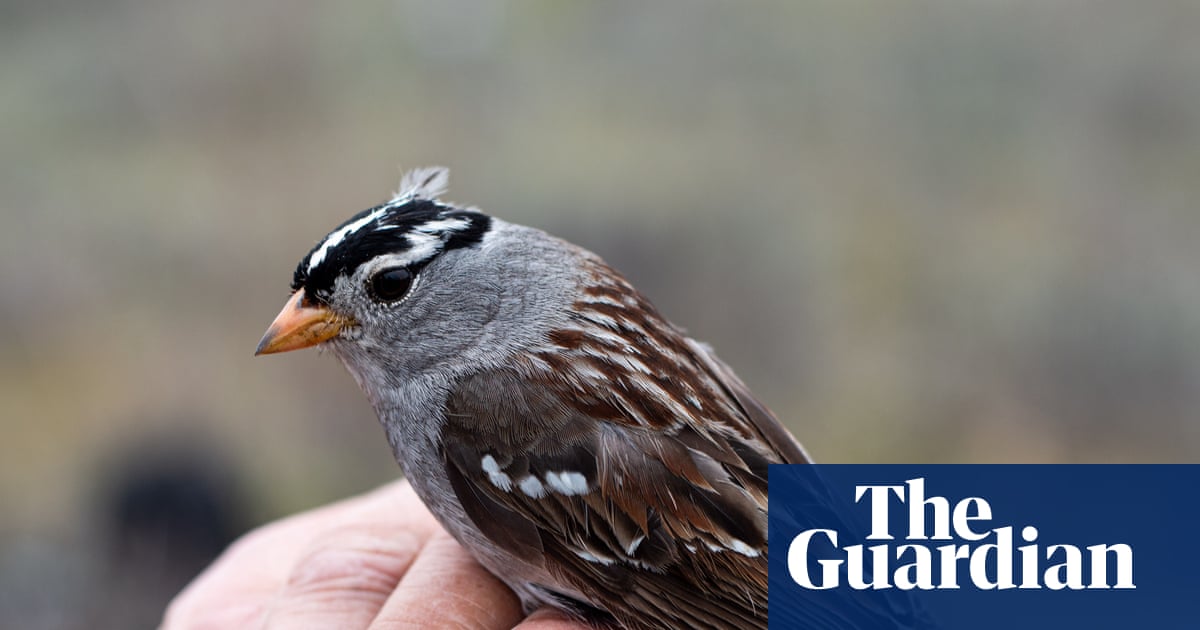
As scientists investigate whether an entire Arctic ecosystem can evolve in response to a rapidly warming climate, UConn’s Mark Urban brings leading expertise on the intersection of evolution, biodiversity, and climate change. Climate change is transforming the Arctic faster than almost anywhere else on Earth. Earlier snowmelt, warmer temperatures, and changing waterways are altering habitats and putting new pressures on the plants and animals that depend on them. But what if nature can evolve in response, not simply one species at a time, but as an interconnected ecosystem? That is the ambitious question behind a six-year, $15-million National Science Foundation-funded research project recently featured in The Guardian. Scientists working on Alaska’s North Slope are studying five interconnected species — white-crowned sparrows, feltleaf willow, Arctic grayling, aquatic mayflies, and ground beetles — to understand whether ecological relationships themselves can evolve as the climate changes. It is a question that sits squarely within the expertise of Mark C. Urban, Ph.D., Professor and Arden Chair of Ecology and Evolutionary Biology at the University of Connecticut. Urban is a global expert on the impact of climate change on biodiversity, eco-evolution, and extinction risk. His research integrates ecology, evolution, and genetics to better understand how species and ecological communities respond to environmental change. He has also conducted extensive field research in Alaska, including research involving Arctic grayling and their ability to respond to a rapidly changing climate. Recently, his work was featured in an in-depth piece by The Guardian. “Across hundreds of experiments, we have seen this happening,” says Mark Urban, an evolutionary biologist at the University of Connecticut working on the project. “There is this incredible buffer ability of adaptive evolution.” How the evolution of one species can help the holistic ecosystems depends on how an adaptive trait ultimately translates into ecological properties. For example, if a fish species can quickly evolve, it means that not only is the population maintained, but so is the stream’s productivity. “Any ecological properties that depend on those populations are maintained as well,” Urban says. To get a better idea of whether the Arctic’s stream and tundra habitats will continue to prosper, scientists are mapping the genetic diversity of each of the five study species to see if there is enough to allow for adaptation – influencing the ecosystems’ resilience potential. “We can get so far with ecology, but at some point we want to get down to the basics of why organisms do the things they do, and can they change the things they do,” says Urban. “That’s something only genetics can explain.” Certain genes control the traits associated with succeeding in different environments. “The holy grail in genomics is to find that one gene that affects everything. The gene that rules them all,” he says. “I think that’s optimistic. Most of the traits are going to be determined by hundreds of thousands of genes.” The Guardian - September 2026 Studies reveal that many plants and animals have been able to persist through evolutionary rescue – the process by which a population on the brink of extinction survives and rebounds through rapid genetic adaptation. Scarlet monkeyflowers in Oregon and California, for example, rapidly evolved during the 2010s to survive a four-year drought. The implications extend far beyond the Arctic. Scientists have traditionally examined how individual species might migrate, acclimatize, or evolve as their environments change. But ecosystems are networks. Fish depend on insects, insects depend on vegetation and water conditions, and predators depend on prey. If those relationships change at different speeds, the consequences can ripple throughout an ecosystem. Urban's work examines precisely these kinds of connections — how ecological and evolutionary processes interact and ultimately influence biodiversity and the resilience of natural systems. His recent research has also examined the growing risk of species extinction as global temperatures rise. The emerging science raises some fascinating questions: How quickly can evolution occur? Can genetic diversity give ecosystems a natural buffer against climate change? What happens when one species adapts faster than another? And are there limits to how much change an ecosystem can absorb before it begins to unravel? As scientists attempt to understand whether nature can keep pace with a rapidly changing planet, Urban can provide valuable perspective on what evolution can — and cannot — do, and what the findings could mean for biodiversity and conservation around the world. If you're interested in speaking with Mark Urban about climate change, evolution, biodiversity, Arctic ecosystems, or extinction risk, click on his profile below.


Researchers detail why kissing bug far from home across Atlantic is an international concern
On an August morning last year, an American couple soon to embark on a European river cruise awoke in a luxury hotel in Lisbon. Staring back at them from the headboard was a bloodsucking insect. It wasn’t a mosquito. It wasn’t a bedbug.They wondered: Could it have bitten them while they slept? They’d later learn the culprit was an adult female kissing bug. More than half of all kissing bugs travel with an accomplice — a parasite called Trypanosoma cruzi. The parasite causes Chagas disease which can lead to serious heart problems. T. cruzi is transmitted through the insect’s feces rather than its bite. But how did this particular species of kissing bug, native to the southwestern U.S. and northwestern Mexico for its dry, desert-like climate, get to Portugal? That question became the centerpiece of a scientific investigation led by University of Delaware assistant professor and medical entomologist Jennifer K. Peterson and her team of Blue Hen sleuths. Their findings were recently published in the journal Parasites and Vectors. A bug’s life When the couple returned to their East Coast home, they brought the now-dead specimen with them in a jewelry box. They reached out to Peterson for identification. “When they first contacted me, I was super skeptical,” Peterson said. “My first response was, ‘Is there a Lisbon, Delaware? Because they can’t be referring to Lisbon, Portugal.’” Peterson and colleagues identified the insect as a species of kissing bug, Hospesneotomae protracta, native to the southwestern U.S. and northwestern Mexico. The insect traveled a 5,000-mile transatlantic journey. Could it have stowed away aboard a cargo shipment? Did it hitchhike in somebody’s suitcase and take an international flight? No one knows how it got to Portugal. Portugal imports hundreds of millions of dollars in U.S. agricultural products each year, and more than 2 million American tourists visit the country annually. Any number of pathways could explain its remarkable journey. “This case demonstrates they are hardy enough to survive that journey and then continue on to do what they biologically do, which is, basically, eating,” Peterson said. Six weeks after the incident, the American couple was tested for T. cruzi antibodies, which would indicate exposure to the parasite. The results showed the couple was not infected; their worries were over. But for medical entomologists like Peterson, the case was far from over. Medical entomologists in training Rather than simply presenting the case to her students, Peterson turned it into a collaborative class research project. She gave her class the basic facts and challenged students to investigate the insect’s biology, identify other hitchhiking cases and explore how the kissing bug might have reached Europe. She then combined the strongest elements of their work into one research paper. “Writing, peer review and publishing are such a huge part of being a researcher,” Peterson said. “As university academics, it’s our bread and butter. I wanted students to experience that process from beginning to end.” To Hunt Kinnaird, a UD Class of 2025 environmental science graduate and current master’s entomology student in Peterson’s lab, the case was a great experience in “digital detective work.” “Our job was to explain why this matters and investigate how the kissing bug could have traveled so far,” Kinnaird said. “I looked at global trade. It’s fascinating that either international commerce or human travel can move an insect thousands of miles beyond its natural range.” Increasing awareness The Lisbon case illustrates how easily this insect (and others) can travel across the globe. Peterson said when any insect that can transmit pathogens or parasites journeys outside of its usual range, there can be medical consequences. Especially if the insect is able to lay eggs and start an infestation. In the case of the adventurous kissing bug, it was not carrying the parasite that causes Chagas disease. The next one might. “This particular kissing bug was not infected with T. cruzi, but others could be,” Peterson said. “What we don’t want is to see kissing bug populations in places where they aren’t. Because once that takes off, they’re really tough to eliminate.” She hopes customs officials, border patrol agents and others who monitor for agricultural pests will become more familiar with kissing bugs. To speak with Peterson more about this extraordinary discovery, email mediarelations@udel.edu.

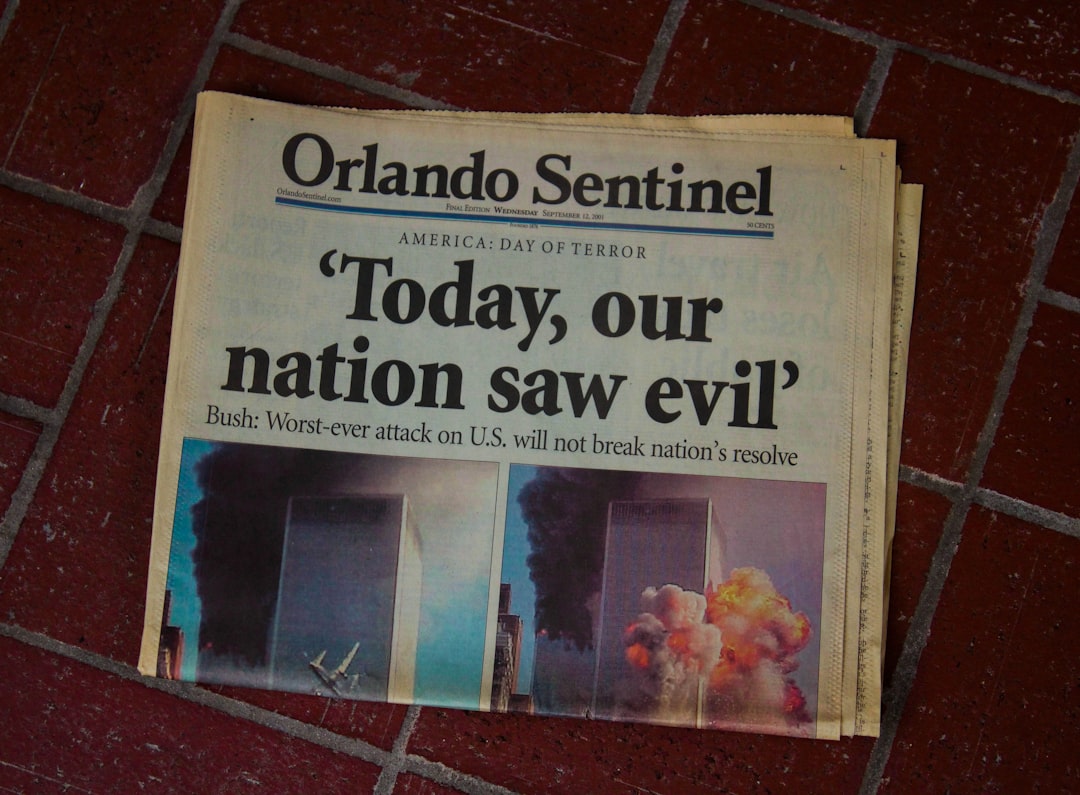
25 Years Later: How 9/11 Changed the World
On September 11, 2001, the world watched as nearly 3,000 people were killed in terrorist attacks that would become one of the defining moments of the 21st century. Twenty-five years later, 9/11 remains much more than a moment in history. Its consequences continue to shape the world we live in. The attacks transformed national security and intelligence, changed how people travel, reshaped airport and border security, and ushered in a new era of surveillance and counterterrorism. They also profoundly influenced American foreign policy, leading to wars in Afghanistan and Iraq and decades of debate about security, military intervention and America's role in the world. The effects were cultural as well as political. September 11 changed how a generation viewed safety, terrorism and global conflict. It also sparked difficult conversations about civil liberties, immigration, religious tolerance and the balance between individual freedoms and collective security. For younger generations, 9/11 is increasingly an event learned about rather than remembered. For millions of others, memories of where they were and what they saw that day remain remarkably vivid. A quarter-century later, the anniversary offers an opportunity to remember those who were lost, recognize the first responders and countless others affected by the attacks, and examine how the decisions made in their aftermath continue to influence our world. Experts in history, political science, international relations, national security, terrorism, public policy and sociology can help provide perspective on September 11, its legacy and how the world has changed 25 years later. Connect with our experts today: View all of your experts here at www.expertfile.com


Energy expert: Venezuela’s oil, U.S. energy security and the future of the Caribbean
Venezuela’s enormous oil reserves have long been central to its economic development and geopolitical importance in the Western Hemisphere and globally. Efforts by the United States to gain greater access to Venezuelan oil supply could have major consequences for both countries, says the University of Delaware’s Kalim Shah. Shah, associate professor of energy and environmental policy, studies energy security, energy policy and governance, with a particular focus on the Caribbean and other energy-producing regions. Venezuela has some of the world’s largest oil reserves, but years of political interference, underinvestment deteriorating infrastructure and expropriation of foreign assets under the Chavez-Maduro socialist model have severely reduced its production capacity, Shah says. Rebuilding the industry will require substantial investment from U.S. and other international energy companies. Shah can discuss: • U.S. energy security: How greater access to Venezuelan oil could provide an additional source of supply during future global disruptions and serve as an “energy shock absorber.” • Gas prices: Why increased Venezuelan production is unlikely to produce an immediate, dramatic reduction in U.S. gasoline prices. • Caribbean geopolitics: How energy resources can shape U.S. influence and relationships throughout the Caribbean and Western Hemisphere. • Venezuela’s recovery: How rebuilding the country’s oil industry can generate jobs, government revenue, infrastructure investment and broader economic recovery. • Energy governance: The importance of transparent contracts, regulation and revenue management in ensuring that energy development benefits Venezuela while protecting international investors. • The energy transition: The long-term risks and opportunities of investing in major oil resources as global energy systems increasingly move toward lower-carbon sources. • U.S. companies: The role American energy companies can play in rebuilding Venezuela’s oil industry, and the opportunities and risks that could come with greater U.S. investment. To reach Shah directly and arrange an interview, visit his profile page and click on the "connect" button. Interested reporters can also send an email to MediaRelations@udel.edu.


How Trade Wars Are Reshaping Fashion and Apparel
Trade disputes and tariffs have become an increasingly common part of the global economic landscape, with the fashion and apparel industry often caught in the crossfire. University of Delaware professor Sheng Lu can explain how these disruptions reshape sourcing decisions, supply chains, prices and the products ultimately available to consumers. Lu can discuss: • How new tariffs, including those on Canadian jackets and wool products, could affect consumers, fashion companies and apparel supply chains. • How tariffs can affect apparel prices and product availability for U.S. consumers. • Why fashion and apparel supply chains are particularly vulnerable to trade policy changes. • The impact of trade disputes on fashion companies and retailers in the U.S. and abroad. • What previous trade disputes can tell us about the potential consequences of tariffs. To arrange an interview, visit Lu's profile and click on the “contact” button. Interested reporters can also email MediaRelations@udel.edu.


Bug Off: Why Some People Are More Attractive to Mosquitoes
Summer means mosquitoes, and with more of the pesky insects buzzing around, more people are grappling with mosquito bites and their consequences, ranging from an itchy inconvenience to serious health risks from vector-borne diseases. If it seems like mosquitoes bite you more than others, you may be right, according to Baylor University mosquito expert Jason Pitts, Ph.D. It simply may come down to how you smell. An associate professor of biology and director of Baylor’s Biology of Global Health 4+1 Program, Pitts focuses his research on mosquitoes and their complex odor-receptors, or sense of smell, to better understand how they locate food sources crucial to survival and reproduction. His impactful work is helping develop new mosquito control methods, which ultimately could lead to a decrease in vector-borne disease transmission around the world. “Many insects find their way around the world through their sense of smell, even more than vision,” Pitts said. “Mosquitoes and other insects really are adept at finding places to lay their eggs, finding flowers on which to feed or finding people on which to blood feed just by the sense of smell.” A mosquito’s strong sense of smell is critical to its survival. While all mosquitoes feed from nectar, only females bite humans and other mammals. They need the blood to support egg development in reproduction, and they rely heavily on scent to locate a host, Pitts said. “As we sweat, we emit volatile odors – or strong smells – which can be very attractive to mosquitoes,” Pitts said, adding that these odors include carboxylic acids, a key component in human sweat, which vary from person to person and can determine how appealing someone is to mosquitoes. Mosquitoes detect these chemicals in a similar way to how humans process smells. Humans have nerves in their nasal passages that, if tuned, will send signal receptors to the brain – the same process for mosquitoes, guiding them toward a potential meal, Pitts said. Because of their efficiency in locating human hosts, mosquitoes are considered to be the deadliest creatures in the world, responsible for more than 700,000 deaths each year from vector-borne diseases they transmit, including yellow fever, Zika, dengue, malaria and West Nile virus. Four D’s of mosquito prevention Whether you are a favorite meal among mosquitoes or not, Pitts recommends following the “Four D’s” of preventing mosquito breeding and bites – Dress, Drain, DEET and Dusk/Dawn. Dress Mosquitoes are attracted to darker colors, so wear light-colored, loose-fitting, long-sleeved shirts and long pants to protect yourself from potential bites. Drain The most important thing anyone can do is to reduce breeding sources for mosquitoes by draining stagnant water. If you have standing water in any kind of container in your yard, get in the habit of emptying those containers, including children’s swimming pools, which should be emptied at least once a week. Defend with DEET The most effective repellent is EPA-approved DEET (N-Diethyl-meta-toluamide). “Once a mosquito lands on the skin, they taste the skin to decide whether this is a good host or not,” Pitts said. “They can actually taste DEET, which is a long-range repellent. They can smell it and avoid it. When they taste it, they will also fly away.” Dusk / Dawn Mosquitoes are more active at dusk and at dawn, when the sun is rising or setting. Avoiding these times will help you avoid bites. If you like to take a morning run or walk at dusk, make sure to apply DEET repellent and wear light-colored clothing. Looking to know more or arrange an interview? Simply click on the icon below and connect with the expert.