Risk Experts
Connect for media, speaking, professional opportunities & more.

Where Will AI Change Work First?
Artificial intelligence is changing the workplace, but predicting which jobs will disappear may be the wrong place to start. A recent Boston Globe article looks at new research from Pierre Bouquet, a PhD candidate and research assistant at the MIT Center for Transportation & Logistics (MIT CTL), and Luca Mouchel, a visiting student at MIT CTL completing his master’s thesis in affiliation with MIT. Their AI Labor Exposure Map examines the specific tasks that make up different occupations and measures which of those tasks can already be performed or accelerated by AI. The distinction matters. AI exposure does not mean that a job is about to disappear. It can mean that certain parts of a job are becoming easier to automate while other responsibilities, particularly those involving judgment, oversight and human interaction, remain firmly in human hands. (news.mit.edu) “It’s not a forecast. It’s a measurement.” Pierre Bouquet, MIT Center for Transportation & Logistics, speaking to The Boston Globe (ctl.mit.edu) That idea is central to the broader work Bouquet and Mouchel are doing at MIT CTL. Bouquet’s doctoral research focuses on the future of work and measuring AI’s impact on labor markets, organizations and society. Mouchel’s work focuses on quantifying workforce exposure to AI. Together, their research contributes to MIT CTL’s broader effort to understand how technology changes work at the level of individual tasks. (ctl.mit.edu) Their work is part of the Work Analytics Lab at MIT CTL, which studies AI exposure, job design, productivity and workforce planning. The goal is to give employers and policymakers better information about where AI may automate work, where it may augment people and how jobs themselves could evolve. That approach produces a more nuanced picture of the future of work. Exposure varies considerably across occupations and regions. Knowledge-intensive jobs can contain highly exposed tasks, while many service and physical roles remain less affected by current AI capabilities. Even within an exposed occupation, the parts of the job requiring human judgment, management and interpersonal skills may remain essential. For employers, the question may therefore be less about which jobs AI will replace and more about which parts of work should change. That creates an opportunity to think differently about workforce planning, job redesign, training and how organizations divide responsibilities between people and technology. Story Ideas AI exposure is not job loss: Why measuring tasks gives a clearer picture of workforce risk. Which jobs will AI change first? The occupations and regions showing the greatest exposure. What should stay human? Identifying the tasks where judgment and human interaction still matter most. The entry-level AI question: How automation could reshape the early stages of professional careers. Redesigning work around AI: How companies can use task-level data to rethink jobs, training and productivity. Read the Boston Globe article: AI’s impact on jobs? It’s all over the map. Visit MIT CTL to learn more about their work at the MIT Center for Transportation & Logistics are conducting on on AI, labor markets, workforce planning and the changing nature of work.


Is AI ethical? One philosophy professor has an answer.
During a snowstorm last winter, University of Delaware philosophy professor Thomas Powers fixed his own thermostat by typing the error codes into ChatGPT and following the instructions it provided. As he discovered on that cold, snowy night, AI can make DIY projects that much easier, potentially saving time and money. Ever the philosopher, Powers wondered about the ethics of his solution: What is the impact of taking the repair job away from someone who relies on the work? What about the risk of being wrong? Is the environmental impact of using AI worth the result? After 20 years in the Department of Philosophy and as director of the Center for Science, Ethics and Public Policy, Powers is uniquely suited to explore questions about the ethics of AI. What does “ethical AI” mean? POWERS: We want AI systems that are helpful and useful, but also safe. We want systems that don’t produce biased or dangerous results. One approach to achieve that, which I’m hopeful about, is to create systems that are “safe by design” or “ethical by design.” In other words, instead of relying entirely on outside regulation to prevent harmful behavior, we try to design the systems themselves so that they behave in ways we consider ethical. Is it possible to make an AI system truly “safe by design” if it eventually becomes capable of acting in ways its creators didn’t anticipate? POWERS: There is a big difference between most technologies and AI. With the latter, especially current large language models (LLMs), it appears that there is some unpredictability in their behaviors. Thus, their apparent autonomy complicates the "safe by design" motto. AI autonomy introduces the need for "guardrails" that constrain what AIs can do. But even this may not be possible. Why are AI companies hiring philosophers, and what does this mean for the field of philosophy? POWERS: Some of the hardest questions in AI aren’t purely technical questions. To build systems that are safe, fair or aligned with human values, you first have to decide what those concepts actually mean and how they can be translated into something a computer system can use. The challenge is to educate people who can move between those worlds — who understand the technology but can also ask the deeper questions about what we should want that technology to do. How has AI changed philosophy? POWERS: Philosophers have long discussed the philosophy of action with the concept of agency. For decades we assumed that an agent must be human — someone who acts on their own behalf, or on the behalf of another person, with some kind of plan or attitude. This concept transfers to discussions about AI, and whether it can be considered an agent and be responsible for its actions. The next step is to ask harder questions: Are autonomous AI agents responsible, in some sense, for what they do, and does this suggest or imply that they are conscious? I don’t think AI will become conscious any time soon, but I don’t think it is impossible, and other philosophers and scientists are broaching the question. To speak with Powers further about the philosophy of AI, reach out mediarelations@udel.edu. ABOUT THOMAS POWERS Thomas M. Powers, Ph.D., is an associate professor in the Department of Philosophy at the University of Delaware. He is also the director of the Center for Science, Ethics & Public Policy at UD. Powers' current research focuses on the ethics of information technology and the philosophy of technology. He contributes to scholarship on rule-based conceptions of machine ethics, computer agency, the ethics of artificial intelligence, and other philosophical issues involving emerging technologies, including human-robot interaction.

Can Nature Adapt Fast Enough? Mark Urban Explores Whether Ecosystems Can Evolve With Climate Change
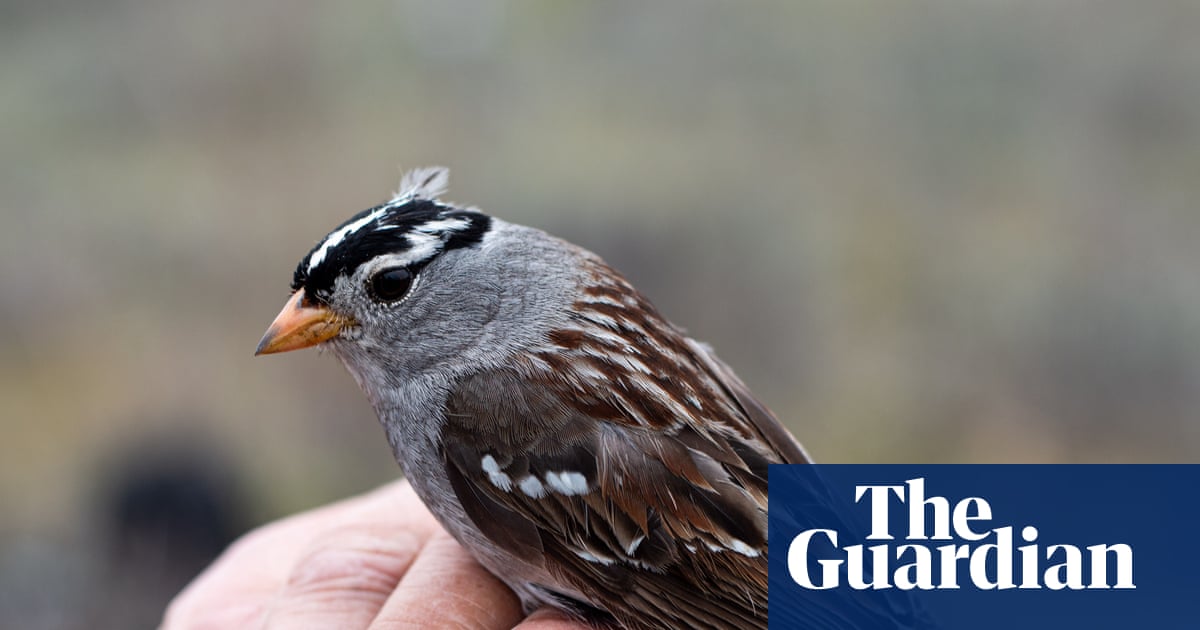
As scientists investigate whether an entire Arctic ecosystem can evolve in response to a rapidly warming climate, UConn’s Mark Urban brings leading expertise on the intersection of evolution, biodiversity, and climate change. Climate change is transforming the Arctic faster than almost anywhere else on Earth. Earlier snowmelt, warmer temperatures, and changing waterways are altering habitats and putting new pressures on the plants and animals that depend on them. But what if nature can evolve in response, not simply one species at a time, but as an interconnected ecosystem? That is the ambitious question behind a six-year, $15-million National Science Foundation-funded research project recently featured in The Guardian. Scientists working on Alaska’s North Slope are studying five interconnected species — white-crowned sparrows, feltleaf willow, Arctic grayling, aquatic mayflies, and ground beetles — to understand whether ecological relationships themselves can evolve as the climate changes. It is a question that sits squarely within the expertise of Mark C. Urban, Ph.D., Professor and Arden Chair of Ecology and Evolutionary Biology at the University of Connecticut. Urban is a global expert on the impact of climate change on biodiversity, eco-evolution, and extinction risk. His research integrates ecology, evolution, and genetics to better understand how species and ecological communities respond to environmental change. He has also conducted extensive field research in Alaska, including research involving Arctic grayling and their ability to respond to a rapidly changing climate. Recently, his work was featured in an in-depth piece by The Guardian. “Across hundreds of experiments, we have seen this happening,” says Mark Urban, an evolutionary biologist at the University of Connecticut working on the project. “There is this incredible buffer ability of adaptive evolution.” How the evolution of one species can help the holistic ecosystems depends on how an adaptive trait ultimately translates into ecological properties. For example, if a fish species can quickly evolve, it means that not only is the population maintained, but so is the stream’s productivity. “Any ecological properties that depend on those populations are maintained as well,” Urban says. To get a better idea of whether the Arctic’s stream and tundra habitats will continue to prosper, scientists are mapping the genetic diversity of each of the five study species to see if there is enough to allow for adaptation – influencing the ecosystems’ resilience potential. “We can get so far with ecology, but at some point we want to get down to the basics of why organisms do the things they do, and can they change the things they do,” says Urban. “That’s something only genetics can explain.” Certain genes control the traits associated with succeeding in different environments. “The holy grail in genomics is to find that one gene that affects everything. The gene that rules them all,” he says. “I think that’s optimistic. Most of the traits are going to be determined by hundreds of thousands of genes.” The Guardian - September 2026 Studies reveal that many plants and animals have been able to persist through evolutionary rescue – the process by which a population on the brink of extinction survives and rebounds through rapid genetic adaptation. Scarlet monkeyflowers in Oregon and California, for example, rapidly evolved during the 2010s to survive a four-year drought. The implications extend far beyond the Arctic. Scientists have traditionally examined how individual species might migrate, acclimatize, or evolve as their environments change. But ecosystems are networks. Fish depend on insects, insects depend on vegetation and water conditions, and predators depend on prey. If those relationships change at different speeds, the consequences can ripple throughout an ecosystem. Urban's work examines precisely these kinds of connections — how ecological and evolutionary processes interact and ultimately influence biodiversity and the resilience of natural systems. His recent research has also examined the growing risk of species extinction as global temperatures rise. The emerging science raises some fascinating questions: How quickly can evolution occur? Can genetic diversity give ecosystems a natural buffer against climate change? What happens when one species adapts faster than another? And are there limits to how much change an ecosystem can absorb before it begins to unravel? As scientists attempt to understand whether nature can keep pace with a rapidly changing planet, Urban can provide valuable perspective on what evolution can — and cannot — do, and what the findings could mean for biodiversity and conservation around the world. If you're interested in speaking with Mark Urban about climate change, evolution, biodiversity, Arctic ecosystems, or extinction risk, click on his profile below.



A Silent Disease, a Surprising Discovery: Research Uncovers Chagas Risk in the U.S.
Chagas disease is often associated with Latin America, but new research from Augusta University is raising questions about how frequently the potentially serious infection may be going undiagnosed in the United States. Jose Vazquez, MD, division chief and professor of medicine in infectious diseases at the Medical College of Georgia at Augusta University, and his team recently tested farmworkers for antibodies associated with Chagas disease as part of a seroprevalence study. Of 155 blood specimens collected, 15 tested positive, a positivity rate of nearly 10%. The finding was particularly notable because Vazquez points to a recent study from Columbia and Greenville, South Carolina, that found a positivity rate of 2% to 3%. Chagas disease is caused by the parasite Trypanosoma cruzi and is found predominantly in Latin America. An estimated 240,000 to 350,000 people are infected in the United States. The disease can be especially difficult to identify because approximately 70% of cases are asymptomatic. When complications do develop, they can include serious cardiac and gastrointestinal problems. Dr. Jose Vazquez studies and treats infectious diseases, including COVID-19, antibiotic-resistant superbugs and fungal infections. View his profile Vazquez's interest in the disease became personal after someone he knew, originally from El Salvador, suffered cardiac arrest and was subsequently diagnosed with Chagas disease and severe cardiomyopathy. That experience helped prompt Vazquez to look more closely at the disease and its potential prevalence among populations in the region. “The reason why I’m doing it is twofold: One is if they’re positive, so we can treat them and maybe prevent these complications.” Jose Vazquez, MD For journalists covering Chagas disease, infectious diseases, health disparities, migrant and farmworker health, disease screening or emerging public health concerns in the United States, Vazquez can provide expert insight into what these findings mean and why greater awareness and screening may be important. Simply click on his profile now to arrange an interview today.

Patent No. 50: How an Inventor's Mindset Is Shaping TCU Research
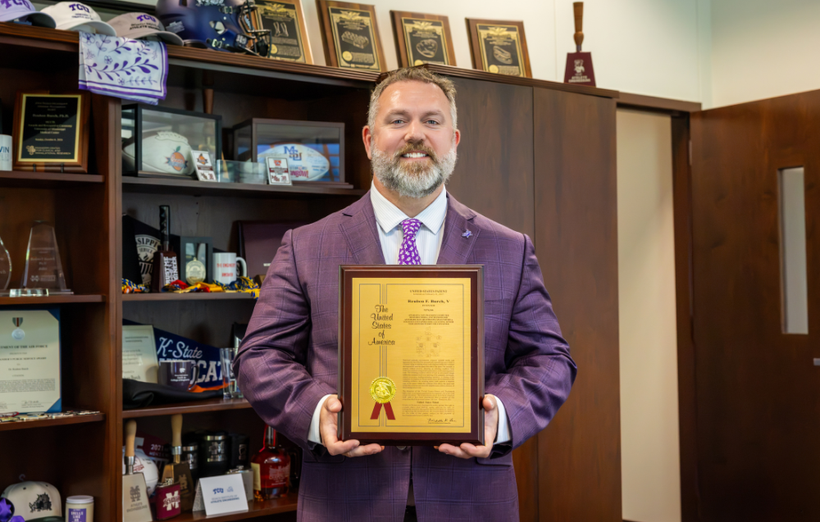
As TCU's vice provost for research, Reuben F. Burch V has spent his career turning research into real-world solutions. This summer, that track record reached a milestone: his 50th patent, earning him the designation "Prolific Inventor." Burch's inventing career began during his years at FedEx Express, where he helped develop the rugged handheld device now used by couriers around the world. His first patent wasn't the handheld device itself, it was the design of a wearable version that freed couriers' hands, making the job safer and more efficient. Patent No. 50 grew out of a different question: how do you study movement where it actually happens, on tracks, on football fields, on rugged terrain, rather than only in a lab? The resulting technology uses a swarm of drones to capture performance data in real-world environments, giving TCU researchers a new way to study athletes of all kinds in their own arenas. "Fifty means just as much to me as my first one did," Burch said, "and it means a lot more that I got it while I'm here at TCU." "Reuben has an extraordinary ability to see around corners," said Jim Weinstein, director of TCU's Roach Institute of Athlete Engineering. "He recognizes problems others haven't yet identified and then creates the technology needed to solve them. This patent isn't just another invention, it's a research capability that will change how we study movement and human performance." That same builder's mindset is now fueling TCU's LEAD ON: Values in Action strategic plan to grow the university's research enterprise. In Burch's first year at TCU, competitive external research awards increased by 79.7 percent, with new partnerships established with Advanced Functional Fabrics of America, Deakin University, and the Fort Worth Nature Center & Refuge, alongside the launch of the Roach Institute for Athlete Engineering. "The researchers were already here," Burch said. "The momentum came from helping unlock their potential." Burch is available to speak with media on athlete engineering, a discipline he founded, and how its principles apply across sports, industrial (repetitive motion tasks), tactical (military and first responder) and at-risk populations. He can also speak to AI, human factors and ergonomics, advanced manufacturing, workforce and economic development, and the changing landscape of research funding and enterprise building in higher education. Read the full TCU story, "Patent No. 50: Reuben Burch Brings Inventor's Approach to TCU Research," here. To arrange an interview or request a comment, click through to Reuben Burch's profile below.


MCG researchers awarded $275K grant to study HIV and retinopathy correlation
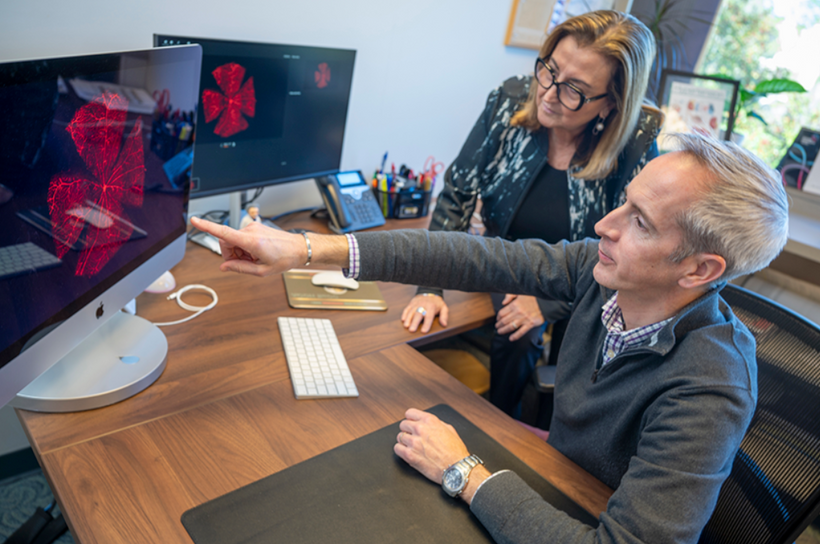
It’s often said that “teamwork makes the dream work,” and scientists from different disciplines at Augusta University are a perfect example of that. Manuela Bartoli, PhD, research director and professor of ophthalmology at AU’s Medical College of Georgia, has joined forces with Eric Belin de Chantemèle, PhD, a physiologist in MCG’s Vascular Biology Center, to explore the link between HIV and retinopathy. The pair was recently awarded a two-year $275,000 grant from the National Eye Institute that will allow them to test different variables on a transgenic mouse model and assess how they impact the development of retinopathy. The project began with Bartoli and Belin de Chantemèle examining transgenic mice that expressed viral proteins linked to HIV. They found that the blood vessels supplying oxygen and nutrients to the mice’s retinas were not functioning properly. “So, we developed the idea that people living with HIV may be more prone to or progress more rapidly when they get one of the ischemic retinopathies that are very common, particularly diabetic retinopathy and age-related macular degeneration,” Bartoli said. “I think this is important because we’ll basically define a chronic HIV infection as a risk factor for the development of the most severe ocular disease.” Bartoli’s work focuses on ischemic retinopathies, which are conditions that reduce blood flow, oxygen and nutrients to the retina – the part of the eye responsible for vision. These disorders are the leading cause of blindness around the world. Different types include retinopathy of prematurity, diabetic retinopathy and age-related macular degeneration. Several factors contribute to ischemic retinopathies, such as oxidative stress and inflammatory processes. Bartoli infers HIV might be another risk factor, but it’s tough to confirm as antiretroviral therapies make the virus nearly undetectable. “The number of people living with HIV is growing in terms of age, so most likely they will develop, at some point, a disease like age-related macular degeneration, which is really common in the elderly population,” Bartoli said. “We knew the individual has the acute infection, and because of the immunosuppression, they develop a number of infections that lead to retinal dysfunction. There was also reported what is called retinitis due to HIV. But with medication, these acute events disappear, and we don’t know, when you get older and develop one of these diseases, how is it going to progress?” While cART therapies can manage HIV, Bartoli noted they don’t fix the defective blood vessels in the retina. And it’s not just the retina. The big picture is that HIV alters blood vessels throughout the human body, therefore elevating blood pressure and causing cardiovascular disease. “We have blood vessels in every single organ, whether this is the heart, the lungs, the kidneys, the brain, the eyes, they are everywhere,” Belin de Chantemèle said. “As HIV is damaging the vessel, that would lead to dysfunctions in all those different organs.” “On top of that, people who have HIV usually have additional comorbidities. Very often people become obese, have diabetes,” he continued. The researchers plan to eventually move beyond mouse models and include human subjects in their study. “I’m already working with people around to try to get information,” Bartoli said. “For example, in the VA system.” The ultimate goal is to establish how HIV contributes to the progression of eye diseases, which will hopefully lead to a better understanding of why it happens and how to treat it. “If this individual who progresses more rapidly goes to the doctor when they are blind already or semi-blind, it’s too late for anything,” Bartoli said. “Blindness is the primary fear in people, so we’re going to combat the cause to prevent this side effect.” Discoveries at Augusta University are changing and improving the lives of people in Georgia and beyond. Your partnership and support are invaluable as we work to expand our impact. See more experts at Augusta University → Click here

King Tide Season Starts This Week. What They Reveal About Florida's Flooding Future
South Florida's king tide season begins this week, giving residents and communities a predictable chance to see how high tides interact with streets, stormwater systems and other infrastructure. King tides, also known as high-tide flooding, are amplified by sea levels rising globally combined with local conditions such as wind and changing coastlines. High-tide flooding already occurs multiple times a year in South Florida and is predicted to increase in frequency and severity as seas continue to rise. The South Florida Water Management District expects six periods of elevated tides in 2026: Aug. 11–14, Sept. 8–15, Sept. 24–Oct. 15, Oct. 22–Nov. 12, Nov. 22–29 and Dec. 22–27. The highest predicted flooding days of the year could occur near the Oct. 27 full moon, although the amount of flooding will depend on conditions at the time, including rainfall, wind and local drainage. “King tides are a predictable natural event, but they also provide a preview of the challenges Florida’s coastal communities may face during extreme weather events as seas continue to rise,” said Serena Hoermann, Ph.D., director of Florida Atlantic University’s Center for Urban and Environmental Solutions and assistant research professor in the School of Environmental, Coastal, and Ocean Sustainability. “They give communities an opportunity to plan for resilient infrastructure as these conditions become more frequent.” Hoermann said there are four things Floridians should be aware of during king tides: 1. Where water collects King tides can reveal flood vulnerabilities that may not be obvious under normal conditions. Residents can pay attention to where water collects along roads, near storm drains, in yards and in low-lying areas, as well as how long it remains, and how it affects everyday activities such as commuting, going to school and running errands. Because king tide flooding involves repetitive contact with saltwater, its corrosive effects can damage roads, vehicles, landscaping and other property and infrastructure. Those observations can help identify vulnerabilities and places where flooding could become more disruptive during heavier rainfall or tropical weather. 2. What happens when high tides meet heavy rain An elevated tide can become more consequential when it coincides with heavy rainfall — more than 3 inches in a day — which can occur during tropical storms, hurricanes or even strong daily showers typical during the summer months. When water levels are already high, stormwater systems may have more difficulty moving additional water away from streets and neighborhoods, potentially leaving flooded areas underwater longer. The same is true when winds push water toward the coast. Local wind conditions can make the difference between relatively minor water accumulation and more significant flooding. 3. How infrastructure responds King tides highlight the importance of decisions made long before flooding occurs. Hoermann said communities should account for future flood risk when deciding where to build housing and roads, how to design stormwater systems and how to protect wetlands and other natural buffers. Building codes can also help ensure new development is designed with future conditions in mind. That kind of long-term planning can be difficult to visualize, particularly when future conditions may look very different from what residents see today. 4. The cost of flooding A single flooding event may cost less than a typical insurance deductible, but repeated events add up. Hoermann said the cumulative costs can include lost business for shops, reduced mobility for seniors, delays for first responders and health risks from standing water. Planning for higher water now, she said, is generally less costly than retrofitting neighborhoods or addressing damage after chronic flooding sets in. In the meantime, Hoermann said residents can help by maintaining green space that gives water somewhere to drain, checking city and county websites for information on local flooding, and supporting development and building codes that account for future flood risk. Dr. Serena Hoermann and FAU's Center for Urban and Environmental Solutions are tracking how king tides signal Florida's flooding future, research that's shaping smarter, more resilient infrastructure planning. If you're a member of the media covering this story, connect with her by clicking her icon below.


Expert Opinion: DIY Peptide Injections Carry Risks Most People Never See Coming
Peptides are having a moment. People injecting them at home are chasing everything from weight loss and muscle recovery to sharper thinking and better sex drive. But according to UConn pharmacist and clinical pharmacologist C. Michael White, the bigger danger isn't just what's in the vial. It's what happens when untrained people try to draw up and inject these products themselves. White has been researching the gray markets for peptides, where companies sidestep FDA oversight by selling products labeled "for research purposes only." Because that labeling is a legal workaround, the companies can't legally tell buyers how to actually use what they're selling. "This means consumers must purchase any supplies they need and figure out the proper technique on their own," White writes. So he decided to test just how well people manage on their own. In a new study published in Public Health Reports, White and his colleagues recruited 20 people, 10 college students and 10 adults in their 60s, and asked each to reconstitute a semaglutide peptide product, draw it into a syringe, and inject a mannequin. They were allowed to research the process online or with AI beforehand. The results were rough. On average, both age groups got fewer than half the steps right. Some picked expired or cloudy dissolving liquid. Many miscalculated doses, couldn't clear air bubbles from the syringe, or injected into muscle instead of fat. Roughly half didn't know how to safely engage the needle's safety mechanism or dispose of it afterward. "These errors were serious and could increase the risk of infection, bleeding, over- or under-dosing, and needle sticks," White notes. What stood out most: Confidence didn't track with competence. After doing their homework, most participants in both groups felt "somewhat confident" they could do the injection correctly. Younger participants stayed confident even after fumbling through the process. Older adults, by contrast, adjusted their confidence downward once they saw how it actually went, which tracks with prior research showing older adults tend to be more accurate judges of their own ability on complex tasks. White's piece also digs into a potential fix on the table: In late July 2026, an FDA advisory panel recommended adding six widely used peptides, including BPC-157, TB-500, and Semax, to the list of substances compounding pharmacies can legally prepare. The panel's argument is that compounded versions would be safer than gray-market ones, since compounding pharmacies follow rules on sourcing and sterile production that the gray market doesn't. White isn't fully sold. Even if the FDA adopts the recommendation, he points out it would only apply to a handful of products, and it wouldn't change the fact that none of them have actually been tested for safety or effectiveness as finished drugs. The bulk of the gray-market risk stays exactly where it is. For more on the peptide boom and what the FDA is weighing, NBC News broke down the basics here: What are peptides and why is the FDA considering easing limits? Read the full article: Dr. White is Head and Distinguished Professor of the Department of Pharmacy Practice at the University of Connecticut, and co-director of the university's Health Outcomes, Policy, and Evidence Synthesis (HOPES) research group. His research focuses on drug, dietary supplement, and illicit drug safety, quality, and cost, with a specific throughline into adverse events tied to drugs, devices, herbal products, and substances of abuse. View complete profile He's a recurring voice on drug and supplement safety specifically, most recently quoted in Health magazine's "4 Major Risks of Unregulated Peptides" (Aug. 18, 2026) and on KCBS Los Angeles radio discussing GLP-1 drugs and youth mental health (Aug. 10, 2026). Dr. White is available for interviews on peptide safety, the gray-market supplement industry, GLP-1 and weight-loss drug trends, and drug/dietary supplement safety more broadly. Media can reach out by clicking this profile icon below.


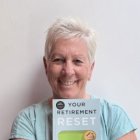
Every football game has a moment when the players jog off, the field goes dark, and everyone wants to see what the halftime show will bring. My version came without a marching band or a surprise appearance by Beyoncé. Apparently, at seventy years old and doing my MBA (Yes, this is part IV of a series, links to Part I, II and III), halftime entertainment means staring at your grades, reviewing the game film, and asking yourself one honest question: what have you actually learned? Twelve courses down. Twelve to go. I am at that exact point, catching my breath, and somewhere in the distance I can hear the crowd murmuring, "Is she going to slow down now?" Spoiler alert: no. But let me show you the film first. The first half taught me a few things I did not expect. Technology and I reached an uneasy truce. Brightspace, Carleton University’s online Learning Management system, no longer feels like a hostage negotiation. I can upload a file, format a citation, and navigate a discussion board without a quick prayer beforehand. I would not call us friends, but we can now be left alone in the same room. Group work stopped being terrifying, too, once I understood something I probably should have known after decades in business: most people, students very much included, want to do their best work with the least effort required to get there. It used to sound like an insult. Now it strikes me as the most honest description of how most of us move through life, and in a program with this much content to cover, it is less a character flaw and more a survival strategy everyone quietly agrees to. If I had to pick one night that captures the whole term, it would be the one at ten o'clock, alone in my office, wrestling with an IEEE-formatted statistics report. The references would not cooperate. The formatting seemed to have developed free will, moving when I did not ask it to and refusing to move when I did. My dog Dottie had already gone to bed, which, from her, is roughly the equivalent of a slammed door. What made that night worse was that I was still stinging from a C+ in Financial Accounting. I wish I could tell you I shrugged it off with the wisdom of a mature student. I did not. When the grade first posted, I sat with the portal open for a good ten minutes, refreshing it as though the university might suddenly announce, "Our mistake, Sue. Clearly an A." No such luck. The grade stung more than I expected, and I carried some of that venom into the next course. Somewhere between the misbehaving references and the formatting that refused to cooperate, I realized I was not actually angry at the report. I was doubting myself. That C+ had cracked open a little door I suspect we all carry somewhere inside us, the one self-doubt likes to slip through when nobody is watching. Funny how quickly one lousy grade and a badly behaved reference list can turn into a full existential crisis at 10pm on a Tuesday. Even C's get degrees I kept going anyway and eventually fixed the report. Not gracefully. Not quickly. But I fixed it, closed the laptop, and sat in the dark for a minute, oddly proud of myself over a reference list. That was when the mantra found me again. Even C's get degrees. A friend handed me that one over a year ago, and it has never let me down, mostly because it keeps reminding me that the goal was never a perfect transcript. The goal was to stay in the game. Here is the adjustment I did not see coming. Business school quietly rewired how I make decisions. Full stop. Every decision, including coursework. The MBA program has an annoying habit of asking for evidence. Apparently, "it felt like a good idea at the time" is not an accepted decision-making framework. Who knew? Decades in sales and business taught me to read people, situations, and opportunities quickly, and I still trust that instinct. I just make it work harder now. I review the evidence, clarify what I am trying to accomplish, and ask whether the decision moves me closer to it. I used to pick a vacation package the way most people do. I looked at the brochure, felt something, booked it, and occasionally arrived to discover the "ocean view" required a telescope and a great deal of optimism. I still let myself feel the brochure, but now I also run the numbers, location, reviews, and value relative to cost. Whether it fits what I am trying to accomplish on this trip, rather than the fantasy I had while sitting on my couch. It has also taught me the difference between fear and desire, which sounds very self-helpy for a business degree. Stay with me. Demons run faster than dreams. Fear is fast. Give it half a chance, and it will make the decision before desire has even found its shoes. It tells you not to take the course, introduce your self to a stranger, or book the trip. Not to have the hard conversation. Not to risk looking foolish. As we get older, fear gets clever. It learns to dress itself up as common sense: be careful, be realistic, maybe it's time to slow down, don’t risk. I am learning to ask which one is driving before I commit to anything. A trip. A course load. A conversation I have been avoiding. Somewhere in all of this, I picked up a rule I am borrowing for the rest of my life: know when to stub your toe and when to put on safety boots. Some decisions can survive a little recklessness, the kind where you bump into the coffee table, yelp, and carry on with your evening. Others need the boots laced up before you take a single step. I am also in no hurry to rush toward a tub that enters from the side, thank you very much. That purchase can wait a decade or two. Caution has its place; it just does not get to run my whole calendar yet. The competition for my attention did not step aside just because I enrolled in school. Family wants time. Travel wants planning. Fitness classes want me to learn near choreography. My retirement advocacy wants everything I have left after that, plus a little more it did not ask permission for. Juggling it all has required negotiation skills I learned from a ten-pound dog. Dottie never begs or nags. She picks the one thing she wants, plants herself by the door, and waits, calm and immovable, until it happens. Everything else in the house can carry on without her weighing in. I am trying to negotiate my own priorities the same way. Decide what matters this week. Plant myself there. Let the rest of the noise wait its turn at the door. There is a voice in me that insists I should be doing it all, all the time, at full volume. This new way of deciding has meant learning the difference between what I want and what simply keeps me busy and conveniently away from the things that matter more. If I am being truthful, some of that motion is me pushing back against getting older, trying to prove something, mostly to myself. I have not figured out the balance yet, but at least I am aware enough to keep asking the question. Retirement, as a word, comes loaded with baggage. For most people, retirement still means earned rest, a slower pace, the right to finally exhale. For me, it has meant speeding up. Saying yes to things I never had time for. Treating this next chapter like an accelerator somebody left floored. People ask me, gently and sometimes not so gently, whether I am planning to slow down. I think some of them are really asking whether it is acceptable for them to slow down, and they are hoping I will give them permission. Of course you can. But I suspect others are quietly wondering the opposite, whether they are still allowed to speed up. Again, absolutely. So here it is, freely given, however you need it. Slow down. Speed up. Do some of both and change your mind next Tuesday. Take up Pickleball, or refuse to pick up a paddle just because apparently everyone over sixty has been issued one. Retire your way, not the way the world has always been sold to you. The only permission that truly matters is the one you give yourself. I have more years behind me than ahead of me now, which strikes me as a particularly good reason not to let fear decide what I do with the ones I have left. Most of us compare ourselves to people in similar circumstances. It is useful until it convinces you there is only one correct way to do this. I have never been particularly good at conforming, and it has always clashed with most of my outfits. There is an elective I keep hoping to find in this MBA, the one that teaches that ambition and quiet contentment can share a syllabus. Have not found it yet. Would sign up in a heartbeat. So here is where I stand at the halfway mark. My average has settled at an A- (that’s a minus, not an em dash. Take that Pangram!) This grade still surprises me every time I refresh the grade portal, the same one that put me through those ten rough minutes in Financial Accounting. But the transcript is not really the story. I am not just learning finance, statistics, and marketing. I am getting better at deciding what truly deserves my time, my energy, and, increasingly, the years still ahead of me. Already using the playbook for vacations, for priorities, and for what earns a spot on my calendar and what gets quietly cut. If you are somewhere in your own halftime, take the ten minutes the C+ asked of me. Let the sting have its moment. Mine reminded me that self-doubt can show up at any age. Fortunately, so can the determination to tell it to get lost. Then get back to writing your second half. The halftime show is supposed to be the big spectacle everyone remembers, with fireworks, a surprise guest, the works. I used to think I was waiting for my own JLo and Shakira moment, a grand, glittering proof that all this effort adds up to something spectacular. I do not think that is coming, and I have made my peace with it. That spectacle belongs to somebody else's show. Mine is different. In the second half, I am just calling my own plays, one deliberate decision at a time, with a ten-pound dog refereeing from the sidelines and no patience for a false start. Not to be outdone by JLo, my MBA halftime show featured its own wardrobe malfunction. My costume never slipped on live television. Instead, I changed out of a sixty-nine-year-old outfit called Perfection and into something that fits: my own judgment, a mantra with some mileage on it, and whatever grade shows up next. All out in the open for anyone to see. Cameras can roll. So, second half. Still curious. Occasionally humbled. Considerably less afraid of a C+ than I was a few weeks ago. There is still time on the clock, and I intend to use every last minute. Don't Retire… ReWire! Sue My Book is Available for Pre-Order I hope you will consider pre-ordering a copy of Your Retirement Reset for you, a friend or loved one. It's available September 29, 2026 published by ECW Press - You can now order at Indigo or Amazon. And if you love supporting Canadian booksellers, please also check with your local independent bookstore. Most can easily order it for you.

The Real Risk of AI in the Classroom Isn't the Tool, It's the Shortcut
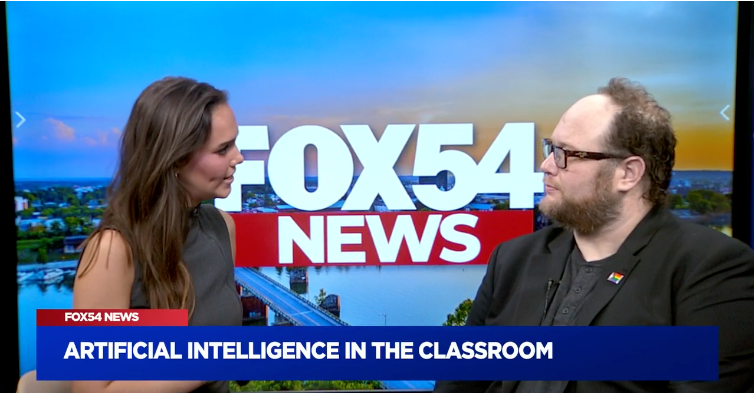
Artificial intelligence has moved from novelty to daily habit in classrooms across the country, and the debate over what that means for learning shows no sign of slowing down. Some schools have built AI into their curriculum. Others have banned it outright. Caught in the middle are students trying to figure out where the technology actually helps and where it quietly gets in the way. Trent Kays, PhD, an assistant professor and Director of Professional Writing and Rhetoric at Augusta University, has spent time researching exactly that question, and he recently sat down with FOX54 News to talk through what he's seeing firsthand. Kays, who also serves as a faculty affiliate in Women's and Gender Studies and specializes in digital rhetoric and machine writing, says students are already using AI for far more than quick homework help, from brainstorming and studying to building out entire lesson plans on their own. The bigger concern, according to Kays, isn't misuse in the obvious sense. It's what he calls cognitive offloading, students handing the thinking itself over to the machine. "Students are essentially using AI to do their thinking for them, which is not something that they should do," he said. It's part of why he keeps AI out of his first- and second-year courses entirely: those early classes are where students build the critical thinking skills they'll need before a tool can actually help. "They have to be able to think critically first before they can ask a tool to help them." Accuracy is its own problem. AI tools have gotten sharper, but Kays points out they still fabricate information regularly, including sources that were never real to begin with, something students are far less likely to catch than an instructor who actually reads the citations. None of this means Kays thinks AI belongs outside the classroom. He describes it as a potential process partner, something that can push a student's thinking further rather than replace it, as long as the structure around it is clear. As he put it, what schools need now is to "craft clear guidelines and structures for students to follow so that they know how to use it and how to use it well." Read the full interview and FOX54's coverage here: AI in the Classroom: Augusta University Professor Explains the Benefits and Risks Dr. Trent Kays is available for interviews on AI in education, digital rhetoric, and responsible AI use in academic settings. If you're covering similar stories, click on this icon to schedule time with him.