
money Experts
Connect for media, speaking, professional opportunities & more.

In my last article, I wrote about couples retiring together. The dishwasher. The thermostat. The 1,500 Tuesdays. If you are retiring solo, you may have read it with a certain amount of satisfaction, thinking, Thank God I don't have to deal with that. Sorry. This week is about you. There are, admittedly, some advantages to retiring solo. Nobody questions why you bought another pair of golf shoes. The thermostat stays exactly where you left it. If the dishwasher is loaded incorrectly, the list of suspects is short. You can eat dinner at 4:30 or 9:00, watch whatever you want on television, and go to bed with a book without anyone asking when you are going to turn out the light. But retiring solo has its own complications. While you may be living without a partner, you aren't retiring without relationships. In fact, those relationships may matter more than ever. Adult children, siblings, friends and neighbours begin to take on different roles in our lives. Work friendships fade. Social circles shift. Things we once did as two may now have to be done as one. Underneath all of that is a question we don't spend nearly enough time thinking about when we plan for retirement: Who are your people? When Solo Wasn't the Plan There are people who retire solo by choice, people who arrive there after a divorce, and people who would give almost anything not to be there at all. Statistics Canada reported that 4.4 million Canadians lived alone in 2021, representing 15 per cent of adults. Living alone becomes increasingly common as we age (Statistics Canada, 2022). But numbers can only tell us how many people live alone. They can't tell us how they got there, and that matters. For someone who has lost a spouse after decades together, solo life isn't necessarily an exciting new chapter of independence. There is an empty chair at dinner and a quietness in the house that wasn't there before. But I suspect some of the hardest losses are much smaller. There is nobody to ask whether you fed the dog, what time you want to leave, whether you need anything from the grocery store, or what you feel like having for dinner. Nothing profound, just thousands of tiny conversations that made up a life. The older I get, the more I realize how much of life unfolds in those unremarkable moments. We photograph birthdays, weddings, anniversaries and vacations, but sometimes the person drinking coffee across from you on an ordinary Tuesday morning turns out to be the event. For anyone who finds themselves alone because somebody died, I think we need to be careful with our cheerful retirement advice. There is no timetable for rebuilding a life, and grief doesn't respond well to project plans, motivational sayings or well-meaning people telling you it's time to "get out there." Eventually, though, perhaps the question begins to change. "How do I live without this person?" can slowly become "What might my life become now?". That isn't replacing anyone. It's continuing, carrying them with you. Living Alone and Being Lonely Are Not the Same Thing You can live alone and have a wonderfully full life. You can also be married and profoundly lonely. A second toothbrush has never been a reliable measure of human connection. Still, retirement removes something many of us didn't realize work was providing: a surprising number of people. Think about an ordinary working day. Someone says good morning. Someone asks about your weekend. There is coffee, hallway chatter, gossip, meetings, lunch, and the person who drops by your office to tell you something that absolutely could have been an email. None of those interactions seemed particularly important at the time, but together they created the social fabric of the day. Then one Friday you retire, and come Monday morning, most of it is gone. Research supports what many retirees discover instinctively. Social isolation and loneliness are related but not the same. Low social participation among older Canadians has been linked to poorer health and a higher risk of mortality. In other words, those seemingly insignificant interactions may not be so insignificant after all (Gilmour & Ramage-Morin, 2020). I see a version of this in the fitness classes I teach. People don't just arrive, exercise and leave. They come early. They talk. They know who has a bad knee, who just got back from Florida, who has a grandchild who got into university, and who hasn't shown up for a couple of classes. Sometimes I think the ten minutes before class are every bit as important as the class itself. Someone is expecting you, and there is something wonderfully ordinary and incredibly important about that. Who Are Your People? Couples tend to have a built-in default. Something happens, and you tell your spouse. You need a ride home after a medical procedure, and there is an obvious candidate. You have a terrible day, hear a ridiculous story, or get wonderful news, and you know who you're going to call first. When you're solo, that role can gradually shift to a best friend, sibling, neighbour or adult child. Before long, one person has become the emergency contact, travel companion, dinner date, sounding board, tech support and the person expected to answer the phone when something goes bump in the night. That's a fairly demanding job description. Your daughter may adore you, yet not want to be your entire social life. Your best friend may love travelling with you, but occasionally want to travel with someone else. Your sister may happily drive you home from a colonoscopy. Friendship has limits, but apparently that isn't one of them. Maybe the answer isn't to find your person at all. Maybe it's to find your people. Who could you call at 2 a.m.? Who makes you laugh? Who would notice if you hadn't heard from them for a few days? Who knows when you need company and when you need to be left alone? Who can tell you you're being ridiculous and still survive the experience? We have spent decades being told to diversify our investment portfolios. I think our relationship portfolios deserve the same consideration. And there is another side of independence that we don't talk about enough. Independence is wonderful, right up until the day you get tired of it. There is a difference between being perfectly capable of handling something yourself and occasionally wishing you didn't have to. The furnace breaks, the car won't start, or you have an important medical appointment, and, of course, you can deal with it. Sometimes what you miss isn't help. It's backup. Someone who simply says, "I'll come with you," even though you both know you could go alone. Your Children Love You. They Also Have Lives. Retirement can rewrite the relationship with adult children, too. You retire, and they hear: Mom has time. Suddenly there are grandchildren to pick up, dogs to sit, deliveries to receive, and errands that somehow land on the desk of the person who no longer has one. Much of this can be wonderful. Having more time for family is one of retirement's great gifts, and being involved with grandchildren can bring enormous joy and purpose. But helping can quietly become being on call, just as needing companionship can quietly become expecting your children to provide it. Nobody has necessarily done anything wrong. The relationship changed, and nobody held a meeting. So maybe hold one. Your children can be an important part of your retirement without being responsible for creating it, and you can be important in their lives without automatically becoming the unpaid Uber driver, dog walker, daycare provider, or the person who waits between noon and 5:00 for the new dishwasher to arrive. Love each other. Help each other. Just don't confuse retirement with unlimited availability. Learning to Occupy the World as One Then there are all the little firsts. The first restaurant. The first trip. Maybe, eventually, the first date. You walk into a restaurant and say, "Table for one." The host smiles brightly. "Right this way," and off you go, past the tables by the window, past the cozy booth, and around the corner to a tiny table directly outside the noisy kitchen door. Apparently, this is where they keep the single people. "Table for one" can be funny until you remember that, for some people, it used to be a table for two. But I wouldn't give up restaurants because of it. Sit at the bar. Bring a book. Become a regular somewhere. Ask another solo friend to join you sometimes, and other times don't. Take yourself somewhere nice because good food and a decent table aren't benefits reserved for couples. I especially wouldn't overlook the neighbourhood diner or watering hole. These places often become little communities. One of the women in my spinning class is in her 80s and started a euchre club that became so popular that she now has a waiting list. I love that story because she didn't wait for someone to invite her into a social life. She created one and then invited everybody else. Sometimes community isn't something you find. It's something you build. Travel requires a little nerve, too. There is something liberating about choosing where you go, when you get up, and whether visiting six museums in one afternoon sounds fascinating or like a human-rights violation. Then you discover the single supplement, the travel industry's charming way of saying, "Congratulations on your independence." That will be another $1,800. There may also be a moment when you see something beautiful and instinctively turn to share it with someone who isn't there. That's the part the travel brochures don't mention. But there may also come a morning when you realize you've travelled to somewhere you wanted to go, figured it out, and had a wonderful time. Both feelings can be true. And then, perhaps, there is dating. If you're my vintage, you may remember the old Canadian Togethers dating-service commercial: "Adult, alone, unattached? Tired of the bar scene?" I can practically hear it. Back then, joining a dating service seemed positively daring. Today, strangers can reject one another from the comfort of their sofas with a single swipe. Apparently, this is progress. Some people would rather have another colonoscopy. Others discover, happily, that companionship, romance and sex did not get the memo about retiring at 65. Enjoy it. Take your time. Keep your head along with your heart. Being 70 does not make everyone trustworthy. Age brings wisdom, just not universally. Make Yourself Expected Somewhere The more I think about solo retirement, the less I believe the goal is to ensure you're never alone. Solitude can be wonderful. There is pleasure in having your own space, your own routines, and no one asking why you're eating cereal for dinner. What matters is having somewhere you belong. Become a regular at the coffee shop where they know your order. Join the fitness class where someone notices when your bike is empty. Volunteer somewhere that counts on you. Make the lunch date. Know your neighbours. Join the euchre game, or, like my spinning participant, start one. Put things on the calendar, because Tuesday can quickly become Friday when nobody expects you anywhere. And don't just build a life full of people you can call when you need something. Build one where people call you. Be the person who remembers a birthday, walks someone's dog when they're sick, makes the lasagna, gives a ride, listens to the story, or notices when someone else hasn't shown up. There is enormous purpose in being needed. Connection isn't simply having a support system. It's participating in other people's lives and allowing them to participate in yours. The Public Health Agency of Canada identifies retirement, illness and the loss of a spouse as later-life transitions that can strain our sense of independence and connection, and encourages older adults to stay connected with family, friends, health professionals and community organizations (Public Health Agency of Canada, n.d.). That sounds very official. I would translate it more simply: keep showing up. And if your world starts to feel smaller, pay attention. If loneliness becomes persistent, tell someone. Call a friend. Talk to your doctor. Look for a community group. In Canada, 211 is a free and confidential service that connects people with government and community-based, non-clinical health and social services. In most of Canada, you can simply dial 2-1-1 (211 Canada, n.d.). Asking for company isn't imposing. You may find the other person was hoping someone would call, too. We spend a lot of retirement planning asking whether we have enough money. If you're retiring solo, perhaps there are two other questions worth asking just as seriously: Who are my people? And whose person am I? Maybe that's the real difference between retiring solo and retiring alone. One describes who lives in your house. The other describes how you live in the world. So build your community before you desperately need one. Be brave enough to walk into the restaurant, book the trip, take the class, call the friend, and occasionally admit you'd like some company. Create reasons to get dressed in the morning and places where someone notices your arrival. More importantly, create a life in which your absence would leave a small hole in someone else's day. And if the restaurant tries to seat you beside the kitchen, smile and ask for the table by the window. The couples get the dishwasher. Surely we can give the solos the good table. Don’t retire... ReWire! Sue My Book is Available for Order: I hope you will consider ordering a copy of Your Retirement Reset for yourself, a friend, or someone you love. Published by ECW Press and is available through Indigo or Amazon and McNally Robinson. If you like supporting Canadian booksellers, check with your local independent bookstore too. Most can order it.

When Hackers Attack the Supply Chain, the Consequences Go Far Beyond Stolen Data
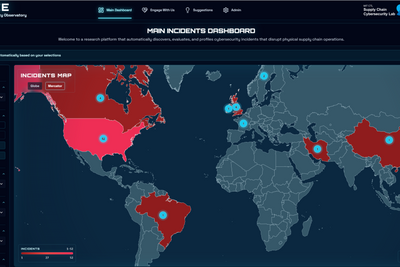
When cybercriminals target a business, the consequences can extend far beyond stolen data and compromised computer systems. Factories can shut down, shipments can be delayed, and disruptions can spread across entire supply networks, affecting businesses and consumers around the world. Recognizing these growing threats, the MIT Center for Transportation & Logistics has launched a new Supply Chain Cybersecurity Lab dedicated to helping organizations prevent, manage and recover from cyberattacks that threaten global operations. The initiative is co-founded by MIT researchers Dr. Miguel Rodríguez García and Dr. Camilo Mora, who are combining expertise in cybersecurity and supply chain management to address vulnerabilities that traditional IT security approaches may overlook. When a Cyberattack Becomes a Supply Chain Crisis The stakes are significant. A 2025 cyberattack against Jaguar Land Rover forced the manufacturer to suspend production at its UK facilities for five to six weeks, with an estimated economic impact exceeding $2 billion. Dr. Camilo Mora is a researcher at the MIT Center for Transportation & Logistics and Co-founder of the MIT Supply Chain Cybersecurity Lab. His research explores how ransomware, cyberattacks and digital vulnerabilities affect supply chain operations and resilience. View his profile And the risks are growing as manufacturers, warehouses and transportation networks become increasingly dependent on interconnected technologies, artificial intelligence, robotics and third-party software providers. For Dr. Camilo Mora, the importance of this research became clear after learning about a ransomware attack that disrupted a company's operations nationwide and required approximately three months to restore its systems. "That moment made me realize the enormous impact that a cyber-attack can have beyond the classic IT department, affecting the flow of goods, information, and money all at once, plus reputational damage across the entire network." The researchers are particularly concerned about smaller suppliers that lack the resources to defend themselves against sophisticated attacks, yet play critical roles in global supply networks. New Research to Identify and Prevent Disruptions The MIT lab is developing three research tools to help organizations understand and address these threats: TRACE: Tracks cyber incidents and their real-world consequences, including operational shutdowns, financial losses and disruptions to supply networks. RADAR: Identifies emerging cybersecurity risks associated with technologies such as autonomous systems, quantum computing and robotics. SCOUT: Helps smaller suppliers identify vulnerabilities and develop practical cybersecurity improvement strategies. The research also emphasizes that technology alone cannot protect supply chains. Employee awareness, leadership preparedness and coordination between IT and operational teams are essential to preventing disruptions and recovering when attacks occur. Protecting Global Supply Chains Before the Next Attack As global supply chains become increasingly interconnected, the work raises urgent questions for business leaders. How vulnerable are their suppliers? Could a cyberattack shut down their operations? And are organizations prepared to keep goods moving when critical technology fails? Dr. Miguel Rodríguez García is a Research Scientist at the MIT Center for Transportation & Logistics and Co-founder and Director of the Supply Chain Cybersecurity Lab. His research examines the cybersecurity risks associated with emerging technologies, automation, robotics and interconnected global supply chains. View his profile For Dr. Miguel Rodríguez García, addressing these challenges requires bringing together two disciplines that have traditionally operated independently. "We created this lab because supply chain and cybersecurity professionals have not been talking to each other. We're here to help companies continue operating even when technology fails, and we want to learn from companies that have suffered these attacks so we can bring those lessons back to the industry and make cybersecurity better for everybody." The lab's mission is straightforward: keeping supply chains moving even when technology fails. By combining research, industry collaboration and practical cybersecurity tools, MIT researchers hope to help organizations anticipate threats, strengthen resilience and recover more quickly when attacks occur. If you're interested in speaking with these MIT researchers about supply chain cybersecurity, ransomware, emerging technology risks, operational disruptions and protecting global commerce, simply click on the profiles of Dr. Miguel Rodríguez García or Dr. Camilo Mora to arrange an interview today.



Why the retirement plan that worked for your parents is failing millions of Canadians
Last month, I found a jar of mustard at the back of my fridge with a best-before date of 2019. It looked and smelled fine. My wife watched me unscrew the lid like I was about to eat gas-station sushi, and I threw the mustard away. I wish Canadians gave their retirement plans the same hard look, because most of the advice we hand people over 55 carries a best-before date of 1990, the year my parents' retirement began. They met at the grocery chain where they both worked, and each left with a defined-benefit pension: a monthly cheque that arrived for the rest of their lives, regardless of what the stock market did. Their employer bore the investment risk. Their job was to show up at the retirement party and eat the cake. That plan stood on three legs: a workplace pension, CPP and Old Age Security, and a paid-off house you would eventually sell to trade down. In 1991, a 65-year-old Canadian man could expect to live about 16 more years and a woman about 20. A plan built for that stretch did its job. Look at those legs today. Only 37.7 per cent of paid workers in Canada belonged to a workplace pension plan of any kind in 2023, according to Statistics Canada, and coverage has been declining for two decades. For most people, the cheque that used to arrive like the newspaper has been replaced by a statement that reads like a horoscope. CPP and OAS were never meant to carry anyone alone. That leaves the house. A 2023 CPP Investments survey found that only 45 per cent of Canadians have a financial plan for retirement, yet about three in four Canadians aged 55 to 74 own their homes. For millions of families, the house was the plan: buy it, pay it off, and burn the mortgage papers in a roasting pan. The old playbook still has one instruction for that asset, unchanged since 1990: sell, move, and hope the condo is cheaper. Most like to stay in their neighbourhood. In Toronto, they usually can't afford to. The calendar changed, too. My parents' plan was built for that 15-to-20-year stretch. Today, Canadian financial planning standards give a 65-year-old couple an even chance of one living to 94, a retirement closer to 30 years. That is about 10 extra years of groceries, property tax and dental work, and nobody gave the plan a raise to cover them. Larry Fink, who runs BlackRock, put his finger on it in his 2024 letter to investors: we have worked hard to help people live longer and much less hard to help them afford those extra years. Those years arrived just as the guaranteed pension cheque was disappearing, a change Fink called "a shift from financial certainty to financial uncertainty." When the man in charge of the world's largest pile of other people's money says so, I'd put down the mustard. Our system does a fine job of helping people pile up money, then goes quiet the moment they need that pile to become a paycheque. We hand people a savings target, a risk questionnaire and an RRSP deadline. On their last day of work, we hand them a bouquet. How much do you withdraw? Which account first? What happens to your OAS when your RRIF minimum pushes you past the clawback threshold? Where does the house fit? The old plan shrugs. The strain shows. Statistics Canada reports that among Canadians aged 65 to 74 who worked in 2022, almost half did so out of necessity. After a late-life divorce, my mother returned to part-time work at a grocery store. She had done everything the old plan asked of her. The usual reply is that people just need to save more. Telling a 72-year-old to save more is like telling a marathoner at kilometre 40 to train harder. An up-to-date plan opens with the question that matters at 65: how will this money cover the bills for 30 years? Home equity goes on the balance sheet at the first meeting, pulled from the drawer marked "emergencies and inheritance." Ninety-one per cent of Canadians say they want to live independently in their own homes for as long as possible, so a good plan offers ways to do that beyond a For Sale sign. And the industry that spent 40 years teaching people to save owes them the same energy in how to spend it. I have a modest proposal for the banks. Every February, you run RRSP season, complete with sailboat commercials. Give us an RRIF season to match, with the same budget, and put a drawdown plan in front of every client who turns 65. And while you are at it, switch the word "savings" to "spending" or "paycheque" on our bank account. Take your retirement plan out of the back of the fridge and check the date on the lid. If it says 1990, you know where it goes. My wife will be happy to show you the garbage. This Opinion Article was published in the Business Section of the Saturday Star and online Toronto Star on October 17, 2026,

Are Small-Dollar Political Donations Making American Politics More Divisive?
Small-dollar political donations have long been celebrated as a way to reduce the influence of wealthy contributors and give ordinary Americans a greater voice in elections. But new research suggests that the growing influence of these donors may also be contributing to political polarization and rewarding candidates who generate attention rather than build consensus. In an article published in The Atlantic, titled Small-Dollar Campaign Donors Are Hurting the Political System, journalist Idrees Kahloon examines how the explosion of grassroots political fundraising has changed American campaigns, drawing attention to research challenging the assumption that small donations necessarily produce healthier democratic outcomes. Among the researchers examining this trend is Ray La Raja, professor of political science and co-director of the UMass Amherst Poll at the University of Massachusetts Amherst. View his profile La Raja is co-author, with Zachary Albert of Brandeis University, of the 2026 book Small Donors in US Politics: Myth and Reality, which examines who contributes to political campaigns, what motivates their donations and how their growing influence affects elections and political representation. Their research finds that small-dollar donors are often more politically engaged, more partisan and more ideologically committed than the average voter. While these contributions can broaden participation in campaign financing, they can also encourage candidates to pursue national attention and emotionally charged fundraising appeals rather than focus on local concerns or legislative compromise. The findings raise important questions about whether the growing influence of small donors is strengthening political representation or creating new incentives for polarization. The issue is particularly relevant ahead of the 2026 midterm elections, as candidates and political parties compete for campaign contributions in an increasingly nationalized fundraising environment. La Raja's work also examines the role of political parties in campaign finance and whether reforms designed to reduce the influence of large donors have produced unintended consequences. With campaign fundraising, political polarization and democratic accountability increasingly connected, La Raja offers journalists a research-based perspective on one of the less understood forces shaping American elections. If you're interested in speaking with Ray La Raja about campaign finance, small-dollar political donations, political polarization, election reform and the influence of money on American democracy, simply click on his profile to arrange an interview today.



All this talk lately about Trump and Carney squaring off has made me reflect on matters closer to home. My living room has never quite reached the level of a televised leaders’ debate, but retirement has a way of turning minor domestic disagreements into full parliamentary sessions. And unlike politicians, you can’t call a recess and fly to Florida. For years, we’ve been sold a lovely picture of retirement. The alarm clock disappears. The kids have finally stopped treating your house like a storage locker. There are leisurely breakfasts, travel, golf, grandchildren, and coffee on the patio on a Tuesday morning simply because you can. And there is your spouse. Every. Single. Day. For many couples, this is wonderful. Even in the happiest relationships, though, somewhere around the third consecutive Tuesday morning together, a thought may quietly surface: Have you always chewed like that? We spend years trying to figure out whether we have enough money to retire. We calculate pensions, RRSPs, CPP, home equity, and how long our savings might last. We consult financial planners and make budgets. Some of us even build colour-coded spreadsheets, which I think is taking things a little far (just saying). Far fewer couples spend time figuring out how they will retire together, and that’s a different calculation altogether. Two Retirement Plans before One During our working years, most couples have something that retirement quietly removes: separation. You go to work. I go to work. You have your colleagues, routines, frustrations, and responsibilities, and I have mine. We leave each other in the morning, collect a day’s worth of stories, and come home with something to talk about. Retirement can fold two fairly independent lives into the same house and the same calendar, usually by the first Monday. Research backs this up. A German study of 2,117 couples, drawing on more than 30 years of national survey data, found that on average both partners grew more satisfied with life around retirement. The changes were also highly correlated within couples, so when one partner’s satisfaction slipped, the other’s tended to slip right along with it (Weber et al., 2021). Your retirement becomes my retirement, whether I applied for the position or not. Then come the expectations. One person has been dreaming of travelling for 20 years. The other would happily never set foot in an airport again. One wants to move, and one wants to stay. One wants to golf four days a week. The other thought retirement meant finally doing things together. One wants to help the kids financially. The other believes the kids are 43 and it may be time they gave adulthood a whirl. Even the timing can cause friction. One of you retires in June, the other has three years left before the pension kicks in, and suddenly someone is home all day reorganizing the spice drawer. Research on how couples make retirement decisions suggests that the way the call gets made, and whether both people feel they had a say, shapes how satisfied they are with retirement afterward (Szinovacz & Davey, 2005). The relationship you bring into retirement also comes along for the ride. Old patterns of closeness and conflict travel with you like carry-on luggage, and retirement simply changes the scenery around them (Davey & Szinovacz, 2004). That makes me wonder whether every couple needs two retirement plans before they have one. What does your retirement look like? What does mine look like? Where do they overlap? Those questions may matter more than whether we can afford the Viking cruise. And Then There’s Money Of course there is. Money has always had an extraordinary ability to walk into a perfectly pleasant conversation and leave with a baseball bat. In retirement it gets even more emotionally charged, because our financial psychology shifts. During our working years, another paycheque is always coming. In retirement, many of us start drawing down assets we spent decades building, which can feel completely sensible to one spouse and mildly terrifying to the other. This is where FORO, Fear of Running Out, can pull up a chair at breakfast. One partner sees $800,000 as security. The other sees the same $800,000 as a number that can only get smaller. Suddenly a $12,000 trip to Italy is carrying a lot of luggage: safety, control, mortality, and whether 93-year-old you might someday need that money. Then health can change the equation again. A spouse gets sick. Mobility changes. One person becomes a caregiver, and independence starts to slip away. Retirement plans that once looked beautifully aligned suddenly don’t, and that is a lot of change for any relationship to absorb. Apparently, Fighting Isn’t Necessarily Bad Three very different thinkers have helped me rethink the whole subject: an ancient Chinese general, a modern conflict facilitator, and a psychologist with a lab full of arguing couples. Sun Tzu’s The Art of War is about military strategy, yet one of its most enduring ideas travels surprisingly well into marriage: understand the situation, understand the other person, and don’t waste resources on battles that don’t need to be fought. Priya Parker comes at conflict from almost the opposite direction in her new book, The Art of Fighting (2026). Her work explores how conflict can strengthen relationships when people engage with it well. She calls this idea “healthy heat.” Some difficult conversations need enough heat to burn through to what actually matters. Then there is psychologist John Gottman, who studied couples over time and found something I love: happy couples don’t all fight the same way (Gottman, 1993). His research identified three stable types. Validators calmly talk their disagreements through. Avoiders would much prefer to change the subject. Volatile couples argue loudly and passionately and keep their marriages intact anyway. The couples headed for trouble were the hostile ones, along with the ones who had quietly checked out. So you and I don’t have to argue like the nice couple down the street. They look exhausted and bored, to be frank. What seems to matter is whether we can disagree and still hold on to respect, affection, and the sense that we are on the same side. That calls for something to sit beside the retirement financial plan. The Retirement Rules of Engagement 1. Figure out what you’re really fighting about. Before digging in your heels, ask why this matters so much to each of you. The argument about selling the house may really be about losing independence. A fight over spending can be tangled up with FORO. Too much golf might be about purpose for one person and loneliness for the other. And the argument about money may have very little to do with the actual numbers. Once the real issue is on the table, at least you’re having the right argument. 2. Choose your battles. Sun Tzu would make an excellent retirement consultant. Some things matter enormously, and others really don’t. If your spouse has loaded the dishwasher incorrectly for 37 years and everyone is still alive, victory may no longer be strategically important. 3. Keep the heat healthy. Disagreement has a place in a strong relationship. Parker’s idea of healthy heat gives us permission to have uncomfortable conversations without treating the discomfort as proof that the relationship is in trouble. Say the difficult thing. Ask the awkward question. Then stay curious about the answer. 4. Remember who is sitting across from you. This is the person you chose to build a life with. Opposing counsel bills by the hour. Gottman’s research is especially useful here, because hostility and emotional disengagement are the real warning signs. Anger passes. Contempt has a nasty habit of moving into the spare room. 5. Build some mine, yours, and ours. Two people don’t need to become one organism to have a good retirement. Separate interests, friendships, and activities give each partner purpose and independence, plus fresh material for dinner conversation. Then build the shared things on purpose too: travel, grandchildren, exercise, volunteering, cottage time, date nights, or whatever makes retirement feel like ours. A little absence can still make the heart grow fonder. 6. Know when you’re stuck. If you keep having the same argument, if conversations regularly turn hostile or contemptuous, or if one of you has simply stopped engaging, outside help may be worth it. A couples therapist can untangle relationship patterns. A financial planner can put real numbers around money fears. A retirement coach can help when identity and purpose are causing friction. Sometimes the most useful person at the kitchen table is the third one. What About Grey Divorce? Grey divorce is worth a few minutes here, because ending a marriage later in life is especially hard to recover from financially, and it ripples through the whole family, right down to the grandchildren who now spend Christmas in two places. The Canadian story, however, is less dramatic than the headlines suggest, partly because so many of those headlines are American. In the United States, adults 50 and older made up 8% of all divorces in 1990 and nearly 40% in the latest figures, and their divorce rate doubled between 1990 and 2010 before levelling off (Westrick-Payne & Brown, 2024). Canada never had that boom. Statistics Canada reports that the divorce rate among Canadians aged 50 and older rose 26% between 1991 and 2006, from 4.2 to 5.3 divorces per 1,000 married people, and has since remained relatively stable (Statistics Canada, 2022). Grey divorce remains considerably less common here than divorce among younger adults, so if you’ve read that it has doubled, you were reading about Americans. Still, divorce at 65 is financially different from divorce at 35. There are fewer working years to rebuild. One household becomes two. Housing, retirement income, pensions, estate plans, and family relationships can all take a hit, and women tend to feel it most. A Statistics Canada study that tracked Canadians from their mid-50s into their 70s found that divorced women kept about 70% of their family income, compared with about 87% for women who stayed married (Mehdi, 2023). The study concluded that divorce lowers living standards in retirement more than the death of a spouse does. Till Death Do Us Part Is Longer Than It Used to Be A couple retiring in their 60s could easily have another 20 or 30 years together. That’s an extraordinary gift. It’s also a very long time to argue over the thermostat. Our health will change, our finances may shift, and our interests will wander off in directions neither of us saw coming. The people we were when we walked away from our careers won’t necessarily be the people we are at 75, 80, or 90, so our relationships need room to grow with us. So pick the battles worth fighting, bring a little healthy heat to the ones that matter, and concede the rest, especially the dishwasher. Thirty years of retirement works out to more than 1,500 Tuesdays together. It would be a shame to spend them arguing about the forks. Don’t retire. ReWire. Sue P.S. Retiring solo? Don’t get too comfortable. Many of the same issues show up with adult children, friends, and family, along with everyone’s sudden assumption that you now have all kinds of free time. I’ll tackle that one in two weeks. My Book is Available for Order: I hope you will consider ordering a copy of Your Retirement Reset for yourself, a friend, or someone you love. Published by ECW Press and is available through Indigo or Amazon and McNally Robinson. If you like supporting Canadian booksellers, check with your local independent bookstore too. Most can order it.
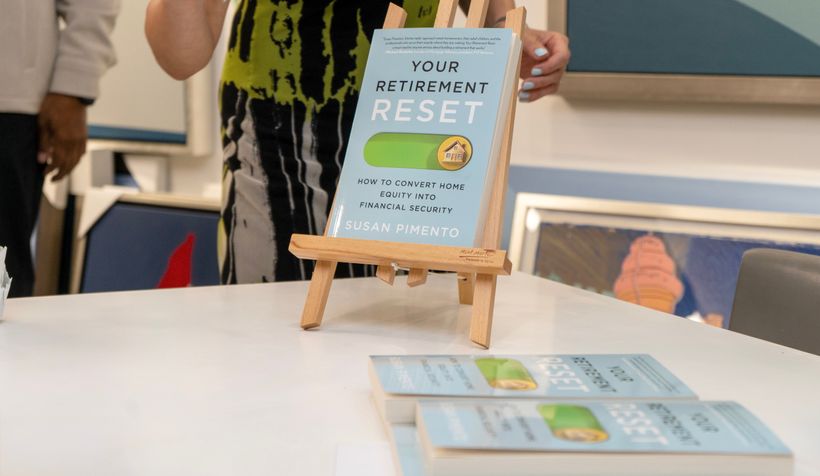
Practical guide to turning home equity into lasting retirement income is now available at Indigo, independent bookstores, Amazon.ca and McNally Robinson, and through Simon & Schuster in the U.S., in paperback, ebook and audiobook. Pimento is on a national media tour. TORONTO, ONTARIO, CANADA, September 29, 2026 -- Many Canadians share the same quiet worry: running out of money before they run out of life. Retirement expert Susan Pimento has a name for it: FORO, the Fear Of Running Out. As of today, her answer to it is in bookstores across the country. Your Retirement Reset: How to Convert Home Equity into Financial Security, published by ECW Press, is now in stores nationwide, including Indigo and Chapters locations and independent booksellers. It is also available on Amazon.ca and from Canadian independent bookseller McNally Robinson, in trade paperback, ebook and audiobook. In the United States, readers can order the book through Simon & Schuster. The book is written for Canadians in or near retirement and for the adult children who help them plan. It addresses a gap in how Canadians talk about retirement. Most advice is about saving. Very little explains how to turn what people have built into steady income that lasts. For many retirees, the family home is their largest asset. Your Retirement Reset explains, in plain language, the tools Canadians can use to unlock home equity. It shows how those tools fit alongside government benefits and registered savings, and how to weigh the trade-offs with family before making a decision. “Canadians have been told to save, save, save. Nobody tells them how to spend it,” said Pimento. “Meanwhile, the biggest asset most retirees own is right under their feet, and they’ve been taught to treat it like it’s off limits. A lot of people are house-rich and cheque-poor. This book is for anyone lying awake at 3 a.m. doing retirement math. You’ve done the hard part. Now let’s make it work for you.” “The book is about something that affects every one of us. How we're going to live and live well in the second half of our lives. Sue challenges us to think differently about retirement, especially the difference between having assets and having the income we need to enjoy life. She also challenges the traditional idea that the equity in our homes should simply sit there untouched until we die. Used thoughtfully and conservatively, she believes home equity can be a part of the retirement income conversation,” said Jennifer Smith, Publisher at ECW Press, at the book launch. National Media Tour Underway Susan Pimento is on a national media tour, and ECW Press is booking interviews with broadcast, print, podcast and online outlets. She can speak to: FORO (the Fear Of Running Out) and why it is keeping retirees up at night How Canadians can use home equity safely as a source of retirement income Common myths about reverse mortgages and downsizing What the shift from defined benefit to defined contribution pensions means for today’s retirees How adult children can start the money conversation with their parents To request an interview, contact Cassie Smyth, Publicist, at ECW Press (details below). Readers can find free resources and learn more about Pimento’s work at retirewithequity.ca. Book Details Title: Your Retirement Reset: How to Convert Home Equity into Financial Security Author: Susan Pimento Publisher: ECW Press In stores: September 29, 2026 Formats: Trade paperback, ebook, audiobook Price: $28.95 (Canada); US$28.95 (United States) ISBN (paperback): 978-1-77041-897-4 Pages: 280 US distribution: Simon & Schuster About Susan Pimento and Retire with Equity Susan Pimento is a Canadian retirement expert, author and founder of Retire with Equity, an education and advocacy platform on retirement financing. She spent more than 30 years in banking and mortgage lending, including as a Vice President at a Schedule I bank. She advises financial institutions and policymakers on modernizing retirement solutions for Canadians 55+, and co-authored EY Canada’s report The Canadian Retirement Evolution. Her motto: “Don’t Retire…ReWire!” Learn more at retirewithequity.ca Media Contact Cassie Smyth, Publicist ECW Press cassie@ecwpress.com | 416-694-3348 | info@ecwpress.com
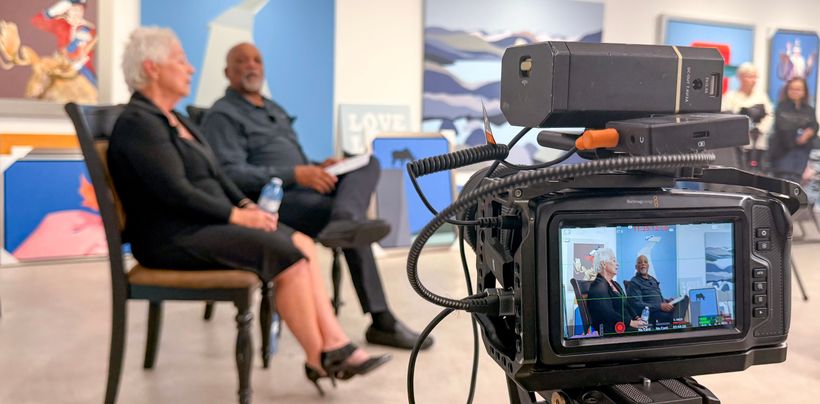
As I stood there before friends, family, colleagues, and the people who had actually agreed to come celebrate a book I wrote, I found myself thinking about how all of this had become possible. There it was my name on the cover. A real book. Something that had started as a vague idea, survived several versions, considerable self-doubt, and a few grammatical interventions, and somehow made it into the world. People frequently ask me about the process. How did you write a book? Where did the idea come from? How did you actually get it finished? The honest answer is that I didn't really know what I was doing. I just kept going long enough to figure some things out. So, in honour of the launch, I thought I would share the formula. I call it The Algebra of Writing a Book. A quick disclaimer before we begin. This is a personal formula, based on a sample size of one, occasionally supervised by a patient editor and a ten-pound she-dog named Dottie, who treats every writing session as a personal invitation to stop working and pay attention. It has not been peer-reviewed by an actual mathematician, unless being an MBA student now qualifies me to turn every human experience into an equation, whether it wants to cooperate or not. The inspiration came partly from Scott Galloway, whose The Algebra of Happiness and The Algebra of Wealth take complicated subjects and distil them into memorable formulas (Galloway, 2019, 2024). What I admired was not the formula at the end of each chapter. It was the discipline behind it. He takes a messy human subject, studies it long enough to understand the mechanics, and then gives readers something they can actually use. For years, I have spent at least a couple of hours a day reading or listening to people who think more clearly than I do. I don't just want to know what they think. I want to understand how they got there. How did they make that point? Why did that sentence work? What did they leave out? Where did they slow down? A surprising number of the ideas I now think of as my own started somewhere else. I turn them over, pull them apart, mix them with my own experience, and, if I'm lucky, they come back sounding like me. I think of them as my thought babies: borrowed genetics, raised in my household until they develop a personality. Research + Experience + Curiosity = Original Ideas At least, that was the theory. Then life decided to test it. At 65, I lost my job. Financially, I was fine. Thirty years in financial services had taken care of that. Emotionally, however, I discovered I had built a surprisingly large part of my identity on a business card. Take away the title, the office, the meetings, the responsibilities and the people who needed you to make decisions, and suddenly you are left wondering who exactly you are supposed to be on Tuesday morning. Naturally, I responded in the most emotionally healthy way I could think of. I built a business case for my reinvention. There was a timeline. There were measurable deliverables. There may even have been a Gantt chart. Picture it: a newly unemployed woman trying to project-manage her emotional recovery as though grief were a product launch. Phase One: Feel Better. Phase Two: Discover New Purpose. Phase Three: Become Inspiring. It was a spectacular failure. A few weeks later, I was sitting in my car in a grocery store parking lot with the engine off, unwilling to go inside and buy milk like someone who actually had somewhere to be. My beautifully organized recovery plan had collapsed somewhere around Phase One. It turns out grief has very little respect for bullet points. What I needed was permission to be a mess for a while. So I gave myself one small instruction: write something five days a week. Not something good. Not something publishable. Not something anyone besides Dottie and I would ever read. Just something. I did not commit to writing a book. I committed to trying. I gave myself permission to be terrible at it for as long as it took. That turned out to be the important part. Somewhere in all that low-stakes trying, I fell in love with writing. I became fascinated by how a good writer can take an idea you’ve been carrying around vaguely for years and suddenly put exactly the right words around it. You read the sentence and think, yes. That's it. That's exactly what I've been trying to say. Stealing Homework David Brooks once described writers as “beggars who tell other beggars where they found bread.” He used the phrase in a 2023 Persuasion interview with Yascha Mounk, calling it one of his favourite sayings about writing (Mounk, 2023). I loved it because it gave me permission to stop pretending that every good idea had originated in my own head. I started paying attention not only to what good writers said but also to how they built an argument, why certain words carried more weight, and how a simple metaphor could sometimes accomplish what three pages of explanation could not. I carried a notebook everywhere. I wrote down phrases that stopped me. I noticed metaphors the way other people notice good haircuts. Patricia O'Conner's Woe Is I: The Grammarphobe's Guide to Better English in Plain English quietly repaired decades of my grammatical freelancing as I tried to figure out why six words could sometimes explain something better than six paragraphs. Then came Christine. Two years and three complete versions of the manuscript later, I had something that vaguely resembled a book. That was largely thanks to Christine, a PhD, teacher, and four-time published author, who agreed to help a woman whose writing experience began and ended with mortgage disclosure statements. Christine was smart, generous, and wonderfully direct. She was also a regular in my GoodLife Fitness classes, which meant she had already watched me botch choreography in public before she read a word of my writing. I had very little dignity left to protect. Her first editorial assessment was concise: “Sue, your grammar sucks.” Fair enough. Her second question was why I insisted on capitalizing the word Mortgage as though it deserved the same reverence as God or Beyoncé. I still don’t have a good answer. But Christine's most important contribution had nothing to do with grammar. My manuscript was full of financial information and professional jargon. It was smart enough, but it wasn't human enough. Buried inside it was Clara, a character representing the ordinary people I had spent my career trying to help. The truth was that I had trouble accessing the human side of aging, finance and retirement. It was much easier to talk about the process and the products than to be vulnerable about what I had actually gone through. Christine kept pushing me. Tell the human story. Go deeper. Be more vulnerable. Stop hiding behind your expertise. She was right. Slowly, Clara became more real. As Clara became more real, so did I. Somewhere along the way, I stopped being an author trying to protect my professional credibility and became a woman willing to be seen. That changed the book. It also changed me. It helped me heal some of the wounds I hadn't realized I was carrying. And somewhere in the middle of all that editing, Christine and I became better friends. I didn't want to disappoint her, which turned out to be a far better motivator than any deadline. Finishing the manuscript didn’t feel like a triumph. It felt more like handing someone something soft and unfinished, hoping they wouldn’t drop it. As long as the book was unfinished, I had an excellent excuse: “I’m working on a book.” Very impressive. Very aspirational. Very safe. Once it was finished, there was nowhere left to hide. So I hired an agent and let him absorb the rejection on my behalf. He sent the manuscript out. Three responses came back. One publisher said, “Thanks, but no thanks.” Two said yes. Suddenly, a woman with three decades in mortgage lending, a character named Clara, and an unapologetic attachment to writing was going to be an author. Which brings me to the actual algebra. Curiosity + Permission to Fail + Consistent Effort + Time = A Finished Manuscript Notice what is missing. There is no talent requirement. No inspiration variable. No line item for knowing what you're doing before you start. There is simply a small, repeatable behaviour applied without judging the results too harshly. And here is the part I especially want to emphasize: I was 65 when I lost my job, and 70 when my book was published. Five years. Is five years too long to reinvent yourself? I doubt it. We have somehow convinced ourselves that reinvention should happen quickly, preferably between lunch and the afternoon news. But some things take time. Five years gave me time to learn, write badly, rewrite, improve, find my voice, work with Christine, survive rejection, heal old wounds, and eventually become an author. Five years earlier, I would never have put “write a book” on my list of things to do. At 65, I was trying to figure out who I was without the job that had defined so much of my adult life. At 70, I was standing in front of friends and family, holding a published book with my name on it. Here is the link to the the launch party interview if you have 37 minutes (or 24 minutes at 1.5x). We spend a lot of time planning for retirement as though we are planning a trip. We think about where we will live, how much money we will need, and what we will do with our time. All important questions. But life doesn't always follow the itinerary. Sometimes the thing you think is the ending turns out to be the beginning of the next chapter. My other formula became: Loss + Curiosity + Permission + Action + Time = Reinvention My two background mantras throughout all of this were simple: It is never too late. If not now, when? They sound almost embarrassingly obvious, but obvious does not mean easy. I have watched too many people postpone the things they want to do until some imaginary future when they will have more time, more confidence, more energy, or fewer obligations. There is always a reason to wait. I had plenty of them myself. You cannot get to “one day” without committing to “day one.” For me, day one wasn't about writing a book. It was about writing one thing. Then another. Then another. Five days out of seven. Eventually, those small acts of showing up became a manuscript. The manuscript became a book. And five years after losing my job, at 70, that book became real. And I became a better human. Scott Galloway gave me the idea of looking for the algebra beneath a complicated subject. David Brooks gave me permission to admit that writers borrow, learn from, and build on one another. Christine gave me the courage to stop hiding behind my expertise and to let the human story into the book. Dottie gave me a very reliable reason to stop writing and go for a walk. And a 65-year-old woman who had just lost a huge part of her identity gave herself permission to be bad at something new. Five days out of seven. For long enough. Apparently, that was enough. Today, Your Retirement Reset is out in the world, on bookshelves, in libraries, and with readers across Canada. More than sixty blog posts have grown out of the same process, a considerably better showing than that Gantt chart ever managed. If there is something on the back burner that you keep telling yourself you will do someday, don't start with the big plan. Try something small. Give yourself permission to be terrible. Then show up again. Make tomorrow your day one. Because sometimes reinvention doesn't arrive with a grand announcement. Sometimes it quietly wanders in while you're busy doing something else. That is how I wrote a book. And perhaps more importantly, that is how I discovered I wasn't finished becoming whoever comes next. It is never too late. If not now, when? Sue My Book is Available for Order: I hope you will consider ordering a copy of Your Retirement Reset for yourself, a friend, or someone you love. Published by ECW Press and is available through Indigo or Amazon and McNally Robinson. If you like supporting Canadian booksellers, check with your local independent bookstore too. Most can order it.

Indiana’s Player-Prop Decision Raises Stakes for College Athletics
The rapid expansion of legal sports betting has created a particularly complicated issue for college athletics: wagers based on the performance of individual student-athletes. Indiana became the latest state to confront that issue Thursday when regulators rejected an NCAA request to ban pregame college-player proposition bets. These wagers allow bettors to predict individual outcomes—such as how many points a basketball player will score or how many passing yards a quarterback will record. The NCAA has increasingly targeted these bets, citing concerns about athlete harassment, access to inside information and the potential manipulation of individual performances. Indiana regulators ultimately chose to preserve the state’s current rules, which permit certain pregame college-player props while prohibiting them once a game is underway. Sports-betting operators maintain that legal sportsbooks can monitor unusual betting patterns and alert regulators to suspicious activity, an oversight mechanism that does not exist in illegal or offshore markets. The NCAA takes a different view, arguing that attaching money directly to an individual college athlete’s statistics creates risks that are difficult to eliminate through monitoring alone. Several states have already restricted or prohibited these wagers, leaving the country with an increasingly uneven regulatory landscape. Indiana’s decision puts a larger question about the future of legalized sports betting into focus. College athletes now compete in an environment where thousands of people may have money riding on their individual performance, even when the athletes themselves receive none of the wager. Are existing safeguards enough to protect athletes and the integrity of competition? Should college sports be treated differently from professional leagues when regulators decide what people can bet on? And if states adopt different answers, how effective can any single state’s restrictions ultimately be?


Is AI ethical? One philosophy professor has an answer.
During a snowstorm last winter, University of Delaware philosophy professor Thomas Powers fixed his own thermostat by typing the error codes into ChatGPT and following the instructions it provided. As he discovered on that cold, snowy night, AI can make DIY projects that much easier, potentially saving time and money. Ever the philosopher, Powers wondered about the ethics of his solution: What is the impact of taking the repair job away from someone who relies on the work? What about the risk of being wrong? Is the environmental impact of using AI worth the result? After 20 years in the Department of Philosophy and as director of the Center for Science, Ethics and Public Policy, Powers is uniquely suited to explore questions about the ethics of AI. What does “ethical AI” mean? POWERS: We want AI systems that are helpful and useful, but also safe. We want systems that don’t produce biased or dangerous results. One approach to achieve that, which I’m hopeful about, is to create systems that are “safe by design” or “ethical by design.” In other words, instead of relying entirely on outside regulation to prevent harmful behavior, we try to design the systems themselves so that they behave in ways we consider ethical. Is it possible to make an AI system truly “safe by design” if it eventually becomes capable of acting in ways its creators didn’t anticipate? POWERS: There is a big difference between most technologies and AI. With the latter, especially current large language models (LLMs), it appears that there is some unpredictability in their behaviors. Thus, their apparent autonomy complicates the "safe by design" motto. AI autonomy introduces the need for "guardrails" that constrain what AIs can do. But even this may not be possible. Why are AI companies hiring philosophers, and what does this mean for the field of philosophy? POWERS: Some of the hardest questions in AI aren’t purely technical questions. To build systems that are safe, fair or aligned with human values, you first have to decide what those concepts actually mean and how they can be translated into something a computer system can use. The challenge is to educate people who can move between those worlds — who understand the technology but can also ask the deeper questions about what we should want that technology to do. How has AI changed philosophy? POWERS: Philosophers have long discussed the philosophy of action with the concept of agency. For decades we assumed that an agent must be human — someone who acts on their own behalf, or on the behalf of another person, with some kind of plan or attitude. This concept transfers to discussions about AI, and whether it can be considered an agent and be responsible for its actions. The next step is to ask harder questions: Are autonomous AI agents responsible, in some sense, for what they do, and does this suggest or imply that they are conscious? I don’t think AI will become conscious any time soon, but I don’t think it is impossible, and other philosophers and scientists are broaching the question. To speak with Powers further about the philosophy of AI, reach out mediarelations@udel.edu. ABOUT THOMAS POWERS Thomas M. Powers, Ph.D., is an associate professor in the Department of Philosophy at the University of Delaware. He is also the director of the Center for Science, Ethics & Public Policy at UD. Powers' current research focuses on the ethics of information technology and the philosophy of technology. He contributes to scholarship on rule-based conceptions of machine ethics, computer agency, the ethics of artificial intelligence, and other philosophical issues involving emerging technologies, including human-robot interaction.


Peri-Retirement: The Life Stage Nobody Told Us About
It started with the sweating. Not the kind you get after a workout, or the kind that shows up when you realize you're late for a job interview. This was different. Our patient, a perfectly healthy 48-year-old man, would be sitting quietly at his desk when a wave of heat would roll over him out of nowhere. His shirt would stick to his back, his forehead would glisten, and he would find himself wondering if his wife had quietly turned up the thermostat. Then came the mood swings. One minute he was fine. The next, he was irrationally furious because his wife had asked what he wanted for dinner. "I DON'T KNOW!" he shouted. "I'VE BEEN MAKING DECISIONS FOR THIRTY YEARS! CAN SOMEONE ELSE PICK FOR ONCE?" Then came the 3:17 a.m. panic attacks, always at 3:17, as if his subconscious had set an alarm. He would wake with his heart pounding, one thought looping through his mind: what if I don't have enough? Enough what? He couldn't say. Enough money, enough retirement savings, enough time, enough health, enough golf. He wasn't taking any chances. By 4:03, he was calculating the future value of his RRSP. By 4:27, he was checking his house's value. By 4:41, he was browsing real estate listings in Portugal. By 5:15, he had determined he could not, in fact, afford Portugal. By 5:22, he was oddly angry about a country he had never planned to move to. His wife finally insisted he see a doctor. The doctor listened carefully, ran the usual tests, folded his hands, and delivered his verdict. "I know what's wrong with you." The man sat up straighter. "Is it serious?" "I'm afraid you're suffering from Peri-Retirement." "Peri what?" "Peri-Retirement." "Is it contagious?" "No." "Curable?" "Not exactly." "Am I going to die?" The doctor paused for a long moment. "Eventually. We all will." "That isn't particularly reassuring." "Sorry. The good news is that Peri-Retirement is completely normal. You're 48. You've spent 25 years building a career, raising a family, paying down a mortgage, and accumulating money. You've simply reached the point where you're starting to wonder what comes next." Welcome to Peri-Retirement. And yes, unlike Peri-Menopause, this one is refreshingly inclusive. It affects men, women, and everyone in between, because apparently anxiety about money doesn't check your chromosomes before it shows up at 3:17 a.m. Maslow Could Have Used a Sequel In 1943, Abraham Maslow published his famous hierarchy of needs, the pyramid every psychology student eventually draws on a napkin. It charts the climb from food and shelter to belonging and esteem, all the way to self-actualization, the state of finally becoming the person you were capable of being all along. It's a genuinely useful map of human development. I just think Maslow wrapped it up about one life stage too soon. After decades of working, raising kids, building a career, and accumulating enough assets to make an accountant blush, most of us hit another transition Maslow never got around to charting. Retirement stops being a hazy concept involving golf and starts feeling uncomfortably real. I call that first stage Peri-Retirement, and I'd put it roughly between ages 45 and 60, the years when retirement starts creeping into every quiet moment. When can I actually retire? Will I have enough? What will I do with my Tuesdays? Can I afford to travel? What happens if I live to 95? And the question that keeps people up at 3:17 in the morning: who am I if I'm no longer working? After that comes Pre-Retirement, roughly 55 to 70. For many Baby Boomers, working until 70 has quietly become the norm, so the old assumption that everyone retires neatly at 65 is starting to look about as current as a rotary phone. Then comes Retirement itself, which turns out to have three distinct acts. There are the Go-Go years, when health and energy are still on your side and people travel, renovate the kitchen, take up pickleball, or try to figure out why everyone suddenly won't stop talking about it. Then the pace naturally shifts into the Slow-Go years, when spending and activity ease off. Eventually come the No-Go years, when health or mobility start setting the boundaries. Retirement, in other words, can run for three decades, and the financial life of a 65-year-old looks nothing like that of an 85-year-old. Which brings us to a problem the industry has grown remarkably comfortable ignoring. The Gap Between Net Worth and Cash Flow We have all become fluent in net worth. We know what our homes are worth, down to the last renovation; we track our RRSPs and TFSAs like box scores; and we celebrate or panic depending on which way the portfolio moved this week. Net worth and cash flow, though, are two completely different animals. Net worth tells you what you own. Cash flow tells you what you actually have available to pay for your life. You can be asset-rich and cash-flow poor at the same time, sitting in a million-dollar house while stressing over the hydro bill, because the grocery store still hasn't rolled out a "pay with bathroom renovation" option. That gap between paper wealth and usable income is one of the biggest problems facing retirees today, yet it gets a fraction of the attention it deserves. Turns out I'm not the only one losing sleep over this at 3:17 a.m. I co-authored a paper with EY called Canada's Retirement Evolution, and the numbers we pulled together read like a diagnosis. About 30 percent of Canadians are already 55 or older, and that share could climb to between 35 and 40 percent by 2030. Layer on top of that a trillion dollars in wealth moving from Baby Boomers to their Gen X and Millennial kids between 2016 and 2026, with roughly 70 percent of it tied up in real estate, and you get an entire country full of people who are asset-rich, cash-flow-anxious, and one awkward Thanksgiving dinner away from an intergenerational conversation about the house. We Got Very Good at One Half of the Job For decades, the financial services industry trained us beautifully in exactly one skill: accumulating. Save into your RRSP, max out your TFSA, diversify, pay down the mortgage, build the portfolio, grow the assets. Most of us became excellent students. The trouble is that the assignment eventually changes. At some point, accumulation has to hand the baton to decumulation, and we're suddenly expected to figure out how to convert decades of saving into income that can fund the rest of our lives. Ideally without draining the account, spooking ourselves every time the market dips, or spending our seventies squinting at investment statements at 4 a.m. We get thirty or forty years of coaching on how to put money into the machine, and then almost none on how to dispense it safely. That's exactly where Peri-Retirement gets interesting. What If the Income Conversation Started Earlier? The Peri-Retirement crowd is sitting on an asset most retirees have already spent: time. These are people still working, often earning meaningful income, with savings, home equity, and years for that money to compound before they need it. That's a real opportunity for the financial services industry; one it has largely left on the table. What if retirement income wasn't something we only started thinking about the week before the retirement party? What if there were products built specifically for the Peri-Retirement years, ones that let people work toward predictable, guaranteed income for life, starting at an age they choose? The idea deserves serious attention. Waiting until retirement to solve the income question means giving up years of compounding and cramming an enormous decision into a painfully short window. Starting earlier lets people build that income gradually, while a paycheque is still coming in to fund it, and it changes the whole conversation. Instead of only asking "how much money will I have when I retire," we could start asking "how much income will I actually need, and how do I build it before I get there?" That's a fundamentally different way to plan for retirement, and it might be exactly what Peri-Retirement is for. Our 48-year-old patient may have shown up with hot flashes, mood swings, and a standing 3:17 a.m. appointment with his own anxiety, but his body wasn't betraying him. It was trying to get his attention. Peri-Retirement might be the moment we finally understand that retirement was never just about the number in the account. It's about knowing exactly how that number translates into a life you can afford to live, for as long as you're living it. That's the question I wrote Your Retirement Reset to answer, including the one that trips up almost everyone: how do you turn what you've accumulated into sustainable income and cash flow for the years ahead? The book hits stores and libraries on September 29, and you're welcome to grab a copy directly from me. If you have a parent circling retirement, buy two. Retirement has a funny way of becoming a family sport, whether anyone signed up for it or not. As for our patient, the doctor sent him home with a retirement plan, a firm suggestion to stop checking his RRSP before sunrise, and strict orders to close every tab related to Portuguese real estate. His prognosis is excellent. He has Peri-Retirement, and now, at least, he finally knows what to call it. The financial industry, meanwhile, is still mostly asleep at 4:03 a.m., and it's about time someone woke it up! Don’t Retire… ReWire! Sue My Book is Available for Pre-Order: I hope you will consider pre-ordering a copy of Your Retirement Reset for yourself, a friend, or someone you love. It arrives September 29, 2026, published by ECW Press, and is already available through Indigo or Amazon. If you like supporting Canadian booksellers, check with your local independent bookstore too. Most can order it.