debate Experts
Connect for media, speaking, professional opportunities & more.
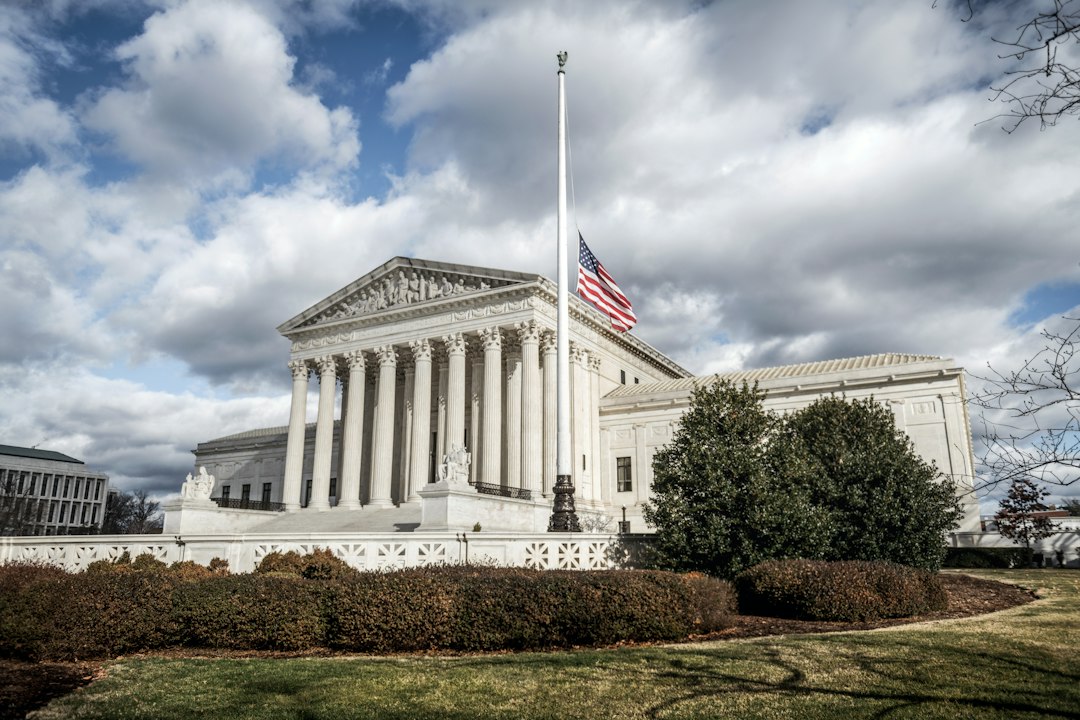
Supreme Court Expansion Debate Raises Questions About Judicial Independence
Should the Supreme Court remain at nine justices, or would a larger bench strengthen the nation’s highest court? That question is drawing renewed attention after a Republican-backed constitutional amendment to permanently limit the court to nine seats failed in the House in September. Democratic proposals include expanding the court to 13 justices, while supporters and opponents disagree over whether changing its size would improve its credibility or deepen political divisions. Although nine justices may seem like a constitutional requirement, Congress determines the court’s size. Its membership changed several times before settling at nine in 1869. Legislation introduced by Rep. Al Green would increase that number to 13, reopening a debate over how much influence elected officials should have over the structure of the judiciary. Supporters see expansion as a way to restore balance and bring additional perspectives to the bench. Critics worry that adding seats to secure favorable rulings could encourage future majorities to pursue similar changes. The broader issue is how to preserve public confidence in an institution designed to exercise independent judgment. The Constitution’s protections for federal judges, including service during good behavior and protection against salary reductions, are intended to shield them from partisan pressure. Changing the court’s membership would create new opportunities for presidential appointments, with consequences that could extend well beyond a single administration. As the debate continues, Americans face a consequential question: What reforms would strengthen accountability while preserving the Supreme Court’s ability to interpret the law independently?



All this talk lately about Trump and Carney squaring off has made me reflect on matters closer to home. My living room has never quite reached the level of a televised leaders’ debate, but retirement has a way of turning minor domestic disagreements into full parliamentary sessions. And unlike politicians, you can’t call a recess and fly to Florida. For years, we’ve been sold a lovely picture of retirement. The alarm clock disappears. The kids have finally stopped treating your house like a storage locker. There are leisurely breakfasts, travel, golf, grandchildren, and coffee on the patio on a Tuesday morning simply because you can. And there is your spouse. Every. Single. Day. For many couples, this is wonderful. Even in the happiest relationships, though, somewhere around the third consecutive Tuesday morning together, a thought may quietly surface: Have you always chewed like that? We spend years trying to figure out whether we have enough money to retire. We calculate pensions, RRSPs, CPP, home equity, and how long our savings might last. We consult financial planners and make budgets. Some of us even build colour-coded spreadsheets, which I think is taking things a little far (just saying). Far fewer couples spend time figuring out how they will retire together, and that’s a different calculation altogether. Two Retirement Plans before One During our working years, most couples have something that retirement quietly removes: separation. You go to work. I go to work. You have your colleagues, routines, frustrations, and responsibilities, and I have mine. We leave each other in the morning, collect a day’s worth of stories, and come home with something to talk about. Retirement can fold two fairly independent lives into the same house and the same calendar, usually by the first Monday. Research backs this up. A German study of 2,117 couples, drawing on more than 30 years of national survey data, found that on average both partners grew more satisfied with life around retirement. The changes were also highly correlated within couples, so when one partner’s satisfaction slipped, the other’s tended to slip right along with it (Weber et al., 2021). Your retirement becomes my retirement, whether I applied for the position or not. Then come the expectations. One person has been dreaming of travelling for 20 years. The other would happily never set foot in an airport again. One wants to move, and one wants to stay. One wants to golf four days a week. The other thought retirement meant finally doing things together. One wants to help the kids financially. The other believes the kids are 43 and it may be time they gave adulthood a whirl. Even the timing can cause friction. One of you retires in June, the other has three years left before the pension kicks in, and suddenly someone is home all day reorganizing the spice drawer. Research on how couples make retirement decisions suggests that the way the call gets made, and whether both people feel they had a say, shapes how satisfied they are with retirement afterward (Szinovacz & Davey, 2005). The relationship you bring into retirement also comes along for the ride. Old patterns of closeness and conflict travel with you like carry-on luggage, and retirement simply changes the scenery around them (Davey & Szinovacz, 2004). That makes me wonder whether every couple needs two retirement plans before they have one. What does your retirement look like? What does mine look like? Where do they overlap? Those questions may matter more than whether we can afford the Viking cruise. And Then There’s Money Of course there is. Money has always had an extraordinary ability to walk into a perfectly pleasant conversation and leave with a baseball bat. In retirement it gets even more emotionally charged, because our financial psychology shifts. During our working years, another paycheque is always coming. In retirement, many of us start drawing down assets we spent decades building, which can feel completely sensible to one spouse and mildly terrifying to the other. This is where FORO, Fear of Running Out, can pull up a chair at breakfast. One partner sees $800,000 as security. The other sees the same $800,000 as a number that can only get smaller. Suddenly a $12,000 trip to Italy is carrying a lot of luggage: safety, control, mortality, and whether 93-year-old you might someday need that money. Then health can change the equation again. A spouse gets sick. Mobility changes. One person becomes a caregiver, and independence starts to slip away. Retirement plans that once looked beautifully aligned suddenly don’t, and that is a lot of change for any relationship to absorb. Apparently, Fighting Isn’t Necessarily Bad Three very different thinkers have helped me rethink the whole subject: an ancient Chinese general, a modern conflict facilitator, and a psychologist with a lab full of arguing couples. Sun Tzu’s The Art of War is about military strategy, yet one of its most enduring ideas travels surprisingly well into marriage: understand the situation, understand the other person, and don’t waste resources on battles that don’t need to be fought. Priya Parker comes at conflict from almost the opposite direction in her new book, The Art of Fighting (2026). Her work explores how conflict can strengthen relationships when people engage with it well. She calls this idea “healthy heat.” Some difficult conversations need enough heat to burn through to what actually matters. Then there is psychologist John Gottman, who studied couples over time and found something I love: happy couples don’t all fight the same way (Gottman, 1993). His research identified three stable types. Validators calmly talk their disagreements through. Avoiders would much prefer to change the subject. Volatile couples argue loudly and passionately and keep their marriages intact anyway. The couples headed for trouble were the hostile ones, along with the ones who had quietly checked out. So you and I don’t have to argue like the nice couple down the street. They look exhausted and boring, to be frank. What seems to matter is whether we can disagree and still hold on to respect, affection, and the sense that we are on the same side. That calls for something to sit beside the retirement financial plan. The Retirement Rules of Engagement 1. Figure out what you’re really fighting about. Before digging in your heels, ask why this matters so much to each of you. The argument about selling the house may really be about losing independence. A fight over spending can be tangled up with FORO. Too much golf might be about purpose for one person and loneliness for the other. And the argument about money may have very little to do with the actual numbers. Once the real issue is on the table, at least you’re having the right argument. 2. Choose your battles. Sun Tzu would make an excellent retirement consultant. Some things matter enormously, and others really don’t. If your spouse has loaded the dishwasher incorrectly for 37 years and everyone is still alive, victory may no longer be strategically important. 3. Keep the heat healthy. Disagreement has a place in a strong relationship. Parker’s idea of healthy heat gives us permission to have uncomfortable conversations without treating the discomfort as proof that the relationship is in trouble. Say the difficult thing. Ask the awkward question. Then stay curious about the answer. 4. Remember who is sitting across from you. This is the person you chose to build a life with. Opposing counsel bills by the hour. Gottman’s research is especially useful here, because hostility and emotional disengagement are the real warning signs. Anger passes. Contempt has a nasty habit of moving into the spare room. 5. Build some mine, yours, and ours. Two people don’t need to become one organism to have a good retirement. Separate interests, friendships, and activities give each partner purpose and independence, plus fresh material for dinner conversation. Then build the shared things on purpose too: travel, grandchildren, exercise, volunteering, cottage time, date nights, or whatever makes retirement feel like ours. A little absence can still make the heart grow fonder. 6. Know when you’re stuck. If you keep having the same argument, if conversations regularly turn hostile or contemptuous, or if one of you has simply stopped engaging, outside help may be worth it. A couples therapist can untangle relationship patterns. A financial planner can put real numbers around money fears. A retirement coach can help when identity and purpose are causing friction. Sometimes the most useful person at the kitchen table is the third one. What About Grey Divorce? Grey divorce is worth a few minutes here, because ending a marriage later in life is especially hard to recover from financially, and it ripples through the whole family, right down to the grandchildren who now spend Christmas in two places. The Canadian story, however, is less dramatic than the headlines suggest, partly because so many of those headlines are American. In the United States, adults 50 and older made up 8% of all divorces in 1990 and nearly 40% in the latest figures, and their divorce rate doubled between 1990 and 2010 before levelling off (Westrick-Payne & Brown, 2024). Canada never had that boom. Statistics Canada reports that the divorce rate among Canadians aged 50 and older rose 26% between 1991 and 2006, from 4.2 to 5.3 divorces per 1,000 married people, and has since remained relatively stable (Statistics Canada, 2022). Grey divorce remains considerably less common here than divorce among younger adults, so if you’ve read that it has doubled, you were reading about Americans. Still, divorce at 65 is financially different from divorce at 35. There are fewer working years to rebuild. One household becomes two. Housing, retirement income, pensions, estate plans, and family relationships can all take a hit, and women tend to feel it most. A Statistics Canada study that tracked Canadians from their mid-50s into their 70s found that divorced women kept about 70% of their family income, compared with about 87% for women who stayed married (Mehdi, 2023). The study concluded that divorce lowers living standards in retirement more than the death of a spouse does. Till Death Do Us Part Is Longer Than It Used to Be A couple retiring in their 60s could easily have another 20 or 30 years together. That’s an extraordinary gift. It’s also a very long time to argue over the thermostat. Our health will change, our finances may shift, and our interests will wander off in directions neither of us saw coming. The people we were when we walked away from our careers won’t necessarily be the people we are at 75, 80, or 90, so our relationships need room to grow with us. So pick the battles worth fighting, bring a little healthy heat to the ones that matter, and concede the rest, especially the dishwasher. Thirty years of retirement works out to more than 1,500 Tuesdays together. It would be a shame to spend them arguing about the forks. Don’t retire. ReWire. Sue P.S. Retiring solo? Don’t get too comfortable. Many of the same issues show up with adult children, friends, and family, along with everyone’s sudden assumption that you now have all kinds of free time. I’ll tackle that one in two weeks. My Book is Available for Order: I hope you will consider ordering a copy of Your Retirement Reset for yourself, a friend, or someone you love. Published by ECW Press and is available through Indigo or Amazon and McNally Robinson. If you like supporting Canadian booksellers, check with your local independent bookstore too. Most can order it.



The House passed the Sunshine Protection Act on July 14, 2026, reviving the national debate over whether the U.S. should adopt permanent daylight saving time, return to permanent standard time, or keep the twice-yearly clock change altogether. The bill now heads to the Senate. At the University of Mary Washington, Dr. Hilary Stebbins, Associate Professor of Psychological Science, studies the chronobiology and sleep patterns of college students, research that can help inform exactly this debate: how does shifting the clock affect cognitive performance and behavior, no matter which system we land on? Dr. Hilary Stebbins is an Associate Professor in the Department of Psychological Science at the University of Mary Washington. She is an expert on sleep deprivation, circadian rhythms, and dopamine function, and how each affects cognitive performance and behavior. View her profile Stebbins doesn't take a side in the policy debate. Her focus is chronobiology, how sleep patterns and circadian rhythms affect college students' cognitive performance and behavior. But that science speaks directly to the choice lawmakers are weighing: any shift, whether it's permanent daylight saving time, permanent standard time, or sticking with the current system, creates a temporary mismatch between our internal clock and the outside world, and it takes the body time to catch up. "One of my past teams found that as people report higher levels of sleepiness, they show higher dopamine function and also have more difficulty controlling impulsive actions." — Dr. Hilary Stebbins, Associate Professor of Psychological Science, University of Mary Washington Stebbins leads a year-long undergraduate research team (PSYC 491/492) each year, and in 2018 a team of her students won the Virginia Association for Psychological Science's award for best undergraduate paper for their research on sleep deprivation. Interested in discussing chronobiology, sleep patterns, or the science behind the debate over permanent daylight saving time, permanent standard time, or dopamine and behavior? Click on the icon below and connect with Dr. Hilary Stebbins, Associate Professor of Psychological Science at the University of Mary Washington, for expert insight into sleep research and its real-world stakes.


White House Media Ban Is Over - But Questions About Press Access Remain
The immediate confrontation may be over, but the questions it raised are not. CNN, MS NOW and Politico have regained access to the White House after President Donald Trump’s administration temporarily barred the news organizations from covering the president. A federal judge ordered their access restored, finding that the outlets had not been provided constitutionally adequate due process when their credentials were revoked. While the ban has been lifted, the episode has renewed a broader debate about press access, government accountability and the relationship between a presidential administration and the journalists assigned to cover it. It also raises questions about what happens the next time an administration strongly objects to a news organization’s coverage. How much discretion should the White House have over access? What protections exist for journalists covering the presidency? And could disputes like this affect how news organizations approach their coverage? Mark Lukasiewicz, dean of The Lawrence Herbert School of Communication at Hofstra University, brings nearly four decades of journalism and network news experience to the discussion, including 17 years at NBC News, where he served as senior vice president of specials and supervised coverage of major breaking news events, presidential elections and debates. View his profile With extensive experience in television news, journalism and political coverage, Lukasiewicz can provide perspective on the practical consequences of restricting media access, the relationship between the White House and the press corps, and what the escalating dispute could mean for news organizations covering the administration. To arrange an interview today, simply click on his profile below.



Professor Julian Ku Discusses U.N.’s Role in Global A.I. Debate
Hofstra Law Professor Julian Ku was quoted in a recent New York Times article examining the United Nations’ efforts to influence global discussions about artificial intelligence as the United States and China continue to lead the technology’s development. Professor Ku explained that the United Nations has historically struggled to shape how global powers use technologies unavailable to most other nations, including nuclear weapons and advanced cybertools. He said the organization may have greater success helping countries share in the benefits of A.I. than influencing the actions of the United States and China directly. “The U.N. can’t really shape the actions of those who have the power directly,” Ku said, but it can represent countries without that power.


White House Pushes Back on Calls for Broader AI Safety Guardrails
As calls grow from technology leaders, researchers and lawmakers for stronger artificial intelligence safety rules, the White House is signaling a different priority: keeping the United States at the forefront of AI innovation. The administration has pushed back on proposals that could slow development or create sweeping federal approval requirements for new models, arguing that excessive regulation could weaken America’s competitive position—especially against China. That does not mean the administration is ignoring AI-related risks. Its approach emphasizes national security, cybersecurity and enforcement against criminal misuse of AI. Recent White House action has encouraged voluntary collaboration between government and AI developers to assess the cyber capabilities of advanced models, protect critical infrastructure and strengthen defenses against malicious actors. But the framework specifically avoids mandatory licensing or government preclearance before companies develop or release new AI systems. The debate raises important questions for business leaders, policymakers and the public: How can innovation move quickly without sacrificing security, privacy and public trust? And where should responsibility rest—within individual companies, through voluntary government-industry partnerships or through enforceable federal safeguards?

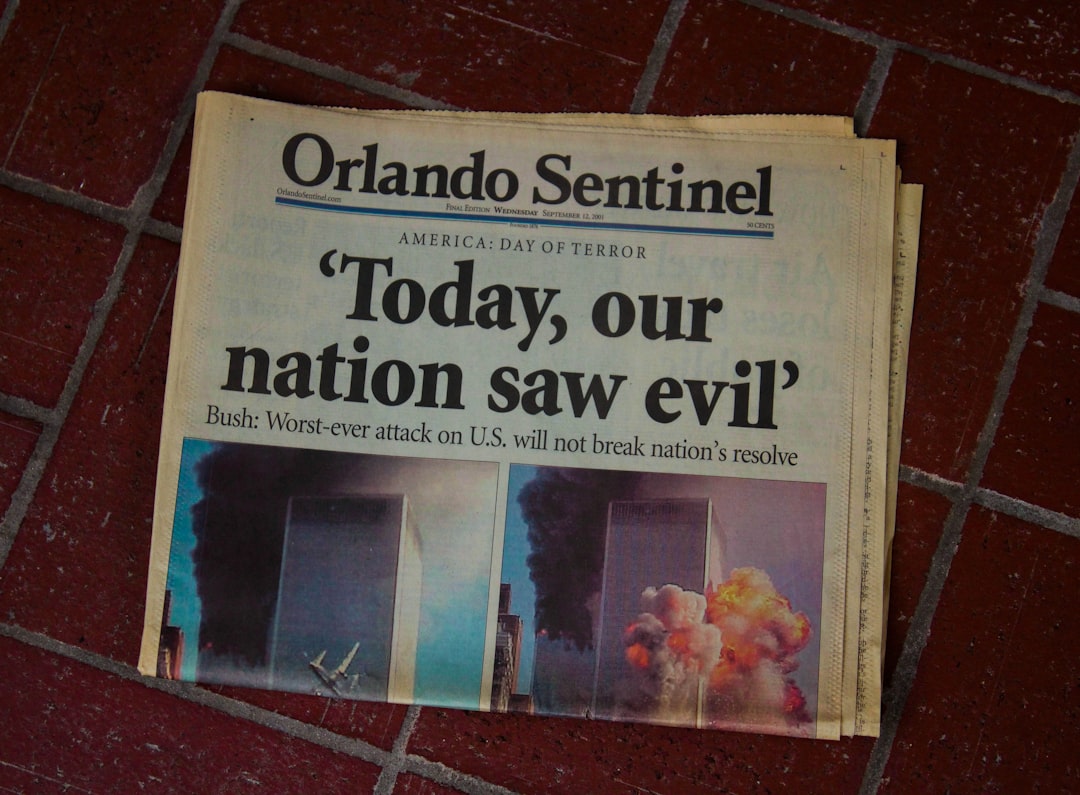
25 Years Later: How 9/11 Changed the World
On September 11, 2001, the world watched as nearly 3,000 people were killed in terrorist attacks that would become one of the defining moments of the 21st century. Twenty-five years later, 9/11 remains much more than a moment in history. Its consequences continue to shape the world we live in. The attacks transformed national security and intelligence, changed how people travel, reshaped airport and border security, and ushered in a new era of surveillance and counterterrorism. They also profoundly influenced American foreign policy, leading to wars in Afghanistan and Iraq and decades of debate about security, military intervention and America's role in the world. The effects were cultural as well as political. September 11 changed how a generation viewed safety, terrorism and global conflict. It also sparked difficult conversations about civil liberties, immigration, religious tolerance and the balance between individual freedoms and collective security. For younger generations, 9/11 is increasingly an event learned about rather than remembered. For millions of others, memories of where they were and what they saw that day remain remarkably vivid. A quarter-century later, the anniversary offers an opportunity to remember those who were lost, recognize the first responders and countless others affected by the attacks, and examine how the decisions made in their aftermath continue to influence our world. Experts in history, political science, international relations, national security, terrorism, public policy and sociology can help provide perspective on September 11, its legacy and how the world has changed 25 years later. Connect with our experts today: View all of your experts here at www.expertfile.com


Parenting Your Parents: When Did I Become the Adult?
My mother used to take her cordless phone with her when she went out for lunch. One day I finally asked why. “Well, I might need to make a phone call,” she explained. I said it was a cordless phone, not a cell phone, and that it only worked in her house. She looked at me with a completely blank expression. I tried again. She listened politely, though I’m still not entirely convinced she believed me. Her smile never reached her eyes. Then there were the calls for technical support. Mom would phone because she couldn’t get the television to work, and I would patiently walk her through using the remote. Press the button at the top. Nothing. The red button. I don’t have a red button. Twenty minutes later, it finally occurred to me to ask what she was holding. Her cell phone. We laughed about these things, and they were funny. They still are. But something else was happening that neither of us wanted to acknowledge. Slowly, I was becoming the person who worried about my mother, checked on things, and occasionally told her what she should or shouldn’t do. In other words, I was parenting my parent, though I’m quite sure she would have objected to that job description. This stage of life brings plenty of drama and absolutely no instructions. No pre-retirement class, no baby shower, and, disappointingly, no one arrives with useful equipment. You just wake up one day and realize you are telling the woman who once taught you to cross the street that she might not be safe driving at night. The Driving Dilemma Few conversations test family diplomacy quite like asking a parent whether they should still be driving, and I sometimes wish my MBA program offered a course on it. They will tell you they are excellent drivers. The garbage cans, curbs, garage door and passenger-side mirror may tell a slightly different story. Driving means independence: spontaneous trips to the grocery store, visits with friends, appointments, and the simple freedom to go somewhere without asking anyone. I learned that there is a difference between what makes me nervous or impatient and what is actually unsafe. Getting lost in a familiar neighbourhood, repeatedly hitting things, missing signals, or becoming confused behind the wheel are very different. Canadian Automobile Association (CAA) offers a useful senior driving resource and assessment toolkit that can help older drivers and their families assess driving ability, changing skills, and ways to adapt. I like the idea of introducing objective information into the discussion. It may go over better than announcing that the children have held a meeting and voted Mom or Dad off the highway. Technology: Funny Until It Wasn’t Technology gave my mother and I some of our funniest moments. The cordless phone going to lunch and the cell phone masquerading as the television remote were classics. Often, my first instinct was to grab the device causing the problem and fix it myself. That solved the problem quickly, but it didn’t help her the next time. Writing down a few steps, simplifying them, and repeating them, sometimes many times, worked better. A checklist taped beside the television could save both of us a lot of grief. Confusion about phones, email, texting and social media could leave her vulnerable to fraud, too. Today’s scams are sophisticated enough that none of us should be too smug about spotting them. I tried to establish a simple habit with Mom: if something looks strange, urgent, frightening or too good to be true, stop and check with someone before clicking, paying or sharing information. I wanted Mom to enjoy technology and stay connected, not be afraid of it. The trick was adding a few guardrails without wrapping the entire Internet in yellow caution tape. The Great Grocery Store Standoff I am a bit of a health nut, which made counselling my mother about nutrition particularly ironic, since I come by it honestly. Mom was the original health-food nut. We called her the wheat-germ fanatic. Wheat germ came onto the scene in the 70s, and as far as Mom was concerned, there was no food that couldn’t be improved with a generous helping. There were four of us kids, and we tolerated a lot in the name of good health, but we finally drew the line when the spaghetti sauce became so chewy from wheat germ that we couldn’t eat it. Then there was powdered milk. We didn’t always have a blender, so it didn’t mix particularly well. We called it clumpy milk. Fast-forward a few decades, and there I was, the daughter of the wheat germ fanatic, lecturing my mother on fruits, vegetables, protein and regular meals. She had her own standards too. Anyone caught buttering bread in her kitchen got a quick lesson in technique, right to the crust, she would say, watching closely until you got every corner. Mom understood healthy eating just fine. What had changed was her ability to manage it, and keeping food safe had become harder. Her freezer became so full that she eventually secured the door with bungee cords. Bungee cords have many legitimate uses, but appliance repair isn’t one of them. The door sometimes didn’t close properly, and food would spoil. Mom periodically complained about what she called her “morning flu,” and I began to wonder whether it had less to do with a virus and more to do with whatever archaeological specimen she had defrosted for dinner. The comedy had a serious side too. Health Canada’s food-safety guidance for adults 60 and over explains that older adults may be more vulnerable to serious complications from foodborne illness and offers practical advice on storage, leftovers and safer food choices (Health Canada, 2025). It also notes that you can’t always tell whether food is safe by its look, smell or taste. Mom’s standard was somewhat simpler: “It looks fine.” She also loved giving food away. I would leave her house carrying freezer-burned shrimp, a grey object that may once have been beef, and mystery packages from an unknown decade. Eventually, I told my brothers to stop arguing and accept everything Mom offered. Smile, say thank you, and take it home. What happened between her front door and our dinner plates was our business. I didn’t have to win every argument. Sometimes a workaround did more than another lecture and helped Mom keep some control over her own life. Then There Was Dad My dad presented a different set of challenges. He had a stroke at 66 that left him with no mobility on his left side and very limited speech. His understanding was fine, but getting words out was difficult. However, there were two words he could say particularly well: “beer” and “Susie.” I’m not sure what it says about me that I made the shortlist, but I’ve always taken it as a compliment. Communication could be frustrating for both of us because Dad knew exactly what he wanted to say, even when he couldn’t express it. He liked wearing the same clothes repeatedly, sometimes long after the stains on the front suggested it was time to change. Telling your father that he needs a clean shirt or a bath requires a particular kind of diplomacy that even graduate school does not teach. Helping the man who once looked after you with something as personal as bathing is strange and tender in equal measure. You want to protect his dignity, but you also can’t pretend hygiene doesn’t matter. I found it worked better when I didn’t turn it into a debate. I could make it part of the day, help where he needed it, and move on. It wasn’t always graceful. Sometimes he was annoyed. Sometimes I was. We figured it out, and his toenails were trimmed. Dad also developed a dessert philosophy I have never been able to disprove. He insisted on eating dessert first. When I suggested he might want to eat his dinner before dessert, his reasoning was simple: “Well, I can’t be sure I’ll make it to dessert, so I’m going to eat it first.” Fair enough, Dad. Have the pie. When the Funny Stuff Stops Being Funny This is the uncomfortable part of parenting your parents. One forgotten lunch may mean nothing. Regularly forgetting to eat is different. One confused encounter with a television remote is hilarious. Increasing confusion across several areas of daily life deserves attention. I found it more useful to look for patterns than to panic over every incident. With Mom, we tried using checklists on the fridge and Meals on Wheels. Then I would arrive to find six or seven meals sitting uneaten in the refrigerator, starting to spoil. Getting help didn’t mean I could stop paying attention. We had solved one problem, but not necessarily the whole problem. It helps to know you are not the only family trying to figure this out. It is easy to assume that if Mom or Dad won’t listen to our brilliant advice, we must be doing something wrong. Our parents are still adults. They don’t suddenly become compliant just because they reach a certain age. I had to learn when to push, when to seek help, when to quietly remove the questionable shrimp, and, perhaps hardest of all, when to keep my mouth shut. I Would Take It All Back Both of my parents are gone now, and time has reshaped how I remember those years. There were days when I was exasperated and frustrated, sometimes to tears. I worried. We argued. I wondered why they wouldn’t listen and whether I was helping or simply making everyone miserable. Watching the people you love lose pieces of their independence is hard, and trying to help without taking over can be even harder. Now I would give almost anything to have some of those moments back. I’d happily explain the television remote again. I’d take another package of freezer-burned shrimp without complaint. I’d negotiate another bath with Dad, let him wear the questionable shirt for one more day, and watch him eat his dessert first. If you are in the middle of parenting your own parents, I don’t have a perfect formula for you. Pay attention when something feels different, protect their safety without forgetting their dignity, and pick the battles that really matter enough to let the rest go. And laugh with them whenever you can, because some of this really is funny, even when it is also difficult and sad. At the time, I often thought I was dealing with problems that needed fixing. Looking back, I can see something else, too. Those frustrating, ridiculous, worrying little moments were also time spent with my mom and dad. I didn’t know how much I would miss them until there were no more remotes to explain, desserts to debate, or mystery packages to remove from the freezer. I’d take the whole messy job back in a heartbeat. Even the clumpy milk. Warmly, Sue This is Part 1. I have a Part 2 that covers what nobody wants to talk about at dinner: who gets power of attorney, how you divide the work with siblings without a family blow-up, whether Mom or Dad should stay in their own home, and what all of this does to the person doing the parenting. I promise there is less shrimp in that one. My Book is Available for Pre-Order I hope you will consider pre-ordering a copy of Your Retirement Reset for you, a friend or loved one. It's available September 29, 2026 published by ECW Press - You can now order at Indigo or Amazon. And if you love supporting Canadian booksellers, please also check with your local independent bookstore. Most can easily order it for you.
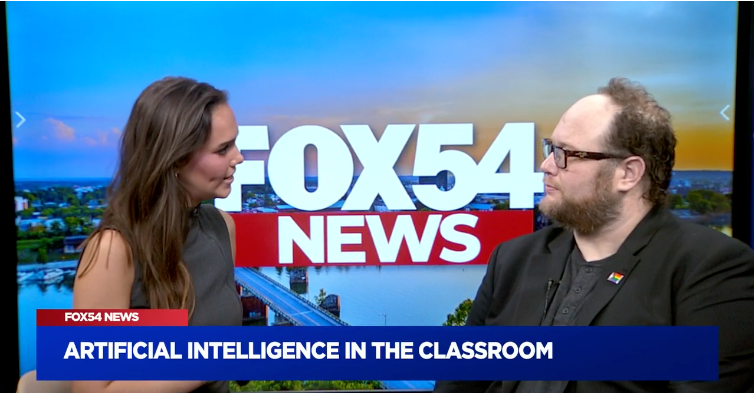
The Real Risk of AI in the Classroom Isn't the Tool, It's the Shortcut
Artificial intelligence has moved from novelty to daily habit in classrooms across the country, and the debate over what that means for learning shows no sign of slowing down. Some schools have built AI into their curriculum. Others have banned it outright. Caught in the middle are students trying to figure out where the technology actually helps and where it quietly gets in the way. Trent Kays, PhD, an assistant professor and Director of Professional Writing and Rhetoric at Augusta University, has spent time researching exactly that question, and he recently sat down with FOX54 News to talk through what he's seeing firsthand. Kays, who also serves as a faculty affiliate in Women's and Gender Studies and specializes in digital rhetoric and machine writing, says students are already using AI for far more than quick homework help, from brainstorming and studying to building out entire lesson plans on their own. The bigger concern, according to Kays, isn't misuse in the obvious sense. It's what he calls cognitive offloading, students handing the thinking itself over to the machine. "Students are essentially using AI to do their thinking for them, which is not something that they should do," he said. It's part of why he keeps AI out of his first- and second-year courses entirely: those early classes are where students build the critical thinking skills they'll need before a tool can actually help. "They have to be able to think critically first before they can ask a tool to help them." Accuracy is its own problem. AI tools have gotten sharper, but Kays points out they still fabricate information regularly, including sources that were never real to begin with, something students are far less likely to catch than an instructor who actually reads the citations. None of this means Kays thinks AI belongs outside the classroom. He describes it as a potential process partner, something that can push a student's thinking further rather than replace it, as long as the structure around it is clear. As he put it, what schools need now is to "craft clear guidelines and structures for students to follow so that they know how to use it and how to use it well." Read the full interview and FOX54's coverage here: AI in the Classroom: Augusta University Professor Explains the Benefits and Risks Dr. Trent Kays is available for interviews on AI in education, digital rhetoric, and responsible AI use in academic settings. If you're covering similar stories, click on this icon to schedule time with him.


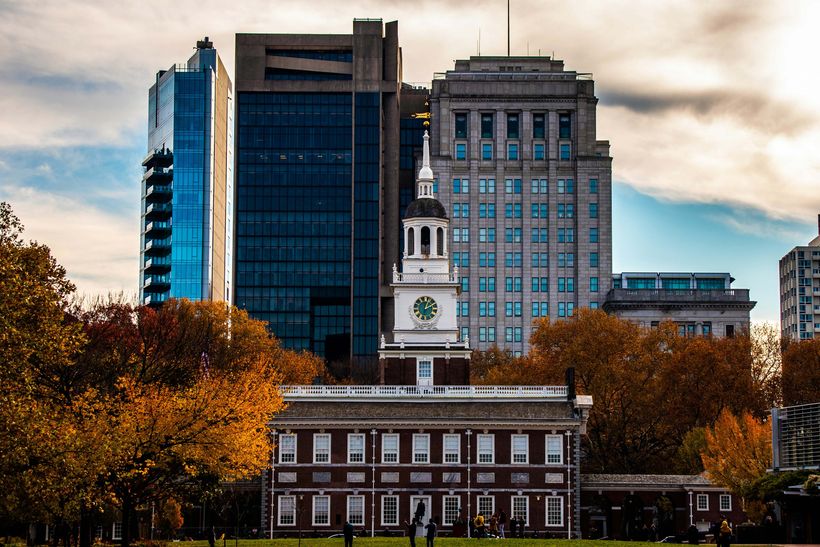
Ahead of America250, Villanova Historian Reveals How Independence Hall Almost Didn't Survive
Philadelphia’s Independence Hall has long occupied an outsized place in the American imagination. The space where the Continental Army was established, the Declaration of Independence adopted and the United States Constitution ratified, the site was once described by President Abraham Lincoln as the source “where were collected together the wisdom, the patriotism, the devotion to principle, from which sprang the institutions under which we live.” In July, these hallowed grounds will yet again take center stage, as the country observes its semiquincentennial, or America250, celebration. In due course, House lawmakers will gather at the landmark for a special commemorative event, mayors from across the U.S. will march to the gates in a show of civic pride and solidarity, and thousands of visitors will flock to the site daily in appreciation for its significance to the cause of “Life, Liberty and the pursuit of Happiness.” However, while Independence Hall’s role in the national saga will go widely remarked and recognized, the building itself has a story that remains largely unknown. According to Whitney Martinko, PhD, associate professor of History and director of the Albert Lepage Center for History in the Public Interest at Villanova University, the “cradle of American democracy” almost never survived the country’s infancy. “Early on, the challenge was about two things,” says Dr. Martinko, who specializes in public history, historic preservation and the early U.S. “One was about ownership of what was called the ‘Old State House,’ because it was the former statehouse in the colony of Pennsylvania. And the second was about the development of the city around it.” As Dr. Martinko explains, in the early 19th century, Independence Hall—then the Old State House—was under the control of the Commonwealth of Pennsylvania, which had shifted its governmental seat from Philadelphia to Harrisburg by 1812. To fund the construction of a new capitol building in the wake of the move, Pennsylvania legislators seriously contemplated selling the site to private enterprise, with the surrounding area undergoing a development boom. “Today’s Independence Mall was built up entirely,” says Dr. Martinko. “In the 18th century, it was full of buildings, shops and houses, and by the 19th century, it had become a huge furniture district and a heart of commerce in many ways.” As plans were drawn up to deliver the hall to the highest bidder, local resistance quickly emerged. Opposed to the landmark’s loss, citizens of Philadelphia and municipal leaders rushed to the defense of the building and its lawn, arguing that their preservation entailed a necessary public good. “Everyone looked to this site as the heart of the new nation. It’s a historic site. It’s an important building. People thought of it as one of the great pieces of Georgian architecture at the time,” says Dr. Martinko. “It was also seen as a civic space, as people gathered there on Election Day. And its lawn was highly valued, with green, open space considered important even then, for air circulation. So, it was really seen as a political space, a civic space and a green space that was important for the well-being of Philadelphians and the health of Philadelphia.” Deliberations over the fate of Independence Hall would continue for a period of five years, up until 1818. After a spirited public campaign, a settlement was finally reached when the City of Philadelphia purchased the plot from the Commonwealth of Pennsylvania for $70,000 (roughly $1.85 million in today’s currency). In essence, the deal would forevermore secure Independence Hall’s place within the pantheon of great American shrines, parks and monuments. However, in a terrific irony, it would also eventually lead to the loss of a different piece of history: Between 1950 and 1967, the 19th-century development projects that once threatened Independence Hall became a casualty of the city’s efforts to make the “birthplace of America” an urban focal point, with the creation of Independence Mall. “Those buildings were all torn down in the mid-20th century, when Ed Bacon and the City Planning Commission decided to make Independence Hall a major attraction,” says Dr. Martinko. “There were debates surrounding this issue as well. The Jayne Building was one of the 19th-century buildings that was demolished and that is most well-known. So, there’s this sense of preserving 18th-century history through the demolition of 19th-century architecture.” As the nation approaches its 250th anniversary, the near loss of Independence Hall and the removal of its 19th-century neighbors stand as striking examples of the ways in which what we value, and how much we value it, evolves over time. What’s more, the historic threats to Philadelphia’s most famous site serve as a poignant reminder of the delicate nature of public memory and preservation—and the fact that the places we treasure today may not always be with us tomorrow. “Even though it seems absurd to us now, we’re still seeing debates over the line between redevelopment and connection with the past,” concludes Dr. Martinko. “It’s not that no one saw the value of Independence Hall, or that they didn’t see it as historic. It was just this debate that a lot of very reasonable people continue to have today: Is this what really needs to be preserved? And how should it be preserved?”