Experts Matter. Find Yours.
Connect for media, speaking, professional opportunities & more.

The Tipping Point: How Gratitude Grew into a Guilt Trip (and How to Get Off It)
My dog Dottie is, and I say this with love, a con artist in a fur coat. She has trained me to hand over a treat every time she sits, spins, or simply exists in my general direction, those big brown eyes fixed on me. If I hesitate even three seconds, she tilts her head and stares at me as if I have personally bankrupted her. I always fold. It turns out that I am not the only sucker for this routine. These days, entire industries have figured out that if you make a person stand there long enough while a screen stares back at them, they will fold too. Except instead of a milk bone, they want eighteen to twenty-two percent of your bill, and instead of a good girl, you get a receipt. Welcome to modern tipping culture, where a simple thank-you has somehow become a math test administered under duress, with a cashier watching as you decide, and somewhere behind the screen, a very deliberate mind has already worked out exactly how to nudge your answer higher. A Short History of Guilt with Percentages Tipping began as a compliment, not a demand. Historians trace it to a Tudor England custom called a vail, in which a noble slipped an extra coin to a servant for going above and beyond (Blueprint Financial, 2024). North America initially wanted nothing to do with it, meeting tipping's arrival in the late 1800s with the kind of suspicion usually reserved for chain letters. Americans who travelled to Europe came home grumbling about being nickeled and dimed by porters and waitstaff, and in 1884 the New York Times ran an editorial calling English-style tipping downright un-American (Mentzer, 2013). Between 1909 and 1915, six American states banned tipping outright, but it did not work. Tipping also has a less charming cousin: bribery, extra money paid in advance for special treatment, a jump on the waitlist, or a better table, not a reward for service already rendered. That is also roughly where the phrase "nickel and dimed" comes from, back when tipping meant tossing a server the smallest coins in your pocket. These days, the phrase seems to describe the opposite, a whole system of small additions that always land in the business's favour. Researchers who study why people tip find that the reasons run deeper than economics. One ethnographic study of servers and diners in Vancouver found that people tip for good service, to follow the social norm, out of sympathy, to signal status, or to lock in a preference for next time. Tipping has never been just a transaction; it has always been part performance and part quiet social contract, which is probably why opting out feels so uncomfortable. Then Tipping Went on a Growth Spurt Fifteen percent used to be the polite standard and twenty percent was for showing off. That range has crept steadily upward. Canadians now commonly tip eighteen to twenty percent at restaurants, bars and at hair salons. Even coffee shops and fast-food counters are edging toward five to fifteen percent as digital prompts normalize the ask (Blueprint Financial, 2024). Nearly two thirds of Canadians say they feel pressured to tip more than they used to, and the share tipping twenty percent or higher has more than doubled in under a decade (Blueprint Financial, 2024). In the US food industry alone, tipping adds up to an estimated forty-seven billion dollars a year (Azar, 2011), proof that this habit is not shrinking on its own. The Power of Suggestion (and the Screen That Stares Back) Once you know the tactics at play, it becomes easier to push back without guilt. The first is plain old anchoring. When a screen offers eighteen, twenty, and twenty-five percent as your only real options, your brain quietly narrows its sense of what is normal to fit that range, even if fifteen felt generous a few years ago. The second is assumptive closing, a sales trick in which, instead of asking whether you would like to tip, the screen assumes you already said yes and only asks how much, with the highest number often listed first or made visually larger. The third is technology itself, which makes the ask frictionless in places it never used to be, a tap and a swivel where someone just handed you a bag. And the fourth is old-fashioned shaming, the discomfort of picking a lower number while the cashier watches your thumb hover over the screen. If this sounds suspiciously like how Dottie gets her treats, that is because it is the same playbook. Offer a limited set of flattering options, stand there expectantly, and let the silence do the persuading. Research shows this tip-screen genuinely works, boosting tips by fifteen to thirty percent compared with a plain jar on the counter, largely because people gravitate to the middle option and nobody wants to look cheap in front of an audience (GlobalTill, 2026). One Toronto bakery owner told CBC that customers get visibly upset just being asked, even with signs posted that tips are not expected (CBC, 2022). University of Saskatchewan professor Marc Mentzer called the whole system a human rights catastrophe we are simply stuck with (CBC, 2022). None of these four tactics are about rewarding good service. They are behavioural design, and once named, they lose a surprising amount of power over you. Then the Pandemic Showed Up and Ruined Math for Everyone It is worth remembering why this all accelerated, because the original impulse was genuinely kind. When the pandemic hit, restaurant workers were being laid off and dining rooms were closed. Tipping generously was in solidarity, meant as temporary help during a crisis. Except it did not stay temporary, and that part was not really an accident either. Once businesses saw customers would tolerate a higher default tip during a crisis, many kept it in place long after. What began as compassion got hardwired into the software as the new normal, with no memo ever announcing that the emergency measure was now permanent. And Then Delivery Apps Moved the Tip Jar to Before Dinner Even Arrives Just as the tip screen had already rewired one part of the routine, delivery apps quietly rewired another. With services like Uber Eats and Skip the Dishes, you are asked to tip before your food has even left the restaurant, a bit like tipping a movie based on the trailer. The gratuity is baked into checkout, so what used to be a reward for good service becomes a pre-negotiated cost of doing business from your couch. Drivers often rely on that upfront tip because base pay per delivery is thin, meaning customers are subsidizing wages before a single doorbell rings, tipping blind. Wait, What? Are We Tipping the Government Too? If the delivery app section left you feeling like every corner of a transaction has been quietly monetized, buckle up, because there is one more layer nobody warns you about. Tipping etiquette has always technically called for calculating your percentage on the pre-tax total, but the machine does not know or care about etiquette. It simply applies a percentage to whatever total is on the screen, tax already included. So, the moment you tap one of those preset percentage buttons, you are effectively handing your server a tip on the government's cut of the meal too, not just on your food. The good news is the money itself still goes straight to the server, not to the government (phew). A flat twenty percent tip, calculated the way the machine calculates it, works out closer to twenty-two percent in provinces with a combined sales tax around thirteen percent, a touch less where the tax rate is lower, once the tax already baked into that total gets factored in (ouch). Let that marinate for a second. You went in planning to leave twenty and walked out having left twenty-two. When There Was No Service to Begin With And then there is the increasingly common experience of being asked to tip somewhere where no actual service happened. The dry cleaners. Seriously? You hand over a bag of shirts, come back two days later, and someone hands you the same shirts on a hanger, and now there is a tip screen. Insert the mother of all eye rolls. Nobody brought anything to a table; nobody checked on you twice. The job was already priced into what you paid. This is the moment tipping stops being gratitude and starts being a business outsourcing payroll onto customers who never agreed to it. Let's Talk About What This Does to Seniors This part matters to me personally, since I spend my days helping retirees stretch every dollar with intention. Tipping fatigue hits seniors differently and being asked to add another eighteen to twenty-two percent to everyday errands can feel less like generosity and more like an unplanned pop quiz. I have heard from clients who now avoid certain errands or choose a drive-through, specifically to sidestep the awkward prompt. Seventy-three percent of Canadians already believe tipping lets employers get away with underpaying staff, and fifty-nine percent would rather see fair wages built into prices than keep gambling on tip guilt (Blueprint Financial, 2024). If tipping anxiety is nudging older adults toward staying home instead of enjoying a coffee with a friend, this so-called social norm is quietly chipping away at connection, not what any of us want for our golden years. And this is not strictly a seniors’ problem either. Many people across every age group now quietly admit to choosing pickup over dine-in, skipping a small business altogether, or simply going out less, purely to avoid the awkward math of a screen and an audience. The difference for seniors is that the squeeze lands on top of a fixed income and a lifetime of budgeting habits that never had to account for an eighteen percent surcharge for saying yes to a friend's invitation. Maybe It Is Time for a Cash Tip Movement Here is an idea worth trying and sharing with your friends. The next time the screen swivels toward you, select no tip (usually tucked into the custom tip section rather than sitting out with the percentage buttons), pay the bill, and leave whatever cash tip you want directly on the table or in the jar afterward. To be clear, this is not about skipping the tip; it is about choosing how and when you deliver it. The server still gets paid fairly, just without a screen and an audience deciding for you. That one move sidesteps the anchoring, the assumptive question, the audience, and the algorithm quietly nudging the suggested amount upward. You decide the amount in private, hand it over with a genuine thank you, and walk out having tipped exactly what you meant to, power fully intact. If anyone asks why you skipped the prompt, just smile and say you do not tip machines; you tip people. This is also a great excuse to talk about it with your people. Ask your friends what they tip and why and figure out together where you all want to draw the line. Strength in numbers works on tipping the same way it works on everything else. Taking Back the Tipping Wheel A couple of practical notes before the cheat sheet below. Most screens that appear to offer only percentages hide a custom tip option that lets you enter zero or a flat dollar amount. It is worth finding, since a flat five dollars does not creep upward the way twenty percent does as prices rise. What to Tip, By Service Tipping Around the World Check Please! At the end of the day, tipping culture can feel like a money furnace, quietly burning through your paycheque, one percentage point at a time, while insisting the whole thing was your idea. And when the topic is your own money and your own life, also known around here as YMYL, letting action absorb anxiety beats letting anxiety run the show every time. Decide your numbers ahead of time, carry a bit of cash, ask a friend what they think, and stop apologizing for wanting a system that rewards real effort rather than clever design. Dottie has never apologized for expecting a treat, and to be fair, she earns hers. A screen swivelling toward you over a bagel has not. Tipping began as a genuine thank-you for genuine effort, so keep it simple. Decide your number before the screen decides it for you and save the big percentages for those who earned them. Next time that screen stares you down for twenty-two percent, channel your inner Dottie: sit, stay, and reward only the performance that deserves it. Don't Retire…ReWire! Sue My Book is Now Available for Pre-Order I hope you will consider pre-ordering a copy of Your Retirement Reset for you, a friend or loved one. It's available September 29, 2026 published by ECW Press - You can now order at Indigo or Amazon. And if you love supporting Canadian booksellers, please also check with your local independent bookstore. Most can easily order it for you.



Could President Trump’s Approval Ratings Rebound?
Newsweek interviewed Meena Bose, professor of political science, executive dean of the Public Policy and Public Service program, the Kalikow Chair in Presidential Studies and director of the Kalikow Center for the Study of the American Presidency, about President Donald Trump’s falling approval ratings due to voter frustration over the economy and inflation. Dr. Bose told Newsweek that the long-term consequences of a president’s leadership and policies are “most significant” in determining their legacy. “A president’s long-term legacy for leadership and policy making is most important for determining historic favorability. The passage of time and the assessment of the totality of a presidency also can lead to more favorable ratings, or at least split ones in different policy or political areas, but this is no guarantee,” she said.



A Closer Look at Index Funds in Retirement
Someone in their early sixties slides a statement across the kitchen table. Balanced portfolio. Broad index funds. Low annual fees. They did everything the industry told them to do, in the order the industry prescribed. Then they ask the question that has nothing to do with the statement: "Will it last?" I call that FORO. Fear Of Running Out. People tell me it's just nerves. It isn't. Here's what I think is really happening. An index fund is a very good machine for one job: growing money over thirty years. It assumes you have time. It assumes you're buying, not selling. It assumes you don't much care what's inside, as long as the number goes up. Every one of those assumptions stops being true the day you retire. Why do index funds treat expensive stocks as growth stocks? Campbell Harvey teaches finance at Duke University's Fuqua School of Business. This spring, he published a paper with four colleagues in the Financial Analysts Journal that tackles something so basic that most of us never think about it. (Source: Arnott, Brightman, Harvey, Nguyen & Shakernia, "Fundamental Growth," Financial Analysts Journal, 2026.) Almost every index fund is built on one idea: if a stock is expensive, the company must be growing rapidly. Harvey's finding is that this is often wrong. A stock can be expensive because it's popular. But popularity and growth are two different things. If you want proof that price and business performance can go their separate ways, think back to 2021. GameStop. AMC. Stocks that shot up on Reddit forums, with very little of the chatter based on earnings reports. Think back to 2021. GameStop. AMC. Share prices shot straight up because people online decided they should. Not because those companies were selling more of anything. Now consider how index funds work across every retirement account. A stock becomes popular, its price rises, and the fund buys more of it, not because the business improved, but because the price went up. How concentrated is the S&P/TSX Composite? Everything above is American. Here's the Canadian version, eh? The main Canadian index is not a broad mix of the world's best businesses. It's dominated by banks, mining and oil. Those three groups make up close to 70% of the index. Banks alone account for about 31%. According to the iShares Core S&P/TSX Capped Composite, the ten biggest holdings are roughly 38% of the whole thing, with Royal Bank at the top. In fact, close to half the weight of the index is made up of just financials and energy. I'm not saying anything negative about those companies. I'm saying you own them, whether you picked them or not, in amounts you didn't choose, for reasons that have nothing to do with what you need at age 72. That's been a fine bet for long stretches. It's also a narrow one. And narrow feels very different at 65 than it did at 35, because at 65 you no longer have the thing that makes a bad market survivable. Time. Why does a market drop cost a 65-year-old more than a 35-year-old? Let’s illustrate this with an example. Two people own the same fund. One is 35 and still contributing, while the other is 65 and withdrawing. Both are dealing with $6,000 this year. A unit of the fund costs $100. Then the market drops 20%, and a unit costs $80. The 35-year-old puts in $6,000. Before the drop, that money bought 60 units. Now it buys 75. Fifteen units he didn't pay for. The 65-year-old needs $6,000 to live on. Before the drop, she'd have sold 60 units to get it. Now she must sell 75. Fifteen units she'll never get back. Then the market recovers. Units return to $100. His 15 extra units are worth $1,500 more than he paid for them. Her 15 units were sold at the bottom. They aren't there to recover. Same fund. Same market. Same $6,000. The only difference is the direction the money was moving. That's why a retiree needs to look inside the fund, whereas a 35-year-old mostly doesn't. RRIF minimum withdrawals: why Canadian retirees are forced to sell In Canada, we've set a rule. When your RRSP becomes a RRIF, you must withdraw a minimum amount each year. The rate starts at 5.28% at age 71 and increases each year after that. (Source: Canada Revenue Agency, prescribed RRIF minimum withdrawal factors.) So, a Canadian retiree can be forced to sell in a bad year, from a narrow index based on a definition of growth that a Duke University business professor has just called flawed. Three problems stacked on top of each other. None of them show up on the statement. This is exactly the point I made with EY Canada in The Canadian Retirement Evolution, published in July (Source: EY Canada, 2026). FORO isn't a personal failing. It's a design gap. We built a system to save money, then asked it to pay people reliably for thirty years. It was never built for that. And the biggest thing most Canadians over 55 own isn't in the index at all. It's the house. About 70% of the coming wealth transfer in this country sits in real estate, and more than 85% of seniors say they want to stay in their homes (Source: EY Canada, The Canadian Retirement Evolution, 2026). Asset-rich, cash-poor, and treating their largest asset as off-limits. 5 questions to ask your advisor about your index funds I'm not telling you to sell anything. I can't. I don't know your health, your pension, your taxes, or your nerves. But here's what I'd want answered before my next meeting with an advisor. What are the ten biggest things I actually own? Not the fund name. The holdings. Do my funds overlap? Three funds that all own the same five banks isn't three bets. It's one. What happens if I must withdraw in a bad year? Is my "growth" fund measuring actual growth, or just price? Where does my home equity fit into all this? Ask. A good advisor will be glad you did. If you get a pie chart and a pat on the back, ask again. One last point from Professor Harvey. More than half of all invested money now sits in funds that buy automatically. He thinks it could reach 80% within ten years. (Source: Duke University Fuqua School of Business, 2026.) When enough money buys without looking, price stops being a judgment and becomes a reflex. But retirees are the least able to afford someone else's reflex. Here's the plain truth beneath all the jargon: nobody swapped out your equipment when the game changed. You're still holding a golf club on a pickleball court. Momentum is still wearing a cardigan. Your funds still can't tell the difference between expensive and growing. And most retirement plans still hand you a seatbelt when what you need is a crash-proof suit. Nobody in the industry is racing to fix this for you. So I will. Consider this the first chapter, not the last word. It's time to take back our retirements and reset. Don't Retire…ReWire! Sue My Book is Now Available for Pre-Order I hope you will consider pre-ordering a copy of Your Retirement Reset for you, a friend or loved one. It's available September 29, 2026 published by ECW Press - You can now order at Indigo or Amazon. And if you love supporting Canadian booksellers, please also check with your local independent bookstore. Most can easily order it for you. References: All figures verified 4 August 2026 Important: This article is general information and commentary only and does not constitute financial, mortgage, tax, legal, or investment advice. Before making decisions about your retirement or home equity, consult qualified liscensed professionals who can assess your personal circumstances.

Op-Ed: Crypto market bill adds risk, not clarity
Markets function best when participants understand the rules of the road, investors have confidence in the integrity of the system, and regulators have clear authority to police misconduct. The crypto market structure legislation now advancing in Congress promises exactly this clarity. Yet it raises a more troubling question: what happens when legislation written to create clarity instead exempts large parts of the digital asset ecosystem from the very safeguards that make markets safe for everyday Americans? Blockchain technology, tokenization, stablecoins and digital assets can improve efficiency, lower transaction costs, and widen access to financial products. Those opportunities are real. But sustainable innovation requires trust, and trust requires accountability. The legislation under consideration would create broad carve-outs for parts of the digital asset ecosystem, particularly within decentralized finance. Supporters call these provisions pro-innovation. Economically, they are regulatory arbitrage–the practice of avoiding rules and requirements that apply to similar financial activities elsewhere. Regulatory arbitrage does not create better products or services. Instead, it allows some firms to operate with lower costs by avoiding obligations designed to protect consumers and maintain financial stability. When two companies provide the same financial service but follow different sets of rules, the company with fewer requirements will naturally have lower costs. Those savings are not necessarily the result of greater efficiency. They often come from avoiding safeguards that other firms are required to maintain. Consider what the exemptions waive. A bank that holds customer assets must keep those assets separate from their own funds, maintain capital reserves, and fund a supervisory and compliance apparatus. An exempt digital platform performing the same custodial function carries none of these costs, so it can offer the service more cheaply while taking on risks that may not become apparent until problems arise. A bank that pays a return on deposits also pays deposit insurance premiums, holds regulatory capital, and absorbs the cost of anti-money-laundering compliance. An exempt platform passing through the yield on its reserves bears none of these and can therefore advertise a higher net rate on funds that are, economically, deposits. The activity is the same on both sides of the ledger. Only the rulebook differs, and the rulebook is the cost. This asymmetry falls hardest on community banks. Their deposits are the raw material of local lending. When an exempt platform can out-price them on stablecoin yield without carrying the costs that yield is meant to cover, deposits migrate, funding costs rise, and lending capacity contracts. As a result, community banks have less money available to lend, which can make it harder for small businesses to access credit. Community banks are responsible for roughly 60% of small-business loans and 80% of agricultural lending nationwide[1]. In Louisiana, where local banks finance small businesses and family farms, that risk is especially acute. The lesson is straightforward: when economically similar activities–like stablecoin yield and interest payments–operate under very different rules, risk often becomes harder to see until it's too late. History shows where this leads. Before the 2008 crisis, mortgage-related risk migrated out of regulated banks and into the “shadow banking” system–financial entities and investment vehicles that operated with less oversight. Those markets looked innovative and efficient. But because transparency and accountability were weaker, risk accumulated out of sight until it threatened the entire system. The lesson is not that the instruments were novel. It is that economically similar activities were governed by different rules, and risk flowed to the corner where it was hardest to see. The same logic applies to investors. Markets succeed only when participants trust them, which is why registration requirements promote transparency, best-execution standards help ensure fair treatment, and anti-money-laundering tools deter illicit activity. The legislation would let certain digital asset developers operate outside many of these protections. Technology can change how an asset is recorded or transferred. It does not change the risks an investor bears, or the incentives a firm faces when no one is watching. The United States does need a durable framework for digital assets, and regulatory uncertainty serves no one. Entrepreneurs need predictable rules, investors need confidence, and markets need consistency. But a framework built on exemptions delivers none of these. It delivers a two-tier market in which the regulated bear the costs and the exempt reap the advantages, until the risks they shed reassemble somewhere less visible. The most durable financial innovations in American history emerged within systems that paired opportunity with accountability. Digital assets should be no exception. Congress should reject this legislation and pursue a framework that applies the same rules to the same activities. Innovation matters. Trust is what makes it last.



Deaths, resignations in Congress test narrow majority
United Press International (UPI wire service) interviewed Meena Bose, Hofstra University professor of political science, executive dean of the Public Policy and Public Service program, the Kalikow Chair in Presidential Studies and director of the Kalikow Center for the Study of the American Presidency, about the death of Senator Lindsey Graham and President Donald Trump‘s choice of the late Senator’s sister Darline Graham Nordone, to succeed him. Until the midterm elections, Nordone will hold that position in an honorary capacity. There are four active vacancies on Capitol Hill with Nordone filling Graham’s seat. “The issue here is really that there have been vacancies and resignations and that the margin is so narrow for party control, particularly in the House of Representatives,” Dr. Bose told UPI. “The number of resignations or decisions not to run for re-election is indicative of questions about why people want to serve in office or indicative of a question of are people hesitant to serve in public office, and if so, why?”

For Louisiana sugarcane producers, huge harvest tempered by arrival of invasive insect
The predictions of a harvest increase over last year’s was undercut by the news of the arrival of a worrisome, invasive insect at the LSU AgCenter’s annual Sugar Research Station field day July 16. At the outset of the day, AgCenter sugarcane specialist Kenneth Gravois said that the U.S. Department of Agriculture’s National Agriculture Statistics Services is indicating a 5,000-to-6,000-acre increase over last year’s crop, with a clearer focus coming into view in August. “All in all, I think pretty much we have a big crop, a good crop, and people are excited about it,” Gravois said. “The big thing that is on everybody’s mind is we have to protect what’s out there. And so, with that, I’m sure a lot of people may have already heard about the pasture mealybug.” For those who haven’t, the invasive pest threatening crops across the South, the pasture mealybug (Heliococcus summervillei), is an insect first detected in the U.S. last year. It travels via wind, storms and unclean mowing equipment. Adults are oval shaped and white and waxy in appearance. They can cause leaf yellowing, which can rapidly progress into crop dieback, thus significantly reducing yields for farmers. AgCenter entomologist Blake Wilson said the pest has become more widespread in the past few weeks. It is on a destructive path that is likely to continue without proper vigilance. “I think we’re up to 14 parishes where it’s been detected, including some of the biggest sugarcane-producing parishes like Iberia and Point Coupee, but we’ve now started to pick it up in the River Parishes as well,” Wilson said. While the impact of the pest on crops isn’t entirely clear, Wilson said, observations indicate that even low densities of the insect can produce symptoms. A few fields where they are present have yellowing of 80% of the canopy. “This is a very new problem,” Wilson said. “It doesn’t appear the pasture mealybug is a pest of sugarcane in its native Australia, so there’s no playbook to use in response to this.” One weapon the industry does have to combat the pest is a Section 18, emergency use exemption from federal regulators to use the insecticides Sivanto Prime and Admire Pro to attempt to manage outbreaks. “Hopefully, those two products together will help growers find some immediate solutions and keep this thing under control before it gets any worse,” Wilson said. In less troubling news coming out of St. Gabriel, AgCenter researchers from across the scientific spectrum reported on the work they’ve been conducting on behalf of producers over the course of the past year. Plant pathologist Andre Gama discussed the disease triangle, where for a disease to happen, three things must be in place simultaneously: a susceptible host, a favorable environment and a virulent pathogen. He said it was harder for weaker stalks with less resilient root systems to defend against soilborne pathogens like the lesion nematode. “So, they’re going to suffer more by having something feeding off their root system,” he said. “We are collaborating with physiologists, pathologists and breeders to try and form some sort of solution to this issue.” While breeders Collins Kimbeng and Michael Pontiff had no new varieties to introduce this year to compete with current champ L 01-299, Kimbeng did discuss various new technologies to incorporate into the AgCenter’s world-class breeding program. “In the future, we’ll be working smarter rather than harder,” Kimbeng said. “Someday, we’ll just shine a light on the stalk and be able to determine brix and even sucrose. We start with 100,000 seedlings, so if we’re able to measure brix and sucrose very early, then that prevents us from selecting clones that have no sugar.” Weed scientist Matt Foster discussed false ragweed, which he said can have a severe impact on ag production in general. He showed attendees the varied effects of the plant treated with different herbicides. From the time the weed emerges, it can start flowering around two months later, Foster said. It is not currently a problem in Louisiana sugarcane, but it can cause allergies, dermatitis and asthma in humans. The day concluded with a welcome video message from Senior Vice Chancellor for Agriculture and Dean of the College of Agriculture Matt Lee, who could not attend this year’s field day. Lee praised AgCenter researchers and producers working in unison to overcome adversity. “Rising input costs, economic pressures and unpredictable weather conditions make farming more difficult than ever,” he said. “But what keeps this industry moving forward is innovation. The research, technology and best practices developed today are helping producers stay ahead.” AgCenter Executive Associate Vice Chancellor Tara Smith was on hand to thank sugarcane researchers and field day event sponsors. Jim Simon, general manager of the American Sugar Cane League; Craig McCain, state executive director of the USDA Farm Service Agency; and Mike Strain, commissioner of the Louisiana Department of Agriculture and Forestry, discussed work being done on the state and federal levels on behalf of the AgCenter and sugarcane producers. Finally, AgCenter plant virologist Madison Flasco presented her research on sugarcane viruses like mosaic and how they can be spread through vectors like aphids. She asked the gathered producers to send samples of any seemingly infected plants to her for testing. Aritcle origianlly posted here.

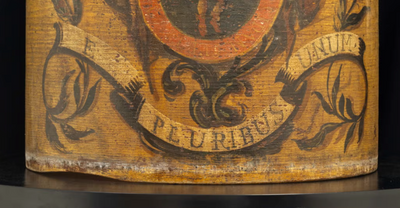
Gretsch Collection Curator Matthew Hill, Ph.D., is accustomed to handling, researching and presenting iconic guitars and drums from the Fred and Dinah Gretsch Collection of Musical Instruments, offering insight into musical artifacts that have shaped contemporary culture. However, discovering a lost story of American Revolutionary history is a new development in his career at Georgia Southern University. Hill had taken on a complex project, collecting and presenting information on the history of the American drumset through the analysis of French and American drums, when his friend and fellow curator, Christina Linsenmeyer, Ph.D., at Yale University’s Morris Steinert Collection of Musical Instruments brought to his attention an American Revolutionary War drum in Yale’s collection. Together, they discussed what might be learned through closer study of the instrument to better understand its place in American history. “I removed the tensioning ropes and we saw that the inscription read ‘Benjamin Clark. Royalton, Mass. 1781’ and that immediately started ringing bells with me,” Hill said. “1781 was a super important year in the American Revolution as it was essentially the time the hostilities began to wind down before it officially ended in 1783.” The drum originally came from the Belle Skinner collection of musical instruments in Massachusetts. Skinner, a wealthy heiress and philanthropist, acquired her extensive collection of instruments in the 1920s and 1930s and displayed them in a specially constructed arcaded gallery at her mansion, Wistariahurst. Yale would later obtain her collection in 1960, more than two decades after her death. Until now, the true rarity and unusual nature of the drum had not yet been fully realized. “There are very few authenticated American Revolutionary War drums,” Hill said. “Aaron Philips, our special collections curator, photographed the instrument, and Dr. Brent Tharp aided in the historical research of Benjamin Clark. And we found evidence of the person behind the name inscribed on the drum.” Hill says Clark is the most noteworthy musician of the American Revolution. He can be placed at the major battles of Trenton and Saratoga and also likely participated in the Battle of Bunker Hill. However, Clark’s involvement in historic American combat isn’t the only fascinating aspect of the man’s life. He’s also important because he was one of two musicians who wrote down what the drumbeat cadences of the Revolutionary War sounded like. “Clark’s drum book of 1797 is probably the most important,” Hill explained. “By way of writing his manuscript, Clark is one of the main sources for our understanding of Revolutionary War drumming. He is a significant figure, just on his own.” American drum sets during this period focused heavily on practicality, according to Hill. However, Clark’s drum was highly decorated, which was very unusual and included a notable, highly recognizable American adage. “‘E Pluribus Unum’ is written on the drum. It was an official American motto very early on,” Hill said. “But in 1781, it wasn’t that common and would not become more common until later. So this is a noteworthy prominent early use of ‘E Pluribus Unum.’” Hill, alongside other curators at higher education institutions, is working to share this unique discovery with public audiences. In order to best preserve and honor the legacy of the instrument and the drummer who carried it throughout America’s battle for independence, Hill reached out to the Massachusetts Historical Society so that Georgia Southern and Yale Universities can collaborate on a joint publication reproducing Clark’s manuscript, the drum itself and the music that would have carried soldiers across the battlefield. The first and only edition of Clark’s manuscript was privately produced in the 1970s. More recently, Hill and Tharp also presented an essay on this drum at the American Musical Instrument Society’s conference in Vermillion, South Dakota, “A Different Drummer (and His Drum): Benjamin Clark’s Revolutionary War Drum of 1781 and His Drum Book of 1797.” For Hill and fellow historians, this new discovery is not only interesting but also remarkable. “It was like Howard Carter finding the tomb of King Tut, for me. I understood his excitement when I realized what an incredible artifact I had come across that had been so well-preserved from the American Revolution,” Hill said. “But what’s most exciting to me is what will come from all of this work and what we will contribute to the greater body of knowledge surrounding the development, implementation and history of the American drum.” As the United States of America celebrates its 250th anniversary, scholars like Hill continue to unearth hidden artifacts that illuminate the origins of an enduring nation. Want to talk to Dr. Hill about this discovery? Contact Georgia Southern's Chief Communications Officer Jennifer Wise at jwise@georgiasouthern.edu to arrange an interview.


Sample Provides Analysis of Landmark Supreme Court Decisions
Professor James Sample of the Maurice A. Deane School of Law at Hofstra University was among the nation’s leading legal scholars providing analysis of the U.S. Supreme Court’s landmark end-of-term decisions this week, appearing on ABC News and MSNBC’s MS NOW to examine the Court’s rulings alongside other major legal and constitutional developments. Professor Sample summarized the recent analysis on his “Who Decides Who Decides” Substack. Across his June appearances, Professor Sample provided legal insight into the Supreme Court’s decisions involving birthright citizenship, immigration, transgender athletes, and religious liberty, while also analyzing election law disputes, executive authority, federal investigations, and litigation involving the Trump administration. His commentary offered audiences context on the constitutional questions shaping the Court’s term and the broader implications for American law and democratic governance.


U.S.-Iran Agreement May Be Easier to Sign Than Sustain, Says TCU Political Scientist
As reports emerge of a potential memorandum of understanding (MOU) between the United States and Iran, questions remain about whether any agreement can overcome decades of mistrust, competing national interests, and domestic political pressures. Ralph Carter is the Piper Professor of Political Science at Texas Christian University (TCU). focuses on Middle East conflicts, U.S. foreign trade and defense policy, with an emphasis on the roles played by Congress. View his profile According to Texas Christian University political scientist Ralph Carter, the details of the agreement and whether both sides ultimately accept those terms, will determine whether negotiations can move forward. "We have to know what's in the MOU itself and whether both sides agree on that. If it's acceptable to both sides, then domestic politics on both sides enters the picture." For the United States, Carter notes that President Trump is eager to secure a diplomatic victory while also maintaining his long-standing position on Iran's nuclear ambitions. Carter says the administration faces competing pressures: demonstrating progress on national security, ensuring stability in global energy markets, and responding to economic concerns that matter most to American voters. At the same time, Iran is unlikely to compromise on what it views as fundamental issues of sovereignty and national independence. "Any Iranian regime, including this one, will insist on two things: Its territory is inviolate. It will not give it up. Its sovereignty is not negotiable." While Tehran may be willing to accept inspections or limits on highly enriched uranium, Carter says Iran is unlikely to abandon its nuclear program entirely simply to satisfy U.S. demands. Economic sanctions and their impact on Iran's economy will also remain central to any negotiations. The timeline may present another obstacle. "A 60-day window after the MOU is signed probably isn't enough time to reconcile these differences." As negotiations continue, Carter can provide expert analysis on U.S.-Iran relations, nuclear diplomacy, sanctions policy, Middle East security, international negotiations, and the domestic political considerations influencing both governments. Ralph Carter is available to discuss U.S.-Iran relations, nuclear negotiations, international diplomacy, sanctions policy, and Middle East politics.


Ahead of America250, Villanova Historian Reveals How Independence Hall Almost Didn't Survive
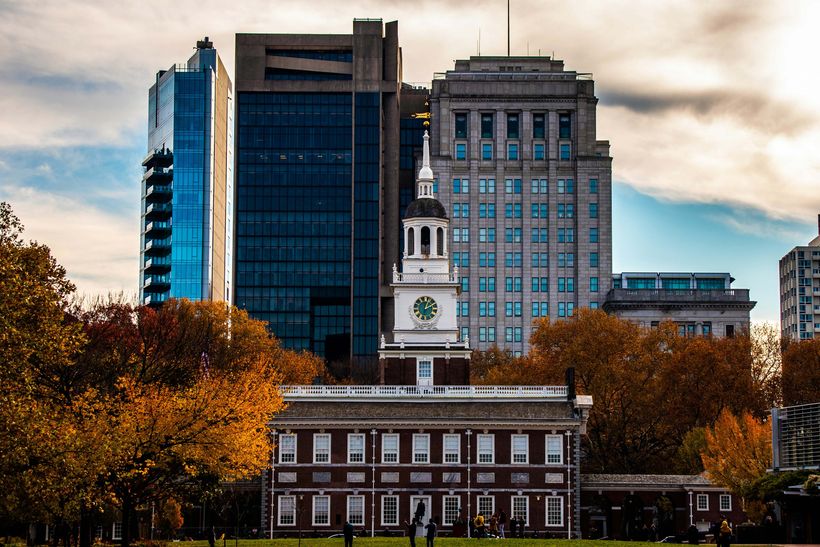
Philadelphia’s Independence Hall has long occupied an outsized place in the American imagination. The space where the Continental Army was established, the Declaration of Independence adopted and the United States Constitution ratified, the site was once described by President Abraham Lincoln as the source “where were collected together the wisdom, the patriotism, the devotion to principle, from which sprang the institutions under which we live.” In July, these hallowed grounds will yet again take center stage, as the country observes its semiquincentennial, or America250, celebration. In due course, House lawmakers will gather at the landmark for a special commemorative event, mayors from across the U.S. will march to the gates in a show of civic pride and solidarity, and thousands of visitors will flock to the site daily in appreciation for its significance to the cause of “Life, Liberty and the pursuit of Happiness.” However, while Independence Hall’s role in the national saga will go widely remarked and recognized, the building itself has a story that remains largely unknown. According to Whitney Martinko, PhD, associate professor of History and director of the Albert Lepage Center for History in the Public Interest at Villanova University, the “cradle of American democracy” almost never survived the country’s infancy. “Early on, the challenge was about two things,” says Dr. Martinko, who specializes in public history, historic preservation and the early U.S. “One was about ownership of what was called the ‘Old State House,’ because it was the former statehouse in the colony of Pennsylvania. And the second was about the development of the city around it.” As Dr. Martinko explains, in the early 19th century, Independence Hall—then the Old State House—was under the control of the Commonwealth of Pennsylvania, which had shifted its governmental seat from Philadelphia to Harrisburg by 1812. To fund the construction of a new capitol building in the wake of the move, Pennsylvania legislators seriously contemplated selling the site to private enterprise, with the surrounding area undergoing a development boom. “Today’s Independence Mall was built up entirely,” says Dr. Martinko. “In the 18th century, it was full of buildings, shops and houses, and by the 19th century, it had become a huge furniture district and a heart of commerce in many ways.” As plans were drawn up to deliver the hall to the highest bidder, local resistance quickly emerged. Opposed to the landmark’s loss, citizens of Philadelphia and municipal leaders rushed to the defense of the building and its lawn, arguing that their preservation entailed a necessary public good. “Everyone looked to this site as the heart of the new nation. It’s a historic site. It’s an important building. People thought of it as one of the great pieces of Georgian architecture at the time,” says Dr. Martinko. “It was also seen as a civic space, as people gathered there on Election Day. And its lawn was highly valued, with green, open space considered important even then, for air circulation. So, it was really seen as a political space, a civic space and a green space that was important for the well-being of Philadelphians and the health of Philadelphia.” Deliberations over the fate of Independence Hall would continue for a period of five years, up until 1818. After a spirited public campaign, a settlement was finally reached when the City of Philadelphia purchased the plot from the Commonwealth of Pennsylvania for $70,000 (roughly $1.85 million in today’s currency). In essence, the deal would forevermore secure Independence Hall’s place within the pantheon of great American shrines, parks and monuments. However, in a terrific irony, it would also eventually lead to the loss of a different piece of history: Between 1950 and 1967, the 19th-century development projects that once threatened Independence Hall became a casualty of the city’s efforts to make the “birthplace of America” an urban focal point, with the creation of Independence Mall. “Those buildings were all torn down in the mid-20th century, when Ed Bacon and the City Planning Commission decided to make Independence Hall a major attraction,” says Dr. Martinko. “There were debates surrounding this issue as well. The Jayne Building was one of the 19th-century buildings that was demolished and that is most well-known. So, there’s this sense of preserving 18th-century history through the demolition of 19th-century architecture.” As the nation approaches its 250th anniversary, the near loss of Independence Hall and the removal of its 19th-century neighbors stand as striking examples of the ways in which what we value, and how much we value it, evolves over time. What’s more, the historic threats to Philadelphia’s most famous site serve as a poignant reminder of the delicate nature of public memory and preservation—and the fact that the places we treasure today may not always be with us tomorrow. “Even though it seems absurd to us now, we’re still seeing debates over the line between redevelopment and connection with the past,” concludes Dr. Martinko. “It’s not that no one saw the value of Independence Hall, or that they didn’t see it as historic. It was just this debate that a lot of very reasonable people continue to have today: Is this what really needs to be preserved? And how should it be preserved?”