
Engagement Experts
Connect for media, speaking, professional opportunities & more.

Cultivating justice and joy through critical AI use in the K-12 Classroom
Inspired by her middle school social studies teacher, University of Delaware Associate Professor Stephanie Smith Budhai has always believed that a classroom should be a space where students feel valued and nurtured. As a seasoned educator, she has helped teachers create spaces using technology to assist students to meet learning outcomes, develop their skills and grow their confidence. Now, Budhai is mentoring overwhelmed teachers to reclaim the classroom as a nurturing environment for all students. Her book, "Critical AI in K-12 Classrooms: A Practical Guide for Cultivating Justice and Joy" with co-author Marie Heath of Loyola University Maryland, supports teachers and students as they navigate the complicated interactions of AI, education and justice. Budhai answered pressing questions about the already popular book. How would you describe the central message or takeaway of this book? "I believe that classrooms should be joyous spaces where all students feel heard, valued, seen and loved. Dealing with powerful technologies that exacerbates the biases and harms of society such as AI can impact teachers’ ability to nurture such spaces. Thus, this book was written to provide a practical guide for teachers and students as they navigate the complicated interactions of AI, education and justice. It is our duty as educators not to dismiss the technology altogether, but to help teachers take a critical lens, as they use AI for teaching and learning." What inspired you to pursue this line of research? "Before writing this book, I had already published 8 books and over 80 practitioner articles around technology, equity, teacher education and leadership. There had been other books that were quickly published about AI, but none focused on the harms of AI, how teachers could come to understand how AI really works and use it in ways that do not harm students." What are some of the key ways that K-12 teachers can cultivate justice and joy through AI? "In the book, we have many examples of how to cultivate justice and joy. For example, in chapter 3, we provide strategies for teachers to build an equity-mindset while supporting students in developing a critical consciousness around AI technologies, which are inherently biased. In chapters 4 and 5, we provide framing for using culturally-sustaining, abolitionist and fugitive pedagogies in designing curricula and learning activities that include the just use of AI technologies. And, in chapter 6, we provide teachers with myriad personal, professional, pedagogical and participatory actions they can take when using AI for teaching and learning." How could this work impact schools, teacher education programs and the broader public? "This work was created to support K-12 teachers, and many teachers have already shared how it has impacted them. K-12 teachers can immediately put the strategies and learning activities that we suggest in the book to use. We also situate AI in longer histories of technology injustice and provide accessible content on understanding how AI works through a critical algorithmic literacy perspective. Teacher education programs can use this work as they prepare teachers to navigate the complicated intersections of teaching, AI and justice. For the broader public, we also include content on justice-centered community activities and projects that are focused on critical AI." About Stephanie Smith Budhai Stephanie Smith Budhai is an associate professor in UD’s College of Education and Human Development, specializing in educational technology. Her interdisciplinary research and practice lies at the intersections of technology, equity and civic engagement, across myriad K-16 settings. She has published 10 books on teaching and digital technologies. Among other professional appointments, she serves as the Chair of the Information Technology Council for the Society for Information Technology and Teacher Education and is on the Board of Directors for the Civics of Technology. To speak with Smith further about AI in K-12 education, reach out to MediaRelations@udel.edu.


Absence and Opportunity: New Academy Report on Working Class Candidates
A new report released by the American Academy of Arts & Sciences aims to explain the near-absence of elected politicians from working-class occupations at all levels of government in the in the U.S., despite making up more than half of the U.S. labor force, and highlights strategies that can give working-class Americans a seat at the table in our elected institutions. In How to Elect More Working-Class Americans and Why It Matters, authors Noam Lupu (Vanderbilt University) and Nicholas Carnes (Duke University) describe how the shortage of politicians from the working class harms trust in government, runs contrary to our national ideals, and makes it difficult for our political institutions to understand and respond to the needs of working people in a fast-changing economy. Carnes and Lupu sought input from the working group that convened to support a recommendation of the Academy’s Commission on Reimagining Our Economy to increase working-class candidates. A main focus of the report is understanding and addressing the barriers that keep working-class Americans from running for office. How to Elect More Working-Class Americans and Why It Matters includes detailed descriptions of how parties, unions, interest groups, funders, and policymakers can increase the number of working-class candidates and officeholders. “Our democracy and our economy will grow stronger when more Americans feel included and invested,” said Laurie Patton, president of the Academy. “To address declining trust and engagement in our government, we need workable evidence-backed solutions that are driven by good ideas and good will. Nick Carnes and Noam Lupu provide a blueprint for how a policymakers, leaders and citizens across the country can increase the number of working-class candidates and benefit all who care about strengthening America.” The report represents the culmination of a decade-and-a-half of research. “Working-class people almost never go on to hold elected office in the U.S.,” said Nick Carnes, Z. Smith Reynolds Distinguished Professor of Public Policy Studies at Duke’s Sanford School of Public Policy. “In this report, we look to the available research to dispel myths about the working class and highlight the real obstacles that prevent working-class Americans from holding office.” “At a time when both major parties are seeking to win over working-class Americans, we hope this document will provide clear and actionable advice for anyone hoping to support working-class people serving their communities as elected officeholders,” said Noam Lupu, Gertrude Conaway Vanderbilt Professor of Political Science at Vanderbilt University. The challenge is not that workers are unqualified or uninterested in public service; it’s that running for office in our nation is burdensome. Candidates have to spend an enormous amount of time, money, and personal resources to run for office, making it difficult for working-class Americans to take time away from work and devote the resources necessary to mount a successful campaign. The report builds on the Academy’s enduring commitment to strengthening democracy, beginning with the organization’s founding in 1780 and embodied most recently with the Our Common Purpose initiative, and the Commission on Reimagining Our Economy, which recognized the inextricable link between democracy and economy. Adam Bonica, Stanford University; Andrea Louise Campbell, Massachusetts Institute of Technology; Katherine J. Cramer, University of Wisconsin–Madison; Jake M. Grumbach, University of California, Berkeley; Alexandra Killewald, University of Michigan; Jane Mansbridge, Harvard University; Tali Mendelberg, Princeton University; Lara Putnam, University of Pittsburgh; and Kay Lehman Schlozman, Boston College served on the advisory group with Carnes and Lupu on this project.



The ABCs of Joy: How Adversity, Belonging and Curiosity Lead to a Fuller Life
Young people today have more technology, more convenience and more connectivity than any generation before them. Yet many are struggling with anxiety, loneliness and a growing sense of dissatisfaction in their lives. The problem may be that most people have confused happiness with something deeper, and that’s joy, said Baylor University education researcher Jon Eckert, Ed.D. Data published by the Centers for Disease Control and Prevention shows that approximately one in two 12th-grade girls is not satisfied with herself, and one in three 12th-grade boys is not satisfied with himself. "We are in a happiness crisis. Kids are pursuing what they think is happiness, but they're doing it through ways that don't actually lead to happiness. Joy is different. It's deeper. It's this sense of enduring love and gratitude for others that will emerge through struggle." - Jon Eckert, Ed.D. Through years of research, Eckert identified what he calls the ABCs of Joy – Adversity, Belonging and Curiosity – finding that adversity builds belonging, and belonging cultivates curiosity. These ABCs of Joy, he said, can help people move beyond circumstantial happiness toward a more meaningful and enduring life. “I work with school leaders from all over the world and find that when people believe joy is durable and grounded in lives lived for and with others, those same people often realize the depth of their struggle determines the peak of their joy,” Eckert said. Adversity In a culture that often treats struggle as something to avoid, Eckert argues that adversity is essential to joy. "A lot of times the most joyful people we know have had really hard lives because life can be hard and joyful," Eckert said. "Oftentimes, the depth of our struggle will determine the peak of our joy." Eckert believes that when parents, teachers and coaches remove every obstacle from a young person's path, they may unintentionally prevent them from experiencing the growth that comes from overcoming challenges. "If we rob kids of the chance to struggle, then we also rob them of the chance to experience that kind of joy," Eckert said. “And I'm very clear, it's not trauma that we want for kids; it's adversity. We want them to do hard things and grow from the experience.” Belonging If adversity is where joy begins, belonging is where it grows. Drawing on flourishing research, Eckert said people may succeed independently, but they cannot truly flourish alone. Belonging is rooted in relationships where people know they are valued and supported. “Belonging is the knowledge that we matter to others, and they matter to us, which is knowledge we gain by going through hard things together,” Eckert said. “We may enjoy the fun-loving, carefree friend, but we need the person who shows up when things are hard.” At a time when much of life has moved online, that truth has become increasingly important. Social media and digital platforms offer constant connectivity, but they often fail to provide the deeper relationships people need. The strongest relationships are often forged through shared challenges, and those relationships not only provide support during difficult times, Eckert said, but also create opportunities for joy. Curiosity Eckert believes belonging and curiosity are closely connected. When people feel secure in who they are and in their relationships, they are more willing to engage those whose experiences, beliefs and backgrounds differ from their own. Because of online algorithms and digital echo chambers, many people limit meaningful engagement with people who hold different perspectives and tend to automatically dismiss those who hold ideas or opinions they disagree with. "We've become incurious as a society,” Eckert said. “How do we allow our joy and our love for others to overcome that incuriosity and seek out others? Those are the people that we should want to engage because that's what makes life more interesting." Curiosity is also essential to learning. While grades, degrees and career goals can motivate behavior, genuine learning begins with a desire to know more. "The only real form of intrinsic motivation for learning is curiosity," Eckert said. “Everything else is just delayed gratification.” Joy is more than happiness Eckert challenges the way many people, especially young people, think about happiness. Social media has fundamentally changed the way many young people evaluate their own lives by encouraging constant comparison with curated versions of others’ experiences. "If your happiness is normative and it's compared to other people, you're always going to lose on this," he said. Ultimately, Eckert believes the path forward is not found in comfort or convenience but in embracing the ABCs of Joy. When adversity is met with belonging and curiosity, young people can discover something far more durable than happiness: a joyful life marked by resilience, meaningful relationships and a deeper understanding of themselves and others. "Joy is not freedom from struggle," he said. "Joy is the fuel that allows us to struggle well.” ABOUT JON ECKERT, ED.D. Jon Eckert, Ed.D., is professor of educational leadership and The Lynda and Robert Copple Endowed Chair for Christians in School Leadership in Baylor University’s Moody School of Education. He leads the Baylor Center for School Leadership, and serves as program director of Baylor’s M.A. in School Leadership and assistant chair of the Department of Educational Leadership. Eckert’s research interests include collective leadership, teaching effectiveness, evaluation and strategic compensation to enhance that effectiveness, and science education. He has conducted research for the U.S. Department of Education, the Carnegie Foundation, the National Network of State Teachers of the Year, the National Institute for Excellence in Teaching and the Center for Teaching Quality, which he has published in numerous peer-reviewed journals and presented around the world. Eckert is the author of several books, including “Just Teaching: Feedback, Engagement, and Well-being for Each Student,” “Leading Together: Teachers and Principals Improving Student Outcomes,” and the soon-to-be-released “The Happiness Crisis: How Adversity Can Build a Resilient and Joyful Next Generation.” More from Jon Eckert, Ed.D. WATCH/LISTEN: Baylor Connections Podcast: Leadership Catalysts: Baylor Center for School Leadership A New Chapter for Educators: Culture of Joy 2026 at Foster Pavilion Looking to know more or arrange an interview? Simply contact: Shelby Cefaratti-Bertin at Shelby_Cefaratti@baylor.edu today.


Go Outside and Play: The Benefits of Outdoor Play for All Ages
The simple act of playing outside offers a multitude of interconnected benefits, profoundly enhancing physical, mental and cognitive well-being. Healthy living expert Renée Umstattd Meyer, Ph.D., professor of public health in Baylor University’s Robbins College of Health and Human Sciences, recommends making outdoor play a regular part of your family’s routine, especially during the summertime when kids are out of school and schedules are typically lighter. “Being outdoors is an equalizer, or at least it can be. Nature offers a lot of opportunities, and there are benefits to all types of being outside, whether it be yards, parks or driveways bordered by trees,” Umstattd Meyer said. “Going outdoors does not require a sign-up fee or certain types of equipment; it is just there waiting for visitors.” Umstattd Meyer’s research focuses on promoting health and access to opportunities for healthy living through an active living lens by collaborating to foster healthy and active opportunities and lifestyles for all people. The benefits of simply being outside, she says, increase through the combination of five factors: movement, connection with nature, connection with others, a reset from busy school schedules and a sense of community. Movement Outdoor play gets kids moving, which inspires creativity, critical thinking and exploration. And research bears that out, Umstattd Meyer said, showing that exercise and physical activity, even in relatively shorter bouts, help with concentration, problem-solving, learning and memory. “Being outdoors beckons us to move our bodies, for kids to run, cartwheel, spin and twirl, play chase, build pill-bug houses, chase lightning bugs, start a pick-up game, and for adults, to walk, exercise, play with our kids, pull a few weeds out of a flower bed, plant and tend to a vegetable, herb or flower garden,” she said. Summertime Safety While playing outside comes with numerous benefits, Umstattd Meyer says a few simple steps will help families safely manage higher temperatures, sun exposure and those pesky mosquitoes: Find time for outdoor play during the cooler times of day. Make sure to have plenty of water and shade available. It's okay to take a break! Use sunscreen and mosquito repellent – reapply as needed. Connection with nature Time outdoors offers well-documented physical and mental benefits, increases awareness and can evoke a sense of environmental stewardship, Umstattd Meyer said. “Just being in nature, whatever the nature might be, from a driveway with a little green around it to local parks, offers those same benefits and connection,” she said. Connection with others Spending time outside also helps people reconnect and step away from the number of devices and screens that contribute to feelings of loneliness and isolation. “Outdoor play also allows opportunities for connection with others, from family members and friends to neighbors,” Umstattd Meyer said. “It provides time and space for adults to connect with others as well, to build relationships, familiarity and trust.” Reset from the schedules Summer play can provide a break from the structured routines of the school year, but Umstattd Meyer said that it requires intentionality. “Taking a break from the planned and orchestrated schedules and demands of the school year and associated stressors, along with a break from screens and devices, will actually foster curiosity and creative thought, opportunities for critical analysis and awareness of caring for our natural surroundings and the environment,” she said. Fosters a sense of community Outdoor play not only benefits children’s health and development, but it also creates natural opportunities for families to build connections and strengthen neighborhood relationships, Umstattd Meyer said. “Being outside with our kids gives us the opportunity to say hello and get to know our neighbors,” she said. “It also allows for parents to become more comfortable with their kids being outside while becoming more acquainted with neighbors, to build confidence that their kids are capable of exploring their surroundings and the outdoors.” Umstattd Meyer encourages everyone to find outdoor spaces and engage in play, which can be planned or spontaneous and is freely chosen at any age. “Play is pursued for enjoyment and recreation rather than serving a serious or practical purpose and enhances health, happiness and quality of life,” Umstattd Meyer said. While technology has improved people’s daily lives, it also has contributed to reduced social connection and engagement with the natural world, she said. At the same time, Americans of all ages are experiencing higher levels of stress and anxiety over demands for higher productivity and achievement. “I encourage each of us to create the time to enjoy nature and plan for ways to regularly engage in outside play in a way that allows you to connect with others and physically move your body,” Umstattd Meyer said. National Play Outside Day The first Saturday of every month marks National Play Outside Day, when people of all ages are encouraged to set their screens and devices aside and head outdoors with friends and families to play together, enjoy nature and discover the multiple benefits of play. Looking to know more or arrange an interview? Simply contact: Shelby Cefaratti-Bertin at Shelby_Cefaratti@baylor.edu today.


New Harvard Report Highlights the Need for Ethical Leaders and Responsible Citizens
A new report from Harvard University's Making Caring Common Project and the National Association for College Admission Counseling is calling for a renewed focus on character, purpose, civic engagement, and ethical leadership in the college admissions process. The report, Turning the Tide in 2026: Preparing Students for Lives of Caring and Purpose, argues that colleges can play a critical role in helping develop the moral and civic capacities needed to strengthen communities and democracy. Among the higher education leaders featured in the report is Heath Einstein, Vice Provost for Enrollment Management at Texas Christian University, whose comments reinforce TCU's longstanding commitment to preparing students for lives of purpose and service. "In near perfect alignment with this report's principles, TCU's raison d'être is to produce ethical leaders and responsible citizens in the global community. At a time when our society—perhaps intentionally fragmented—cannot even agree on facts, it is essential to teach young people how to think critically about the world around them, communicate across difference, and collaborate to solve humanity's most pressing issues." The report warns that increasing political polarization, declining trust, rising mental health challenges, and excessive achievement pressure are affecting young people across the United States. Its authors argue that colleges, schools, and families should place greater emphasis on helping students develop empathy, curiosity, humility, civic responsibility, and a sense of purpose. Einstein notes that these qualities are central to the student experience TCU seeks to cultivate. "In order to achieve this outcome, we seek to create a class of students who possess empathy and humility so that they can critique ideas without critiquing the people presenting the ideas." The report's recommendations include encouraging meaningful engagement over résumé-building, helping students identify what they value and find purposeful, and creating admissions processes that recognize ethical character alongside academic achievement. Looking to know more? We can help. Heath Einstein, Vice Provost for Enrollment Management at Texas Christian University, is available to discuss college admissions, student success, ethical leadership, civic engagement, student purpose, and the evolving role of higher education in preparing future leaders.



The Business of Sports Is Booming
A recent Forbes article highlights the rapid growth of sponsorship revenue across North America's major professional sports leagues, which generated a record $7.66 billion in sponsorship revenue last season. According to research from SponsorUnited, Major League Baseball led the way with nearly $300 million in new sponsorship business in 2024, reaching $1.84 billion league-wide. One of the biggest drivers was the arrival of Japanese superstar Shohei Ohtani in Los Angeles. SponsorUnited estimates the Dodgers added 12 Japanese-based partners and $70 million in incremental sponsorship revenue during Ohtani's first season with the club. The impact extended beyond the Dodgers, with Japanese brands purchasing advertising and signage opportunities at ballparks across the league whenever Ohtani played on the road. The article also points to broader industry trends fueling sponsorship growth, including jersey patch advertising, digital signage, premium fan experiences, international expansion, and increasingly sophisticated audience targeting. Tim Derdenger is an Associate Professor of Marketing and Strategy at Carnegie Mellon’s Tepper School of Business. An expert in sports markets, his research is centered around celebrity endorsements and how to optimize their impact on product sales. View his profile According to Carnegie Mellon University marketing expert Tim Derdenger, technology will play a critical role in the future of sports sponsorship. "Using technology to reach customers and personalize those messages for them is going to be a key player in the growth of sponsorship across the leagues." As teams seek new revenue opportunities and brands look for more effective ways to engage fans, sponsorship has become one of the fastest-growing segments in professional sports. The trend reflects how leagues are increasingly leveraging data, technology, and innovative marketing strategies to create value for partners while connecting with audiences in new ways. Connect with Tim Derdenger from Carnegie Mellon University's Tepper School of Business, who is available to discuss: • The economics of sports sponsorship • How technology is transforming sports marketing • The business impact of global athletes and superstar brands • Fan engagement and personalized advertising • Emerging trends in professional sports business



Covering the World Cup? University of Delaware Experts are Here to Help with Your Coverage
As the 2026 FIFA World Cup captures attention across North America and around the world, University of Delaware experts are available to help media examine the larger stories connected to the tournament, from player safety and youth soccer to tourism, sports analytics, playing surfaces and the shared experience of watching the game. University of Delaware's World Cup Experts Hub brings together faculty and specialists who can provide timely commentary on the health, business, social and scientific issues shaping one of the world’s most watched sporting events. Featured Topics The Business of Youth Soccer Youth sports participation, community impact, the business of soccer and how a major global tournament can influence local programs, families and the next generation of players. Player Safety and Concussions Head injuries, concussion prevention, heading guidelines, athlete health and how evolving safety standards are changing the way soccer is played and taught. Tourism and Global Impact How mega-events drive tourism, economic activity, host-city visibility and broader cultural connection across countries, communities and fans. Youth Development and Fan Engagement How family traditions, school programs and shared sports experiences shape youth identity, social development and interest in physical activity. Sports Analytics in Action The rise of data-driven performance, real-time game analysis and how students and practitioners are applying analytics to elite global competition. The Science of Playing Surfaces Natural grass requirements, turfgrass systems, stadium preparation and the science behind maintaining world-class fields for international play. Why Watching Together Matters The psychology of shared experiences, happiness, social connection and why gathering for World Cup matches can be meaningful far beyond the final score. Media can visit the University of Delaware’s World Cup Experts Hub to explore available experts and connect directly with the right source for their story.





World Cup 2026: The Business Behind the Game
As the 2026 FIFA World Cup unfolds across North America, Emory University’s Goizueta Business School experts are available to help media explore the business stories behind the world’s biggest sporting event, from the economics of hosting and ticket pricing to global sponsorship, player brands and the psychology of fandom. Goizueta’s World Cup 2026 Business Hub brings together faculty who can provide timely, research-backed commentary on the commercial, cultural and consumer forces shaping the tournament as it moves from match to match, city to city and story to story. Featured Topics The Economics of Hosting Infrastructure investment, tourism revenue, real estate, local labor markets and the broader financial impact of hosting World Cup matches. The Science of Fandom What drives global fan devotion, audience loyalty and engagement across stadiums, broadcasts and digital platforms. Ticket Pricing and Demand Dynamic pricing, hospitality packages, travel costs and how extraordinary demand shapes the fan experience at major global events. Brand Strategy and Global Sponsorship How companies evaluate World Cup sponsorships, build global campaigns and measure the return on major sports partnerships. The Rise of the Player Brand How star footballers build, extend and monetize personal brands that reach far beyond the pitch. Media can visit Goizueta’s World Cup 2026 Business Hub to explore available experts and connect directly with the right source for their story.








FIFA 2026: Where Sports, Technology and Global Marketing Collide
After an amazing opening weekend - the 2026 FIFA World Cup has the full attention of a global audience. The event is poised to be one of the biggest sports business stories in North America. With matches hosted across Canada, the United States, and Mexico, the expanded 48-team tournament is expected to draw billions of viewers while creating unprecedented opportunities for sponsors, broadcasters, marketers, and technology companies. A recent BBC StoryWorks feature examining Lenovo's role as FIFA's Official Technology Partner highlights how artificial intelligence is transforming the fan experience. New technologies include AI-powered match analytics, enhanced broadcasts, referee-view cameras, AI-generated player avatars that help explain officiating decisions, and infrastructure designed to deliver near real-time content to audiences around the globe. Tim Derdenger is an Associate Professor of Marketing and Strategy at Carnegie Mellon’s Tepper School of Business. He also coordinates the Technology Strategy & Product Management Track for Tepper MBA students whose interest lead them to employment in technology firms. View his profile Beyond the technology, FIFA 2026 represents a major cultural and commercial moment for soccer in the United States. The tournament is expected to accelerate awareness of the sport, attract new fans, create new sponsorship opportunities, and further integrate soccer into the North American sports landscape. At the same time, innovations in broadcasting, immersive content, and digital engagement are changing how fans experience major events, whether they are in the stadium or following from thousands of miles away. Fernando De la Torre is a a research faculty member in the Robotics Institute at Carnegie Mellon University. His research interests are in the fields of Computer Vision and Machine Learning. In particular, applications to human health, augmented reality, virtual reality, and methods that focus on the data (not the model). View his profile CMU experts like Fernando De la Torre and Tim Derdenger can provide insight into the business, marketing, and technology implications of FIFA 2026, including how global sporting events influence consumer behavior, brand strategy, fan engagement, media consumption, and the growing role of AI in sports entertainment. As organizations look to understand the long-term impact of the tournament, these perspectives can help explain why FIFA 2026 is much more than a sporting event, it is a case study in the future of global audience engagement.

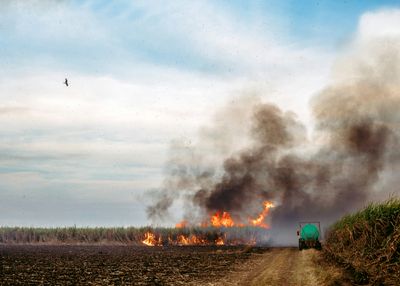
The world is burning useful waste, and cleaner alternatives are needed
When we talk about clean air, the conversation usually turns to traffic: exhaust fumes, congestion, school runs and the air people breathe on busy streets. That focus is understandable because road transport remains one of the most visible sources of poor air quality in everyday life. But Clean Air Day should also draw attention to a less visible question: why are useful materials still being burned as waste? Clean air is about more than traffic Around the world, huge quantities of leftover straw are still treated as waste to be cleared quickly, with rice straw one of the clearest examples. More than 700 million tonnes of rice straw are produced globally every year, and around 80% is burned. That contributes directly to air pollution and greenhouse gas emissions, while also destroying material that could have value. At Aston University’s Energy and Bioproducts Research Institute, researchers are exploring alternatives to open burning of crop residues, including whether materials often treated as waste could instead become useful sources of energy, fuels or bioproducts. This matters because the clean air debate needs to look beyond transport. How we manage waste, land and energy also plays a part, and agricultural residues should not automatically be seen as rubbish to be burned. In many cases, they could be resources with real value. Why burning crop waste matters The World Health Organization describes air pollution as one of the greatest environmental risks to health, estimating that ambient outdoor air pollution caused 4.2 million premature deaths globally in 2019. Much of that risk comes from exposure to fine particulate matter, which is linked to cardiovascular and respiratory disease and cancers. That is particularly relevant when residues are burned in the open, as smoke and fine particles can travel beyond the field where burning takes place, affecting nearby communities and wider air quality. There is a practical issue as well as an environmental one. If burning is the fastest and cheapest way to clear land, it can easily become the default, which is why any cleaner alternative has to work for farmers and communities in practice. It is not enough to tell people to stop burning; they need practical alternatives that make sense economically and locally. Turning waste into cleaner alternatives Biochar and bioenergy are two examples of how waste crop material can be treated differently. Instead of being burned in the open, residues can be converted into useful products or sources of renewable energy. Biochar can also offer practical benefits for farmers when it is produced and applied appropriately. Studies have shown that addition of biochar to the soil can improve its structure, help retain nutrients and, in some cases, reduce the need for synthetic fertilisers, which will lower associated emissions and economic demands. The water-holding capacity of biochar can also support crops during dry periods, potentially reducing irrigation demand in drought-prone seasons. Work connected to rice straw has shown that cleaner alternatives to burning can produce measurable environmental benefits while supporting local economies. Community-scale rice straw bioenergy systems, for example, can avoid 2.7–3.5 tonnes of CO₂ equivalent emissions per hectare each year, while creating fuel savings and reducing post-harvest losses for rice farming communities. Research and interviews have shown that farmers and local stakeholders are willing to participate in these transitions when alternatives are designed around their needs and priorities. During community engagement activities, participants consistently highlighted cleaner air as an important benefit, not only for environmental reasons but also because of concerns about the health impacts of smoke and the financial burden of illness. For many households, avoiding respiratory problems and expensive hospital bills was seen as just as important as generating additional income from agricultural residues. That matters because cleaner air is linked to more than one policy area. Transport is important, but so are farming, energy and waste. Research can help identify what works, where the trade-offs are, and how promising ideas can move beyond the lab. It can also support industry, policymakers and local partners to develop alternatives that are practical rather than theoretical. For policymakers, the lesson is that air quality cannot be improved by focusing only on the most visible sources of pollution. Transport matters, but so do homes, industry, farming, waste and energy systems. There is no single answer. Agricultural residues vary, local conditions vary, and technologies need to be assessed carefully, but cleaner air will require better options than burning. Clean Air Day should prompt us to ask why useful materials are still being burned in the first place. If we want cleaner air, we need to reduce what we burn and get smarter about what we waste. This article was written by Dr Samuel Sogbesan and Thea Mae Baltazar from Aston University’s Energy and Bioproducts Research Institute. (Photo by Sandie Peters on Unsplash)
