
addiction Experts
Connect for media, speaking, professional opportunities & more.

Study: Discuss Religion, Spirituality When Treating Young Adults with Severe Mental Illness
Baylor researcher and expert says it’s “critical” that mental health providers be equipped to assess clients’ religion/spirituality A majority of young adults with severe mental illness – bipolar disorder, schizophrenia or major depression – consider religion and spirituality relevant to their mental health, according to a new study from Baylor University’s Diana R. Garland School of Social Work. Holly Oxhandler, Ph.D., associate dean for research and faculty development in the Garland School of Social Work, served as lead author on the study, which was published in the journal Spirituality in Clinical Practice. Researchers examined data from 55 young adults (ages 18-25) with serious mental illness who had used crisis emergency services. Of the 55 young adults interviewed, 34 “mentioned religion or spirituality in the context of talking about their mental health symptoms and service use with little-to-no prompting,” researchers wrote. The sample for the study was racially diverse and gender-balanced. Not all of those interviewed considered themselves religious, as 41 percent answered “other,” “I don’t know” or “none” when asked their religious preference. However, researchers found that religion and spirituality emerged as a unique way in which this sample was able to make sense of their difficult life situations and mental health struggles. “Not only did these young adults struggle with serious mental illness, but they had also experienced extreme adversity – including abuse, poverty, homelessness, addiction, near-death experiences, loss and an overwhelming lack of access to medical and mental health services,” researchers wrote. “Yet, many attempted to explain, make sense of or organize their circumstances through their religious/spiritual perspective and talked about God as a source of comfort and support.” The young adults expressed both positive and negative views of God, prayer and support from religious and spiritual communities. Regardless of their views, the important thing to note, Oxhandler explained, is that they’re talking about these topics – something social workers and counselors traditionally are not often equipped or trained to assess or discuss. “It’s the elephant in the room,” Oxhandler said of discussions of religion and spirituality. “If we continue to ignore it, we’re ignoring a huge component of peoples’ lives that may be tied to the clinical issue.” Oxhandler, who has researched this area extensively, said such discussions can help drive subsequent treatment options. “As mental health care providers discern what mental health services to provide or coping strategies to recommend, it’s especially important they understand the role of religion/spirituality in the lives of the vulnerable young adults they serve,” she said. Researchers also found that those surveyed described using positive religious coping, negative religious coping or experiences, discussed their relationship with God/Higher Power and unpacked the role of their support systems and faith. Positive religious coping included prayer, reading religious texts, support from their religious and spiritual communities and identifying religious and spiritual meaning in difficult situations. Negative religious coping or experiences included having a negative experience with a religious organization not being supportive or receiving hurtful messages from the religious community. “Those who discussed their relationship with God or a higher power discussed God providing a sense of comfort or protection, accepting them for who they are or positively intervening in their lives,” Oxhandler said. “Among those who unpacked the role of their support systems and faith, they often described family and friends referencing religion or God for support, and some even offered recommendations for others struggling with mental illness that involve religion and spirituality.” Some of those interviewed shared that they found the mention of God or religion by family and friends less than helpful. For example, a 22-year-old white female with no religious identification mentioned in her interview that a family member “tries to tell me that going to church will be better for me because it will help me find peace, and it really does quite the opposite.” Interestingly, researchers noted that nearly all participants who reported negative experiences with religion and spirituality also reported utilizing positive religious and spiritual coping or having a positive relationship with God. Oxhandler said such complexity highlights the importance of including religion and spirituality during the initial assessment with a client. “It’s critical that mental health care providers be well equipped and trained to assess for the complex role of religion and spirituality in the lives of young adults with serious mental illness, recognizing that it could appear to be a tremendous source of support and resilience and/or a source of pain and discomfort, if even a part of their lives at all,” she said. ABOUT THE STUDY “Religion and Spirituality Among Young Adults With Severe Mental Illness,” published in the journal Spirituality in Clinical Practice, is authored by Holly K. Oxhandler, Ph.D., L.M.S.W., assistant professor and associate dean for research and faculty development, Diana R. Garland School of Social Work, Baylor University; Sarah C. Narendorf, Ph.D., L.C.S.W., assistant professor, Graduate College of Social Work, University of Houston; and Kelsey M. Moffatt, M.S.W., Diana R. Garland School of Social Work, Baylor University. ABOUT BAYLOR UNIVERSITY Baylor University is a private Christian University and a nationally ranked research institution. The University provides a vibrant campus community for more than 17,000 students by blending interdisciplinary research with an international reputation for educational excellence and a faculty commitment to teaching and scholarship. Chartered in 1845 by the Republic of Texas through the efforts of Baptist pioneers, Baylor is the oldest continually operating University in Texas. Located in Waco, Baylor welcomes students from all 50 states and more than 80 countries to study a broad range of degrees among its 12 nationally recognized academic divisions. ABOUT DIANA R. GARLAND SCHOOL OF SOCIAL WORK Baylor University’s Diana R. Garland School of Social Work is home to one of the leading graduate social work programs in the nation with a research agenda focused on the integration of faith and practice. Upholding its mission of preparing social workers in a Christian context for worldwide service and leadership, the School offers a baccalaureate degree (B.S.W.), a Master of Social Work (M.S.W.) degree and three joint-degree options, M.S.W./M.B.A., M.S.W./M.Div. and M.S.W./M.T.S., through a partnership with Baylor’s Hankamer School of Business and George W. Truett Theological Seminary, and a Ph.D. program. Visit www.baylor.edu/social_work to learn more.


Can Hollywood help lift the stigma on mental health?
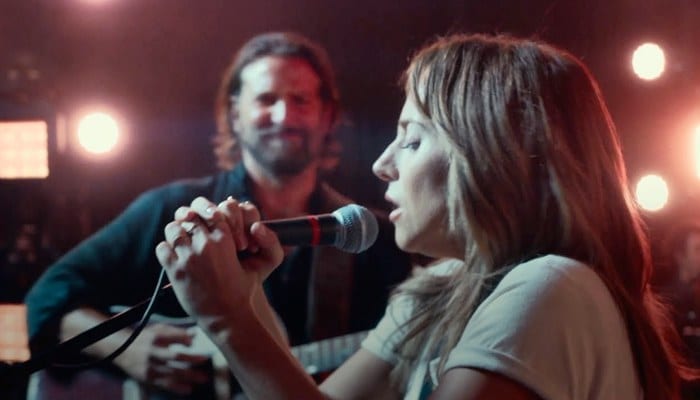
When A Star is Born was released to theatres – it had high expectations. It was a hit at international film festivals and Oscar buzz was already starting. Loaded with stars from stage, screen, and the music industry, it was guaranteed to bring in the audiences and pack theatres. While critics are raving about the performances, the message the film is bringing is also resonating with audiences as well. The story deals with characters attempting to overcome addictions as well as suicide. It’s a film that has people talking about serious issues. But is it Hollywood’s job to educate people about issues such as mental health? With the lines between education and entertainment blurring – is this a platform that could serve the wrong purposes? And with all things celebrity, is there a risk to glorifying acts of suicide or addiction? There are a lot of questions and that’s where the experts from CARF International can help. Michael Johnson is Managing Director of Behavioral Health at CARF and is an expert in mental health and substance use disorder. Mike is available to speak with media regarding this topic – simply click on his icon to arrange an interview.


Just how vulnerable are older Americans to getting hooked on opioids?
It’s a problem that most don’t commonly associate with seniors, retirees and older adults – being hooked on opioids. But it is a problem in America and it’s growing at a frightening pace. According the article attached: ‘Researchers involved with the University of Michigan’s National Poll on Healthy Aging polled a nationally representative sample of 2,000 Americans, aged 50 to 80, about what their health-care providers talked about when prescribing opioid medication to them. In the past two years, 589 said they filled an opioid prescription. This group knew how often to take the medication, but the majority didn’t recall their doctors or pharmacists talking about the risk of addiction, the risk of overdose, or what to do with leftover pills. About 40 percent said their doctors didn’t talk to them about the side effects of opioid use or guide them on when to cut back on pain medications.’ That is a staggering and scary scenario? But what can be done? Is it simply about better communication and information? Or do stronger restrictions and regulations need to be put in place to limit the opportunity for vulnerable seniors to become addicted? As America struggles to battle the opioid epidemic – are seniors another layer of addicts that could compound this situation? There are a lot of questions and that’s where the experts from can help. Dr. Marc Sweeney is the Founding Dean of the School of Pharmacy at Cedarville University and is an expert in the fields of drug abuse, prescription drug abuse and Opioid addiction. Marc is available to speak with media regarding this growing issue. Simply click on his icon to arrange an interview. Source:


National Nutrition Month - Eat better, save money, live longer
March is National Nutrition Month and it couldn’t come any quicker. After a long winter and spring around the corner, many Americans are ready to start eating healthier. Healthy eating is not merely about shedding pounds. Good nutrition often leads to financial savings and enables us to reduce waste. One way to eat healthier is by cooking at home instead of eating out. Unfortunately, according to the Bureau of Labor Statistics, the average household spends about $3,008 per year on dining out and the food consumed is usually high in trans-fats, sodium and calories. Eating out is an expensive and often times unhealthy habit. That habit is also becoming an addiction – in 1900, only two percent of U.S. meals were eaten outside the home. Recently, that number has climbed to more than 50. It’s not always easy forgoing eating out, but the reward is truly worth the effort. Cost savings aside, cooking at home and eating as a family has proven to make people happier and feel more connected. RD Natalie Allen, clinical instructor of biomedical science at Missouri State University, can share insights about cooking home-cooked meals that are tasty, healthy, cost-effective and don't take a lot of time. Contact her for an interview. Source:


Seeing the light. What is photobiomodulation and how is it changing the way we treat the brain?
As prospects for pharmaceutical solutions to Alzheimer's decline with no solution in sight over the next five years - could this daunting challenge be a catalyst for acceleration of alternative therapies? Vielight, partnering with leading health research institutions in North America has now attracted worldwide attention for its unique light therapy (photobiomodulation) technology which is showing promise for a number neurological conditions. Photobiomodulation uses visible red and near infrared light energy stimulates cells to generate more energy and undergo self-repair. The concept is not new, but advanced technologies and applications have allowed this form of therapy to emerge as a new leader in treating brain trauma and afflictions and diseases such as dementia and Alzheimer’s. The first large scale human clinical trial kicks off this year in Toronto - but patients and families have already seen astounding results. Health research institutions are making serious investments in light therapy research related to variety of neurological conditions and treatments such as Alzheimer's, dementia and Parkinson's. Researchers at institutions such as Harvard, UCSF and the Centre for Addiction and Mental Health in Toronto are discovering profound neurological effects of Vielight technology to support treatment options for Alzheimer’s and Dementia, PTSD and Traumatic brain Injury. There are a lot of questions and there is still a lot to learn about this emerging technology as well as the advancements that are taking place as we learn more about the brain and how to treat it. That’s where the experts from Vielight can help. Simply click on the icons of one of the many experts from Vielight to arrange an interview or learn more about photobiomodulation and how light therapy is being used to treat patients around the world. Source:


Is Trump a Twitter Addict? Baylor Expert Says 'Yes'
Trump has said that Twitter is his way of communicating his thoughts directly with the world, bypassing the more traditional means of using the news media, which he tends to distrust. The president’s daily use of social media begs the questions: Can people be addicted to social media? If so, is President Trump an addict? “Yes and yes,” answered James Roberts, Ph.D., The Ben H. Williams Professor of Marketing in Baylor University’s Hankamer School of Business. Roberts is a nationally known expert on consumer behavior, social media and smartphone addiction, and the effects of smartphone use on relationships. He recently published a new edition of his book, “Too Much of a Good Thing: Are You Addicted to Your Smartphone?” which includes a bonus chapter focused squarely on the Commander in Chief’s Twitter habits. “Addiction is a strong word,” Roberts said. “It’s best understood and defined as ‘continuing a behavior despite its negative consequences for you and others around you.’ Yes, we can be addicted to social media use just like we can be addicted to drugs or alcohol. Addiction can result from any behavior that produces pleasure in the brain.” In his look at President Trump, Roberts focused on the six core components applied by many health professionals when analyzing substance use disorders – salience, euphoria, tolerance, withdrawal symptoms, conflicts and relapse. “Our inability to separate from technology is devastating to our well-being,” Roberts said. “Even if it’s not an addiction, it’s a deeply ingrained habit.” Source:


New iPhone X Announcement Sparks Talk of Smartphone Use and Addiction - Baylor Experts Can Weigh In
James A. Roberts, Ph.D., The Ben H. Williams Professor of Marketing, and Meredith David, Ph.D., assistant professor of marketing, in Baylor University's Hankamer School of Business, actively research the effects of smartphones on consumers. Their findings regarding "phubbing" -- phone snubbing -- and how that practice can damage relationship and lead to depression have garnered national and international attention. Building on their "phubbing" research and the damage it does to relationship, they more recently found that the circle nearly completes itself as the offended parties frequently jump online to find affirmation in the likes and shares and positive comments of social media. “Although the stated purpose of technology like smartphones is to help us connect with others, in this particular instance, it does not,” David said. “Ironically, the very technology that was designed to bring humans closer together has isolated us from these very same people.” Roberts authored the book “Too Much of a Good Thing: Are You Addicted to Your Smartphone?” Source:


Baylor Smartphone Addiction Expert Featured in The New York Times
James Roberts, Ph.D., The Ben H. Williams Professor of Marketing in Baylor’s Hankamer School of Business, is a featured expert in this story about society’s “love” for smartphones. “A key to a healthy relationship is being present,” said Roberts, who authored the book “Too Much of a Good Thing: Are You Addicted to Your Smartphone?” The article also cites research conducted by Roberts and Meredith David, Ph.D., assistant professor of marketing, which found that “phubbing” – phone snubbing – can damage relationships and lead to depression. Source: