law Experts
Connect for media, speaking, professional opportunities & more.

Does International Law Still Matter? UMass Amherst Expert Weighs In on Doha Debates
As wars, geopolitical tensions and questions about international accountability challenge the global order, an important debate is emerging: Does international law still matter when powerful countries can choose to ignore it? That question was at the center of a recent episode of Doha Debates, which brought together international experts to examine the effectiveness, legitimacy and future of international law. Among the featured panelists was Charli Carpenter, Professor of Political Science at the University of Massachusetts Amherst, who offered a perspective on why international law remains important, even when its rules are violated. The discussion also featured Balakrishnan Rajagopal of the Massachusetts Institute of Technology, Victor Gao of the Center for China and Globalization and political philosopher Curtis Yarvin. Carpenter challenged the notion that violations of international law necessarily demonstrate its failure. She pointed to the international agreements that make everyday global cooperation possible, from aviation safety to diplomacy, and argued that international legal frameworks have helped establish expectations for how countries conduct themselves. Charli Carpenter is a scholar of international relations whose research examines international law, human security, global norms and the role of advocacy networks in shaping international policy. View her profile She also emphasized that violations can sometimes strengthen international norms by prompting other countries and institutions to reaffirm their importance. "And I think it is a common myth that if an actor breaks a rule that necessarily weakens the rule. Sometimes that can be an impetus for others to defend and reaffirm the rule. And it's often the case that rule breakers don't undermine rules, they undermine themselves and their social standing in a community." The debate explored the role of the United Nations, the Geneva Conventions, the International Criminal Court and the challenges of holding powerful countries accountable. Carpenter also discussed research into international treaties and public attitudes toward nuclear weapons, explaining how international agreements can influence expectations and behavior even when major powers are not parties to them. As global conflicts continue to test international institutions, the discussion offers a timely examination of whether the international legal system needs reform, stronger enforcement or renewed political commitment. Watch the full Doha Debates discussion on YouTube to hear Carpenter and her fellow panelists explore the future of international law and the consequences of weakening global institutions. If you're interested in speaking with Charli Carpenter about international law, global governance, international security, human rights and the future of international institutions, simply click on her profile to arrange an interview today.


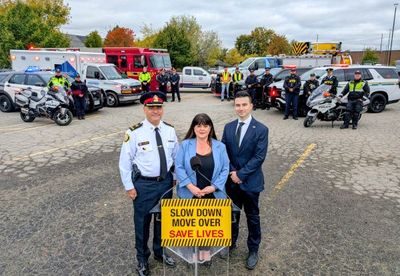
Ahead of National Slow Down, Move Over (SDMO) Day, CAA South Central Ontario, in partnership with the Ministry of Transportation, Canadian Towing Association, Toronto Police Service (TPS), Ontario Provincial Police (OPP), Toronto Fire, Toronto Paramedic Services, and 407 ETR, have joined forces to remind Ontario drivers that slowing down and moving over is one of the simplest actions they can take to help protect tow operators, first responders and other roadside workers. “For tow operators and first responders, the roadside is their workplace,” says Teresa Di Felice, assistant vice-president of government and community relations at CAA South Central Ontario. “When drivers see flashing lights, we need them to recognize that there is a trained professional helping someone at the roadside. Slowing down and moving over gives those workers the space they need to do their jobs more safely.” While most Ontario drivers are familiar with the law, that awareness does not always translate into consistent action on the road. “Every day, the men and women who respond to emergencies, assist stranded drivers and maintain our highways put themselves at risk to keep others safe,” said Prabmeet Sarkaria, Minister of Transportation. “That’s why, beginning January 1, 2027, we’re expanding Ontario’s Slow Down, Move Over law to protect more roadside workers on the job because something as simple as slowing down and moving over can save lives and help ensure those who keep our roads safe make it home to their families.” Toronto Police Service says those protections are critical for officers and other roadside workers who routinely work alongside moving traffic. "Many police officers have found themselves in situations where they are stopped on the side of the road doing their job, only to have vehicles pass dangerously close by," says Robert Johnson, Deputy Chief, Toronto Police Service. "When first responders or tow truck drivers have their lights flashing, drivers are legally required to slow down safely below the speed limit and leave space for emergency vehicles." As part of its continuing road safety work, CAA is piloting Variable Message Signs (VMS) technology on tow trucks across Ontario to determine whether enhanced visibility and directional messaging can help motorists recognize roadside incidents sooner and respond safely. Research from the AAA Foundation for Traffic Safety found drivers were 95 per cent more likely to change lanes when a VMS was active. CAA’s pilot will assess whether the technology can help motorists identify a roadside response earlier and encourage them to slow down and move over. “Drivers are processing a lot of information when they approach a roadside incident,” said Di Felice. “A clear, visible message may help them understand what is happening sooner and give them more time to slow down, check surrounding traffic and move over safely.” Putting drivers in the worker’s shoes Technology is one part of the solution. CAA is also using public education to help drivers understand the people Ontario’s SDMO law is intended to protect. CAA’s SDMO public service announcement puts motorists in the shoes of the people who assist stranded drivers every day. Rather than focusing only on the rules of the road, it highlights the individuals behind the flashing lights and the risks they face while working just feet from live traffic. Watch the PSA here. Ontario expanding slow down move over law to protect more workers Starting January 1, 2027, drivers must also slow down and move over for certain work vehicles stopped at roadside with flashing amber lights activated. Work vehicles under the expanded law include highway maintenance vehicles, public utility vehicles (such as electricity, water, natural gas, telecommunications), waste collection vehicles (such as garbage, recycling or organic waste trucks) and roadside assistance vehicles (like CAA or other providers). CN Tower to shine for roadside safety On Saturday, October 17, the CN Tower will be illuminated in yellow and black to mark National Slow Down, Move Over Day, commemorated by all the CAA clubs across the country, and in honour of the tow operators, emergency responders and other roadside workers who assist motorists every day. A standard light show will run for 5 minutes at the top of every hour, followed by another light show on the half hour. To learn more about SDMO laws, please visit: www.caasco.com/SDMO Quick Facts CAA research shows that Ontario drivers report slowing down and moving over for emergency vehicles more than 90 per cent of the time, but only 49 per cent of the time for tow trucks. Nearly 4 in 5 Ontario drivers have heard of the SDMO law, but only 55 per cent knew they were required to slow down and move over for stopped tow trucks with flashing lights. The same study found that 93 per cent of Ontarians support the use of Variable Message Signs. Respondents also said the signs would encourage drivers to slow down and move over, improving safety for roadside workers and stranded motorists. Quotes “Tow operators are often called to the roadside when someone needs help. Everyday members of our industry are available 24-hours in all kinds of weather. Doing the work safely depends in part on the actions of passing drivers. When motorists slow down and move over, they give tow operators the room they need to assist stranded drivers and clear vehicles safely. It is a small action behind the wheel that can make a big difference at the roadside.” – Joey Gagne, President, Canadian Towing Association "First responders are there to help those in crisis and keep our roads safe, but we can’t do it alone. When approaching a stopped emergency vehicle with its flashing lights activated, slow down and, where possible, move over. The Slow Down, Move Over law helps create a safer environment for emergency personnel working on our roads. It’s the law. Road safety is a shared responsibility, and a simple action can make a meaningful difference for everyone on our roads.” - Deputy Commissioner Bryan MacKillop, Ontario Provincial Police "Toronto Fire Services is proud to support CAA's Slow Down, Move Over campaign. Every day, emergency responders work in and around live traffic to keep our communities safe. Slowing down and moving over when approaching emergency scenes helps protect firefighters, paramedics, police officers, tow operators, and all roadside workers who put themselves at risk to serve others. This simple action can save lives." - Fire Chief Jim Jessop, Toronto Fire Services "Every day, emergency responders, tow truck operators and highway patrollers put themselves at risk to help keep people moving safely. At 407 ETR, we see this firsthand through the work of our patrollers, OPP officers and first responders who assist drivers and respond to incidents around the clock. That's why we're proud to support CAA's Slow Down, Move Over campaign. Slowing down and moving over isn't just the law, it's a simple action that helps protect the people working roadside and can prevent tragedies on our roads.” -Jose Espinosa, President & CEO, 407 ETR “Paramedics work in dynamic environments, including at the roadside alongside live traffic. When drivers slow down and move over, they help create a safer space for all emergency responders to do their jobs and care for those in need. Road safety is a shared responsibility.” - Chief Bikram Chawla, Toronto Paramedic Services

Supreme Court Expansion Debate Raises Questions About Judicial Independence
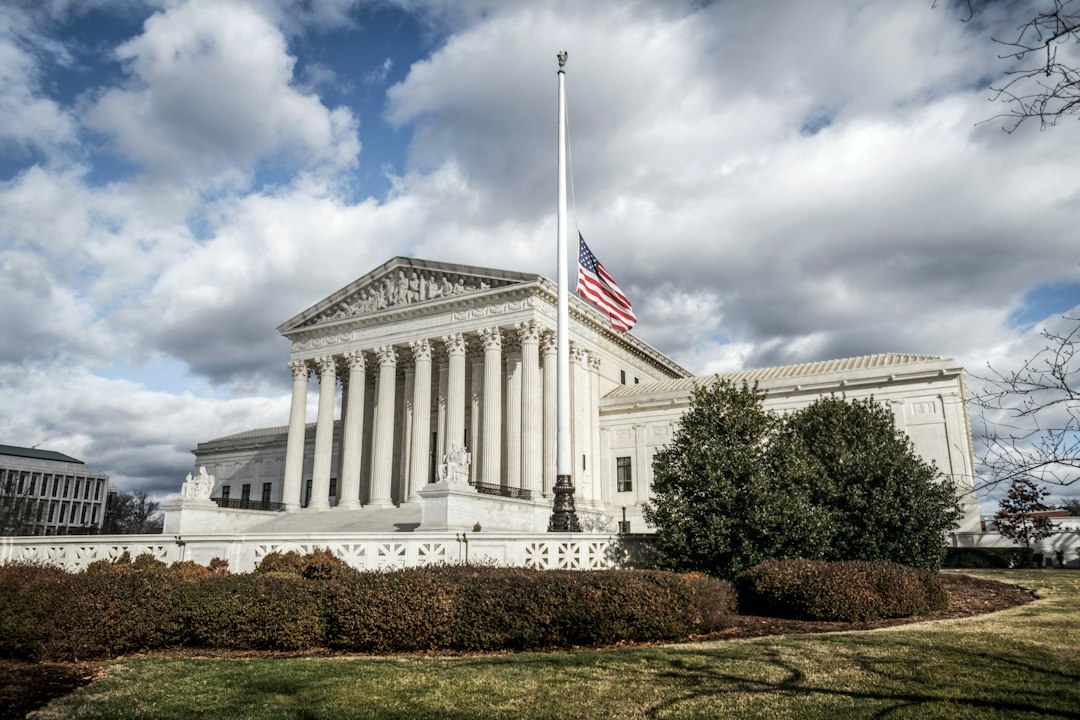
Should the Supreme Court remain at nine justices, or would a larger bench strengthen the nation’s highest court? That question is drawing renewed attention after a Republican-backed constitutional amendment to permanently limit the court to nine seats failed in the House in September. Democratic proposals include expanding the court to 13 justices, while supporters and opponents disagree over whether changing its size would improve its credibility or deepen political divisions. Although nine justices may seem like a constitutional requirement, Congress determines the court’s size. Its membership changed several times before settling at nine in 1869. Legislation introduced by Rep. Al Green would increase that number to 13, reopening a debate over how much influence elected officials should have over the structure of the judiciary. Supporters see expansion as a way to restore balance and bring additional perspectives to the bench. Critics worry that adding seats to secure favorable rulings could encourage future majorities to pursue similar changes. The broader issue is how to preserve public confidence in an institution designed to exercise independent judgment. The Constitution’s protections for federal judges, including service during good behavior and protection against salary reductions, are intended to shield them from partisan pressure. Changing the court’s membership would create new opportunities for presidential appointments, with consequences that could extend well beyond a single administration. As the debate continues, Americans face a consequential question: What reforms would strengthen accountability while preserving the Supreme Court’s ability to interpret the law independently?


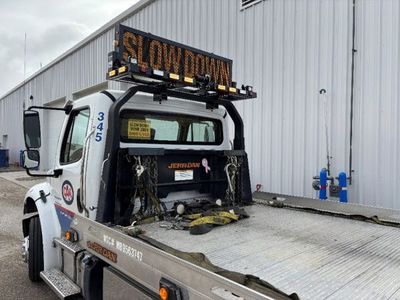
Ahead of National Slow Down Move Over (SDMO) Day, acknowledged on October 17, CAA Manitoba is calling for regulatory changes that would allow tow trucks to use vehicle-mounted electronic warning signs, known as Variable Message Signs (VMS), to give approaching drivers an earlier warning of roadside incidents. Every day, tow truck operators work alongside live traffic to help stranded motorists, but many drivers still do not give them the same space and protection they provide emergency vehicles such as police, fire and ambulances. "For tow operators and first responders, the roadside is their workplace," said Teresa Di Felice, assistant vice president, government and community relations, CAA Manitoba. "Slowing down and moving over is a simple action drivers can take to make a meaningful difference to protect the people who assist Manitobans every day." Variable Message Signs (VMS) provide drivers with advance warning of roadside incidents, giving them more time to react safely. The technology is already authorized in over 40 U.S. states, as well as in Australia and across the European Union. Research from the AAA Foundation for Traffic Safety found drivers were more likely to slow down and move over when a VMS was active, with the odds of a vehicle moving over increasing by 95 per cent. CAA Manitoba continues to discuss the use of truck-mounted VMS technology with government and industry stakeholders as part of broader efforts to improve roadside safety. A pilot project underway in Ontario is testing how the technology can help protect roadside workers, including tow operators. Despite growing awareness of SDMO laws, compliance around tow trucks continues to lag behind other emergency vehicles. CAA research found members were less likely to move over for tow trucks than for police, ambulances or fire trucks. Among those who did not move over for a tow truck, nearly half said they did not know it was required by law. "Tow truck operators are often among the first people to arrive when someone needs help," says Di Felice. "They deserve the same care and protection we give other emergency responders." To help address the issue, CAA has launched a new public service announcement that puts motorists in the shoes of the roadside workers who assist drivers every day. Rather than focusing solely on the rules of the road, the campaign highlights the people those rules are designed to protect. Watch the PSA here. CAA research also found that while eight in 10 members understand the core Slow Down, Move Over message, some remain unclear about the exact action required when approaching a roadside incident. The campaign aims to close that gap through education and awareness. To learn more about SDMO laws, please visit: https://www.caamanitoba.com/SDMO

Supreme Court’s New Term Puts Government Power and Constitutional Rights in Focus
The U.S. Supreme Court began its new term October 5 with major cases involving climate change, gun rights, immigration and religious freedom. Although the disputes address different issues, they share an underlying question: What limits govern the exercise of government power? The answers could affect how communities seek compensation, how states regulate firearms and how religious institutions participate in publicly funded programs. The climate change case centers on Boulder, Colorado’s efforts to hold Suncor Energy and ExxonMobil accountable for alleged local damage associated with greenhouse gas emissions. The companies argue that federal law prevents those claims from proceeding. Beyond the financial stakes, the dispute raises questions about whether state courts can provide remedies for local harm linked to a global problem. The outcome could influence the path available to other communities pursuing similar claims. Gun rights cases will examine restrictions on semiautomatic rifles such as AR-15s. States defend the bans as public safety measures, while challengers argue that they prohibit commonly owned firearms protected by the Second Amendment. The cases could clarify how far states may go in regulating these weapons. Immigration disputes concern detention without bond hearings and deportations to countries where migrants have no ties. These cases place the administration’s enforcement authority alongside questions about migrants’ opportunities to challenge government actions. Their practical consequences could reach people facing prolonged detention or removal to unfamiliar countries. Religious freedom will receive particular attention in a case involving Catholic preschools seeking access to Colorado’s universal preschool funding. The schools argue that their exclusion amounts to religious discrimination, while Colorado maintains that participating schools must meet nondiscrimination requirements. The dispute asks how protections for religious exercise apply when faith-based institutions seek public benefits while retaining policies grounded in their beliefs. For communities, policymakers and religious organizations, the significance of this term extends beyond individual victories or losses. These decisions could establish boundaries that guide future laws and government actions, shaping how Americans exercise their rights and seek accountability through the courts.

Professor Julian Ku Discusses U.N.’s Role in Global A.I. Debate
Hofstra Law Professor Julian Ku was quoted in a recent New York Times article examining the United Nations’ efforts to influence global discussions about artificial intelligence as the United States and China continue to lead the technology’s development. Professor Ku explained that the United Nations has historically struggled to shape how global powers use technologies unavailable to most other nations, including nuclear weapons and advanced cybertools. He said the organization may have greater success helping countries share in the benefits of A.I. than influencing the actions of the United States and China directly. “The U.N. can’t really shape the actions of those who have the power directly,” Ku said, but it can represent countries without that power.


Vanderbilt Index Finds Sustainability Remains a Mainstream Consumer Priority
As companies reconsider environmental commitments and sustainability receives less attention in corporate America, American consumers appear to be holding their ground. The inaugural Vanderbilt Consumer Sustainability Index (VCSI), released today by Vanderbilt University and consumer research company Switch 5, finds broad and consistent commitment to sustainability across the country. The national survey of 2,528 American adults found that 83% score above the midpoint on the new index, with surprisingly small differences across regions, gender and urban and rural communities. The findings establish the first baseline for the VCSI, a new quarterly measure designed to track how Americans’ attitudes toward sustainability change over time. Unlike existing measures focused primarily on climate policy or political attitudes, the VCSI looks at Americans as consumers — what they believe, what they expect from businesses and other institutions, and what they say they are willing to do themselves. The inaugural July 2026 reading places the VCSI at 69.2 out of 100, indicating a moderate-to-strong sustainability orientation among American consumers. The VCSI builds on more than two years of consumer research by Switch 5, which studies the attitudes and behaviors shaping consumer adoption of clean energy and sustainable products. That research has included more than 16 national surveys involving more than 50,000 Americans. The partnership with Vanderbilt brings that work into a recurring academic index designed to provide researchers, journalists, and businesses with a consistent measure of how consumer sustainability sentiment is changing over time. “Sustainability is often discussed through the lens of politics or corporate commitments, but consumer preferences are a critical part of the picture,” said Eric VanEpps, Associate Professor of Marketing at Vanderbilt Owen Graduate School of Management and coauthor of the study. “We created the VCSI to establish a consistent measure of what Americans believe and expect when it comes to sustainability, and to track how those attitudes change over time.” Key Findings from the Inaugural Wave 1. Consumer sustainability orientation is stronger than commonly recognized. 83% of Americans score above the midpoint of 50 on the index, suggesting broad popularity of sustainability. “People might read media coverage about how both public and private investments in sustainability initiatives have been reduced, and how large corporations have pulled back from the climate goals they set a few years ago. But the American public still cares about the environment, and these initial results create a baseline from which we can now measure trends in general sentiment,” said VanEpps. 2. Americans want businesses to lead on sustainability. Nearly nine in ten Americans (87%) want companies to help them be more environmentally friendly, and 85% say corporations bear responsibility for addressing climate change. Support for federal government action to address climate change is similarly high, at 84%, indicating broad public expectation that institutions — both public and private — should be part of the solution. “One thing to note is that most Americans work for either large corporations or the government. So when survey respondents say they want these organizations to address climate change, that is also a likely signal of how they want their employers to act,” said Vanderbilt Law School professor and study coauthor Michael Vandenbergh. 3. Concerns about future generations are widespread. More than four in five Americans (81%) believe climate change will harm future generations, including nearly half (47%) who say it will do a great deal of harm. Parents score meaningfully higher on the overall index than non-parents (72.9 vs. 67.3), suggesting the intergenerational frame is a significant motivator of sustainability commitment. 4. Americans say they are willing to act — including at some personal cost. Nearly three-quarters (74%) of Americans say they are willing to pay a little more for products that are better for the environment, and 72% say they are willing to sacrifice convenience to make environmentally friendly choices. These findings suggest meaningful room for consumer-facing sustainability initiatives that go beyond attitude measurement into behavioral change. 5. Sustainability commitment cuts across demographic lines. Perhaps the most noteworthy finding of the inaugural wave is how narrow the differences are across groups typically assumed to hold divergent views on the environment. Regional differences are minimal, with less than 2 points separating the highest and lowest of the four census regions. The gender gap is 1.5 points, and the urban-rural gap is 3 points. 6. Younger Americans lead, but sustainability commitment is broad across generations. Americans aged 18-34 score 72.2 on the index, compared to 65.1 among those 65 and older — a 7-point generational gap that reflects growing sustainability orientation among younger cohorts. Even the oldest segment sits well above the midpoint of the scale, however, indicating sustainability commitment has broad support across generations. Methodology The inaugural wave of the VCSI was fielded to a nationally representative sample of 2,528 American adults in July 2026, with data collection and analysis conducted by Switch 5 using PureSpectrum and Beacon Research. The 10-item composite index demonstrates strong internal reliability (Cronbach’s α = 0.87). Two sub-indices — Consumer Commitment (5 items) and Climate Concern & Responsibility (5 items) — correlate at r = 0.52, indicating that the two dimensions are meaningfully related but distinct. Full methodology and item-level results are available upon request, with a website currently in development. The next wave of the VCSI is expected to be fielded in October 2026 and released in late fall. Subsequent waves will report the current index level along with wave-over-wave and year-over-year changes.



Can President’s Visit Sway LI Voters in Governor’s Race?
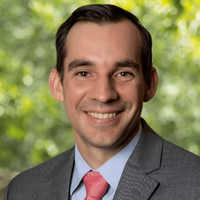
Lawrence Levy, associate vice president and executive dean of Hofstra University’s National Center for Suburban Studies, was interviewed by Newsday about President Donald Trump’s planned visit to Long Island on August 14 to show support for local law enforcement and boost Nassau County Executive Bruce Blakeman’s gubernatorial campaign. “Nothing has been more damaging to Blakeman’s campaign, especially to his ability to attract moderate suburbanites, ubiquitous on Long Island, than President Trump’s plunging approval ratings,” Levy said. “So unless the president comes with bags of money for Blakeman’s underfunded campaign, it’s hard to imagine how the visit will be a net positive. If Blakeman doesn’t have his MAGA base already secure, he’s in more trouble than even the polls suggest.”


James Sample Authors Guest Essay in The New York Times
Professor James Sample of the Maurice A. Deane School of Law has published a guest essay in The New York Times examining a U.S. Supreme Court case that could reshape how courts interpret the Eighth Amendment’s Excessive Fines Clause. In the essay, Sample analyzes Jouppi v. Alaska, a case involving an Alaska pilot whose $95,000 airplane was ordered forfeited after a passenger transported a six-pack of beer to a dry village. He argues that the case gives the Supreme Court an opportunity to clarify when government-imposed financial penalties become so disproportionate that they violate the Constitution’s prohibition on excessive fines, reinforcing an important constitutional safeguard against excessive government power. The essay is the latest example of Sample’s national thought leadership on constitutional law, the Supreme Court, and the rule of law. Throughout the month, he has been a frequent legal analyst for leading national and regional media outlets, offering insight on major Supreme Court decisions, executive power, freedom of the press, immigration, election law, judicial ethics, and other pressing constitutional issues.


A plan to sell minority stakes in the commercial business surrounding FIFA competitions has triggered a major confrontation with European soccer. UEFA and its 55 national associations have reportedly agreed to boycott FIFA competitions while the proposal remains active. The dispute touches on sports governance, private investment, legal authority, media rights and the growing commercialization of the World Cup. Writing a story around this unprecedented event? Connect with leading experts below for insight and commentary. Matthew Robinson — University of Delaware Robinson specializes in international sports governance, sport diplomacy and global sport development. His work is particularly relevant to the power struggle between FIFA, UEFA and national associations—and what a coordinated European boycott could mean for FIFA’s authority. Thomas Smith — Emory University’s Goizueta Business School Smith studies sports economics, finance and the business of entertainment. He can provide insight into the financial thinking behind FIFA’s proposal, including the trade-off between receiving capital now and sharing future World Cup revenues. Tim Derdenger — Carnegie Mellon University’s Tepper School of Business Derdenger studies sports markets, sponsorship and the commercialization of major sporting events. His research is relevant to the potential effects on broadcast value, sponsors, fan interest and the overall World Cup brand. Klaas Baks — Emory University’s Goizueta Business School Baks specializes in private equity, alternative investments, mergers and acquisitions and business valuation. His expertise can help explain how investors might value FIFA’s commercial assets and what they would typically expect from a minority investment. Andrew Brandt — Villanova University Brandt’s expertise spans sports law and sports business. That experience is relevant to questions about FIFA’s authority over its members, the legal consequences of a boycott and the potential impact on players, sponsors, broadcasters and host countries. Tim DeSchriver — University of Delaware DeSchriver researches sport finance, economics and marketing. His work can help frame the broader financial question: Is FIFA unlocking the value of its competitions, or giving up a share of long-term revenue in exchange for immediate funding? Reach out to these experts now for your next story. All inquiries are monitored to ensure time-sensitive request and deadlines are met. For more FIFA and WorldCup information visit our World Cup Expert Hubs.