money Experts
Connect for media, speaking, professional opportunities & more.

All this talk lately about Trump and Carney squaring off has made me reflect on matters closer to home. My living room has never quite reached the level of a televised leaders’ debate, but retirement has a way of turning minor domestic disagreements into full parliamentary sessions. And unlike politicians, you can’t call a recess and fly to Florida. For years, we’ve been sold a lovely picture of retirement. The alarm clock disappears. The kids have finally stopped treating your house like a storage locker. There are leisurely breakfasts, travel, golf, grandchildren, and coffee on the patio on a Tuesday morning simply because you can. And there is your spouse. Every. Single. Day. For many couples, this is wonderful. Even in the happiest relationships, though, somewhere around the third consecutive Tuesday morning together, a thought may quietly surface: Have you always chewed like that? We spend years trying to figure out whether we have enough money to retire. We calculate pensions, RRSPs, CPP, home equity, and how long our savings might last. We consult financial planners and make budgets. Some of us even build colour-coded spreadsheets, which I think is taking things a little far (just saying). Far fewer couples spend time figuring out how they will retire together, and that’s a different calculation altogether. Two Retirement Plans before One During our working years, most couples have something that retirement quietly removes: separation. You go to work. I go to work. You have your colleagues, routines, frustrations, and responsibilities, and I have mine. We leave each other in the morning, collect a day’s worth of stories, and come home with something to talk about. Retirement can fold two fairly independent lives into the same house and the same calendar, usually by the first Monday. Research backs this up. A German study of 2,117 couples, drawing on more than 30 years of national survey data, found that on average both partners grew more satisfied with life around retirement. The changes were also highly correlated within couples, so when one partner’s satisfaction slipped, the other’s tended to slip right along with it (Weber et al., 2021). Your retirement becomes my retirement, whether I applied for the position or not. Then come the expectations. One person has been dreaming of travelling for 20 years. The other would happily never set foot in an airport again. One wants to move, and one wants to stay. One wants to golf four days a week. The other thought retirement meant finally doing things together. One wants to help the kids financially. The other believes the kids are 43 and it may be time they gave adulthood a whirl. Even the timing can cause friction. One of you retires in June, the other has three years left before the pension kicks in, and suddenly someone is home all day reorganizing the spice drawer. Research on how couples make retirement decisions suggests that the way the call gets made, and whether both people feel they had a say, shapes how satisfied they are with retirement afterward (Szinovacz & Davey, 2005). The relationship you bring into retirement also comes along for the ride. Old patterns of closeness and conflict travel with you like carry-on luggage, and retirement simply changes the scenery around them (Davey & Szinovacz, 2004). That makes me wonder whether every couple needs two retirement plans before they have one. What does your retirement look like? What does mine look like? Where do they overlap? Those questions may matter more than whether we can afford the Viking cruise. And Then There’s Money Of course there is. Money has always had an extraordinary ability to walk into a perfectly pleasant conversation and leave with a baseball bat. In retirement it gets even more emotionally charged, because our financial psychology shifts. During our working years, another paycheque is always coming. In retirement, many of us start drawing down assets we spent decades building, which can feel completely sensible to one spouse and mildly terrifying to the other. This is where FORO, Fear of Running Out, can pull up a chair at breakfast. One partner sees $800,000 as security. The other sees the same $800,000 as a number that can only get smaller. Suddenly a $12,000 trip to Italy is carrying a lot of luggage: safety, control, mortality, and whether 93-year-old you might someday need that money. Then health can change the equation again. A spouse gets sick. Mobility changes. One person becomes a caregiver, and independence starts to slip away. Retirement plans that once looked beautifully aligned suddenly don’t, and that is a lot of change for any relationship to absorb. Apparently, Fighting Isn’t Necessarily Bad Three very different thinkers have helped me rethink the whole subject: an ancient Chinese general, a modern conflict facilitator, and a psychologist with a lab full of arguing couples. Sun Tzu’s The Art of War is about military strategy, yet one of its most enduring ideas travels surprisingly well into marriage: understand the situation, understand the other person, and don’t waste resources on battles that don’t need to be fought. Priya Parker comes at conflict from almost the opposite direction in her new book, The Art of Fighting (2026). Her work explores how conflict can strengthen relationships when people engage with it well. She calls this idea “healthy heat.” Some difficult conversations need enough heat to burn through to what actually matters. Then there is psychologist John Gottman, who studied couples over time and found something I love: happy couples don’t all fight the same way (Gottman, 1993). His research identified three stable types. Validators calmly talk their disagreements through. Avoiders would much prefer to change the subject. Volatile couples argue loudly and passionately and keep their marriages intact anyway. The couples headed for trouble were the hostile ones, along with the ones who had quietly checked out. So you and I don’t have to argue like the nice couple down the street. They look exhausted and boring, to be frank. What seems to matter is whether we can disagree and still hold on to respect, affection, and the sense that we are on the same side. That calls for something to sit beside the retirement financial plan. The Retirement Rules of Engagement 1. Figure out what you’re really fighting about. Before digging in your heels, ask why this matters so much to each of you. The argument about selling the house may really be about losing independence. A fight over spending can be tangled up with FORO. Too much golf might be about purpose for one person and loneliness for the other. And the argument about money may have very little to do with the actual numbers. Once the real issue is on the table, at least you’re having the right argument. 2. Choose your battles. Sun Tzu would make an excellent retirement consultant. Some things matter enormously, and others really don’t. If your spouse has loaded the dishwasher incorrectly for 37 years and everyone is still alive, victory may no longer be strategically important. 3. Keep the heat healthy. Disagreement has a place in a strong relationship. Parker’s idea of healthy heat gives us permission to have uncomfortable conversations without treating the discomfort as proof that the relationship is in trouble. Say the difficult thing. Ask the awkward question. Then stay curious about the answer. 4. Remember who is sitting across from you. This is the person you chose to build a life with. Opposing counsel bills by the hour. Gottman’s research is especially useful here, because hostility and emotional disengagement are the real warning signs. Anger passes. Contempt has a nasty habit of moving into the spare room. 5. Build some mine, yours, and ours. Two people don’t need to become one organism to have a good retirement. Separate interests, friendships, and activities give each partner purpose and independence, plus fresh material for dinner conversation. Then build the shared things on purpose too: travel, grandchildren, exercise, volunteering, cottage time, date nights, or whatever makes retirement feel like ours. A little absence can still make the heart grow fonder. 6. Know when you’re stuck. If you keep having the same argument, if conversations regularly turn hostile or contemptuous, or if one of you has simply stopped engaging, outside help may be worth it. A couples therapist can untangle relationship patterns. A financial planner can put real numbers around money fears. A retirement coach can help when identity and purpose are causing friction. Sometimes the most useful person at the kitchen table is the third one. What About Grey Divorce? Grey divorce is worth a few minutes here, because ending a marriage later in life is especially hard to recover from financially, and it ripples through the whole family, right down to the grandchildren who now spend Christmas in two places. The Canadian story, however, is less dramatic than the headlines suggest, partly because so many of those headlines are American. In the United States, adults 50 and older made up 8% of all divorces in 1990 and nearly 40% in the latest figures, and their divorce rate doubled between 1990 and 2010 before levelling off (Westrick-Payne & Brown, 2024). Canada never had that boom. Statistics Canada reports that the divorce rate among Canadians aged 50 and older rose 26% between 1991 and 2006, from 4.2 to 5.3 divorces per 1,000 married people, and has since remained relatively stable (Statistics Canada, 2022). Grey divorce remains considerably less common here than divorce among younger adults, so if you’ve read that it has doubled, you were reading about Americans. Still, divorce at 65 is financially different from divorce at 35. There are fewer working years to rebuild. One household becomes two. Housing, retirement income, pensions, estate plans, and family relationships can all take a hit, and women tend to feel it most. A Statistics Canada study that tracked Canadians from their mid-50s into their 70s found that divorced women kept about 70% of their family income, compared with about 87% for women who stayed married (Mehdi, 2023). The study concluded that divorce lowers living standards in retirement more than the death of a spouse does. Till Death Do Us Part Is Longer Than It Used to Be A couple retiring in their 60s could easily have another 20 or 30 years together. That’s an extraordinary gift. It’s also a very long time to argue over the thermostat. Our health will change, our finances may shift, and our interests will wander off in directions neither of us saw coming. The people we were when we walked away from our careers won’t necessarily be the people we are at 75, 80, or 90, so our relationships need room to grow with us. So pick the battles worth fighting, bring a little healthy heat to the ones that matter, and concede the rest, especially the dishwasher. Thirty years of retirement works out to more than 1,500 Tuesdays together. It would be a shame to spend them arguing about the forks. Don’t retire. ReWire. Sue P.S. Retiring solo? Don’t get too comfortable. Many of the same issues show up with adult children, friends, and family, along with everyone’s sudden assumption that you now have all kinds of free time. I’ll tackle that one in two weeks. My Book is Available for Order: I hope you will consider ordering a copy of Your Retirement Reset for yourself, a friend, or someone you love. Published by ECW Press and is available through Indigo or Amazon and McNally Robinson. If you like supporting Canadian booksellers, check with your local independent bookstore too. Most can order it.


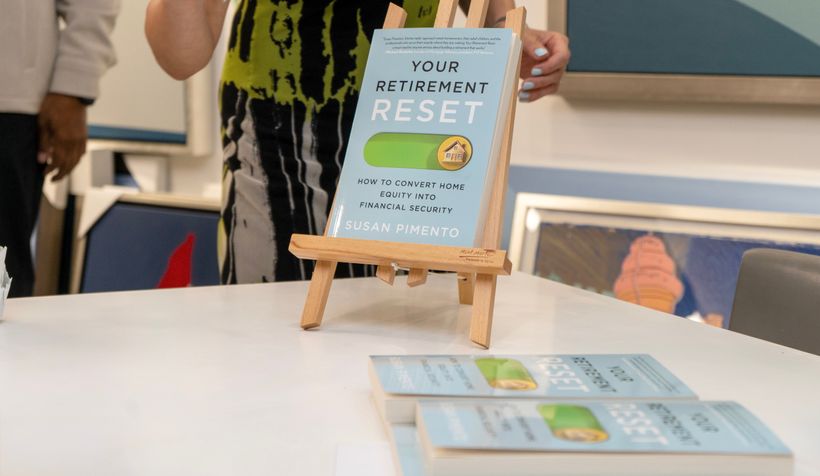
Practical guide to turning home equity into lasting retirement income is now available at Indigo, independent bookstores, Amazon.ca and McNally Robinson, and through Simon & Schuster in the U.S., in paperback, ebook and audiobook. Pimento is on a national media tour. TORONTO, ONTARIO, CANADA, September 29, 2026 -- Many Canadians share the same quiet worry: running out of money before they run out of life. Retirement expert Susan Pimento has a name for it: FORO, the Fear Of Running Out. As of today, her answer to it is in bookstores across the country. Your Retirement Reset: How to Convert Home Equity into Financial Security, published by ECW Press, is now in stores nationwide, including Indigo and Chapters locations and independent booksellers. It is also available on Amazon.ca and from Canadian independent bookseller McNally Robinson, in trade paperback, ebook and audiobook. In the United States, readers can order the book through Simon & Schuster. The book is written for Canadians in or near retirement and for the adult children who help them plan. It addresses a gap in how Canadians talk about retirement. Most advice is about saving. Very little explains how to turn what people have built into steady income that lasts. For many retirees, the family home is their largest asset. Your Retirement Reset explains, in plain language, the tools Canadians can use to unlock home equity. It shows how those tools fit alongside government benefits and registered savings, and how to weigh the trade-offs with family before making a decision. “Canadians have been told to save, save, save. Nobody tells them how to spend it,” said Pimento. “Meanwhile, the biggest asset most retirees own is right under their feet, and they’ve been taught to treat it like it’s off limits. A lot of people are house-rich and cheque-poor. This book is for anyone lying awake at 3 a.m. doing retirement math. You’ve done the hard part. Now let’s make it work for you.” “The book is about something that affects every one of us. How we're going to live and live well in the second half of our lives. Sue challenges us to think differently about retirement, especially the difference between having assets and having the income we need to enjoy life. She also challenges the traditional idea that the equity in our homes should simply sit there untouched until we die. Used thoughtfully and conservatively, she believes home equity can be a part of the retirement income conversation,” said Jennifer Smith, Publisher at ECW Press, at the book launch. National Media Tour Underway Susan Pimento is on a national media tour, and ECW Press is booking interviews with broadcast, print, podcast and online outlets. She can speak to: FORO (the Fear Of Running Out) and why it is keeping retirees up at night How Canadians can use home equity safely as a source of retirement income Common myths about reverse mortgages and downsizing What the shift from defined benefit to defined contribution pensions means for today’s retirees How adult children can start the money conversation with their parents To request an interview, contact Cassie Smyth, Publicist, at ECW Press (details below). Readers can find free resources and learn more about Pimento’s work at retirewithequity.ca. Book Details Title: Your Retirement Reset: How to Convert Home Equity into Financial Security Author: Susan Pimento Publisher: ECW Press In stores: September 29, 2026 Formats: Trade paperback, ebook, audiobook Price: $28.95 (Canada); US$28.95 (United States) ISBN (paperback): 978-1-77041-897-4 Pages: 280 US distribution: Simon & Schuster About Susan Pimento and Retire with Equity Susan Pimento is a Canadian retirement expert, author and founder of Retire with Equity, an education and advocacy platform on retirement financing. She spent more than 30 years in banking and mortgage lending, including as a Vice President at a Schedule I bank. She advises financial institutions and policymakers on modernizing retirement solutions for Canadians 55+, and co-authored EY Canada’s report The Canadian Retirement Evolution. Her motto: “Don’t Retire…ReWire!” Learn more at retirewithequity.ca Media Contact Cassie Smyth, Publicist ECW Press cassie@ecwpress.com | 416-694-3348 | info@ecwpress.com
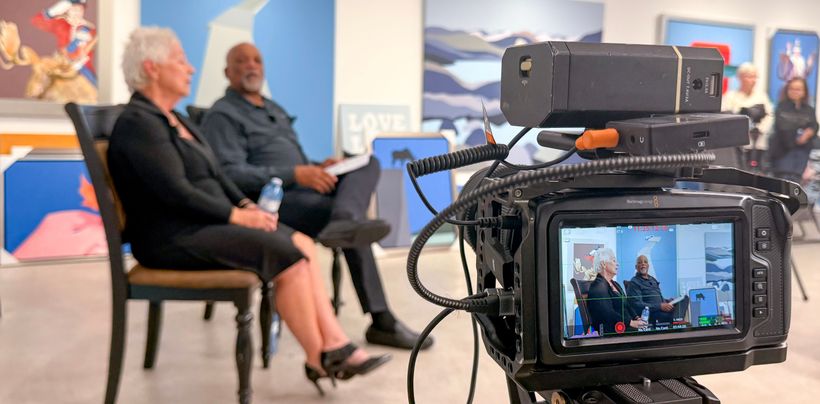
As I stood there before friends, family, colleagues, and the people who had actually agreed to come celebrate a book I wrote, I found myself thinking about how all of this had become possible. There it was my name on the cover. A real book. Something that had started as a vague idea, survived several versions, considerable self-doubt, and a few grammatical interventions, and somehow made it into the world. People frequently ask me about the process. How did you write a book? Where did the idea come from? How did you actually get it finished? The honest answer is that I didn't really know what I was doing. I just kept going long enough to figure some things out. So, in honour of the launch, I thought I would share the formula. I call it The Algebra of Writing a Book. A quick disclaimer before we begin. This is a personal formula, based on a sample size of one, occasionally supervised by a patient editor and a ten-pound she-dog named Dottie, who treats every writing session as a personal invitation to stop working and pay attention. It has not been peer-reviewed by an actual mathematician, unless being an MBA student now qualifies me to turn every human experience into an equation, whether it wants to cooperate or not. The inspiration came partly from Scott Galloway, whose The Algebra of Happiness and The Algebra of Wealth take complicated subjects and distil them into memorable formulas (Galloway, 2019, 2024). What I admired was not the formula at the end of each chapter. It was the discipline behind it. He takes a messy human subject, studies it long enough to understand the mechanics, and then gives readers something they can actually use. For years, I have spent at least a couple of hours a day reading or listening to people who think more clearly than I do. I don't just want to know what they think. I want to understand how they got there. How did they make that point? Why did that sentence work? What did they leave out? Where did they slow down? A surprising number of the ideas I now think of as my own started somewhere else. I turn them over, pull them apart, mix them with my own experience, and, if I'm lucky, they come back sounding like me. I think of them as my thought babies: borrowed genetics, raised in my household until they develop a personality. Research + Experience + Curiosity = Original Ideas At least, that was the theory. Then life decided to test it. At 65, I lost my job. Financially, I was fine. Thirty years in financial services had taken care of that. Emotionally, however, I discovered I had built a surprisingly large part of my identity on a business card. Take away the title, the office, the meetings, the responsibilities and the people who needed you to make decisions, and suddenly you are left wondering who exactly you are supposed to be on Tuesday morning. Naturally, I responded in the most emotionally healthy way I could think of. I built a business case for my reinvention. There was a timeline. There were measurable deliverables. There may even have been a Gantt chart. Picture it: a newly unemployed woman trying to project-manage her emotional recovery as though grief were a product launch. Phase One: Feel Better. Phase Two: Discover New Purpose. Phase Three: Become Inspiring. It was a spectacular failure. A few weeks later, I was sitting in my car in a grocery store parking lot with the engine off, unwilling to go inside and buy milk like someone who actually had somewhere to be. My beautifully organized recovery plan had collapsed somewhere around Phase One. It turns out grief has very little respect for bullet points. What I needed was permission to be a mess for a while. So I gave myself one small instruction: write something five days a week. Not something good. Not something publishable. Not something anyone besides Dottie and I would ever read. Just something. I did not commit to writing a book. I committed to trying. I gave myself permission to be terrible at it for as long as it took. That turned out to be the important part. Somewhere in all that low-stakes trying, I fell in love with writing. I became fascinated by how a good writer can take an idea you’ve been carrying around vaguely for years and suddenly put exactly the right words around it. You read the sentence and think, yes. That's it. That's exactly what I've been trying to say. Stealing Homework David Brooks once described writers as “beggars who tell other beggars where they found bread.” He used the phrase in a 2023 Persuasion interview with Yascha Mounk, calling it one of his favourite sayings about writing (Mounk, 2023). I loved it because it gave me permission to stop pretending that every good idea had originated in my own head. I started paying attention not only to what good writers said but also to how they built an argument, why certain words carried more weight, and how a simple metaphor could sometimes accomplish what three pages of explanation could not. I carried a notebook everywhere. I wrote down phrases that stopped me. I noticed metaphors the way other people notice good haircuts. Patricia O'Conner's Woe Is I: The Grammarphobe's Guide to Better English in Plain English quietly repaired decades of my grammatical freelancing as I tried to figure out why six words could sometimes explain something better than six paragraphs. Then came Christine. Two years and three complete versions of the manuscript later, I had something that vaguely resembled a book. That was largely thanks to Christine, a PhD, teacher, and four-time published author, who agreed to help a woman whose writing experience began and ended with mortgage disclosure statements. Christine was smart, generous, and wonderfully direct. She was also a regular in my GoodLife Fitness classes, which meant she had already watched me botch choreography in public before she read a word of my writing. I had very little dignity left to protect. Her first editorial assessment was concise: “Sue, your grammar sucks.” Fair enough. Her second question was why I insisted on capitalizing the word Mortgage as though it deserved the same reverence as God or Beyoncé. I still don’t have a good answer. But Christine's most important contribution had nothing to do with grammar. My manuscript was full of financial information and professional jargon. It was smart enough, but it wasn't human enough. Buried inside it was Clara, a character representing the ordinary people I had spent my career trying to help. The truth was that I had trouble accessing the human side of aging, finance and retirement. It was much easier to talk about the process and the products than to be vulnerable about what I had actually gone through. Christine kept pushing me. Tell the human story. Go deeper. Be more vulnerable. Stop hiding behind your expertise. She was right. Slowly, Clara became more real. As Clara became more real, so did I. Somewhere along the way, I stopped being an author trying to protect my professional credibility and became a woman willing to be seen. That changed the book. It also changed me. It helped me heal some of the wounds I hadn't realized I was carrying. And somewhere in the middle of all that editing, Christine and I became better friends. I didn't want to disappoint her, which turned out to be a far better motivator than any deadline. Finishing the manuscript didn’t feel like a triumph. It felt more like handing someone something soft and unfinished, hoping they wouldn’t drop it. As long as the book was unfinished, I had an excellent excuse: “I’m working on a book.” Very impressive. Very aspirational. Very safe. Once it was finished, there was nowhere left to hide. So I hired an agent and let him absorb the rejection on my behalf. He sent the manuscript out. Three responses came back. One publisher said, “Thanks, but no thanks.” Two said yes. Suddenly, a woman with three decades in mortgage lending, a character named Clara, and an unapologetic attachment to writing was going to be an author. Which brings me to the actual algebra. Curiosity + Permission to Fail + Consistent Effort + Time = A Finished Manuscript Notice what is missing. There is no talent requirement. No inspiration variable. No line item for knowing what you're doing before you start. There is simply a small, repeatable behaviour applied without judging the results too harshly. And here is the part I especially want to emphasize: I was 65 when I lost my job, and 70 when my book was published. Five years. Is five years too long to reinvent yourself? I doubt it. We have somehow convinced ourselves that reinvention should happen quickly, preferably between lunch and the afternoon news. But some things take time. Five years gave me time to learn, write badly, rewrite, improve, find my voice, work with Christine, survive rejection, heal old wounds, and eventually become an author. Five years earlier, I would never have put “write a book” on my list of things to do. At 65, I was trying to figure out who I was without the job that had defined so much of my adult life. At 70, I was standing in front of friends and family, holding a published book with my name on it. Here is the link to the the launch party interview if you have 37 minutes (or 24 minutes at 1.5x). We spend a lot of time planning for retirement as though we are planning a trip. We think about where we will live, how much money we will need, and what we will do with our time. All important questions. But life doesn't always follow the itinerary. Sometimes the thing you think is the ending turns out to be the beginning of the next chapter. My other formula became: Loss + Curiosity + Permission + Action + Time = Reinvention My two background mantras throughout all of this were simple: It is never too late. If not now, when? They sound almost embarrassingly obvious, but obvious does not mean easy. I have watched too many people postpone the things they want to do until some imaginary future when they will have more time, more confidence, more energy, or fewer obligations. There is always a reason to wait. I had plenty of them myself. You cannot get to “one day” without committing to “day one.” For me, day one wasn't about writing a book. It was about writing one thing. Then another. Then another. Five days out of seven. Eventually, those small acts of showing up became a manuscript. The manuscript became a book. And five years after losing my job, at 70, that book became real. And I became a better human. Scott Galloway gave me the idea of looking for the algebra beneath a complicated subject. David Brooks gave me permission to admit that writers borrow, learn from, and build on one another. Christine gave me the courage to stop hiding behind my expertise and to let the human story into the book. Dottie gave me a very reliable reason to stop writing and go for a walk. And a 65-year-old woman who had just lost a huge part of her identity gave herself permission to be bad at something new. Five days out of seven. For long enough. Apparently, that was enough. Today, Your Retirement Reset is out in the world, on bookshelves, in libraries, and with readers across Canada. More than sixty blog posts have grown out of the same process, a considerably better showing than that Gantt chart ever managed. If there is something on the back burner that you keep telling yourself you will do someday, don't start with the big plan. Try something small. Give yourself permission to be terrible. Then show up again. Make tomorrow your day one. Because sometimes reinvention doesn't arrive with a grand announcement. Sometimes it quietly wanders in while you're busy doing something else. That is how I wrote a book. And perhaps more importantly, that is how I discovered I wasn't finished becoming whoever comes next. It is never too late. If not now, when? Sue My Book is Available for Order: I hope you will consider ordering a copy of Your Retirement Reset for yourself, a friend, or someone you love. Published by ECW Press and is available through Indigo or Amazon and McNally Robinson. If you like supporting Canadian booksellers, check with your local independent bookstore too. Most can order it.

Indiana’s Player-Prop Decision Raises Stakes for College Athletics
The rapid expansion of legal sports betting has created a particularly complicated issue for college athletics: wagers based on the performance of individual student-athletes. Indiana became the latest state to confront that issue Thursday when regulators rejected an NCAA request to ban pregame college-player proposition bets. These wagers allow bettors to predict individual outcomes—such as how many points a basketball player will score or how many passing yards a quarterback will record. The NCAA has increasingly targeted these bets, citing concerns about athlete harassment, access to inside information and the potential manipulation of individual performances. Indiana regulators ultimately chose to preserve the state’s current rules, which permit certain pregame college-player props while prohibiting them once a game is underway. Sports-betting operators maintain that legal sportsbooks can monitor unusual betting patterns and alert regulators to suspicious activity, an oversight mechanism that does not exist in illegal or offshore markets. The NCAA takes a different view, arguing that attaching money directly to an individual college athlete’s statistics creates risks that are difficult to eliminate through monitoring alone. Several states have already restricted or prohibited these wagers, leaving the country with an increasingly uneven regulatory landscape. Indiana’s decision puts a larger question about the future of legalized sports betting into focus. College athletes now compete in an environment where thousands of people may have money riding on their individual performance, even when the athletes themselves receive none of the wager. Are existing safeguards enough to protect athletes and the integrity of competition? Should college sports be treated differently from professional leagues when regulators decide what people can bet on? And if states adopt different answers, how effective can any single state’s restrictions ultimately be?


Is AI ethical? One philosophy professor has an answer.
During a snowstorm last winter, University of Delaware philosophy professor Thomas Powers fixed his own thermostat by typing the error codes into ChatGPT and following the instructions it provided. As he discovered on that cold, snowy night, AI can make DIY projects that much easier, potentially saving time and money. Ever the philosopher, Powers wondered about the ethics of his solution: What is the impact of taking the repair job away from someone who relies on the work? What about the risk of being wrong? Is the environmental impact of using AI worth the result? After 20 years in the Department of Philosophy and as director of the Center for Science, Ethics and Public Policy, Powers is uniquely suited to explore questions about the ethics of AI. What does “ethical AI” mean? POWERS: We want AI systems that are helpful and useful, but also safe. We want systems that don’t produce biased or dangerous results. One approach to achieve that, which I’m hopeful about, is to create systems that are “safe by design” or “ethical by design.” In other words, instead of relying entirely on outside regulation to prevent harmful behavior, we try to design the systems themselves so that they behave in ways we consider ethical. Is it possible to make an AI system truly “safe by design” if it eventually becomes capable of acting in ways its creators didn’t anticipate? POWERS: There is a big difference between most technologies and AI. With the latter, especially current large language models (LLMs), it appears that there is some unpredictability in their behaviors. Thus, their apparent autonomy complicates the "safe by design" motto. AI autonomy introduces the need for "guardrails" that constrain what AIs can do. But even this may not be possible. Why are AI companies hiring philosophers, and what does this mean for the field of philosophy? POWERS: Some of the hardest questions in AI aren’t purely technical questions. To build systems that are safe, fair or aligned with human values, you first have to decide what those concepts actually mean and how they can be translated into something a computer system can use. The challenge is to educate people who can move between those worlds — who understand the technology but can also ask the deeper questions about what we should want that technology to do. How has AI changed philosophy? POWERS: Philosophers have long discussed the philosophy of action with the concept of agency. For decades we assumed that an agent must be human — someone who acts on their own behalf, or on the behalf of another person, with some kind of plan or attitude. This concept transfers to discussions about AI, and whether it can be considered an agent and be responsible for its actions. The next step is to ask harder questions: Are autonomous AI agents responsible, in some sense, for what they do, and does this suggest or imply that they are conscious? I don’t think AI will become conscious any time soon, but I don’t think it is impossible, and other philosophers and scientists are broaching the question. To speak with Powers further about the philosophy of AI, reach out mediarelations@udel.edu. ABOUT THOMAS POWERS Thomas M. Powers, Ph.D., is an associate professor in the Department of Philosophy at the University of Delaware. He is also the director of the Center for Science, Ethics & Public Policy at UD. Powers' current research focuses on the ethics of information technology and the philosophy of technology. He contributes to scholarship on rule-based conceptions of machine ethics, computer agency, the ethics of artificial intelligence, and other philosophical issues involving emerging technologies, including human-robot interaction.


Peri-Retirement: The Life Stage Nobody Told Us About
It started with the sweating. Not the kind you get after a workout, or the kind that shows up when you realize you're late for a job interview. This was different. Our patient, a perfectly healthy 48-year-old man, would be sitting quietly at his desk when a wave of heat would roll over him out of nowhere. His shirt would stick to his back, his forehead would glisten, and he would find himself wondering if his wife had quietly turned up the thermostat. Then came the mood swings. One minute he was fine. The next, he was irrationally furious because his wife had asked what he wanted for dinner. "I DON'T KNOW!" he shouted. "I'VE BEEN MAKING DECISIONS FOR THIRTY YEARS! CAN SOMEONE ELSE PICK FOR ONCE?" Then came the 3:17 a.m. panic attacks, always at 3:17, as if his subconscious had set an alarm. He would wake with his heart pounding, one thought looping through his mind: what if I don't have enough? Enough what? He couldn't say. Enough money, enough retirement savings, enough time, enough health, enough golf. He wasn't taking any chances. By 4:03, he was calculating the future value of his RRSP. By 4:27, he was checking his house's value. By 4:41, he was browsing real estate listings in Portugal. By 5:15, he had determined he could not, in fact, afford Portugal. By 5:22, he was oddly angry about a country he had never planned to move to. His wife finally insisted he see a doctor. The doctor listened carefully, ran the usual tests, folded his hands, and delivered his verdict. "I know what's wrong with you." The man sat up straighter. "Is it serious?" "I'm afraid you're suffering from Peri-Retirement." "Peri what?" "Peri-Retirement." "Is it contagious?" "No." "Curable?" "Not exactly." "Am I going to die?" The doctor paused for a long moment. "Eventually. We all will." "That isn't particularly reassuring." "Sorry. The good news is that Peri-Retirement is completely normal. You're 48. You've spent 25 years building a career, raising a family, paying down a mortgage, and accumulating money. You've simply reached the point where you're starting to wonder what comes next." Welcome to Peri-Retirement. And yes, unlike Peri-Menopause, this one is refreshingly inclusive. It affects men, women, and everyone in between, because apparently anxiety about money doesn't check your chromosomes before it shows up at 3:17 a.m. Maslow Could Have Used a Sequel In 1943, Abraham Maslow published his famous hierarchy of needs, the pyramid every psychology student eventually draws on a napkin. It charts the climb from food and shelter to belonging and esteem, all the way to self-actualization, the state of finally becoming the person you were capable of being all along. It's a genuinely useful map of human development. I just think Maslow wrapped it up about one life stage too soon. After decades of working, raising kids, building a career, and accumulating enough assets to make an accountant blush, most of us hit another transition Maslow never got around to charting. Retirement stops being a hazy concept involving golf and starts feeling uncomfortably real. I call that first stage Peri-Retirement, and I'd put it roughly between ages 45 and 60, the years when retirement starts creeping into every quiet moment. When can I actually retire? Will I have enough? What will I do with my Tuesdays? Can I afford to travel? What happens if I live to 95? And the question that keeps people up at 3:17 in the morning: who am I if I'm no longer working? After that comes Pre-Retirement, roughly 55 to 70. For many Baby Boomers, working until 70 has quietly become the norm, so the old assumption that everyone retires neatly at 65 is starting to look about as current as a rotary phone. Then comes Retirement itself, which turns out to have three distinct acts. There are the Go-Go years, when health and energy are still on your side and people travel, renovate the kitchen, take up pickleball, or try to figure out why everyone suddenly won't stop talking about it. Then the pace naturally shifts into the Slow-Go years, when spending and activity ease off. Eventually come the No-Go years, when health or mobility start setting the boundaries. Retirement, in other words, can run for three decades, and the financial life of a 65-year-old looks nothing like that of an 85-year-old. Which brings us to a problem the industry has grown remarkably comfortable ignoring. The Gap Between Net Worth and Cash Flow We have all become fluent in net worth. We know what our homes are worth, down to the last renovation; we track our RRSPs and TFSAs like box scores; and we celebrate or panic depending on which way the portfolio moved this week. Net worth and cash flow, though, are two completely different animals. Net worth tells you what you own. Cash flow tells you what you actually have available to pay for your life. You can be asset-rich and cash-flow poor at the same time, sitting in a million-dollar house while stressing over the hydro bill, because the grocery store still hasn't rolled out a "pay with bathroom renovation" option. That gap between paper wealth and usable income is one of the biggest problems facing retirees today, yet it gets a fraction of the attention it deserves. Turns out I'm not the only one losing sleep over this at 3:17 a.m. I co-authored a paper with EY called Canada's Retirement Evolution, and the numbers we pulled together read like a diagnosis. About 30 percent of Canadians are already 55 or older, and that share could climb to between 35 and 40 percent by 2030. Layer on top of that a trillion dollars in wealth moving from Baby Boomers to their Gen X and Millennial kids between 2016 and 2026, with roughly 70 percent of it tied up in real estate, and you get an entire country full of people who are asset-rich, cash-flow-anxious, and one awkward Thanksgiving dinner away from an intergenerational conversation about the house. We Got Very Good at One Half of the Job For decades, the financial services industry trained us beautifully in exactly one skill: accumulating. Save into your RRSP, max out your TFSA, diversify, pay down the mortgage, build the portfolio, grow the assets. Most of us became excellent students. The trouble is that the assignment eventually changes. At some point, accumulation has to hand the baton to decumulation, and we're suddenly expected to figure out how to convert decades of saving into income that can fund the rest of our lives. Ideally without draining the account, spooking ourselves every time the market dips, or spending our seventies squinting at investment statements at 4 a.m. We get thirty or forty years of coaching on how to put money into the machine, and then almost none on how to dispense it safely. That's exactly where Peri-Retirement gets interesting. What If the Income Conversation Started Earlier? The Peri-Retirement crowd is sitting on an asset most retirees have already spent: time. These are people still working, often earning meaningful income, with savings, home equity, and years for that money to compound before they need it. That's a real opportunity for the financial services industry; one it has largely left on the table. What if retirement income wasn't something we only started thinking about the week before the retirement party? What if there were products built specifically for the Peri-Retirement years, ones that let people work toward predictable, guaranteed income for life, starting at an age they choose? The idea deserves serious attention. Waiting until retirement to solve the income question means giving up years of compounding and cramming an enormous decision into a painfully short window. Starting earlier lets people build that income gradually, while a paycheque is still coming in to fund it, and it changes the whole conversation. Instead of only asking "how much money will I have when I retire," we could start asking "how much income will I actually need, and how do I build it before I get there?" That's a fundamentally different way to plan for retirement, and it might be exactly what Peri-Retirement is for. Our 48-year-old patient may have shown up with hot flashes, mood swings, and a standing 3:17 a.m. appointment with his own anxiety, but his body wasn't betraying him. It was trying to get his attention. Peri-Retirement might be the moment we finally understand that retirement was never just about the number in the account. It's about knowing exactly how that number translates into a life you can afford to live, for as long as you're living it. That's the question I wrote Your Retirement Reset to answer, including the one that trips up almost everyone: how do you turn what you've accumulated into sustainable income and cash flow for the years ahead? The book hits stores and libraries on September 29, and you're welcome to grab a copy directly from me. If you have a parent circling retirement, buy two. Retirement has a funny way of becoming a family sport, whether anyone signed up for it or not. As for our patient, the doctor sent him home with a retirement plan, a firm suggestion to stop checking his RRSP before sunrise, and strict orders to close every tab related to Portuguese real estate. His prognosis is excellent. He has Peri-Retirement, and now, at least, he finally knows what to call it. The financial industry, meanwhile, is still mostly asleep at 4:03 a.m., and it's about time someone woke it up! Don’t Retire… ReWire! Sue My Book is Available for Pre-Order: I hope you will consider pre-ordering a copy of Your Retirement Reset for yourself, a friend, or someone you love. It arrives September 29, 2026, published by ECW Press, and is already available through Indigo or Amazon. If you like supporting Canadian booksellers, check with your local independent bookstore too. Most can order it.

Peri-Retirement, Divorce Dust, and the Investment Hiding in Your Backyard
My friend from the gym has a recurring nightmare, not the usual one about showing up to spin class without pants. In hers, she is sixty-eight, broke, standing on her parents' porch with a suitcase, ringing the doorbell of the house she grew up in, hoping they still remember her. In the dream, her parents are somehow both alive and completely unbothered, as though this is a perfectly ordinary Tuesday. She wakes up in a sweat every time. She has told me about this dream more than once, usually mid-hill climb, which is not when I do my best financial counselling. For her, it is not a silly dream, it is the shape of her deepest fear, failure. Not being able to afford her own retirement feels like proof that she did something fundamentally wrong. Father Time does not send polite reminders. He taps his watch, and her subconscious taps back. A few months ago when she started making progress on the construction of the laneway house in her backyard, I expected her to feel lighter. Instead, she cornered me by the water fountain, looking as if she had personally lost a boxing match. "I should be in my accumulation years," she said, "and instead I am pouring every spare dollar into a construction site." She said the word construction the way other people say audit. Here is what I told her: she had this exactly backwards. This is peri-retirement, a phase I coined to describe the stretch that can hit anywhere between forty-five and sixty. It is the point when most of the accumulating happens, and savings should be well underway. The kids are at school. Retirement is coming whether you are ready or not, and peri-retirement is the stage when that fact finally gets your attention. It deserves its own post, coming soon. For today, back to my friend and her Home Equity Line of Credit (HELOC). Spending feels like money disappearing. Investing is money that goes somewhere. When you spend money, it is gone in a way you can feel immediately: dinner is bought, eaten, and now there is only a receipt. When you invest money, the dollars leave your hand but do not vanish. They convert into something: a stock certificate, a retirement account, or, in my friend's case, a fully legal, income-producing rental unit thirty feet behind her kitchen. The trouble is that every invoice looks the same, whether you are buying a vacation or a foundation. Her brain filed the whole project under "money disappearing," no matter how many times I explained that a rental suite generates a cheque every month for the rest of her life. What made this harder to accept was her HELOC. She had spent years throwing every spare dollar at her mortgage so she could stand at her front door and say "paid" out loud to nobody in particular. Now she watched a home equity line of credit climb back up to pay for two-by-fours and a very opinionated contractor, as if undoing decades of discipline in one renovation season. But debt taken on to build an income-producing asset is a different animal from debt taken on to buy a car that loses value the moment you drive it off the lot. The couch is delivered, comfortable, and will never write you a cheque. An investment costs money up front and, if structured well, pays you back for years. A laneway suite is not a couch. It is a very slow, very stubborn vending machine that eventually hands you rent instead of snacks. Numbers make this less abstract. A laneway or garden suite in a city like Toronto typically costs three hundred and fifty thousand to six hundred thousand dollars plus to build. The rent can range from two thousand to four thousand dollars a month. After property tax, insurance, and maintenance take their cut, most homeowners break even in ten to fifteen-ish years, still slow compared with a twenty-five-year mortgage, but faster than it sounds. After that, it is simply income, for as long as you own the property. What exactly is an ADU? An Accessory Dwelling Unit, or ADU, is a separate, fully equipped living space on the same lot as your main house, giving its occupant their own front door, kitchen, and, mercifully, their own bathroom. The basement apartment is the classic workhorse of the category and the more accessible option: no backyard or laneway access needed, and usually a smaller cheque, making it the realistic starting point for most homeowners before they ever consider the trendier laneway or garden suite. The rules vary by city. Vancouver has allowed laneway houses, once called coach houses, for years, with a permitting framework it has published. Toronto came later, introducing Laneway Suites in 2018 and Garden Suites in 2022, with its own permit process outlined here. My friend started her project after hearing some version of "build it and they will come," hoping to eventually have her mother move in or to have a space ready for her own child. A laneway suite can also become a studio for a retirement passion project, or even the retirement plan itself, with the homeowner moving into the smaller suite and renting out the main house, a modern spin on downsizing, as one Toronto homeowner described in a piece worth reading. Using rental income to fund retirement is not new. Landlords have long understood this math. What is new is that many homeowners in their fifties are realizing their house is their largest asset and possibly the centrepiece of their retirement plan. Now for the part nobody puts in the glossy brochure. Building an ADU is stressful in a way that is hard to explain to someone who has not lived through a renovation. Contractors have a nickname for the fine grey powder that coats every surface in a house under construction. They call it divorce dust. I did not make that up, and I did not need to ask why. My gym friend has had the full tour: Committee of Adjustment (COA) hearings, legal agreements between neighbours causing permit delays, a contractor who went MIA with her down payment, the other contractor who went MIA for 3 weeks and a neighbour, silent about the fence for eleven years, who suddenly developed passionate opinions about sightlines the moment scaffolding went up. Building one is still worth doing. It just means staying vigilant after the ribbon cutting, too. A rental unit does not run itself: there is vacancy to plan for, tenant relationships to manage, insurance to update, since a standard homeowner policy will not cover a rental suite, and rental income to declare at tax time. It is genuinely not for everyone. But with the resilience to weather the dust and the landlord duties that follow, the payoff is a long-term, appreciating asset that can steadily fund a big piece of your retirement. Governments have finally noticed. Different levels of government are working to make these suites easier to build, with mixed follow-through. In 2024, the federal government announced an expansion of the Canada Secondary Suite Loan Program, offering up to eighty thousand dollars at two percent interest over fifteen years, though it never launch. Some municipalities like County of Simcoe, have launched their own Secondary Suites Program. Other programs currently in place, Homeowners can refinance an insured mortgage to cover a secondary suite, up to ninety percent of the post-renovation value. A Multigenerational Home Renovation Tax Credit for a suite built for an elderly or disabled family member. Recently there was a quiet launch of a GST and HST rebate eligibility for laneway and garden suites starting construction between April 1, 2026, and March 31, 2027. This is a step in the right direction, but needs more clarity and longer timeframe. It is estimated that Toronto alone has around twelve hundred active permits for these suites, with roughly five hundred completed (Source). If curiosity is winning out over fear, skip the contractor for now. Call your city's planning department to find out what your lot allows, then speak with a mortgage broker or accountant about how a HELOC or refinance fits your finances. Ten minutes on the phone beats an afternoon scrolling through laneway house photos. Back to the nightmare. My gym friend is going to be fine. Better than fine, actually. She already sees the win for her family: the parent who gets to stay close or the tenant who covers a meaningful chunk of her expenses. What she needed was permission to stop grading her HELOC statement like a report card and to start seeing it as the price of admission to a retirement plan that pays her back for decades. I keep thinking about that dream, the suitcase, the porch, and her bewildered parents opening the door. Here is the twist she has not clocked yet. In the upcoming year, when the suite is finished, occupied by her mom or rented, and quietly depositing a cheque into her account every month, she will have built the one thing that makes that nightmare impossible. She will not be the one showing up on a porch with a suitcase. She will be the one handing someone else the keys and locking her own front door behind her without a second thought. Don't Retire...ReWire! Sue My Book is Available for Pre-Order I hope you will consider pre-ordering a copy of Your Retirement Reset for yourself, a friend, or someone you love. It arrives September 29, 2026, published by ECW Press, and is already available through Indigo or Amazon. If you like supporting Canadian booksellers, check with your local independent bookstore too. Most can order it in without any trouble. Important: This article is general information and commentary only and does not constitute financial, mortgage, tax, legal, or investment advice. Before making decisions about your retirement or home equity, consult qualified, licensed professionals who can assess your personal circumstances.
Absence and Opportunity: New Academy Report on Working Class Candidates
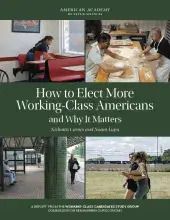
A new report released by the American Academy of Arts & Sciences aims to explain the near-absence of elected politicians from working-class occupations at all levels of government in the in the U.S., despite making up more than half of the U.S. labor force, and highlights strategies that can give working-class Americans a seat at the table in our elected institutions. In How to Elect More Working-Class Americans and Why It Matters, authors Noam Lupu (Vanderbilt University) and Nicholas Carnes (Duke University) describe how the shortage of politicians from the working class harms trust in government, runs contrary to our national ideals, and makes it difficult for our political institutions to understand and respond to the needs of working people in a fast-changing economy. Carnes and Lupu sought input from the working group that convened to support a recommendation of the Academy’s Commission on Reimagining Our Economy to increase working-class candidates. A main focus of the report is understanding and addressing the barriers that keep working-class Americans from running for office. How to Elect More Working-Class Americans and Why It Matters includes detailed descriptions of how parties, unions, interest groups, funders, and policymakers can increase the number of working-class candidates and officeholders. “Our democracy and our economy will grow stronger when more Americans feel included and invested,” said Laurie Patton, president of the Academy. “To address declining trust and engagement in our government, we need workable evidence-backed solutions that are driven by good ideas and good will. Nick Carnes and Noam Lupu provide a blueprint for how a policymakers, leaders and citizens across the country can increase the number of working-class candidates and benefit all who care about strengthening America.” The report represents the culmination of a decade-and-a-half of research. “Working-class people almost never go on to hold elected office in the U.S.,” said Nick Carnes, Z. Smith Reynolds Distinguished Professor of Public Policy Studies at Duke’s Sanford School of Public Policy. “In this report, we look to the available research to dispel myths about the working class and highlight the real obstacles that prevent working-class Americans from holding office.” “At a time when both major parties are seeking to win over working-class Americans, we hope this document will provide clear and actionable advice for anyone hoping to support working-class people serving their communities as elected officeholders,” said Noam Lupu, Gertrude Conaway Vanderbilt Professor of Political Science at Vanderbilt University. The challenge is not that workers are unqualified or uninterested in public service; it’s that running for office in our nation is burdensome. Candidates have to spend an enormous amount of time, money, and personal resources to run for office, making it difficult for working-class Americans to take time away from work and devote the resources necessary to mount a successful campaign. The report builds on the Academy’s enduring commitment to strengthening democracy, beginning with the organization’s founding in 1780 and embodied most recently with the Our Common Purpose initiative, and the Commission on Reimagining Our Economy, which recognized the inextricable link between democracy and economy. Adam Bonica, Stanford University; Andrea Louise Campbell, Massachusetts Institute of Technology; Katherine J. Cramer, University of Wisconsin–Madison; Jake M. Grumbach, University of California, Berkeley; Alexandra Killewald, University of Michigan; Jane Mansbridge, Harvard University; Tali Mendelberg, Princeton University; Lara Putnam, University of Pittsburgh; and Kay Lehman Schlozman, Boston College served on the advisory group with Carnes and Lupu on this project.



Parenting Your Parents: The Stuff We Don’t Say at Dinner
Every family has an elephant it keeps meaning to talk about, and in my family, that conversation always seemed to circle back to dessert. Someone would work up the nerve to raise something serious, and right on cue, someone else would ask if anyone wanted more pie. The elephant would quietly slip out of the room again. Dessert was sacred in our house, which is probably why my dad ate his first. We could talk about the weather, the traffic, Aunt Carol’s hip, almost anything except who would be in charge if Mom’s memory got worse or where Dad would live if the stairs ever became a problem. Here’s the thing about elephants. Silence only makes the room darker, and everyone ends up bumping into more furniture while trying to avoid the thing nobody wants to name. Instead, turn on the lights and look at it together, out loud, as a family, preferably before an emergency forces the conversation to happen at full volume in a hospital hallway. Part one of this series was about the everyday chaos of parenting your parents, the cordless phones, the clumpy milk and the mystery meals from the freezer. This part is different. These are the conversations nobody brings up willingly, the ones that involve lawyers instead of laughs. But they come from exactly the same place and matter just as much, maybe more, because they’re the ones that keep a family from falling apart the moment something goes wrong. The Power of Attorney Huddle Start with a power of attorney, the single most practical and least romantic gift you can give your family. Most people assume it is one document that covers everything. In Ontario, it is two separate things. A Continuing Power of Attorney for Property covers money, bills, and anything linked to a bank account. A Power of Attorney for Personal Care covers health decisions, housing, and day-to-day well-being. Other provinces use slightly different names for the same idea, so check your own, but the concept holds everywhere in Canada. One person can hold both roles, or you can split them between two people, whichever fits your family better. Nobody wants to picture a parent developing dementia or Alzheimer’s, but that is precisely why these documents exist. The time to set them up is now, while everyone involved is still sharp enough to have an opinion. Once capacity is gone, the chance to choose is lost. Families who skip this step often end up applying to court for guardianship instead, which costs more, takes longer, and does nothing about the emergency sitting in the hospital bed. Do not let AI draft these documents. This is the kind of paperwork that needs to hold up at two in the morning in an emergency room, so it needs a legal professional who knows your province and your family’s particular version of complicated. Have the conversation as a family first. Ask Mom and Dad honestly who they want making these calls, then take that to a professional who can build something that will hold up when it is needed. Splitting the Shift, and Supporting Whoever Carries It If you are an only child, feel free to skip this part, mostly because you never had a choice in the matter to begin with. Every ounce of this responsibility lands on your shoulders alone, and if there is a special corner of heaven reserved for those who carry it entirely by themselves, I hope it comes with better snacks than the rest of us get. For everyone with siblings, the question of dividing the work is really a workload question, and workload questions go sideways fast when nothing is written down. I know it sounds painfully formal, like drafting a treaty instead of helping your mother, to put who calls the doctor, who handles the finances, and who takes the overnight shifts into an actual document. But clarity is the entire point, because when something goes wrong, and it always eventually does, families get frenetic, pointing fingers or freezing instead of deciding anything. There is an old line about the best time to negotiate a prenup being on the honeymoon, when everyone still likes each other and no crisis is pulling at the conversation. The same logic applies here. Do this work while everyone is calm and well-rested, not standing in a hospital hallway, because the alternative is doing it during the worst week of the year, with all the extra tension thrown in for free. Even with the fairest split, the person carrying the heaviest share still needs support of their own. Caregivers have a real talent for arranging support for everyone except themselves, scheduling pills, appointments, and grocery runs for someone else while quietly running their own tank down to empty. I did plenty of that myself. The exhaustion was never a badge of honour, just a warning light I mostly ignored. Support in Canada varies by province, but it is available. The Ontario Caregiver Organization offers free counselling, peer support, a helpline for when you need someone to talk you down, and help finding respite care. Caregivers Alberta provides resources, mental health support, and education for Albertans caring for family members or friends. The Canadian Centre for Caregiving Excellence tracks support nationally and points you to programs wherever you live. Eligible individuals may qualify for Employment Insurance (EI) Caregiving Benefits. There is also a federal tax credit worth asking an accountant about, since most people qualify and never claim it. None of this replaces an actual break, and a break is not optional, no matter how capable you feel. Respite care exists so you can sleep, see a friend, or sit in a coffee shop without your phone buzzing about a missed pill. Asking for it isn't a weakness; it's what keeps you able to show up for your parent at all. Feet First or in a Box Somewhere in every family, a parent eventually announces their exit strategy. I’m not moving. You can’t make me. The only way I’m leaving this house is feet first or in a box. It’s delivered with total confidence, usually while standing on a knee or hip that clearly objects to the plan. Here is the distinction that matters most in this conversation. The children don’t get to decide where Mom or Dad lives. They get to help their parents decide, and that difference changes everything about how the conversation should go. Instead of announcing a verdict, ask open questions. How do you picture your retirement? Where do you see yourself in five years? What would need to change for you to still feel safe here? Then sit with the answers instead of rushing to fix them. For those of you with a difficult relationships with a parent, a complicated family tree or a family with illness or any form of abuse, my heart is with you. Thank you for even reading this far. I know this is an even more delicate topic and I don't have solutions for you. I do know that the same questions and conversations would apply but perhaps would be better delivered by a neutral 3rd party individual, trusted friend of the family or local pastor. Patience matters here more than almost anywhere else in this series, because older Canadians have earned the right to be stubborn about their front door, and pushing too hard usually only produces more stubbornness in return. What matters is that you talk about what happens if the stairs become a problem, the garden becomes too much, or living alone starts to feel isolating. Sometimes the answer is small: a gardener, a chairlift or safety bars in the bathroom. Sometimes it is a little sneaky with a housekeeper once a week, who conveniently expands to caregiving assistance on additional days. Sometimes it is bigger, such as moving in with a family member or trading the family home for a one-level apartment that does not require a hip replacement just to reach the mailbox. Whatever shape it takes, it works best when the whole family writes that next chapter together rather than one person handing it to the rest. Wishes and Wills The last set of conversations covers what your parents want if they get sick, what they want when they die, and what kind of care setting they would choose if they ever needed one, as well as which community they want to be part of and what matters most when choices become hard. These are not questions you settle in one sitting over coffee. They build slowly, over several conversations, and some of it needs time to sink in before anyone can respond honestly. If a conversation stalls, let it stall. Somewhere in all of this, the subject of a will comes up, and it is worth asking plainly whether one exists, where to find it, whether it is up to date, and whether it is legal. Sometimes parents want to walk you through every detail. Sometimes they would rather keep the specifics to themselves, and that is entirely their right. It is their money, their wishes, their life, and being an adult about it means respecting the boundary even when you are curious. What matters is that the conversation happened at all, not that you know every line of it. There is also a very modern wrinkle to all of this: passwords. A will can name exactly who gets the rocking chair, but it says nothing about who can unlock the phone to find the photos in the first place, or access the email, or access online banking once nobody remembers the password to the password manager. Write down the important logins somewhere real, not just in someone's memory, and tell a person you trust where to find them. I have friends in their fifties and sixties who found a genuinely clever way through all of this. They told their adult kids about their wishes and what was in their wills via a family group text, agreeing to save the real questions for when they were together at the cottage for the family vacation. Nobody had to maintain composure across a formal dinner table. They just laid it out in writing, then filled in the details around campfires and silly card games. Then, at the next big family gathering, actual Post-it notes started appearing on furniture around the house. Someone had written their name on artwork. Someone else claimed the good armchair. What could have been a heavy, tense conversation turned into a full-blown Post-it war, with siblings calling dibs on Grandma’s lamp with the same energy usually reserved for calling shotgun on the front seat. Turns out you can talk about who gets what without anyone needing a box of tissues in the room. Same Family, Different Kind of Love None of this is easy, and none of it should be. If it were simple, someone would have written the manual I was looking for in part one. But easy was never the goal. The goal is to show up for the people who showed up for you, with enough light in the room that nobody has to keep pretending the elephant is not there. Part one was about the everyday chaos, the stuff that makes you laugh even as it drives you slightly insane. This part is about the quieter, harder stuff: the paperwork and the conversations that do not come with a punchline. But it all comes from the same place. Every bit of it, the freezer-burned shrimp and the power of attorney alike, is really just love wearing a very inconvenient disguise. So have the conversations, write things down, and get a real lawyer to make it official. Ask the open questions, then listen to the answers. And when it is done, or as done as these things ever get, go ahead and have dessert first. Life is too short and far too unpredictable to save the best part for last. Warmly, Sue My Book is Available for Pre-Order I hope you will consider pre-ordering a copy of Your Retirement Reset for you, a friend or loved one. It's available September 29, 2026 published by ECW Press - You can now order at Indigo or Amazon. And if you love supporting Canadian booksellers, please also check with your local independent bookstore. Most can easily order it for you.

Can President’s Visit Sway LI Voters in Governor’s Race?
Lawrence Levy, associate vice president and executive dean of Hofstra University’s National Center for Suburban Studies, was interviewed by Newsday about President Donald Trump’s planned visit to Long Island on August 14 to show support for local law enforcement and boost Nassau County Executive Bruce Blakeman’s gubernatorial campaign. “Nothing has been more damaging to Blakeman’s campaign, especially to his ability to attract moderate suburbanites, ubiquitous on Long Island, than President Trump’s plunging approval ratings,” Levy said. “So unless the president comes with bags of money for Blakeman’s underfunded campaign, it’s hard to imagine how the visit will be a net positive. If Blakeman doesn’t have his MAGA base already secure, he’s in more trouble than even the polls suggest.”