
Experts Matter. Find Yours.
Connect for media, speaking, professional opportunities & more.

Bug Off: Why Some People Are More Attractive to Mosquitoes
Summer means mosquitoes, and with more of the pesky insects buzzing around, more people are grappling with mosquito bites and their consequences, ranging from an itchy inconvenience to serious health risks from vector-borne diseases. If it seems like mosquitoes bite you more than others, you may be right, according to Baylor University mosquito expert Jason Pitts, Ph.D. It simply may come down to how you smell. An associate professor of biology and director of Baylor’s Biology of Global Health 4+1 Program, Pitts focuses his research on mosquitoes and their complex odor-receptors, or sense of smell, to better understand how they locate food sources crucial to survival and reproduction. His impactful work is helping develop new mosquito control methods, which ultimately could lead to a decrease in vector-borne disease transmission around the world. “Many insects find their way around the world through their sense of smell, even more than vision,” Pitts said. “Mosquitoes and other insects really are adept at finding places to lay their eggs, finding flowers on which to feed or finding people on which to blood feed just by the sense of smell.” A mosquito’s strong sense of smell is critical to its survival. While all mosquitoes feed from nectar, only females bite humans and other mammals. They need the blood to support egg development in reproduction, and they rely heavily on scent to locate a host, Pitts said. “As we sweat, we emit volatile odors – or strong smells – which can be very attractive to mosquitoes,” Pitts said, adding that these odors include carboxylic acids, a key component in human sweat, which vary from person to person and can determine how appealing someone is to mosquitoes. Mosquitoes detect these chemicals in a similar way to how humans process smells. Humans have nerves in their nasal passages that, if tuned, will send signal receptors to the brain – the same process for mosquitoes, guiding them toward a potential meal, Pitts said. Because of their efficiency in locating human hosts, mosquitoes are considered to be the deadliest creatures in the world, responsible for more than 700,000 deaths each year from vector-borne diseases they transmit, including yellow fever, Zika, dengue, malaria and West Nile virus. Four D’s of mosquito prevention Whether you are a favorite meal among mosquitoes or not, Pitts recommends following the “Four D’s” of preventing mosquito breeding and bites – Dress, Drain, DEET and Dusk/Dawn. Dress Mosquitoes are attracted to darker colors, so wear light-colored, loose-fitting, long-sleeved shirts and long pants to protect yourself from potential bites. Drain The most important thing anyone can do is to reduce breeding sources for mosquitoes by draining stagnant water. If you have standing water in any kind of container in your yard, get in the habit of emptying those containers, including children’s swimming pools, which should be emptied at least once a week. Defend with DEET The most effective repellent is EPA-approved DEET (N-Diethyl-meta-toluamide). “Once a mosquito lands on the skin, they taste the skin to decide whether this is a good host or not,” Pitts said. “They can actually taste DEET, which is a long-range repellent. They can smell it and avoid it. When they taste it, they will also fly away.” Dusk / Dawn Mosquitoes are more active at dusk and at dawn, when the sun is rising or setting. Avoiding these times will help you avoid bites. If you like to take a morning run or walk at dusk, make sure to apply DEET repellent and wear light-colored clothing. Looking to know more or arrange an interview? Simply click on the icon below and connect with the expert.



How would one even begin the task of adapting The Odyssey, Homer’s nearly 3,000-year-old poem, to the big screen in 2026? We’re finding out as Academy Award-winning director Christopher Nolan brings the epic story of the hero Odysseus on his decade-long journey home after the Trojan War to modern audiences, including some who may never have read the classic story. As a professor of Great Texts at Baylor University, Sarah-Jane (SJ) Murray, Ph.D., has spent most of her life reading and analyzing ancient texts like The Odyssey and teaching a popular course in the Honors College on the “Intellectual Tradition of the Ancient World.” But she’s also a screenwriter and filmmaker who works with modern media and technologies to invite new audiences into the “Great Conversation” that spans millennia. Baylor Media & Public Relations spoke with SJ Murray about her approach to The Odyssey on the big screen, why this ancient story still resonates with readers – and now viewers – today and the creation of The Greats Story Lab that breathes new life into ancient wisdom from yesterday’s great books for today’s digital world. Q: You’ve described The Odyssey by Homer as “one of the greatest journeys ever told,” but it’s also a story that has us ponder some of life’s deepest questions. Why does The Odyssey, written nearly 3,000 years ago, continue to speak to us today? SJ Murray: This is something I spend a lot of time thinking about. At the end of the day, there are stories that are here for now, maybe entertain us in the day-to-day, or distract us and provide a little bit of relief from the difficulties of life. But then there are these enduring tales that challenge us to ask about timeless questions that never go away. I watch my students go through this in the classroom all the time, even the ones who have encountered maybe parts of The Odyssey in high school, and they're thinking, why am I reading this again? And then I watched them fall in love with it for the first time. It's not just that the story endures; it's that we can revisit it at different times in our lives, and we find new answers. Or if we're lucky and we're curious, we find new questions to ask about who we are. So there's all kinds of themes that help us in this, but at the end of the day, this is a story about someone who can't go home. Q: That desire to “go home” is a universal theme we all can recognize, whether we’ve read the book or not. It's not that easy to come home from war and from great trial. You're no longer the same person you were when you left, so when we meet the great hero for the first time – and we don't meet him at the beginning of the book – he’s weeping. There are always a few students in the class who say, this is just not how I would think of Odysseus. And the Greeks wouldn't have either. This is the great hero of the battle of Troy, and yet when we meet him, he's a broken man, war has taken its toll on him and so has separation from his community, and he yearns to go home. The person holding him hostage has offered him immortality, and unlike, let's say the Interview with a Vampire interviewer, who wants that immortality more than anything else, Odysseus just wants to be human, knowing that he will die. The Odyssey is a book about challenging us to live well, because life is short, and there will be trials, there will be challenges, and as we see Odysseus wrestle with them, including his own great pride, we have a chance to learn lessons from him and to forge our own characters alongside him. There's the adventure, for sure, but there's an incredible part of the book that forms us as people who think about restraint, and what does a virtue like humility look like? What does a virtue like courage look like? All of these are questions that help us live more fruitful lives if we seek out the answers, and there's no easy answer, so we have to keep revisiting these questions, and a book like The Odyssey invites us into that same quest, so that we, too, can find the peace and rest of finally being home again. That really inspires me. Q: As a professor of Great Texts who also teaches in film & digital media, how should moviegoers who have never read The Odyssey engage with the story? SJ Murray: This is such a great thing to think about because there's a lot of noise right now on the internet. Read the book first, read the book after. And I think it's okay to approach it from many different ways. My advice would be to remember, and I say this as a positive thing, that a movie is a work of art in its own right, and it is an interpretation in its own right. So I do not presume to tell anybody what they should do, but I can tell you what I do, and that is I will be going in, and I will be excited to see how Christopher Nolan adapts it. My hope is that the truth and the spirit and the themes of The Odyssey are alive and well, and I expect to see some things that delight and surprise me. Q: You're a medieval scholar and a filmmaker, so you have an interesting perspective on film adaptations of ancient stories. During medieval times, stories were told to audiences – and they changed with each telling. And that was okay! SJ Murray: Maybe I have had many years on my side to train me to think about stories in this way, because in the Middle Ages, that I studied in graduate school, it was sort of insulting if somebody copied your story verbatim. Think about this. This is all pre-printing press, so people would expand dialogue, or add a little scene, or take something out that they didn't like, or add a love interest. This happened all the time in medieval storytelling, and the idea was that the story had to be alive, it had to breathe, it had to grow. So if we go in expecting the story I see play in my head, then we're more at risk of maybe being disappointed. I did this when I went in to watch “The Lord of the Rings.” I was like, I want to see what Peter Jackson did with one of my favorite books of all time. And I was delighted, and I wanted to read the book again. I think that if you go see The Odyssey and want to be surprised and delighted and to feel that Homer is alive, then that is a good thing. Q: Do audiences have to choose between the movie and the book? SJ Murray: I would not presume to say I watched the movie, therefore I have read the book because they are two different things. Nolan has to be allowed the freedom to create his work of art, and Homer's poem has to live on in its own right that deserves our attention today as well. The two things can be true. I can love the movie, and I can love the old book. I want to live in a world where we can enjoy both because the reality today is that the greatest gateway into reading a book for a young person is going to be a great movie or something that they come across on Instagram. I want them to find their way back into the book, and we have to find ways to issue that invitation today in new ways. Q: You recently published an essay in the Sunday New York Times about our modern crisis of attention and how advice from the Roman philosopher Seneca from 2,000 years ago can help us reclaim wisdom and avoid distraction today. Can ancient stories brought to life on the big screen ignite a reading journey in the classics like The Odyssey? I would just say that if you love a story and you love a book, a far more powerful way for people to read with joy and gusto again is to hear about it from another human being. If you and I were not here talking today about this, and I said to you, one of my favorite books of all time that really changed my life is Homer's Odyssey. I got you a copy, and no pressure, give it to somebody else if you don't want to read it, but I think you'd really enjoy it. It really speaks to something you're going through right now. The chance of your friend reading that book just went up astronomically. And that's what it means to steward bookish culture well in our digital age. We have to remember that books are things shared person to person, and stories are things shared person to person. So if you have a grandkid right now, and you love The Odyssey, they will love to receive it from you as a gift, and they will probably love it all the more because their grandfather or grandmother gave it to them. Don't underestimate the gift of your love of a book, sharing it verbally with somebody else. It might be the little spark they need to turn that page and start reading. Q: Director Christopher Nolan spoke recently to The New York Times about challenging himself with an ancient story like The Odyssey that resonates with our culture today. How do you foresee viewing the film yourself as both a filmmaker and Great Texts scholar? SJ Murray: I learned this from a late mentor, Robert Fagles, who was a great translator of Homer. In my first year or second year at Baylor, he came to Baylor to give a lecture on campus, and I asked him what he thought about the film, “Troy.” I expected him to be like, oh, they really should have worked harder on making that more exact or something. And I just remember this huge smile came over his face, and he was just sort of looking out in front of him, thinking, and he said, “Well, Sarah Jane, it's just… it's wonderful. The stories are alive. People are talking about them, they're watching them, people are reading them again. Homer would be so pleased.” And I remember in that moment, I told myself, when a movie comes out about a book I care about, I want to be like Bob Fagles. I want to be excited for the movie. How lucky are we that in our lifetime, an amazing director like Christopher Nolan has chosen to bring Homer back to life for us. That's amazing. It's wondrous. I'm so excited. The best advice I can give anyone, and this is what I do myself every time I start a movie and every time I start a book. I'm going to turn off my inner critic when I walk in. When the lights go down, that is a sign for me to be with the story and the journey and to turn off the little voice in my head that wants to analyze anything. When I go into the movie theater, I want to watch and enjoy and be part of that community experience of watching “The Odyssey” together. Looking to know more or arrange an interview? Simply contact: Shelby Cefaratti-Bertin at Shelby_Cefaratti@baylor.edu today.

A plan to sell minority stakes in the commercial business surrounding FIFA competitions has triggered a major confrontation with European soccer. UEFA and its 55 national associations have reportedly agreed to boycott FIFA competitions while the proposal remains active. The dispute touches on sports governance, private investment, legal authority, media rights and the growing commercialization of the World Cup. Writing a story around this unprecedented event? Connect with leading experts below for insight and commentary. Matthew Robinson — University of Delaware Robinson specializes in international sports governance, sport diplomacy and global sport development. His work is particularly relevant to the power struggle between FIFA, UEFA and national associations—and what a coordinated European boycott could mean for FIFA’s authority. Thomas Smith — Emory University’s Goizueta Business School Smith studies sports economics, finance and the business of entertainment. He can provide insight into the financial thinking behind FIFA’s proposal, including the trade-off between receiving capital now and sharing future World Cup revenues. Tim Derdenger — Carnegie Mellon University’s Tepper School of Business Derdenger studies sports markets, sponsorship and the commercialization of major sporting events. His research is relevant to the potential effects on broadcast value, sponsors, fan interest and the overall World Cup brand. Klaas Baks — Emory University’s Goizueta Business School Baks specializes in private equity, alternative investments, mergers and acquisitions and business valuation. His expertise can help explain how investors might value FIFA’s commercial assets and what they would typically expect from a minority investment. Andrew Brandt — Villanova University Brandt’s expertise spans sports law and sports business. That experience is relevant to questions about FIFA’s authority over its members, the legal consequences of a boycott and the potential impact on players, sponsors, broadcasters and host countries. Tim DeSchriver — University of Delaware DeSchriver researches sport finance, economics and marketing. His work can help frame the broader financial question: Is FIFA unlocking the value of its competitions, or giving up a share of long-term revenue in exchange for immediate funding? Reach out to these experts now for your next story. All inquiries are monitored to ensure time-sensitive request and deadlines are met. For more FIFA and WorldCup information visit our World Cup Expert Hubs.


The Truth About “Negative-Calorie” Cucumbers
As summer temperatures climb, so does interest in cucumbers — crunchy, hydrating, and long rumored to be a “negative-calorie food” that burns more energy to digest than it provides. It's a claim that circulates every year in diet culture, but it isn't true. The New York Times recently set out to separate the nutrition science from the myth, and turned to registered dietitians for a clear-eyed answer. Dr. Gina Jarman Hill is a Professor and Chair of the Department of Nutritional Sciences at Texas Christian University. A Registered and Licensed Dietitian, she has worked as a clinical and consultant dietitian and is a member of the Hunger and Environmental Nutrition (HEN) and Dietitians in Integrative and Functional Medicine dietetic practice groups. Her teaching and research center on food and sustainability, nutrition ecology, community nutrition, and public health — with particular expertise in food security, urban agriculture, and hunger. She earned her BS, MS, and PhD in Food and Nutrition from Texas Tech University and was named the Texas Academy of Nutrition and Dietetics' Outstanding Nutrition Educator in 2017. Dr. Hill was recently featured in The New York Times article “How Healthy Are Cucumbers?” by Amanda Schupak (July 13, 2026), which examines what cucumbers do — and don't — offer nutritionally. Read the full article here. A 10.5-ounce unpeeled garden cucumber, for instance, contains just over one cup of water and 45 calories. Gina Jarman Hill, a professor of nutritional sciences at Texas Christian University, said there is a common misconception that cucumbers are “negative-calorie foods” — meaning they contain fewer calories than it takes to burn digesting them. “There’s no such thing as a ‘negative-calorie food,’” she said, but because the number of calories in cucumbers is so low, they’re about as close as you will get to one. As long as you’re mindful of what you pair them with, Dr. Hill said, there is no reason to curb your cucumber consumption. Dr. Hill is available to speak with media on nutrition myths, food security, sustainable and urban agriculture, community nutrition education, and healthy eating on a budget — timely topics as outlets continue to cover diet trends, food waste, and seasonal eating. To arrange an interview or request a comment, click through to Dr. Hill's profile below.



There's No Such Thing as the Average Canadian Retiree. There Are Three.
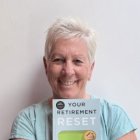
You've seen the photo. Silver-haired couple on a sailboat, or walking on a beach at golden hour, laughing about nothing in particular. It's on the cover of every retirement brochure ever printed. It's what "the average Canadian retiree" looks like. In thirty years of banking, I never met that couple. I met a widow in her seventies deciding between a dental crown and her property taxes. I met a couple in their sixties quietly draining their RRSPs to keep a grandchild in university. And yes, I met people with sailboats, though they weren't asking me about retirement income. They were asking about estate freezes and charitable foundations. Three conversations. Three completely different Canadians. And after three decades of having them, most recently as a vice president at one of Canada's Schedule I banks, I've come to believe our biggest retirement problem isn't that Canadians plan badly. It's that we keep designing for an "average retiree" who doesn't exist. In The Canadian Retirement Evolution, a report newly published by EY that I was proud to co-author, I make the case for seeing Canadian retirees as three distinct groups. 1) Retirees in Need (roughly 30%) Nearly one-third of Canadian retirees are living close to the edge. Limited pension income, modest personal savings, and rising living costs define their retirement. Adding to the pressure, retirement debt is becoming the new reality. According to Royal LePage, 29% of Canadians who are recently retired or approaching retirement expect to continue making mortgage payments on their primary residence. For many Canadians, debt has become a permanent companion, extending well into what should be their most financially secure years. Perhaps the most troubling reality is this. Most people in this group have never received professional financial advice. The Canadians who need planning the most are often the Canadians the financial planning industry reaches the least. That should concern every financial institution, advisor and policymaker in this country. When retirement arrives with too little income, too much debt and no plan, the result is not just financial stress. It is anxiety, reduced independence and difficult choices that no Canadian should have to make after a lifetime of work. 2) Retirees Seeking Stability (roughly 60%) This is the majority of Canadian retirees, and the group that the sailboat photo completely misses. They are not financially struggling, but neither are they financially free. They have enough to retire, but not enough to stop worrying. What they want is simple. They want to maintain the lifestyle they spent forty years building. They want confidence that their money will last as long as they do. They want a retirement plan that offers stability and predictability. And they want the freedom to help the people they love, whether that's contributing to a grandchild's education, helping with a first home, or lending a hand when life throws one of their children an unexpected curveball. That is where retirement becomes complicated. Retirement has changed dramatically over the past three decades, but much of the advice Canadians receive has not. The result is a growing gap between today's retirement realities and yesterday's retirement plans. Every dollar shared with family is one less dollar available to fund their own future. Every unexpected expense raises the same unsettling question: Will I still have enough? This group lives in the space between abundance and anxiety. They have assets, but not always confidence. They have choices, but every choice comes with trade-offs. They don't need a miracle. They need a plan that provides stability, predictability, and the confidence to enjoy the retirement they worked so hard to earn without constantly wondering if today's decisions will become tomorrow's regrets. 3) Affluent Retirees (roughly 10%) The remaining ten percent focuses on sophisticated wealth management: transferring wealth to the next generation, structuring estates to minimize taxes, and giving philanthropically. These are good problems to have, served by an entire industry built to solve them. And that's the uncomfortable truth hiding in the framework: most of our retirement advice, most of our products, and most of our planning tools were designed with this group in mind. Retirement Fear Has a Name In 1990, more than 70% of Canadian workplace pension plans were defined benefit plans, providing predictable, guaranteed lifetime income. By 2022, that figure had fallen to just 37%. In the span of a single working generation, we quietly shifted the risk of outliving retirement savings from institutions to individuals. The anxiety created by that shift is something I encountered in thousands of conversations with Canadians throughout my lending career, long before I had a name for it. I call it FORO, the Fear of Running Out. In the EY report, we describe it this way: "Fear of running out (FORO) reflects a structural gap in retirement system design, not a failure of individual planning. Most retirement frameworks were built for accumulation rather than sustainable income in later life." That is the heart of the challenge. Canada's retirement system does an excellent job of helping people save, but far less to help them transform those savings into sustainable, predictable income throughout retirement. It is little wonder that so many Canadians approach retirement with uncertainty rather than confidence. The Elephant in the Living Room One final reality deserves far more attention. Canada is in the midst of one of the largest intergenerational wealth transfers in its history. Much of that wealth is tied up in residential real estate, owned by Canadians who consistently say they want to remain in their homes for as long as possible. That creates an important contradiction. The largest asset held by most Canadian households is also one of the least integrated into mainstream retirement planning. We encourage Canadians to build home equity for decades, then often ignore it when they need income the most. If retirement planning is meant to consider every available resource, why do we continue to overlook the largest one? Resolving that question has become the focus of my research and my forthcoming book, Your Retirement Reset: How to Convert Home Equity into Financial Security (ECW Press, September 2026). But that discussion extends beyond the scope of this article. For now, it is enough to recognize the disconnect. Retirement has changed. Canadians' balance sheets have changed. It may be time for retirement planning to change as well. A Retirement System Designed for Everyone The EY report reminds us that retirement is more than a financial milestone. It is one of life's most significant transitions, and every Canadian deserves to approach it with confidence, dignity and choice. That outcome will not be achieved with a retirement system designed around a single, hypothetical retiree. Canadians retire with different financial realities, different goals and different challenges. A retirement system that recognizes only one path will continue to leave too many people behind. Designing for the three retirement realities outlined in this paper is not simply good policy. It is good business. Financial institutions that tailor products, advice and education to meet the needs of all three groups will be better positioned to serve Canada's fastest-growing demographic. Policymakers who encourage that evolution will help create a retirement system that reflects the way Canadians actually live today, not the way they lived thirty years ago. The question is no longer whether retirement has changed. It has. The question is whether our retirement system will evolve quickly enough to meet Canadians where they are. Don't Retire... Re-Wire! Sue

How Wildfires Impact Vulnerable Communities, Pets and Public Health Systems
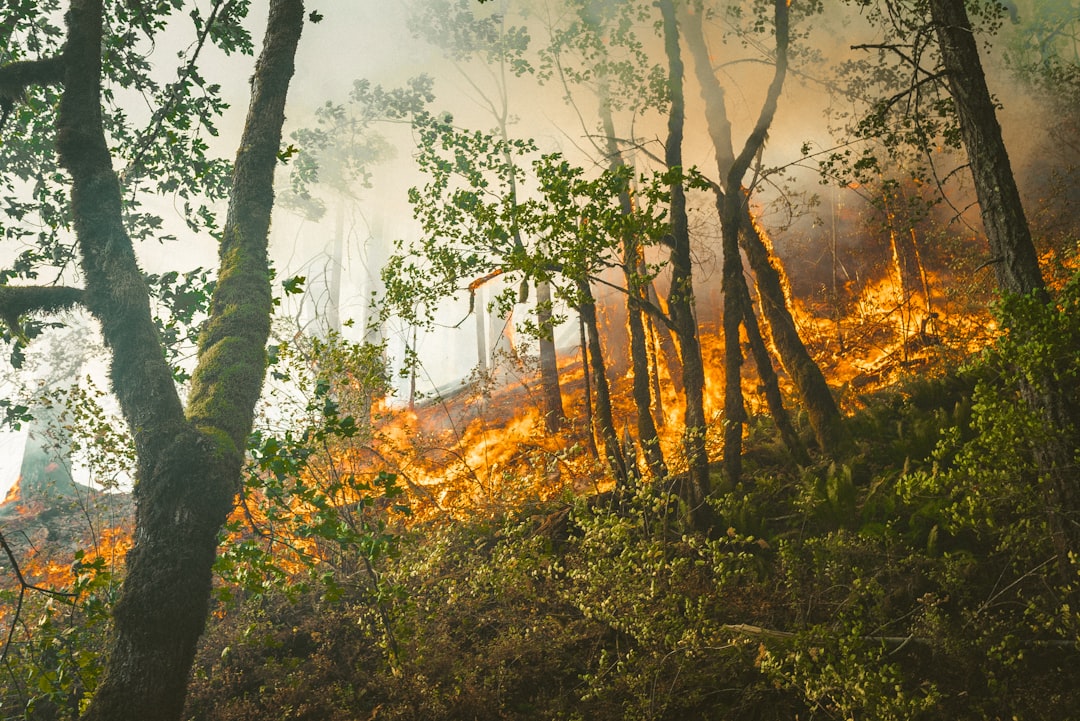
Wildfires burning across the world, now in parts of France and Spain, are forcing hundreds of thousands of people to evacuate. University of Delaware experts are available to discuss wildfire evacuations, vulnerable communities, animal rescue and the health effects of wildfire smoke exposure. Those experts, from UD’s Disaster Research Center, include: Sarah DeYoung Professor of sociology and criminal justice: • How people are forced to make split-second decisions involving horses, livestock and companion animals during fast-moving wildfires. • Why some owners must turn animals loose when evacuation time is limited. • Lessons from past disasters and animal rescue research. Jennifer Trivedi Assistant professor of anthropology: • The unique challenges faced by vulnerable populations during wildfires. • Complications surrounding evacuation decision-making and evacuation needs. • Long-term recovery following catastrophic disasters. Jennifer Horney Chair of UD’s Department of Epidemiology: • Health risks associated with wildfire smoke exposure, including respiratory infections. • How wildfire smoke and airborne pollutants affect population health. • The strain major wildfires can place on public health and health care systems. To arrange an interview with these experts, visit their profile page and click on the "contact" button. Interested journalists can also send an email to MediaRelations@udel.edu.





Deaths, resignations in Congress test narrow majority
United Press International (UPI wire service) interviewed Meena Bose, Hofstra University professor of political science, executive dean of the Public Policy and Public Service program, the Kalikow Chair in Presidential Studies and director of the Kalikow Center for the Study of the American Presidency, about the death of Senator Lindsey Graham and President Donald Trump‘s choice of the late Senator’s sister Darline Graham Nordone, to succeed him. Until the midterm elections, Nordone will hold that position in an honorary capacity. There are four active vacancies on Capitol Hill with Nordone filling Graham’s seat. “The issue here is really that there have been vacancies and resignations and that the margin is so narrow for party control, particularly in the House of Representatives,” Dr. Bose told UPI. “The number of resignations or decisions not to run for re-election is indicative of questions about why people want to serve in office or indicative of a question of are people hesitant to serve in public office, and if so, why?”


Fewer Essays, Fiercer Odds: The New College Application Math
A growing number of top colleges — including Tulane, Washington University in St. Louis, and UNC Chapel Hill — are trimming or eliminating supplemental essays, citing student stress and the rise of AI-assisted writing that makes it harder to tell who actually wrote an application. But the shift comes with a catch: fewer barriers to applying tend to mean more applications and lower admit rates. The Wall Street Journal explored the trend, and pointed to Texas Christian University as a case study already living the tradeoff. Heath Einstein is Vice Provost for Enrollment at Texas Christian University, now in his 13th year at TCU after previously serving as dean of admission and director of freshman admission. With more than two decades in admission and college counseling, he is a frequent speaker at national conferences and a voting delegate to the National Association for College Admission Counseling's Assembly, the governing body that sets national admissions-practice standards. He has chaired Texas ACAC's Government Relations and Advancement committees, received the association's Founders' Award, and served as Board Chair of ACCEPT: Admissions Community Cultivating Equity and Peace Today. His expertise spans cultural humility, shared governance, crisis management, staff development, and data analytics. Einstein was recently featured in The Wall Street Journal article “Colleges Juice Application Numbers by Letting Students Write Fewer Essays” by Roshan Fernandez (July 10, 2026), which examines how cutting supplemental essays is reshaping admissions strategy nationally. “TCU said responses to the questions it cut—about its values and inclusivity—lacked originality. ‘You still see a narrowing to the mean,’ said Heath Einstein, vice provost of enrollment management. ‘Students are still going to respond in ways that they think we want to hear.’ Einstein said the school's aim in expanding application numbers is simply to increase enrollment, not lower its admit rate.” Einstein is available to speak with media on college admissions strategy, the impact of AI on application review, supplemental essays and holistic review, enrollment management, and higher-education leadership through crisis and change — all live issues as the 2026-27 application cycle takes shape. To arrange an interview or request a comment, click through to Heath Einstein's profile below.


New Gallup–Lumina Study Data Suggests Parents Can't See What a University Degree Is Really Worth
Sixty-three percent of Americans say four-year colleges are doing a poor job of making education affordable. Twelve percent say they're doing well. That figure is getting a lot of attention along with other results in the latest Gallup and Lumina Foundation survey of 2,043 adults. Ironically, this data will surprise very few people working in the sector who are paying attention. When you look at the data, one number stands out and provides hope for institutions. Among parents who hold a college degree, 48 percent want a four-year university for their child. And among parents with some college or a high school diploma, fewer than 20 percent do. Both groups want education after high school. What separates them is whether the parent has personally experienced what a degree does to employment, earnings and job satisfaction. So the case for the four-year degree is currently being carried by "lived experience", which, by definition, does not reach families who haven't had it. These are the families four-year institutions most need to reach. Community colleges, by contrast, show what the alternative looks like when it's explained well. They're rated good or excellent by 68 percent on access, 61 percent on quality, 54 percent on affordability and 52 percent on workforce preparation. Four-year institutions lead in one category: advancing knowledge and new discoveries, 53 percent to 46. Price is where institutions have hurt themselves most directly. Net prices have fallen across income brackets and institution types over six years, yet colleges continue publishing sticker figures that most enrolled students never pay. Courtney Brown calls transparency “the missing link in rebuilding trust.” A family that can't determine the price before applying will assume the advertised number is the price. The 3 Themes Run Through this Data Evidence has to Connect with Audiences Who Have No Reference Point: Institutions often position for families who already understand how higher education works. And the survey suggests the persuadable audience is the one that doesn't. Unexplained Value Doesn't Count: A college credential that costs less, takes two years, and ends in a job explains itself. A benefit that compounds over thirty years does not, and most institutions have responded by falling back on median starting salary. Universities need to show other evidence of value. Scattered Evidence Isn't Discoverable: Aid data, outcomes, faculty expertise, and research impact each live in a different department, in different faculties, and in different systems. It’s challenging for CMO’s to unify all this information. But the market isn’t waiting for that to happen. Students and families now hand that assembly job to an AI search tool, and whatever it retrieves and attributes is functionally what the institution has said. None of this starts with a campaign. Write down the ten questions families ask most often, then check what your website, your faculty pages and an AI assistant currently return for each one. Most institutions find the evidence exists and nobody can locate it. At ExpertFile we understand we can’t fix all of these problems. Nonetheless, we’re working hard to make faculty expertise and research more findable and relatable to a variety of audiences - this includes the students and families that have important questions about the value of university. Americans have not given up on higher education. They just want clearer evidence of what it costs and what it returns, and they want it from credible voices willing to put their names to it.


Summer slide isn't just about academics
As summer reaches its midpoint, many parents are wondering how to keep their children engaged without turning the rest of the break into summer school. University of Delaware professors from the College of Education and Human Development say "summer slide" is real. However, preventing summer learning loss doesn't require expensive camps, tutors or educational apps. Instead, simple everyday activities can help children build academic skills, executive functioning and social-emotional development before they head back to school. Roberta Michnick Golinkoff, internationally recognized expert in child development and early learning can comment on: Why children lose academic skills over the summer – and why the effects are greatest for under-resourced families Why parents shouldn't rely on "educational" apps Free, research-backed ways to keep preschoolers and elementary-age children learning through play, reading and everyday activities like grocery shopping, puzzles and scavenger hunts Andrea Glowatz, expert in special education and child development can comment on: Why boredom is actually good for children – and how it builds creativity, problem-solving and independence How summer routines help children, particularly those with learning differences or neurodivergence Why chores, calendars and family routines strengthen executive functioning, not just responsibility Sara Goldstein, expert in adolescent development and parent-teen relationships can comment on: Why teenagers experience a version of the summer slide through increased screen time, disrupted sleep and reduced activity Healthy ways parents can encourage independence before college, from managing money to building life skills Research showing that strengthening parent-teen relationships during the summer benefits both parents and young adults These experts can also comment on broader parenting topics including screen time, executive functioning, preparing children for the new school year, supporting neurodivergent learners, and helping teens transition to college. If you're planning back-to-school or parenting coverage and want to speak with any of these experts, click on their profiles or email mediarelations@udel.edu.
