
university Experts
Connect for media, speaking, professional opportunities & more.

States Are Helping Thousands of Families Balance Work, Care, and the Costs of Raising Young Children
Raising an infant or toddler requires time, care, and financial resources, often while families are stretching their budgets to cover groceries, housing, child care, and other everyday needs. State policies help determine whether families have them. During the past year, states expanded paid leave, tax credits, wages, perinatal health services, and child care assistance. These changes can help thousands of families during the earliest years of a child’s life. The 2026 Prenatal-to-3 State Policy Roadmap, released by the Prenatal-to-3 Policy Impact Center at Vanderbilt University, tracks those changes and explains what they mean for families. Delaware, Maine, and Minnesota began providing statewide paid family and medical leave programs, making paid leave a leading area of state momentum in 2026. Approximately 84,300 babies are born each year across those three states. The programs are funded through payroll contributions, with each state setting its own rules for whether and how employers and workers divide the cost. For parents who previously had no paid leave, the new programs can mean recovering from childbirth and spending up to 12 weeks with their baby without sacrificing all their income. Pennsylvania newly implemented the Working Pennsylvanians Tax Credit, a refundable state earned income tax credit equal to 10 percent of the federal credit. For an eligible Pennsylvania family with two children, the new credit can provide up to $731 annually, helping to cover everyday expenses, including groceries, diapers, and child care. This progress comes during a period of significant federal change. New requirements affecting Medicaid and the Supplemental Nutrition Assistance Program, along with other federal actions affecting early care and education programs, may make health coverage, food assistance, and child care harder for some families to access. Against this backdrop, state policy decisions take on greater importance because they can expand resources and services even as families encounter new barriers. “Families do not experience paid leave, minimum wage, health care, and child care in isolation. Together, these policies create a system of care that can help families meet their children’s needs during the most important years of development. This year’s Roadmap shows states continuing to strengthen that system, even in a complex policy environment.” -Dr. Cynthia Osborne, Executive Director and Professor of Early Childhood Education and Policy at Vanderbilt University State action extended beyond those four milestones. Minimum wages increased in 23 states, increasing pay for workers earning the state minimum. Four states began covering community-based doula services through Medicaid, giving more families the option of care before, during, and after birth. Other states invested in group prenatal care, newborn screening, and connections to health and community services. States also confronted one of the greatest pressures facing families with young children: finding and affording child care. Changes to child care subsidy programs allowed more families to qualify, lowered what some parents pay, and directed additional funding to providers working to keep care available. Together, these changes show states responding to the pressures families face all at once. A stronger system of care can give parents more time with a new baby, help families cover everyday costs, improve access to care before and after birth, and make child care easier to find and afford. About the 2026 Prenatal-to-3 State Policy Roadmap The Prenatal-to-3 State Policy Roadmap guides state leaders on the most effective investments to ensure all children thrive from the start. Grounded in rigorous evidence, the Roadmap identifies state policies and strategies that support infants, toddlers, and their families and reduce disparities in access and outcomes. Explore the 2026 Roadmap at pn3policy.org/roadmap. About the Prenatal-to-3 Policy Impact Center The Prenatal-to-3 Policy Impact Center is a nonpartisan research center at Vanderbilt University’s Peabody College of Education and Human Development that provides state leaders with clear, evidence-based policy solutions to improve the lives of young children and their families. For more information, visit pn3policy.org.

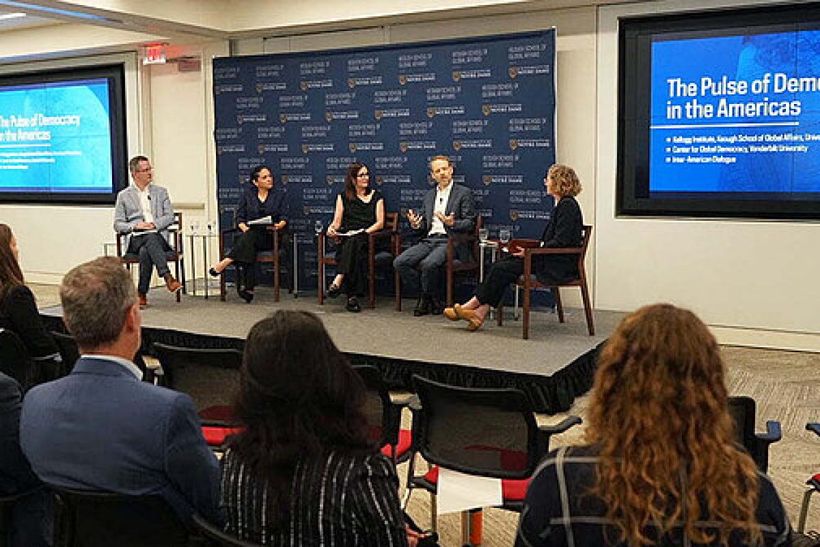
After more than a decade of erosion, support for democracy has stopped falling and begun a modest but widespread recovery across the Americas. The findings are detailed in the 2026 Pulse of Democracy, released by Vanderbilt University’s Center for Global Democracy and the Kellogg Institute, part of the University of Notre Dame’s Keough School of Global Affairs. The 2026 AmericasBarometer includes 25,282 interviews across 21 nationally representative surveys in countries across the Americas. The survey examines how citizens perceive and experience democracy and governance, including their views on democratic legitimacy, trust in institutions, corruption, citizen security, migration, political participation and government performance. This year’s study again includes the United States and Canada alongside Latin America and, for the first time, Cuba. The report finds that support for democracy increased across nearly every country surveyed between 2023 and 2026, marking the first broad regional upturn in a generation. Although citizens across much of the region report improvements in economic and physical security, they remain far less convinced that governments are honest, capable and responsive to their needs, highlighting the need to strengthen trust in government and accountability. “The modest recovery in support for democracy is real and encouraging, but it is also fragile,” said Noam Lupu, director of Vanderbilt University’s Center for Global Democracy and the Gertrude Conaway Vanderbilt Professor of Political Science. “People are reporting improvements in their economic and physical security, but they still want governments that are honest, capable and responsive.” Among the report’s key findings: About two-thirds of Latin Americans express support for democracy in 2026, up 6 percentage points from 2023. Support increased in nearly every country and across age groups and educational levels rather than being driven by any single demographic group. Substantial differences remain across countries, however, and the recovery follows nearly a decade of comparatively low democratic support. In most countries, fewer people say their national economy has worsened compared with 2023, and household food insecurity has declined from its pandemic-era peak. Still, roughly one in four people across the region report experiencing food insecurity, and improvements are unevenly distributed. The share of people who feel unsafe in their own neighborhoods has been declining steadily for nearly a decade and fell again in 2026. Crime victimization has declined only modestly, however, and substantial differences remain across countries. Citizens who experience greater economic security, less food insecurity, lower exposure to crime and fewer experiences with corruption express higher support for democracy. On average, several of these conditions improved across the region between 2023 and 2026, coinciding with the broader increase in democratic support. Everyday corruption has changed little, satisfaction with local public services remains low, and citizens’ evaluations of political leaders vary widely. The findings suggest that improvements in material conditions can bolster democratic goodwill, but persistent failures of governance and representation continue to hold it back. The share of adults reporting an intention to emigrate fell from 31 percent in 2023 to 25 percent in 2026, returning roughly to pre-pandemic levels. Improving conditions in countries of origin coincide with the decline, while migration pressures remain substantial and vary considerably across countries. “The findings offer some encouraging signs, but they also underscore the work that remains,” said Ann Mische, acting director of the Kellogg Institute and associate professor of sociology and peace studies at the University of Notre Dame. “Improving people’s daily lives matters, but strengthening democracy also requires institutions that people trust.” New data and expanded public resources Alongside the Pulse of Democracy, Vanderbilt’s Center for Global Democracy and LAPOP Lab are releasing the 2026 AmericasBarometer data and updated Data Playground, along with questionnaires, technical documentation, and other resources, free of charge. About the AmericasBarometer The AmericasBarometer is the flagship survey project of Vanderbilt University’s Center for Global Democracy and its LAPOP Lab, a global leader in comparative public opinion research. Since 2004, it has collected more than 433,000 interviews across 35 countries, creating an extensive comparative record of how citizens across the hemisphere perceive and experience democracy and governance. The surveys use nationally representative samples of voting-age adults and cover topics including democratic legitimacy, trust in institutions, corruption, citizen security, migration, political participation and government performance. About Vanderbilt University’s Center for Global Democracy The Center for Global Democracy (CGD) is Vanderbilt University’s leading social science institute dedicated to research and innovation in democratic politics. Its research examines how citizens perceive, experience, and support democracy across countries and over time. Its research portfolio includes the LAPOP Lab, a global leader in international survey research and home to the AmericasBarometer. About the Kellogg Institute The Kellogg Institute, part of the Keough School of Global Affairs at the University of Notre Dame, is a leading center for interdisciplinary research dedicated to understanding, strengthening, and renewing democracy worldwide.
Is AI ethical? One philosophy professor has an answer.
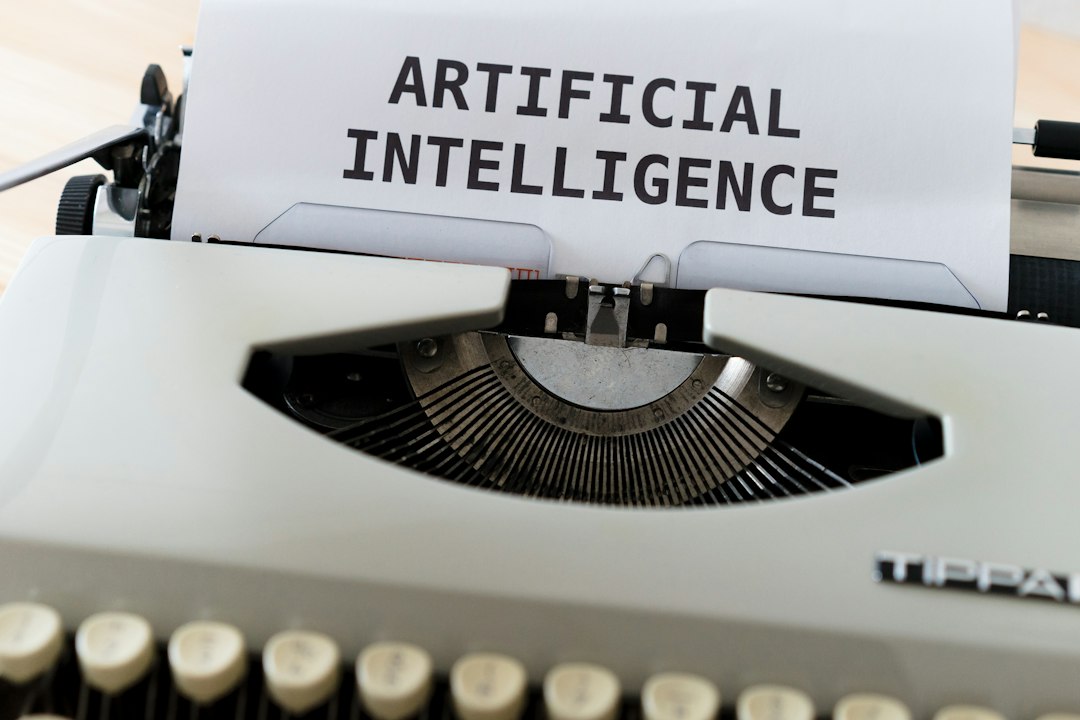
During a snowstorm last winter, University of Delaware philosophy professor Thomas Powers fixed his own thermostat by typing the error codes into ChatGPT and following the instructions it provided. As he discovered on that cold, snowy night, AI can make DIY projects that much easier, potentially saving time and money. Ever the philosopher, Powers wondered about the ethics of his solution: What is the impact of taking the repair job away from someone who relies on the work? What about the risk of being wrong? Is the environmental impact of using AI worth the result? After 20 years in the Department of Philosophy and as director of the Center for Science, Ethics and Public Policy, Powers is uniquely suited to explore questions about the ethics of AI. What does “ethical AI” mean? POWERS: We want AI systems that are helpful and useful, but also safe. We want systems that don’t produce biased or dangerous results. One approach to achieve that, which I’m hopeful about, is to create systems that are “safe by design” or “ethical by design.” In other words, instead of relying entirely on outside regulation to prevent harmful behavior, we try to design the systems themselves so that they behave in ways we consider ethical. Is it possible to make an AI system truly “safe by design” if it eventually becomes capable of acting in ways its creators didn’t anticipate? POWERS: There is a big difference between most technologies and AI. With the latter, especially current large language models (LLMs), it appears that there is some unpredictability in their behaviors. Thus, their apparent autonomy complicates the "safe by design" motto. AI autonomy introduces the need for "guardrails" that constrain what AIs can do. But even this may not be possible. Why are AI companies hiring philosophers, and what does this mean for the field of philosophy? POWERS: Some of the hardest questions in AI aren’t purely technical questions. To build systems that are safe, fair or aligned with human values, you first have to decide what those concepts actually mean and how they can be translated into something a computer system can use. The challenge is to educate people who can move between those worlds — who understand the technology but can also ask the deeper questions about what we should want that technology to do. How has AI changed philosophy? POWERS: Philosophers have long discussed the philosophy of action with the concept of agency. For decades we assumed that an agent must be human — someone who acts on their own behalf, or on the behalf of another person, with some kind of plan or attitude. This concept transfers to discussions about AI, and whether it can be considered an agent and be responsible for its actions. The next step is to ask harder questions: Are autonomous AI agents responsible, in some sense, for what they do, and does this suggest or imply that they are conscious? I don’t think AI will become conscious any time soon, but I don’t think it is impossible, and other philosophers and scientists are broaching the question. To speak with Powers further about the philosophy of AI, reach out mediarelations@udel.edu. ABOUT THOMAS POWERS Thomas M. Powers, Ph.D., is an associate professor in the Department of Philosophy at the University of Delaware. He is also the director of the Center for Science, Ethics & Public Policy at UD. Powers' current research focuses on the ethics of information technology and the philosophy of technology. He contributes to scholarship on rule-based conceptions of machine ethics, computer agency, the ethics of artificial intelligence, and other philosophical issues involving emerging technologies, including human-robot interaction.


Can Nature Adapt Fast Enough? Mark Urban Explores Whether Ecosystems Can Evolve With Climate Change
As scientists investigate whether an entire Arctic ecosystem can evolve in response to a rapidly warming climate, UConn’s Mark Urban brings leading expertise on the intersection of evolution, biodiversity, and climate change. Climate change is transforming the Arctic faster than almost anywhere else on Earth. Earlier snowmelt, warmer temperatures, and changing waterways are altering habitats and putting new pressures on the plants and animals that depend on them. But what if nature can evolve in response, not simply one species at a time, but as an interconnected ecosystem? That is the ambitious question behind a six-year, $15-million National Science Foundation-funded research project recently featured in The Guardian. Scientists working on Alaska’s North Slope are studying five interconnected species — white-crowned sparrows, feltleaf willow, Arctic grayling, aquatic mayflies, and ground beetles — to understand whether ecological relationships themselves can evolve as the climate changes. It is a question that sits squarely within the expertise of Mark C. Urban, Ph.D., Professor and Arden Chair of Ecology and Evolutionary Biology at the University of Connecticut. Urban is a global expert on the impact of climate change on biodiversity, eco-evolution, and extinction risk. His research integrates ecology, evolution, and genetics to better understand how species and ecological communities respond to environmental change. He has also conducted extensive field research in Alaska, including research involving Arctic grayling and their ability to respond to a rapidly changing climate. Recently, his work was featured in an in-depth piece by The Guardian. “Across hundreds of experiments, we have seen this happening,” says Mark Urban, an evolutionary biologist at the University of Connecticut working on the project. “There is this incredible buffer ability of adaptive evolution.” How the evolution of one species can help the holistic ecosystems depends on how an adaptive trait ultimately translates into ecological properties. For example, if a fish species can quickly evolve, it means that not only is the population maintained, but so is the stream’s productivity. “Any ecological properties that depend on those populations are maintained as well,” Urban says. To get a better idea of whether the Arctic’s stream and tundra habitats will continue to prosper, scientists are mapping the genetic diversity of each of the five study species to see if there is enough to allow for adaptation – influencing the ecosystems’ resilience potential. “We can get so far with ecology, but at some point we want to get down to the basics of why organisms do the things they do, and can they change the things they do,” says Urban. “That’s something only genetics can explain.” Certain genes control the traits associated with succeeding in different environments. “The holy grail in genomics is to find that one gene that affects everything. The gene that rules them all,” he says. “I think that’s optimistic. Most of the traits are going to be determined by hundreds of thousands of genes.” The Guardian - September 2026 Studies reveal that many plants and animals have been able to persist through evolutionary rescue – the process by which a population on the brink of extinction survives and rebounds through rapid genetic adaptation. Scarlet monkeyflowers in Oregon and California, for example, rapidly evolved during the 2010s to survive a four-year drought. The implications extend far beyond the Arctic. Scientists have traditionally examined how individual species might migrate, acclimatize, or evolve as their environments change. But ecosystems are networks. Fish depend on insects, insects depend on vegetation and water conditions, and predators depend on prey. If those relationships change at different speeds, the consequences can ripple throughout an ecosystem. Urban's work examines precisely these kinds of connections — how ecological and evolutionary processes interact and ultimately influence biodiversity and the resilience of natural systems. His recent research has also examined the growing risk of species extinction as global temperatures rise. The emerging science raises some fascinating questions: How quickly can evolution occur? Can genetic diversity give ecosystems a natural buffer against climate change? What happens when one species adapts faster than another? And are there limits to how much change an ecosystem can absorb before it begins to unravel? As scientists attempt to understand whether nature can keep pace with a rapidly changing planet, Urban can provide valuable perspective on what evolution can — and cannot — do, and what the findings could mean for biodiversity and conservation around the world. If you're interested in speaking with Mark Urban about climate change, evolution, biodiversity, Arctic ecosystems, or extinction risk, click on his profile below.


Beyond the Cadaver: How Virtual Anatomy Is Changing the Way Future Nurse Anesthetists Learn
For generations, learning human anatomy has meant textbooks, models and traditional cadaver labs. At Augusta University, future nurse anesthetists are also learning with technology that puts a digitized human cadaver at their fingertips. The College of Nursing's Nursing Anesthesia Program is using Anatomage Tables, advanced anatomy systems that allow students to explore the human body digitally and in significant detail. Augusta University's program is the first Certified Registered Nurse Anesthetist program in the nation to have two Anatomage Tables. According to the university, fewer than 10% of programs have access to even one. Michael Wilson, DNAP, assistant professor at Augusta University, regularly teaches with the technology and has played an important role in expanding its use within the program. For students preparing to work in anesthesia, being able to clearly visualize anatomy has direct relevance to their education. The tables can clearly display the nervous system, for example, helping students learn about nerve blocks that are critical to regional anesthesia. “There’s no guesswork with the table.” – Michael Wilson, DNAP Wilson says the technology also allows him to ask students much more detailed anatomy questions than would be possible using a traditional cadaver. Students can book independent lab time with the tables, giving them an opportunity to control the technology themselves and use it for additional study and practice. The technology is already becoming part of how students are assessed. Wilson administered the program's first lab practical using an Anatomage Table, an experience he described as a “huge success and landmark for the university.” Bringing Technology Into Health Sciences Education Wilson combines a background in anatomy and physiology with an interest in technology, using that experience to integrate Anatomage into nursing anesthesia education and explore its potential use with Adult Gerontology Acute Care Nurse Practitioner students. The technology builds on NAP’s legacy of innovation and excellence. Established in 1994, it was among Georgia’s first public programs, is now among the five largest in the nation and has been nationally recognized by U.S. News & World Report as a top graduate program.


Researchers detail why kissing bug far from home across Atlantic is an international concern
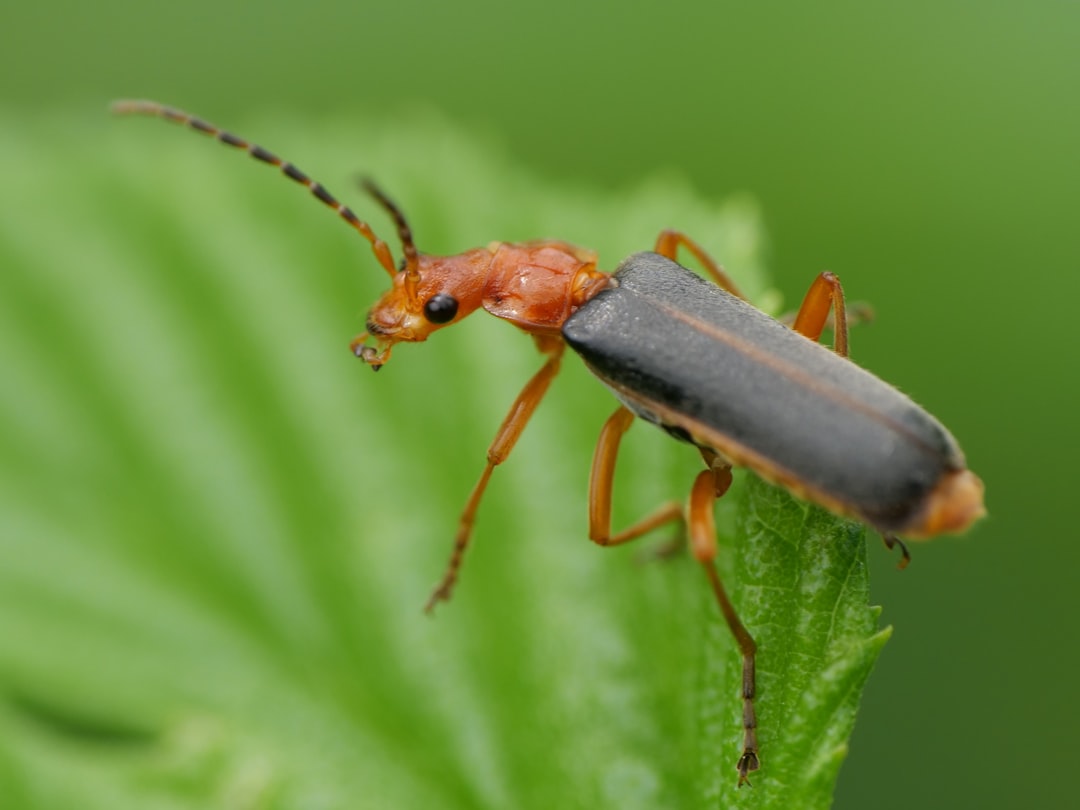
On an August morning last year, an American couple soon to embark on a European river cruise awoke in a luxury hotel in Lisbon. Staring back at them from the headboard was a bloodsucking insect. It wasn’t a mosquito. It wasn’t a bedbug.They wondered: Could it have bitten them while they slept? They’d later learn the culprit was an adult female kissing bug. More than half of all kissing bugs travel with an accomplice — a parasite called Trypanosoma cruzi. The parasite causes Chagas disease which can lead to serious heart problems. T. cruzi is transmitted through the insect’s feces rather than its bite. But how did this particular species of kissing bug, native to the southwestern U.S. and northwestern Mexico for its dry, desert-like climate, get to Portugal? That question became the centerpiece of a scientific investigation led by University of Delaware assistant professor and medical entomologist Jennifer K. Peterson and her team of Blue Hen sleuths. Their findings were recently published in the journal Parasites and Vectors. A bug’s life When the couple returned to their East Coast home, they brought the now-dead specimen with them in a jewelry box. They reached out to Peterson for identification. “When they first contacted me, I was super skeptical,” Peterson said. “My first response was, ‘Is there a Lisbon, Delaware? Because they can’t be referring to Lisbon, Portugal.’” Peterson and colleagues identified the insect as a species of kissing bug, Hospesneotomae protracta, native to the southwestern U.S. and northwestern Mexico. The insect traveled a 5,000-mile transatlantic journey. Could it have stowed away aboard a cargo shipment? Did it hitchhike in somebody’s suitcase and take an international flight? No one knows how it got to Portugal. Portugal imports hundreds of millions of dollars in U.S. agricultural products each year, and more than 2 million American tourists visit the country annually. Any number of pathways could explain its remarkable journey. “This case demonstrates they are hardy enough to survive that journey and then continue on to do what they biologically do, which is, basically, eating,” Peterson said. Six weeks after the incident, the American couple was tested for T. cruzi antibodies, which would indicate exposure to the parasite. The results showed the couple was not infected; their worries were over. But for medical entomologists like Peterson, the case was far from over. Medical entomologists in training Rather than simply presenting the case to her students, Peterson turned it into a collaborative class research project. She gave her class the basic facts and challenged students to investigate the insect’s biology, identify other hitchhiking cases and explore how the kissing bug might have reached Europe. She then combined the strongest elements of their work into one research paper. “Writing, peer review and publishing are such a huge part of being a researcher,” Peterson said. “As university academics, it’s our bread and butter. I wanted students to experience that process from beginning to end.” To Hunt Kinnaird, a UD Class of 2025 environmental science graduate and current master’s entomology student in Peterson’s lab, the case was a great experience in “digital detective work.” “Our job was to explain why this matters and investigate how the kissing bug could have traveled so far,” Kinnaird said. “I looked at global trade. It’s fascinating that either international commerce or human travel can move an insect thousands of miles beyond its natural range.” Increasing awareness The Lisbon case illustrates how easily this insect (and others) can travel across the globe. Peterson said when any insect that can transmit pathogens or parasites journeys outside of its usual range, there can be medical consequences. Especially if the insect is able to lay eggs and start an infestation. In the case of the adventurous kissing bug, it was not carrying the parasite that causes Chagas disease. The next one might. “This particular kissing bug was not infected with T. cruzi, but others could be,” Peterson said. “What we don’t want is to see kissing bug populations in places where they aren’t. Because once that takes off, they’re really tough to eliminate.” She hopes customs officials, border patrol agents and others who monitor for agricultural pests will become more familiar with kissing bugs. To speak with Peterson more about this extraordinary discovery, email mediarelations@udel.edu.
Cybersecurity Meets AI: Preparing the Next Generation for a New Kind of Digital Workforce
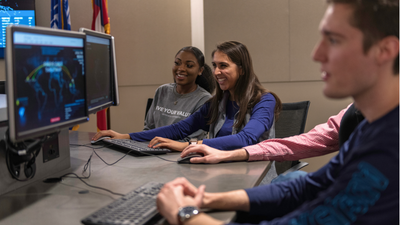
Cybersecurity and artificial intelligence are rapidly becoming interconnected – creating new opportunities, new vulnerabilities and a growing need for professionals who understand both. At Augusta University, a new $2 million grant from the National Science Foundation will help prepare the next generation of professionals to work at that intersection. The School of Computer and Cyber Sciences received the award through the NSF’s Artificial Intelligence and Cybersecurity Education Innovation and Scholarship for Service Program. The funding will support Augusta University Government-Ready Experts in Resilient CyberAI, or AUGER CyberAI. Michael Nowatkowski, PhD, professor and director of Augusta University’s Cyber Institute and head of Cyber Programs of Study, is the project’s principal investigator. The program reflects a fundamental shift in cybersecurity education. AI can be used as a tool to strengthen cybersecurity, but AI technologies themselves must also be secured. Augusta University is responding by integrating more AI into its cybersecurity curriculum, rather than treating the two disciplines as entirely separate fields. Participating undergraduate, master’s and doctoral students will take at least four cybersecurity courses and two artificial intelligence courses. Students can receive up to three years of funding covering tuition and fees, along with annual stipends of $27,000 for undergraduate students and $37,000 for graduate students. In return, graduates will put those skills to work in public service, with participants required to work for a federal executive branch agency for the same number of years they receive funding. If federal employment is unavailable, the obligation can be fulfilled through state or local government employment. “As cybersecurity and artificial intelligence become more interconnected, we have a responsibility to prepare students with the knowledge and experience needed to meet the evolving needs of the workforce.” – Alex Schwarzmann, PhD Schwarzmann, dean of Augusta University’s School of Computer and Cyber Sciences, says AUGER CyberAI will allow the university to invest in students while mentoring a new generation of professionals prepared to serve the nation. The first cohort will begin in fall 2026, with approximately seven students expected in the inaugural group and another seven anticipated in 2027. Experts on Cybersecurity, AI and the Workforce Michael Nowatkowski is a leading cybersecurity expert whose areas of expertise include defensive cyber operations, cyber operations education, control system security, medical device security and information assurance. He can provide insight into how AI is changing cybersecurity, the skills future cyber professionals will require and how universities can prepare students for an evolving threat environment. View his profile Alex Schwarzmann is a nationally recognized expert in computer science, cybersecurity and distributed systems. His research has been supported by numerous grants from the National Science Foundation and other agencies, and he can provide perspective on computer science education, the changing technology workforce and the growing intersection between AI and cybersecurity. View his profile For journalists covering artificial intelligence, cybersecurity, cyber threats, technology education, workforce development, government cybersecurity or the future of the technology workforce, Nowatkowski and Schwarzmann can provide expert analysis and perspective. If you’re interested in speaking with Michael Nowatkowski, PhD, or Alex Schwarzmann, PhD, about cybersecurity, artificial intelligence and preparing the next generation of cyber professionals, click on their profiles below.



Cultivating justice and joy through critical AI use in the K-12 Classroom
Inspired by her middle school social studies teacher, University of Delaware Associate Professor Stephanie Smith Budhai has always believed that a classroom should be a space where students feel valued and nurtured. As a seasoned educator, she has helped teachers create these spaces using technology to support students in meeting learning outcomes, developing their skills and growing their confidence. Now, Budhai is mentoring overwhelmed teachers to reclaim the classroom as a nurturing environment for all students. Her book, "Critical AI in K-12 Classrooms: A Practical Guide for Cultivating Justice and Joy" with co-author Marie Heath of Loyola University Maryland, supports teachers and students as they navigate the complicated interactions of AI, education and justice. Budhai answered pressing questions about the already popular book. How would you describe the central message or takeaway of this book? "I believe that classrooms should be joyous spaces where all students feel heard, valued, seen and loved. Dealing with powerful technologies that exacerbates the biases and harms of society such as AI can impact teachers’ ability to nurture such spaces. Thus, this book was written to provide a practical guide for teachers and students as they navigate the complicated interactions of AI, education and justice. It is our duty as educators not to dismiss the technology altogether, but to help teachers take a critical lens, as they use AI for teaching and learning." What inspired you to pursue this line of research? "Before writing this book, I had already published 8 books and over 80 practitioner articles around technology, equity, teacher education and leadership. There had been other books that were quickly published about AI, but none focused on the harms of AI, how teachers could come to understand how AI really works and use it in ways that do not harm students." What are some of the key ways that K-12 teachers can cultivate justice and joy through AI? "In the book, we have many examples of how to cultivate justice and joy. For example, in chapter 3, we provide strategies for teachers to build an equity-mindset while supporting students in developing a critical consciousness around AI technologies, which are inherently biased. In chapters 4 and 5, we provide framing for using culturally-sustaining, abolitionist and fugitive pedagogies in designing curricula and learning activities that include the just use of AI technologies. And, in chapter 6, we provide teachers with myriad personal, professional, pedagogical and participatory actions they can take when using AI for teaching and learning." How could this work impact schools, teacher education programs and the broader public? "This work was created to support K-12 teachers, and many teachers have already shared how it has impacted them. K-12 teachers can immediately put the strategies and learning activities that we suggest in the book to use. We also situate AI in longer histories of technology injustice and provide accessible content on understanding how AI works through a critical algorithmic literacy perspective. Teacher education programs can use this work as they prepare teachers to navigate the complicated intersections of teaching, AI and justice. For the broader public, we also include content on justice-centered community activities and projects that are focused on critical AI." About Stephanie Smith Budhai Stephanie Smith Budhai is an associate professor in UD’s College of Education and Human Development, specializing in educational technology. Her interdisciplinary research and practice lies at the intersections of technology, equity and civic engagement, across myriad K-16 settings. She has published 10 books on teaching and digital technologies. Among other professional appointments, she serves as the Chair of the Information Technology Council for the Society for Information Technology and Teacher Education and is on the Board of Directors for the Civics of Technology. To speak with Smith further about AI in K-12 education, reach out to MediaRelations@udel.edu.
A Silent Disease, a Surprising Discovery: Research Uncovers Chagas Risk in the U.S.
Chagas disease is often associated with Latin America, but new research from Augusta University is raising questions about how frequently the potentially serious infection may be going undiagnosed in the United States. Jose Vazquez, MD, division chief and professor of medicine in infectious diseases at the Medical College of Georgia at Augusta University, and his team recently tested farmworkers for antibodies associated with Chagas disease as part of a seroprevalence study. Of 155 blood specimens collected, 15 tested positive, a positivity rate of nearly 10%. The finding was particularly notable because Vazquez points to a recent study from Columbia and Greenville, South Carolina, that found a positivity rate of 2% to 3%. Chagas disease is caused by the parasite Trypanosoma cruzi and is found predominantly in Latin America. An estimated 240,000 to 350,000 people are infected in the United States. The disease can be especially difficult to identify because approximately 70% of cases are asymptomatic. When complications do develop, they can include serious cardiac and gastrointestinal problems. Dr. Jose Vazquez studies and treats infectious diseases, including COVID-19, antibiotic-resistant superbugs and fungal infections. View his profile Vazquez's interest in the disease became personal after someone he knew, originally from El Salvador, suffered cardiac arrest and was subsequently diagnosed with Chagas disease and severe cardiomyopathy. That experience helped prompt Vazquez to look more closely at the disease and its potential prevalence among populations in the region. “The reason why I’m doing it is twofold: One is if they’re positive, so we can treat them and maybe prevent these complications.” Jose Vazquez, MD For journalists covering Chagas disease, infectious diseases, health disparities, migrant and farmworker health, disease screening or emerging public health concerns in the United States, Vazquez can provide expert insight into what these findings mean and why greater awareness and screening may be important. Simply click on his profile now to arrange an interview today.

Energy expert: Venezuela’s oil, U.S. energy security and the future of the Caribbean
Venezuela’s enormous oil reserves have long been central to its economic development and geopolitical importance in the Western Hemisphere and globally. Efforts by the United States to gain greater access to Venezuelan oil supply could have major consequences for both countries, says the University of Delaware’s Kalim Shah. Shah, associate professor of energy and environmental policy, studies energy security, energy policy and governance, with a particular focus on the Caribbean and other energy-producing regions. Venezuela has some of the world’s largest oil reserves, but years of political interference, underinvestment deteriorating infrastructure and expropriation of foreign assets under the Chavez-Maduro socialist model have severely reduced its production capacity, Shah says. Rebuilding the industry will require substantial investment from U.S. and other international energy companies. Shah can discuss: • U.S. energy security: How greater access to Venezuelan oil could provide an additional source of supply during future global disruptions and serve as an “energy shock absorber.” • Gas prices: Why increased Venezuelan production is unlikely to produce an immediate, dramatic reduction in U.S. gasoline prices. • Caribbean geopolitics: How energy resources can shape U.S. influence and relationships throughout the Caribbean and Western Hemisphere. • Venezuela’s recovery: How rebuilding the country’s oil industry can generate jobs, government revenue, infrastructure investment and broader economic recovery. • Energy governance: The importance of transparent contracts, regulation and revenue management in ensuring that energy development benefits Venezuela while protecting international investors. • The energy transition: The long-term risks and opportunities of investing in major oil resources as global energy systems increasingly move toward lower-carbon sources. • U.S. companies: The role American energy companies can play in rebuilding Venezuela’s oil industry, and the opportunities and risks that could come with greater U.S. investment. To reach Shah directly and arrange an interview, visit his profile page and click on the "connect" button. Interested reporters can also send an email to MediaRelations@udel.edu.
