Experts Matter. Find Yours.
Connect for media, speaking, professional opportunities & more.

A plan to sell minority stakes in the commercial business surrounding FIFA competitions has triggered a major confrontation with European soccer. UEFA and its 55 national associations have reportedly agreed to boycott FIFA competitions while the proposal remains active. The dispute touches on sports governance, private investment, legal authority, media rights and the growing commercialization of the World Cup. Writing a story around this unprecedented event? Connect with leading experts below for insight and commentary. Matthew Robinson — University of Delaware Robinson specializes in international sports governance, sport diplomacy and global sport development. His work is particularly relevant to the power struggle between FIFA, UEFA and national associations—and what a coordinated European boycott could mean for FIFA’s authority. Thomas Smith — Emory University’s Goizueta Business School Smith studies sports economics, finance and the business of entertainment. Canprovide insight into the financial thinking behind FIFA’s proposal, including the trade-off between receiving capital now and sharing future World Cup revenues. Tim Derdenger — Carnegie Mellon University’s Tepper School of Business Derdenger studies sports markets, sponsorship and the commercialization of major sporting events. His research is relevant to the potential effects on broadcast value, sponsors, fan interest and the overall World Cup brand. Klaas Baks — Emory University’s Goizueta Business School Baks specializes in private equity, alternative investments, mergers and acquisitions and business valuation. His expertise can help explain how investors might value FIFA’s commercial assets and what they would typically expect from a minority investment. Andrew Brandt — Villanova University Brandt’s expertise spans sports law and sports business. That experience is relevant to questions about FIFA’s authority over its members, the legal consequences of a boycott and the potential impact on players, sponsors, broadcasters and host countries. Tim DeSchriver — University of Delaware DeSchriver researches sport finance, economics and marketing. His work can help frame the broader financial question: Is FIFA unlocking the value of its competitions, or giving up a share of long-term revenue in exchange for immediate funding? Reach out to these experts now for your next story. All inquiries are monitored to ensure time-sensitive request and deadlines are met. For more FIFA and WorldCup information visit our World Cup Expert Hubs.

Built to Last: What It Takes to Compete Across Generations of World Cups
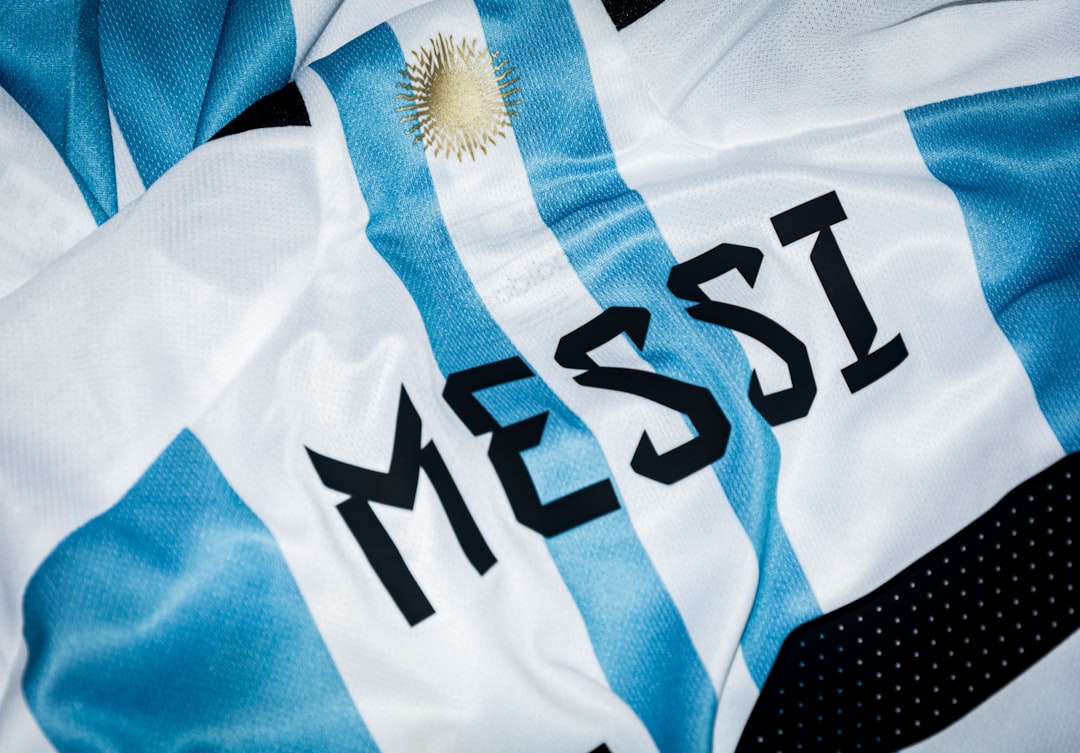
The 2026 FIFA World Cup is giving fans an unusual view of football history: several of the game’s biggest names are still competing long after most elite careers have ended. Cristiano Ronaldo and Lionel Messi are appearing in their sixth World Cups. Ronaldo has scored twice in this tournament and 10 times overall, while Messi has added six goals in 2026 to reach 19 for his World Cup career. Luka Modrić is playing in his fifth tournament. Neymar and Kevin De Bruyne are each appearing in their fourth. Those numbers say something important about talent. They say even more about durability. Reaching one World Cup is difficult. Returning four, five or six times means surviving nearly two decades of club schedules, injuries, travel, tactical changes and competition from younger players. It also means finding new ways to contribute when the body no longer responds exactly as it once did. That opens up several timely questions for journalists covering this final stage of their careers. Below, experts in sports science, biomechanics, psychology and sports business offer perspective on what it takes to compete across multiple World Cups—and what allows some players to remain influential long after their physical peak. What does it take physically to last this long? The World Cup lasts only a few weeks, but the careers behind it are built over thousands of training sessions and matches. For older players, the challenge is not simply staying fit. It is managing fatigue, recovering faster and avoiding the injury that could end the run. Hofstra exercise physiologist Katie Sell can speak to the less visible work behind these careers: sleep, hydration, nutrition, endurance and the tighter recovery window athletes face as they age. At the University of Delaware, Tom Kaminski brings expertise in soccer injuries, concussions and player safety. He can help explain how accumulated wear, repeated head impacts and return-to-play decisions influence whether a player can continue at the highest level. Texas Christian University’s Peter Weyand, an expert in sprint mechanics and running performance, can discuss what happens to speed and acceleration over time—and which physical qualities can still be protected through training. How do great players change their game? Longevity rarely comes from playing the same way forever. Ronaldo moved from the wing into a more central scoring role. Messi became more selective with his movement. Modrić continued to control matches through timing, positioning and awareness rather than physical dominance. These are not signs that aging players have stopped influencing games. They are signs that influence has changed. Carnegie Mellon biomechanics researcher Eni Halilaj can speak to how athletes adjust their movement patterns, conserve energy and reduce physical strain as they get older, while her colleague Eric Yttri, who studies motor control and decision-making, can explain how anticipation and experience allow veteran players to act earlier and more efficiently. Texas Christian University’s Peter Weyand can also add context on why older players often change positions, reduce repeated sprinting or become more selective about when they make high-intensity runs. Why keep coming back? By the time a player reaches a fourth or fifth World Cup, money and recognition are unlikely to be the main reasons for continuing. The harder question is what keeps an athlete committed after years of success, injuries and public scrutiny—especially when their role may be smaller than it once was. TCU sport psychology expert Robyn Trocchio can speak to motivation, focus and how accomplished athletes continue setting meaningful goals late in their careers. Hofstra’s Genevieve Weber can address performance anxiety, media pressure and the emotional weight of entering what may be a final international tournament. Georgia Southern sport psychologist Brandonn Harris can discuss resilience, confidence and the mental discipline required to recover from injury, disappointment and changing expectations. How should an aging superstar be judged? Goals are easy to count. Leadership, timing and influence are not. A veteran player may no longer dominate every match, but may still shape how teammates prepare, how opponents defend and how supporters respond. For coaches, that creates a difficult balance between reputation, current performance and what an experienced player brings in moments of pressure. At Emory University’s Goizueta Business School, Michael Lewis can discuss the value of global stars beyond the score sheet, including fan interest, brand strength and the attention they bring to a national team. Carnegie Mellon University’s Eric Yttri can speak to the on-field contributions that statistics often miss, including positioning, anticipation and decision-making. Texas Christian University’s Robyn Trocchio can address the leadership side of the story, including the difficult transition from automatic starter to mentor, substitute or situational player. A generation nearing the end The 2026 World Cup may be remembered not only for the players who emerged, but for the ones who were leaving. Ronaldo, Messi, Modrić, Neymar and De Bruyne have played through different tactical eras and alongside multiple generations of teammates. Their longevity was not built on talent alone. It required adaptation, recovery, discipline and a willingness to accept that staying great sometimes means becoming a different kind of player. For reporters, their careers offer a timely way to examine how elite athletes age—and why some remain relevant long after the normal limits of the game suggest they should.

U.S.-Iran Agreement May Be Easier to Sign Than Sustain, Says TCU Political Scientist
As reports emerge of a potential memorandum of understanding (MOU) between the United States and Iran, questions remain about whether any agreement can overcome decades of mistrust, competing national interests, and domestic political pressures. Ralph Carter is the Piper Professor of Political Science at Texas Christian University (TCU). focuses on Middle East conflicts, U.S. foreign trade and defense policy, with an emphasis on the roles played by Congress. View his profile According to Texas Christian University political scientist Ralph Carter, the details of the agreement and whether both sides ultimately accept those terms, will determine whether negotiations can move forward. "We have to know what's in the MOU itself and whether both sides agree on that. If it's acceptable to both sides, then domestic politics on both sides enters the picture." For the United States, Carter notes that President Trump is eager to secure a diplomatic victory while also maintaining his long-standing position on Iran's nuclear ambitions. Carter says the administration faces competing pressures: demonstrating progress on national security, ensuring stability in global energy markets, and responding to economic concerns that matter most to American voters. At the same time, Iran is unlikely to compromise on what it views as fundamental issues of sovereignty and national independence. "Any Iranian regime, including this one, will insist on two things: Its territory is inviolate. It will not give it up. Its sovereignty is not negotiable." While Tehran may be willing to accept inspections or limits on highly enriched uranium, Carter says Iran is unlikely to abandon its nuclear program entirely simply to satisfy U.S. demands. Economic sanctions and their impact on Iran's economy will also remain central to any negotiations. The timeline may present another obstacle. "A 60-day window after the MOU is signed probably isn't enough time to reconcile these differences." As negotiations continue, Carter can provide expert analysis on U.S.-Iran relations, nuclear diplomacy, sanctions policy, Middle East security, international negotiations, and the domestic political considerations influencing both governments. Ralph Carter is available to discuss U.S.-Iran relations, nuclear negotiations, international diplomacy, sanctions policy, and Middle East politics.



New Harvard Report Highlights the Need for Ethical Leaders and Responsible Citizens
A new report from Harvard University's Making Caring Common Project and the National Association for College Admission Counseling is calling for a renewed focus on character, purpose, civic engagement, and ethical leadership in the college admissions process. The report, Turning the Tide in 2026: Preparing Students for Lives of Caring and Purpose, argues that colleges can play a critical role in helping develop the moral and civic capacities needed to strengthen communities and democracy. Among the higher education leaders featured in the report is Heath Einstein, Vice Provost for Enrollment Management at Texas Christian University, whose comments reinforce TCU's longstanding commitment to preparing students for lives of purpose and service. "In near perfect alignment with this report's principles, TCU's raison d'être is to produce ethical leaders and responsible citizens in the global community. At a time when our society—perhaps intentionally fragmented—cannot even agree on facts, it is essential to teach young people how to think critically about the world around them, communicate across difference, and collaborate to solve humanity's most pressing issues." The report warns that increasing political polarization, declining trust, rising mental health challenges, and excessive achievement pressure are affecting young people across the United States. Its authors argue that colleges, schools, and families should place greater emphasis on helping students develop empathy, curiosity, humility, civic responsibility, and a sense of purpose. Einstein notes that these qualities are central to the student experience TCU seeks to cultivate. "In order to achieve this outcome, we seek to create a class of students who possess empathy and humility so that they can critique ideas without critiquing the people presenting the ideas." The report's recommendations include encouraging meaningful engagement over résumé-building, helping students identify what they value and find purposeful, and creating admissions processes that recognize ethical character alongside academic achievement. Looking to know more? We can help. Heath Einstein, Vice Provost for Enrollment Management at Texas Christian University, is available to discuss college admissions, student success, ethical leadership, civic engagement, student purpose, and the evolving role of higher education in preparing future leaders.


The Business of Sports Is Booming
A recent Forbes article highlights the rapid growth of sponsorship revenue across North America's major professional sports leagues, which generated a record $7.66 billion in sponsorship revenue last season. According to research from SponsorUnited, Major League Baseball led the way with nearly $300 million in new sponsorship business in 2024, reaching $1.84 billion league-wide. One of the biggest drivers was the arrival of Japanese superstar Shohei Ohtani in Los Angeles. SponsorUnited estimates the Dodgers added 12 Japanese-based partners and $70 million in incremental sponsorship revenue during Ohtani's first season with the club. The impact extended beyond the Dodgers, with Japanese brands purchasing advertising and signage opportunities at ballparks across the league whenever Ohtani played on the road. The article also points to broader industry trends fueling sponsorship growth, including jersey patch advertising, digital signage, premium fan experiences, international expansion, and increasingly sophisticated audience targeting. Tim Derdenger is an Associate Professor of Marketing and Strategy at Carnegie Mellon’s Tepper School of Business. An expert in sports markets, his research is centered around celebrity endorsements and how to optimize their impact on product sales. View his profile According to Carnegie Mellon University marketing expert Tim Derdenger, technology will play a critical role in the future of sports sponsorship. "Using technology to reach customers and personalize those messages for them is going to be a key player in the growth of sponsorship across the leagues." As teams seek new revenue opportunities and brands look for more effective ways to engage fans, sponsorship has become one of the fastest-growing segments in professional sports. The trend reflects how leagues are increasingly leveraging data, technology, and innovative marketing strategies to create value for partners while connecting with audiences in new ways. Connect with Tim Derdenger from Carnegie Mellon University's Tepper School of Business, who is available to discuss: • The economics of sports sponsorship • How technology is transforming sports marketing • The business impact of global athletes and superstar brands • Fan engagement and personalized advertising • Emerging trends in professional sports business


Covering the World Cup? University of Delaware Experts are Here to Help with Your Coverage
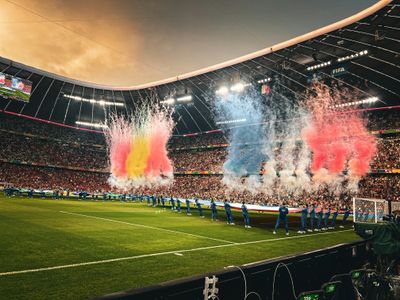
As the 2026 FIFA World Cup captures attention across North America and around the world, University of Delaware experts are available to help media examine the larger stories connected to the tournament, from player safety and youth soccer to tourism, sports analytics, playing surfaces and the shared experience of watching the game. University of Delaware's World Cup Experts Hub brings together faculty and specialists who can provide timely commentary on the health, business, social and scientific issues shaping one of the world’s most watched sporting events. Featured Topics The Business of Youth Soccer Youth sports participation, community impact, the business of soccer and how a major global tournament can influence local programs, families and the next generation of players. Player Safety and Concussions Head injuries, concussion prevention, heading guidelines, athlete health and how evolving safety standards are changing the way soccer is played and taught. Tourism and Global Impact How mega-events drive tourism, economic activity, host-city visibility and broader cultural connection across countries, communities and fans. Youth Development and Fan Engagement How family traditions, school programs and shared sports experiences shape youth identity, social development and interest in physical activity. Sports Analytics in Action The rise of data-driven performance, real-time game analysis and how students and practitioners are applying analytics to elite global competition. The Science of Playing Surfaces Natural grass requirements, turfgrass systems, stadium preparation and the science behind maintaining world-class fields for international play. Why Watching Together Matters The psychology of shared experiences, happiness, social connection and why gathering for World Cup matches can be meaningful far beyond the final score. Media can visit the University of Delaware’s World Cup Experts Hub to explore available experts and connect directly with the right source for their story.






World Cup 2026: The Business Behind the Game
As the 2026 FIFA World Cup unfolds across North America, Emory University’s Goizueta Business School experts are available to help media explore the business stories behind the world’s biggest sporting event, from the economics of hosting and ticket pricing to global sponsorship, player brands and the psychology of fandom. Goizueta’s World Cup 2026 Business Hub brings together faculty who can provide timely, research-backed commentary on the commercial, cultural and consumer forces shaping the tournament as it moves from match to match, city to city and story to story. Featured Topics The Economics of Hosting Infrastructure investment, tourism revenue, real estate, local labor markets and the broader financial impact of hosting World Cup matches. The Science of Fandom What drives global fan devotion, audience loyalty and engagement across stadiums, broadcasts and digital platforms. Ticket Pricing and Demand Dynamic pricing, hospitality packages, travel costs and how extraordinary demand shapes the fan experience at major global events. Brand Strategy and Global Sponsorship How companies evaluate World Cup sponsorships, build global campaigns and measure the return on major sports partnerships. The Rise of the Player Brand How star footballers build, extend and monetize personal brands that reach far beyond the pitch. Media can visit Goizueta’s World Cup 2026 Business Hub to explore available experts and connect directly with the right source for their story.








Brexit at 10: A Decade After the Vote That Changed Britain
On June 23, 2016, voters in the United Kingdom made a historic decision that would reshape the country's relationship with Europe and reverberate around the world. Ten years later, Brexit remains one of the most significant political and economic events of the modern era, with its effects still being felt across trade, immigration, governance, and international relations. While the United Kingdom formally left the European Union in 2020, debate continues over Brexit's long-term impact. Supporters point to greater national sovereignty and independent trade policy, while critics highlight economic challenges, labour shortages, and new barriers to commerce. The referendum's legacy has also influenced political movements beyond Britain, sparking broader conversations about globalization, national identity, and the future of multinational institutions. As policymakers, businesses, and citizens assess a decade of change, experts are examining what Brexit has achieved, where it has fallen short, and what it reveals about the evolving relationship between democracy, economics, and national sovereignty. Covering - we can help! We have experts available to discuss the origins of Brexit, its lasting consequences, and what the next decade may hold for the United Kingdom and Europe. Topic and Questions to Consider: The political history and causes of Brexit U.K.–European Union relations Trade, investment, and economic impacts Immigration and labour market policy Nationalism, populism, and democratic movements The future of Scotland, Northern Ireland, and the United Kingdom Britain's role in global affairs after Brexit Lessons from Brexit for policymakers around the world Key Questions What factors drove the Brexit vote in 2016? How has Brexit changed Britain's economy and trade relationships? What impact has Brexit had on immigration and labour markets? Has Brexit strengthened or weakened the United Kingdom's global influence? How have Scotland and Northern Ireland been affected? What lessons can other countries learn from Brexit? Could the U.K. and European Union move toward closer cooperation in the future? What does Brexit reveal about voter attitudes toward globalization and national sovereignty? Our leading experts can provide analysis on the political, economic, and social legacy of Brexit, the evolving relationship between the United Kingdom and the European Union, and the broader implications for democracies navigating questions of identity, sovereignty, and international cooperation. Connect with an expert today:
World Cup 2026: Georgia Southern University Experts on the Game Behind the Game
Atlanta is one of the World Cup's biggest host cities. Georgia Southern faculty across economics, health sciences and international studies are ready to speak to the stories behind the tournament. Featured Topic The Atlanta Advantage: Regional Economics of Hosting the World Cup What it means for local businesses, tourism, and the long-term economic legacy of a host city Atlanta's World Cup moment is as much an economic story as a sporting one. Georgia Southern University economics professors Michael Toma, Ph.D., and Anthony Barilla, Ph.D., can speak to tourism revenue, infrastructure investment and what host cities actually gain — and manage —- when the world comes to town. Experts Michael Toma, Ph.D. - Regional Economics and Development Anthony Barilla, Ph.D. - Economics and Public Policy Featured Topic Playing Across a Continent: The Physical Demands of a 48-Team Tournament What elite athletes face competing across climates, time zones and a month-long schedule 48 teams. Multiple cities. Almost no recovery time. Georgia Southern health sciences and kinesiology professor Samuel Wilson, Ph.D., and sports psychologist Brandonn Harris, Ph.D., can explain how a World Cup schedule affects the human body and how elite teams prepare for it. Experts Samuel Wilson, Ph.D. - Health Sciences and Athletic Performance Brandonn Harris, Ph.D. - Kinesiology and Exercise Science Featured Topic More Than a Match: The World Cup as Cultural and Political Exchange How the world's biggest sporting event becomes a stage for diplomacy, identity, and soft power When 48 nations converge on American soil, the game is only part of the story. Political science and international studies expert Christopher M. Brown, Ph.D., can speak to the geopolitical dimensions — national identity, soft power and what it means for the U.S. to host global soccer for the first time in a generation. Experts Christopher M. Brown, Ph.D. - Political Science and International Studies



FIFA 2026: Where Sports, Technology and Global Marketing Collide
After an amazing opening weekend - the 2026 FIFA World Cup has the full attention of a global audience. The event is poised to be one of the biggest sports business stories in North America. With matches hosted across Canada, the United States, and Mexico, the expanded 48-team tournament is expected to draw billions of viewers while creating unprecedented opportunities for sponsors, broadcasters, marketers, and technology companies. A recent BBC StoryWorks feature examining Lenovo's role as FIFA's Official Technology Partner highlights how artificial intelligence is transforming the fan experience. New technologies include AI-powered match analytics, enhanced broadcasts, referee-view cameras, AI-generated player avatars that help explain officiating decisions, and infrastructure designed to deliver near real-time content to audiences around the globe. Tim Derdenger is an Associate Professor of Marketing and Strategy at Carnegie Mellon’s Tepper School of Business. He also coordinates the Technology Strategy & Product Management Track for Tepper MBA students whose interest lead them to employment in technology firms. View his profile Beyond the technology, FIFA 2026 represents a major cultural and commercial moment for soccer in the United States. The tournament is expected to accelerate awareness of the sport, attract new fans, create new sponsorship opportunities, and further integrate soccer into the North American sports landscape. At the same time, innovations in broadcasting, immersive content, and digital engagement are changing how fans experience major events, whether they are in the stadium or following from thousands of miles away. Fernando De la Torre is a a research faculty member in the Robotics Institute at Carnegie Mellon University. His research interests are in the fields of Computer Vision and Machine Learning. In particular, applications to human health, augmented reality, virtual reality, and methods that focus on the data (not the model). View his profile CMU experts like Fernando De la Torre and Tim Derdenger can provide insight into the business, marketing, and technology implications of FIFA 2026, including how global sporting events influence consumer behavior, brand strategy, fan engagement, media consumption, and the growing role of AI in sports entertainment. As organizations look to understand the long-term impact of the tournament, these perspectives can help explain why FIFA 2026 is much more than a sporting event, it is a case study in the future of global audience engagement.