
Risk Experts
Connect for media, speaking, professional opportunities & more.
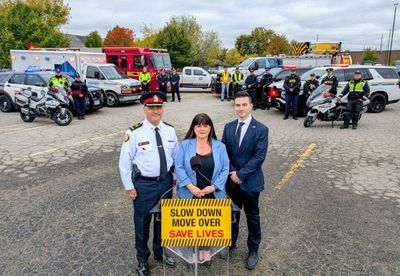
Ahead of National Slow Down, Move Over (SDMO) Day, CAA South Central Ontario, in partnership with the Ministry of Transportation, Canadian Towing Association, Toronto Police Service (TPS), Ontario Provincial Police (OPP), Toronto Fire, Toronto Paramedic Services, and 407 ETR, have joined forces to remind Ontario drivers that slowing down and moving over is one of the simplest actions they can take to help protect tow operators, first responders and other roadside workers. “For tow operators and first responders, the roadside is their workplace,” says Teresa Di Felice, assistant vice-president of government and community relations at CAA South Central Ontario. “When drivers see flashing lights, we need them to recognize that there is a trained professional helping someone at the roadside. Slowing down and moving over gives those workers the space they need to do their jobs more safely.” While most Ontario drivers are familiar with the law, that awareness does not always translate into consistent action on the road. “Every day, the men and women who respond to emergencies, assist stranded drivers and maintain our highways put themselves at risk to keep others safe,” said Prabmeet Sarkaria, Minister of Transportation. “That’s why, beginning January 1, 2027, we’re expanding Ontario’s Slow Down, Move Over law to protect more roadside workers on the job because something as simple as slowing down and moving over can save lives and help ensure those who keep our roads safe make it home to their families.” Toronto Police Service says those protections are critical for officers and other roadside workers who routinely work alongside moving traffic. "Many police officers have found themselves in situations where they are stopped on the side of the road doing their job, only to have vehicles pass dangerously close by," says Robert Johnson, Deputy Chief, Toronto Police Service. "When first responders or tow truck drivers have their lights flashing, drivers are legally required to slow down safely below the speed limit and leave space for emergency vehicles." As part of its continuing road safety work, CAA is piloting Variable Message Signs (VMS) technology on tow trucks across Ontario to determine whether enhanced visibility and directional messaging can help motorists recognize roadside incidents sooner and respond safely. Research from the AAA Foundation for Traffic Safety found drivers were 95 per cent more likely to change lanes when a VMS was active. CAA’s pilot will assess whether the technology can help motorists identify a roadside response earlier and encourage them to slow down and move over. “Drivers are processing a lot of information when they approach a roadside incident,” said Di Felice. “A clear, visible message may help them understand what is happening sooner and give them more time to slow down, check surrounding traffic and move over safely.” Putting drivers in the worker’s shoes Technology is one part of the solution. CAA is also using public education to help drivers understand the people Ontario’s SDMO law is intended to protect. CAA’s SDMO public service announcement puts motorists in the shoes of the people who assist stranded drivers every day. Rather than focusing only on the rules of the road, it highlights the individuals behind the flashing lights and the risks they face while working just feet from live traffic. Watch the PSA here. Ontario expanding slow down move over law to protect more workers Starting January 1, 2027, drivers must also slow down and move over for certain work vehicles stopped at roadside with flashing amber lights activated. Work vehicles under the expanded law include highway maintenance vehicles, public utility vehicles (such as electricity, water, natural gas, telecommunications), waste collection vehicles (such as garbage, recycling or organic waste trucks) and roadside assistance vehicles (like CAA or other providers). CN Tower to shine for roadside safety On Saturday, October 17, the CN Tower will be illuminated in yellow and black to mark National Slow Down, Move Over Day, commemorated by all the CAA clubs across the country, and in honour of the tow operators, emergency responders and other roadside workers who assist motorists every day. A standard light show will run for 5 minutes at the top of every hour, followed by another light show on the half hour. To learn more about SDMO laws, please visit: www.caasco.com/SDMO Quick Facts CAA research shows that Ontario drivers report slowing down and moving over for emergency vehicles more than 90 per cent of the time, but only 49 per cent of the time for tow trucks. Nearly 4 in 5 Ontario drivers have heard of the SDMO law, but only 55 per cent knew they were required to slow down and move over for stopped tow trucks with flashing lights. The same study found that 93 per cent of Ontarians support the use of Variable Message Signs. Respondents also said the signs would encourage drivers to slow down and move over, improving safety for roadside workers and stranded motorists. Quotes “Tow operators are often called to the roadside when someone needs help. Everyday members of our industry are available 24-hours in all kinds of weather. Doing the work safely depends in part on the actions of passing drivers. When motorists slow down and move over, they give tow operators the room they need to assist stranded drivers and clear vehicles safely. It is a small action behind the wheel that can make a big difference at the roadside.” – Joey Gagne, President, Canadian Towing Association "First responders are there to help those in crisis and keep our roads safe, but we can’t do it alone. When approaching a stopped emergency vehicle with its flashing lights activated, slow down and, where possible, move over. The Slow Down, Move Over law helps create a safer environment for emergency personnel working on our roads. It’s the law. Road safety is a shared responsibility, and a simple action can make a meaningful difference for everyone on our roads.” - Deputy Commissioner Bryan MacKillop, Ontario Provincial Police "Toronto Fire Services is proud to support CAA's Slow Down, Move Over campaign. Every day, emergency responders work in and around live traffic to keep our communities safe. Slowing down and moving over when approaching emergency scenes helps protect firefighters, paramedics, police officers, tow operators, and all roadside workers who put themselves at risk to serve others. This simple action can save lives." - Fire Chief Jim Jessop, Toronto Fire Services "Every day, emergency responders, tow truck operators and highway patrollers put themselves at risk to help keep people moving safely. At 407 ETR, we see this firsthand through the work of our patrollers, OPP officers and first responders who assist drivers and respond to incidents around the clock. That's why we're proud to support CAA's Slow Down, Move Over campaign. Slowing down and moving over isn't just the law, it's a simple action that helps protect the people working roadside and can prevent tragedies on our roads.” -Jose Espinosa, President & CEO, 407 ETR “Paramedics work in dynamic environments, including at the roadside alongside live traffic. When drivers slow down and move over, they help create a safer space for all emergency responders to do their jobs and care for those in need. Road safety is a shared responsibility.” - Chief Bikram Chawla, Toronto Paramedic Services


When Diesel Prices Surge, What Happens to the Supply Chain?
Diesel rarely gets the same public attention as gasoline, but its price can reverberate across almost every part of the economy. Global diesel prices have climbed to record levels amid significant supply disruptions, putting additional pressure on trucking, agriculture, manufacturing and the movement of goods. The impact is raising an important question for businesses: When does a fuel-price spike become a genuine supply-chain problem? Dr. Chris Caplice, founder and director of the MIT FreightLab at the MIT Center for Transportation and Logistics, says the freight industry has spent decades developing mechanisms to manage fuel volatility. But that doesn't mean every carrier experiences the impact equally. “Smaller carriers not only have older equipment and are not getting fully reimbursed, they also have cash flow challenges.” Caplice notes that fuel surcharge programs help shippers and carriers share the risk of changing diesel prices. However, carriers must pay for fuel immediately while surcharge payments can arrive 30 days or more later — creating particular pressure for smaller operators. Dr. Chris Caplice serves as the Executive Director of the Massachusetts Institute of Technology’s Center for Transportation & Logistics (CTL) where he is responsible for the planning and management of the research, education, and corporate outreach programs for the center. View his profile The consequences can extend well beyond the trucking company. According to Caplice, every 20-cent-per-gallon increase in diesel costs a shipper approximately three to four cents per mile. Rather than immediately redesigning supply chains, companies are more likely to look for operational efficiencies, including increasing truck utilization or shifting freight to intermodal transportation where practical. So, what should businesses be watching? Small-carrier vulnerability: Sustained fuel costs could create significant cash-flow pressure and contribute to some smaller trucking companies exiting the market. More efficient freight: Companies may increasingly focus on fuller loads, better utilization and other measures that reduce unnecessary miles. Intermodal opportunities: Higher trucking costs could make shifting appropriate freight between truck and rail more attractive. Electric trucks: Persistently expensive diesel could strengthen the economic case for electric Class 8 trucks in some applications. The six-month question: Caplice suggests duration matters. If elevated diesel prices persist for six months, businesses may have greater reason to view the situation as something more significant than temporary volatility. The broader freight network has considerable capacity to adapt, Caplice says. But the longer high diesel prices persist, the more important efficiency, carrier stability and transportation strategy become for companies trying to manage costs and maintain resilient supply chains. Dr. Chris Caplice is founder and co-director of the MIT FreightLab and Executive Director of the MIT Center for Transportation & Logistics. His research focuses on freight transportation, procurement, planning, performance and infrastructure. If you’re interested in speaking with Dr. Caplice about rising diesel prices, freight transportation and what sustained fuel costs could mean for supply chains, simply click on his profile below to arrange an interview today.



Slowing Job Growth Raises Questions About the Economy’s Momentum
The U.S. economy added just 29,000 jobs in September, while unemployment edged up to 4.2%, raising concerns about the strength of the labor market. Downward revisions to July and August’s employment figures further weakened the picture, suggesting hiring had been less robust than previously reported. For workers seeking their first job or a new opportunity, the slowdown adds uncertainty to an already challenging economic environment. The report also complicates the Federal Reserve’s next interest-rate decision. Weaker hiring reduced expectations for another rate increase this month, as policymakers weigh inflation concerns against the risk of slowing the economy further. Higher borrowing costs can make business expansion more expensive and discourage spending on homes, vehicles and other major purchases. A softer labor market gives the Fed another reason to consider how much financial pressure households and employers can absorb. September’s figures do not establish that a recession is underway: unemployment has remained between 4.1% and 4.3% since March, and employers are still adding jobs. Nevertheless, the report raises a broader question about whether the economy can sustain growth while hiring remains subdued. The coming months will help reveal whether September represented a temporary slowdown or a more persistent loss of momentum—with consequences for household confidence, business investment and monetary policy.


Expert Insight: UConn's Jennifer Dineen weighs in with her perspective on gun violence in America
Earlier this week, UConn's Jennifer Dineen co-authored an opinion piece in Vital City where she shared a very candid expert perspective on gun violence and how too often it is only portrayed or explained from the point of view and experience of a male observer. She shares how topics like intimate partner violence, a lack of data on gun ownership by women, and the risks that pregnant women face are at best overlooked and too often simply ignored. Jennifer Dineen is a survey methodologist who focuses on stakeholder attitudes as mechanism for intervention uptake and policy change. She is an associate professor in-residence on fellowship in the Institute for Collaboration on Health, Intervention, and Policy (InCHIP) at the University of Connecticut and associate director of UConn’s Center for Advancing Research, Methods, and Scholarship (ARMS) in Gun Violence Prevention. View her profile Men are more likely victims and perpetrators of firearm injury, and men are most likely firearm owners. And so we often consider gun violence a mostly male problem. Mostly, but not only — and the way guns shape women’s lives often falls away from the conversation altogether. This issue of Vital City attempts to serve as a corrective. We ask readers to consider the unique impact and ways that women interact with or are harmed by firearms and to then consider solutions. Though American women’s firearm injury and death rates are lower than American men’s, they are much higher than women’s in other countries. And women are increasingly owners of guns, at rates that would’ve been highly surprising a generation ago. When we start to see guns through women’s eyes, the policy conversation changes. It changes the strategy considerations for preventing violence and for educating gun owners. The articles in this issue try to explain what we know about women and firearms and the knowledge gaps that still hinder our understanding. Our goal is to spark future research and data collection and to highlight what policymakers can do now as well as ultimately, finding well-tailored interventions that reduce adverse outcomes (like fear, injury and death) and promote positive outcomes (like safer firearm ownership, health and well-being). Women’s relationship with firearms is distinct from men’s Let’s begin with how women are harmed by weapons. If the classic picture of a male homicide or injury victim is a young man, shot by a stranger, what’s a female gun homicide or injury victim? Far too often, it’s someone targeted by her intimate partner. And, far too often, it’s someone pregnant. In a surprising number of cases, victims are older women. Which is not to say that women don’t get involved in street violence, both on the receiving and the giving end; they do. How women are harmed by guns Women most commonly are injured or killed by guns used by an intimate partner in the context of domestic violence. The presence of a firearm in an abusive household increases the risk of intimate partner homicide fivefold. While homicide is the worst outcome, firearms may also be used in an abusive relationship to exert coercive control; thus their presence changes the threat calculus even when never fired. Further, when women are harmed, it’s often in their own homes, which, as Erdal Tekin and Michael Ulrich detail in their articles, has implications for the interpretation of legal doctrine — a doctrine built on threats outside of the home. Homicide — primarily by firearm — leads to more maternal death (defined as the death of those who are pregnant or have recently given birth) in the U.S. than hemorrhage, hypertension and infection. Stated differently, expectant and new mothers are in greater danger from bullets than biology. Lynn Addington points out that, while there is an age gradient, women over the age of 50 are still at risk of intimate partner homicide (which may also involve the shooter dying by suicide). Finally, women may suffer from firearms due to their caregiver roles. Nelba Márquez-Greene and Zirui Song document that when children and other family members are shot, it is disproportionately women — mothers, sisters, daughters — who absorb the psychological and economic fallout. The full piece is attached above and is a must-read article for anyone interested in this important topic. And, if you're a journalist looking to know more about violence prevention, gun violence, and how it impacts women in America, then we can help. Jennifer Dineen is available to speak with media about this topic, simply click on her profile now to arrange an interview today.


Kratom Is Easy to Find - But How Much Do Young People Know About the Risks?
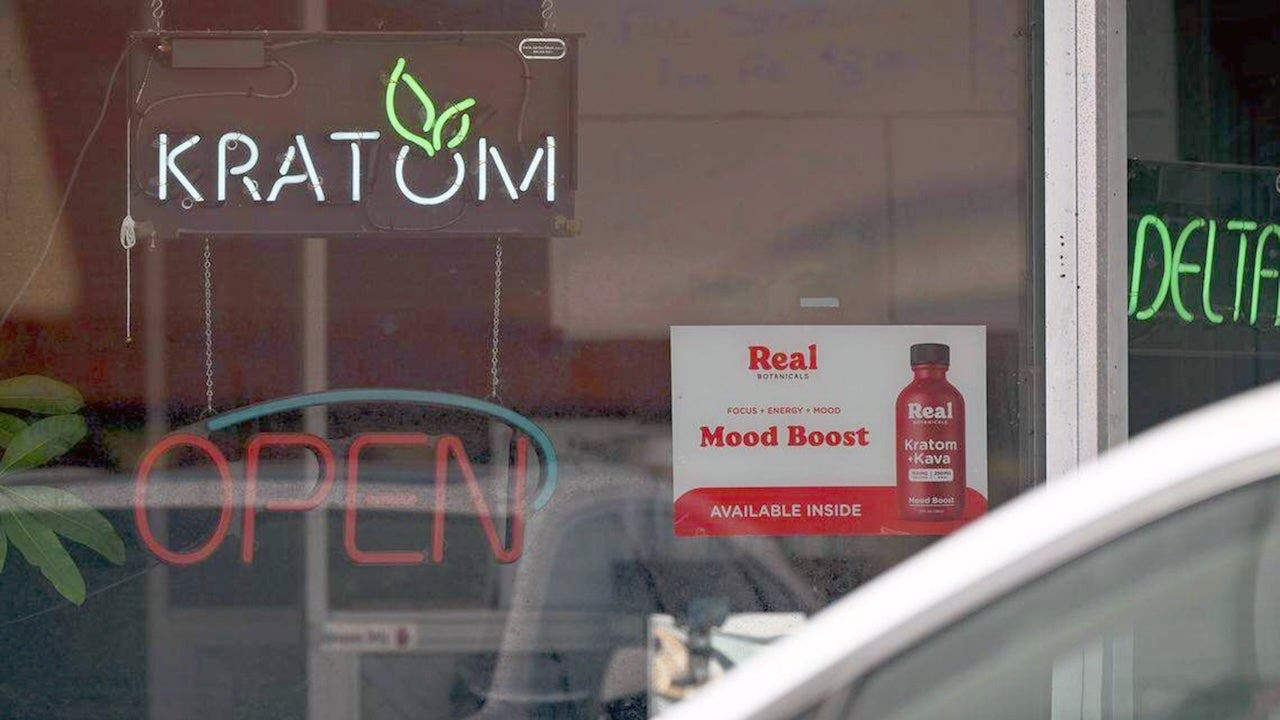
Kratom products have become increasingly visible in convenience stores, smoke shops and online, but growing concerns about dependence and increasingly potent derivatives are putting the substance under greater scrutiny. Addiction treatment providers across the United States are reporting an increase in patients seeking help for dependence on kratom and 7-hydroxymitragynine, commonly known as 7-OH. Some newer products contain highly concentrated levels of 7-OH, a compound that acts on opioid receptors and can produce stronger opioid-like effects. The issue is particularly relevant for adolescents and young adults. Kratom and related products can be sold as powders, pills, gummies and liquid shots, potentially making it difficult for consumers and families to understand exactly what they are purchasing and the risks involved. Genevieve Weber, PhD, LMHC, LPC, associate professor of counseling and mental health at Hofstra University, can discuss the risks associated with kratom and other emerging substances, particularly among adolescents and young adults. View her profile Drawing on her clinical practice and community-based work educating families and retailers, Weber can address why young people may be vulnerable to emerging substances, how perceptions of availability and legality can influence perceptions of risk, and what parents, educators and communities should know as new products continue to appear. With regulators, health professionals and treatment providers paying increasing attention to kratom and concentrated 7-OH products, Weber can also offer perspective on the importance of education and prevention as the substance landscape continues to evolve. To arrange an interview today, simply click on her profile below.



Twice a year, Americans are made to gain or lose one hour of sleep to accommodate an age-old custom of dubious origins. But that may soon change. On July 14, 2026, Democrats and Republicans in the U.S. House of Representatives joined together to approve the Sunshine Protection Act, a bill that would effectively eliminate seasonal clock adjustments and institute permanent daylight saving time. Currently, this legislation is stalled in the Senate, but pressure is steadily mounting for the act’s passage before clocks once again “fall back” at the beginning of November. Amid the push, many researchers who specialize in sleep science and medicine hope Congressional lawmakers continue biding their time—and time in general—and weigh a different approach to the nation’s wakeup call conundrum. “Both the general public and the medical and scientific communities seem to largely support eliminating the practice of changing the clocks twice a year,” says Elizabeth Pantesco, PhD, assistant professor of Psychological and Brain Sciences and head of the Sleep and Heart Health Lab at Villanova University. “However, while political and public opinion often seem to slightly favor permanent daylight saving time, the sleep medicine and circadian science communities generally support permanent standard time.” As Dr. Pantesco explains, this support largely stems from experts’ understanding of circadian health. Permanent standard time would produce earlier morning light and earlier evening darkness, which is generally considered more favorable for optimizing the body’s 24-hour internal rhythms, than permanent daylight saving time. “Under permanent daylight saving time, reduced morning light and increased evening light exposure could shift the circadian clock later, while work, school and other social schedules remain fixed,” says Dr. Pantesco. “This can result in more difficulty falling asleep at night while still needing to get up at the same time in the morning, increasing the likelihood of circadian misalignment, poorer-quality sleep and shorter sleep.” Based on research and historical evidence, the consequences of this restlessness could extend far beyond bleary eyes and midday yawns. While permanent daylight saving time has never been analyzed in controlled trials, the existing literature on sleep restriction and circadian misalignment indicates that the policy change could have significant health and safety ramifications over an extended period. “Circadian misalignment and insufficient sleep have been associated with increased risks for cardiovascular and metabolic disease, as well as depression and other psychiatric outcomes. Long-term circadian disruption, particularly in research on shift work, has also been linked with certain cancers. More immediate consequences can include daytime sleepiness, impaired attention, reduced productivity and an increased risk of errors and motor vehicle crashes.” Dr. Pantesco also notes the possibility of some drawbacks with permanent standard time, which would shift an hour of daylight from evening to morning during the months currently on daylight saving time. Among the resultant pitfalls are that it could limit “opportunities for outdoor and social activities after work, affect businesses that benefit from evening activity and potentially increase risks for certain types of crime and for evening pedestrian or cyclist accidents.” Still, while the communal and societal effects of a permanent standard time have yet to be fully understood, the health benefits are strongly supported by circadian biology. As the American Academy of Sleep Medicine (AASM) contends, its institution could eliminate the chronic sleep disruption caused by seasonal clock changes while creating a “natural synchrony [optimal] for health, mood, performance and safety.” Among U.S. lawmakers, there is a contingent that wholeheartedly agrees, working to enshrine permanent standard time through a Sunshine Protection Act alternative—the Sunshine for Our Kids Act. Whether they will be able to convince their Congressional cohorts of the benefits of permanently “springing forward” over permanently “falling back” remains to be seen, however. As with most things, only time will tell.


Public health risks after a major flood
Floodwaters may recede quickly, but the health consequences of a major disaster can last for months or even years, says University of Delaware epidemiologist Jennifer Horney. Horney, an expert in disaster recovery and public health, can discuss the longer-term health challenges communities face after major flooding events, including the Aug. 26 flash floods in Nepal that resulted in 1,450 deaths, with 6,000 people still missing. Horney can talk about: • How damage to health infrastructure can make it more difficult for people to access medical care after a disaster, and what communities can do to prepare for and reduce longer-term health consequences following flooding and other disasters. • How contaminated water and food can increase the risk of infectious disease, and how standing water left behind by floods can create breeding grounds for mosquitoes that transmit diseases such as dengue, malaria, encephalitis and chikungunya. • The impact disasters have on physical and mental health well after the immediate emergency has passed. To arrange an interview, visit Horney's profile and click on the contact button. Interested reporters can also send an email to MediaRelations@udel.edu.



When Brand Activism Meets the Bottom Line
Should companies speak out on political issues? When does taking a stand become a business risk? University of Rochester political scientist and professor of business administration David Primo studies the tension between corporate strategy, free expression, and consumer backlash. His insights have become indispensable for journalists covering the CEOs, sports owners, and brands that increasingly find themselves at the center of public controversies. Primo was recently quoted in The Boston Globe about the fallout from New England Patriots owner Robert Kraft’s intervention in Ed Sheeran’s stadium tour after rapper Macklemore was dropped as an opening act. While Kraft had the legal right to regulate speech on private property, Primo argued, the larger business question is whether companies benefit from policing the political views of performers, employees, or partners. “You’re not going to be a successful arena owner if you start checking people’s politics before you book them,” Primo told The Globe. His expertise extends beyond concerts and stadiums. Primo researches corporate political activity, regulation, governance, and the strategic decisions organizations make when navigating contentious public issues. He has been a source in news stories about boycotts involving big brands like Harley-Davidson and Target. Primo can discuss: • Brand activism and corporate political speech • When companies should — or shouldn’t — take public positions • Consumer backlash and reputational risk • CEO activism and its business consequences • Corporate governance and political decision-making • The intersection of free expression and private businesses As debates over corporate values, sponsorships, employee activism, and executive leadership continue to shape headlines, Primo offers evidence-based insight into how businesses weigh the costs — and potential benefits — of entering the political arena. Connect with him by clicking on his profile.



Where Will AI Change Work First?
Artificial intelligence is changing the workplace, but predicting which jobs will disappear may be the wrong place to start. A recent Boston Globe article looks at new research from Pierre Bouquet, a PhD candidate and research assistant at the MIT Center for Transportation & Logistics (MIT CTL), and Luca Mouchel, a visiting student at MIT CTL completing his master’s thesis in affiliation with MIT. Their AI Labor Exposure Map examines the specific tasks that make up different occupations and measures which of those tasks can already be performed or accelerated by AI. The distinction matters. AI exposure does not mean that a job is about to disappear. It can mean that certain parts of a job are becoming easier to automate while other responsibilities, particularly those involving judgment, oversight and human interaction, remain firmly in human hands. (news.mit.edu) “It’s not a forecast. It’s a measurement.” Pierre Bouquet, MIT Center for Transportation & Logistics, speaking to The Boston Globe (ctl.mit.edu) That idea is central to the broader work Bouquet and Mouchel are doing at MIT CTL. Bouquet’s doctoral research focuses on the future of work and measuring AI’s impact on labor markets, organizations and society. Mouchel’s work focuses on quantifying workforce exposure to AI. Together, their research contributes to MIT CTL’s broader effort to understand how technology changes work at the level of individual tasks. (ctl.mit.edu) Their work is part of the Work Analytics Lab at MIT CTL, which studies AI exposure, job design, productivity and workforce planning. The goal is to give employers and policymakers better information about where AI may automate work, where it may augment people and how jobs themselves could evolve. That approach produces a more nuanced picture of the future of work. Exposure varies considerably across occupations and regions. Knowledge-intensive jobs can contain highly exposed tasks, while many service and physical roles remain less affected by current AI capabilities. Even within an exposed occupation, the parts of the job requiring human judgment, management and interpersonal skills may remain essential. For employers, the question may therefore be less about which jobs AI will replace and more about which parts of work should change. That creates an opportunity to think differently about workforce planning, job redesign, training and how organizations divide responsibilities between people and technology. Story Ideas AI exposure is not job loss: Why measuring tasks gives a clearer picture of workforce risk. Which jobs will AI change first? The occupations and regions showing the greatest exposure. What should stay human? Identifying the tasks where judgment and human interaction still matter most. The entry-level AI question: How automation could reshape the early stages of professional careers. Redesigning work around AI: How companies can use task-level data to rethink jobs, training and productivity. Read the Boston Globe article: AI’s impact on jobs? It’s all over the map. Visit MIT CTL to learn more about their work at the MIT Center for Transportation & Logistics are conducting on on AI, labor markets, workforce planning and the changing nature of work.

Is AI ethical? One philosophy professor has an answer.
During a snowstorm last winter, University of Delaware philosophy professor Thomas Powers fixed his own thermostat by typing the error codes into ChatGPT and following the instructions it provided. As he discovered on that cold, snowy night, AI can make DIY projects that much easier, potentially saving time and money. Ever the philosopher, Powers wondered about the ethics of his solution: What is the impact of taking the repair job away from someone who relies on the work? What about the risk of being wrong? Is the environmental impact of using AI worth the result? After 20 years in the Department of Philosophy and as director of the Center for Science, Ethics and Public Policy, Powers is uniquely suited to explore questions about the ethics of AI. What does “ethical AI” mean? POWERS: We want AI systems that are helpful and useful, but also safe. We want systems that don’t produce biased or dangerous results. One approach to achieve that, which I’m hopeful about, is to create systems that are “safe by design” or “ethical by design.” In other words, instead of relying entirely on outside regulation to prevent harmful behavior, we try to design the systems themselves so that they behave in ways we consider ethical. Is it possible to make an AI system truly “safe by design” if it eventually becomes capable of acting in ways its creators didn’t anticipate? POWERS: There is a big difference between most technologies and AI. With the latter, especially current large language models (LLMs), it appears that there is some unpredictability in their behaviors. Thus, their apparent autonomy complicates the "safe by design" motto. AI autonomy introduces the need for "guardrails" that constrain what AIs can do. But even this may not be possible. Why are AI companies hiring philosophers, and what does this mean for the field of philosophy? POWERS: Some of the hardest questions in AI aren’t purely technical questions. To build systems that are safe, fair or aligned with human values, you first have to decide what those concepts actually mean and how they can be translated into something a computer system can use. The challenge is to educate people who can move between those worlds — who understand the technology but can also ask the deeper questions about what we should want that technology to do. How has AI changed philosophy? POWERS: Philosophers have long discussed the philosophy of action with the concept of agency. For decades we assumed that an agent must be human — someone who acts on their own behalf, or on the behalf of another person, with some kind of plan or attitude. This concept transfers to discussions about AI, and whether it can be considered an agent and be responsible for its actions. The next step is to ask harder questions: Are autonomous AI agents responsible, in some sense, for what they do, and does this suggest or imply that they are conscious? I don’t think AI will become conscious any time soon, but I don’t think it is impossible, and other philosophers and scientists are broaching the question. To speak with Powers further about the philosophy of AI, reach out mediarelations@udel.edu. ABOUT THOMAS POWERS Thomas M. Powers, Ph.D., is an associate professor in the Department of Philosophy at the University of Delaware. He is also the director of the Center for Science, Ethics & Public Policy at UD. Powers' current research focuses on the ethics of information technology and the philosophy of technology. He contributes to scholarship on rule-based conceptions of machine ethics, computer agency, the ethics of artificial intelligence, and other philosophical issues involving emerging technologies, including human-robot interaction.