Experts Matter. Find Yours.
Connect for media, speaking, professional opportunities & more.

As the moon passes in front of the sun on August 12, 2026, viewers along the eclipse’s path of totality in Iceland, Greenland and Northern Spain will be treated to more than two minutes of daytime darkness. For many, it will be their first experience in totality. For the eclipse itself, it’s just another slightly different chapter in a millennium-long rinse and repeat. That’s because every eclipse belongs to what is called a saros series—a “family” of eclipses that follow a predictable schedule. A saros series begins and ends with partial eclipses near opposite poles of the Earth, and in between may feature annular, hybrid or total eclipses—like the kind occurring this August—across the world. “Then the series will end,” said Frank Maloney, PhD, associate professor of Astrophysics and Planetary Science at Villanova University. “New saros series are always coming into being, and old ones fading from existence. While they are here, they usually have between 70-73 eclipses over a span of 1,200-1,300 years.” Within the series is what is known as a saros cycle. It’s a period of roughly 18 years, 11 days and eight hours, when a natural synchronization of the moon’s three lunar phases arises. That synchronization can predict both lunar and solar eclipses, which follow very similar geometrics to the ones that precede and follow in their series. But why, then, aren’t all eclipses in a series over the same viewing area? The answer lies more with the movement of the Earth than with the eclipse. Within each series, the biggest cause of change from eclipse to eclipse comes from that last eight hours. It’s only the length of a workday, but each cycle, the Earth has rotated an additional 120 degrees from the previous. While the eclipse itself remains very similar to its predecessor and successor in the series, the viewing area does not. “Every fourth eclipse, or roughly every 54 years, you are back to where you began,” said Dr. Maloney. “That fourth eclipse in a saros is referred to as an exeligmos. But even that eclipse won’t follow the exact same path for a few reasons, including slight variations in the moon’s orbital node and distance from Earth.” Same region, but different track. The August 2026 eclipse will pass over Greenland, Iceland and Northern Spain, but its exeligmos from July 10, 1972 passed over parts of Russia, Alaska and Northeast Canada. Ed Guinan, PhD, ’64 CLAS, professor of Astrophysics and Planetary Science, witnessed that one with a Villanova contingent on the Gulf of St. Lawrence in Nova Scotia. Fifty-four years from now, this eclipse will be only a partial one, as the saros series begins to wane. The upcoming August event, in fact, is the penultimate of 10 total solar eclipses in Saros 126. The 10th will be in August 2044—the next one visible in the contiguous United States, seen in totality in parts of Montana, North Dakota and South Dakota. Saros 126 began with a partial eclipse on March 10, 1179, and will end with another partial on May 3, 2459. Humans understood these patterns long before this one began. In the first millennium BCE, the Chaldeans discovered the saros cycle by “carefully keeping record of observations” of eclipses over time, explained Dr. Maloney. “Our lives are linked with the sun. To the ancients, having the sun disappear was believed to be a really bad thing, like a demon devouring it. That goes for lunar eclipses too, which caused the moon to turn red and really bother people. When they could begin to predict them, total eclipses ceased to be the powerfully bad omens that ancients believed they were. It was still a mystery as to why it happened, but at least it was predictable, which reduced people's anxieties.” Now, the anxiety stemming from eclipse viewing is saved for the fierce competition for hotels along the path of totality and threats of cloudy weather. “But don’t worry,” Dr. Maloney said. "If you miss one, you might be able to see it ‘nearby’ in another 54 years.”


The ABCs of Joy: How Adversity, Belonging and Curiosity Lead to a Fuller Life
Young people today have more technology, more convenience and more connectivity than any generation before them. Yet many are struggling with anxiety, loneliness and a growing sense of dissatisfaction in their lives. The problem may be that most people have confused happiness with something deeper, and that’s joy, said Baylor University education researcher Jon Eckert, Ed.D. Data published by the Centers for Disease Control and Prevention shows that approximately one in two 12th-grade girls is not satisfied with herself, and one in three 12th-grade boys is not satisfied with himself. "We are in a happiness crisis. Kids are pursuing what they think is happiness, but they're doing it through ways that don't actually lead to happiness. Joy is different. It's deeper. It's this sense of enduring love and gratitude for others that will emerge through struggle." - Jon Eckert, Ed.D. Through years of research, Eckert identified what he calls the ABCs of Joy – Adversity, Belonging and Curiosity – finding that adversity builds belonging, and belonging cultivates curiosity. These ABCs of Joy, he said, can help people move beyond circumstantial happiness toward a more meaningful and enduring life. “I work with school leaders from all over the world and find that when people believe joy is durable and grounded in lives lived for and with others, those same people often realize the depth of their struggle determines the peak of their joy,” Eckert said. Adversity In a culture that often treats struggle as something to avoid, Eckert argues that adversity is essential to joy. "A lot of times the most joyful people we know have had really hard lives because life can be hard and joyful," Eckert said. "Oftentimes, the depth of our struggle will determine the peak of our joy." Eckert believes that when parents, teachers and coaches remove every obstacle from a young person's path, they may unintentionally prevent them from experiencing the growth that comes from overcoming challenges. "If we rob kids of the chance to struggle, then we also rob them of the chance to experience that kind of joy," Eckert said. “And I'm very clear, it's not trauma that we want for kids; it's adversity. We want them to do hard things and grow from the experience.” Belonging If adversity is where joy begins, belonging is where it grows. Drawing on flourishing research, Eckert said people may succeed independently, but they cannot truly flourish alone. Belonging is rooted in relationships where people know they are valued and supported. “Belonging is the knowledge that we matter to others, and they matter to us, which is knowledge we gain by going through hard things together,” Eckert said. “We may enjoy the fun-loving, carefree friend, but we need the person who shows up when things are hard.” At a time when much of life has moved online, that truth has become increasingly important. Social media and digital platforms offer constant connectivity, but they often fail to provide the deeper relationships people need. The strongest relationships are often forged through shared challenges, and those relationships not only provide support during difficult times, Eckert said, but also create opportunities for joy. Curiosity Eckert believes belonging and curiosity are closely connected. When people feel secure in who they are and in their relationships, they are more willing to engage those whose experiences, beliefs and backgrounds differ from their own. Because of online algorithms and digital echo chambers, many people limit meaningful engagement with people who hold different perspectives and tend to automatically dismiss those who hold ideas or opinions they disagree with. "We've become incurious as a society,” Eckert said. “How do we allow our joy and our love for others to overcome that incuriosity and seek out others? Those are the people that we should want to engage because that's what makes life more interesting." Curiosity is also essential to learning. While grades, degrees and career goals can motivate behavior, genuine learning begins with a desire to know more. "The only real form of intrinsic motivation for learning is curiosity," Eckert said. “Everything else is just delayed gratification.” Joy is more than happiness Eckert challenges the way many people, especially young people, think about happiness. Social media has fundamentally changed the way many young people evaluate their own lives by encouraging constant comparison with curated versions of others’ experiences. "If your happiness is normative and it's compared to other people, you're always going to lose on this," he said. Ultimately, Eckert believes the path forward is not found in comfort or convenience but in embracing the ABCs of Joy. When adversity is met with belonging and curiosity, young people can discover something far more durable than happiness: a joyful life marked by resilience, meaningful relationships and a deeper understanding of themselves and others. "Joy is not freedom from struggle," he said. "Joy is the fuel that allows us to struggle well.” ABOUT JON ECKERT, ED.D. Jon Eckert, Ed.D., is professor of educational leadership and The Lynda and Robert Copple Endowed Chair for Christians in School Leadership in Baylor University’s Moody School of Education. He leads the Baylor Center for School Leadership, and serves as program director of Baylor’s M.A. in School Leadership and assistant chair of the Department of Educational Leadership. Eckert’s research interests include collective leadership, teaching effectiveness, evaluation and strategic compensation to enhance that effectiveness, and science education. He has conducted research for the U.S. Department of Education, the Carnegie Foundation, the National Network of State Teachers of the Year, the National Institute for Excellence in Teaching and the Center for Teaching Quality, which he has published in numerous peer-reviewed journals and presented around the world. Eckert is the author of several books, including “Just Teaching: Feedback, Engagement, and Well-being for Each Student,” “Leading Together: Teachers and Principals Improving Student Outcomes,” and the soon-to-be-released “The Happiness Crisis: How Adversity Can Build a Resilient and Joyful Next Generation.” More from Jon Eckert, Ed.D. WATCH/LISTEN: Baylor Connections Podcast: Leadership Catalysts: Baylor Center for School Leadership A New Chapter for Educators: Culture of Joy 2026 at Foster Pavilion Looking to know more or arrange an interview? Simply contact: Shelby Cefaratti-Bertin at Shelby_Cefaratti@baylor.edu today.


The Truth About “Negative-Calorie” Cucumbers
As summer temperatures climb, so does interest in cucumbers — crunchy, hydrating, and long rumored to be a “negative-calorie food” that burns more energy to digest than it provides. It's a claim that circulates every year in diet culture, but it isn't true. The New York Times recently set out to separate the nutrition science from the myth, and turned to registered dietitians for a clear-eyed answer. Dr. Gina Jarman Hill is a Professor and Chair of the Department of Nutritional Sciences at Texas Christian University. A Registered and Licensed Dietitian, she has worked as a clinical and consultant dietitian and is a member of the Hunger and Environmental Nutrition (HEN) and Dietitians in Integrative and Functional Medicine dietetic practice groups. Her teaching and research center on food and sustainability, nutrition ecology, community nutrition, and public health — with particular expertise in food security, urban agriculture, and hunger. She earned her BS, MS, and PhD in Food and Nutrition from Texas Tech University and was named the Texas Academy of Nutrition and Dietetics' Outstanding Nutrition Educator in 2017. Dr. Hill was recently featured in The New York Times article “How Healthy Are Cucumbers?” by Amanda Schupak (July 13, 2026), which examines what cucumbers do — and don't — offer nutritionally. Read the full article here. A 10.5-ounce unpeeled garden cucumber, for instance, contains just over one cup of water and 45 calories. Gina Jarman Hill, a professor of nutritional sciences at Texas Christian University, said there is a common misconception that cucumbers are “negative-calorie foods” — meaning they contain fewer calories than it takes to burn digesting them. “There’s no such thing as a ‘negative-calorie food,’” she said, but because the number of calories in cucumbers is so low, they’re about as close as you will get to one. As long as you’re mindful of what you pair them with, Dr. Hill said, there is no reason to curb your cucumber consumption. Dr. Hill is available to speak with media on nutrition myths, food security, sustainable and urban agriculture, community nutrition education, and healthy eating on a budget — timely topics as outlets continue to cover diet trends, food waste, and seasonal eating. To arrange an interview or request a comment, click through to Dr. Hill's profile below.



Deaths, resignations in Congress test narrow majority
United Press International (UPI wire service) interviewed Meena Bose, Hofstra University professor of political science, executive dean of the Public Policy and Public Service program, the Kalikow Chair in Presidential Studies and director of the Kalikow Center for the Study of the American Presidency, about the death of Senator Lindsey Graham and President Donald Trump‘s choice of the late Senator’s sister Darline Graham Nordone, to succeed him. Until the midterm elections, Nordone will hold that position in an honorary capacity. There are four active vacancies on Capitol Hill with Nordone filling Graham’s seat. “The issue here is really that there have been vacancies and resignations and that the margin is so narrow for party control, particularly in the House of Representatives,” Dr. Bose told UPI. “The number of resignations or decisions not to run for re-election is indicative of questions about why people want to serve in office or indicative of a question of are people hesitant to serve in public office, and if so, why?”

Sharks as Ocean Sensors: How New Tagging Technology Is Advancing Marine Science
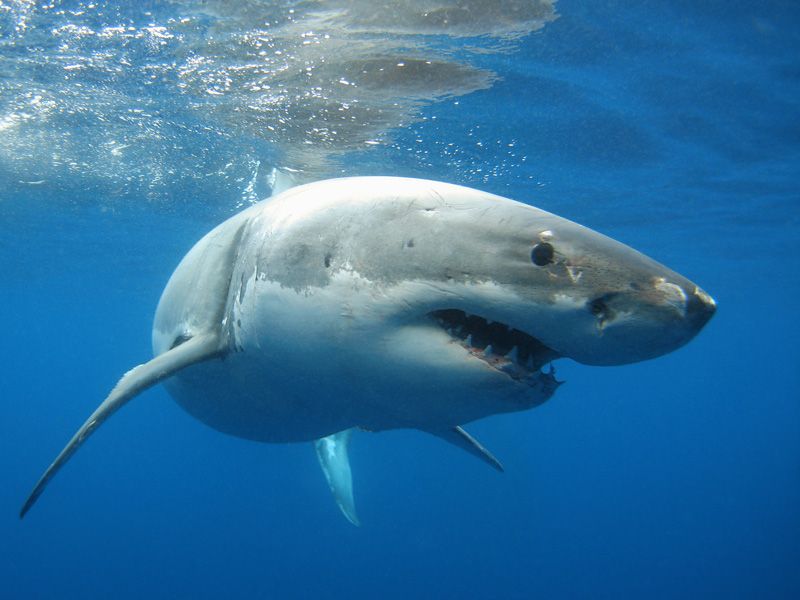
University of Delaware researchers are helping to expand how scientists observe the ocean by developing and deploying animal-borne electronic tags that turn sharks into mobile ocean sensors. The research is led by UD marine scientist Aaron Carlisle, who studies shark ecology, movement patterns and conservation. He can discuss how tagging technology is helping researchers better understand sharks and the ocean environment. The data collected by the tags allow researchers to gather ocean temperature and salinity measurements from parts of the Atlantic that are difficult and expensive to monitor consistently. These observations could help scientists better understand the Mid-Atlantic’s seasonal “cold pool,” a layer of colder bottom water that can influence how quickly hurricanes intensify. This summer, Carlisle and his team are conducting offshore tagging expeditions in the Mid-Atlantic aboard UD's R/V Daiber, where they are testing redesigned tags. Carlisle also studies human impacts on shark populations, including recent research examining the international trade of sand tiger sharks and the biological, ethical and economic concerns surrounding the harvest of a protected species for aquarium display. Carlisle’s expertise includes: • Shark ecology, movement patterns and conservation. • How satellite-linked tags allow researchers to collect and transmit ocean data. • How animal-borne sensors can help researchers gather observations from difficult-to-monitor parts of the Atlantic. • How ocean temperature and salinity data can improve understanding of hurricane development and ocean processes. • How shark-based observations can complement existing ocean observing networks. To arrange an interview with Carlisle, visit his profile and click the contact button. Interested reporters can also send an email to MediaRelations@udel.edu.



Why Negative Campaign Ads Work: David Schweidel on the Psychology Driving This Election Cycle
As the 2026 Senate races heat up, negative campaign ads are once again dominating the airwaves. David Schweidel, Professor of Marketing and the Roberto C. Goizueta Professor in Business Technology at Emory's Goizueta Business School, has researched political advertising for years and is currently tracking the 2026 Senate races. Asked why negative campaigns tend to outperform positive ones, Schweidel points to what sticks with voters: "It's those negative messages. It's those attack messages," often fear- or anger-based, that he says are "more arousing to us" and "tends to move the needle more so than positive advertising." Where an ad comes from matters too. Schweidel's research looks at whether messaging originates from the candidate directly or from third parties like PACs or political parties, and he's found that candidate-sourced messaging tends to be more believable, "coming from a human brand," in his words, rather than an unfamiliar political organization. His current research pushes this further, into how political advertising shapes what AI chatbots tell voters. Schweidel notes that where news coverage and social media once drove poll movement, more voters are now turning to AI chatbots for candidate information. Using Maine Senate candidate Graham Platner as an example, he explains that recent news coverage and online conversation about a candidate gets absorbed by these chatbots, ultimately shaping what's presented to a voter asking about that candidate. For campaigns and advertisers, Schweidel frames this as a new channel to understand, similar to how companies already monitor social media conversation, and predicts political campaigns will start actively tracking how their candidates are portrayed in AI responses, the same way many companies now treat AI presence the way they once treated search engine optimization: "What a lot of companies are trying to come up with now is what is the playbook to do the same thing for AI." Dr. Schweidel is an expert in marketing technology, AI, social media, political marketing, and customer analytics. He holds a PhD in Marketing from the Wharton School of the University of Pennsylvania and is the author of Social Media Intelligence and Profiting from the Data Economy. His research has appeared in the Journal of Marketing, Journal of Marketing Research, Marketing Science, and Management Science, and he has been recognized as a Marketing Science Institute Young Scholar and named to Poets & Quants' "Top 40 Under 40." Dr. Schweidel is available to discuss: Why are negative campaign ads more effective than positive ads? Why do negative emotions drive people to vote, donate, and campaign, more than positive emotions? The connection between AI and campaign ads How organizations make explicit decisions to exploit these trends Click on the connect button in his profile below.



Built to Last: What It Takes to Compete Across Generations of World Cups
The 2026 FIFA World Cup is giving fans an unusual view of football history: several of the game’s biggest names are still competing long after most elite careers have ended. Cristiano Ronaldo and Lionel Messi are appearing in their sixth World Cups. Ronaldo has scored twice in this tournament and 10 times overall, while Messi has added six goals in 2026 to reach 19 for his World Cup career. Luka Modrić is playing in his fifth tournament. Neymar and Kevin De Bruyne are each appearing in their fourth. Those numbers say something important about talent. They say even more about durability. Reaching one World Cup is difficult. Returning four, five or six times means surviving nearly two decades of club schedules, injuries, travel, tactical changes and competition from younger players. It also means finding new ways to contribute when the body no longer responds exactly as it once did. That opens up several timely questions for journalists covering this final stage of their careers. Below, experts in sports science, biomechanics, psychology and sports business offer perspective on what it takes to compete across multiple World Cups—and what allows some players to remain influential long after their physical peak. What does it take physically to last this long? The World Cup lasts only a few weeks, but the careers behind it are built over thousands of training sessions and matches. For older players, the challenge is not simply staying fit. It is managing fatigue, recovering faster and avoiding the injury that could end the run. Hofstra exercise physiologist Katie Sell can speak to the less visible work behind these careers: sleep, hydration, nutrition, endurance and the tighter recovery window athletes face as they age. At the University of Delaware, Tom Kaminski brings expertise in soccer injuries, concussions and player safety. He can help explain how accumulated wear, repeated head impacts and return-to-play decisions influence whether a player can continue at the highest level. Texas Christian University’s Peter Weyand, an expert in sprint mechanics and running performance, can discuss what happens to speed and acceleration over time—and which physical qualities can still be protected through training. How do great players change their game? Longevity rarely comes from playing the same way forever. Ronaldo moved from the wing into a more central scoring role. Messi became more selective with his movement. Modrić continued to control matches through timing, positioning and awareness rather than physical dominance. These are not signs that aging players have stopped influencing games. They are signs that influence has changed. Carnegie Mellon biomechanics researcher Eni Halilaj can speak to how athletes adjust their movement patterns, conserve energy and reduce physical strain as they get older, while her colleague Eric Yttri, who studies motor control and decision-making, can explain how anticipation and experience allow veteran players to act earlier and more efficiently. Texas Christian University’s Peter Weyand can also add context on why older players often change positions, reduce repeated sprinting or become more selective about when they make high-intensity runs. Why keep coming back? By the time a player reaches a fourth or fifth World Cup, money and recognition are unlikely to be the main reasons for continuing. The harder question is what keeps an athlete committed after years of success, injuries and public scrutiny—especially when their role may be smaller than it once was. TCU sport psychology expert Robyn Trocchio can speak to motivation, focus and how accomplished athletes continue setting meaningful goals late in their careers. Hofstra’s Genevieve Weber can address performance anxiety, media pressure and the emotional weight of entering what may be a final international tournament. Georgia Southern sport psychologist Brandonn Harris can discuss resilience, confidence and the mental discipline required to recover from injury, disappointment and changing expectations. How should an aging superstar be judged? Goals are easy to count. Leadership, timing and influence are not. A veteran player may no longer dominate every match, but may still shape how teammates prepare, how opponents defend and how supporters respond. For coaches, that creates a difficult balance between reputation, current performance and what an experienced player brings in moments of pressure. At Emory University’s Goizueta Business School, Michael Lewis can discuss the value of global stars beyond the score sheet, including fan interest, brand strength and the attention they bring to a national team. Carnegie Mellon University’s Eric Yttri can speak to the on-field contributions that statistics often miss, including positioning, anticipation and decision-making. Texas Christian University’s Robyn Trocchio can address the leadership side of the story, including the difficult transition from automatic starter to mentor, substitute or situational player. A generation nearing the end The 2026 World Cup may be remembered not only for the players who emerged, but for the ones who were leaving. Ronaldo, Messi, Modrić, Neymar and De Bruyne have played through different tactical eras and alongside multiple generations of teammates. Their longevity was not built on talent alone. It required adaptation, recovery, discipline and a willingness to accept that staying great sometimes means becoming a different kind of player. For reporters, their careers offer a timely way to examine how elite athletes age—and why some remain relevant long after the normal limits of the game suggest they should.


U.S.-Iran Agreement May Be Easier to Sign Than Sustain, Says TCU Political Scientist
As reports emerge of a potential memorandum of understanding (MOU) between the United States and Iran, questions remain about whether any agreement can overcome decades of mistrust, competing national interests, and domestic political pressures. Ralph Carter is the Piper Professor of Political Science at Texas Christian University (TCU). focuses on Middle East conflicts, U.S. foreign trade and defense policy, with an emphasis on the roles played by Congress. View his profile According to Texas Christian University political scientist Ralph Carter, the details of the agreement and whether both sides ultimately accept those terms, will determine whether negotiations can move forward. "We have to know what's in the MOU itself and whether both sides agree on that. If it's acceptable to both sides, then domestic politics on both sides enters the picture." For the United States, Carter notes that President Trump is eager to secure a diplomatic victory while also maintaining his long-standing position on Iran's nuclear ambitions. Carter says the administration faces competing pressures: demonstrating progress on national security, ensuring stability in global energy markets, and responding to economic concerns that matter most to American voters. At the same time, Iran is unlikely to compromise on what it views as fundamental issues of sovereignty and national independence. "Any Iranian regime, including this one, will insist on two things: Its territory is inviolate. It will not give it up. Its sovereignty is not negotiable." While Tehran may be willing to accept inspections or limits on highly enriched uranium, Carter says Iran is unlikely to abandon its nuclear program entirely simply to satisfy U.S. demands. Economic sanctions and their impact on Iran's economy will also remain central to any negotiations. The timeline may present another obstacle. "A 60-day window after the MOU is signed probably isn't enough time to reconcile these differences." As negotiations continue, Carter can provide expert analysis on U.S.-Iran relations, nuclear diplomacy, sanctions policy, Middle East security, international negotiations, and the domestic political considerations influencing both governments. Ralph Carter is available to discuss U.S.-Iran relations, nuclear negotiations, international diplomacy, sanctions policy, and Middle East politics.


Covering the World Cup? University of Delaware Experts are Here to Help with Your Coverage
As the 2026 FIFA World Cup captures attention across North America and around the world, University of Delaware experts are available to help media examine the larger stories connected to the tournament, from player safety and youth soccer to tourism, sports analytics, playing surfaces and the shared experience of watching the game. University of Delaware's World Cup Experts Hub brings together faculty and specialists who can provide timely commentary on the health, business, social and scientific issues shaping one of the world’s most watched sporting events. Featured Topics The Business of Youth Soccer Youth sports participation, community impact, the business of soccer and how a major global tournament can influence local programs, families and the next generation of players. Player Safety and Concussions Head injuries, concussion prevention, heading guidelines, athlete health and how evolving safety standards are changing the way soccer is played and taught. Tourism and Global Impact How mega-events drive tourism, economic activity, host-city visibility and broader cultural connection across countries, communities and fans. Youth Development and Fan Engagement How family traditions, school programs and shared sports experiences shape youth identity, social development and interest in physical activity. Sports Analytics in Action The rise of data-driven performance, real-time game analysis and how students and practitioners are applying analytics to elite global competition. The Science of Playing Surfaces Natural grass requirements, turfgrass systems, stadium preparation and the science behind maintaining world-class fields for international play. Why Watching Together Matters The psychology of shared experiences, happiness, social connection and why gathering for World Cup matches can be meaningful far beyond the final score. Media can visit the University of Delaware’s World Cup Experts Hub to explore available experts and connect directly with the right source for their story.



Science Is Changing the Game: How Research Is Transforming Modern Sports
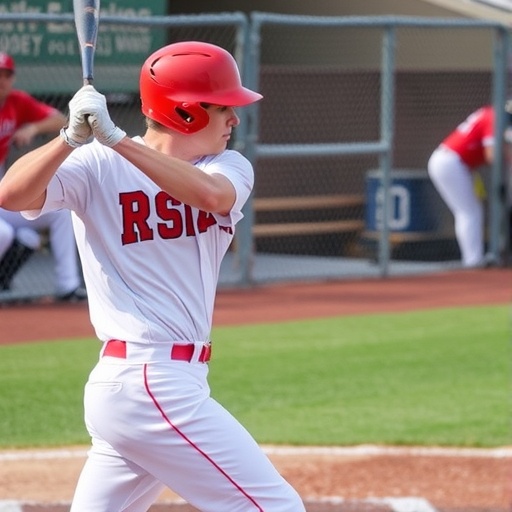
Professional sports have always embraced innovation, but today's competitive advantage increasingly comes from science. Researchers are applying advances in neuroscience, artificial intelligence, biomechanics, data analytics, and human performance to better understand how athletes make decisions, respond under pressure, recover from injury, and maximize performance. What once relied heavily on intuition and experience is now being informed by sophisticated research that can measure, predict, and improve outcomes at every level of competition. Recent studies from Carnegie Mellon University highlight the growing role science is playing across the sports landscape. Whether examining decision-making in high-pressure situations, analyzing performance strategies, or using artificial intelligence to improve health outcomes, researchers are uncovering insights that can help athletes perform at their best while extending careers and reducing injury risk. Ron Yurko is an Assistant Teaching Professor in the Department of Statistics & Data Science at Carnegie Mellon University, and the Director of the Carnegie Mellon Sports Analytics Center (CMSAC). View his profile Scott Powers, an assistant professor at Rice University with vast front-office experience in Major League Baseball—including stints with the Los Angeles Dodgers and the Houston Astros—joined forces with Ron Yurko, a director at the Carnegie Mellon Sports Analytics Center, to analyze this cutting-edge data. Their study, published in The American Statistician in 2026, marks a significant advancement in the quantitative understanding of batting dynamics. It uses high-resolution measurements of bat speed and swing length, metrics that were publicly released for the first time in 2024, to explore how hitters modulate their swings under different pitch counts, particularly when facing two strikes. Eric Yttri is an Associate Professor at Carnegie Mellon University where his research goal is to establish how neural circuits lead to these action selection decisions. View his profile As a neuroscientist, I have been working to uncover how the brain decides when to act and when to wait. Recent research from my team and me helps explain why this split-second pause happens, offering insight not only into elite athletic performance, but also how people make everyday decisions when the potential outcome isn't clear. We found that the key to hesitation is a response to uncertainty. This could be where a dropped hockey puck will land, when a race starts, or placing your order at a new restaurant. Eni Halilaj is an Associate Professor at Carnegie Mellon University where she directs the CMU Musculoskeletal Biomechanics Lab, an interdisciplinary group of engineers seeking to understand and optimize human movement mechanics. View her profile According to Eni Halilaj, an assistant professor in mechanical engineering at Carnegie Mellon University and biomechanist who specializes in orthopedic rehabilitation, 60 percent of those who suffer this common knee injury also develop osteoarthritis early in life. The degenerative joint disease, which affects an estimated 32.5 million individuals in the U.S., is especially problematic for younger patients because of the longer time span during which the chronic condition can cause debilitating pain, stiffness and limited mobility. "How can we make the 60 percent have the same long-term outcome as the 40 percent?" asked Halilaj, who is working to understand the difference between those who do and those who do not develop osteoarthritis following knee trauma. Matthew Walker is a Professor, Astrophysics & Cosmology at Carnegie Mellon University. His research focuses on the astrophysical properties of dark matter, but he is also a former collegiate D1 baseball player and lifelong, passionate fan staying apprised of advancements in the game. View his profile Carnegie Mellon University physics professor Matthew Walker said the system still has limitations, especially on pitches that are extremely close to the edge of the strike zone. "Every measurement device has a margin of error," Walker said. "ABS is, from what I can tell, somewhere around half an inch -- which means if the ABS call says that the pitch was within half an inch of the border between a ball and a strike, whether it says it’s a ball or a strike is really no better than a guess." Walker said that in those situations, the umpire’s original call should remain in place rather than letting the automated system make the final decision. The influence of science in sports extends far beyond professional athletics. Research developed for elite competitors often finds applications in healthcare, rehabilitation, education, workplace performance, and everyday decision-making. As teams continue to invest in analytics, wearable technology, artificial intelligence, and performance science, the relationship between research and sports is expected to grow even stronger. The result is a deeper understanding of how humans learn, adapt, compete, and perform under pressure. If you're covering or looking to know more, we can help! Carnegie Mellon University experts can discuss: • The growing role of science and technology in sports • Performance optimization and decision-making under pressure • Artificial intelligence and data analytics in athletics • Injury prevention, rehabilitation, and athlete health • The future of sports research and innovation