Experts Matter. Find Yours.
Connect for media, speaking, professional opportunities & more.

Cornea specialist, educator named chair of MCG Ophthalmology
Amy Estes, MD, a cornea specialist, educator and long‑time faculty leader, has been named chair of the Department of Ophthalmology at the Medical College of Georgia at Augusta University, effective July 1. Pending approval of the University System of Georgia Board of Regents, she will also hold the Knights Templar Educational Foundation of Georgia/Fleetwood Maddox Chair in Ophthalmology. Estes joined MCG in 2013 and currently serves as director of the Cornea Service. She is a highly respected clinician who cares for patients from across Georgia who require advanced medical and surgical management of complex corneal disease. A dedicated educator, Estes has played a central role in training the next generation. She has advised numerous medical students pursuing careers in ophthalmology, served on multiple PhD committees and contributed extensively to resident education. She previously served as associate director of the Ophthalmology Residency Program and has led the residency program as director since 2020. Her leadership has strengthened the visibility and reputation of the department’s educational programs across the state. She also brings significant leadership experience at both the state and national levels. She has served on the council of the Georgia Society of Ophthalmology, ultimately becoming its president, and as the Georgia representative at the American Academy of Ophthalmology. Her research collaborations with the James and Jean Culver Vision Discovery Institute have contributed to six R01 grants and 19 peer-reviewed publications, advancing both basic science and translational vision research at MCG. “Dr. Estes has demonstrated exceptional commitment to patient care, education, and research throughout her career at MCG,” said MCG Dean David C. Hess, MD. “Her vision for the department, combined with her deep understanding of our institution and the needs of patients across Georgia, makes her an outstanding choice to lead the department into its next chapter. “I also want to express my sincere appreciation to Steve Brooks, MD, who has served as chair of the department since 2020 and will return to his faculty role as a pediatric ophthalmologist. Dr. Brooks has guided the department through significant transitions with steadiness, compassion, and a deep commitment to learners and patients. I’m thankful that he will continue to share his expertise with our students, residents, and the children and families he serves, and that he will continue his important work in patient care, research, and education.” As chair, Estes plans to prioritize faculty recruitment and retention, support continued growth in research and education, and pursue opportunities to expand clinical services, including exploring satellite locations to improve patient access and accommodate increasing demand for eye care across the state. She completed her undergraduate education at Davidson College before earning her medical degree from The Ohio State University College of Medicine. She completed both her ophthalmology residency and a fellowship in cornea and refractive surgery at Wake Forest Baptist Medical Center. See more experts at Augusta University → Click here


Fantasy Football Draft: Watch for 'Brain Bias'
National Football League fantasy drafts are underway in preparation for the season — and that means millions of fantasy football coaches are already overthinking their lineups. Before they blame a bad draft slot or a fluke injury for bombing from one week to the next, they might want to look in the mirror and give their head a shake. That’s because there’s good science behind those bad fantasy football decision. Renee Miller, a professor of brain and cognitive sciences at the University of Rochester, studies cognitive biases and literally wrote the book on bias in fantasy sports. She plays fantasy football, too. She warns that our brains are wired to interpret fantasy football results in ways that are suboptimal and illogical. “Biased thinking occurs in everyday life and work, and in fantasy sports,” Miller says. “Through the course of a season, you can see a full range of the ways cognitive bias affects a person’s weekly fantasy matchups.” Here’s the good news: Miller says we can untangle those wires if we know what to look for. Among the biggest culprits are what Miller calls “the endowment effect” (overvaluing and clinging to players you drafted high), “recency bias” (falling in love with last week’s star), and “confirmation bias” (cherry-picking stats that support what you already believe). But especially beware of Week One. Thanks to the “primacy effect,” those games early in the season loom larger in memory than later ones. One hot debut or a disappointing flop can warp a coach’s thinking for weeks. The result? Lineups driven more by emotion than logic — and possibly a lot of pick sixes. Biases aren’t all bad, though. Sometimes instincts pay off. First impressions and recent performances sometimes hold fast. But the best fantasy players, Miller says, know when to slow down and think systematically. They stay skeptical, challenge their gut reactions, and accept that they’ll be wrong sometimes. So before you rage-drop that underperforming wide receiver or crown your Week One sleeper a superstar, remember, the smartest move might be to take a look in the mirror and give your head a shake. Miller is available for interviews for journalists covering fantasy sports. Connect with her by clicking on her profile.



Could President Trump’s Approval Ratings Rebound?
Newsweek interviewed Meena Bose, professor of political science, executive dean of the Public Policy and Public Service program, the Kalikow Chair in Presidential Studies and director of the Kalikow Center for the Study of the American Presidency, about President Donald Trump’s falling approval ratings due to voter frustration over the economy and inflation. Dr. Bose told Newsweek that the long-term consequences of a president’s leadership and policies are “most significant” in determining their legacy. “A president’s long-term legacy for leadership and policy making is most important for determining historic favorability. The passage of time and the assessment of the totality of a presidency also can lead to more favorable ratings, or at least split ones in different policy or political areas, but this is no guarantee,” she said.


Mapping the ancient world with underwater robotics
As audiences flock to theaters for Christopher Nolan's The Odyssey, University of Delaware professor Art Trembanis is leading a real-life expedition to uncover one of ancient Greece's most important maritime landscapes. Trembanis, a professor in UD's School of Marine Science and Policy and an expert in seafloor mapping, marine robotics and underwater sensing technologies, recently led a team of students and researchers to the ancient harbor of Kenchreai, where they deployed autonomous underwater vehicles, advanced sonar systems and other cutting-edge mapping technologies to document a harbor that has remained hidden beneath the Mediterranean Sea for centuries. The expedition collected geospatial data that will allow researchers to reconstruct the ancient port in remarkable detail and ultimately create a "digital twin" of the site. The virtual model will enable archaeologists, engineers, students and the public to explore the harbor as if the water had been removed, preserving an invaluable piece of cultural heritage while advancing the use of marine technology in archaeology. Trembanis can discuss: Marine robotics and autonomous underwater vehicles Seafloor mapping and underwater imaging technologies The use of digital twins and 3D modeling to study underwater environments Advances in marine geospatial technology and ocean exploration Underwater archaeology and documenting submerged cultural heritage How engineering and marine science are transforming the study of oceans and ancient landscapes The role of emerging technologies in scientific discovery and education To arrange an interview with Trembanis, click on his profile or email mediarelations@udel.edu.



As the moon passes in front of the sun on August 12, 2026, viewers along the eclipse’s path of totality in Iceland, Greenland and Northern Spain will be treated to more than two minutes of daytime darkness. For many, it will be their first experience in totality. For the eclipse itself, it’s just another slightly different chapter in a millennium-long rinse and repeat. That’s because every eclipse belongs to what is called a saros series—a “family” of eclipses that follow a predictable schedule. A saros series begins and ends with partial eclipses near opposite poles of the Earth, and in between may feature annular, hybrid or total eclipses—like the kind occurring this August—across the world. “Then the series will end,” said Frank Maloney, PhD, associate professor of Astrophysics and Planetary Science at Villanova University. “New saros series are always coming into being, and old ones fading from existence. While they are here, they usually have between 70-73 eclipses over a span of 1,200-1,300 years.” Within the series is what is known as a saros cycle. It’s a period of roughly 18 years, 11 days and eight hours, when a natural synchronization of the moon’s three lunar phases arises. That synchronization can predict both lunar and solar eclipses, which follow very similar geometrics to the ones that precede and follow in their series. But why, then, aren’t all eclipses in a series over the same viewing area? The answer lies more with the movement of the Earth than with the eclipse. Within each series, the biggest cause of change from eclipse to eclipse comes from that last eight hours. It’s only the length of a workday, but each cycle, the Earth has rotated an additional 120 degrees from the previous. While the eclipse itself remains very similar to its predecessor and successor in the series, the viewing area does not. “Every fourth eclipse, or roughly every 54 years, you are back to where you began,” said Dr. Maloney. “That fourth eclipse in a saros is referred to as an exeligmos. But even that eclipse won’t follow the exact same path for a few reasons, including slight variations in the moon’s orbital node and distance from Earth.” Same region, but different track. The August 2026 eclipse will pass over Greenland, Iceland and Northern Spain, but its exeligmos from July 10, 1972 passed over parts of Russia, Alaska and Northeast Canada. Ed Guinan, PhD, ’64 CLAS, professor of Astrophysics and Planetary Science, witnessed that one with a Villanova contingent on the Gulf of St. Lawrence in Nova Scotia. Fifty-four years from now, this eclipse will be only a partial one, as the saros series begins to wane. The upcoming August event, in fact, is the penultimate of 10 total solar eclipses in Saros 126. The 10th will be in August 2044—the next one visible in the contiguous United States, seen in totality in parts of Montana, North Dakota and South Dakota. Saros 126 began with a partial eclipse on March 10, 1179, and will end with another partial on May 3, 2459. Humans understood these patterns long before this one began. In the first millennium BCE, the Chaldeans discovered the saros cycle by “carefully keeping record of observations” of eclipses over time, explained Dr. Maloney. “Our lives are linked with the sun. To the ancients, having the sun disappear was believed to be a really bad thing, like a demon devouring it. That goes for lunar eclipses too, which caused the moon to turn red and really bother people. When they could begin to predict them, total eclipses ceased to be the powerfully bad omens that ancients believed they were. It was still a mystery as to why it happened, but at least it was predictable, which reduced people's anxieties.” Now, the anxiety stemming from eclipse viewing is saved for the fierce competition for hotels along the path of totality and threats of cloudy weather. “But don’t worry,” Dr. Maloney said. "If you miss one, you might be able to see it ‘nearby’ in another 54 years.”


The ABCs of Joy: How Adversity, Belonging and Curiosity Lead to a Fuller Life
Young people today have more technology, more convenience and more connectivity than any generation before them. Yet many are struggling with anxiety, loneliness and a growing sense of dissatisfaction in their lives. The problem may be that most people have confused happiness with something deeper, and that’s joy, said Baylor University education researcher Jon Eckert, Ed.D. Data published by the Centers for Disease Control and Prevention shows that approximately one in two 12th-grade girls is not satisfied with herself, and one in three 12th-grade boys is not satisfied with himself. "We are in a happiness crisis. Kids are pursuing what they think is happiness, but they're doing it through ways that don't actually lead to happiness. Joy is different. It's deeper. It's this sense of enduring love and gratitude for others that will emerge through struggle." - Jon Eckert, Ed.D. Through years of research, Eckert identified what he calls the ABCs of Joy – Adversity, Belonging and Curiosity – finding that adversity builds belonging, and belonging cultivates curiosity. These ABCs of Joy, he said, can help people move beyond circumstantial happiness toward a more meaningful and enduring life. “I work with school leaders from all over the world and find that when people believe joy is durable and grounded in lives lived for and with others, those same people often realize the depth of their struggle determines the peak of their joy,” Eckert said. Adversity In a culture that often treats struggle as something to avoid, Eckert argues that adversity is essential to joy. "A lot of times the most joyful people we know have had really hard lives because life can be hard and joyful," Eckert said. "Oftentimes, the depth of our struggle will determine the peak of our joy." Eckert believes that when parents, teachers and coaches remove every obstacle from a young person's path, they may unintentionally prevent them from experiencing the growth that comes from overcoming challenges. "If we rob kids of the chance to struggle, then we also rob them of the chance to experience that kind of joy," Eckert said. “And I'm very clear, it's not trauma that we want for kids; it's adversity. We want them to do hard things and grow from the experience.” Belonging If adversity is where joy begins, belonging is where it grows. Drawing on flourishing research, Eckert said people may succeed independently, but they cannot truly flourish alone. Belonging is rooted in relationships where people know they are valued and supported. “Belonging is the knowledge that we matter to others, and they matter to us, which is knowledge we gain by going through hard things together,” Eckert said. “We may enjoy the fun-loving, carefree friend, but we need the person who shows up when things are hard.” At a time when much of life has moved online, that truth has become increasingly important. Social media and digital platforms offer constant connectivity, but they often fail to provide the deeper relationships people need. The strongest relationships are often forged through shared challenges, and those relationships not only provide support during difficult times, Eckert said, but also create opportunities for joy. Curiosity Eckert believes belonging and curiosity are closely connected. When people feel secure in who they are and in their relationships, they are more willing to engage those whose experiences, beliefs and backgrounds differ from their own. Because of online algorithms and digital echo chambers, many people limit meaningful engagement with people who hold different perspectives and tend to automatically dismiss those who hold ideas or opinions they disagree with. "We've become incurious as a society,” Eckert said. “How do we allow our joy and our love for others to overcome that incuriosity and seek out others? Those are the people that we should want to engage because that's what makes life more interesting." Curiosity is also essential to learning. While grades, degrees and career goals can motivate behavior, genuine learning begins with a desire to know more. "The only real form of intrinsic motivation for learning is curiosity," Eckert said. “Everything else is just delayed gratification.” Joy is more than happiness Eckert challenges the way many people, especially young people, think about happiness. Social media has fundamentally changed the way many young people evaluate their own lives by encouraging constant comparison with curated versions of others’ experiences. "If your happiness is normative and it's compared to other people, you're always going to lose on this," he said. Ultimately, Eckert believes the path forward is not found in comfort or convenience but in embracing the ABCs of Joy. When adversity is met with belonging and curiosity, young people can discover something far more durable than happiness: a joyful life marked by resilience, meaningful relationships and a deeper understanding of themselves and others. "Joy is not freedom from struggle," he said. "Joy is the fuel that allows us to struggle well.” ABOUT JON ECKERT, ED.D. Jon Eckert, Ed.D., is professor of educational leadership and The Lynda and Robert Copple Endowed Chair for Christians in School Leadership in Baylor University’s Moody School of Education. He leads the Baylor Center for School Leadership, and serves as program director of Baylor’s M.A. in School Leadership and assistant chair of the Department of Educational Leadership. Eckert’s research interests include collective leadership, teaching effectiveness, evaluation and strategic compensation to enhance that effectiveness, and science education. He has conducted research for the U.S. Department of Education, the Carnegie Foundation, the National Network of State Teachers of the Year, the National Institute for Excellence in Teaching and the Center for Teaching Quality, which he has published in numerous peer-reviewed journals and presented around the world. Eckert is the author of several books, including “Just Teaching: Feedback, Engagement, and Well-being for Each Student,” “Leading Together: Teachers and Principals Improving Student Outcomes,” and the soon-to-be-released “The Happiness Crisis: How Adversity Can Build a Resilient and Joyful Next Generation.” More from Jon Eckert, Ed.D. WATCH/LISTEN: Baylor Connections Podcast: Leadership Catalysts: Baylor Center for School Leadership A New Chapter for Educators: Culture of Joy 2026 at Foster Pavilion Looking to know more or arrange an interview? Simply contact: Shelby Cefaratti-Bertin at Shelby_Cefaratti@baylor.edu today.


The Truth About “Negative-Calorie” Cucumbers
As summer temperatures climb, so does interest in cucumbers — crunchy, hydrating, and long rumored to be a “negative-calorie food” that burns more energy to digest than it provides. It's a claim that circulates every year in diet culture, but it isn't true. The New York Times recently set out to separate the nutrition science from the myth, and turned to registered dietitians for a clear-eyed answer. Dr. Gina Jarman Hill is a Professor and Chair of the Department of Nutritional Sciences at Texas Christian University. A Registered and Licensed Dietitian, she has worked as a clinical and consultant dietitian and is a member of the Hunger and Environmental Nutrition (HEN) and Dietitians in Integrative and Functional Medicine dietetic practice groups. Her teaching and research center on food and sustainability, nutrition ecology, community nutrition, and public health — with particular expertise in food security, urban agriculture, and hunger. She earned her BS, MS, and PhD in Food and Nutrition from Texas Tech University and was named the Texas Academy of Nutrition and Dietetics' Outstanding Nutrition Educator in 2017. Dr. Hill was recently featured in The New York Times article “How Healthy Are Cucumbers?” by Amanda Schupak (July 13, 2026), which examines what cucumbers do — and don't — offer nutritionally. Read the full article here. A 10.5-ounce unpeeled garden cucumber, for instance, contains just over one cup of water and 45 calories. Gina Jarman Hill, a professor of nutritional sciences at Texas Christian University, said there is a common misconception that cucumbers are “negative-calorie foods” — meaning they contain fewer calories than it takes to burn digesting them. “There’s no such thing as a ‘negative-calorie food,’” she said, but because the number of calories in cucumbers is so low, they’re about as close as you will get to one. As long as you’re mindful of what you pair them with, Dr. Hill said, there is no reason to curb your cucumber consumption. Dr. Hill is available to speak with media on nutrition myths, food security, sustainable and urban agriculture, community nutrition education, and healthy eating on a budget — timely topics as outlets continue to cover diet trends, food waste, and seasonal eating. To arrange an interview or request a comment, click through to Dr. Hill's profile below.



Deaths, resignations in Congress test narrow majority
United Press International (UPI wire service) interviewed Meena Bose, Hofstra University professor of political science, executive dean of the Public Policy and Public Service program, the Kalikow Chair in Presidential Studies and director of the Kalikow Center for the Study of the American Presidency, about the death of Senator Lindsey Graham and President Donald Trump‘s choice of the late Senator’s sister Darline Graham Nordone, to succeed him. Until the midterm elections, Nordone will hold that position in an honorary capacity. There are four active vacancies on Capitol Hill with Nordone filling Graham’s seat. “The issue here is really that there have been vacancies and resignations and that the margin is so narrow for party control, particularly in the House of Representatives,” Dr. Bose told UPI. “The number of resignations or decisions not to run for re-election is indicative of questions about why people want to serve in office or indicative of a question of are people hesitant to serve in public office, and if so, why?”
Sharks as Ocean Sensors: How New Tagging Technology Is Advancing Marine Science
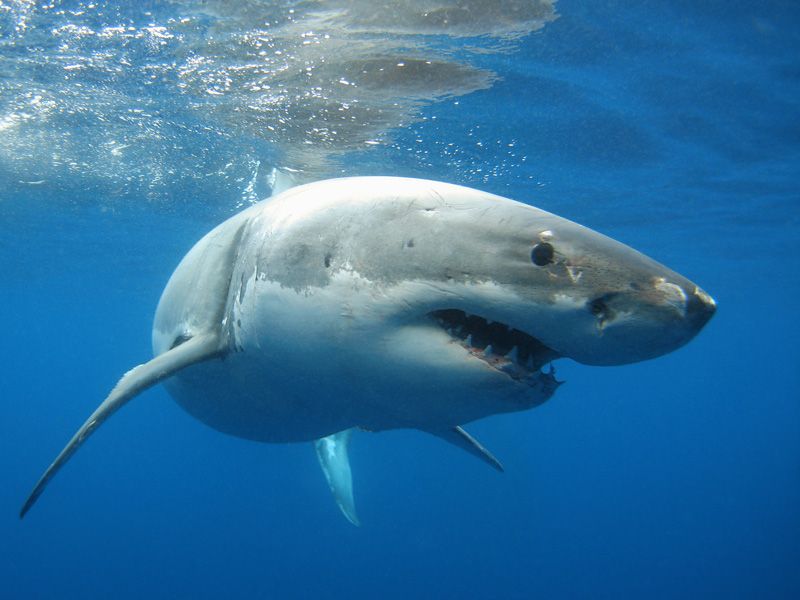
University of Delaware researchers are helping to expand how scientists observe the ocean by developing and deploying animal-borne electronic tags that turn sharks into mobile ocean sensors. The research is led by UD marine scientist Aaron Carlisle, who studies shark ecology, movement patterns and conservation. He can discuss how tagging technology is helping researchers better understand sharks and the ocean environment. The data collected by the tags allow researchers to gather ocean temperature and salinity measurements from parts of the Atlantic that are difficult and expensive to monitor consistently. These observations could help scientists better understand the Mid-Atlantic’s seasonal “cold pool,” a layer of colder bottom water that can influence how quickly hurricanes intensify. This summer, Carlisle and his team are conducting offshore tagging expeditions in the Mid-Atlantic aboard UD's R/V Daiber, where they are testing redesigned tags. Carlisle also studies human impacts on shark populations, including recent research examining the international trade of sand tiger sharks and the biological, ethical and economic concerns surrounding the harvest of a protected species for aquarium display. Carlisle’s expertise includes: • Shark ecology, movement patterns and conservation. • How satellite-linked tags allow researchers to collect and transmit ocean data. • How animal-borne sensors can help researchers gather observations from difficult-to-monitor parts of the Atlantic. • How ocean temperature and salinity data can improve understanding of hurricane development and ocean processes. • How shark-based observations can complement existing ocean observing networks. To arrange an interview with Carlisle, visit his profile and click the contact button. Interested reporters can also send an email to MediaRelations@udel.edu.


Why Negative Campaign Ads Work: David Schweidel on the Psychology Driving This Election Cycle
As the 2026 Senate races heat up, negative campaign ads are once again dominating the airwaves. David Schweidel, Professor of Marketing and the Roberto C. Goizueta Professor in Business Technology at Emory's Goizueta Business School, has researched political advertising for years and is currently tracking the 2026 Senate races. Asked why negative campaigns tend to outperform positive ones, Schweidel points to what sticks with voters: "It's those negative messages. It's those attack messages," often fear- or anger-based, that he says are "more arousing to us" and "tends to move the needle more so than positive advertising." Where an ad comes from matters too. Schweidel's research looks at whether messaging originates from the candidate directly or from third parties like PACs or political parties, and he's found that candidate-sourced messaging tends to be more believable, "coming from a human brand," in his words, rather than an unfamiliar political organization. His current research pushes this further, into how political advertising shapes what AI chatbots tell voters. Schweidel notes that where news coverage and social media once drove poll movement, more voters are now turning to AI chatbots for candidate information. Using Maine Senate candidate Graham Platner as an example, he explains that recent news coverage and online conversation about a candidate gets absorbed by these chatbots, ultimately shaping what's presented to a voter asking about that candidate. For campaigns and advertisers, Schweidel frames this as a new channel to understand, similar to how companies already monitor social media conversation, and predicts political campaigns will start actively tracking how their candidates are portrayed in AI responses, the same way many companies now treat AI presence the way they once treated search engine optimization: "What a lot of companies are trying to come up with now is what is the playbook to do the same thing for AI." Dr. Schweidel is an expert in marketing technology, AI, social media, political marketing, and customer analytics. He holds a PhD in Marketing from the Wharton School of the University of Pennsylvania and is the author of Social Media Intelligence and Profiting from the Data Economy. His research has appeared in the Journal of Marketing, Journal of Marketing Research, Marketing Science, and Management Science, and he has been recognized as a Marketing Science Institute Young Scholar and named to Poets & Quants' "Top 40 Under 40." Dr. Schweidel is available to discuss: Why are negative campaign ads more effective than positive ads? Why do negative emotions drive people to vote, donate, and campaign, more than positive emotions? The connection between AI and campaign ads How organizations make explicit decisions to exploit these trends Click on the connect button in his profile below.