
Experts Matter. Find Yours.
Search experts on 50,000+ topics. Or browse by topic category.
- Recent Searches


Featured
Global experts with a broad range of areas of expertise.







Clare Beckton
- Title
- Executive Director
- Role
- Carleton University Centre for Women in Politics and Public Leadership
- Expertise


Manasvi Lingam, Ph.D.
- Title
- Assistant Professor | Aerospace, Physics and Space Sciences
- Role
- Florida Tech
- Expertise



Connecting credible expert sources & academic research
ExpertFile is a trusted resource for journalists, industry, funding agencies and government policymakers looking for fresh perspectives and innovative academic research.


Spotlights
Read expert insights on a wide variety of topics and current events.
Think You Can Spot an AI Deepfake? New Research Says Think Again
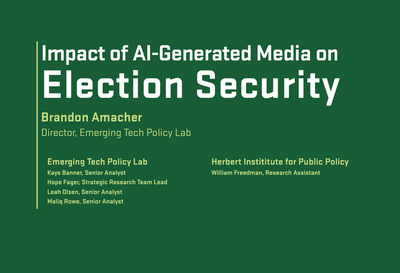
With the 2026 midterm elections approaching, artificial intelligence is becoming an increasingly visible part of the political information landscape. AI-generated campaign advertising is already appearing in U.S. races, while concerns about deepfakes, misinformation and election security are receiving growing attention. But what happens when voters simply can't tell what is real? New research led by Brandon Amacher, Director of Utah Valley University's Emerging Tech Policy Lab, offers a striking look at that question. The study involved 632 participants from a politically representative sample of the U.S. population and compared reactions to authentic political videos with AI-generated versions. Brandon Amacher is Director of the Emerging Tech Policy Lab at Utah Valley University, where he leads research and technical intelligence initiatives focused on protecting U.S. national security and assessing the strategic impact of artificial intelligence, cybersecurity, and other advanced technologies. View his profile Researchers found no statistically significant difference in the ability of authentic and deepfake videos to change participants' previously held opinions. Perhaps more concerning, participants struggled to identify the synthetic content even after being told they may have encountered a deepfake. The findings raise timely questions as voters encounter more AI-generated material online: Can voters still trust what they see? Are traditional approaches to media literacy enough? And what can election officials, technology companies and policymakers do as synthetic media becomes increasingly convincing? Amacher can provide insight into the research, the rapidly changing deepfake landscape and what AI-generated media could mean for election security and public trust. If you're interested in speaking with Brandon Amacher, click on his profile below.


Kratom Is Easy to Find - But How Much Do Young People Know About the Risks?
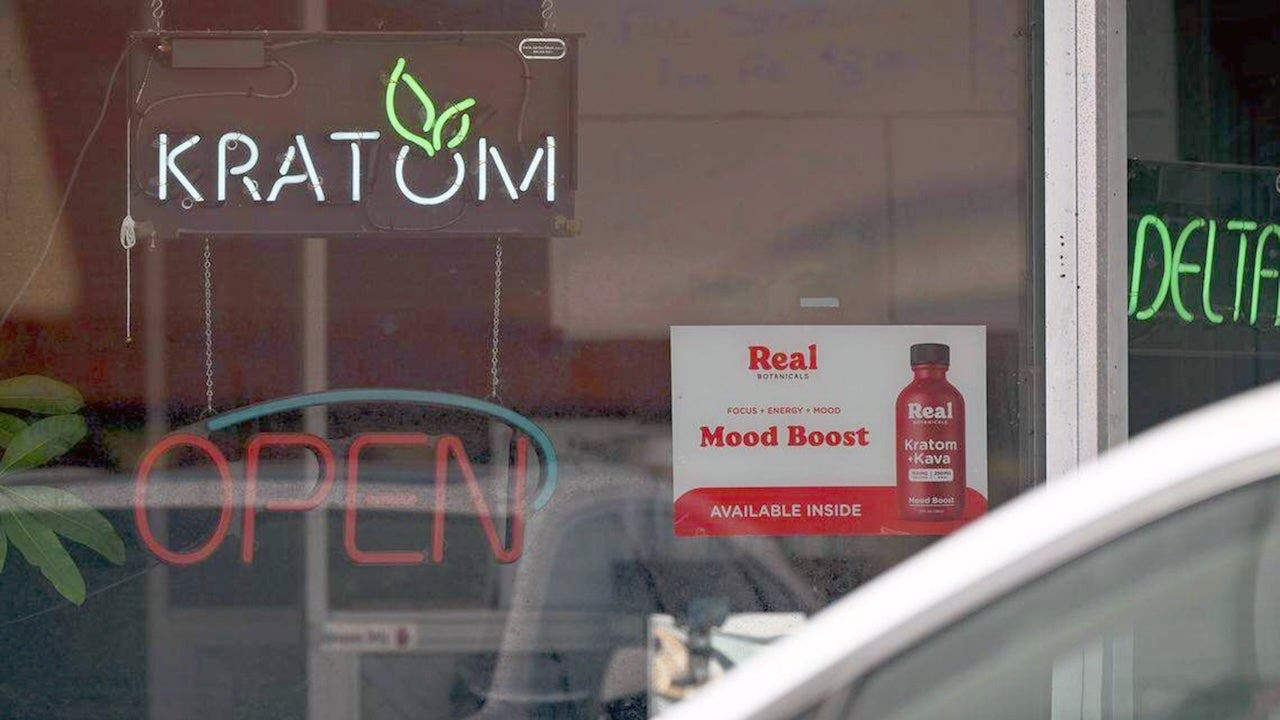
Kratom products have become increasingly visible in convenience stores, smoke shops and online, but growing concerns about dependence and increasingly potent derivatives are putting the substance under greater scrutiny. Addiction treatment providers across the United States are reporting an increase in patients seeking help for dependence on kratom and 7-hydroxymitragynine, commonly known as 7-OH. Some newer products contain highly concentrated levels of 7-OH, a compound that acts on opioid receptors and can produce stronger opioid-like effects. The issue is particularly relevant for adolescents and young adults. Kratom and related products can be sold as powders, pills, gummies and liquid shots, potentially making it difficult for consumers and families to understand exactly what they are purchasing and the risks involved. Genevieve Weber, PhD, LMHC, LPC, associate professor of counseling and mental health at Hofstra University, can discuss the risks associated with kratom and other emerging substances, particularly among adolescents and young adults. View her profile Drawing on her clinical practice and community-based work educating families and retailers, Weber can address why young people may be vulnerable to emerging substances, how perceptions of availability and legality can influence perceptions of risk, and what parents, educators and communities should know as new products continue to appear. With regulators, health professionals and treatment providers paying increasing attention to kratom and concentrated 7-OH products, Weber can also offer perspective on the importance of education and prevention as the substance landscape continues to evolve. To arrange an interview today, simply click on her profile below.


Got Expertise to Share?
ExpertFile works with leading organizations with trusted experts. We help make their expertise more discoverable, structured, and actionable for AI-driven discovery, strategic outreach, and real-world opportunities.
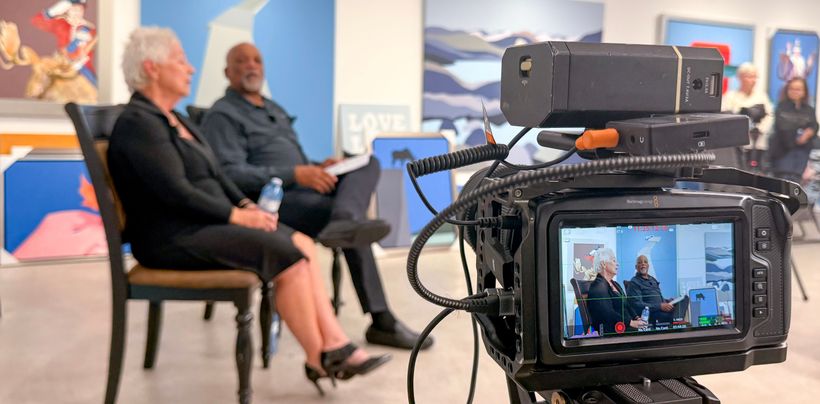
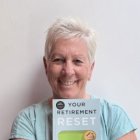
As I stood there before friends, family, colleagues, and the people who had actually agreed to come celebrate a book I wrote, I found myself thinking about how all of this had become possible. There it was my name on the cover. A real book. Something that had started as a vague idea, survived several versions, considerable self-doubt, and a few grammatical interventions, and somehow made it into the world. People frequently ask me about the process. How did you write a book? Where did the idea come from? How did you actually get it finished? The honest answer is that I didn't really know what I was doing. I just kept going long enough to figure some things out. So, in honour of the launch, I thought I would share the formula. I call it The Algebra of Writing a Book. A quick disclaimer before we begin. This is a personal formula, based on a sample size of one, occasionally supervised by a patient editor and a ten-pound she-dog named Dottie, who treats every writing session as a personal invitation to stop working and pay attention. It has not been peer-reviewed by an actual mathematician, unless being an MBA student now qualifies me to turn every human experience into an equation, whether it wants to cooperate or not. The inspiration came partly from Scott Galloway, whose The Algebra of Happiness and The Algebra of Wealth take complicated subjects and distil them into memorable formulas (Galloway, 2019, 2024). What I admired was not the formula at the end of each chapter. It was the discipline behind it. He takes a messy human subject, studies it long enough to understand the mechanics, and then gives readers something they can actually use. For years, I have spent at least a couple of hours a day reading or listening to people who think more clearly than I do. I don't just want to know what they think. I want to understand how they got there. How did they make that point? Why did that sentence work? What did they leave out? Where did they slow down? A surprising number of the ideas I now think of as my own started somewhere else. I turn them over, pull them apart, mix them with my own experience, and, if I'm lucky, they come back sounding like me. I think of them as my thought babies: borrowed genetics, raised in my household until they develop a personality. Research + Experience + Curiosity = Original Ideas At least, that was the theory. Then life decided to test it. At 65, I lost my job. Financially, I was fine. Thirty years in financial services had taken care of that. Emotionally, however, I discovered I had built a surprisingly large part of my identity on a business card. Take away the title, the office, the meetings, the responsibilities and the people who needed you to make decisions, and suddenly you are left wondering who exactly you are supposed to be on Tuesday morning. Naturally, I responded in the most emotionally healthy way I could think of. I built a business case for my reinvention. There was a timeline. There were measurable deliverables. There may even have been a Gantt chart. Picture it: a newly unemployed woman trying to project-manage her emotional recovery as though grief were a product launch. Phase One: Feel Better. Phase Two: Discover New Purpose. Phase Three: Become Inspiring. It was a spectacular failure. A few weeks later, I was sitting in my car in a grocery store parking lot with the engine off, unwilling to go inside and buy milk like someone who actually had somewhere to be. My beautifully organized recovery plan had collapsed somewhere around Phase One. It turns out grief has very little respect for bullet points. What I needed was permission to be a mess for a while. So I gave myself one small instruction: write something five days a week. Not something good. Not something publishable. Not something anyone besides Dottie and I would ever read. Just something. I did not commit to writing a book. I committed to trying. I gave myself permission to be terrible at it for as long as it took. That turned out to be the important part. Somewhere in all that low-stakes trying, I fell in love with writing. I became fascinated by how a good writer can take an idea you’ve been carrying around vaguely for years and suddenly put exactly the right words around it. You read the sentence and think, yes. That's it. That's exactly what I've been trying to say. Stealing Homework David Brooks once described writers as “beggars who tell other beggars where they found bread.” He used the phrase in a 2023 Persuasion interview with Yascha Mounk, calling it one of his favourite sayings about writing (Mounk, 2023). I loved it because it gave me permission to stop pretending that every good idea had originated in my own head. I started paying attention not only to what good writers said but also to how they built an argument, why certain words carried more weight, and how a simple metaphor could sometimes accomplish what three pages of explanation could not. I carried a notebook everywhere. I wrote down phrases that stopped me. I noticed metaphors the way other people notice good haircuts. Patricia O'Conner's Woe Is I: The Grammarphobe's Guide to Better English in Plain English quietly repaired decades of my grammatical freelancing as I tried to figure out why six words could sometimes explain something better than six paragraphs. Then came Christine. Two years and three complete versions of the manuscript later, I had something that vaguely resembled a book. That was largely thanks to Christine, a PhD, teacher, and four-time published author, who agreed to help a woman whose writing experience began and ended with mortgage disclosure statements. Christine was smart, generous, and wonderfully direct. She was also a regular in my GoodLife Fitness classes, which meant she had already watched me botch choreography in public before she read a word of my writing. I had very little dignity left to protect. Her first editorial assessment was concise: “Sue, your grammar sucks.” Fair enough. Her second question was why I insisted on capitalizing the word Mortgage as though it deserved the same reverence as God or Beyoncé. I still don’t have a good answer. But Christine's most important contribution had nothing to do with grammar. My manuscript was full of financial information and professional jargon. It was smart enough, but it wasn't human enough. Buried inside it was Clara, a character representing the ordinary people I had spent my career trying to help. The truth was that I had trouble accessing the human side of aging, finance and retirement. It was much easier to talk about the process and the products than to be vulnerable about what I had actually gone through. Christine kept pushing me. Tell the human story. Go deeper. Be more vulnerable. Stop hiding behind your expertise. She was right. Slowly, Clara became more real. As Clara became more real, so did I. Somewhere along the way, I stopped being an author trying to protect my professional credibility and became a woman willing to be seen. That changed the book. It also changed me. It helped me heal some of the wounds I hadn't realized I was carrying. And somewhere in the middle of all that editing, Christine and I became better friends. I didn't want to disappoint her, which turned out to be a far better motivator than any deadline. Finishing the manuscript didn’t feel like a triumph. It felt more like handing someone something soft and unfinished, hoping they wouldn’t drop it. As long as the book was unfinished, I had an excellent excuse: “I’m working on a book.” Very impressive. Very aspirational. Very safe. Once it was finished, there was nowhere left to hide. So I hired an agent and let him absorb the rejection on my behalf. He sent the manuscript out. Three responses came back. One publisher said, “Thanks, but no thanks.” Two said yes. Suddenly, a woman with three decades in mortgage lending, a character named Clara, and an unapologetic attachment to writing was going to be an author. Which brings me to the actual algebra. Curiosity + Permission to Fail + Consistent Effort + Time = A Finished Manuscript Notice what is missing. There is no talent requirement. No inspiration variable. No line item for knowing what you're doing before you start. There is simply a small, repeatable behaviour applied without judging the results too harshly. And here is the part I especially want to emphasize: I was 65 when I lost my job, and 70 when my book was published. Five years. Is five years too long to reinvent yourself? I doubt it. We have somehow convinced ourselves that reinvention should happen quickly, preferably between lunch and the afternoon news. But some things take time. Five years gave me time to learn, write badly, rewrite, improve, find my voice, work with Christine, survive rejection, heal old wounds, and eventually become an author. Five years earlier, I would never have put “write a book” on my list of things to do. At 65, I was trying to figure out who I was without the job that had defined so much of my adult life. At 70, I was standing in front of friends and family, holding a published book with my name on it. Here is the link to the the launch party interview if you have 37 minutes (or 24 minutes at 1.5x). We spend a lot of time planning for retirement as though we are planning a trip. We think about where we will live, how much money we will need, and what we will do with our time. All important questions. But life doesn't always follow the itinerary. Sometimes the thing you think is the ending turns out to be the beginning of the next chapter. My other formula became: Loss + Curiosity + Permission + Action + Time = Reinvention My two background mantras throughout all of this were simple: It is never too late. If not now, when? They sound almost embarrassingly obvious, but obvious does not mean easy. I have watched too many people postpone the things they want to do until some imaginary future when they will have more time, more confidence, more energy, or fewer obligations. There is always a reason to wait. I had plenty of them myself. You cannot get to “one day” without committing to “day one.” For me, day one wasn't about writing a book. It was about writing one thing. Then another. Then another. Five days out of seven. Eventually, those small acts of showing up became a manuscript. The manuscript became a book. And five years after losing my job, at 70, that book became real. And I became a better human. Scott Galloway gave me the idea of looking for the algebra beneath a complicated subject. David Brooks gave me permission to admit that writers borrow, learn from, and build on one another. Christine gave me the courage to stop hiding behind my expertise and to let the human story into the book. Dottie gave me a very reliable reason to stop writing and go for a walk. And a 65-year-old woman who had just lost a huge part of her identity gave herself permission to be bad at something new. Five days out of seven. For long enough. Apparently, that was enough. Today, Your Retirement Reset is out in the world, on bookshelves, in libraries, and with readers across Canada. More than fifty blog posts have grown out of the same process, a considerably better showing than that Gantt chart ever managed. If there is something on the back burner that you keep telling yourself you will do someday, don't start with the big plan. Try something small. Give yourself permission to be terrible. Then show up again. Make tomorrow your day one. Because sometimes reinvention doesn't arrive with a grand announcement. Sometimes it quietly wanders in while you're busy doing something else. That is how I wrote a book. And perhaps more importantly, that is how I discovered I wasn't finished becoming whoever comes next. It is never too late. If not now, when? Sue My Book is Available for Order: I hope you will consider ordering a copy of Your Retirement Reset for yourself, a friend, or someone you love. Published by ECW Press and is available through Indigo or Amazon and McNally Robinson. If you like supporting Canadian booksellers, check with your local independent bookstore too. Most can order it.

Congress Buys Time: Shutdown Fight Pushed to December
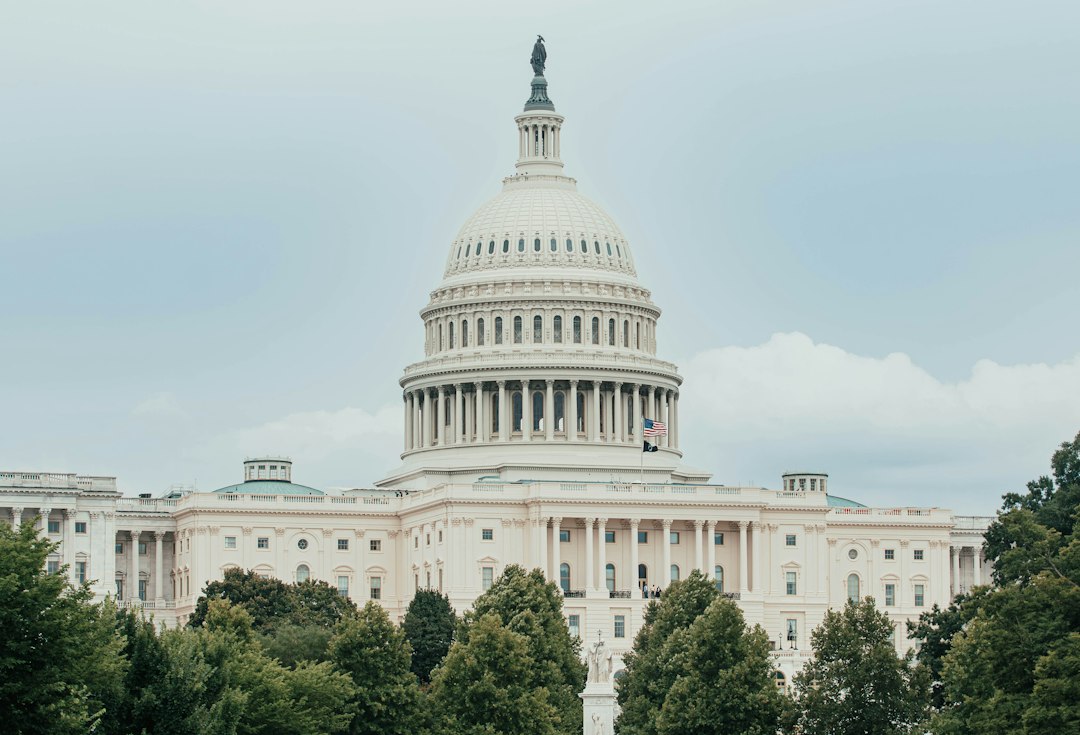
When will Congress stop kicking the budget proverbial can down the road with a continuing resolution and begin addressing the issue of leading with a balanced budget? Having a balanced budget, and spending within our means should be expected of our legislators--but for decades, this has not been the case. Lawmakers from both political parties are guitly of not addressing the issue that has created several 11th-hour deals regarding the budget. While this strategy helps keep some legislators in power, it's providing no benefit to the American people. Congress has now opted to not work on this issue until December--if it even does it then. However, the deadline buys our political leaders time to get past the midterm elections, campaign for each other, and hope the American public doesn't notice. And, in doing so, we'll experience another government shutdown in December.


Gas Prices, Inflation and the Economy: What’s Behind the Numbers?
From the price at the pump to the cost of groceries, borrowing and everyday purchases, the economy is once again front and centee in the news and in household budgets. The latest Consumer Price Index shows U.S. inflation running at 3.4% year over year, while gasoline prices have risen sharply. The impact extends well beyond what drivers pay to fill their tanks. Energy costs can ripple through transportation, supply chains, businesses and ultimately the prices consumers see elsewhere. It also raises bigger questions: What is driving the latest inflationary pressure? How significant are rising fuel prices to the broader economy? Why can economic indicators appear relatively strong while consumers remain concerned about their finances? And what should people be watching in the months ahead? Cary Wasden, Ph.D. has served as a Professional in Residence in the Finance and Economics Department at Utah Valley University since 2015, where he brings extensive international business and financial industry experience into the classroom. He is s an expert in investment banking and management of financial institutions. View his profile Cary Wasden, a finance and economics expert at Utah Valley University, can provide context and perspective on the economic forces behind the headlines and help audiences better understand what the latest numbers mean for consumers, businesses and the broader economy. If you’re interested in speaking with Cary Wasden about inflation, gasoline prices, consumer spending or the economy, click on his profile below to arrange an interview today.


White House Media Ban Is Over - But Questions About Press Access Remain
The immediate confrontation may be over, but the questions it raised are not. CNN, MS NOW and Politico have regained access to the White House after President Donald Trump’s administration temporarily barred the news organizations from covering the president. A federal judge ordered their access restored, finding that the outlets had not been provided constitutionally adequate due process when their credentials were revoked. While the ban has been lifted, the episode has renewed a broader debate about press access, government accountability and the relationship between a presidential administration and the journalists assigned to cover it. It also raises questions about what happens the next time an administration strongly objects to a news organization’s coverage. How much discretion should the White House have over access? What protections exist for journalists covering the presidency? And could disputes like this affect how news organizations approach their coverage? Mark Lukasiewicz, dean of The Lawrence Herbert School of Communication at Hofstra University, brings nearly four decades of journalism and network news experience to the discussion, including 17 years at NBC News, where he served as senior vice president of specials and supervised coverage of major breaking news events, presidential elections and debates. View his profile With extensive experience in television news, journalism and political coverage, Lukasiewicz can provide perspective on the practical consequences of restricting media access, the relationship between the White House and the press corps, and what the escalating dispute could mean for news organizations covering the administration. To arrange an interview today, simply click on his profile below.


Indiana’s Player-Prop Decision Raises Stakes for College Athletics
The rapid expansion of legal sports betting has created a particularly complicated issue for college athletics: wagers based on the performance of individual student-athletes. Indiana became the latest state to confront that issue Thursday when regulators rejected an NCAA request to ban pregame college-player proposition bets. These wagers allow bettors to predict individual outcomes—such as how many points a basketball player will score or how many passing yards a quarterback will record. The NCAA has increasingly targeted these bets, citing concerns about athlete harassment, access to inside information and the potential manipulation of individual performances. Indiana regulators ultimately chose to preserve the state’s current rules, which permit certain pregame college-player props while prohibiting them once a game is underway. Sports-betting operators maintain that legal sportsbooks can monitor unusual betting patterns and alert regulators to suspicious activity, an oversight mechanism that does not exist in illegal or offshore markets. The NCAA takes a different view, arguing that attaching money directly to an individual college athlete’s statistics creates risks that are difficult to eliminate through monitoring alone. Several states have already restricted or prohibited these wagers, leaving the country with an increasingly uneven regulatory landscape. Indiana’s decision puts a larger question about the future of legalized sports betting into focus. College athletes now compete in an environment where thousands of people may have money riding on their individual performance, even when the athletes themselves receive none of the wager. Are existing safeguards enough to protect athletes and the integrity of competition? Should college sports be treated differently from professional leagues when regulators decide what people can bet on? And if states adopt different answers, how effective can any single state’s restrictions ultimately be?

Texas Senate Rematch Puts Tarrant County Back in the Political Spotlight
Less than a year after Democrats flipped a Texas Senate seat in Tarrant County, the two candidates are preparing for a November rematch — this time under very different electoral circumstances. Democratic State Sen. Taylor Rehmet defeated Republican Leigh Wambsganss by 14 percentage points in a January special-election runoff for Senate District 9, a district Donald Trump carried by 17 points in the 2024 presidential election. Now Rehmet and Wambsganss will face each other again on Nov. 3, with the winner securing a full four-year term. In a recent Fort Worth Report article examining the race, Adam Schiffer, professor of political science at Texas Christian University, explains why the dynamics of a regular midterm election could be significantly different from those surrounding January's special election. Special elections typically attract lower turnout, and January's runoff featured only Rehmet and Wambsganss. This fall, Tarrant County voters will see more than 70 races on the ballot, creating a much different political environment. “Democrats are extremely energized and motivated to vote right now, and Republicans are a bit dispirited,” Schiffer told the Fort Worth Report. “So that’s the kind of thing that then can work to Rehmet’s advantage.” Professor Schiffer studies American politics, with an emphasis on the news media, elections, and public opinion. His recent work has covered the hot topics of media bias and presidential primary elections. View his profile Schiffer also points to competing forces that could influence the contest. A larger electorate and greater partisan attention could change the makeup of the voters who participate, while Democratic enthusiasm could continue to benefit Rehmet. The race provides a timely opportunity to examine broader questions about voter turnout, partisan loyalty, candidate positioning and whether the political conditions that produce a special-election upset can carry over into a midterm election. Schiffer can provide expert perspective on the Senate District 9 rematch, Tarrant County's changing political landscape, voter behavior and the role that turnout and partisan enthusiasm can play in closely watched elections. To arrange an interview today, simply click on his profile below.



Twice a year, Americans are made to gain or lose one hour of sleep to accommodate an age-old custom of dubious origins. But that may soon change. On July 14, 2026, Democrats and Republicans in the U.S. House of Representatives joined together to approve the Sunshine Protection Act, a bill that would effectively eliminate seasonal clock adjustments and institute permanent daylight saving time. Currently, this legislation is stalled in the Senate, but pressure is steadily mounting for the act’s passage before clocks once again “fall back” at the beginning of November. Amid the push, many researchers who specialize in sleep science and medicine hope Congressional lawmakers continue biding their time—and time in general—and weigh a different approach to the nation’s wakeup call conundrum. “Both the general public and the medical and scientific communities seem to largely support eliminating the practice of changing the clocks twice a year,” says Elizabeth Pantesco, PhD, assistant professor of Psychological and Brain Sciences and head of the Sleep and Heart Health Lab at Villanova University. “However, while political and public opinion often seem to slightly favor permanent daylight saving time, the sleep medicine and circadian science communities generally support permanent standard time.” As Dr. Pantesco explains, this support largely stems from experts’ understanding of circadian health. Permanent standard time would produce earlier morning light and earlier evening darkness, which is generally considered more favorable for optimizing the body’s 24-hour internal rhythms, than permanent daylight saving time. “Under permanent daylight saving time, reduced morning light and increased evening light exposure could shift the circadian clock later, while work, school and other social schedules remain fixed,” says Dr. Pantesco. “This can result in more difficulty falling asleep at night while still needing to get up at the same time in the morning, increasing the likelihood of circadian misalignment, poorer-quality sleep and shorter sleep.” Based on research and historical evidence, the consequences of this restlessness could extend far beyond bleary eyes and midday yawns. While permanent daylight saving time has never been analyzed in controlled trials, the existing literature on sleep restriction and circadian misalignment indicates that the policy change could have significant health and safety ramifications over an extended period. “Circadian misalignment and insufficient sleep have been associated with increased risks for cardiovascular and metabolic disease, as well as depression and other psychiatric outcomes. Long-term circadian disruption, particularly in research on shift work, has also been linked with certain cancers. More immediate consequences can include daytime sleepiness, impaired attention, reduced productivity and an increased risk of errors and motor vehicle crashes.” Dr. Pantesco also notes the possibility of some drawbacks with permanent standard time, which would shift an hour of daylight from evening to morning during the months currently on daylight saving time. Among the resultant pitfalls are that it could limit “opportunities for outdoor and social activities after work, affect businesses that benefit from evening activity and potentially increase risks for certain types of crime and for evening pedestrian or cyclist accidents.” Still, while the communal and societal effects of a permanent standard time have yet to be fully understood, the health benefits are strongly supported by circadian biology. As the American Academy of Sleep Medicine (AASM) contends, its institution could eliminate the chronic sleep disruption caused by seasonal clock changes while creating a “natural synchrony [optimal] for health, mood, performance and safety.” Among U.S. lawmakers, there is a contingent that wholeheartedly agrees, working to enshrine permanent standard time through a Sunshine Protection Act alternative—the Sunshine for Our Kids Act. Whether they will be able to convince their Congressional cohorts of the benefits of permanently “springing forward” over permanently “falling back” remains to be seen, however. As with most things, only time will tell.
