
Experts Matter. Find Yours.
Search experts on 50,000+ topics. Or browse by topic category.
- Recent Searches


Featured
Global experts with a broad range of areas of expertise.









Jesse Bockstedt
- Title
- Senior Associate Dean for Graduate Programs; Roberto C. Goizueta Professor in Business Technology
- Role
- Emory University, Goizueta Business School
- Expertise

Kara Dixon Vuic
- Title
- LCpl. Benjamin W. Schmidt Professor of War, Conflict, and Society in 20th-Century America
- Role
- Texas Christian University
- Expertise

Tricia Wachtendorf
- Title
- Director / Professor, Disaster Research Center / Department of Sociology & Criminal Justice
- Role
- University of Delaware
- Expertise


Connecting credible expert sources & academic research
ExpertFile is a trusted resource for journalists, industry, funding agencies and government policymakers looking for fresh perspectives and innovative academic research.


Spotlights
Read expert insights on a wide variety of topics and current events.
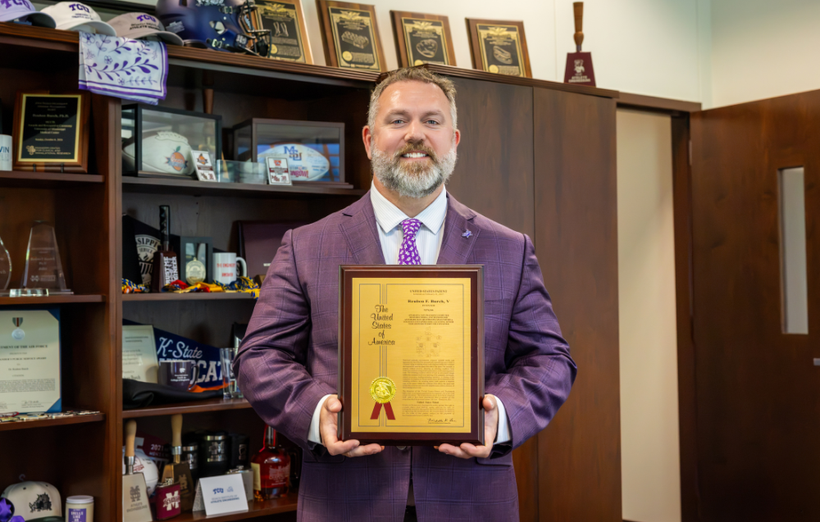
Patent No. 50: How an Inventor's Mindset Is Shaping TCU Research
As TCU's vice provost for research, Reuben F. Burch V has spent his career turning research into real-world solutions. This summer, that track record reached a milestone: his 50th patent, earning him the designation "Prolific Inventor." Burch's inventing career began during his years at FedEx Express, where he helped develop the rugged handheld device now used by couriers around the world. His first patent wasn't the handheld device itself, it was the design of a wearable version that freed couriers' hands, making the job safer and more efficient. Patent No. 50 grew out of a different question: how do you study movement where it actually happens, on tracks, on football fields, on rugged terrain, rather than only in a lab? The resulting technology uses a swarm of drones to capture performance data in real-world environments, giving TCU researchers a new way to study athletes of all kinds in their own arenas. "Fifty means just as much to me as my first one did," Burch said, "and it means a lot more that I got it while I'm here at TCU." "Reuben has an extraordinary ability to see around corners," said Jim Weinstein, director of TCU's Roach Institute of Athlete Engineering. "He recognizes problems others haven't yet identified and then creates the technology needed to solve them. This patent isn't just another invention, it's a research capability that will change how we study movement and human performance." That same builder's mindset is now fueling TCU's LEAD ON: Values in Action strategic plan to grow the university's research enterprise. In Burch's first year at TCU, competitive external research awards increased by 79.7 percent, with new partnerships established with Advanced Functional Fabrics of America, Deakin University, and the Fort Worth Nature Center & Refuge, alongside the launch of the Roach Institute for Athlete Engineering. "The researchers were already here," Burch said. "The momentum came from helping unlock their potential." Burch is available to speak with media on athlete engineering, a discipline he founded, and how its principles apply across sports, industrial (repetitive motion tasks), tactical (military and first responder) and at-risk populations. He can also speak to AI, human factors and ergonomics, advanced manufacturing, workforce and economic development, and the changing landscape of research funding and enterprise building in higher education. Read the full TCU story, "Patent No. 50: Reuben Burch Brings Inventor's Approach to TCU Research," here. To arrange an interview or request a comment, click through to Reuben Burch's profile below.



More Than a Long Weekend: Why Labor Day Still Matters in America
For millions of Americans, Labor Day means the unofficial end of summer , a final long weekend before schools are back in full swing and the fall routine takes over. But behind the barbecues, travel and end-of-summer sales is a holiday rooted in the history of American workers and the transformation of the workplace. Observed on the first Monday in September, Labor Day recognizes the social and economic achievements of American workers. Its origins date to the labor movement of the late 19th century, with the first Labor Day celebration held in New York City on September 5, 1882. In 1894, it became a federal holiday. More than 130 years later, Labor Day remains an opportunity to look at the role work plays in American life, particularly at a time when the workplace itself is undergoing enormous change. Artificial intelligence and automation are reshaping jobs and industries. Remote and hybrid work have changed where and how millions of people work. Employers continue to navigate workforce shortages, recruitment and retention, while workers are reconsidering expectations around compensation, flexibility, benefits and work-life balance. Labor Day can also open the door to broader conversations about the American labor movement, organized labor, workplace protections, wages and the economic contribution of workers. For journalists, that makes the holiday much more than a date on the calendar. It's a timely opportunity to explore both how work in America has changed and where it is heading next. Experts across economics, business, labor relations, history, human resources, public policy and emerging technology can provide valuable perspective on Labor Day and the changing American workplace. Journalists covering Labor Day and looking for expert perspective on the history of the holiday, labor and employment, workplace trends, organized labor, artificial intelligence and the future of work can connect with experts directly through ExpertFile profiles below:


Got Expertise to Share?
ExpertFile works with leading organizations with trusted experts. We help make their expertise more discoverable, structured, and actionable for AI-driven discovery, strategic outreach, and real-world opportunities.

Vanderbilt Index Finds Sustainability Remains a Mainstream Consumer Priority
As companies reconsider environmental commitments and sustainability receives less attention in corporate America, American consumers appear to be holding their ground. The inaugural Vanderbilt Consumer Sustainability Index (VCSI), released today by Vanderbilt University and consumer research company Switch 5, finds broad and consistent commitment to sustainability across the country. The national survey of 2,528 American adults found that 83% score above the midpoint on the new index, with surprisingly small differences across regions, gender and urban and rural communities. The findings establish the first baseline for the VCSI, a new quarterly measure designed to track how Americans’ attitudes toward sustainability change over time. Unlike existing measures focused primarily on climate policy or political attitudes, the VCSI looks at Americans as consumers — what they believe, what they expect from businesses and other institutions, and what they say they are willing to do themselves. The inaugural July 2026 reading places the VCSI at 69.2 out of 100, indicating a moderate-to-strong sustainability orientation among American consumers. The VCSI builds on more than two years of consumer research by Switch 5, which studies the attitudes and behaviors shaping consumer adoption of clean energy and sustainable products. That research has included more than 16 national surveys involving more than 50,000 Americans. The partnership with Vanderbilt brings that work into a recurring academic index designed to provide researchers, journalists, and businesses with a consistent measure of how consumer sustainability sentiment is changing over time. “Sustainability is often discussed through the lens of politics or corporate commitments, but consumer preferences are a critical part of the picture,” said Eric VanEpps, Associate Professor of Marketing at Vanderbilt Owen Graduate School of Management and coauthor of the study. “We created the VCSI to establish a consistent measure of what Americans believe and expect when it comes to sustainability, and to track how those attitudes change over time.” Key Findings from the Inaugural Wave 1. Consumer sustainability orientation is stronger than commonly recognized. 83% of Americans score above the midpoint of 50 on the index, suggesting broad popularity of sustainability. “People might read media coverage about how both public and private investments in sustainability initiatives have been reduced, and how large corporations have pulled back from the climate goals they set a few years ago. But the American public still cares about the environment, and these initial results create a baseline from which we can now measure trends in general sentiment,” said VanEpps. 2. Americans want businesses to lead on sustainability. Nearly nine in ten Americans (87%) want companies to help them be more environmentally friendly, and 85% say corporations bear responsibility for addressing climate change. Support for federal government action to address climate change is similarly high, at 84%, indicating broad public expectation that institutions — both public and private — should be part of the solution. “One thing to note is that most Americans work for either large corporations or the government. So when survey respondents say they want these organizations to address climate change, that is also a likely signal of how they want their employers to act,” said Vanderbilt Law School professor and study coauthor Michael Vandenbergh. 3. Concerns about future generations are widespread. More than four in five Americans (81%) believe climate change will harm future generations, including nearly half (47%) who say it will do a great deal of harm. Parents score meaningfully higher on the overall index than non-parents (72.9 vs. 67.3), suggesting the intergenerational frame is a significant motivator of sustainability commitment. 4. Americans say they are willing to act — including at some personal cost. Nearly three-quarters (74%) of Americans say they are willing to pay a little more for products that are better for the environment, and 72% say they are willing to sacrifice convenience to make environmentally friendly choices. These findings suggest meaningful room for consumer-facing sustainability initiatives that go beyond attitude measurement into behavioral change. 5. Sustainability commitment cuts across demographic lines. Perhaps the most noteworthy finding of the inaugural wave is how narrow the differences are across groups typically assumed to hold divergent views on the environment. Regional differences are minimal, with less than 2 points separating the highest and lowest of the four census regions. The gender gap is 1.5 points, and the urban-rural gap is 3 points. 6. Younger Americans lead, but sustainability commitment is broad across generations. Americans aged 18-34 score 72.2 on the index, compared to 65.1 among those 65 and older — a 7-point generational gap that reflects growing sustainability orientation among younger cohorts. Even the oldest segment sits well above the midpoint of the scale, however, indicating sustainability commitment has broad support across generations. Methodology The inaugural wave of the VCSI was fielded to a nationally representative sample of 2,528 American adults in July 2026, with data collection and analysis conducted by Switch 5 using PureSpectrum and Beacon Research. The 10-item composite index demonstrates strong internal reliability (Cronbach’s α = 0.87). Two sub-indices — Consumer Commitment (5 items) and Climate Concern & Responsibility (5 items) — correlate at r = 0.52, indicating that the two dimensions are meaningfully related but distinct. Full methodology and item-level results are available upon request, with a website currently in development. The next wave of the VCSI is expected to be fielded in October 2026 and released in late fall. Subsequent waves will report the current index level along with wave-over-wave and year-over-year changes.


Absence and Opportunity: New Academy Report on Working Class Candidates
A new report released by the American Academy of Arts & Sciences aims to explain the near-absence of elected politicians from working-class occupations at all levels of government in the in the U.S., despite making up more than half of the U.S. labor force, and highlights strategies that can give working-class Americans a seat at the table in our elected institutions. In How to Elect More Working-Class Americans and Why It Matters, authors Noam Lupu (Vanderbilt University) and Nicholas Carnes (Duke University) describe how the shortage of politicians from the working class harms trust in government, runs contrary to our national ideals, and makes it difficult for our political institutions to understand and respond to the needs of working people in a fast-changing economy. Carnes and Lupu sought input from the working group that convened to support a recommendation of the Academy’s Commission on Reimagining Our Economy to increase working-class candidates. A main focus of the report is understanding and addressing the barriers that keep working-class Americans from running for office. How to Elect More Working-Class Americans and Why It Matters includes detailed descriptions of how parties, unions, interest groups, funders, and policymakers can increase the number of working-class candidates and officeholders. “Our democracy and our economy will grow stronger when more Americans feel included and invested,” said Laurie Patton, president of the Academy. “To address declining trust and engagement in our government, we need workable evidence-backed solutions that are driven by good ideas and good will. Nick Carnes and Noam Lupu provide a blueprint for how a policymakers, leaders and citizens across the country can increase the number of working-class candidates and benefit all who care about strengthening America.” The report represents the culmination of a decade-and-a-half of research. “Working-class people almost never go on to hold elected office in the U.S.,” said Nick Carnes, Z. Smith Reynolds Distinguished Professor of Public Policy Studies at Duke’s Sanford School of Public Policy. “In this report, we look to the available research to dispel myths about the working class and highlight the real obstacles that prevent working-class Americans from holding office.” “At a time when both major parties are seeking to win over working-class Americans, we hope this document will provide clear and actionable advice for anyone hoping to support working-class people serving their communities as elected officeholders,” said Noam Lupu, Gertrude Conaway Vanderbilt Professor of Political Science at Vanderbilt University. The challenge is not that workers are unqualified or uninterested in public service; it’s that running for office in our nation is burdensome. Candidates have to spend an enormous amount of time, money, and personal resources to run for office, making it difficult for working-class Americans to take time away from work and devote the resources necessary to mount a successful campaign. The report builds on the Academy’s enduring commitment to strengthening democracy, beginning with the organization’s founding in 1780 and embodied most recently with the Our Common Purpose initiative, and the Commission on Reimagining Our Economy, which recognized the inextricable link between democracy and economy. Adam Bonica, Stanford University; Andrea Louise Campbell, Massachusetts Institute of Technology; Katherine J. Cramer, University of Wisconsin–Madison; Jake M. Grumbach, University of California, Berkeley; Alexandra Killewald, University of Michigan; Jane Mansbridge, Harvard University; Tali Mendelberg, Princeton University; Lara Putnam, University of Pittsburgh; and Kay Lehman Schlozman, Boston College served on the advisory group with Carnes and Lupu on this project.
Ten years ago, Colin Kaepernick transformed a moment before an NFL game into one of the most consequential acts of athlete protest in modern American sports. What began in 2016 as a protest against racial injustice and police brutality quickly moved far beyond football. Kaepernick became a national flashpoint in debates about race, patriotism, free expression and the role professional athletes should play in challenging social and political institutions. A decade later, the impact of that decision, and the questions it raised, remain. The Associated Press recently revisited Kaepernick’s protest and its legacy, including the fact that many people who played or coached alongside him in 2016 remain reluctant to discuss what happened and its aftermath. Kaepernick never played another NFL game after that season, despite having previously led the San Francisco 49ers to a Super Bowl. For Frederick Gooding Jr., Ph.D., Professor of African American Studies and the Dr. Ronald E. Moore Professor in Humanities at Texas Christian University, that continuing reluctance is itself significant. View his profile “I think that this reluctance to even talk about it now is indicative of to what degree did the NFL substantively address it.” — Frederick Gooding Jr., speaking to The Associated Press Gooding told the AP that people should now be more willing to discuss the episode openly, and said Kaepernick “forced people to get uncomfortable.” He also pointed to the power dynamics involved when the NFL later acknowledged that it should have listened more closely to players speaking out about social inequality — after Kaepernick's playing career had effectively ended. Why This Story Still Matters The Kaepernick story provides an opportunity to look beyond whether taking a knee was right or wrong and examine what happened afterward. How much has professional sports actually changed in the decade since Kaepernick's protest? What happens when athletes use their platforms to challenge powerful institutions? Why can some forms of athlete activism become accepted over time while others remain deeply polarizing? And what does the continuing discomfort around Kaepernick tell us about the intersection of race, sports, media and American culture? Those questions extend well beyond one quarterback or one football league. For journalists covering the 10th anniversary of Kaepernick's protest, or future stories involving athletes, race, activism and the role of sports organizations in social debates, Gooding can provide perspective on questions including: How Kaepernick changed the relationship between professional athletes, activism and their employers. Why the reaction to athlete protest often reveals broader attitudes about race and power. How media coverage influences public perceptions of athletes who engage in activism. Whether sports organizations have substantively changed since the protests of 2016 and 2020. How Kaepernick fits within the longer history of Black athletes using sports as a platform for social change. Why the intersection of race, sports and popular culture continues to produce some of America's most contentious public debates. Frederick Gooding Jr. is available to speak with media about Colin Kaepernick's legacy, race and sports, athlete activism, representation, popular culture and the intersection of race and mainstream media. Simply click on his profile now to arrange an interview today.


Why Dolly Parton’s intersectional philanthropy keeps making headlines
Dolly Parton’s generosity keeps showing up in the news because it feels both big and deeply personal. Her charitable work, especially around literacy, education and community support, connects to real-life needs that people understand right away, all while being a big part of her own intersectional identity. That makes her philanthropy easy to notice and even easier to care about. Jennifer Naccarelli is chair of the Department of Women & Gender Studies here at the University of Delaware and the founding director of the Center for Study & Prevention of Gender Based Violence. On Dolly Parton's passing she said: "In practice, Dolly Parton's life is a case study in intersectionality: the various social identities that she encompassed and her interactions with various social structures led to her unique perspectives, lifelong commitments and magnificent catalog. While not an political activist, and hesitant to call herself a feminist, her work and religious identity informed her contributions to so many communities. She was an ally before that term entered the vernacular. It is truly a loss of a model human and great talent." To speak with Naccarelli about Parton and other feminist icons, email mediarelations@udel.edu.

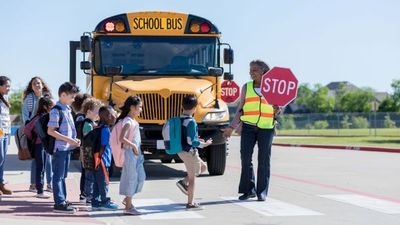
As Manitoba students head back to school, CAA Manitoba is encouraging families to make one simple school year resolution: help create safer school zones for everyone. With students, parents, school buses, adult crossing guards and pedestrians returning to daily routines, school zones become significantly busier during the back-to-school season. CAA Manitoba is reminding all road users that school zone safety is a shared responsibility and that small actions can make a big difference in helping children get to and from school safely every day. "Back-to-school season is an exciting time for families, but it also brings increased traffic and activity around schools," says Ewald Friesen, manager of government and community relations, CAA Manitoba. "Whether you're driving, walking, cycling or taking the bus, everyone has a role to play in creating safer school communities by slowing down, staying focused and looking out for one another." Reduced school zone speed limits are back in effect As of Sept. 1, reduced school zone speed limits are back in effect across Manitoba. Between 7 a.m. and 5:30 p.m., Monday through Friday, drivers are required to reduce their speed to 30 km/h when travelling through school zones. To help reduce congestion and improve safety, CAA Manitoba is encouraging families to set a few "school year resolutions" this fall: Give yourself a few extra minutes: We know mornings don't always go according to plan. When possible, build in a little extra time for the school run. A less rushed arrival can help reduce behaviours like double parking, stopping in undesignated areas or dropping children off from unsafe locations. Follow your school's drop-off routine: Every school has procedures designed to move students safely and efficiently. Following designated pick-up and drop-off practices, even when the line is long, helps improve traffic flow and creates a safer experience for children, families, and school staff. Consider a "park and walk": If it's practical for your family, parking a short distance from the school and walking the last block can help ease congestion near entrances while giving children an opportunity to build road safety awareness. Help reduce traffic with active school travel: If possible, incorporate active school travel into your family's routine, even one or two days per week. Encouraging your kids to walk or wheel to school helps to ease traffic congestion, among other benefits. Reinforce road safety rules: Proactively chat with children about how to safely walk, bike or scooter based on their age and neighbourhood. Simple reminders like looking "left, right, left" before crossing, paying attention to crossing guards and staying alert around driveways, back lanes and parking lots can make a big difference. CAA Manitoba is also reminding drivers to stay alert in school zones, particularly during arrival and dismissal periods. Motorists should watch for adult crossing guards, school safety patrollers, pedestrians, and school buses, and be prepared to stop at marked crossings. Drivers must stop at least five metres away from a school bus with flashing red lights and an extended stop arm and remain stopped until the signals are no longer activated. Now in its 90th year, the CAA School Safety Patrol program has helped keep Manitoba students safe as they travel to and from school. Student Patrollers help classmates cross roadways safely while promoting good road safety habits and demonstrating leadership within their communities. "Creating safer school zones starts with all of us making thoughtful choices every day," said Friesen. "When drivers slow down, families follow safe drop-off practices and children understand how to navigate their neighbourhood safely, we can help ensure every student has a safer journey to and from school." For more information, visit: www.caamanitoba.com/advocacy/school-safety/school-zones.


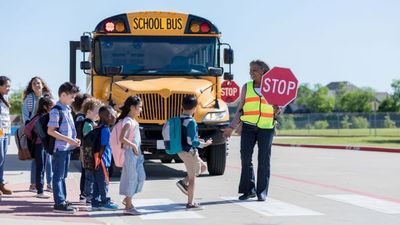
As students head back to class, CAA South Central Ontario (CAA SCO) is encouraging families to make one simple resolution this school year: help create safer school zones. New CAA research shows that school zone congestion remains a significant concern for Ontario parents. Eight in 10 parents report congestion during school drop-off and pick-up times, while 84 per cent say they have witnessed at least one dangerous driving behaviour in their child's school zone. The most observed behaviours include speeding, double-parking, stopping in undesignated areas, and blocking school bus drop-off zones. "Back-to-school season is exciting, but it can also be hectic," says Tracy Marshall, manager, community relations at CAA SCO. "The good news is that small changes to our daily routines can make a meaningful difference. By planning ahead, following school drop-off procedures and staying alert, we can all help make school zones safer for children, parents and school staff." Ontario parents raise concerns about school zone safety as risky drop-off and pick-up habits persist According to the survey, 63 per cent of Ontario parents reported that their child's school zone was not very safe. Three of the four most frequently observed unsafe behaviours are directly related to school drop-off and pick-up activity, highlighting the need for safer habits during busy school travel periods. CAA is encouraging families to set a few 'school year resolutions' to create safer school zones as children go back to school: Give yourself a few extra minutes: We know mornings don't always go according to plan. When possible, build in a little extra time for the school run. A less rushed arrival can help reduce behaviours such as double parking, stopping in undesignated areas, or dropping children off in unsafe locations. Follow your school's drop-off routine: Every school has procedures designed to move students safely and efficiently. Following designated pick-up and drop-off practices, even when the line is long, helps improve traffic flow and creates a safer experience for children, families, and school staff. Consider a "park and walk": If it's practical for your family, parking a short distance from the school and walking the last block can help ease congestion near entrances while giving children an opportunity to build road safety awareness. Help reduce traffic with active school travel: If possible, incorporate active school travel into your family's routine, even one or two days per week. Encouraging your kids to walk or wheel to school helps to ease traffic congestion, among other benefits. Reinforce road safety rules: Proactively chat with children about how to safely walk, bike or scooter based on their age and neighbourhood. Simple reminders like looking "left, right, left" before crossing, paying attention to adult crossing guards and staying alert around driveways and parking lots can make a big difference. CAA SCO is also asking all motorists to remember that when you're in a school zone, children are nearby. Drivers can support school zone safety with a few simple actions: Stay alert: Put away distractions and focus on the road. Children can appear unexpectedly between parked vehicles, near crossings or around school buses. Slow down: Reduce your speed and be prepared to stop. School zones require extra attention, particularly during arrival and dismissal periods. Watch for school buses and crossing guards: Always obey school bus signals and be aware of adult crossing guards, safety patrollers and students crossing the road. Not only is it illegal to pass a stopped school bus with red lights flashing and the stop arm extended, it is also incredibly dangerous. For more school zone safety information and tips, visit caasco.com/schoolzone.


Elevated Interest Rates in the United States
Interest rates in the United States remain elevated, with the Federal Reserve holding its benchmark rate near its highest level in more than two decades as of late summer 2026. The Fed’s stance reflects its effort to fully tame inflation, which has cooled significantly from its 2022 peak but still shows pockets of persistence in areas like housing and services. Higher borrowing costs continue to ripple through the economy: mortgages remain expensive, business loans are harder to justify, and consumers face steeper rates on credit cards and auto financing. The broader economy is feeling the strain. Growth has slowed as companies delay expansion, hiring becomes more cautious, and households pull back on discretionary spending. At the same time, elevated rates have strengthened the dollar and helped stabilize inflation expectations, giving policymakers confidence that price pressures are gradually easing. The result is a mixed landscape — one where the labor market is steady but no longer surging, investment is cooling, and many sectors are waiting for clearer signals about when rate cuts might begin.


