
Experts Matter. Find Yours.
Search experts on 50,000+ topics. Or browse by topic category.
- Recent Searches


Featured
Global experts with a broad range of areas of expertise.






Sam Coogan
- Title
- Assistant Professor, Electrical and Computer Engineering
- Role
- Georgia Tech - COE
- Expertise


Connecting credible expert sources & academic research
ExpertFile is a trusted resource for journalists, industry, funding agencies and government policymakers looking for fresh perspectives and innovative academic research.


Spotlights
Read expert insights on a wide variety of topics and current events.

Blood Clots Can Sideline Elite Athletes. Could Microrobots Offer a New Approach?
Blood clots have sidelined or ended the careers of several elite athletes, drawing attention to a potentially life-threatening condition. The University of Delaware's Sambeeta Das is part of a team that has developed tiny, magnetically guided robots that could offer a new approach to removing such blockages. The list of athletes affected by blood clots includes NBA champion Chris Bosh, whose career ended after recurring clots; tennis great Serena Williams, who survived two life-threatening pulmonary embolisms; San Antonio Spurs center Victor Wembanyama, who was shut down in February 2025 when deep vein thrombosis was discovered in his right shoulder; and Philadelphia Eagles quarterback Jalen Hurts, whose recent diagnosis of blood clots in his lungs has drawn national attention. In a published study, Das and her colleagues demonstrated that magnetic microrobots could mechanically break apart clusters of human liver cancer cells and clear them from narrow channels designed to model blood vessels. The robots used mechanical forces rather than drugs or chemicals to disperse the clusters. The research offers an early proof of concept for using microrobots to remove unwanted cellular material in confined spaces. Das can discuss how the technology works, its potential application to blood-clot removal, the challenges of targeting blockages inside the body, and what further research is needed to explore its use in patients. To contact Das and arrange an interview, visit her profile and click the “Contact” button. Reporters can also email MediaRelations@udel.edu.


Why the retirement plan that worked for your parents is failing millions of Canadians
Last month, I found a jar of mustard at the back of my fridge with a best-before date of 2019. It looked and smelled fine. My wife watched me unscrew the lid like I was about to eat gas-station sushi, and I threw the mustard away. I wish Canadians gave their retirement plans the same hard look, because most of the advice we hand people over 55 carries a best-before date of 1990, the year my parents' retirement began. They met at the grocery chain where they both worked, and each left with a defined-benefit pension: a monthly cheque that arrived for the rest of their lives, regardless of what the stock market did. Their employer bore the investment risk. Their job was to show up at the retirement party and eat the cake. That plan stood on three legs: a workplace pension, CPP and Old Age Security, and a paid-off house you would eventually sell to trade down. In 1991, a 65-year-old Canadian man could expect to live about 16 more years and a woman about 20. A plan built for that stretch did its job. Look at those legs today. Only 37.7 per cent of paid workers in Canada belonged to a workplace pension plan of any kind in 2023, according to Statistics Canada, and coverage has been declining for two decades. For most people, the cheque that used to arrive like the newspaper has been replaced by a statement that reads like a horoscope. CPP and OAS were never meant to carry anyone alone. That leaves the house. A 2023 CPP Investments survey found that only 45 per cent of Canadians have a financial plan for retirement, yet about three in four Canadians aged 55 to 74 own their homes. For millions of families, the house was the plan: buy it, pay it off, and burn the mortgage papers in a roasting pan. The old playbook still has one instruction for that asset, unchanged since 1990: sell, move, and hope the condo is cheaper. Most like to stay in their neighbourhood. In Toronto, they usually can't afford to. The calendar changed, too. My parents' plan was built for that 15-to-20-year stretch. Today, Canadian financial planning standards give a 65-year-old couple an even chance of one living to 94, a retirement closer to 30 years. That is about 10 extra years of groceries, property tax and dental work, and nobody gave the plan a raise to cover them. Larry Fink, who runs BlackRock, put his finger on it in his 2024 letter to investors: we have worked hard to help people live longer and much less hard to help them afford those extra years. Those years arrived just as the guaranteed pension cheque was disappearing, a change Fink called "a shift from financial certainty to financial uncertainty." When the man in charge of the world's largest pile of other people's money says so, I'd put down the mustard. Our system does a fine job of helping people pile up money, then goes quiet the moment they need that pile to become a paycheque. We hand people a savings target, a risk questionnaire and an RRSP deadline. On their last day of work, we hand them a bouquet. How much do you withdraw? Which account first? What happens to your OAS when your RRIF minimum pushes you past the clawback threshold? Where does the house fit? The old plan shrugs. The strain shows. Statistics Canada reports that among Canadians aged 65 to 74 who worked in 2022, almost half did so out of necessity. After a late-life divorce, my mother returned to part-time work at a grocery store. She had done everything the old plan asked of her. The usual reply is that people just need to save more. Telling a 72-year-old to save more is like telling a marathoner at kilometre 40 to train harder. An up-to-date plan opens with the question that matters at 65: how will this money cover the bills for 30 years? Home equity goes on the balance sheet at the first meeting, pulled from the drawer marked "emergencies and inheritance." Ninety-one per cent of Canadians say they want to live independently in their own homes for as long as possible, so a good plan offers ways to do that beyond a For Sale sign. And the industry that spent 40 years teaching people to save owes them the same energy in how to spend it. I have a modest proposal for the banks. Every February, you run RRSP season, complete with sailboat commercials. Give us an RRIF season to match, with the same budget, and put a drawdown plan in front of every client who turns 65. And while you are at it, switch the word "savings" to "spending" or "paycheque" on our bank account. Take your retirement plan out of the back of the fridge and check the date on the lid. If it says 1990, you know where it goes. My wife will be happy to show you the garbage. This Opinion Article was published in the Business Section of the Saturday Star and online Toronto Star on October 17, 2026,


Got Expertise to Share?
ExpertFile works with leading organizations with trusted experts. We help make their expertise more discoverable, structured, and actionable for AI-driven discovery, strategic outreach, and real-world opportunities.

Are Small-Dollar Political Donations Making American Politics More Divisive?
Small-dollar political donations have long been celebrated as a way to reduce the influence of wealthy contributors and give ordinary Americans a greater voice in elections. But new research suggests that the growing influence of these donors may also be contributing to political polarization and rewarding candidates who generate attention rather than build consensus. In an article published in The Atlantic, titled Small-Dollar Campaign Donors Are Hurting the Political System, journalist Idrees Kahloon examines how the explosion of grassroots political fundraising has changed American campaigns, drawing attention to research challenging the assumption that small donations necessarily produce healthier democratic outcomes. Among the researchers examining this trend is Ray La Raja, professor of political science and co-director of the UMass Amherst Poll at the University of Massachusetts Amherst. View his profile La Raja is co-author, with Zachary Albert of Brandeis University, of the 2026 book Small Donors in US Politics: Myth and Reality, which examines who contributes to political campaigns, what motivates their donations and how their growing influence affects elections and political representation. Their research finds that small-dollar donors are often more politically engaged, more partisan and more ideologically committed than the average voter. While these contributions can broaden participation in campaign financing, they can also encourage candidates to pursue national attention and emotionally charged fundraising appeals rather than focus on local concerns or legislative compromise. The findings raise important questions about whether the growing influence of small donors is strengthening political representation or creating new incentives for polarization. The issue is particularly relevant ahead of the 2026 midterm elections, as candidates and political parties compete for campaign contributions in an increasingly nationalized fundraising environment. La Raja's work also examines the role of political parties in campaign finance and whether reforms designed to reduce the influence of large donors have produced unintended consequences. With campaign fundraising, political polarization and democratic accountability increasingly connected, La Raja offers journalists a research-based perspective on one of the less understood forces shaping American elections. If you're interested in speaking with Ray La Raja about campaign finance, small-dollar political donations, political polarization, election reform and the influence of money on American democracy, simply click on his profile to arrange an interview today.



From Baseball to Business: The Science of Team Success
The ingredients that create a World Series team often mirrors how units achieve success in business. How did they get there? The University of Delaware's Kyle Emich says the answer goes beyond assembling a roster of star players. Emich, a professor of management, says that how players combine their strengths, respond to opponents and create opportunities together can be just as important as individual talent. The same is true in business, where a collection of talented employees doesn’t automatically translate into a high-performing team, he said. One example is the approach that the 2026 Milwaukee Brewers’ took during their postseason run. Rather than relying exclusively on home runs and individual star power, the team created opportunities through a combination of speed, patience at the plate, timely hitting and pressure on opposing defenses. A stolen base, a walk or a defensive mistake might seem like a small event on its own, but the effects can build as players’ actions interact. These interactions matter, he says, because teams are not simply collections of individuals; their performance emerges from how people and their activities affect one another within a larger environment. The same is true in business as well as baseball. Businesses may recruit exceptional employees or invest in promising technologies such as artificial intelligence, yet fail to realize their potential if their processes, team structures and working practices don’t support those strengths. Emich can discuss: • Beyond Moneyball: What baseball’s emphasis on statistics and individual talent reveals about the limits of evaluating people in isolation. • Building better teams: How coordination, complementary strengths and the interaction among team members contribute to performance. • Strategy and competition: What baseball teams’ adjustments to opponents can teach business leaders about responding to competitors and changing conditions. • Technology and the future of work: Why adopting artificial intelligence or other new technologies is not enough without considering how people, processes and technology work together. To reach Emich directly and arrange an interview, visit his profile page and click on the "contact" button. Interested reporters can also send an email to MediaRelations@udel.edu.


Does International Law Still Matter? UMass Amherst Expert Weighs In on Doha Debates
As wars, geopolitical tensions and questions about international accountability challenge the global order, an important debate is emerging: Does international law still matter when powerful countries can choose to ignore it? That question was at the center of a recent episode of Doha Debates, which brought together international experts to examine the effectiveness, legitimacy and future of international law. Among the featured panelists was Charli Carpenter, Professor of Political Science at the University of Massachusetts Amherst, who offered a perspective on why international law remains important, even when its rules are violated. The discussion also featured Balakrishnan Rajagopal of the Massachusetts Institute of Technology, Victor Gao of the Center for China and Globalization and political philosopher Curtis Yarvin. Carpenter challenged the notion that violations of international law necessarily demonstrate its failure. She pointed to the international agreements that make everyday global cooperation possible, from aviation safety to diplomacy, and argued that international legal frameworks have helped establish expectations for how countries conduct themselves. Charli Carpenter is a scholar of international relations whose research examines international law, human security, global norms and the role of advocacy networks in shaping international policy. View her profile She also emphasized that violations can sometimes strengthen international norms by prompting other countries and institutions to reaffirm their importance. "And I think it is a common myth that if an actor breaks a rule that necessarily weakens the rule. Sometimes that can be an impetus for others to defend and reaffirm the rule. And it's often the case that rule breakers don't undermine rules, they undermine themselves and their social standing in a community." The debate explored the role of the United Nations, the Geneva Conventions, the International Criminal Court and the challenges of holding powerful countries accountable. Carpenter also discussed research into international treaties and public attitudes toward nuclear weapons, explaining how international agreements can influence expectations and behavior even when major powers are not parties to them. As global conflicts continue to test international institutions, the discussion offers a timely examination of whether the international legal system needs reform, stronger enforcement or renewed political commitment. Watch the full Doha Debates discussion on YouTube to hear Carpenter and her fellow panelists explore the future of international law and the consequences of weakening global institutions. If you're interested in speaking with Charli Carpenter about international law, global governance, international security, human rights and the future of international institutions, simply click on her profile to arrange an interview today.

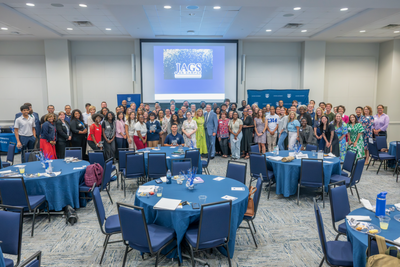
AU designated APLU Innovation and Economic Prosperity Institution
Augusta University has earned national recognition for work that has been taking shape across the university and the region for years: connecting education, research, innovation and workforce development to the needs of the community. After more than three years of collaboration with campus and community partners, AU has been designated an Innovation and Economic Prosperity (IEP) institution by the Association of Public and Land-Grant Universities. This national designation recognizes public research universities that work with public and private sector partners to advance and support economic development in their states and regions. For AU, the IEP designation is both a celebration and a commitment. It recognizes significant work already underway while challenging the university to become even more connected, accessible, measurable and strategic in its economic and community engagement. It also marks an important milestone in its evolution as a public research university, workforce partner, innovation catalyst and community anchor. More than a recognition of programs already underway, the IEP process offered AU an opportunity to examine in depth how many areas of work intersect and how those connections can generate greater impact for students, partners and communities. “I am grateful to our steering committee and the entire team of campus and community partners whose resolve and determination made this achievement possible,” said Augusta University President Russell T. Keen. “Their efforts truly epitomize our ‘It can be done’ mindset. At its heart, economic prosperity is about people. It means helping students build meaningful careers, preparing the workforce our state needs, turning discoveries into solutions and working alongside our neighbours to build healthier, stronger communities.” AU‘s IEP journey began in early 2023 with an expansive group of CSRA community partners. A steering committee and subcommittees brought together 42 participants representing the university and partners across economic development, K-12 education, local government, community foundations, health systems, the University System of Georgia, the Technical College System of Georgia, the Department of Energy, the Department of Defense, entrepreneurs and other regional stakeholders. This collaborative work continued through significant transitions, including the local impact of Hurricane Helene. The group explored a broad definition of economic prosperity – one that goes beyond traditional measures to include talent development, experiential learning, applied research, entrepreneurship, healthcare access, innovation and mutually beneficial partnerships. “Augusta University has a unique opportunity, and responsibility, to help drive economic prosperity across the communities we serve,” said Tina Baggott, vice president of Corporate and Community Engagement. “Our work brings together innovation, workforce development and meaningful community partnerships to address the needs of today while helping to prepare our communities for the challenges of tomorrow. The APLU Innovation and Economic Prosperity designation affirms our commitment to working alongside industry, government and community partners to turn ideas into impact, talent into opportunity, and partnerships into lasting economic and community growth.” Using APLU’s Commission on Economic and Community Engagement assessment tools, peer benchmarking, institutional data, surveys and more than 38 focus groups and individual conversations, the outcome represents the collective work of many in the region, with AU at the helm. “Receiving the IEP designation is a tremendous recognition of what is possible when we bring people together around a shared purpose,” said Lynsey Steinberg, director of Academic Entrepreneurship at AU. “Augusta University has incredible talent, innovative ideas, and strong community partners, and when we connect those strengths, we can make a real difference in supporting regional prosperity. Over the past three years, we have seen what can happen when people collaborate, elevate one another and work toward something bigger than themselves. This designation celebrates that work, but more importantly to keep building relationships, creating connections, and finding new ways to make a meaningful impact together.” AU’s public mission is equally central to economic prosperity. The university extends healthcare, education, research and community engagement throughout Georgia, including rural and underserved communities. Through its health sciences enterprise, telehealth, clinical education, community partnerships and expansion of programs and campuses, AU is strengthening both access and the talent pipeline required to meet critical workforce needs. “Augusta University has a unique opportunity, and responsibility, to help drive economic prosperity across the communities we serve.” Tina Baggott, vice president of Corporate and Community Engagement. The IEP process reinforced the importance of innovation infrastructure – the systems and connections that help move ideas from discovery to real-world impact. From translational research and commercialization to makerspaces, entrepreneurship programming, interdisciplinary collaboration and the Regional Innovation Advisory Committee – which is focused on advancing AU’s strategic goals of community engagement, student success and research excellence by fostering cross-sector collaborations – AU is building pathways for innovation to move beyond campus into communities, industries and the economy. “Augusta University’s APLU Innovation and Economic Prosperity designation underscores the university’s important role in strengthening the Augusta region as a place to live, work, invest, and visit,” said Jennifer Bowen, Chief Strategy Officer and Senior Vice President & Film Commissioner at Destination Augusta. “Through innovation, workforce development, research, and community partnerships, AU helps build the talent, opportunities, and economic vitality that make our community more competitive and enhance the region’s appeal as a destination.” The work does not end with this designation. Findings from the IEP self-study have been incorporated into AU’s Growth and Improvement Plan, with priorities focused on stronger coordination, clearer access for partners, improved measurement, increased visibility, workforce alignment and a more intentionally connected regional innovation economy. Economic engagement is also helping shape the university’s next long-term strategic plan, ensuring decisions about academic programs, research, partnerships, infrastructure and investment remain connected to the needs of the communities AU serves. Augusta University will be recognized for this achievement during the APLU Annual Meeting in November in San Antonio, Texas.


NBA stars and Achilles injuries: The road back to peak performance
A new NBA season brings plenty of storylines, from star players in new uniforms to the debut of promising rookies. But for players recovering from Achilles tendon injuries, returning to the court is just the beginning, says the University of Delaware's Karin Grävare Silbernagel. Regaining strength, explosiveness and consistent performance can take longer to achieve, said Silbernagel, a professor of physical therapy who studies tendon injuries and rehabilitation, with a focus on Achilles tendon ruptures, ankle function and long-term physical performance. Her research explores why recovery involves more than healing tissue or returning to competition. Strength, movement, tendon function and the ability to perform under the demands of sport all matter, she said. In a recent study, Silbernagel and colleagues examined single-leg jumping in people about two years after an Achilles tendon rupture. They found that fatigue affected ankle power differently on the injured and uninjured sides, highlighting how an injury can influence movement and the way the body distributes physical demands even well into recovery. Silbernagel can discuss: • Why returning to the court does not necessarily mean an NBA player has regained full strength, explosiveness or durability. • How clinicians assess recovery and readiness to return to sport after an Achilles tendon rupture. • How rehabilitation, progressive loading and return-to-sport testing can help guide recovery. • What research reveals about lingering changes in movement and function after tendon injuries. • What Achilles injuries can mean for athletic performance over time. Silbernagel leads the Delaware Tendon Research Group and consults with professional sports teams. Her research has helped inform clinical guidelines for treating tendon injuries. To reach Silbernagel directly and arrange and interview, visit her profile and click on the "contact" button. Interested reporters can also send an email to MediaRelations@udel.edu.


Could a Supreme Court Power Play Backfire on Republicans?
With November's midterm elections approaching, Republicans may face a consequential decision: whether to confirm another conservative Supreme Court justice before potentially losing control of the Senate. In a new piece published October 14 in The Conversation, Paul M. Collins Jr., professor of legal studies and political science at the University of Massachusetts Amherst, examines how such a move could reshape the Supreme Court and intensify political divisions over the judiciary. Collins explains that if Democrats win control of the Senate, a retirement by conservative Justices Clarence Thomas or Samuel Alito before the new Congress takes office in January could give President Donald Trump an opportunity to appoint a fourth Supreme Court justice. While Republicans could potentially secure another conservative appointment, Collins argues the political consequences could extend well beyond the immediate confirmation battle. As Collins writes in The Conversation: If Alito or Thomas announced their retirement after the midterms, Republicans would have enough time to confirm a successor. The Senate has four and a half work weeks scheduled between Election Day and Jan. 3. Justice Amy Coney Barrett was confirmed less than a month after her nomination, making the timeline tight but doable. His analysis draws parallels to the contentious Supreme Court confirmation battles of 2016 and 2020, when Republicans blocked Merrick Garland's nomination before subsequently confirming Amy Coney Barrett shortly before a presidential election. Collins suggests another controversial confirmation could further undermine public confidence in the Supreme Court and strengthen calls for judicial reform, including expanding the number of justices. The stakes are significant. With lifetime appointments shaping constitutional interpretation for decades, the outcome could influence not only the Court's ideological direction but also the future of judicial independence and the relationship between Congress and the judiciary. Paul M. Collins, Jr. is a professor of legal studies and political science at the University of Massachusetts Amherst. His research focuses on understanding bias and inequality in the legal system, the selection and work of judges and social movement litigation. View his profile An established authority on Supreme Court nominations, Collins has researched judicial appointments, political influences on the courts and the confirmation process. He is co-author of Supreme Court Confirmation Hearings and Constitutional Change and Supreme Bias: Gender and Race in U.S. Supreme Court Confirmation Hearings. As the midterm elections approach, Collins can provide journalists with expert analysis of Supreme Court vacancies, Senate confirmation procedures, judicial politics and the potential long-term consequences of another contentious appointment. If you're interested in speaking with Paul M. Collins Jr. about Supreme Court nominations, judicial independence, Senate confirmation battles and the future of the U.S. judiciary, simply click on his profile to arrange an interview today.


Georgia Governor's Race Draws National Attention as Obama Endorses Keisha Lance Bottoms
Former President Barack Obama's endorsement of Keisha Lance Bottoms in Georgia's gubernatorial race has brought renewed national attention to one of the state's closely watched political contests. In recent coverage by Newsweek, the endorsement was examined alongside polling showing a competitive race between Democrat Keisha Lance Bottoms and Republican Rick Jackson. Among the experts providing perspective was William Hatcher, PhD, chair and professor of social sciences at Augusta University, who discussed the differences between polling results and election forecasting models. Hatcher's analysis highlights the importance of understanding what polls can reveal about voter preferences, how forecasting models interpret available information and why election outcomes remain uncertain. Augusta's experts are regulars – when it comes to national media. Hatcher's inclusion in Newsweek reinforces the role university experts can play in helping national media audiences understand the political forces shaping important elections. William Hatcher, chair and professor of social sciences at Augusta University, told Newsweek the race is a “statistical tie” based on limited polling, but noted there have not been many high quality surveys so far. “The few polls that have been conducted show a statistical tie, as noted, but often do have Jackson with a small lead. On the other hand, the predictive models are showing that Bottoms may have a slight edge,” he said. Oct. 8 – Newsweek With Georgia voters preparing for the Nov. 3 election, Hatcher can help journalists explore polling, voter turnout, political endorsements and the broader implications of the state's gubernatorial contest. If you're interested in speaking with Dr. William Hatcher about Georgia politics, the governor's race, election polling and public policy, simply click on his profile to arrange an interview today.
