Experts Matter. Find Yours.
Search experts on 50,000+ topics. Or browse by topic category.
- Recent Searches


Featured
Global experts with a broad range of areas of expertise.






Marci Lynn Drees, M.D., MS, DTMH, FACP, FIDSA, FSHEA
- Title
- Chief Infection Prevention Officer and Hospital Epidemiologist
- Role
- ChristianaCare
- Expertise

Vishesh Agarwal, M.D.
- Title
- Chair of Addiction Medicine Services, Vice Chair of Department of Psychiatry
- Role
- ChristianaCare
- Expertise

Meena Bose
- Title
- Professor of Political Science, Executive Dean for Public Policy & Public Service Programs
- Role
- Hofstra University
- Expertise

Monica Escaleras, Ph.D.
- Title
- Associate Professor and Director of the Business and Economics Polling Initiative
- Role
- Florida Atlantic University
- Expertise


Connecting credible expert sources & academic research
ExpertFile is a trusted resource for journalists, industry, funding agencies and government policymakers looking for fresh perspectives and innovative academic research.


Spotlights
Read expert insights on a wide variety of topics and current events.
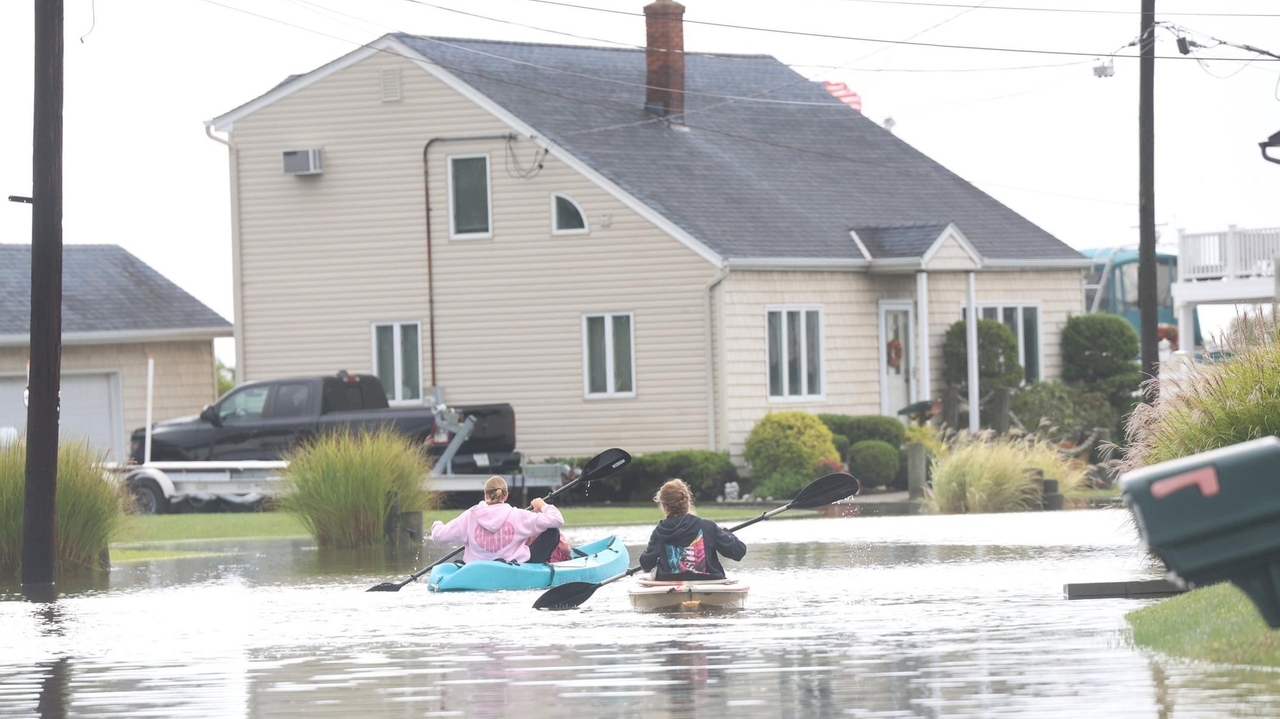
Nor’easter Caused Widespread Damage, Worsened Beach Erosion
Following a rare September nor’easter, Dr. Jase Bernhardt, associate professor of geology, environment, and sustainability, talked to Newsday about the damage caused by the storm, including its effects on beach erosion. The slow-moving storm, which began overnight on Friday, September 25, and continued through Monday, September 28, resulted in local flooding, power outages, and thousands of downed trees. “It is unusual but not quite unprecedented for a nor’easter to linger for so long,” said Dr. Bernhardt. “It is possible that the time of year played a role, as the ‘blocking’ pattern that allowed this storm to linger for so long would be more likely to occur at this time of year versus during the winter, when nor’easters are more common.”



Expert Insight: UConn's Jennifer Dineen weighs in with her perspective on gun violence in America
Earlier this week, UConn's Jennifer Dineen co-authored an opinion piece in Vital City where she shared a very candid expert perspective on gun violence and how too often it is only portrayed or explained from the point of view and experience of a male observer. She shares how topics like intimate partner violence, a lack of data on gun ownership by women, and the risks that pregnant women face are at best overlooked and too often simply ignored. Jennifer Dineen is a survey methodologist who focuses on stakeholder attitudes as mechanism for intervention uptake and policy change. She is an associate professor in-residence on fellowship in the Institute for Collaboration on Health, Intervention, and Policy (InCHIP) at the University of Connecticut and associate director of UConn’s Center for Advancing Research, Methods, and Scholarship (ARMS) in Gun Violence Prevention. View her profile Men are more likely victims and perpetrators of firearm injury, and men are most likely firearm owners. And so we often consider gun violence a mostly male problem. Mostly, but not only — and the way guns shape women’s lives often falls away from the conversation altogether. This issue of Vital City attempts to serve as a corrective. We ask readers to consider the unique impact and ways that women interact with or are harmed by firearms and to then consider solutions. Though American women’s firearm injury and death rates are lower than American men’s, they are much higher than women’s in other countries. And women are increasingly owners of guns, at rates that would’ve been highly surprising a generation ago. When we start to see guns through women’s eyes, the policy conversation changes. It changes the strategy considerations for preventing violence and for educating gun owners. The articles in this issue try to explain what we know about women and firearms and the knowledge gaps that still hinder our understanding. Our goal is to spark future research and data collection and to highlight what policymakers can do now as well as ultimately, finding well-tailored interventions that reduce adverse outcomes (like fear, injury and death) and promote positive outcomes (like safer firearm ownership, health and well-being). Women’s relationship with firearms is distinct from men’s Let’s begin with how women are harmed by weapons. If the classic picture of a male homicide or injury victim is a young man, shot by a stranger, what’s a female gun homicide or injury victim? Far too often, it’s someone targeted by her intimate partner. And, far too often, it’s someone pregnant. In a surprising number of cases, victims are older women. Which is not to say that women don’t get involved in street violence, both on the receiving and the giving end; they do. How women are harmed by guns Women most commonly are injured or killed by guns used by an intimate partner in the context of domestic violence. The presence of a firearm in an abusive household increases the risk of intimate partner homicide fivefold. While homicide is the worst outcome, firearms may also be used in an abusive relationship to exert coercive control; thus their presence changes the threat calculus even when never fired. Further, when women are harmed, it’s often in their own homes, which, as Erdal Tekin and Michael Ulrich detail in their articles, has implications for the interpretation of legal doctrine — a doctrine built on threats outside of the home. Homicide — primarily by firearm — leads to more maternal death (defined as the death of those who are pregnant or have recently given birth) in the U.S. than hemorrhage, hypertension and infection. Stated differently, expectant and new mothers are in greater danger from bullets than biology. Lynn Addington points out that, while there is an age gradient, women over the age of 50 are still at risk of intimate partner homicide (which may also involve the shooter dying by suicide). Finally, women may suffer from firearms due to their caregiver roles. Nelba Márquez-Greene and Zirui Song document that when children and other family members are shot, it is disproportionately women — mothers, sisters, daughters — who absorb the psychological and economic fallout. The full piece is attached above and is a must-read article for anyone interested in this important topic. And, if you're a journalist looking to know more about violence prevention, gun violence, and how it impacts women in America, then we can help. Jennifer Dineen is available to speak with media about this topic, simply click on her profile now to arrange an interview today.



Got Expertise to Share?
ExpertFile works with leading organizations with trusted experts. We help make their expertise more discoverable, structured, and actionable for AI-driven discovery, strategic outreach, and real-world opportunities.

Ahead of the busy winter travel season, CAA Travel Insurance, a product of Orion Travel Insurance, is introducing several important coverage enhancements to provide broader protection, clearer benefits, and more support when travel plans are disrupted. Key coverage enhancements include: • Emergency medical coverage increased from $5 million to $10 million. • Expanded coverage for climate events and extreme weather. • A new CAA Flight Delay Benefit, to provide cash or lounge passes to travellers delayed two or more hours. • Broader Trip Cancellation and Interruption coverage for major travel disruptions and unexpected personal circumstances. These updates reflect the changing travel realities that Canadians continue to navigate, including the rising costs of medical care. “Today’s travellers face a broad range of risks, from flight disruptions and extreme weather to unexpected medical emergencies and events at home,” says Elliott Silverstein, director, government relations, insurance, CAA South Central Ontario. “These updates deliver clearer benefits, broader protection and new forms of support to travellers when plans change unexpectedly.” The increase in emergency medical coverage reflects the continually rising cost of medical care while travelling abroad. Costs associated with everything from routine treatment to emergency transportation and air ambulance services have increased approximately 14 to 15 per cent annually since 2019. CAA’s expanded climate-related coverage introduces explicit policy language that clearly explains what coverage is available if a natural disaster impacts your destination accommodation, or if weather-related property damage at home disrupts your travel plans. In addition, eligible trip cancellation policies now include a new Flight Delay Benefit, providing an automatic benefit if your flight is delayed. Unlike a traditional expense-based reimbursement process, insured travellers will automatically receive a benefit when their insured flight is delayed by two or more hours, in the form of immediate payment or a lounge pass. CAA’s new Major Travel Disruption coverage addresses eligible flight cancellations or unannounced strikes, which are increasingly impacting travellers. New travel document protection covers stolen documents before departure, as well as documents that are lost or stolen at a destination. Other new covered situations include a stolen private vehicle, possible damage to a home or business, and additional occupancy costs when a travel companion interrupts their trip and the insured traveller continues as planned. “These updates are part of the ongoing optimization of CAA Travel Insurance coverage; intended to provide clearer benefits, broader protection and more support when travel plans change,” says Silverstein. “Travel insurance is not only about responding to major emergencies, it can also provide practical support during the more common situations travellers may experience while they are away from home.” CAA encourages travellers to review their policy, including its eligibility requirements, terms, conditions, limitations and exclusions, before departure. For more information about CAA Travel Insurance and coverage updates, visit: www.caasco.com/travelinsurance


Ahead of the busy winter travel season, CAA Travel Insurance, a product of Orion Travel Insurance, is introducing several important coverage enhancements to provide broader protection, clearer benefits, and more support when travel plans are disrupted. Key coverage enhancements include: • Emergency medical coverage increased from $5 million to $10 million. • Expanded coverage for climate events and extreme weather. • A new CAA Flight Delay Benefit, to provide cash or lounge passes to travellers delayed two or more hours. • Broader Trip Cancellation and Interruption coverage for major travel disruptions and unexpected personal circumstances. These updates reflect the changing travel realities that Canadians continue to navigate, including the rising costs of medical care. “Today’s travellers face a broad range of risks, from flight disruptions and extreme weather to unexpected medical emergencies and events at home,” says Elliott Silverstein, director, government relations, insurance, CAA South Central Ontario. “These updates deliver clearer benefits, broader protection and new forms of support to travellers when plans change unexpectedly.” The increase in emergency medical coverage reflects the continually rising cost of medical care while travelling abroad. Costs associated with everything from routine treatment to emergency transportation and air ambulance services have increased approximately 14 to 15 per cent annually since 2019. CAA’s expanded climate-related coverage introduces explicit policy language that clearly explains what coverage is available if a natural disaster impacts your destination accommodation, or if weather-related property damage at home disrupts your travel plans. In addition, eligible trip cancellation policies now include a new Flight Delay Benefit, providing an automatic benefit if your flight is delayed. Unlike a traditional expense-based reimbursement process, insured travellers will automatically receive a benefit when their insured flight is delayed by two or more hours, in the form of immediate payment or a lounge pass. CAA’s new Major Travel Disruption coverage addresses eligible flight cancellations or unannounced strikes, which are increasingly impacting travellers. New travel document protection covers stolen documents before departure, as well as documents that are lost or stolen at a destination. Other new covered situations include a stolen private vehicle, possible damage to a home or business, and additional occupancy costs when a travel companion interrupts their trip and the insured traveller continues as planned. “These updates are part of the ongoing optimization of CAA Travel Insurance coverage; intended to provide clearer benefits, broader protection and more support when travel plans change,” says Silverstein. “Travel insurance is not only about responding to major emergencies, it can also provide practical support during the more common situations travellers may experience while they are away from home.” CAA encourages travellers to review their policy, including its eligibility requirements, terms, conditions, limitations and exclusions, before departure. For more information about CAA Travel Insurance and coverage updates, visit: www.caasco.com/travelinsurance

Experts in the Media: How competitive are Georgia’s political races this November?
This November marks the first time in over a generation that there are so many competitive statewide elections in Georgia. Voters in the state will have the opportunity to cast their ballot in multiple federal, state and local elections, including a competitive race for the governor’s mansion and a U.S. senate election. Control of the Senate is key for most administrations, and with a razor-thin edge favoring the Republicans, any pickup to keep control of the Senate after the mid-term elections is a priority. But it appears so far that the incumbent Senator Jon Ossoff (D) has a lead in the polls over the challenger, U.S. House Representative Mike Collins (R). Still, the election will be a close one. For the state’s gubernatorial election, what is turning out to be an even closer election, the Democrat Keisha Lance Bottoms is mounting a strong campaign against the Republican Rick Jackson. A Democrat has not won the Georgia’s governorship since 1998. These competitive elections put Georgia firmly in the camp of states to watch in November. This has political watchers and media trying to cover and figure out as parties enter the final weeks of the 2026 campaigns. It's also why journalists and news outlets like Newsweek are connecting with experts like William Hatcher, PhD, for expert opinion and perspective. An award-winning scholar, Hatcher is the chair of the Department of Social Sciences and a professor of political science. His research focuses on the connection between public administration and the development of local communities. Last year, Brian Kemp (R), the state’s popular governor, decided not to challenge Ossoff in the state's 2026 Senate race, which led to a competitive primary on the Republican side and most likely contributed to the election being more competitive. Polls suggested Kemp would have been the strongest candidate against Ossoff. Recent polling from the Atlanta Journal-Constitution has Ossoff with a four-point lead over Collins. When it comes to the state’s gubernatorial race, recent polling by Rasmussen shows Jackson with a three-point lead over Bottoms. Election predicators, such as Nate Silver, have forecasted that the Democrats are likely to win the Senate election and are very competitive in the gubernatorial contest. Hatcher said that “This November’s election marks the first time in over a generation that there are so many competitive statewide elections in Georgia." May 06 - Newsweek The races in Georgia will have significant impact on politics in the state and the nation. If you're a journalist looking to cover Georgia politics, let us help. William Hatcher, PhD, is available to speak with media – simply click on his icon now to arrange an interview today.


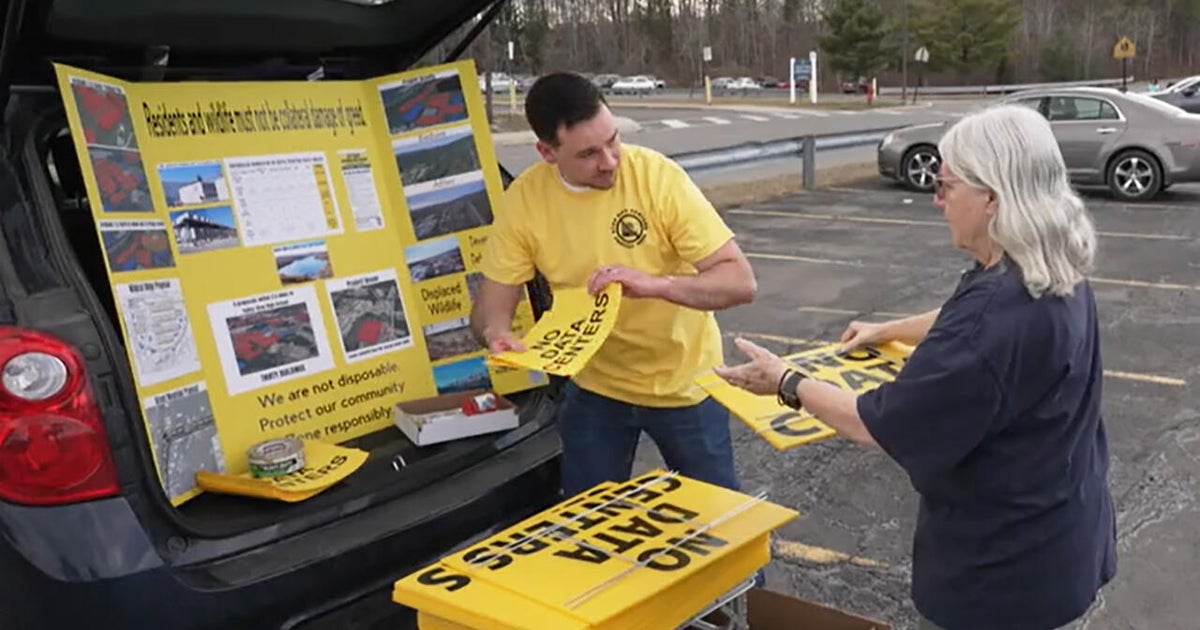
What Does an AI Data Center Really Cost the Environment?
Artificial intelligence may live in the cloud, but the infrastructure powering it has a very real footprint on the ground. As the race to build the massive data centers needed to support AI accelerates, their demands on electricity, water and local infrastructure are drawing increasing attention. Reuters reports that proposed AI data centers in Silicon Valley are facing resistance from residents and environmental groups concerned about water consumption, energy use, air pollution and the broader impact on their communities. Those concerns are becoming increasingly relevant as communities across the country weigh the economic opportunities associated with AI infrastructure against its environmental costs. Dr. Hilary Hungerford is a human geographer whose research explores the relationships between people and their environments, with a particular focus on the role of water in shaping those connections. She is an expert in the areas of human geography, sustainability, climate change, urban geography, and the geography of Utah. View her profile Dr. Hilary Hungerford, a professor of geography at Utah Valley University, studies the intersection between people and their environments, with particular expertise in water, sustainability and urban geography. Her research has examined water use by the technology industry in Utah and the relationship between water, infrastructure and technology industries in urban environments. Her expertise raises important questions as the AI data center boom continues: How much pressure can these facilities place on local water and energy supplies? What does rapid data center development mean for communities already facing water constraints? And how should cities balance economic development with sustainability and the long-term availability of natural resources? As communities confront the physical infrastructure required to power the AI revolution, Hungerford can provide important context on the environmental impacts that can accompany technological growth. If you’re interested in speaking with Hilary Hungerford about data centers, water use, sustainability and the environmental impact of the AI boom, click on her profile below.

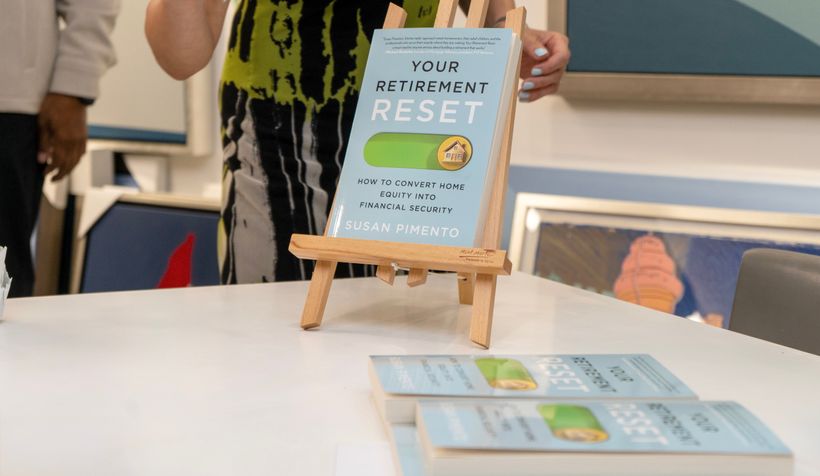
Practical guide to turning home equity into lasting retirement income is now available at Indigo, independent bookstores, Amazon.ca and McNally Robinson, and through Simon & Schuster in the U.S., in paperback, ebook and audiobook. Pimento is on a national media tour. TORONTO, ONTARIO, CANADA, September 29, 2026 -- Many Canadians share the same quiet worry: running out of money before they run out of life. Retirement expert Susan Pimento has a name for it: FORO, the Fear Of Running Out. As of today, her answer to it is in bookstores across the country. Your Retirement Reset: How to Convert Home Equity into Financial Security, published by ECW Press, is now in stores nationwide, including Indigo and Chapters locations and independent booksellers. It is also available on Amazon.ca and from Canadian independent bookseller McNally Robinson, in trade paperback, ebook and audiobook. In the United States, readers can order the book through Simon & Schuster. The book is written for Canadians in or near retirement and for the adult children who help them plan. It addresses a gap in how Canadians talk about retirement. Most advice is about saving. Very little explains how to turn what people have built into steady income that lasts. For many retirees, the family home is their largest asset. Your Retirement Reset explains, in plain language, the tools Canadians can use to unlock home equity. It shows how those tools fit alongside government benefits and registered savings, and how to weigh the trade-offs with family before making a decision. “Canadians have been told to save, save, save. Nobody tells them how to spend it,” said Pimento. “Meanwhile, the biggest asset most retirees own is right under their feet, and they’ve been taught to treat it like it’s off limits. A lot of people are house-rich and cheque-poor. This book is for anyone lying awake at 3 a.m. doing retirement math. You’ve done the hard part. Now let’s make it work for you.” “The book is about something that affects every one of us. How we're going to live and live well in the second half of our lives. Sue challenges us to think differently about retirement, especially the difference between having assets and having the income we need to enjoy life. She also challenges the traditional idea that the equity in our homes should simply sit there untouched until we die. Used thoughtfully and conservatively, she believes home equity can be a part of the retirement income conversation,” said Jennifer Smith, Publisher at ECW Press, at the book launch. National Media Tour Underway Susan Pimento is on a national media tour, and ECW Press is booking interviews with broadcast, print, podcast and online outlets. She can speak to: FORO (the Fear Of Running Out) and why it is keeping retirees up at night How Canadians can use home equity safely as a source of retirement income Common myths about reverse mortgages and downsizing What the shift from defined benefit to defined contribution pensions means for today’s retirees How adult children can start the money conversation with their parents To request an interview, contact Cassie Smyth, Publicist, at ECW Press (details below). Readers can find free resources and learn more about Pimento’s work at retirewithequity.ca. Book Details Title: Your Retirement Reset: How to Convert Home Equity into Financial Security Author: Susan Pimento Publisher: ECW Press In stores: September 29, 2026 Formats: Trade paperback, ebook, audiobook Price: $28.95 (Canada); US$28.95 (United States) ISBN (paperback): 978-1-77041-897-4 Pages: 280 US distribution: Simon & Schuster About Susan Pimento and Retire with Equity Susan Pimento is a Canadian retirement expert, author and founder of Retire with Equity, an education and advocacy platform on retirement financing. She spent more than 30 years in banking and mortgage lending, including as a Vice President at a Schedule I bank. She advises financial institutions and policymakers on modernizing retirement solutions for Canadians 55+, and co-authored EY Canada’s report The Canadian Retirement Evolution. Her motto: “Don’t Retire…ReWire!” Learn more at retirewithequity.ca Media Contact Cassie Smyth, Publicist ECW Press cassie@ecwpress.com | 416-694-3348 | info@ecwpress.com



Think You Can Spot an AI Deepfake? New Research Says Think Again
With the 2026 midterm elections approaching, artificial intelligence is becoming an increasingly visible part of the political information landscape. AI-generated campaign advertising is already appearing in U.S. races, while concerns about deepfakes, misinformation and election security are receiving growing attention. But what happens when voters simply can't tell what is real? New research led by Brandon Amacher, Director of Utah Valley University's Emerging Tech Policy Lab, offers a striking look at that question. The study involved 632 participants from a politically representative sample of the U.S. population and compared reactions to authentic political videos with AI-generated versions. Brandon Amacher is Director of the Emerging Tech Policy Lab at Utah Valley University, where he leads research and technical intelligence initiatives focused on protecting U.S. national security and assessing the strategic impact of artificial intelligence, cybersecurity, and other advanced technologies. View his profile Researchers found no statistically significant difference in the ability of authentic and deepfake videos to change participants' previously held opinions. Perhaps more concerning, participants struggled to identify the synthetic content even after being told they may have encountered a deepfake. The findings raise timely questions as voters encounter more AI-generated material online: Can voters still trust what they see? Are traditional approaches to media literacy enough? And what can election officials, technology companies and policymakers do as synthetic media becomes increasingly convincing? Amacher can provide insight into the research, the rapidly changing deepfake landscape and what AI-generated media could mean for election security and public trust. If you're interested in speaking with Brandon Amacher, click on his profile below.


Kratom Is Easy to Find - But How Much Do Young People Know About the Risks?
Kratom products have become increasingly visible in convenience stores, smoke shops and online, but growing concerns about dependence and increasingly potent derivatives are putting the substance under greater scrutiny. Addiction treatment providers across the United States are reporting an increase in patients seeking help for dependence on kratom and 7-hydroxymitragynine, commonly known as 7-OH. Some newer products contain highly concentrated levels of 7-OH, a compound that acts on opioid receptors and can produce stronger opioid-like effects. The issue is particularly relevant for adolescents and young adults. Kratom and related products can be sold as powders, pills, gummies and liquid shots, potentially making it difficult for consumers and families to understand exactly what they are purchasing and the risks involved. Genevieve Weber, PhD, LMHC, LPC, associate professor of counseling and mental health at Hofstra University, can discuss the risks associated with kratom and other emerging substances, particularly among adolescents and young adults. View her profile Drawing on her clinical practice and community-based work educating families and retailers, Weber can address why young people may be vulnerable to emerging substances, how perceptions of availability and legality can influence perceptions of risk, and what parents, educators and communities should know as new products continue to appear. With regulators, health professionals and treatment providers paying increasing attention to kratom and concentrated 7-OH products, Weber can also offer perspective on the importance of education and prevention as the substance landscape continues to evolve. To arrange an interview today, simply click on her profile below.