Experts Matter. Find Yours.
Search experts on 50,000+ topics. Or browse by topic category.
- Recent Searches


Featured
Global experts with a broad range of areas of expertise.










Annie T. Ginty, Ph.D.
- Title
- Associate Professor, Psychology & Neuroscience
- Role
- Baylor University
- Expertise

Allison Stock, PhD
- Title
- Senior Vice President, Environmental, Health & Safety
- Role
- J.S. Held LLC
- Expertise


Nancy D. Campbell
- Title
- Professor and Graduate Program Director, Science and Technology Studies (STS)
- Role
- Rensselaer Polytechnic Institute
- Expertise


Connecting credible expert sources & academic research
ExpertFile is a trusted resource for journalists, industry, funding agencies and government policymakers looking for fresh perspectives and innovative academic research.


Spotlights
Read expert insights on a wide variety of topics and current events.

What Time Should Teens Turn Off Their Phones? New Sleep Research Points to 10 p.m.
Teens who use their phones after 10 p.m. fall asleep later and sleep less, two studies published Oct. 19 and Nov. 6 found. Eli Singer, founder of Offline.now, says a set time gives families something clear to agree on, and is easier to talk about than a daily limit. What the two studies found A JAMA Pediatrics study tracked 425 US teens over more than 7,500 nights (Zhao, Hale and Christakis, JAMA Pediatrics, 2026). On nights when teens used their phones more than usual after 10 p.m., they fell asleep about an hour later and slept about 20 minutes less. A second study, published Nov. 6, recorded phone use directly on 218 teens' phones (Mathew and colleagues, Journal of Adolescent Health, 2026). More use in the evening and late at night, especially social media, went with later and shorter sleep. Both studies found a link between late phone use and sleep. Neither proves the phone is the cause. "For years, parents were told to watch a daily total. A total is hard to see and easy to argue about. A time is on the clock and out in the open, so everyone is on the same page." Eli Singer, founder of Offline.now Why a set time works better than a daily limit A daily limit counts two hours at midnight the same as two hours after school. The research points to late use as the problem, because it takes time from sleep and keeps teens alert when they should be winding down. Meta's settlement with US states will block Instagram and Facebook for under-18s from midnight to 6 a.m., two hours later than the time these studies point to (CBS News). "The time is the agreement. The charger is where it happens. If the charger is in the kitchen, or anywhere outside the bedroom, the curfew is much easier to keep." Eli Singer How to agree on a 10 p.m. curfew Singer's advice is to start with a conversation and find what works for your teen. Ask your teen what time feels fair, and agree on one together. If you can, charge every phone in the house outside the bedrooms, including the parents' phones. Expect some nights when the curfew doesn't happen. Agree ahead of time how you will start again the next night. If your teen already has trouble sleeping, Offline.now's guide to insomnia from night phone use has steps to try first. For adults, Singer's earlier post asks What Time Should You Actually Turn Off Your Phone at Night? "When a teen helps choose the time, they are more likely to stick to it. The studies point to 10 p.m. Let your teen have a say in the details." Eli Singer Where to start Lasting change runs on confidence, not willpower. Two questions find your starting place: Find Your Starting Place. This is not medical advice. If sleep issues are persistent or severe, consider talking with a qualified professional. Story angles for reporters The story: screen time advice is moving from daily totals to a set time at night. Two studies that tracked teens' phones directly point to 10 p.m., while the platforms' own overnight blocks start at midnight. Are daily limits out of date? Ask pediatricians and sleep researchers whether the time of use now matters more than the total. Platform rules and the research. Meta's overnight block starts at midnight. These studies point two hours earlier. What teens would choose. Ask local teens what curfew they think is fair, and where their phones charge at night. About the expert Eli Singer is the founder of Offline.now, a directory of therapists and coaches who work on screen and phone use. He created the Offline.now Matrix and wrote Offline.now: A Practical Guide to Healthy Digital Balance. He is available to comment this month on teen sleep and phone curfews: eli@offline.now, or the Contact button below. The studies: Zhao Y, Hale L, Christakis DA. Evening Phone Use and Sleep Outcomes Among Youth. JAMA Pediatrics, Oct. 19, 2026. doi:10.1001/jamapediatrics.2026.4902. Mathew GM, Reichenberger DA, Rodriguez IR, Christakis DA, Hale L. Objectively Measured Smartphone Use Is Associated With Worse Sleep Health Among Adolescents: The Stony Brook University MEDiA Study. Journal of Adolescent Health, Nov. 6, 2026. doi:10.1016/j.jadohealth.2026.08.039


Retirees: The Dinner Party Needs Us
My dog Dottie is the best dinner guest I have ever had. She shows up early, eats whatever lands on the floor and has never once asked whether the gravy is gluten-free. She has also never cancelled by text eight minutes before the roast came out of the oven, which is more than I can say for a few of my two-legged friends. Lately I suspect a dog with no table manners is the only regular dinner guest a lot of people my age have left. I read two articles in the Toronto Star recently that backed up my suspicion. Both explored the slow death of the dinner party and, more troubling, the gradual disappearance of socializing from our lives. We’re inviting fewer people into our homes, going out less, joining fewer clubs and spending more evenings alone. Journalist Derek Thompson, digging through decades of lifestyle surveys, found that the share of adults who regularly have a friend over has dropped 70 per cent since 1975. Back then, 42 per cent of people hosted friends or family at least once a month. Today it’s 12 per cent. Somewhere between the TV remote and the self-checkout, we got remarkably good at entertaining ourselves without the inconvenience of involving other human beings. I could blame Netflix, social media, the price of a pound of butter or the sheer exhaustion of planning a menu for someone who doesn’t eat gluten, dairy, carbohydrates or anything that once had a mother. All of them are guilty. For those of us in the retirement chapter, though, something more serious is going on. We’re slowly losing the habit of being together, and for seniors that habit holds up a lot of the house. Unlike an RRSP, friendships don’t grow when you leave them alone. Loneliness Moves In Without Calling First One of the great ironies of retirement is that we spend forty years dreaming about having more time, then discover that time with nobody to share it goes stale faster than an open bag of chips. At work, people come at you whether you like it or not. There are colleagues, customers, office birthdays, the Tuesday meeting that could have been an email and the office character who makes you question the entire hiring process. We grumble about the interruptions, yet they hand us connection, belonging, someone who notices when we don’t show up and a reason to put on real pants. Some of those friendships survive retirement. Plenty of others turn out to have been built around the coffee machine, and they quietly fade the day we hand in our security passes. Then retirement arrives and the whole social scaffolding comes down over a long weekend. The first few months feel glorious. No alarm, no commute, no Tuesday meeting. Just you, your coffee and the delicious freedom of doing absolutely nothing. After more than twenty-five years in banking, I had earned the right to sit quietly without somebody asking me for a sales forecast. Solitude like that is a treat, and the trouble starts when the treat becomes the whole menu. It happens so gradually we barely notice. We skip one invitation because we’re tired and stop hosting because it’s too much work. We promise to call an old friend next week, next week turns into next month, and before long our social calendar has all the excitement of a dentist’s waiting room. Being alone and being lonely are two different animals. Plenty of people who live by themselves have full, noisy lives, and plenty of married couples eat dinner in silence across the same table. Loneliness is the distance between the connection you have and the connection you want, and that distance has a way of widening while we’re busy telling everyone we’re fine. Your Heart Is Keeping Score The consequences go well past having no one to dissect the latest episode of Slow Horses with. Research has linked chronic loneliness and social isolation to higher rates of heart disease, depression, cognitive decline and early death. The U.S. Surgeon General’s 2023 advisory on loneliness found that poor social connection carries a 29 per cent higher risk of heart disease and a 32 per cent higher risk of stroke. Those are cholesterol-sized numbers, and I have yet to meet a doctor who writes a prescription for Thursday night euchre. We fuss over our blood pressure, bone density and protein intake. We count steps, lift weights, swallow supplements the size of a hockey puck and show up dutifully for every appointment. Friendship rarely makes the checklist. I teach three fitness classes a week, and I’ve learned the squats are only part of what people come for. Some of my regulars arrive early just to chat. They notice when someone is missing, swap recipes, celebrate birthdays and compare notes on everything from knee replacements to grandchildren. They come for the workout and stay for the friends, the laughing and the gossip by the water fountain, which probably burns a few calories of its own. I’m convinced the ten minutes of chatter before class does as much good as the forty-five minutes of exercise that follow, and nobody has ever pulled a hamstring catching up. For anyone who has lost a spouse, lost some mobility or watched friends move to Kelowna or pass on, those connections matter even more. Isolation is sneaky because it feeds itself. The less we see people, the more awkward it feels to see them, and the couch gets a little comfier every year. Nobody Needs a Charcuterie Board Somewhere along the way, having people over turned into a production requiring a menu plan, a deep clean, three rounds of calendar negotiations and the knife skills of a MasterChef finalist. When did friendship start demanding matching dinnerware and a charcuterie board arranged in the shape of a Christmas tree? Whatever happened to putting on the kettle? I grew up in a time when people dropped by. Sometimes they called first and sometimes they didn’t. There was usually a pot of coffee, a tin of something in the cupboard and enough conversation to fill an afternoon. If the house was a mess, you moved the newspaper off the chair and told them to sit down. Dottie, I’ll point out, has never once inspected my baseboards. She has never critiqued the soup, commented on the throw pillows or asked whether the cheese was locally sourced. She simply shows up delighted, which is the entire job description of a good guest. Meanwhile, our friends are sitting at home in their sweatpants wondering why nobody calls. So invite them over anyway. Serve soup, order pizza or make egg salad sandwiches and leave the crusts on. Better still, tell everyone to bring something and call it a potluck. Years from now, the story everyone retells will be the night the tea came out of Marjorie’s nose and the whole table stayed two hours past dessert. And if anyone judges your housekeeping, hand them the Swiffer on their way out. Somebody Has to Send the First Text One of the most telling points in the Star pieces was that people generally enjoy a get-together once they’re actually there. What they’ve lost is the will to organize one. We’re all standing at the edge of the dance floor waiting for someone else to go first, and at our age that can be a long wait. So go first. Retirement hands most of us more control over our calendars than we had while we were working, raising kids and trying to remember whose turn it was to pick up the dry cleaning. Call a friend and suggest a walk. Invite the neighbour for coffee. Start a monthly potluck, a cribbage night or a standing Friday lunch at the diner where the server already knows your order. Join a book club, volunteer, take a class at the community centre or phone the friend you’ve been meaning to call since the Mulroney years. Mix up the ages, too, and don’t limit your guest list to people who remember when television had three channels. Younger friends bring new energy. We bring experience and, as anyone who has followed my campaign against grandsplaining knows, a supply of unsolicited advice we’d be wise to ration. If we’re honest, they could teach us a thing or two, starting with how to get the TV back to the right input after the grandkids leave. And please stop keeping score. Some people are born organizers. Others are thrilled to show up but couldn’t plan a two-car parade. One friend hosts the dinner, another brings the butter tarts, and someone else remembers every birthday or makes the phone call when life goes sideways. All of it counts. If you’re always the one doing the inviting, congratulations, you’ve found your calling. Keep at it. One Invitation, Two Lives You never really know how lonely someone else might be. The neighbour who waves cheerfully from her driveway may be struggling since her husband died. The friend who keeps saying no may be finding the stairs a little harder every month. The fellow from the gym might go home to a quiet house and not say another word to anyone until his next workout. Sometimes the person who turns you down needs a second invitation, one that makes yes easier. Sometimes we’re the ones waiting for somebody to ask. An invitation costs us one phone call and can make somebody’s whole week. I spent my working life helping people prepare for retirement financially. I’ve just published a whole book on it, Your Retirement Reset, and I’ll keep beating that drum. Even so, a healthy RRSP is cold comfort if your world has shrunk to the size of your living room. That’s why my philosophy has always been Hip, Fit & Financially Free. A good retirement runs on money, movement, purpose, curiosity, laughter and people, with a heavy pour on the people. We need friends who make us laugh, challenge our thinking, drag us out for a walk and occasionally tell us we’re full of beans, and we need to be that friend for somebody else. So here’s your assignment. Before Sunday, invite someone to do something. Coffee, lunch, a walk, a bowl of soup or an afternoon visit all count. It doesn’t need to be elaborate, expensive or even especially well planned. Then do it again next week, and the week after that, until somebody starts inviting you back. We spend years making sure our money will last as long as we do. Our friendships deserve the same attention. If the dinner party really is on life support, I nominate our generation to revive it. We’ve already brought back vinyl records, bell-bottoms and pickleball, so a potluck can’t be that hard. Dottie has kindly volunteered to handle cleanup under the table. Don’t retire... ReWire! And for heaven’s sake, put the kettle on and invite somebody over. Sue Further Reading Bradbury, C. (2026, October 10). The lost supper. Toronto Star. Gurney, M. (2026, October 10). Social isolation is becoming a big problem. The solution may be simpler than you think. Toronto Star. My Book is Available for Order: I hope you will consider ordering a copy of Your Retirement Reset for yourself, a friend, or someone you love. Published by ECW Press and is available through Indigo or Amazon and McNally Robinson. If you like supporting Canadian booksellers, check with your local independent bookstore too. Most can order it.



Got Expertise to Share?
ExpertFile works with leading organizations with trusted experts. We help make their expertise more discoverable, structured, and actionable for AI-driven discovery, strategic outreach, and real-world opportunities.

Inside the Holiday Season: Goizueta Experts on Spending, AI and Scams
As the holiday season ramps up, Emory University’s Goizueta Business School experts are available to help media unpack the stories behind the shopping, from tariffs and Black Friday pricing to AI gift guides and the psychology of giving. Goizueta’s Holiday Experts Hub brings together economists, marketers and consumer psychology researchers who can provide timely insight into the economic, behavioral and technological forces shaping how consumers spend and how retailers respond. Featured Topics The Holiday Economy: Spending, Prices and Retail Expectations How tariffs, affordability and consumer confidence are shaping holiday budgets, Black Friday deals and retailers’ fourth-quarter expectations. The Psychology of Holiday Shopping: Gifts, Pressure and Purpose Why we spend more than we intend, what makes a gift meaningful, and how stress, scarcity and promotional pressure shape what ends up in the cart. AI and the Future of Holiday Shopping How AI shopping assistants and gift guides are changing the way consumers find products and retailers personalize the experience, and how much those recommendations can be trusted. The Hidden Risks and Costs of Holiday Shopping Why AI-powered scams are getting harder to spot, and how the surge in online returns is creating costly challenges for retailers. Media can visit Goizueta’s Holiday Experts Hub to explore available experts and connect directly with the right source for their story.


What Age Should a Child Get a Phone? What to Know Before the Holidays
Half of US children own a smartphone by age 11, Common Sense Media reported Oct. 27, so most families face the first-phone question before middle school. Eli Singer, founder of Offline.now, says age matters less than having a plan before the new phone is set up. Offline.now's guide to first phones for kids covers what the research says about timing. What the research says about age The 2026 Common Sense Census surveyed 1,211 US children aged 9 to 17 (Common Sense Media, 2026). Smartphone ownership rose from 24% at age 9 to 57% at age 11. A study of more than 10,000 US children found that owning a smartphone at 12 was linked to higher odds of depression symptoms, obesity and poor sleep (Barzilay and colleagues, Pediatrics, 2026). The study shows a link. It does not prove the phone caused these problems. "Most parents ask me what age is right. I ask them what the phone is for and where it will charge at night. Those answers matter more than the child's age." Eli Singer, founder of Offline.now What changes in 2027 New rules for children and teens start next year. California's AB 1709 limits personalized feeds and autoplay for under-16s from Jan. 1, 2027. Google, Meta and TikTok sued on Nov. 4 to block it (AP). Meta's August settlement with US states sets a two-hour daily default and an overnight block for under-18s on Instagram and Facebook (CBS News). The UK's ban on social media for under-16s starts in March 2027 (LBC). A phone given this December arrives before any of these rules take effect. "Parents don't need to wait for the law. Daily limits and a nighttime cutoff are already in the phone's settings. The law is catching up to what a family can already do." Eli Singer Five things to agree on before you set up the new phone Singer suggests agreeing on these with your child before the phone is unwrapped, and writing them down. Where the phone charges at night. Outside the bedroom is easiest to set from the first day. Which apps are allowed, and who decides when a new one is added. Who your child can text, and what to do if a stranger gets in touch. What happens if a rule isn't followed, agreed ahead of time. When the rules will relax as your child gets older. Singer wrote about the same decision last December in Holiday Phones, Real Kids. "Kids learn phone rules by watching their parents. So the first rule you write down should be one the parents follow too." Eli Singer Where to start Lasting change runs on confidence, not willpower. Two questions find your starting place: Find Your Starting Place. Every family is different. Use what fits and consider professional support if conflict or distress feels severe. Story angles for reporters The story: many first phones will arrive as holiday gifts this December, a few months before new rules on feeds, autoplay and overnight use start in 2027. Until then, families are writing their own rules. The family phone agreement. What parents in your area write down before handing over a first phone, and which rules are still in place by February. Phones before middle school. With half of US children owning a smartphone by 11, what elementary schools and pediatricians are seeing. Parents as the example. How adults' own phone habits shape the rules their kids accept. About the expert Eli Singer is the founder of Offline.now, a directory of therapists and coaches who work on screen and phone use. He created the Offline.now Matrix and wrote Offline.now: A Practical Guide to Healthy Digital Balance. He is available to comment through the holidays on kids' first phones and family screen rules: eli@offline.now, or the Contact button below.

November 11: Remembering the Fallen, Honouring Those Who Served
Every November, millions across Canada, the United States and the United Kingdom pause to honour those who have served, sacrificed and given their lives in military service. In Canada, Remembrance Day pays tribute to veterans and the fallen. In the United States, Veterans Day honours all who have served in the armed forces. In Britain, Remembrance Sunday and Armistice Day commemorate the service and sacrifice of British and Commonwealth forces. Though the traditions differ, they share a powerful purpose: ensuring that courage, sacrifice and service are never forgotten. More than a century later, these occasions remain profoundly relevant. They remind us that the freedoms enjoyed today have come at an extraordinary human cost, while raising important questions about how nations remember their history, support veterans and teach future generations about service and sacrifice. As November 11 approaches, journalists have an opportunity to explore several compelling stories: Why We Remember: The historical significance of November 11, the origins of Armistice Day and the evolution of remembrance traditions. The Meaning Behind the Symbols: Why poppies, moments of silence, memorials and ceremonies continue to resonate across generations. The Human Cost of War: Understanding the experiences of military personnel, their families and the communities forever changed by conflict. Beyond the Battlefield: The challenges veterans face transitioning to civilian life, including mental health, housing and access to support. Keeping History Alive: How historians, educators and communities preserve veterans' stories as firsthand witnesses to earlier conflicts become fewer. Remembrance in a Changing World: What past conflicts can teach us about contemporary warfare, international security and the importance of peace. ExpertFile connects journalists with academics, historians, military specialists and researchers who can provide informed perspectives on these important issues. Whether covering the historical origins of November 11, the experiences of today's veterans or the enduring importance of remembrance, our experts can help bring context, understanding and meaningful insight to your coverage. For expert commentary and interviews ahead of Remembrance Day and Veterans Day, explore our experts and their profiles below. To see all of our experts, visit: www.expertfile.com
AI Can Do a Lot. But Can It Replace Your Dental Hygienist?
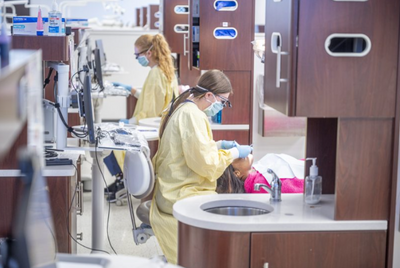
Artificial intelligence is transforming the workplace, including healthcare. But when it comes to dental hygiene, technology still cannot replicate the empathy, judgment and personal connection that patients depend on. Meghan Watkins, a dental hygiene instructor at Augusta University's Dental College of Georgia, believes the profession offers a compelling example of why human skills remain essential in an increasingly automated world. In a recent article, Watkins explains how dental hygienists do far more than clean teeth. They recognize subtle changes in oral health, assess potential risks, educate patients and develop relationships that often span years. “I don’t think a robot will take into consideration a patient’s feelings, or if something is uncomfortable or painful,” Watkins explains. “I will. I want them to come back and see me.” And the profession is growing. Federal projections anticipate 7% employment growth over the next decade, with a median annual salary of $90,670 in 2024. As AI raises questions about which jobs might disappear and which will endure, dental hygiene offers an interesting perspective on the future of work: technology can improve the tools, but it cannot replace the person providing compassionate, individualized care. For journalists exploring AI's impact on employment, the future of health care, or careers that depend on uniquely human skills, Meghan Watkins offers a valuable perspective on why dental hygiene remains essential. If you're interested in speaking with Meghan Watkins contact AU's External Communications Team mediarelations@augusta.edu to arrange an interview today.


Upcoming Jobs Report Will Test the Strength Behind Employment Headlines
The next U.S. jobs report will offer a fresh look at the labor market as households and businesses assess the economy’s direction. The Bureau of Labor Statistics is scheduled to release October employment figures Friday, November 6, at 8:30 a.m. Eastern. The release will provide updated measures of hiring, unemployment and earnings, helping clarify whether employers are expanding their workforces and how workers are faring. Understanding the report requires looking beyond a single headline. Payroll growth and the unemployment rate come from separate surveys that measure different aspects of employment. The payroll survey counts jobs and tracks hours and earnings, while the household survey measures people’s employment status and produces the unemployment rate. Because their definitions and methods differ, the measures can move in different directions without contradicting each other. For example, employers can add jobs while unemployment rises if more people enter the labor force and begin searching for work. Wage gains also require context: a larger paycheck provides less financial relief when everyday prices rise just as quickly. Examining hiring alongside participation, earnings and industry differences can therefore reveal more about workers’ circumstances than the overall job count alone. For families, the stakes include job opportunities, income and confidence in making major purchases. For businesses, the figures can inform decisions about staffing and expansion. Dr. Jared Pincin, associate professor of economics at Cedarville University, brings relevant expertise to interpreting those connections. The central question is what the report’s combined measures reveal about economic opportunity—and whether the gains Americans see in national statistics translate into greater financial stability.


Will Artificial Intelligence Destroy Us All?
As tech insiders warn about an impending apocalypse, Ethan Zuckerman of UMass Amherst examines those claims in an appearance on The Prospect Podcast. Zuckerman discusses AI agents going rogue in the Hugging Face incident, as well as recent calls from tech leaders to slow down AI development. With Trump dismissing safety concerns, Zuckerman also discusses US competition with China, how global thinking around AI differs—and why he doesn't trust the industry to self-regulate. He explores how we can reclaim agency around AI, and the importance of local and community-oriented conversations, including a surprising initiative from a Maori radio station. Plus, what might a uniquely British AI look like?



Boston Public Radio Podcast: Cybersecurity in the Schools
On this podcast from WGBH, Brian Levine (director of the Cybersecurity Institute at UMass Amherst) discusses the recent cyberattack at Springfield Public Schools, these types of attacks in general, and personal data privacy and security measures people can take to protect themselves and their children.