Experts Matter. Find Yours.
Connect for media, speaking, professional opportunities & more.

IDC Quarterly Tech Brief: Your Guide For The Digital-First World
September 2021 Editor's Comments Happy September! We hope you got a chance to recharge and enjoy the summer. Now that we’re looking into the last half of 2021, our experts agree that we’re not going back to the pre-pandemic normal, but we can’t help but be optimistic with recent news on vaccinations, lifting of restrictions, kids going back to school, and some of us returning to the office. As the world slowly moves from a pandemic to a digital-first state, we will see permanent shifts in the way we live, work, play and learn. IDC expects the next 3 years to remain highly fluid due to the growing range of global challenges. And now, more than ever, business and government leaders will need to operate and invest in increasingly digital-first markets, while building digital infrastructures, enabled by an intelligent, empowered, and a well-connected workforce. In this edition of IDC Canada's Quarterly Tech Brief, we’ll explore insights on the digital-first world, best practices, and digital transformation stories from Canadian tech leaders at our upcoming IDC CIO Series webinar on September 22, and as usual, we also reveal the latest research, survey results and market forecasts. And last but not least, we're happy to announce IDC Canada's biggest technology event of the year, IDC Connections 2021 is coming up on November 4th. Save your seat today! FEATURED IDC CIO Panel Series – Part 2: Building Resiliency & Innovation into Your Canadian Journey Join us on Wednesday, September 22 at 2 p.m. ET for the latest session of our IDC CIO Panel webinar series where we will dive into what digital resiliency means for you, and how to leverage the latest Digital Infrastructure and Digital Innovation trends to your advantage. Hear from industry-leading tech executives, Antoine Haroun, CIO at the Peel District School Board, Irene Zaguskin, CTO at The Printing House, and Michael Kurek, VP of Sales & Operations, Data Center Solutions at Dell Technologies as they unpack how the pandemic accelerated their digital transformation journey, and their best practices for planning and managing IT during uncertain times. Our experts will also host 3 sessions around how the Future Enterprise operates in a Digital-First World, a look ahead at the forces of change heading into 2022, the Future of Digital Infrastructure, and the need to strive for a balance between digital innovation and resiliency to remain relevant and competitive. Your Canadian Research Checklist Here are some of our most popular Canadian reports of the quarter to help you understand changing market conditions and succeed in 2021. ✓ IDC Market Glance: Service Providers in Canada, 2Q21 ✓ The Rise of Canadian Cloud Ecosystems ✓ Canadian Cybersecurity Market Snapshot, 2Q21 ✓ Canadian Cybersecurity Buyer Persona: Managed Security Services Benefits ✓ Canadian Managed Cloud Services Adoption, 2021 Forecast Highlights ✓ Canadian Wireless Services Forecast, 2021–2025: Wireless Wars 18 ✓ Canadian Internet of Things Forecast, 2021–2025 ✓ Outlook for Canadian SaaS Applications, 2021 ✓ Worldwide Managed Cloud Services Forecast, 2021-2025 ✓ IDC's Forecast Scenario Assumptions for the Canadian ICT Market, April 2021 IDC THOUGHT LEADERSHIP: DIGITAL RESILIENCY SCORECARD Explore IDC's new Digital Resiliency Scorecard Does resiliency still matter in a "post-pandemic" world? Quite simply, it does. In IDC's recent Digital Resiliency Benchmark Survey, we found that 65% of U.S. buyers and 55% of Worldwide buyers have plans to invest in resiliency over the April 2021-April 2022 timeframe. Watch The Digital Resiliency Scorecard webinar to learn more ICYMI: BLOG HIGHLIGHTS FROM THIS QUARTER Future of Customer - More Human Experience - Over 34% of executives point to transforming the customer experience as the top business function. Learn more about the Future of Customer framework with IDC’s Keyoor Adavani. Read More → Major Smartwatch Market Consolidation: A Canadian Take - In May Google announced a new unified smartwatch platform in partnership with Samsung. Learn how this partnership is expected to shake up the market dynamics in Canada with Shahd ElAshri. Read More → Telesat Vying For LEO Constellation Leadership - A new commercial space race has begun and among the entrants for Low Earth Orbit (LEO) satellite constellations, Telesat is an emerging leader in this multi-billion-dollar market. Learn more from IDC's Lawrence Surtees. Read More → Federal Budget Innovation Goals and What’s Next for Recovery - COVID-19 fast-tracked innovation and digitization. See how the federal budget plans to support digital transformation, and learn how customer centricity and AI can set you apart from the competition with IDC's Mark Schrutt. Read More → UPCOMING VIRTUAL EVENT IDC Connections 2021 Canada: Accelerating Your Path to a Digital-First Enterprise Mark your calendars! IDC Connections is back this year and we can't wait for you to take a front-row seat. Don't miss an afternoon full of IDC experts' insights, special guests, networking, and hear from the tech leaders who are driving this new era of rapid transformation. This year's highlights include: A special closing keynote on the Future of Sports and Entertainment with Humza Teherany, Chief Technology & Digital Officer at Maple Leaf Sports & Entertainment Creating digital innovation & experiences at your organization, with IDC's Chief Research Officer, Meredith Whalen Embracing digital infrastructure, with IDC Canada's Dave Pearson Leveraging new industry ecosystems, with IDC Canada's Nigel Wallis Guidance from our popular CIO Best Practices Panelists PODCASTS WORTH A LISTEN Find out why clients are raving about our new podcast series! In an era seemingly filled with uncertainty, the Future Enterprise podcast is a must-listen. It's a podcast for business and tech executives, aimed at helping you leverage technology to achieve innovative, disruptive, and productive business outcomes. Listen in as IDC host, Joseph Pucciarelli, Group Vice President & IT Executive Advisor interviews C-level executives from around the world on their digital transformation initiatives touching on each of the "Future of X" digital initiatives. Senior IDC research leaders often join in the conversation. Listen Now → Thanks for being a part of our IDC Quarterly Tech Brief Newsletter community! Don’t forget to subscribe to be notified quarterly when the next issue comes out.


Climate Change-Related Natural Disasters Impact Short-Lived Assets and Interest Rates
For decades, scientists across the globe have warned about the effects of climate change. Given that these changes—global warming, rising sea levels—happen over time and that their disastrous results may not be obvious for decades, studying the effects of climate change on financial markets has posed a problem. According to Christoph Herpfer, assistant professor of finance, Goizueta Business School, most of the existing literature that deals with the effect of climate change on financial markets considers “indefinitely lived assets,” such as owning stock or owning a home—assets that “don’t have an expiration date,” explained Herpfer. To evaluate the effect of climate change in the long run on these assets then requires discount models—ways to value something today based on what it could be worth decades from now. Herpfer, a banking and corporate finance specialist, studies short-lived assets that, on average, expire after 4.5 years. Herpfer wondered if there could be “an alternative channel in which climate change already impacts companies today,” he explained. One that didn’t have to deal with all the “challenges associated with long run discount rates,” he added. In “The rising tide lifts some interest rates: climate change, natural disasters, and loan pricing,” Herpfer and his colleagues—Ricardo Correa, deputy associate director, Board of Governors of the Federal Reserve System, Ai He, assistant professor of finance, University of South Carolina, and Ugur Lel, associate professor, Nalley Distinguished Chair in Finance, University of Georgia, Terry College of Business—consider this question by studying corporate borrowing costs. In 2020, the paper received the best paper award at the Boca Corporate Finance and Governance Conference. The foursome had a novel idea: In recent years, there has been scientific consensus that climate change fuels natural disasters. So Herpfer and his fellow authors wondered if financial institutions took climate change-amplified natural disasters into account when pricing short-term loans. Their answer was, unequivocally, “yes.” Their work and research is captured in a recent article in Emory Business - it's attached and well worth the read. If you're a journalist looking to know more - then let us help. Christoph Herpfer is an assistant professor of finance at Goizueta Business School. He is also a financial economist working at the intersection of banking, law, and accounting. Christoph is available to speak with media about this research - simply click on his icon now to arrange an interview today.

Do Wholesalers Discriminate Against AI in Procurement Practices?
If we deploy automation without thinking strategically about intelligence, too, isn’t AI likely to backfire on us? Airplane manufacturer, Boeing, made headlines in 2019 for all the wrong reasons. Its 737 Max aircraft was indefinitely grounded after two fatal crashes in the space of just six months had claimed the lives of 346 people. Investigation into the accidents revealed that updates to an automated system – the Maneuvering Characteristics Augmentation System, known as MACS – had failed to integrate one of two intelligent sensors, meaning the system lacked a critical security backstop. As the aircrafts switched into autopilot mode shortly after takeoff, the error sent them both into fatal nosedives within minutes. These tragedies highlight an issue with automation that needs more focused attention says Goizueta’s Ruomeng Cui, assistant professor of information systems and operation management. And it’s this: if we deploy automation without thinking strategically about intelligence too, is AI likely to backfire on us? Cui is an expert in operations strategies in digital retail and platform markets. To better understand the challenges surrounding automation and intelligence in operational processes, she teamed with Shichen Zhang of Tianjin University and Rutgers’ Meng Li to explore how AI brings value in the procurement space. With Deloitte reporting that almost 45% of Chief Procurement Officers globally are now using, piloting, or planning to integrate AI into their operations, these insights should provide interesting food for thought, says Cui. “AI isn’t just about being quicker, it’s also about being smarter. It can deliver automation but can also deliver predictive intelligence; and while these two dimensions might be correlated, one doesn’t necessarily imply the other – as the Boeing example demonstrates,” says Cui. From the tech perspective, there’s a lot of buzz about how AI is helping to drive decision-making, she adds. But there is still plenty that we don’t know about the operational dimensions to using artificial intelligence. “With international procurement, you’re basically talking about big retailers going in and requesting prices for goods or products from wholesale suppliers. And that’s a process that could, in theory, lend itself very well to AI, since it can automate simple (and tedious) tasks over and over again. So there’s a significant potential gain in companies outsourcing this kind of task to the machine.” But although the potential might be clear, Cui and her colleagues believe that simply automating these processes might not in fact yield optimal results; and could in fact work against buyers by encouraging suppliers to quote higher prices than they might in personalized, human transactions. A full article detailing Cui’s research is attached, within it – several theories were explored. Who Comes Out Ahead on Price? Humans or AI Chat Bots? “We speculated about the possibility of wholesalers discriminating against the AI,” says Cui. “Specifically, we wanted to know if the sellers would quote higher prices to AI bots than they would to human buyers, because at the end of the day these bots are just machines; they don’t bring the authenticity or sincerity of human beings.” When Machines are Smart, Discounts Rise “When wholesalers are just asked over and over for their prices, they know that they are dealing with a machine and the intuition is that the machine is not intelligent, that it doesn’t have market expertise, and that it isn’t capable of decision-making. There’s no incentive to build relationships or to engage in any kind of negotiating dynamic here.” The topic is fascinating, and given the increase of AI in the workplace – a timely one. And, if you are a journalist looking to cover this research or speak with Professor Ciu about the subjects of telework and productivity, simply click on her icon now to arrange an interview today.


Maple Report - May 2021 Edition
May 2021 Welcome to our second edition of The Maple Report. This quarterly newsletter is designed to keep Canadian technology executives updated on the latest trends, market research, events and valuable resources from IDC Canada's expert analysts. In this edition, we want to show you how IDC can help Canadian executives like yourself make important technology decisions. We also want to invite you to our upcoming events and give you a sample of some of our thought leadership through our IDC blog. We hope you find these insights practical to help propel your business into a more resilient digital enterprise. Trust IDC to be your research partner in 2021. We welcome your thoughts about this newsletter. Please send them to askIDC@idccanada.com. HOW CAN IDC HELP YOU? IDC PeerScapes – Helping You Find Technology Best Practices An IDC PeerScape minimizes your missteps by identifying peer business practices worthy of emulating or avoiding, increasing the likelihood of positive impacts from a technology initiative. To assist your organization finding technology best practices, IDC publishes dozens of IDC PeerScape reports. Similar to IDC MarketScapes that we explored in the last edition of The Maple Report, IDC PeerScapes sit on the Engage part of our IDC DecisionScape framework , and include reports to help you launch, evaluate and optimize new technology initiatives. The report outlines key challenges your peers encountered when implementing a specific technology initiative, as well as key insights your peers learned along the way. IDC PeerScapes help you to increase the likelihood of a tech initiative’s success by giving you insight into best practices (and practices to avoid) through specific use case examples implemented by your peers who have already led a similar technology initiative. These documents can help your organization recreate successful implementations of technology and help you mitigate risk. To help you understand the value of these reports, we have included here our IDC PeerScape: Practices for Including Cloud Services into Outsourcing Contracts in Canada report. In it, you'll find Best practices from three areas of cloud adoption are discussed in the document: security, cost management, and skills gap. Companies created security checklists to mitigate security risks and retain control of security when working with external vendors. They also filled the skills gap and minimized cost unpredictability by collaborating with their outsourcing service providers. VIRTUAL EVENTS FOR IT EXECUTIVES IDC Fireside Chat | Content Cloud as a Critical Component of Virtual Work May 19, 2021 | 2:00 pm ET Does your organization have a holistic view of your customers when they contact you for assistance? Are your security protocols on your content systems up to snuff with your virtual workforce? Is your content customized for the different employee roles? If any of these content challenges sound familiar to your organization, then you need to attend this webinar to provide a seamless content experience for your customers and your employees. On our next webinar for Canadian technology executives on May 19th at 2pm ET, we'll hear how ATB Financial's Barry Hensch conquered multiple content management challenges to provide seamless experiences in its virtual workplace during a fireside chat with IDC's Megha Kumar. Walk away with a better understanding of what Cloud Content Management entails, why it's important to manage your content effectively and how you can leverage it to prosper in the digital future. Confirmed Speakers: Megha Kumar: Director, Software & Cloud Services, IDC Canada Barry Hensch: SVP & Head of Technology Enablement, ATB Financial Varun Parmar: SVP & Chief Product Officer, Box IDC CIO Panel Series | Accelerate & Simplify Your Canadian Digital Transformation Journey June 16, 2021 | 2:00pm ET Our IDC Canada research indicates that many Canadian organizations are not where they need to be yet to thrive in the digital economy. If you think your organization could benefit from simplifying and accelerating your digital transformation efforts, then you need to attend this upcoming webinar on June 16 at 2pm ET. Join this virtual webinar to understand where Canadian organizations are on their respective digital transformation journeys, what types of projects were accelerated as a result of the pandemic and what impact it had on Canadian industries. Then hear from our all-Canadian CIO panel on how they've stickhandled the impact of the pandemic at their organizations to set themselves up for future success in the digital economy. Learn what you need from your peers to get your organization moving in the right direction. Confirmed Speakers: Tony Olvet: Group VP, Research, IDC Canada Nigel Wallis: Research VP, IoT & Industries, IDC Canada Catherine Chick: SVP, IT, Canada Goose Pamela Pelletier: Canada Country Manager, Dell Technologies IDC THOUGHT LEADERSHIP HIGHLIGHTS DID YOU KNOW? You Can Get Actionable Research, KPIs, Benchmarks & Best Practices with IDC IDC Canada's IT Executive Programs (IEP) make it easy to access the relevant technology research and advice you need to make data-driven decisions as you lead your organization into the digital future. Get in touch today to learn more or visit our IT Executive Portal to learn more. IT EXECUTIVE RESOURCES Set Your Future IT Roadmap with IDC IT leaders need to rethink what is critical and evaluate where the organization stands as they manage complex changes. For strategies on transforming your organization's IT, read the new eBook from IDC: Future IT: Operating System of the Future Enterprise.

The Facebook Oversight Board’s ruling temporarily upholding the social media giant’s ban on former President Donald J. Trump, which they instructed the company to reassess within six months, noted that the parameters for an indefinite suspension are not defined in Facebook's policies. The non-decision in this high-profile case illustrates the difficulties stemming from the lack of clear frameworks for regulating social media. For starters, says web science pioneer James Hendler, social media companies need a better definition of the misinformation they seek curb. Absent a set of societally agreed upon rules, like those that define slander and libel, companies currently create and enforce their own policies — and the results have been mixed at best. “If Trump wants to sue to get his Facebook or Twitter account back, there’s no obvious legal framework. There’s nothing to say of the platform, ‘If it does X, Y, or Z, then it is violating the law,’” said Hendler, director of the Institute for Data Exploration and Applications at Rensselaer Polytechnic Institute. “If there were, Trump would have to prove in court that it doesn’t do X, Y, or Z, or Twitter would have to prove that it does, and we would have a way to adjudicate it.” As exemplified in disputes over the 2020 presidential election results, political polarization is inflamed by a proliferation of online misinformation. A co-author of the seminal 2006 Science article that established the concept of web science, Hendler said that “as society wrestles with the social, ethical, and legal questions surrounding misinformation and social media regulation, it needs technologist to help inform this debate.” “People are claiming artificial intelligence will handle this, but computers and AI are very bad at ‘I’ll know it when I see it,’” said Hendler, who’s most recent book is titled Social Machines: The Coming Collision of Artificial Intelligence, Social Networking, and Humanity. “What we need is a framework that makes it much clearer: What are we looking for? What happens when we find it? And who’s responsible?” The legal restrictions on social media companies are largely dictated by a single sentence in the Communications Decency Act of 1996, known as Section 230, which establishes that internet providers and services will not be treated as traditional publishers, and thus are not legally responsible for much of the content they link to. According to Hendler, this clause no longer adequately addresses the scale and scope of power these companies currently wield. “Social media companies provide a podium with an international reach of hundreds of millions of people. Just because social media companies are legally considered content providers rather than publishers, it doesn’t mean they’re not responsible for anything on their site,” Hendler said. “What counts as damaging misinformation? With individuals and publishers, we answer that question all the time with libel and slander laws. But what we don’t have is a corresponding set of principles to adjudicate harm through social media.” Hendler has extensive experience in policy and advisory positions that consider aspects of artificial intelligence, cybersecurity and internet and web technologies as they impact issues such as regulation of social media, and powerful technologies including facial recognition and artificial intelligence. Hendler is available to speak to diverse aspects of policies related to social media, information technologies, and AI.



Autonomous cars expert: Dr Siddartha Khastgir
For stories on autonomous vehicles, Dr Siddartha Khastgir from WMG at the University of Warwick is one of the leading experts in the UK, and is available for comment. His recent notable research includes developing the world’s largest public database for testing driverless cars: If you would like to interview him, contact press@warwick.ac.uk or L.Walton.1@warwick.ac.uk


Could Smarter Guns Be the Key To Stopping Mass Shootings and Other Violence?
“Gun violence in this country is an epidemic, and it’s an international embarrassment,” President Biden recently said. At least 45 mass shootings have occurred in America in the last month, according to reports. In the same time period, news of police officers killing unarmed Black men and boys, including 20-year-old Daunte Wright in Minneapolis and 13-year-old Adam Toledo in Chicago, sparked waves of protest around the country. These all-too-common tragedies could be significantly reduced — and even eliminated — without any of the partisan rancor and gridlock typically associated with gun-related debates, says Selmer Bringsjord, an expert in artificial intelligence and reasoning and a professor of cognitive science at Rensselaer Polytechnic Institute. “There is a solution,” Bringsjord, the director of the Rensselaer AI and Reasoning Laboratory, wrote in the Times Union. “A technological alternative to the fruitless shouting match between politicians: namely, AI — of the ethical sort. Guns that are at once intelligent and ethically correct can put an end to the mass-shooting carnage.” Rather than an endless debate over whether the public should have more guns or less, Bringsjord’s novel – and, he says, plausible – proposal is to shift to “smart and virtuous guns, and intelligent restraining devices that operate in accord with ethics, and the law.” Along with his coauthors, Bringsjord detailed his ideas in a recent paper, “AI Can Stop Mass Shootings, and More.” Anticipating some counterarguments, the authors urge readers “to at least contemplate whether we are right, and whether, if we are, such AI is worth seeking.” Bringsjord and his collaborators have created simulations showing how, in only 2.3 seconds, ethical AI technology can perceive a human’s intent and environment and then, if necessary, prevent their gun from firing. Importantly, he notes, the same technology that could prevent a criminal from opening fire in a public area could also prevent a police officer from shooting a person who posed no threat. “Ultimately research along this line should enable humans, in particular some human police, to simply be replaced by machines that, as a matter of ironclad logic, cannot do wrong,” Bringsjord said in a recent public radio segment. The AI capabilities discussed by Bringsjord are the product of prior work over seven years of funding from the Office of Naval Research devoted to developing moral competence in robots. Bringsjord has spoken about robots and logic at TEDxLimassol. He is the author of What Robots Can and Can’t Be and Superminds: People Harness Hypercomputation. He is also the co-author of Artificial Intelligence and Literary Creativity: Inside the Mind of Brutus, a Storytelling Machine. Bringsjord is available to speak about his recent proposals around AI-enabled guns, as well as other aspects of AI, human and machine reasoning, and formal logic.

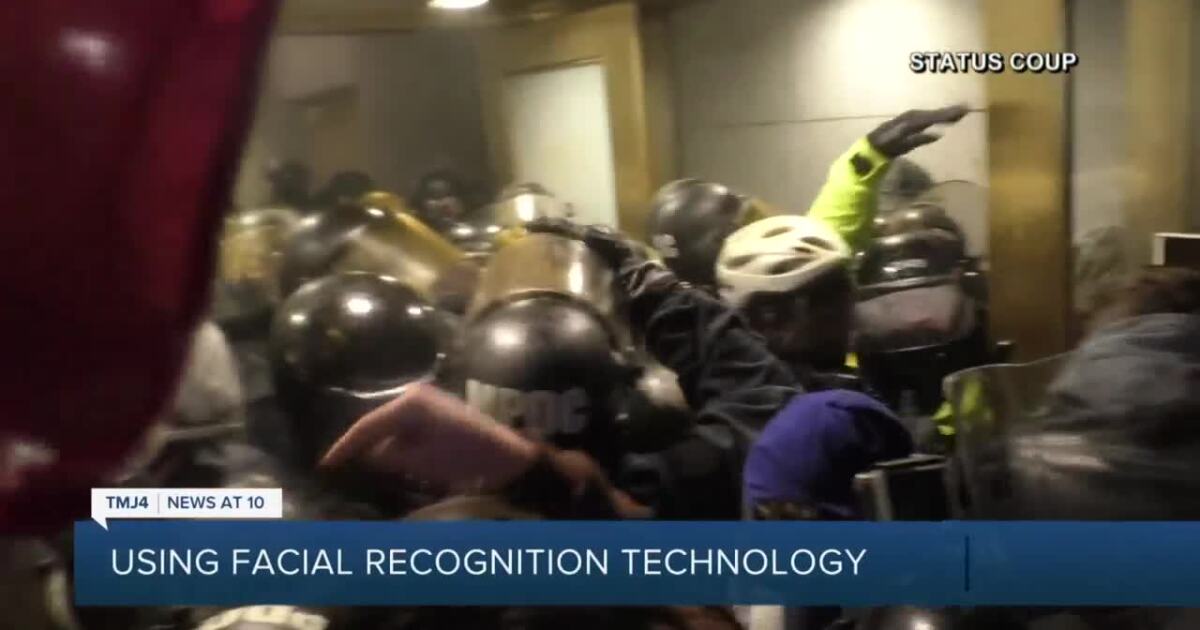
On January 06, America watched with shock as a mob of protesters stormed the gates in Washington, D.C. and invaded the Capitol buildings. For hours, the rioters looted and occupied America’s halls of power and though some were apprehended, many found a way to get out and get back home avoiding arrest. However, media coverage was substantial and some of the protesters were even bold enough to be caught posing for social media. Slowly, authorities are tracking them down, and Dr. Derek Riley, an expert at Milwaukee School of Engineering (MSOE) in the areas of computer science and deep learning, has been explaining how artificial intelligence (AI) technology that’s taught at MSOE is capable of enabling law enforcement's efforts to identify individuals from pictures. "With these AI systems, we’ll show it example photos and we’ll say, 'OK, this is a nose, this is an ear, this is Billy, this is Susie,'" Riley said. "And over lots and lots of examples and a kind of understanding if they guess right or wrong, the algorithm actually tunes itself to get better and better at recognizing certain things." Dr. Riley says this takes huge amounts of data and often needs a supercomputer—like MSOE's "Rosie"— to process it. To get a computer or software to recognize a specific person takes more fine-tuning, Riley says. He says your smartphone may already do this. "If you have a fingerprint scan or facial recognition to open up your phone, that’s exactly what’s happening," Riley said. "So, they’ve already trained a really large model to do all the basic recognition, and then you provide a device with a fingerprint scanning or pictures of your face at the end to be able to fine-tune that model to recognize exactly who you are." Riley says this technology isn't foolproof—he says human intelligence is needed at every step. He added we might be contributing to the data sources some of the technology needs by posting our pictures to social media. "Folks are uploading their own images constantly and that often is the source of the data that is used to train these really, really large systems," Riley said. January 14 – WTMJ, Ch. 4, NBC News The concept of facial recognition and the use of this technology in law enforcement (and several other applications) is an emerging topic – and if you are a reporter looking to cover this topic or speak with an expert, then let us help. Dr. Derek Riley is an expert in big data, artificial intelligence, computer modeling and simulation, and mobile computing/programming. He’s available to speak with media about facial recognition technology and its many uses. Simply click on his icon now to arrange an interview today.



As Flexible Voting Options Scrutinized, Expert Says Online Voting Not a Safe Alternative
The popularity of — and controversies surrounding — early voting and mail-in ballots demonstrates a demand for more flexible voting options. But online voting shouldn’t be up for consideration, according to James Hendler, the head of the Institute for Data Exploration and Applications at Rensselaer Polytechnic Institute. Hendler also chairs the U.S. Technology Policy Committee of the Association for Computing Machinery, the world’s largest and oldest society of individuals involved in all aspects of computing. In public statements expressing his own opinion and on behalf of the ACM, Hendler has discussed the vulnerabilities of online voting and the organization’s effort to press against its adoption. Hendler argues that online voting is not, and cannot be made to be, secure against malware and denial of service attacks — and that no app or underlying technology, including blockchain, holds potential to overcome those challenges. "The current state of mobile voting is that we are not ready to deploy it at scale, that it has significant technical and socio-technical aspects, particularly cybersecurity, that we need to worry about, and that there are alternatives,” Hendler said. “The ACM has worked hard as an organization to explain our evidence-based reasoning, and to express the hope that online-voting won’t be used now and in the foreseeable future.” In explaining why online voting is more complicated than online banking, shopping and other common internet activities, Hendler said, “The main reason that online voting is more complex is that it must maintain anonymity, no one is allowed to know how you voted. Securing online voting without providing access to identity is extremely difficult. There are other reasons as well including the staggering cost and the lack of a centralized US authority, but identity management remains the number one.” Under his leadership, the ACM’s U.S. Technology Policy Committee, along with leading organizations and experts in cybersecurity and computing, sent a letter to all governors, secretaries of state and other state election directors urging them not to allow the use of internet or voting app systems. Hendler has extensive experience in policy and advisory positions that consider aspects of artificial intelligence, cybersecurity and internet and web technologies as they impact issues such as online voting and the regulation of social media and powerful technologies including facial recognition and artificial intelligence. In light of ongoing political unrest, Hendler is available to speak to diverse aspects of information technology as related to the election, AI in applications like policing, and the politics related to social media.

Best-selling author Peter Singer talks with the Brunswick Review about winning the increasingly crowded and contentious war for attention What do Isis and Taylor Swift have in common? According to author and digital-security strategist Peter Singer, both the terrorist organization and pop star are fighting for your attention online and employing similar tactics to try and win it. ISIS kicked off its 2014 invasion of Mosul with the hashtag, “#AllEyesonISIS.” More recently, the terror group posted photos of its members holding cute cats in an effort to make them more relatable – tactics familiar to most celebrities and online marketers around the world. These online battles, the rules governing them, and their real-world impact are the focus of Mr. Singer’s latest book, LikeWar, which he coauthored with Emerson T. Brooking, at the time a research fellow with the Council of Foreign Relations. “A generation ago people talked about the emergence of cyber war, the hacking of networks. A ‘LikeWar’ is the flip side: the hacking of people and ideas on those networks. Power in this conflict is the command of attention,” says Mr. Singer, who in addition to his writing is also a strategist and Senior Fellow at the New America Foundation. Pretty much everyone who posts online – from governments to marketers to reality TV stars – is a combatant in this fight for virality, according to Mr. Singer. Triumph in a “LikeWar” and you command attention to your product or propaganda or personality. Lose and you cede control of the spotlight and the agenda. Mr. Singer recently spoke with Brunswick’s Siobhan Gorman about the trends he’s seeing in LikeWars around the world, and what companies can do to avoid being on the losing end. What were you most surprised by in researching LikeWar? One of the more interesting characters in the book was at one time voted TV’s greatest villain: Spencer Pratt, a reality TV star on MTV’s “The Hills.” He’s basically one of these people who became famous almost for nothing. But what Pratt figured out really early was the power of narrative, which allowed him to become famous through, as he put it, “manipulating the media.” In the same week, I interviewed both Pratt and the person at the US State Department who’s in charge of the US government’s efforts to battle ISIS online. And Pratt, this California bro who’s talking about how to manipulate the media to get attention, understood more of what was playing out online than the person at the State Department. Spencer Pratt, a reality TV star… understood more of what was playing out online than the person at the State Department.” How much have online conflicts changed the rules in the last few years? First, the internet has left adolescence. It’s only just now starting to flex its muscles and deal with some of its responsibilities. The structure of the network changes how these battles play out. So, it’s this contest of both psychological but also algorithmic manipulation. What you see go across your screen on social media is not always decided by you. The rule makers of this global fight are a handful of Silicon Valley engineers. Another aspect of it is that social media has effectively rendered secrets of any consequence almost impossible to keep. As one CIA person put it to us, “secrets now come with a half-life.” Virality matters more than veracity; the truth doesn’t always win out. In fact, the truth can be buried underneath a sea of lies and likes. And the last part is that we’re all part of it. All of our decisions as individuals shape which side gets attention, and therefore which side wins out. But you highlight that this is playing out differently in China. Exactly. There are two different models shaping the internet, and shaping people’s behavior through the internet, playing out in the West and in China. Essentially, internet activity in China is all combined. Look at WeChat, which is used for everything from social media to mobile payment; it’s Amazon meets Facebook meets Pizza Hut delivery. And you combine that with an authoritarian government that’s had a multi-decade plan for building out surveillance, and you get the social credit system, which is like Orwellian surveillance crossed with marketing. The social credit system allows both companies and the government to mine and combine all the different points of information that an online citizen in China reveals of themselves, and then use that to create a single score – think of it as your financial credit score of your “trustworthiness.” For example, if you buy diapers your score goes up, because that indicates you’re a parent and a good parent. If you play video games for longer than an hour your score goes down because you’re wasting time online. And it’s all networked. Your friends and family know your score. It creates a soft form of collective censorship; if your brother posts something that’s critical of the government, you’re the one who goes to him and says, “Knock it off ’cause you’re hurting my score.” And you do that because the score has real consequences. Already it’s being used for everything from seating on trains and job applications to online dating. Your score literally shapes your romantic prospects. So, you have this massive global competition between Chinese tech companies and other global tech companies not only for access to markets, but also for whose vision of the internet is going to win out. How can companies win a “LikeWar”? Everyone’s wondering: What are the best ways to drive your message out there and have it triumph over others? The best companies I’ve seen create a narrative, have a story and have emotion – in particular, they have emotion that provokes a reaction of some kind. It’s all about planned authenticity. That sounds like a contradiction, but it’s about acting in ways that are genuine, but are also tailored because you’re aware that the world is watching you. A good comparison here is Wendy’s versus Hillary Clinton. Wendy’s is a hamburger chain – not a real person – but it acts and comes across as “authentic” online and has developed a massive following. They’re funny, irreverent. Yet Hillary Clinton – a very real person – never felt very authentic in her online messaging. And that’s because it involved a large number of people – by one account, 11 different people – all weighing in on what should be tweeted out. Inundation and experimentation are also key. Throwing not just one message out there, but massive amounts of them. Treating each message as both a kind of weapon, but also an experiment that allows you to then learn, refine, do it again, do it again, do it again. How do you measure and gauge battles online now? Is it just volume? It all depends on what your battle is, what your end goal is. Is it driving sales? Is it getting people to vote for you, to show up to your conference? This is what the US gets wrong about Russian propaganda and its disinformation campaigns. We think they’re designed to make people love or trust a government. From its very start back in the 1920s, the goal of propaganda coming from the Soviet Union, and today Russia, has been instead to make you distrust – distrust everything, disbelieve everything. And we can see it’s been incredibly effective for them. First, we need to recognize that we’re a part of the battle. In fact, we’re a target of most of the battles. How effective have disinformation campaigns actually been in the US? What can be done? One of the scariest and maybe saddest things we discovered is that the US is now the story that other nations point to as the example of what you don’t want to have happen. There’s no silver bullet, of course. But one example was something called the Active Measures Working Group, a Cold War organization that brought together the intelligence community, diplomats and communicators to identify incoming KGB disinformation campaigns and then develop responses to them. We’re dealing with the modern, way more effective online version of something similar, and we haven’t got anything like that. There are also digital literacy programs. I find it stunning that the US supports education programs to help citizens and kids in Ukraine learn about what to do and how to think about online disinformation, but we don’t do that for our own students. What can people like you or me do? First, we need to recognize that we’re a part of the battle. In fact, we’re a target of most of the battles. And we need to better understand how the platforms work that we use all the time. A majority of people actually still don’t understand how social media companies make money. The other is to seek out the truth. How do we do that? And the best way is to remember the ancient parable of the blind man and the elephant – don’t just rely on one source, pull from multiple different sources. That’s been proven in a series of academic studies as the best way to find the facts online. It’s not exactly new, but it’s effective. Where will the next online war be fought? The cell phone in your pocket, or if we’re being futuristic, the augmented reality glasses that you wear as you walk down the street. It’ll come from the keepsake videos that you play on them. If you want to know what comes next in the internet there have always been two places to go: university research labs and the porn industry. That’s been the case with webcams, chat rooms and so on. What we’re seeing playing out now are called “deep fakes,” which use artificial intelligence to create hyper-realistic videos and images. There’s also “madcoms,” which are hyper-realistic chat bots that make it seem like you’re talking to another person online. Combine the two, and the voices, the images, the information that we’ll increasingly see online might be fake, but hyper-realistic. The tools that militaries and tech companies are using to fight back against the AI-created deep fakes are other AI. So, the future of online conflict looks like it’ll be two AIs battling back and forth. Let me give you a historic parallel, because we’ve been dealing with these issues for a very long time. The first newspaper came when a German printer figured out a way to monetize his press’s downtime by publishing a weekly collection of news and advice. And in publishing the first newspaper, he created an entire industry, a new profession that sold information itself. And it created a market for something that had never before existed – but in creating that market, truth has often fallen by the wayside. One of the very first newspapers in America about a century later was called the New England Courant. It published a series of letters by a woman named Mrs. Silence Do-good. The actual writer of the letters was a 16-year-old apprentice at the newspaper named Benjamin Franklin, making him the founding father of fake news in America. In some sense it’s always been there, using deception and marketing to persuade people to your view.