
Experts Matter. Find Yours.
Connect for media, speaking, professional opportunities & more.

Pause for Water. Stay for the Ads. FIFA's $500 Million Timeout
FIFA's decision to introduce mandatory hydration breaks in every match of the 2026 FIFA World Cup is drawing attention far beyond player welfare circles. The new rule requires a three-minute stoppage in each half of all 104 tournament matches, creating more than 10 hours of additional broadcast inventory that did not exist in previous World Cups. Analysts estimate the added commercial value could approach $500 million, making the breaks one of the most significant business stories of the tournament. While FIFA has emphasized player health and safety amid concerns about summer temperatures across North America, broadcasters and advertisers have quickly recognized the value of guaranteed in-game breaks. Networks are now able to sell premium advertising inventory during some of the most highly watched sporting events on the planet, creating opportunities that resemble the commercial structure of American sports broadcasts. Tim Derdenger is an Associate Professor of Marketing and Strategy at Carnegie Mellon’s Tepper School of Business. An expert in sports markets, his research is centered around celebrity endorsements and how to optimize their impact on product sales. View his profile The move has generated debate among fans and observers, with some questioning whether commercial considerations played a role in expanding hydration breaks to every match regardless of venue or weather conditions. Critics argue the stoppages alter the traditional flow of soccer, while supporters point to growing concerns about extreme heat and player safety. For brands, however, the development represents a rare opportunity. Unlike traditional halftime advertising, hydration breaks occur while viewers remain actively engaged in the match, creating premium moments for sponsors seeking global reach and attention. The breaks also open new possibilities for branded content, integrated sponsorship activations, and enhanced fan engagement strategies during live play. Looking to know more? We can help. Tim Derdenger is an expert in sports marketing, sponsorship strategy, media rights, and the business of major sporting events. He can discuss: • How hydration breaks create new revenue opportunities for broadcasters and sponsors • The growing commercialization of global sports properties • Whether fans will accept more advertising during live sporting events • How brands can maximize engagement during high-profile World Cup broadcasts • What this development signals about the future of sports media rights and sponsorship Looking for expert insight on the business side of the 2026 FIFA World Cup? Connect with Tim Derdenger today to discuss how FIFA's hydration breaks could reshape sports marketing, sponsorship activation, and broadcast economics for years to come.



World Cup 2026: Story Angles Beyond the Pitch
The 2026 FIFA World Cup will be one of the biggest sports stories of the year, with matches taking place across Mexico, Canada and the United States. But the story will reach well beyond the field. As the tournament moves from city to city, it will bring host communities, public agencies, local businesses and civic leaders into the spotlight. That creates a wide range of story angles for journalists, from public health and safety, tourism and economic impact to sports technology, fan culture, athlete performance, national identity and the politics of international sport. Institutions using ExpertFile are helping media cover these broader World Cup stories through dedicated Topic Authority Hubs, Spotlight posts and expert profiles featuring trusted sources across health, business, technology, public policy, culture and sport. Featured World Cup Expert Hubs With the World Cup coming to the New York metro area, Hofstra University’s hub brings together experts on athlete health, recovery, injury prevention, mental performance, public health, tourism, local business impact and the cultural history of soccer. Explore Hofstra’s World Cup 2026 Hub. Source: Hofstra University The University of Delaware’s hub focuses on player safety, concussion research, sports analytics, tourism, youth development, fan behavior, shared experiences and the science behind elite competition. Explore the University of Delaware’s World Cup 2026 Hub. Source: University of Delaware Carnegie Mellon University’s hub looks at the tournament through the lenses of geopolitics, diplomacy, sports marketing, fan engagement, AI, robotics, biomechanics, human performance and emerging sports technologies. Explore Carnegie Mellon’s World Cup 2026 hub. Source: Carnegie Mellon University Story Angles As coverage plans take shape, these are some of the World Cup 2026 story angles journalists may want to explore. The Topic Authority Hubs featured above offer a helpful starting point, with Spotlight posts and expert profiles connected to many of these issues. Journalists can also search directly on expertfile.com to find additional academic experts who can bring depth, context and clarity to their coverage. The politics behind the tournament The World Cup is never just about sport. It can become a global stage for diplomacy, national pride, protest, soft power and political tension, with countries not only competing on the field but also presenting themselves to the world. For journalists, that creates timely story opportunities around national identity, international relations and the political flashpoints that often surface around major global sporting events. The next generation of fans A World Cup can shape how young people connect with sport, family, community and national identity. For many children and teenagers, this may be the first tournament they experience in a big way — at school, at home, in their community or through local soccer programs. The mental pressure of representing a country Few sporting events carry the emotional weight of the World Cup. Players are not just competing for clubs or contracts. They are carrying national expectations in front of a global audience, often under intense media and social media scrutiny. The science of movement under pressure World Cup matches are full of moments that happen almost too quickly to see: a sudden change of direction, a hard landing, a collision, a late tackle, a split-second decision to accelerate or pull back. Experts can help explain the biomechanics behind elite soccer movement, how the body absorbs stress during competition, and why injuries such as ACL tears and concussions remain such important issues at the highest level of the game. How technology is changing the game AI, sports analytics, wearables, robotics, motion tracking and virtual experiences are changing how soccer is played, trained, analyzed and watched. Some of this technology is visible to fans. Much of it is happening behind the scenes. The hidden science behind the tournament Some of the most important parts of the World Cup are easy to overlook. Playing surfaces, stadium preparation, natural grass requirements, turfgrass systems and venue logistics all play a role in the quality of the tournament. What host cities gain — and what they have to manage The World Cup can bring major attention to host cities, along with increased demand on hotels, restaurants, transportation systems, small businesses and public services. The story is not only how many people visit, but who benefits and what remains after the tournament moves on. Sports analytics in action Data is now part of how elite soccer is understood, taught and analyzed. From performance trends to real-time decision-making, analytics can help explain what is happening inside the game and how teams, coaches and analysts evaluate play at the highest level. Soccer as culture and identity For many fans, soccer is tied to family, community, immigration, history and belonging. The World Cup offers a chance to tell stories about fan culture, grassroots soccer, Latin American soccer history, gender and power in the sport, and why watching together can feel so meaningful. Public health and mass gatherings Millions of fans travelling across borders and gathering in stadiums, fan zones and public spaces create important public health questions. Cities need to think about disease surveillance, emergency preparedness, health system readiness and health equity — all while hosting one of the most visible events in the world. About ExpertFile ExpertFile helps organizations become the most trusted and visible source of expertise in an AI-driven world. The platform combines expert profiles, content publishing, inquiry management, analytics and media distribution into a single Visible Authority infrastructure - enabling universities, healthcare organizations, corporations and associations to improve how their expertise is discovered, cited and engaged across search engines, AI assistants and media channels. Built-in workflow orchestration, governance controls and compliance oversight help organizations reduce risk and achieve greater impact with existing resources. Trusted by leading institutions including Carnegie Mellon University, the Massachusetts Institute of Technology (MIT) and ChristianaCare, ExpertFile helps organizations unlock the full value of their expertise at scale. The ExpertFile Mobile App connects journalists, conference organizers, policymakers, researchers and industry partners with authoritative expertise across more than 50,000 topics.


Reconstruction Reconsidered: Manisha Sinha Brings Historical Context to New Obama Podcast Series
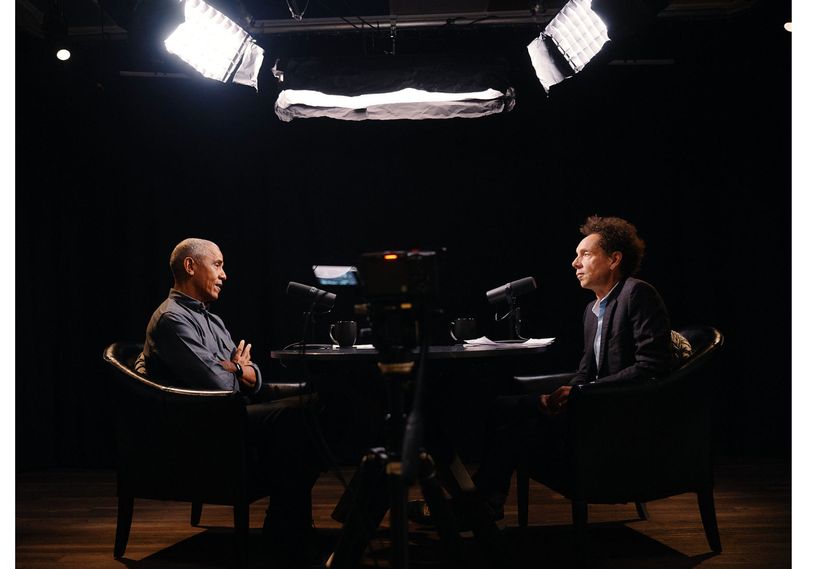
As the United States marks its 250th anniversary, a major new podcast series is drawing renewed attention to the Reconstruction era and its lasting impact on American democracy. Reconstruction: The Unfinished Promise, hosted by Malcolm Gladwell and featuring former President Barack Obama, examines the turbulent decades following the Civil War and the ongoing struggle to define citizenship, equality, and political participation in the United States. Among the historians featured in the series is Manisha Sinha, a leading scholar of the Civil War, abolition, and Reconstruction. Her participation brings decades of research and scholarship to a national audience at a time when Americans are revisiting the people, events, and ideas that shaped the nation. Manisha Sinha is the James L. and Shirley A. Draper Chair in American History at UConn and past president of the Society for Historians of the Early American Republic. She is an expert in American political history, the Civil War, and Reconstruction. View her profile Sinha is the author of The Rise and Fall of the Second American Republic: Reconstruction, 1860–1920, a widely acclaimed examination of Reconstruction that challenges conventional timelines and interpretations of the era. Her work argues that Reconstruction was not confined to the years immediately following the Civil War, but instead represented a broader struggle over democracy, citizenship, civil rights, and political inclusion that continued well into the twentieth century. In interviews discussing her research, Sinha has emphasized the transformative nature of Reconstruction and its importance in understanding the development of modern America. Her scholarship explores how debates over voting rights, constitutional protections, racial equality, and citizenship during Reconstruction continue to influence public life today. As interest in Reconstruction grows through America 250 programming and broader public discussions about democracy and civil rights, Sinha's expertise offers valuable historical context for understanding the era's enduring significance. Connect with an Expert Manisha Sinha is available to discuss: The history and legacy of Reconstruction Why Reconstruction remains relevant today The concept of America's "Second Republic" The evolution of citizenship and voting rights in the United States The relationship between Reconstruction, civil rights, and democratic reform Historical perspectives connected to America 250 commemorations How historians are rethinking the traditional timeline of Reconstruction For journalists and audiences seeking deeper insight into one of the most important periods in American history, Sinha offers expert analysis on the debates, achievements, and unresolved questions that continue to shape the nation more than 150 years later.


Inside the Partnership Between Texas Christian University and Taylor Sheridan’s Four Sixes Ranch
A unique partnership between Texas Christian University and the legendary Four Sixes Ranch is giving students hands-on experience helping shape the future of one of the most recognizable brands in the American West. Recently featured at a major national rodeo event, the ranch’s newly designed retail booth, created by TCU faculty and students, blends heritage-inspired design with modern merchandising, reflecting the ranch’s growing national profile under the ownership of Taylor Sheridan and Nicole Sheridan. “We’re now written into the history of the Four Sixes Ranch.” The collaboration spans fashion merchandising, branding and business strategy, allowing students to contribute directly to product development, retail design and digital marketing initiatives. For students involved, the project offered a rare opportunity to see classroom ideas become real-world products tied to an internationally recognized Texas brand. Faculty members say the partnership reflects TCU’s focus on experiential learning while helping preserve and evolve an important piece of Texas cultural identity. Check out the video TCU and Four Sixes Ranch, and you can read more about this project in the full article below: Looking to connect with Chares Freeman, Kevin Smith, Nicole Bettinger or Rima Shrestha about this exciting project? Simply contact Holly Ellman, Associate Director of Communication, at h.ellman@tcu.edu today.


Spielberg's "Disclosure Day" Revives the UFO Debate. But What Would Real 'Disclosure' Mean?
What if the government finally revealed the truth about UFOs and extraterrestrial visitors? That’s the premise of the new Steven Spielberg film “Disclosure Day,” which the director has said was inspired by the U.S. government’s release of previously classified records related to unidentified aerial phenomena (UAPs) that sparked congressional hearings and renewed interest in so-called “disclosure.” But to University of Rochester astrophysicist Adam Frank the real question isn't whether the government is hiding secrets. It's what would count as actual evidence of extraterrestrial interaction. “Over the last several years, we’ve had hearings, testimony, and lots of extraordinary claims,” Frank says. “What we haven’t had is the one thing science requires: hard physical evidence.” Frank, an award-winning science communicator, astrophysicist, and leading expert on the search for extraterrestrial life, says the distinction matters. Stories, rumors, and secondhand accounts may generate headlines, but they don't constitute proof. "What true disclosure would mean is simple," Frank says. "It wouldn’t be stories about alien spaceships, but the actual spaceships. Not stories about alien bodies, but actual physical evidence that independent scientists around the world could examine and verify." As media coverage surrounding UFOs, government transparency, and extraterrestrial life intensifies, Frank offers a grounded scientific perspective on what we know, what we don't know, and how science separates possibility from proof. Frank is available to discuss: • The science behind UFO and UAP investigations • What constitutes evidence of extraterrestrial life • Why government disclosures have so far failed to provide proof • The search for life elsewhere in the universe • How Hollywood portrays alien contact versus scientific reality • Why scientists remain open to — but skeptical of — extraordinary claims "The universe is vast, and the possibility of life elsewhere is real," Frank says. "But if we're going to claim aliens have visited Earth, then we need evidence that meets the same standards we would demand for any other scientific discovery." Frank is a frequent on-air commentator for live interviews and segments in national media outlets and the author of The Little Book of Aliens (Harper Collins, 2023). He also regularly contributes to written publications, including Forbes, The Atlantic, The New York Times, and Scientific American. He is a recipient of the Carl Sagan Medal, which recognizes and honors outstanding communication by an active planetary scientist to the general public. Click on Frank's profile to connect with him.


Villanova Sports Business Expert Bret Myers, PhD, Previews the World Cup
Move over, American football fans. Hello, American… fútbol fans. Soon, the homes of NFL franchises like the Kansas City Chiefs, Dallas Cowboys and Philadelphia Eagles will play host to the 2026 FIFA World Cup, returning to the United States for the first time in 32 years. Through five-plus weeks of action-packed matches, soccer lovers from across the country—alongside more than 1.2 million international visitors—will flock to the nation’s metro areas to take in and celebrate the “beautiful game,” contributing to an atmosphere of revelry, drama and overall excitement. One person adding to the chorus of “olé”s will be Bret Myers, PhD, a sports business expert and professor of the practice of Management and Operations at Villanova University. Formerly a consultant with the Philadelphia Union, the Columbus Crew and Toronto FC, he recently shared some thoughts concerning the upcoming World Cup, its stateside appeal and the latest developments relating to the international contest. Q: The last World Cup game played on U.S. soil took place in 1994. How has soccer’s profile, and the American relationship with the sport, evolved since then? Dr. Myers: Undoubtedly, soccer has grown in this country since 1994 across all relevant metrics—namely, youth participation and academy development, domestic professional league development, TV and streaming viewership and the strength of the national team. A recent Economist survey even identified soccer as the third most popular sport in the country. A lot of that can be attributed to different demographic trends. Many Gen Xers grew up playing and following the sport, and Millennials and younger have become accustomed to engaging with it through social media. The popularity of EA Sports’ FIFA on gaming consoles has also helped with brand and player recognitions domestically. That said, while there have been many positive signs of growth, it is still a complex landscape in the U.S. Major League Soccer (MLS) has increased in quality over its 30 years of existence, but it has been challenging for them to carry the same kind of stature and appeal as the English Premier League, Mexico’s Liga MX, Spain’s La Liga and Germany’s Bundesliga—whose global broadcast rights and merchandising have attracted a lot of American fans due to higher standards of play and tradition. Q: How effective are promotions surrounding the World Cup? And do domestic professional and youth soccer teams benefit from the interest cultivated? DM: Honestly, it doesn’t take much to generate interest in World Cup games. Back in 1994, promotional efforts were arguably more important because soccer was in its infant stages of growth in the U.S., and the ticket prices were accordingly much lower, to spur demand. For this year’s World Cup, there’s an inverse problem. There is so much demand that FIFA is capitalizing with high ticket prices, unfortunately pricing out a lot of avid soccer fans. As for youth soccer and MLS, I don’t see a direct relationship between the promotional effort for the World Cup and the dynamics there. Participation in youth soccer is already high, and it has become a very competitive landscape with a lot of different tiers across multiple age groups, male and female. Meanwhile, MLS interest and ticket sales really boil down to the talent the league attracts. For instance, Lionel Messi’s decision to sign with Inter Miami was an enormous lift factor, bumping up attendance levels and increasing revenue levels for tickets, sponsorships and broadcast rights. Q: This year’s competition marks the first that will feature 48 teams, up from 32 previously. Could you speak about the logic and potential benefits of boosting the number of participants? DM: With the expansion of the World Cup field, there are certainly revenue benefits that come with more matches, more ticket sales, more consumption by fans and more viewership potential. That is the business side of things. From a competition standpoint, the clear beneficiaries are the smaller nations from less competitive continents that get the opportunity to participate, like Curaçao and Cape Verde. These teams are not going to win the World Cup, but they will make things interesting at times in the group phase, as there is always the potential for a surprise knockout or qualification for the next stage. Q: As Sports Illustrated reports, a series of rule changes have been put into effect for the World Cup to “maximize fairness and eliminate the dark arts.” Do you see any of these tweaks meaningfully impacting the product on the pitch? DM: While I think it’s good that FIFA is continuing to examine how to make the game safer, fairer and more exciting, I don’t think the World Cup is the place to experiment. Players should have the chance to get accustomed to rule changes during other types of competitions, so that they can better understand how they are being enforced. That said, in the long term, I think the proposed changes [aimed at preventing time-wasting and feigned injuries] will impact the sport positively. On-field theatrics compromise the integrity of the game, and most fans pick up on it and don’t appreciate it. Q: What elements of the upcoming tourney have you most excited? Are there any particular trends or stories you suggest fans track? DM: Personally, I’m satisfied to see that certain players are defying the traditional notion of an “age curve.” Many countries have players over 35 on their roster, with some of the bigger names being Messi (38), Cristiano Ronaldo (41) and U.S. team captain Tim Ream (38). It is also interesting to see the other end of the spectrum, with emerging talents like Spain’s Lamine Yamal (18) and Brazil’s Estêvão (19). With all the “GOATs” and “young bucks,” it isn’t exactly clear who is effectively the best player in the world right now. It’ll be interesting to see who emerges at the end of the World Cup to stake a claim.



UD English professors reveal 2026 beach reads, tying summer picks to big themes in today’s culture
When summer rolls around, the best beach reads do more than just pass the time—they somehow capture what everyone’s talking about right now. That’s the vibe behind University of Delaware’s professor-picked list: books that are fun to sink into, but also surprisingly sharp about the world we’re living in. Think big feelings, messy relationships, culture shifts, and the kind of stories that make you look up from the page and go, “Yep, that tracks.” "There Is No Antimemetics Division" By qntm A Reddit novel turned print bestseller, "There Is No Antimemetics Division" is a surreal horror story that follows an X-Fileish government division fighting aliens whose battlefield is the human mind. How do you fight an enemy whose existence you cannot remember? – Siobhan Carroll, Associate Professor "The Briar Club" By Kate Quinn I'm a big fan of Kate Quinn. Her books never disappoint. Her writing is wonderful and captivating, and the voices and characters are authentic. This book, set in the 50s, is a post-war reflection on a group of tenants in a boarding house who, over food (recipes included!), become friends and navigate McCarthyism, conspiracies and fear. It is historical fiction written to remind us that history repeats itself. – Christine Cucciarre, Professor "Guido Brunetti mysteries" By Donna Leon I've gotten completely hooked on these mysteries set in Venice. Fans will tell you the best is the fifth book in the series, "Acqua Alta," but be sure you read the first book to meet the characters! – Emily S. Davis, Director of Graduate Studies "When We Cease to Understand the World" By Benjamin Labatut An English professor recommending a book detailing the lives of physicists, scientists and mathematicians? Yes! History, heady concepts, madness, melancholy and beautiful prose come together in a haunting way. – Viet Dinh, Associate Professor "Dungeon Crawler Carl series" By Matt Dinniman What if you smushed role-playing video games/tabletop games with The Running Man? Plus, there's a sassy cat who talks! – Lowell Duckert, Associate Professor "Just Kids" By Patti Smith I've recently read "M Train" by Patti Smith, and now I'm looking forward to reading the book for which she won the National Book Award. Smith's memoirs can be impressionistic, but they often come down to some unexpected detail or some ongoing longing. If you know her music, you can sometimes hear it in the background, or you can spot those moments in her life when music would almost necessarily emerge as a great force gathered by her authentic approach to life. She's one of those writers who can change how you look for and find what most matters to you, how you look for and embrace your own soul. – John Ernest, Chair in English "Prairie Fires: The American Dreams of Laura Ingalls Wilder" By Caroline Fraser I loved reading the "Little House" books as a child. It seemed like a life full of adventure and love, even through "The Long Winter." But this biography of author Laura Ingalls Wilder reveals a life full of struggle and loss behind the calico dresses and the fiddle lullabies. Caroline Fraser won the 2018 Pulitzer Prize for "Prairie Fires," using unpublished manuscripts, letters, diaries, and land and financial records to pull back the pioneer spirit curtain and show readers the reality of life on the prairie. – Dawn Fallik, Associate Professor "The School for Good Mothers" By Jessamine Chan Warning: Do not bring this book to the beach without plenty of sun screen, because you will not put it down and that might make YOU a candidate for enrollment in The School. Second Warning: The book is compelling precisely because it will make you mad and freak you out. My wife gave it to friends as a Mother's Day present, and every mother who read it could relate. – Peter X Feng, Associate Professor "Audition" By Katie Kitamura This book has been on my bedside table for months now, just waiting for the semester to end. I am a sucker for books that shift perspective in the middle (see also: Susan Choi's "Trust Exercise"). – Peter X Feng, Associate Professor "The Road to Tender Hearts" By Annie Hartnett You might not expect a book that features domestic violence, children being orphaned and a 63-year-old man still pathetically dependent on his ex-wife to be funny. But I laughed out loud multiple times—and had some tears as well—as I read this novel! Follow the adventures of PJ, two children from his town, and a death-predicting cat as they road trip across the country. "The Road to Tender Hearts" was the best book I read all year! – Jill Flynn, Professor "The Stories of John Cheever" By John Cheever One of the finest collections of short fiction ever published. Witty, magical, often devastating portraits of people navigating mid-century New York. – McKay Jenkins, Cornelius Tilghman Professor of English "Vacationland: True Stories from Painful Beaches" By John Hodgman This book is a collection of nonfiction essays by John Hodgman (Daily Show writer and "Judge John Hodgman" podcast and The NY Times Magazine column). It is laugh-out-loud funny in a very self-deprecating, Gen X way. – Matthew Kinservik, Professor "Cloud Cuckoo Land" By Anthony Doerr This is one of the best novels I've ever read. Ever. It follows three stories set in very different times and places (15th-century Constantinople, 21st-century Idaho, and the not-too-distant future on a spacecraft headed to a new planet that will support human habitation). It's a book about the value of books and human storytelling. The stories eventually get braided together in moving and surprising ways. Amazing. – Matthew Kinservik, Professor "The Wilderness" By Angela Flournoy Have you wondered how your friendships in your early 20s might follow you into middle age? "The Wilderness" focuses on the friendships between four women: Desiree, Monique, Nakia and January from 2008 until 2027, when they are in their early 40s. They support one another through marriage, divorce, career anxiety, loss and a persistent set of questions about who they each want to be in the world and the lives they want to live. "The Wilderness" is told from many perspectives and details how culture, place, habits, friendships and childhood experiences combine to make and remake our adult lives. – Davy Knittle, Assistant Professor "Kin" By Tayari Jones "Kin" is about two motherless girls from Louisiana who find themselves as grown women on two very different paths, looking to other mother figures along the way. The writing is beautiful and engaging! I could not put this book down. I truly fell in love with all of the characters, and even the locations come alive. – Meg McGuire, Associate Director of First-Year Writing "How to Solve Your Own Murder" By Kristen Perrin This truly is a cozy mystery about a woman called Frances Adams—a resident of the moody Castle Knoll. When Frances is a teenager, she encounters a fortune teller who portends Frances's murder. Frances then spends most of her life sort of obsessively surveilling everyone around her, trying to figure out who will kill her. When she does die, her great niece Annie is surprised to learn that the late Frances has left Annie her entire estate, even though they have never actually met. When Annie arrives in Castle Knoll and at the estate, she follows in her great aunt's footsteps by holding all of the town's quirky characters at arm's length while she tries to discover who killed her late great aunt. This is an easy-breezy read, even if it does include a murder mystery at the center. Perfect for a day at the beach. Best of all, if you fall in love with the characters and the place, it's part of a series of three books, so you can keep going! – Cathryn Molloy, Professor "The Order of Time" By Carlo Rovelli You could read any Rovelli book, really—I am reading the one on the birth of science at the moment— but this is the one that drew me in. He merges a physics/science‒centered approach to time with a human/experienced‒centered view of it, which I just cannot get enough of. It is beautifully written, at times verging on poetic, while also bringing in a lot of the information and knowledge I seem to have skipped over as a terrible science student. It's joyful and intense and meditative. And yes, this is what I read for fun! – Amish Trivedi, Assistant Professor "The Season of Styx Malone" By Kekla Magoon Two young Black boys in small-town Indiana fall under the spell of Styx Malone, a mysterious new kid who arrives for the summer and stirs things up by persuading them to pursue their biggest dreams and breaking a few rules along the way. I collect multicultural kids books and stumbled across this one six years ago. It captured me because it celebrates family and friendship, depicts young people with rich interior lives, and mixes in a little mystery and humor. There's something sweet and down-home about it. It's a refreshing little respite from, well, everything ... – Délice Williams, Associate Professor To speak to the professors more about what makes these books the perfect summer reads, email mediarelations@udel.edu.


Abhijit Bhattacharyya, Ph.D., has been named the next dean of Georgia Southern University’s Allen E. Paulson College of Engineering and Computing. He will begin his role July 1. Bhattacharyya currently serves as the inaugural dean of the College of Engineering and Computer Science at Arkansas State University, where he has led a period of strategic growth focused on student success, workforce development and research expansion. During his tenure, the college launched new academic programs in high-demand fields, strengthened industry partnerships and advanced initiatives supporting student recruitment, retention and career readiness. “I have the honor and privilege to join Georgia Southern at an exciting time in its journey as it soars beyond its current very strong position in the state of Georgia,” said Bhattacharyya. “The energy on campus and within the college was palpable during my visit, and I look forward to working alongside my colleagues to build on that strong foundation and create a national brand.” Prior to his current role, Bhattacharyya held several leadership positions at the University of Arkansas at Little Rock, including interim vice provost for Research and dean of the graduate school, as well as associate dean of Engineering and Information Technology. He began his career as a faculty member committed to teaching, research and service, and remains an active scholar with externally funded research from federal agencies. Bhattacharyya earned his Ph.D. in mechanical and aerospace engineering from Rutgers University, along with a master’s degree in applied mechanics. He also holds a bachelor’s degree in mechanical engineering from the Indian Institute of Technology, Kharagpur. He is a fellow of the American Society of Mechanical Engineers and serves as an ABET program evaluator. Provost and Executive Vice President for Academic Affairs Avi Mukherjee, Ph.D., said Bhattacharyya’s experience and leadership align strongly with the University’s strategic priorities. “Dr. Bhattacharyya brings a proven record of growing engineering education, advancing academic programs, bolstering research, managing accreditation, strengthening industry partnerships and positioning engineering and computer science for long-term impact,” said Mukherjee. “His commitment to faculty excellence, student success and workforce development will be instrumental as we continue to expand opportunities for our students and elevate the national profile of the Allen E. Paulson College of Engineering and Computing.” Looking to connect with Abhijit Bhattacharyya? Simply contact Georgia Southern's Director of Communications Jennifer Wise at jwise@georgiasouthern.edu to arrange an interview today.


June 1 marks Marilyn Monroe’s 100th birthday. Despite her death in 1962, Monroe remains an icon of American pop culture. Amanda Konkle, Ph.D., researches film history, stardom and celebrity prominence. Konkle is an expert in Monroe’s rise to fame and her lasting relevance in modern style. She published the book “Some Kind of Mirror: Creating Marilyn Monroe,” along with several research papers detailing Monroe’s unique status in American history. Konkle can speak to how Monroe connected with audiences during her life by creating a new ideal of feminine power that defined an era. She can explore how Monroe’s acting methods mirrored society’s anxieties and desires, and why they still resonate today. Konkle is available virtually or for in-person interviews at the Armstrong Campus. Simply contact Georgia Southern's Director of Communications Jennifer Wise at jwise@georgiasouthern.edu to arrange an interview today.
Memorial Day: A Time to Remember, Reflect, and Honor
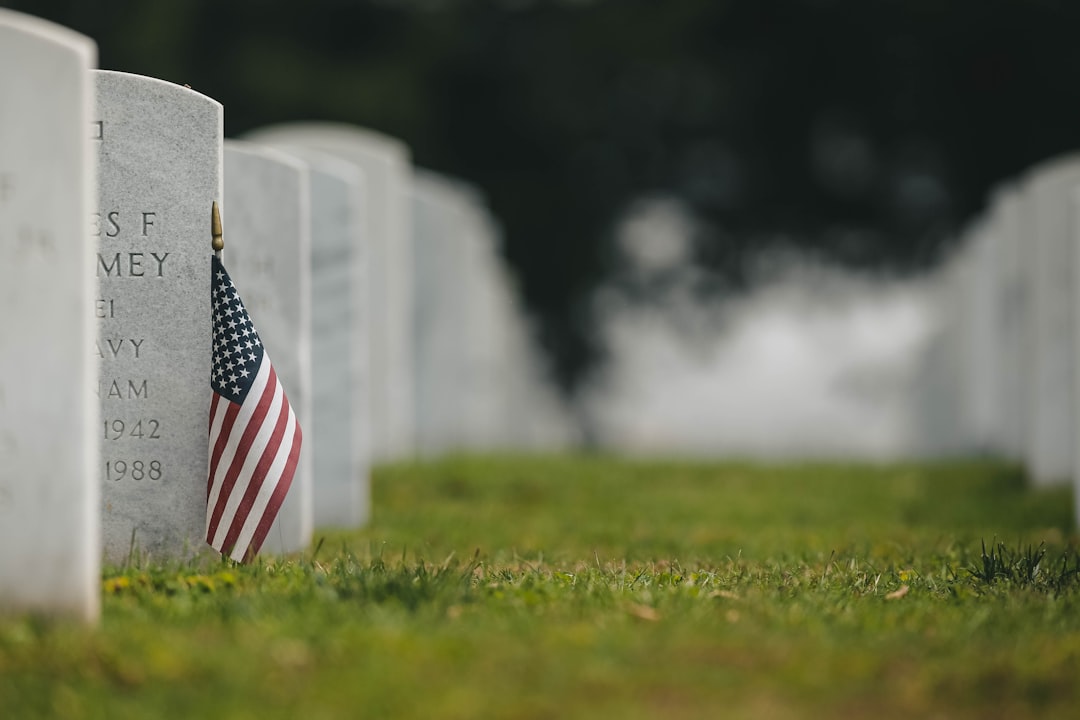
Every year, millions of Americans gather for backyard barbecues, parades, family gatherings, and the unofficial start of summer. But at its heart, Memorial Day is something far deeper - a national day of remembrance dedicated to the men and women who died while serving in the United States Armed Forces. Originally known as “Decoration Day,” the holiday emerged after the American Civil War, when communities began decorating the graves of fallen soldiers with flowers and flags. Over time, the observance expanded to honour all U.S. military personnel who made the ultimate sacrifice in service to their country. Memorial Day officially became a federal holiday in 1971 and is observed annually on the last Monday in May. Today, Americans commemorate the day in many ways. Traditional ceremonies include visits to cemeteries and memorials, moments of silence, flag placements on graves, military flyovers, and community parades. The National Moment of Remembrance at 3 p.m. local time encourages citizens across the country to pause and reflect on the cost of freedom and the lives lost defending it. While celebrations and long weekends have become part of the modern Memorial Day experience, historians and veterans’ advocates often remind people that the holiday’s true significance lies in remembrance, gratitude, and national reflection. It remains one of the most meaningful civic observances in the United States — a day that connects generations through sacrifice, service, and shared history. Story Angles Journalists May Explore The historical origins of Memorial Day after the Civil War How Memorial Day differs from Veterans Day The evolution of military remembrance traditions in America Why symbols like poppies, flags, and wreaths matter The role of cemeteries, monuments, and memorial sites in preserving national memory How younger generations are reshaping the meaning of patriotic observances Journalists covering Memorial Day, military history, civic traditions, remembrance culture, or the evolving meaning of patriotism may wish to connect with experts in American history, military studies, sociology, or cultural traditions surrounding national remembrance days. Covering or have questions? Our experts are here to help: To see all of our experts - simply visit www.expertfile.com