
Experts Matter. Find Yours.
Connect for media, speaking, professional opportunities & more.

Latest push in fake news is pushing fake experts
During the 2016 presidential election, hundreds of fake sources used social media to spread fake news. Many of these posts were traced back to the Internet Research Agency, a Russian troll farm that used social networks to create divides among Americans and influence the election. This is known as cognitive hacking and is the real scandal of the 2016 election, said Dr. Craig Albert, director of the Master of Arts in Intelligence and Security Studies program and associate professor of political science at Katherine Reese Pamplin College of Arts, Humanities, and Social Sciences at Augusta University. Fake sources using social media to spread fake news are often able to reach a large audience who may never realize the stories are false, Albert said. In some instances, entire organizations and groups have been created under false pretenses and have had millions of social media followers. “When so many people see fake news on their newsfeeds, they become a product of their belief in a fake story,” Albert said. “So, a fake story controls their opinions.” Now, Russia is taking fake news a step farther. The newest trend is creating a false persona to push fake news on U.S. news organizations. “They will have an expert create a story, and they will create credentials and a website to give credibility to this individual,” Albert said. “When media outlets try to ascertain the credibility of a person they typically visit the individual’s website or look at their resume. It appears legitimate, so the source is validated, and news outlets run the story.” In many cases, though, these are false stories by individuals with fake credentials. Albert calls this source hacking. Dr. Albert is an expert on American politics and political philosophy. He has experience with all forms of local and national news organizations and is available to speak to media regarding cognitive and source hacking. Contact us to schedule an interview with Dr. Albert or to learn more about his expertise. Source:



Community is key for those recovering from a mass shooting
The man accused of killing 17 people and injuring 14 more at Marjory Stoneman Douglas High School in February is set to appear in court Wednesday. Meanwhile, survivors of the mass shooting are still grappling with the aftermath of that day. Laura Wilson, co-author and editor of "The Wiley Handbook of the Psychology of Mass Shootings" and an assistant professor of psychology at the University of Mary Washington in Fredericksburg, recently talked about that struggle in an American Psychological Association article. "Simply by definition, mass shootings are more likely to trigger difficulties with beliefs that most of us have, including that we live in a just world and that if we make good decisions, we'll be safe," she is quoted as saying. According to the article: "The National Center for PTSD estimates that 28 percent of people who have witnessed a mass shooting develop post-traumatic stress disorder (PTSD) and about a third develop acute stress disorder. "Research also suggests that mass shooting survivors may be at greater risk for mental health difficulties compared with people who experience other types of trauma, such as natural disasters. A study led by former Northern Illinois University (NIU) graduate student Lynsey Miron, PhD, after the 2008 shootings on NIU's campus, found that although a large percentage of mass shooting survivors were either resilient or displayed only short-term stress reactions, about 12 percent reported persistent PTSD, a number that's higher than the average prevalence of PTSD among trauma survivors as a whole (Behavior Therapy, Vol. 45, No. 6, 2014). "What's critical, psychologists' research suggests, is to ensure that victims feel connected to their communities in the aftermath of mass violence and that they have ongoing support available to them." Dr. Wilson is available to speak with media regarding this subject. Simply click on her icon to arrange an interview. Source:



Understanding Trump’s ‘transition tax’ and who wins and who could lose (a lot)
Last December President Donald Trump signed into law sweeping tax reforms – some which had a purpose of discouraging multi-billion-dollar corporations from parking their money outside of the United States. The goal was to incentivise or encourage American-based companies like Apple and Amazon to keep profits local and ideally taxable in the United States. But the impact of these new laws is trickling down and hurting a lot of people. It seems anyone with dual citizenship or any American with interests in Canada may be vulnerable. And for some it is costing a lot of money that’s due very soon. So how much are companies expected to pay? Who is expected to pay and who will be impacted the most? As well, when it comes to taxes – that often means a windfall of new revenue for governments. Is it just Washington that will benefit or will the coffers in Ottawa see some money too? Tax laws are not an easy topic to understand. There are loopholes, complexities and levels of accounting that are beyond most people’s grasp. But that’s where the experts from Freelandt Caldwell Reilly LLP can help. Ed Reilly, Managing Partner and co-founder of Freelandt Caldwell Reilly LLP practices in the areas of tax and owner-managed businesses. To contact Ed directly, simply click on his icon to arrange an appointment regarding this topic. Source:


America needs a million more nurses – Cedar Crest College is working to fill the void
The United States is facing a critical nursing shortage. According to the American Nurses Association, the U.S. will need to produce more than one million new registered nurses by 2022 to fulfill its health care needs. Cedar Crest College believes its upcoming Nursing Orientation Bootcamp is a critical step on the path to creating nursing leaders, which is the goal of the School of Nursing. This Thursday, Cedar Crest College’s School of Nursing will welcome dozens of students to campus for Nursing Orientation Bootcamp. The purpose of the bootcamp is to prepare students and get them excited about starting the undergraduate nursing program at Cedar Crest College. Nursing faculty and staff will host a number of activities, from exam prep to a scavenger hunt. Approximately 60 students entering their junior year are expected to attend and will be wearing their nursing uniforms for the first time. “If we can start these students off on the right foot, they will have a better chance of succeeding in the program,” said Dr. Wendy Robb, Dean of the Cedar Crest College School of Nursing. “We are confident that in two years, these students will be prepared to enter the workforce to help combat the nursing shortage.” Nursing Orientation Bootcamp Hamilton Boulevard Building Cedar Crest College 100 College Drive, Allentown, Pa. 18104 Thursday, August 16 8:30 a.m.-2 p.m. *The best opportunity for photos and video will be during the scavenger hunt and handwashing demonstration from 12:30-1:45 p.m. Media Contact: Katie Kennedy, 610-740-3790 or katie.kennedy@cedarcrest.edu Source:


Understanding the meaning of America’s monuments
As the debate continues with what to do with Confederate monuments that dot America’s landscape, the experts from the University of Mary Washington have been lending perspective, knowledge and opinion to the conversation. Professor of Geography Stephen P. Hanna is part of a team of scholars from universities across the South who are investigating how enslavement is incorporated in the landscape and narratives of Southern plantation museums. A key part of this work is to suggest ways these museums can rework their tours and exhibits to help the public understand that slavery was central to both the lives of everybody who lived at these sites and to the development of American political and economic systems. Says Hanna: “A year after white supremacists rioted in Charlottesville, it is clear that the underlying issues related to racial justice have not gone away. African-Americans face arrest for simply being in places where whites suspect they don’t belong. Police are more likely to escalate their use of force more quickly when dealing with black Americans. In addition, both Blacks and Latinos are fighting efforts to make it harder for them to vote while Latino Immigrants have to fear deportation and family separation.” He continues: “The struggle over Confederate Memorials and the narratives presented as “history” at southern plantation museums must be seen within this context. The good news is that more people understand that statues of Robert E. Lee and costumed tour guides at plantation museums describing a romanticized version of the antebellum South don’t represent our shared past. Instead they are efforts to write a particular history that denies that our nation’s roots include enslavement of African-Americans and that slavery’s legacy includes the injustices non-whites endure today.” Dr. Hanna is available to speak with media regarding this topic. Simply click on his icon to arrange an interview. Source:

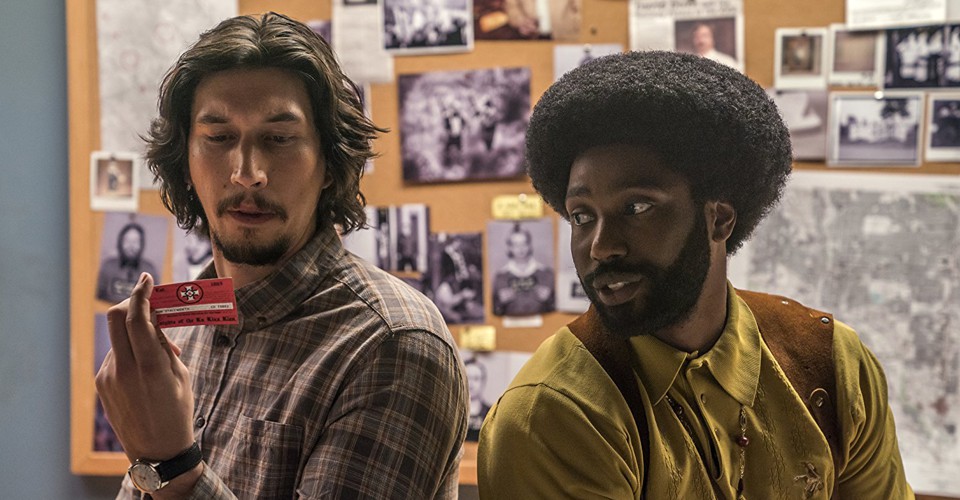
Spike Lee's Cinematic Alchemy of Past and Present is a Warning About the Future
Nearly a year to the day after White Nationalists marched in Charlottesville, the film “BlacKkKlansman” is released. Spike Lee's film is both a representation of a real-life story of an African-American detective who infiltrated and exposed the Ku Klux Klan in the 1970s and as an ideological vehicle for critique of our current social and political moment, says Matthew Hughey, associated professor of sociology at UConn. Together, “BlacKkKlansman” conveys a multi-part message. First, it is cinematic alchemy of the past and present—revealing what has and has not changed over the past half-century in order create a warning about the future. It recalls philosopher George Santayana’s saying “those who cannot learn from history are doomed to repeat it.” Second, the film eviscerates both American naiveté and intentional hypocrisy regarding racism and racial inequality. The film shines a bright light on the dark methods people use to dress up racism, nativist xenophobia, and hatred as “pride and patriotism,” and the madness deployed to rationalize police brutality and murder as little more than “law and order.” Third, and perhaps most importantly, the film deconstructs the “bad apple” theory of racism. Racism does not exist within the hood-wearing, swastika-sporting, epithet-spewing ignoramus alone, but exists in a systemic orchard that segregates and privileges whiteness economically, politically, and socially regardless of individual intention, worldview, or behavior. In the end, Lee’s film leads us to the conclusion that if “we are all Charlottesville” then “we are all Klansman,” too, says Hughey. Source:


Baylor Media Expert Shares Thoughts Re: Charges of Biased Media Coverage of Minorities
Early this week, 18-year-old Nia Wilson was stabbed to death on a platform while transferring trains in Oakland, California. Authorities said the attack was unprovoked. Media coverage of Wilson's death included photos from her social media accounts. One California television station chose to share a photo of Wilson, who was African American, holding what appeared to be a gun. The decision to run that particular photo sparked outrage, with many saying the photo added to a trend of a biased media portrayal of minorities. Mia Moody-Ramirez, Ph.D., professor of journalism, public relations and new media at Baylor University, is an expert on mass media representations of women, minorities and other underrepresented groups. "This incident brings back memories of the shooting deaths of Trayvon Martin and Michael Brown. Media outlets used various photos to portray them as menacing. It also brings to mind the hashtag: #IfTheyGunnedMeDown, which asks the question: 'If they gunned me down, what photo would media use?'" Moody Ramirez said. "Historically, media outlets have used such photos to: 1) frame the individuals a certain way, 2) add interest to the story, 3) stir up conflict. Awareness that this is happening is the best way to stop it in the future. Black Twitter has taken on this cause. In the 'clap back' culture of Black Twitter, news outlets are very likely to get called out for such behavior." Moody-Ramirez is the co-author of the new book "From Blackface to Black Twitter: Reflections on Black Humor, Race, Politics, & Gender." In 2013, she co-authored "The Obamas and Mass Media: Race, Gender, Religion, and Politics." She also authored "Black and Mainstream Press’ Framing of Racial Profiling: A Historical Perspective." Source:


Today, US President Donald Trump and Russian President Vladimir Putin met at the presidential palace in Helsinki to discuss the relationship between their respective countries. Prior to the meeting, Trump cited national security concerns and trade as agenda items. Since the start of the meeting, the two presidents have also discussed the tension between the two countries and accused election meddling. At Augusta University, our experts have been following the historic meeting, and made the following observations: • Trump is correct in asserting the importance of having Russia as an ally. • The US is currently facing Russian cyberaggression, so how Trump addresses this issue has immediate concerns. • US posture in Syria is at stake. • It is important to keep this meeting in the context of “America First.” Trump will push messages at the summit that fall in line with his national security interests. What are the implications of this summit for every-day Americans? Will this meeting improve the relationship between the United States and Russia? How will this meeting effect the United States’ relationship with other European allies? There are a lot of questions to answer – and that’s where our experts can help. Dr. Craig Albert is an expert on American politics and political philosophy. He was recently appointed director of Augusta University’s new Masters of Arts in Intelligence and Security Studies. Dr. Albert has experience with all forms of national and local news organizations and is available to speak to media regarding the Helsinki Summit. Simply click on his icon to arrange an interview. Source:
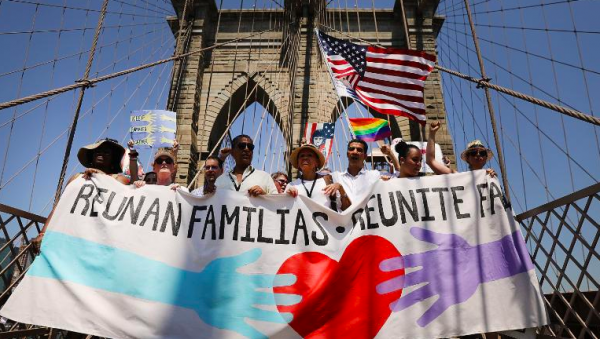
6 Facts We Learned Working with Migrants and Refugees Around the World: Facts 1 and 2 Working with migrants and refugees is our business at Catholic Relief Services. CRS was founded in 1943 to assist refugees during World War II. Seventy-five years later, we are still coming to the aid of people escaping conflict, violence and natural disasters. While CRS doesn’t resettle refugees in the United States (these programs are run by the Catholic Church’s Migration and Refugee Service and Catholic Charities), our rich history has taught us valuable lessons on how to best help families fleeing crisis. 1. People Do Not Want to Leave Their Homes. An astonishing 1 in 110 people have been forced to flee their home (UNHCR). They only do that when they feel they have no other choice. Most people the world over give the same reason for starting their perilous journey across borders -- violence. That’s true for millions fleeing conflict in South Sudan and for tens of thousands fleeing gang violence in Central America. Most often, people flee to other parts within their country first. Only when they see no other option do people leave their country. Rick Jones is the agency's Youth and Migration Advisor in Latin America and the Caribbean. He also specializes in issues affecting Central American migration, including gang violence, poverty, and internal displacement. See his contact information at the bottom. 2. Don’t Separate Families. Based on extensive experience with refugees and migrants, CRS agrees with the criticism of the former U.S. policy of separating children from their parents. Decades of research shows that this is so traumatic for children it can lead to long-term psychological, and even physical damage. Shannon Senefeld is a global development expert at CRS. She has published and presented extensively on international children’s issues and the importance of strengthened family care for children’s development. See her contact information at the bottom. The experts at Catholic Relief Services are available to help with any media coverage or insight that is required regarding this ongoing news story and issue that is continuing in America. Simply click on any of their icons to arrange a time for an interview. Source:


Independence Day: Baylor’s Benjamin Franklin Scholars Bring Light to Complex Figure
Founding Father Benjamin Franklin was a complex man. Among his many roles, he was a businessman, entrepreneur, inventor, journalist, author, printer, editor, politician, postmaster, statesman, ambassador and signer of the Declaration of Independence. And even with a treasure trove of accomplishments, sometimes the Franklin legends are bigger than Franklin the man – and it’s taken an army of historians and scholars throughout the centuries to sort it out. As July 4 Independence Day approaches, Baylor University's two Franklin scholars share different perspectives of Franklin, his faith and his business acumen: • Thomas Kidd, Ph.D., Distinguished Professor of History and associate director of Baylor’s Institute for Studies of Religion • Blaine McCormick, Ph.D., associate professor and chair of the management department in Baylor’s Hankamer School of Business Both have penned Franklin books and both have been featured nationally for their research on the Founding Father. Kidd’s 2017 book, “Benjamin Franklin: The Religious Life of a Founding Father,” has received high marks for its analysis of Franklin’s beliefs. From his Puritan upbringing to deism, skepticism and more, the book explores the influences and evolution of faith throughout Franklin’s life. “In today’s polarized political and religious environment, some pundits seek to remake the Founding Fathers in their own image. Benjamin Franklin’s example reveals that the historical truth is often more complicated,” Kidd wrote in a column for The Wall Street Journal. McCormick, who wrote “Ben Franklin: America’s Original Entrepreneur,” discovered a passion to study the Founding Father after listening to an audiobook of Franklin’s autobiography. “Franklin could do things as a statesman, and understand things, and achieve things as a statesman, because he had achieved things in the marketplace first,” he said. “I’ve yet to find a better book for businesspeople to learn about how to run a business in the American Experiment. He wrote the autobiography to help train people in the life of business. Many of the principles are still very robust.” And the way he shared those principles (many of which have been misquoted and made into memes through the decades) is important, McCormick said. “Franklin used sentences no longer than a Tweet to train generations of colonial businesspeople,” he said. “They were short. They were memorable. They were high-impact.” Source: