
Experts Matter. Find Yours.
Connect for media, speaking, professional opportunities & more.
Farm but no fowl: How Florida aquaculture is growing the economy
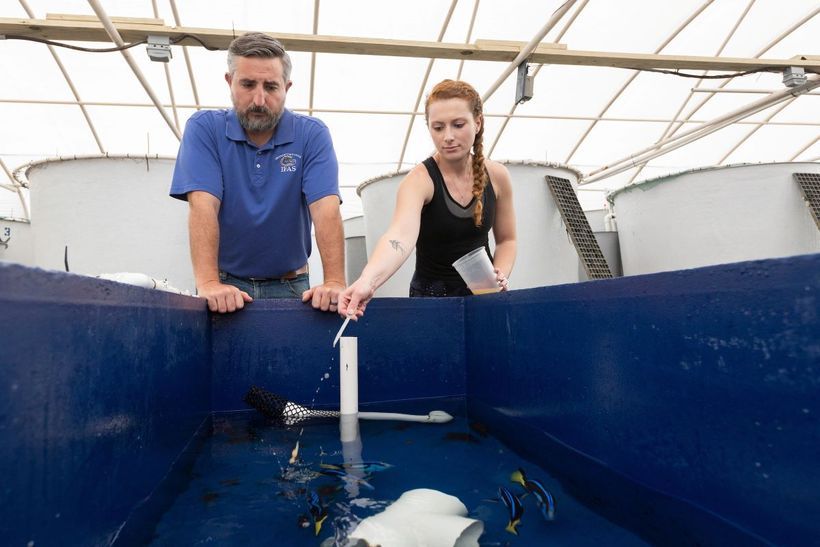
Florida’s thriving aquaculture industry is a vital part of the state’s economy, generating more than $165 million in sales annually and supporting jobs across rural and coastal communities. Recognized as agriculture by the Florida Legislature in 1993, aquaculture contributes to food security, environmental sustainability and economic resilience. “Just like terrestrial, land-based agriculture, aquaculture is the process of growing or raising a product,” said Shirley Baker, UF/IFAS professor of aquaculture and associate director of the School of Forest, Fisheries and Geomatics Sciences. “The people who do the work consider themselves farmers. Their products are simply plants and animals grown or raised underwater.” Overseen by the Florida Department of Agriculture & Consumer Services (FDACS), the industry includes an estimated 1,500 varieties of food fish, bait fish, mollusks, aquatic plants, alligators, turtles, crustaceans, amphibians, caviar and ornamental fish. With proper regulatory support, aquaculture can continue to be a driving force in Florida’s economy and environmental stewardship. The hallmark of Florida aquaculture is ornamental, or tropical fish, the saltwater and freshwater species bred for aquariums. In 2023, the sector generated more than $57 million, making the state the country’s top pet fish producer. In fact, 95% of ornamental fish in the United States come from the Sunshine State. About 90% of Florida’s ornamental fish are freshwater varieties. Farmers primarily raise live-bearing species in sterilized earthen ponds dug into loam or bedrock. They fill ponds with sexually mature fish called broodstock and harvest offspring using baited traps. Most egg-laying fish are grown in commercial hatcheries. Like ornamental fish, the demand for farmed seafood has grown as wild-caught sources are increasingly depleted. Globally, more than 50% of all seafood for human consumption is produced through aquaculture. “Seafood is considered one of the most in-demand sources of lean protein in the world, and it has to come from somewhere,” said Matthew DiMaggio, director of the UF/IFAS Tropical Aquaculture Laboratory in Ruskin. “The ocean can't produce any more than it already has, so aquaculture has to make up the deficit.” In Florida, as the number of fish farms and the scale of their operations have grown, the value of food fish sales has skyrocketed. Between 2018 and 2023, sales rose from $4 million to $26 million, a 550% increase. Some of the most common Florida food fish are tilapia, striped bass, cobia, pompano and red drum. They’re housed in various ways. Operations can include fiberglass ponds, vats and tanks inside greenhouses and recirculating systems occupying entire warehouses. Farmers typically start with fingerlings, or juvenile fish, purchased from reputable suppliers. Aquaculture farmers share their experiences Evans Farm of Pierson, Florida, is among the pioneering food fish farms in the state. Originally cattle farmers, the company expanded to sell tilapia, striped bass and caviar harvested from sturgeon. Fish are kept in filtered, recirculating ponds and long tanks known as raceways. They’re transported live to grocery stores and markets in vans outfitted with tanks and filtration systems. “Our fish are thriving, and they’re healthy. We grow them with great water quality, and we feed them excellent food,” said Jane Davis, who owns the business with her mother and brothers. “Although they’re raised in water, they’re no different than other agriculture crops, whether it's cattle, chickens or anything else.” Mollusks are another significant contributor to Florida aquaculture. While the sector includes oysters and scallops, clams are the dominating commodity; in 2023, they brought in $32 million of the state’s $43 million in mollusk sales. Clam farmers generally obtain grain-sized seed clams from hatcheries. The smallest varieties are initially cared for in nursery systems. Once the shells become large enough, they’re transferred to bags submerged off the coast. Cedar Key resident Heath Davis, no relation to Jane Davis, transitioned from fishing to clam farming in the mid-1990s. He and his father, Mike Davis, own Cedar Key Seafarms, one of the state’s leading wholesale clam distributors. “Before, as fishermen, we would go out and place nets wherever we thought the fish were,” Heath Davis said. “But clamming is like farming. We lease a 2-acre, underwater plot from the state and harvest the product from our designated field.” The Florida Aquaculture Plan In November, the Florida Aquaculture Review Council, the official conduit between FDACS and farmers, published the latest revision of the Florida Aquaculture Plan, a detailed list of research and development priorities. Florida’s climate, infrastructure, streamlined regulations and positive business environment have positioned the state to become the national leader in aquaculture, but innovation is required to remain competitive, according to the document. It’s a message Heath Davis echoed. “Aquaculture farming is such a huge part of Florida’s economy,” he said. “It could hold some of the answers needed to sustain the growing number of people living on this peninsula.”


How UF researchers are helping Floridians to build resilience
When Hurricane Idalia hit the Big Bend region of Florida in 2023, Jeff Carney and his team were watching. A coalition of architects, planners, and landscape architects led by Carney worked closely with the tiny Gulf island of Cedar Key, which is particularly vulnerable to hurricanes, to prepare for this moment. The researchers had modeled for city officials how a major storm would flood the city’s core services. “Idalia caused flooding exactly where the maps said it would, including city hall, the historic downtown, older homes, and many streets,” Carney said. After the storm, Cedar Key moved city hall to higher ground, as outlined in the plan. And just in time. Barely a year later, Cedar Key was hit even harder by Hurricane Helene. Between the storms, Carney’s group had worked with the city to refine their storm preparation. The new plan focused more on resilience-boosting projects, like improving drainage around the city. Cedar Key finalized their plans just weeks before Helene. “A lot of the projects we put forward in this plan are in the process of seeking additional funding after Helene,” Carney said. A professor of architecture at the University of Florida, Carney directs the Florida Institute for Built Environment Resilience, or FIBER. A research institute in UF’s College of Design, Construction and Planning, FIBER engages with communities to understand how the designs of buildings and cities expose Floridians to risks — not just storms, but also excessive heat, poor air quality, even a lack of health care. FIBER faculty then work with cities to mitigate these hazards. By preparing for emergencies, upgrading buildings, and providing targeted services, communities across Florida are bolstering the resilience of their residents, all with expert help from UF researchers. Preparing to weather big storms That kind of resilience is especially important for some of Florida’s most vulnerable residents. Older and poorer Floridians face higher-than-average risks from natural disasters and other environmental hazards. That vulnerability was apparent in Cedar Key as it weathered the last two hurricane seasons. Centered around aquaculture and tourism, Cedar Key seems in many ways to be thriving. Yet, with the feel of a small fishing village, roughly 13% of its nearly 1,000 full-time residents are considered to be financially disadvantaged, according to U.S. Census data. Poorer residents may also have a harder time walking away from coastal communities devastated by storms. With savings invested into damaged homes and jobs tied to the local area, less-wealthy residents often have no choice but to stay and rebuild. Carney’s team helps people see the opportunities for rebuilding with a clearer vision of a future where rising sea levels are a reality. “You capture people’s attention and excitement when you can offer them options that are not doomsday,” said Carney, who has been working in Pine Island and Matlacha in Southwest Florida’s Lee County to help residents affected by recent storms prepare for the future. “There’s a lot of opportunity for rebuilding as long as you don’t try to have it be business as usual. We help people see how redevelopment can provide a community asset for the future,” he added. “We try to paint the picture of all the possible scenarios so people can find their own comfort level. It puts them in the driver’s seat.” Aging with fewer choices While that kind of agency is empowering, it can be harder to come by as people retire and find themselves facing tough decisions on fixed incomes. That’s a common experience in Florida, which has a larger proportion of seniors than any other state, due in part to its popularity as a retirement destination. More than 10% of Americans over the age of 65 live below the federal poverty line. This population often finds themselves moving to less safe places as they age. “Older people with more social vulnerability — such as low income or poor health — have a tendency to move to worse places,” said Yan Wang, Ph.D., a professor of urban and regional planning in the UF College of Design, Construction and Planning. “They are more likely to move to places with less economic stability, with less access to health care, and with more exposure to extreme weather.” Wang and postdoctoral researcher Shangde Gao, Ph.D., recently published a study that uncovered the risks low-income seniors face when moving. Compared to their peers with higher incomes, poorer seniors were more likely to end up in neighborhoods lacking access to health care facilities. To address these kinds of disparities, UF Health has launched mobile health units that can reach people who have trouble traveling to health centers, including low-income seniors. The Mobile Outreach Clinic provides primary care and referrals for specialists. And the newly launched cancer screening vehicle, which serves all of North Central Florida, can help catch the disease in the early stages when it is easiest to treat. It’s not just finding health care that’s a struggle. Older adults from minority racial groups were also more likely to increase their exposure to poor air quality and to natural disasters like flooding and hurricanes when they moved, Wang and Gao discovered. “If we understand the trend and causes of these income disparities better, we could better prepare some places with more health care resources or better hurricane preparation for these older populations,” Wang said. Building safer, healthier homes That preparation is happening right now in Jacksonville, not just for big storms but for the everyday nuisances and hazards — even the ones people are exposed to in their own homes — that threaten people’s lives and health. The Jacksonville Restore and Repair for Resiliency research initiative was founded to address these kinds of risks while improving energy efficiency. The R3 initiative, as it’s known, is a home remodeling program organized by a slew of community partners and supported by FIBER research on the impact of housing quality on health. The project aims to keep longtime residents of the Historic Eastside in their homes while addressing the home hazards that put people at risk for medical complications like asthma attacks and emergency room visits. “The designs of buildings impact human health and well-being,” said Lisa Platt, Ph.D., the lead researcher with the Jacksonville program and an assistant professor of interior design with FIBER. “Our research is helping the team prioritize the home improvements that will benefit residents’ health the most.” Jacksonville’s Eastside faces a lot of challenges. The population is older than the city as a whole. Roughly three-quarters of residents are over the age of 60, and the poverty rate is over 40%. Yet more than a third of residents own their own homes. Often passed down from previous generations, some of the houses are now over a century old and struggle to keep the intense Florida heat and humidity out. Platt’s research has modeled how things like high heat days — only growing more common in a warming world —are associated with increased emergency room use and poor perceived physical and mental health. That science helps guide the community partners to prioritize providing air conditioning and better insulation to protect Historic Eastside residents. To date, the Jacksonville program is targeting up to 70 homes for renovation. Builders have fixed holes in roofs, replaced drafty windows, and hooked up air conditioning for the first time, keeping the heat and humidity at bay and protecting residents’ health. Now the R3 initiative is applying for federal grants to expand the program. “I think the best way to approach this kind of community action research is with humility and outreach. Community members have amazing expertise. I always say, ‘I can build models to analyze the problem, but you are the ones that are the experts,’” Platt said. “That’s where UF can be most useful, is coming in from a perspective of service.”

Research explores recreational shark fishing's impact on protected species
In Delaware, recreational shark fishing is popular, with anglers taking part in half- and full-day shark fishing trips. However, they are prohibited from keeping protected species of sharks. A University of Delaware research team led by Aaron Carlisle, assistant professor in UD's School of Marine Science and Policy (SMSP), is studying the impact of releasing these sharks, aiming to understand their post-release survival and how fishing operations handle them. Carlisle, graduate student Bethany Brodbeck and Ed Hale, assistant professor and aquaculture specialist for Delaware Sea Grant, are conducting the field research for the study, riding along with recreational fishing vessels to better understand what happens to sharks when they are caught and released. Another component to the research is being led by George Parsons, E.I. du Pont Professor at UD’s College of Earth, Ocean and Environment, who is looking at the economic aspect, using survey-based research to value the shark fishery and study anglers’ perceptions and attitudes toward sharks and their management. Carlisle said the two concurrent studies will help gauge the biological and economic impacts of the shark fishery in Delaware. “We want to find out how much money the fishery is actually drawing to the economy,” Carlisle said. “We also want to find out how the fishery is actually impacting the populations of sharks in Delaware, especially the protected ones.” The research was funded by Delaware Sea Grant, which helps communities wisely use, manage and conserve coastal resources. To arrange an interview with Carlisle, simply click on the link to his profile. Pressing the contact button and using the form will send your request directly to him and a member of UD's media relations team.


Most in-demand jobs in British Columbia (B.C.) for newcomers
British Columbia is Canada’s third most populous province after Ontario and Quebec, with a large portion of its residents living in the Lower Mainland, which includes the coastal city of Vancouver and surrounding municipalities. The province attracts newcomers from all over the world with its cultural diversity, career opportunities, and enjoyable temperate climate. The government of British Columbia periodically invites newcomers with the skills and experience to meet the province’s growing labour requirements to work and settle in B.C. as Permanent Residents (PR) through the British Columbia Provincial Nominee Program (BC PNP). This article provides information on British Columbia’s job market, including key industries and in-demand occupations for newcomers in B.C., along with NOC codes and median wage estimates, so you can arrive prepared to kick-start your career in Canada. What are the top industries in British Columbia? Services industry: The services sector is the largest contributor to the province’s GDP and the biggest employer in British Columbia. Some key service industries include real estate, construction, banking and financial services, health care, entertainment, retail, education, and professional, scientific, and technical services. Manufacturing industry: Top manufacturing industries include aerospace, clean technology, life sciences, information and communication technology, and paper. Mining and natural gas industry: B.C. has more than 700 mining and mineral companies, and employs over 25,000 people in mining and natural gas extraction and processing. The province is rich in precious metals and non-metallic minerals. Agriculture, aquaculture, and food processing industry: A wide range of agricultural and seafood products support a varied food processing industry in the province. Forestry: B.C. is one of the world’s largest exporters of wood products and the industry employs over 55,000 people. Which cities have the most job opportunities in BC? Lower Mainland, including Vancouver, Surrey, Burnaby, and Richmond: The most populous area in all of B.C., the Lower Mainland region offers ample job opportunities in services, trade, technology, film and television, tourism, natural resources, and construction. Victoria: The capital city of Victoria has large industries centred around advanced technology, tourism, education, health, retail, construction, and agriculture. Abbotsford: Abbotsford is known for its large agribusiness industry. It also offers employment opportunities in technology and aerospace industries. Kelowna: Kelowna has a diverse economy with opportunities in agriculture, health care, manufacturing, tourism, and service industries. What jobs are in demand in British Columbia? Construction and engineering jobs in B.C. Construction managers (NOC 0711): To get a job as a construction manager, you may require a management degree and can expect to earn a median income of $41 CAD per hour. Civil, electrical, electronic, and mechanical engineers (NOC 2131, 2133, 2132): These in-demand jobs in B.C. pay between $36 CAD and $43 CAD per hour. However, you’ll need an engineering degree and a provincial licence to work as an engineer. Technology jobs in B.C. Information systems analysts and consultants (NOC 2171): IT analysts and consultants earn a median income of $36 CAD per hour. Computer programmers and interactive media developers (NOC 2174): As a programmer or developer, you can expect to make around $43 CAD per hour. Computer network technicians (NOC 2281): Technicians make a median income of $28.85 CAD per hour in B.C. Software engineers and designers (NOC 2173): Software engineering jobs in B.C. are highly paid, with a median hourly pay of $52 CAD. You’ll need an engineering degree to qualify. Business and administration jobs in B.C. Administrative officers and assistants (NOC 1221 and 1241): These roles typically pay between $23 CAD and $26 CAD per hour. Financial auditors and accountants (NOC 1111): For finance and accounting roles, you’ll need a graduate degree or diploma in relevant courses. Auditors earn an average salary of $28 CAD per hour in B.C. Accounting technicians and bookkeepers (NOC 1311): Bookkeepers are paid a median hourly wage of $24 CAD. Health care jobs in B.C. Specialist physicians, general practitioners and family physicians (NOC 3111, 3112): Most of the in-demand occupations in health care require a provincial licence. To practise as a physician in B.C., newcomers also need to take a qualifying examination. Physicians, depending on their specialization, make a median annual income between $164,237 CAD and $256,202 CAD in British Columbia. Registered nurses and psychiatric nurses (NOC 3012): Registered nurses earn a median income of $41 CAD per hour and require a provincial nursing licence. Licensed practical nurses (NOC 3233): This in-demand occupation pays a median wage of $29 CAD per hour. Medical sonographers (NOC 3216): Sonographers make between $35 CAD and $39 CAD per hour in B.C. Nurse aides, orderlies, and patient service associates (NOC 3413): Nurse aides and orderlies earn between $18 CAD and $25 CAD per hour, depending on their experience and seniority. Education and social services jobs in B.C. Social and community service workers (NOC 4212): These jobs pay around $21 CAD per hour in B.C. Educators for universities, colleges, vocational institutes, and early childhood education (NOC 4011, 4021, and 4214): University and college professors and lecturers require a provincial teaching credential to work in BC. The median hourly pay for these occupations is $43 CAD. Early childhood educators earn a median income of $19 CAD per hour. Sales and services jobs in B.C. Retail and wholesale trade managers (NOC 0621): Managers in trade earn a median hourly wage of $30 CAD in BC. Restaurant and food service managers (NOC 0631): The median hourly wage for these positions is $26 CAD. Corporate sales managers (NOC 0601): Managerial jobs in sales make an average of $31.25 CAD per hour. What is the minimum wage in British Columbia? As of June 1, 2021, the minimum wage in British Columbia is $15.20 CAD per hour. What is the unemployment rate in B.C.? In November 2021, the unemployment rate in British Columbia was 5.4 per cent. How do I move to British Columbia? In addition to the federal Express Entry program, the province also invites skilled immigrants to come to B.C. as permanent residents through the British Columbia Provincial Nominee Program (BC PNP). To work in B.C. temporarily, you’ll require a work permit. You’ll also have a better chance of finding a job if your skills match the province’s in-demand occupations. British Columbia is also home to some of the best universities in Canada, which welcome thousands of students each year. After graduating from your study program, you may be eligible for a Post-Graduation Work Permit and can gain valuable work experience that will make it easier for you to settle permanently in Canada. About Arrive Arrive is powered by RBC Ventures Inc, a subsidiary of Royal Bank of Canada. In collaboration with RBC, Arrive is dedicated to helping newcomers achieve their life, career, and financial goals in Canada. An important part of establishing your financial life in Canada is finding the right partner to invest in your financial success. RBC is the largest bank in Canada* and here to be your partner in all of your financial needs. RBC supports Arrive, and with a 150-year commitment to newcomer success in Canada, RBC goes the extra mile in support and funding to ensure that the Arrive newcomer platform is FREE to all. Working with RBC, Arrive can help you get your financial life in Canada started – right now. * Based on market capitalization

Working together to promote veteran education
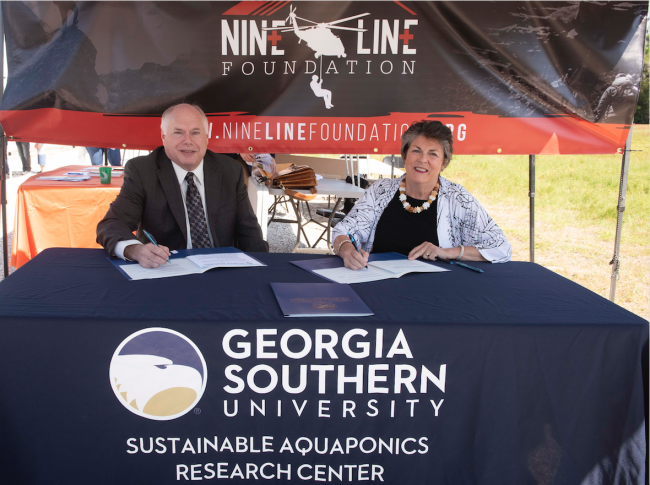
Georgia Southern University recently signed an agreement (see attached) with Nine Line Foundation that will assist veterans as they transition back into civilian life. Veterans will be enrolled in an aquaponics training program with the University’s Armstrong Campus’ Sustainable Aquaponics Research Center (SARC) at a compound at Nine Line Apparel in Savannah, Georgia. Aquaponics, or soilless farming, mixes aquaculture, the farming of fish, and hydroponics, to fuel the growth of plants in water. The SARC, a 4,100 square-foot greenhouse, has four independent recirculating systems, each containing 900-gallon tanks capable of holding more than 100 mature tilapia. Working within the College of Science and Mathematics, the SARC is focused on providing students, faculty and volunteers with the opportunity to conduct fundamental, interdisciplinary research in the area of aquaponics. The partnership with Nine Line Foundation will extend education opportunities to area homeless veterans and provide faculty and students an opportunity to engage with the veterans. Are you interested in learning more about his project and how Nine Line Foundation and Georgia Southern University are working together to provide opportunities and training to veterans? SARC’s director, Brent Feske available to speak with media – simply click on his icon to arrange an interview.

