Experts Matter. Find Yours.
Connect for media, speaking, professional opportunities & more.

As holiday shopping season nears, UF experts warn retail theft is growing more sophisticated
With the busiest shopping season of the year approaching, new findings from the National Retail Federation’s Impact of Retail Theft and Violence 2025 report — developed by the University of Florida’s SaferPlaces Lab and the Loss Prevention Research Council — show retailers are facing increasingly complex and technology-driven threats. UF researchers say early preparation, better data and stronger collaboration will be essential as stores brace for heavier foot traffic and heightened safety risks. Despite public reports that retail theft is decreasing, Read Hayes, Ph.D., a UF research scientist and director of the LPRC at UF Innovate, said retailer surveys tell a different story: Incidents of shoplifting, organized retail crime, online fraud and other external theft continue to rise, even as some law enforcement statistics appear flat or declining. The gap, he said, reflects how much crime goes unreported or unrecorded. “Retailers have always had a difficult time reporting much of their crime, and if you look only at police data, like calls for service or arrests, it can look like retail crime is flat or even slightly down,” he said. “But when we survey retailers, who are the actual crime victims, they consistently report year-over-year increases in theft and violence.” Criminal groups are also becoming more sophisticated. Hayes said offenders are increasingly using technology to defeat protective systems, disrupt cameras and identify vulnerable stores. They also rely heavily on social media platforms such as TikTok and Reddit to coordinate attacks and share tactics. “It’s a little disconcerting how much criminals rely on social media now to scout stores, map out easy targets, learn from each other or just plain brag about how they did it,” he said. LPRC scientists monitor social media signals to help retailers and law enforcement understand emerging threats — not in real time, Hayes said, but to help build best practices organizations can use to defend themselves. Criminals continue to focus on high-demand items such as branded apparel and footwear, prompting retailers to rethink how those products are displayed and secured. Hayes said many companies are testing new approaches to better protect vulnerable merchandise without driving customers away. One example is automated self-service systems for locked items, where customers can retrieve a product by having a code sent to their phone without waiting for a store employee. Safety remains retailers’ top concern, Hayes said. LPRC’s latest report, developed in collaboration with the security technology company Verkada, found that frontline retail workers report feeling less safe than ever, a trend that typically intensifies during the holiday rush. Rising incidents of in-store violence, limited law enforcement support in some areas and increased guest-related confrontations are pushing retailers to reassess how they protect both employees and customers. “Nothing is more important than protecting the frontline retail associates who keep this industry running,” Hayes said. “This report helps reinforce what retailers need to do to ensure those workers feel safe.” LPRC teams are also studying ways to improve safety beyond store walls, testing parking lot technologies, including license plate readers and flashing deterrent systems designed to discourage potential offenders and reassure law-abiding shoppers. At the federal level, Hayes said he and partners across the country are urging Congress to pass a bill to address organized retail crime and establish a centralized platform for reporting retail theft threats. As the holiday season approaches, Hayes said the need for evidence-based solutions has never been clearer. “Retailers are under pressure to keep their stores safe, welcoming and competitive,” Hayes said. “The more we can understand offender behavior, customer expectations and emerging technologies, the better we can help retailers, communities and law enforcement reduce harm.” The LPRC, headquartered at UF Innovate, brings together more than 200 major retailers, technology companies and public safety agencies to conduct research that strengthens store safety, reduces loss and enhances the customer experience.


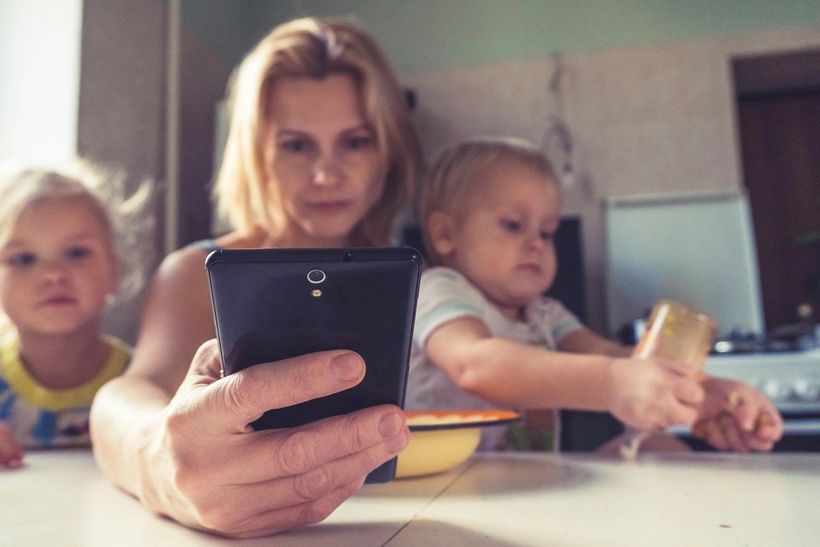
School’s Out, Screens Are In: Why Your Kids Copy Your Phone Habits on Winter Break
When the bell rings for winter break, most parents worry their kids will “disappear into their phones.” What often goes unmentioned? The adults usually disappear into theirs first. New behavioral data from Offline.now, the digital wellness platform founded by author Eli Singer, shows we now spend about 10 of our 16 waking hours on screens, roughly 63% of our day. Kids off school are simply mirroring the digital norms they see at home. Executive Function Coach and child development specialist Craig Selinger says winter break is less a test of kids’ willpower and more a test of family norms: “If you want behavior change in kids, start with the parent model. A 12-year-old will not put their phone away at dinner if their parents won’t.” Selinger points to what he calls the “mobility problem”: what used to be a TV in the living room is now a device in your child’s pocket. “Mobility makes tech sticky - there’s no natural ‘show’s over’ when Minecraft and TikTok never end.” Offline.now’s experts note that high, especially late screen use is tied to disrupted sleep and next-day behavior in children and teens, exactly when parents say, “They’re monsters over break.” Selinger’s work with families suggests the answer isn’t banning devices outright, but changing what kids see adults do with theirs. When parents put phones in a basket at meals, leave devices out of bedrooms, and actually join “old school” activities: cooking, board games, hands-on hobbies, kids’ attention and confidence start to rebound: “Micro-independence beats micromanagement. If you engineer small wins off-screen - a 20-minute task kids can complete without their phone - you rebuild their real-world confidence one brick at a time.” Key message for journalists: Over winter break, the real story isn’t just “kids are on their phones all day.” It’s that adult behavior quietly sets the ceiling on what’s realistic for children. The most effective “screen-time rule” is the one parents are willing to follow themselves. Featured Expert Craig Selinger, M.S., CCC-SLP - Executive Function Coach and child development specialist (Brooklyn Letters), focused on how kids actually learn and how digital dependency affects attention, writing, family systems, and school success. Expert interview availability can be arranged through Offline.now’s media team.



Violence alters human genomes for generations, researchers discover
In February of 1982, the Syrian government besieged the city of Hama, killing tens of thousands of its own citizens in sectarian violence. Four decades later, rebels used the memory of the massacre to help inspire the toppling of the Assad family that had overseen the operation. But there is another lasting effect of the attack, hidden deep in the genes of Syrian families. The grandchildren of women who were pregnant during the siege — grandchildren who never experienced such violence themselves — nonetheless bear marks of it in their genomes. Passed down through their mothers, this genetic imprint offers the first human evidence of a phenomenon previously documented only in animal models. The genetic transmission of stress across multiple generations. “The idea that trauma and violence can have repercussions into future generations should help people be more empathetic, help policymakers pay more attention to the problem of violence,” said Connie Mulligan, Ph.D., a professor of Anthropology and the Genetics Institute at the University of Florida and co-senior author of the new study. “It could even help explain some of the seemingly unbreakable intergenerational cycles of abuse and poverty and trauma that we see around the world, including in the U.S.” While our genes are not changed by life experiences, they can be tuned through a system known as epigenetics. In response to stress or other events, our cells can add small chemical flags to genes that may quiet them down or alter their behavior. These changes may help us adapt to stressful environments, although the effects aren’t well understood. It is these tell-tale chemical flags that Mulligan and her team were looking for in the genes of Syrian families. While lab experiments have shown that animals can pass along epigenetic signatures of stress to future generations, proving the same in people has been nearly impossible. “Resilience and perseverance is quite possibly a uniquely human trait.” —Connie Mulligan Mulligan worked with Rana Dajani, Ph.D., a molecular biologist at Hashemite University in Jordan and co-senior author, as well as anthropologist Catherine Panter-Brick, Ph.D., of Yale University, to conduct the unique study. Dajani envisioned the research project; because of her intimate knowledge of the Syrian population and its tragic history, she designed the study to cover three generations of Syrian refugees to Jordan. Some families had lived through the Hama attack before fleeing to Jordan. Other families avoided Hama, but lived through the recent civil war against the Assad regime. The team collected samples from grandmothers and mothers who were pregnant during the two conflicts, as well as from their children. This study design meant there were grandmothers, mothers and children who had each experienced violence at different stages of development. A third group of families had immigrated to Jordan before 1980, avoiding the decades of violence in Syria. These early immigrants served as a crucial control to compare to the families who had experienced the stress of civil war. Study coauthor Dima Hamadmad, a Syrian researcher and the daughter of refugees, led the search for families that met the study criteria and collected cheek swabs from 138 people across 48 families. "The participants took part in the research out of love for their children and concern for future generations,” she said. “But more than that, they wanted their stories of trauma to be heard and acknowledged.” Back in Florida, Mulligan’s lab scanned the DNA for epigenetic modifications and looked for any relationship with the families’ experience of violence. In the grandchildren of Hama survivors, the researchers discovered 14 areas in the genome that had been modified in response to the violence their grandmothers experienced. These 14 modifications demonstrate that stress-induced epigenetic changes may indeed appear in future generations in humans, just as they can in animals. The study also uncovered 21 epigenetic sites in the genomes of people who had directly experienced violence in Syria. In a third finding, the researchers reported that people exposed to violence while in their mothers’ wombs showed evidence of accelerated epigenetic aging, a type of biological aging that may be associated with susceptibility to age-related diseases. Most of these epigenetic changes showed the same pattern after exposure to violence, suggesting a kind of common epigenetic response to stress – one that can not only affect people directly exposed to stress, but also future generations. “We think our work is relevant to many forms of violence, not just refugees. Domestic violence, sexual violence, gun violence: all the different kinds of violence we have in the U.S,” said Mulligan. “We should study the effects of violence. We should take it more seriously.” It’s not clear what, if any, effect these epigenetic changes have in the lives of people carrying them inside their genomes. But some studies have found a link between stress-induced epigenetic changes and diseases like diabetes. One famous study of Dutch survivors of famine during World War II suggested that their offspring carried epigenetic changes that increased their odds of being overweight later in life. While many of these modifications likely have no effect, It’s possible that some have functional effects that can affect our health, Mulligan said. The researchers published their findings, which were supported by the National Science Foundation, Feb. 27 in the journal Scientific Reports. While carefully searching for evidence of the lasting effects of war and trauma stamped into our genomes, Mulligan and her collaborators were also struck by the perseverance of the families they worked with. Their story was much bigger than merely surviving war, Mulligan said. “In the midst of all this violence we can still celebrate their extraordinary resilience. They have persevered,” Mulligan said. “That resilience and perseverance is quite possibly a uniquely human trait.”

Ape Ancestors and Neanderthals Likely Kissed, New Analysis Finds
Kissing occurs in a variety of animals but presents an evolutionary puzzle: it appears to carry high risks, such as disease transmission, while offering no obvious reproductive or survival advantage. Despite kissing carrying cultural and emotional significance in many human societies, up to now researchers have paid little attention to its evolutionary history. In the new study, “A comparative approach to the evolution of kissing,” published this week in the journal Evolution and Human Behavior, the researchers carried out the first attempt to reconstruct the evolutionary history of kissing using a cross-species approach based on the primate family tree. The results indicate that kissing is an ancient trait in the large apes, evolving in the ancestor to that group 21.5 – 16.9 million years ago. Kissing was retained over the course of evolution and is still present in most of the large apes. The team also found that our extinct human relatives, Neanderthals, were likely to have engaged in kissing too. This finding, together with previous studies showing that humans and Neanderthals shared oral microbes (via saliva transfer) and genetic material (via interbreeding), strongly suggests that humans and Neanderthals kissed one another. “While kissing may seem like an ordinary or universal behavior, it is only documented in 46% of human cultures,” said Catherine Talbot, co-author and assistant professor in the College of Psychology at Florida Tech. “The social norms and context vary widely across societies, raising the question of whether kissing is an evolved behavior or cultural invention. This is the first step in addressing that question.” Matilda Brindle, lead author and evolutionary biologist at Oxford’s Department of Biology, said: “This is the first time anyone has taken a broad evolutionary lens to examine kissing. Our findings add to a growing body of work highlighting the remarkable diversity of sexual behaviors exhibited by our primate cousins.” To run the analyses, the team first defined what constitutes a kiss. This was challenging because many mouth-to-mouth behaviours look like kissing. Since the researchers were exploring kissing across different species, the definition also needed to be applicable to a wide range of animals. They therefore defined kissing as non-aggressive, mouth-to-mouth contact that did not involve food transfer. Having established this definition, the researchers collected data from the literature on which modern primate species have been observed kissing, focusing on the group of monkeys and apes that evolved in Africa, Europe and Asia. This included chimpanzees, bonobos, and orangutans, all of which have been observed kissing. They then ran a phylogenetic analysis, treating kissing as a ‘trait’ and mapping this to the family tree of primates. They used a statistical approach (called Bayesian modelling) to simulate different evolution scenarios along the branches of the tree, to estimate the probability that different ancestors also engaged in kissing. The model was run 10 million times to give robust statistical estimates. Stuart West, co-author and professor of evolutionary biology at Oxford, said, “By integrating evolutionary biology with behavioral data, we’re able to make informed inferences about traits that don’t fossilise – like kissing. This lets us study social behaviour in both modern and extinct species.” While the researchers caution that existing data are limited – particularly outside the large apes – the study offers a framework for future work and provides a way for primatologists to record kissing behaviors in nonhuman animals using a consistent definition.


Giving with Purpose This Holiday Season
As the season of giving draws near, many people are searching for meaningful ways to support the causes that matter most. From local food banks to global humanitarian organizations, charitable giving offers an opportunity to make a genuine difference – for the organization and for the donor. Two Baylor University experts in consumer behavior and philanthropy – James A. Roberts, Ph.D., The Ben H. Williams Professor of Marketing in the Hankamer School of Business, and Andrew P. Hogue, Ph.D., associate dean in the Office of Engaged Learning and founder of Philanthropy and the Public Good program – share five practical strategies to help donors give with intention and impact. Five ways to give more thoughtfully and effectively 1. Choose a cause that resonates with you Begin by considering the issues that matter most –education, hunger, health care, the environment or another area close to your heart. Once you identify your passion, take time to research organizations working in that space. Look for transparency, measurable results and a strong record of directing funds to mission-focused programs. “A helpful shortcut is to see whether a nonprofit receives repeat grants from charitable foundations,” Hogue said. “Those grants typically follow a rigorous evaluation process.” 2. Decide what you can comfortably give Giving should feel fulfilling, not stressful. Roberts and Hogue recommend reviewing your household budget and determining an amount that fits comfortably. Even small donations can accumulate into meaningful support over time. 3. Consider how often you want to give Think about whether a single contribution or ongoing support works best for you. Regular giving helps nonprofits plan ahead and maintain steady programming. “Consistent donations allow charities to allocate resources more effectively throughout the year,” Hogue said. 4. Automate your contributions Setting up recurring gifts through your bank or directly with a nonprofit keeps your generosity on track with minimal effort. Automatic withdrawals ensure reliability for the organization and ease for the donor. “It’s a simple way to make sure you don’t forget to give,” Roberts said, “and it provides charities with predictable support.” 5. Offer your time and talent if money is tight Financial support is just one form of generosity. Time, skills and personal networks can be equally valuable. “Donating your time and skills can be just as impactful,” Roberts said. “Whether you’re mentoring, sorting donations or helping at events, your presence matters.” Hogue added that giving enriches both the recipient and the giver: “Charitable giving is about making a difference in others’ lives while adding purpose and connection to your own.” His advice: start small, stay consistent and simply take the first step. “Giving is deeply rewarding,” Hogue said. “And as you grow in your generosity, keep a beginner’s mindset – there is always room to improve how we steward the resources entrusted to us.” Looking to know more or arrange an interview? Simply click on the expert's icon below or contact: Shelby Cefaratti-Bertin today.


Five Million Airbnb Reviews Illuminate Guests’ Crime and Safety Concerns
Concerns about crime and safety have a dramatic impact on the behavior of Airbnb customers, according to new research co-authored by Liad Wagman, Ph.D., Dean of the RPI Lally School of Management. In an analysis of nearly 5 million reviews left by Airbnb guests, Wagman and his colleagues found that a short-term rental property’s occupancy rate and rental price dropped by significant amounts after a guest left a review mentioning safety concerns at or around the property: occupancy rates fell by anywhere from 1.5 to 2.4 percent, while average nightly prices dropped by roughly 1.5 percent. These negative safety reviews influenced the behavior not only of potential future customers, but also of the people who wrote them. A customer who mentioned concerns about crime and safety in the neighborhood around a property, for instance, became 60 percent less likely to ever use Airbnb again. “To see the effect of these dynamics play out in action is always fascinating to me," Wagman said. “Given that humans have different preferences, and that information transmittal is imperfect, it’s unsurprising that the effect of self-experience is larger than that of reading a critical review that resulted from it.” Worries about safety within a property — say, a broken step or a slippery tub — also reduced customers’ willingness to return to the platform, but by a more modest amount. The study also found that when people with neighborhood safety concerns did return to the platform, they tended to book properties in areas with lower rates of crime. The study, co-authored by Aron Culotta of Tulane, Ginger Zhe Jin of the University of Maryland, and Yidan Sun of Binghamton University, was published in the journal Marketing Science. Overall, the researchers found that safety-oriented reviews were rare: only about 0.5 percent of customer reviews mentioned safety concerns. But those reviews tend to be more negative in sentiment than the typical customer review, giving them an outsize impact on the behavior of subsequent would-be customers. The findings illustrate a delicate balancing act digital platforms have to perform, particularly those that rely heavily on user reviews: while highlighting negative experiences can help consumers make more informed choices, too much emphasis can drive customers away completely. The team ran several simulations calibrated by their empirical analysis to test how these dynamics play out in the market. They found that if a platform suppressed negative safety reviews completely, customers might assume that safety information was being hidden, and become more wary of using the platform in general. Conversely, while more transparency around safety issues could lead to fewer bookings of impacted properties in the short term, in the long run such a policy could boost user trust and draw more people to the platform, offsetting the short-term losses. “Platforms with the competitive space to focus on long-term objectives may benefit from a higher level of transparency, which can be facilitated by making information that is relevant to their buyers’ decision-making more readily available,” Wagman said. “Doing so facilitates trust and helps incentivize sellers to work to improve the quality of their offerings, as well as help shape sellers' decisions to enter a market (e.g., offer their listings) in the first place.”


A new national Unity Poll from Vanderbilt University shows overwhelming agreement among Americans on one core belief: colleges should teach students how to think, not what to think. At a time when higher education is under intense political and cultural scrutiny, this finding reveals an unexpected area of unity. Amid debates over free speech, curriculum design, and the purpose of a degree, Americans are signaling a shared expectation for colleges to cultivate critical thinking and reasoning — not ideological conformity. For journalists, observers or anyone keeping a close eye on post-secondary education, this is a rare lens into what the public actually wants from higher education, and a timely point of entry into stories about academic freedom, the value of a college degree, political polarization, and workforce readiness. “Many observers think current debates about the nature of higher education are relatively new but they are not,” said John Geer, co-director of the Vanderbilt Unity Poll and professor of political science. “The country, for example, was debating the purpose, value and direction of higher education in the 1940s when the federal government made major investments in research and teaching during and after World War II.” “People want colleges and professors to teach students how to think, not what to think,” added Vanderbilt Poll Co-Director Josh Clinton, who holds the Abby and Jon Winkelried Chair at Vanderbilt and is a professor of political science. “The public most highly values those parts of higher education that help students think critically, process information and contribute meaningfully to society. The closer you get to subjects and content that has associations with contemporary political divisions, the more you see public support fracture.” John Geer and Josh Clinton, Co-Directors of the Vanderbilt Unity Poll and Professors of Political Science, are among the nation’s leading experts on public opinion, political behavior and democratic attitudes. With decades of research experience and multiple national polls under their leadership, Geer and Clinton bring essential context to these findings. Their perspective helps media interpret not only the data itself, but the broader social forces shaping how Americans view higher education, institutional trust and the role of colleges in preparing the next generation. What the Data Reveals: 1. A Return to Fundamentals: The Public Wants Critical Thinking Above All Ninety percent of Americans say “the ability to think more logically” is extremely or very important for their children to gain from college. Factual knowledge matters too, but the public places higher value on reasoning, analysis and cognitive skill-building. Geer can help illuminate why this shift is resonating so strongly now — and what it suggests about the changing expectations placed on colleges and universities. 2. A Rare Point of Consensus in a Polarized Era The emphasis on teaching students how to think cuts across political, geographic and demographic lines. Geer notes that agreement of this magnitude is increasingly uncommon in today’s contentious climate. This story angle gives journalists a data-driven counterpoint to the typical “campus culture wars” narrative — showing where unity still exists and why. 3. Is College Worth It? Depends How You Ask When asked about long-term value, a majority of Americans say a college degree is worth the time because it opens better job prospects. But when the question focuses on financial cost, support drops significantly. Geer and Clinton can walk reporters through why perceptions differ depending on how “value” is framed — and how these attitudes influence choices about pursuing postsecondary education. 4. Americans Oppose Government Control of College Teaching Most respondents say the federal government should not direct how professors teach. This adds nuance to ongoing debates about curriculum oversight, classroom autonomy and political influence in higher education. Geer and Clinton’s expertise help explain how this preference aligns with longstanding public attitudes about institutional independence. 5. Curriculum Flashpoints Reveal Sharp Divides While many Americans agree on the need for core historical and civic content, support fragments around politically charged topics. Issues such as gender identity, sexual orientation, and certain cultural topics show much lower consensus. Read the full article and report here:



Why TikTok Keeps You Scrolling: Baylor Research Explains the Science Behind Social Media Addiction
Why is it so hard to stop scrolling TikTok? A new study by Baylor University marketing professors and social media researchers James A. Roberts, Ph.D. and Meredith E. David, Ph.D., reveals that the answer lies not only in the app’s content, but in its design. Their research, published in the journal Cyberpsychology, Behavior, and Social Networking, is among the first to compare the technological affordances – the built-in design features that shape user behavior – of three leading short-form video (SFV) platforms: TikTok, Instagram Reels and YouTube Shorts. The findings reveal that TikTok’s combination of ease of use, highly accurate recommendations and surprising content variety creates a powerful recipe for user engagement – and, in many cases, addiction. The power of effortless design In their study, Roberts and David had participants rate each platform on three key technological affordances: perceived effortlessness, recommendation accuracy and serendipity (the element of surprise) and answer questions measuring their levels of social media engagement and addictive use. The results were clear: TikTok scored significantly higher than Instagram Reels or YouTube Shorts across all categories. Users in the study said TikTok required the least effort to use, delivered the most relevant videos and surprised them most often with unexpected but enjoyable content. “It’s the combination of all three that keeps people scrolling,” David said. “But the prerequisite is effortlessness. Without that ease of use, the other two wouldn’t matter as much.” TikTok’s seamless experience – where videos begin playing automatically the moment the app opens – creates a sense of immersion unmatched by competitors. Other platforms require users to click or select a video before viewing begins, a subtle difference that nonetheless makes TikTok feel faster and more intuitive. Engagement becomes addiction The study found that TikTok’s technological affordances indirectly increase addiction by first increasing engagement. The more users engage, the more likely they are to lose track of time – a phenomenon known as time distortion. David said this design is no accident. “TikTok’s algorithm is intentionally created to be addictive,” she said. “Their own materials acknowledge that users can become hooked after less than half an hour on the app.” She noted that even users who recognize these patterns often underestimate how long they spend scrolling. “We all need to be more cognizant of our time on these platforms,” David said. “Check your phone’s screen-time data – you may be surprised.” Implications for users and policy Beyond individual awareness, the researchers point to the broader social impact of overuse – particularly for young people. Excessive time on short-form video apps can erode attention spans, foster expectations for instant gratification and displace face-to-face interaction. “These platforms are designed to hold our attention,” David said. “But the opportunity cost is huge. The more time we spend scrolling, the less time we have for the activities that build real connection and meaning.”


Black Friday 2025: Earlier, Bigger and More Digital Than Ever
Black Friday is no longer just a day – it’s becoming an entire season. In 2025, shoppers are starting earlier, spending more and relying heavily on technology to find the best deals. With online shopping now the dominant force, an estimated 71% of consumers plan to browse and buy from their screens rather than stand in long lines. Baylor University consumer behavior expert James A. Roberts, Ph.D., said this year’s sales stretch well beyond Thanksgiving weekend. Top 5 Black Friday Trends from Dr. James A. Roberts Retailers have pushed promotions into early November – and in some cases, late October – creating what many now call “Black November.” And for the true procrastinators, “Desperate in December” is the new reality, with next-day delivery extending holiday shopping right up to the last minute. Even as shoppers plan to spend up to 10% more, they’re extremely price sensitive, Roberts said. Inflation, rising living costs and ongoing economic uncertainty – including concerns over tariffs – are prompting consumers to hunt for deeper discounts and compare prices more closely than ever. That caution is also fueling another trend: increased use of buy-now-pay-later plans. While convenient, Roberts urges shoppers to approach them carefully to avoid overspending. Technology also is accelerating the shift. AI tools and retail chatbots are helping customers track deals and make purchases, while influencers and social media ads continue to shape buying habits. Cost-conscious platforms like Temu and Shein are poised for another strong season. Clothing, electronics and home goods remain top categories, Roberts said, with gift cards still the go-to for last-minute buyers. Walmart, Target and Kohl’s are expected to be the most popular in-store destinations, while Amazon – unsurprisingly – continues to dominate Cyber Monday. Overall spending remains robust. Shoppers are expected to spend roughly $20 billion across online and in-store purchases, split almost evenly between the two. The best bargains will be toys discounted about 25 percent, phones and computers discounted around 30 percent and TVs discounted an average of 23 percent. The typical shopper will spend about $650 this holiday weekend. How to navigate the shopping frenzy Roberts offers some simple advice for navigating the frenzy: Set a budget, stick to it, choose thoughtful gifts and keep the season in perspective. After all, the most meaningful gifts are the ones that show how well you know the people you love. ABOUT JAMES A. ROBERTS, PH.D. James A. Roberts, Ph.D., is The Ben H. Williams Professor of Marketing at Baylor University’s Hankamer School of Business. A noted consumer behavior expert, he is among the Top 2% Most-Cited Researchers in a database compiled by Stanford University. In addition to journal citations, Roberts has often been called upon by national media outlets for his consumer expertise and latest research. He has appeared on the CBS Early Show, ABC World News Tonight, ABC Good Morning America, NBC’s TODAY Show and NPR’s Morning Edition, as well as in articles in The New York Times, USA TODAY, The Wall Street Journal, TIME and many others. Roberts’ research has focused on how individual consumer attitudes and behavior impact personal and collective well-being, including investigating the factors that drive ecologically and socially conscious consumer behavior, the impact of materialism and compulsive buying on well-being and the effect of smartphone and social media use on personal well-being. He is the author of “Shiny Objects: Why We Spend Money We Don’t Have in Search of Happiness We Can’t Buy” and “Too Much of a Good Thing: Are You Addicted to Your Smartphone?”
Want a Better Thanksgiving? Start With a Screen Break
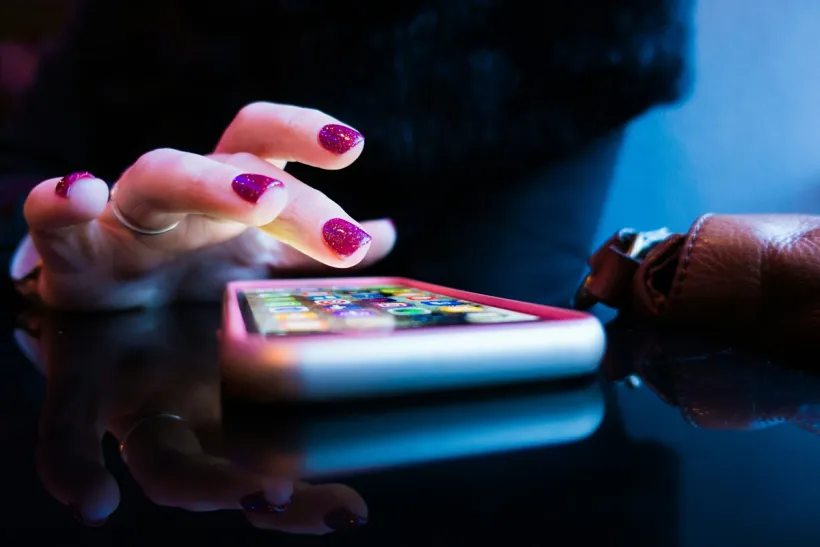
For many families, Thanksgiving weekend has quietly become a four-day screen marathon: football, streaming, shopping, scrolling through sales, and group chats buzzing in the background. Personal development coach Mark Diamond has spent decades seeing what happens when people take a different approach. After running a tech-free camp for 25 years, he’s watched kids and adults transform when phones disappear and the outdoors becomes the main event. “You can actually feel nervous systems reset,” he says. “People sleep better, they laugh more, and they have the kinds of conversations that just don’t happen when everyone’s half-present on their devices.” Diamond believes Thanksgiving is one of the easiest times of year to test what he’s learned - without asking anyone to give up the game or the parade. “You don’t have to cancel screens,” he says. “You just have to make sure they’re not the only thing you remember about the weekend.” He suggests families experiment with one simple offline tradition they can repeat every year: Everyone helps with the meal - put on some good music and try to learn to cook! Hear family stories - instead of talking about trending videos, have some questions ready to learn about the lives of relatives you don't see so often. A tech-free walk before or after dinner - leave phones at home or in pockets on airplane mode. An outdoor game (even in colder weather) - touch football, a scavenger hunt for younger kids, or a quick “around the block” relay. A “no scroll, just snap” rule - photos are fine, but posting and scrolling wait until the next day. When people are already together, Diamond notes, it’s actually easier to introduce new traditions. “You can say, ‘This year, let’s try 30 minutes of no screens while we do X.’ It feels like a shared experiment, not a punishment.” The real payoff, he says, isn’t just fewer hours online. It’s the memories and inside jokes that come from doing something real together, not just watching the same screen side by side. “We’re not going to remember every highlight reel or Black Friday deal,” Diamond says. “We remember the time we got caught in the rain on a walk, or when somebody’s throw went wildly off course and everyone burst out laughing.” In his coaching work, Diamond helps people who feel “glued to their phones” design lives where brief, meaningful offline moments are built in — starting with accessible opportunities like holiday weekends. “Thanksgiving is a perfect low-stakes test. If one tiny offline tradition makes the day feel better, that’s powerful feedback. You can carry that forward into December, and into the new year.” About the Expert Mark Diamond is a personal development coach and founder of a long-running tech-free camp. He focuses on outdoor wellness, sustainable behavior change, and helping people reconnect to happiness and real-world experiences in an age of constant screens. Mark is part of the Offline.now expert directory, contributing to the community supporting better parental modelling for device use.