
Experts Matter. Find Yours.
Connect for media, speaking, professional opportunities & more.
Journalism, Libel, and Political Messaging in America - UConn's Expert Weighs in
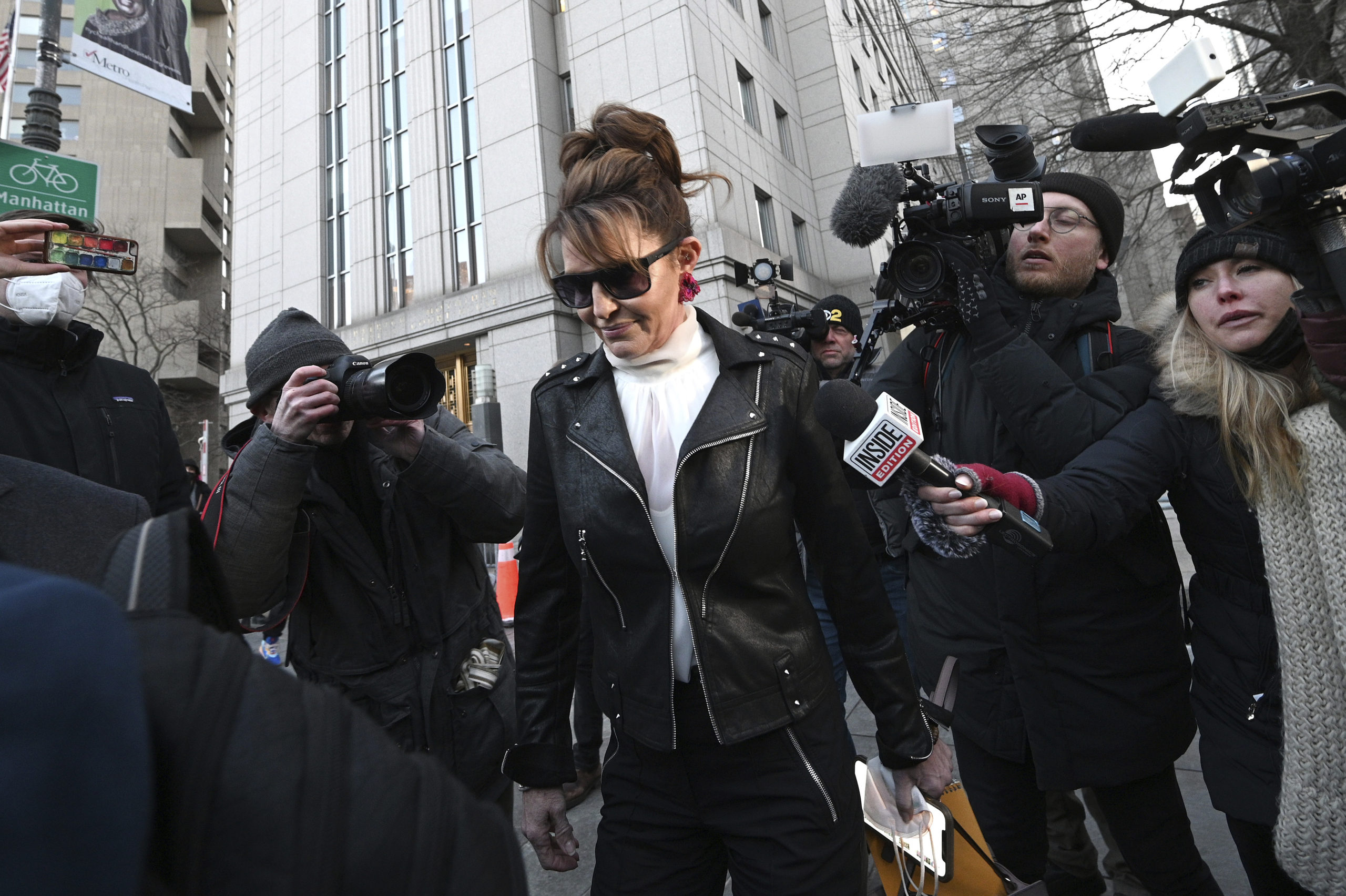
Former Alaska governor and vice presidential candidate Sarah Palin didn't cause the deadly 2011 shooting in Tuscon, Arizona, that injured Congresswoman Gabrielle Giffords, says former journalist and UConn expert Amanda Crawford in a new essay for Nieman Reports. Palin is asking for a new trial after a jury in February rejected her libel lawsuit against the New York Times. Palin sued the newspaper after it published a 2017 editorial that erroneously claimed she was responsible for the shooting. The Times quickly issued a correction. But Crawford says that, in her opinion, Palin has contributed to increased vitriol in American politics today, and that libel laws protecting freedom of the press need to be guarded: Palin, the 2008 Republican vice presidential nominee known for her gun-toting right-wing invective, is now asking for a new trial in the case that hinges on an error in a 2017 Times editorial, “America’s Lethal Politics.” The piece, which bemoaned the viciousness of political discourse and pondered links to acts of violence, was published after a man who had supported Sen. Bernie Sanders opened fire at congressional Republicans’ baseball practice, injuring House Majority Whip Steve Scalise. The Times editorial noted that Palin’s political action committee published a campaign map in 2010 that used a graphic resembling the crosshairs of a rifle’s scope to mark targeted districts. It incorrectly drew a link between the map and the shooting of Rep. Gabrielle Giffords, the Democratic incumbent in one of those districts, while she was at a constituent event in a grocery store parking lot in Tucson less than a year later. I was a political reporter in Arizona at the time, and I remember how Giffords herself had warned that the map could incite violence. “We’re on Sarah Palin’s targeted list,” she said in a 2010 interview, according to The Washington Post, “but the thing is that the way that she has it depicted has the crosshairs of a gun sight over our district, and when people do that, they’ve got to realize there are consequences to that action.” In the wake of the mass shooting in Tucson, some officials and members of the media suggested that political rhetoric, including Palin’s, may be to blame. In fact, no link between the campaign map and the shooting was ever established. As the judge said, the shooter’s own mental illness was to blame. That is where the Times blundered. An editor inserted language that said, “the link to political incitement was clear.” (The Times promptly issued a correction.) This was an egregious mistake and the product of sloppy journalism, but both the judge and the jury agreed that it was not done with actual malice or reckless disregard for the truth. That’s the standard that a public figure like Palin must meet because of the precedent set in the Sullivan case and subsequent decisions. Even if Palin is granted a new trial and loses again, she is likely to appeal. Her lawsuit is part of a concerted effort by critics of the “lamestream media,” including former President Donald Trump, to change the libel standard to make it easier for political figures to sue journalists and win judgments for unintentional mistakes. They want to inhibit free debate and make it harder for journalists to hold them accountable. -- Nieman Reports, March 14, 2022 If you are a reporter who is interested in covering this topic, or who would like to discuss the intersection between politics and media, let us help. Amanda Crawford is a veteran political reporter, literary journalist, and expert in journalism ethics, misinformation, conspiracy theories, and the First Amendment. Click on her icon now to arrange an interview today.


Is this the biggest election since 1860? Let our expert explain why
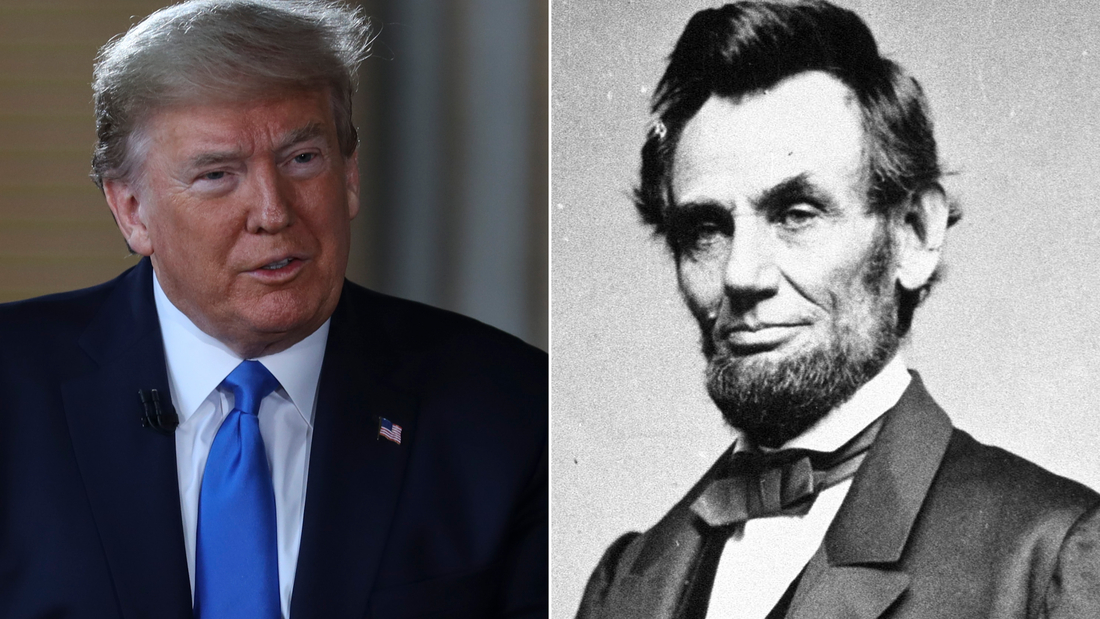
The upcoming U.S. presidential election is happening in unprecedented times and during what could be the most divisive era in more than a century and a half. This week, one of the University of Connecticut’s historical experts, Manisha Sinha, was featured by CNN to explain her point that America is indeed facing its biggest election in 160 years. “The 2020 presidential election is certainly as consequential as that of 1860. It is, as Biden is fond of saying, a battle for the 'soul of America.' The fate of the American republic once again hangs in the balance. Like the slaveholders of the 1850s, Trump, his followers and enablers are in a position to pose an existential threat to American democracy. Like many slaveholders, Trump refuses to commit to a peaceful transfer of power if he loses. "If history appears first as tragedy, then as farce, the counterparts of southern secessionists and proslavery theorists today are QAnon conspiracy theorists, neo Confederates, and the right-wing Boogaloo boys. Much of the contemporary Republican Party that refuses to repudiate Trump is like those southern Whites who may not have had a direct stake in slavery but went with their states, who ultimately chose slavery before the republic. The choice -- as the Republicans of the Lincoln Project, who have broken with their party, put it -- is between America and Trump.” Dr. Sinha’s full op-ed is available on CNN.com and is a must-read for anyone looking to put this year’s election into historical context. And, if you are a journalist looking to cover this topic, let our experts help with your coverage. Manisha Sinha is the Draper Chair in American History at the University of Connecticut and the author of "The Slave's Cause: A History of Abolition." She is available to speak with media regarding this topic – simply click on her icon now to arrange an interview today.


As the global pandemic touches almost all parts of the United States – it is essential that the public receives only accurate and definitive information from credible and expert sources as news, media and information reaches million of people across the country. An invisible enemy is killing thousands and forcing people worldwide to cower behind closed doors. Unfounded conspiracy theories and miracle “cures” abound on social media. Politicians and pundits send mixed messages about how to protect yourself. Who you gonna call? - Bedford Gazette, April 14 As the coronavirus rampages, the public increasingly is turning to experts in academia and government -- the educated, experienced “elites” that many Americans had tuned out. The Coronavirus 2019 (COVID-19) situation is certainly new to all of us. As guidance from the CDC changes and instructional methods transition, there are experts at Georgia Southern who can help to answer questions such as: How should we best address this pandemic as a nation? How should we best address this pandemic individually? What does it mean to “flatten the curve?" What is the economic impact of COVID-19? How do you best manage employees virtually? Why are grocery stores having trouble keeping inventory on their shelves? Should we prepare for a lapse in groceries and goods? What contributes to the fear and panic in disasters and pandemics? What do educators, parents and students need to know to prepare for online learning in the K-12 and college settings? If you are a reporter covering COVID-19, let the team of experts from Georgia Southern help with your coverage. Public Health: Atin Adhikari, Ph.D. Associate Professor of Environmental Health Sciences, Department of Biostatistics, Epidemiology and Environmental Health Sciences, Jiann-Ping Hsu College of Public Health Dr. Adhikari brings over 15 years of extensive research experience on aerosols, airborne microorganisms, other air pollutants, and related respiratory disorders. His current research areas include environmental air quality, exposure assessment, occupational health and safety, environmental microbiology, and respiratory health. Before joining JPHCOPH, Dr. Adhikari was also involved (Co-I) with two DoD-DTRA and U.S. Office of Naval Research funded projects on inactivation of hazardous microorganisms. Chun Hai (Isaac) Fung, Ph.D. Associate Professor, Department of Biostatistics, Epidemiology and Environmental Health Sciences, Jiann-Ping Hsu College of Public Health Dr. Isaac Chun-Hai Fung is a digital health expert and an infectious disease epidemiologist. He analyses social media data for public health surveillance and health communication and uses digital technologies for public health interventions. He investigates the transmission of communicable diseases with a focus on respiratory infections and environmentally transmitted infections. He applied a variety of methods, from classical statistical methods to machine learning and mathematical modeling, to address public health problems and to provide solutions to policy-makers. He is especially interested in assisting public health agencies in their responses to public health emergencies. He is currently a guest researcher with the Health Economics and Modeling Unit, Division of Preparedness and Emerging Infections, National Center for Emerging and Zoonotic Infectious Diseases, Centers for Disease Control and Prevention (CDC). Examples of his recent projects include: Surveillance of unplanned school closures through social media platforms, Analysis of social media posts pertinent to public health emergencies, such as Ebola, MERS and Zika. Jessica Schwind, Ph.D. Assistant Professor, Department of Biostatistics, Epidemiology, and Environmental Health Sciences, Jiann-Ping Hsu College of Public Health Dr. Jessica Smith Schwind is an epidemiologist and program evaluator. She joined the Department of Biostatistics, Epidemiology and Environmental Health Sciences at JPHCOPH in August 2017. Her current research interests include disease surveillance, capacity building and risk communication for the prevention and/or early recognition of outbreaks with a focus on: best practices for operationalizing the ‘One Health’ approach, understanding and improving capacity building efforts and priorities for increasing health surveillance, and improving early warning systems for disease detection and response by bridging the gap between global digital databases and local health information. Schwind also conducts SoTL research on innovative online/onsite teaching and evaluation with a focus on immersive and service-learning practices. Pandemics, panic and the public: Amy Ballagh, Ed.D. Associate Vice President of Enrollment Management Featured in the Washington Post : Jessica Schwind, Ph.D. Assistant Professor, Department of Biostatistics, Epidemiology, and Environmental Health Sciences, Jiann-Ping Hsu College of Public Health Dr. Jessica Smith Schwind is an epidemiologist and program evaluator. She joined the Department of Biostatistics, Epidemiology and Environmental Health Sciences at JPHCOPH in August 2017. Her current research interests include disease surveillance, capacity building and risk communication for the prevention and/or early recognition of outbreaks with a focus on: best practices for operationalizing the ‘One Health’ approach, understanding and improving capacity building efforts and priorities for increasing health surveillance, and improving early warning systems for disease detection and response by bridging the gap between global digital databases and local health information. Schwind also conducts SoTL research on innovative online/onsite teaching and evaluation with a focus on immersive and service-learning practices. Jodi Caldwell, Ph.D. Executive Director of the Georgia Southern University Counseling Center On a national level, Dr. Caldwell is currently serving her second elected term to the Directorate Board of the Commission for Counseling and Psychological Services of the American College Personnel Association and is a certified Red Cross Disaster Mental Health Responder. COVID-19 and logistics, the economy and the workforce: Alan Mackelprang, Ph.D. Associate Professor, Department of Logistics & Supply Chain Management Currently the director of the Ph.D. in Logistics and Supply Chain Management program, his research interests include examining interdependencies among supply chain partners, JIT/Lean production, manufacturing flexibility as well as supply chain integration. Scott Ellis, Ph.D. Associate Professor, Department of Logistics & Supply Chain Management Scott Ellis’ research interests center on the study of purchasing and supply management processes and functions. He has published in Journal of Operations Management and Journal of Supply Chain Management, among others. Richard McGrath, Ph.D. Professor, Parker College of Business Richard McGrath researches immigration, consumer survey methodology, and applied microeconomics. He is a long time expert on the economy in Savannah and the Coastal Empire. Michael Toma, Ph.D. Fuller E. Callaway Professor of Economics Michael Toma is a professor and lead analyst for the Center for Business Analytics and Economic Research, a student- and faculty-staffed applied research group focused on the Savannah-area economy that works with many local partners on special initiatives, customized applied business research and impact studies. Based on Toma's analytics, the Center publishes the quarterly Coastal Empire Economic Monitor, a closely watched economic report. Toma's community ties are also strong in the area. He serves on the Board of Directors for United Way of the Coastal Empire and on the organization's Executive Committee as chair of the Community Investments Committee. David Sikora, Ph.D. Assistant professor of management David Sikora’s research interests include strategic human resource management and the business impact of employee management practices. He has published his research in such journals as the Journal of Applied Psychology, Leadership Quarterly, Human Resources Management Review, International Journal of Selection and Assessment, and International Journal of Human Resources Development and Management. Prior to his academic career, David had extensive corporate experience in human resources and marketing including serving as human resources vice president at Cigna Corporation and director of human resources product management at Gevity HR, Incorporated. Steven Charlier, Ph.D. Associate Professor, Department of Management Charlier’s research interests are focused on the modern work environment, and include virtual teams, e-learning, leadership in a virtual world, and management education. His work has been published in several leading international academic journals, including The Leadership Quarterly, Human Resource Management, Journal of Organizational Behavior, Academy of Management Learning & Education, and Human Resource Management Review. Online teaching and learning: Charles Hodges, Ph.D. Professor, Department of Leadership, Technology and Human Development Hodges is a tenured professor of instructional technology at Georgia Southern with over 20 years of online teaching experience. As an active researcher in online teaching and learning, Hodges presents regularly at the national and international levels. He currently serves as the editor-in-chief of the journal and he is a long-time member of the Association for Educational Communications and Technologies, a professional organization for Educational Technology scholars and practitioners. Featured in the Inside Higher Ed article (published 3/11/20): Jeffrey Tysinger, Ph.D. and Dawn Tysinger, Ph.D. Professors, Department of Leadership, Technology and Human Development The Tysingers are one of very few individuals who are actively researching in the area of crisis preparedness in K-12 online learning Professors, Department of Leadership, Technology and Human Development The Tysingers are one of very few individuals who are actively researching in the area of crisis preparedness in K-12 online learning: o https://digitalcommons.georgiasouthern.edu/nyar/vol2/iss1/4/ o https://dl.acm.org/doi/10.5555/2811036.2811057 o https://eric.ed.gov/?q=Tysinger&id=EJ1147626 o https://eric.ed.gov/?q=Tysinger&id=ED595756 Dawn Tysinger, NCSP, serves as professor and program director for the nationally-recognized, National Association of School Psychologists-Approved Education Specialist program in school psychology at Georgia Southern University. Tysinger has contributed to her field through active participation in NASP, publications in school psychology journals, and presentations at the local, state, regional, national, and international levels. She currently serves on the NASP program review board for school psychology programs and as a member of the editorial boards of Journal of School Psychology, Psychology in the Schools, Trainers’ Forum: Journal of the Trainers of School Psychologists, National Youth-At-Risk Journal and Journal of Online Learning Research. Jeff Tysinger, NCSP, is a professor of school psychology at Georgia Southern University. He has been the president of the Kansas Association of School Psychologists (KASP), editor of the KASP Newsletter, KASP Futures committee member, KASP NCSP committee member, member of National Association of School Psychologists (NASP) since 1997, Nationally Certified School Psychologist since 1997, NASP Program Reviewer, NCSP Portfolio Reviewer, member of NCATE Board of Examiners, member of Georgia Association of School For parents at home with (k-12) children now distance learning: Chelda Smith Associate Professor, Department of Elementary and Special Education Smith’s master's thesis focused on parents as the first teachers of children and can speak to how parents can be empowered in that role. Her research agenda continues to focus on home and community assets, of which parents/caregivers are the primary influence and factor for positive outcomes. Lastly, as a parent of both a middle schooler and a toddler, Smith is navigating the process of being a primary educator in the home in real-time. Each expert is available to speak with media – simply contact Melanie Simon at 912.313.3245 to arrange an interview today.


Conspiracy Theories & Social Media
A recent Rolling Stone article examining an FBI memo focused on the spread of conspiracy theories includes analysis from Kathleen Stansberry, assistant professor of strategic communications. The article was prompted by reporting by Yahoo News on the memo, which cited a number of violent incidents believed to be linked to conspiracy theories and offered that "these conspiracy theories very likely will emerge, spread, and evolve in the modern information marketplace, occasionally driving both groups and individual extremists to carry out criminal or violent acts." In the Rolling Stone article, reporter EJ Dickson focused specifically on the activity of QAnon, a far-right conspiracy theory about a supposed "deep state" effort targeting President Donald Trump and his supporters. In the article, Stansberry explains the role that social media — in particular the YouTube and Twitter platforms — have played in propagating these theories and why conspiracy theories can be so dangerous. This, says Stansberry, is precisely what makes conspiracy theories so dangerous: because they are impossible to disprove, any outsider attempt to poke holes in them is always viewed as just another sign, just another breadcrumb, just another reason for you to keep fighting to get the real story out into the world. “You’re trying to share the truth as you see it, and there’s some reason why that truth is being hidden,” she explains. “If you truly believe in the conspiracy theory, then you’re David against Goliath.” She suggests that the memo “could certainly have stoked some of the desire for people to push what they see as their truth out.” If Dr. Stansberry can assist with your reporting about social media and the spread of conspiracy theories, please reach out to News Bureau Director Owen Covington at ocovington@elon.edu or (336) 278-7413. Dr. Stansberry is available for phone, email and broadcast interviews.


'The wrong way to fix social media'
In a recent column published by the St. Louis Post-Dispatch, Associate Dean and Professor Enrique Armijo of the Elon School of Law addresses flaws in a plan to crack down on social media content many find objectionable. Armijo, an expert on how new technologies affect free speech issues, explains how the Communications Decency Act prevents internet websites and applications from being liable for the content of their users. Now more than 20 years since that protection was codified, there is a movement to legislatively revoke that immunity from liability as debate about whether internet platforms should assume more responsibility for the content they publish and distribute. Anyone who calls himself a conservative should be embarrassed to be associated with this idea. As an initial matter, the legislation ignores the fact that a publisher's decisions as to what to publish are protected First Amendment speech. Armijo goes on to note that "the actual First Amendment rights of platforms cannot be sacrificed to protect rights of access to the platform's users claims but don't exist. We can all hope that neutrality will guide the hands of power, but the government cannot command neutrality from the powerful." If Dr. Armijo can assist with your reporting about free speech, social media and new technologies, please reach out to News Bureau Director Owen Covington at ocovington@elon.edu or (336) 278-7413. Dr. Armijo is available for phone, email and broadcast interviews.

Why Operation Varsity Blues has some experts seeing red
It’s a scandal that has all the right ingredients - celebrity, trusted institutions, entitlement, bribery and now stars potentially behind bars. The 50 people charged on March 12 in a college admissions conspiracy include the tennis coach for the Obama family, an investor and friend of Bono and TV celebrities Felicity Huffman from Desperate Housewives and Full House’s Lori Loughlin. They are all wealthy, connected and parents who participated in a scheme that saw cheating on admission tests and bribery of college coaches to get their kids into some of the most elite schools across America. It’s embarrassing for the kids, the parents and the schools. But nonetheless, there will be consequences. This conspiracy was brought down by the FBI after all. However, there is collateral damage that has also been done to America’s academic community. The reputation, importance and value of a degree from a post-secondary institution has been sullied. And undoing this damage will not be easy. Dr. David Rettinger is Director of Academic Integrity at the University of Mary Washington and President of the International Center for Academic Integrity, an organization founded to combat cheating, plagiarism and academic dishonesty in higher education. “With the recent revelations from the indictments in Operation Varsity Blues, the integrity of higher education is once again under attack. As a scholar of student ethics and President of the International Center for Academic Integrity, I encourage both condemnation of this behavior and understanding of the context in which it occurred. Our society is commodifying higher education, focusing on degrees and not learning. I hope that the public discourse about education can focus on authentic learning rather than degrees and qualifications, so that higher education can remain a public good.” Approved quote from Dr. David Rettinger Dr. Rettinger is available to speak with media regarding this scandal as well as the importance of education and how universities and colleges across America will need to work to rebuild trust in the institutions that have been impacted by these events. Simply click on his icon to arrange an interview.
