
Experts Matter. Find Yours.
Connect for media, speaking, professional opportunities & more.
Baylor Consumerism Expert Discusses the Challenges of Gift Cards and Spending
James Roberts, Ph.D., The Ben Williams Professorship in Marketing in Baylor’s Hankamer School of Business and an expert on consumerism, is featured in this Chicago Tribune story about spending gift cards – a popular holiday present. Roberts commented on a study that showed consumers spend an average of $38 more than the value of their gift cards. “We’re going to be more free with our spending when ... we didn’t generate the money that’s paying for it. The fact that we’re paying with a credit card-like mechanism means we’re not going to be as mindful of the price. We’ll overpay or spend more money than we would otherwise,” Roberts said. This story was picked up in dozens of national publications, including the Atlanta Journal-Constitution, Stars and Stripes, Dayton (Ohio) Daily News, Palm Beach Post and the St. Paul Pioneer Press. Source:


Study Says Canadians Aren't Ready For An Economic Downturn
A new report says unprecedented household-debt levels will give Canadians a rude awakening on their unpaid credit-card bills if another economic downturn hits. We see reports like this all the time, but what does it mean for regular people? Nathan Sugeng helps people with debt issues every day and he says this is a trend that can't be ignored. He's a federally-regular Licensed Insolvency Trustee and a former bank manager. Nathan is an experienced media commentator who specializes in distilling complex information down to valuable nuggets audiences can understand, including advice on how to deal with these issues. Source:

Another Big Short or Better Off? 10 Years Later – Is there Another Financial Crisis Looming?
It was 10 years ago Wednesday that the world changed for just about everyone. It was on that afternoon when BNP Paribas announced it was ceasing activity in three hedge funds that specialized in U.S. mortgage debt. BNP Paribas was the first major bank to acknowledge the risk of exposure to the sub-prime mortgage market, and many look back at those days as the start of the worst financial crisis in American history since the stock market crashed in 1929. For a decade, America has been in a state of recovery. It took trillions of dollars in stimulus and bail outs. The real estate market almost collapsed on itself and millions were left unemployed. Some are still incapable of finding work and income that matched what they made back then. On the outside, America seems to be in complete recovery. Housing prices have bounced back, the DOW is soaring and unemployment rests at just 5.1 percent. However, some are skeptical. Americans are borrowing again at record rates. Credit is once again being offered abundantly and as people spend again – risk is climbing. Add in China’s shaky economy and there’s also talk of a double-bubble bursting. Understanding finance and economics is no easy task. It takes global understanding, a keen eye on micro and macroeconomics and sometimes a crystal ball. But on Wednesday, many people will remember exactly what they were doing when America’s economy tanked. So where are we now? Have we learned our lesson or are we doomed to repeat ourselves? Have the reforms on Wall Street worked or can the actions of a few big banks still derail one of the strongest financial engines in the world? None of these are easy questions to answer or explain. But experts from Missouri State University can help. Dr. David Mitchell is a Professor of Economics and Director of the Bureau of Economic Research at Missouri State. He is also an expert at economic forecasting and understanding market trends and direction. Dr. Mitchell can speak to the anniversary of the financial crisis and what may lie ahead for America’s economy. Click on his icon to arrange an interview. Source:


Signed Off - Bass Pro Finally Reels in a Deal
Earlier this week, federal regulators finally signed off on the approval for Bass Pro to acquire rival Cabela’s for a projected $4 billion dollars. The deal includes Cabela’s retail and online properties, as well as the lucrative credit card unit that is part of the chain. Cabela’s shareholders are expected to vote July 11 on whether to accept the privately held Bass Pro’s offer of $61.50 per share. So, what will this mean for Cabela’s 82 locations and Bass Pro’s 95 retail stores? With Bass Pro’s one major rival acquired, how will it affect prices, competition and loyal customers? As well, with any acquisition or merger, there will be duplication. What can Bass Pro employees in Missouri or the 2,000 Cabela’s staff in Nebraska expect? There are many questions to be answered. This is where Missouri State University experts can help. Dr. Jeff Jones is an Assistant Professor in Finance and General Business at Missouri State. An expert in corporate finance, Dr. Jones has spoken with media previously regarding this developing business story. Simply click on his icon to arrange an interview. Source:

Payday loan rollovers do not harm some borrowers’ financial welfare
Research by a Kennesaw State University professor has found that there is a potentially limited adverse relationship between repeated refinancing and credit scores for those at the lowest end of the credit spectrum, casting doubt on the claims of payday loan critics that extended refinancing of these loans is universally harmful to consumers' financial welfare. Jennifer Priestley, a professor of applied statistics and data science and author of the 2014 study, says that "payday loans may not only fail to harm borrowers, but may actually contribute to an improvement in borrower welfare for some customers on the lower end of the credit continuum." Source:

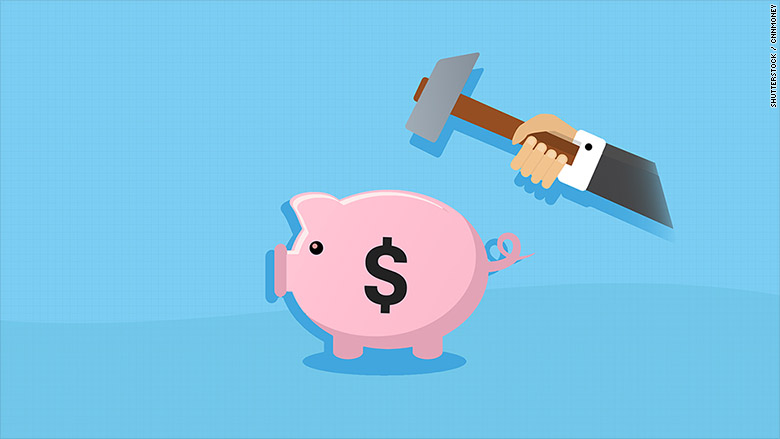
More than half of Americans do not have $500 in savings
Nearly six in 10 Americans do not have enough savings to cover a $500 or $1,000 unplanned expense, according to a new report from Bankrate. Only 41 percent of adults reported having enough in their savings account to cover a surprise bill of this magnitude. A little more than 20 percent said they would put it on a credit card, the report said, while 20 percent would cut their spending and 11 percent would turn to friends and family for financial assistance. So, is there cause to worry? Just how leveraged is the average American and what does this mean when looking at the long-term forecast of the country’s economy? America seems to finally be back from the financial meltdown it faced in 2008. Is the bubble about to burst again? Dr. David Mitchell is a professor of economics and a director of both the Bureau of Economic Research and Center for Economic Education at Missouri State University. He is a respected expert in economic forecasting and is ready to speak to this important topic. Click on his icon to arrange an interview. Source:
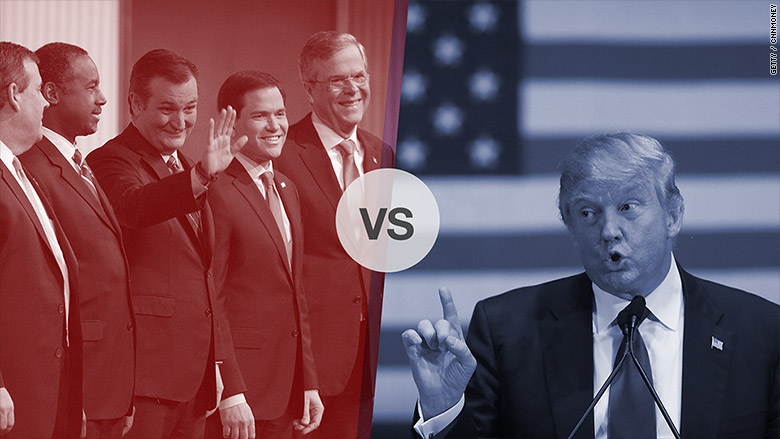
Who won the ratings race: Fox News or Donald Trump?
Fox News Channel's Trump-less debate had 12.5 million viewers between 9 and 11 p.m. Eastern, according to Nielsen.By comparison, two of the cable channels that showed parts of Trump's event, CNN and MSNBC, had about 2.7 million viewers combined.So Trump's rivals clearly came out ahead in the raw ratings. Source:


Our experts provide insights on key changes in the budget that will affect Canadians including: - Registered Retirement Income (RRIF) - Tax Free Savings Accounts (TFSA) - Family Tax Credit and EI Compassionate Care Benefits. The 2015 Federal Budget was released late Tuesday afternoon. We've summarized some of the key highlights of this 528 document to help you understand how this budget effects you and your business. Click below to see our managing partner Michael Burch's interview with 580 CFRA News Talk Radio. Source:
