
Experts Matter. Find Yours.
Connect for media, speaking, professional opportunities & more.
Public health education soars in wake of pandemic
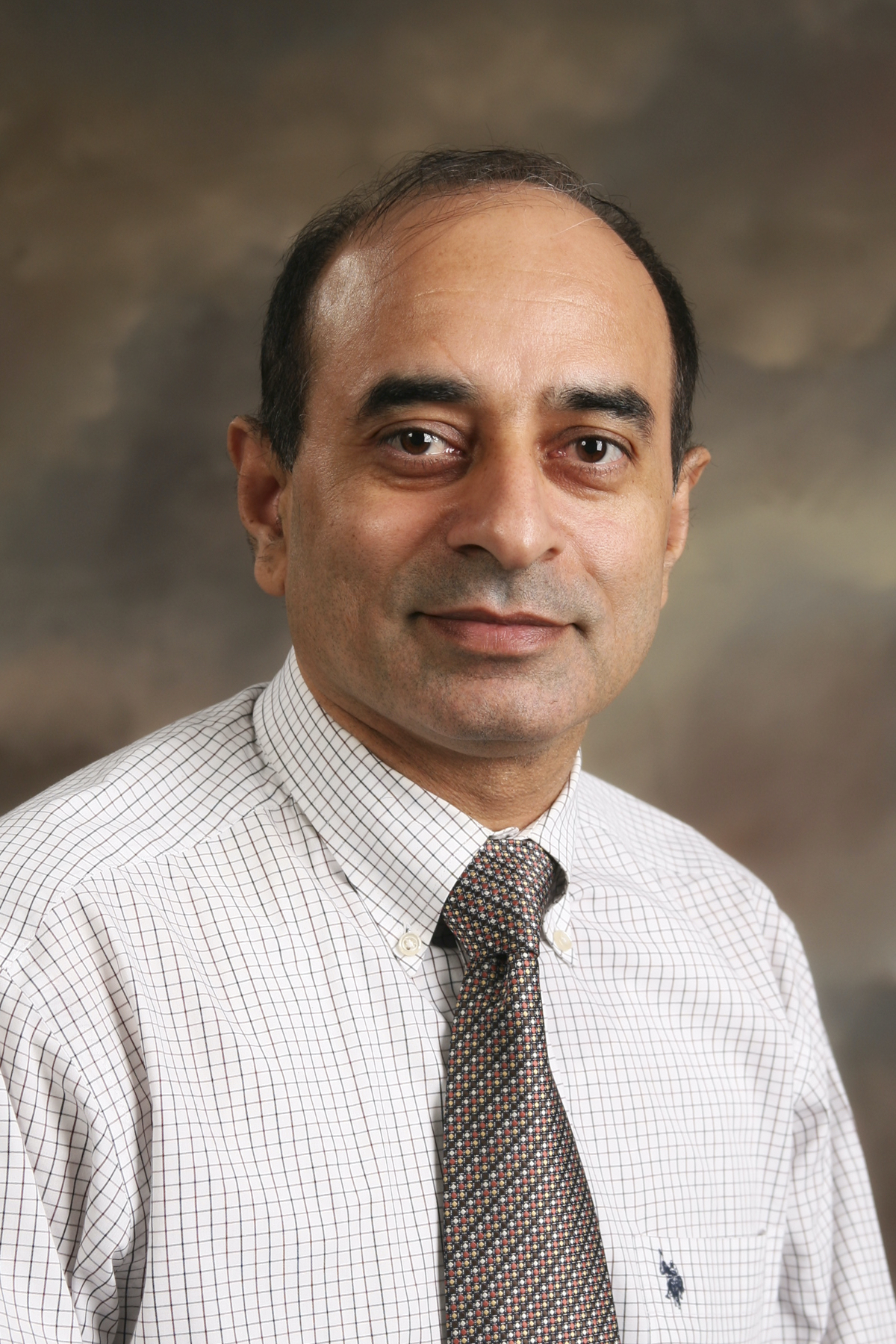
Maybe a silver lining can be found from the COVID-19 pandemic, as interest in public health education is soaring at U.S. colleges and universities, says a nationally prominent public health professor. Public health education has become a logical choice for students when looking at changing public health practice trends and their implications for public health education, explained Gulzar Shah, Ph.D., who authored an invited editorial in the March issue of the American Journal of Public Health (AJPH). Shah is department chair and professor of health policy and community health in Georgia Southern University’s Jiann-Ping Hsu College of Public Health. His editorial is titled “Public Health Education and Changing Public Health Realities in the Public Health 3.0 Era.” “For many of the 19 million college students enrolling annually in public and private colleges in the United States, public health is becoming a logical choice,” he said. “Because of COVID-19, interest in public health careers is soaring, evident from the 20% increase nationwide in Master of Public Health applicants.” The editorial also drew insights from the Association of Schools and Programs of Public Health’s national-level data from schools and programs of public health about the first employment destinations of public health graduates. “The emphasis on aligning public health practice and policy with the Public Health 3.0 framework, in which leaders partner across various sectors to address social, environmental and economic factors that affect population health and health inequity, has attracted the spotlight on generalist, behavioral education and health policy degrees,” Shah noted. “The Public Health 3.0 framework has also underscored the desirability of adopting the Health in All Policies approach and encouraging public health leaders to act as chief health strategists in influencing policies in other sectors affecting population health. Increasing focus on Health in All Policies and higher salary positions in health care may further explain the popularity of health policy and management and health law programs.” If you are a journalist looking to know more about Dr. Shah’s work, and the importance public health education in America of the programs Georgia Southern is offering – then let us help. Dr. Gulzar H. Shah is a Professor and Department Chair, Health Policy and Community Health at the Jiann-Ping Hsu College of Public Health (JPHCOPH), Georgia Southern University. He is available to speak with media regarding this important topic - simply click on his icon now to arrange an interview today.


Are big changes coming to financial accountability in Ontario as Laurentian loses its elite status?
As the higher education community anxiously awaits more news on just exactly how Laurentian University in Sudbury has essentially gone bankrupt, those who oversee universities and colleges in Ontario are also watching with interest. The chain of events that led to Laurentian having to file for creditor protection reveal a failure in governance. And it points to a wider set of reforms that are being contemplated within the public sector. A special investigator’s report on the Laurentian University insolvency is coming out soon, according to the Minister of Training, Colleges and Universities, Ross Romano. The province has warned it may introduce legislation granting it greater oversight of every university’s finances. Recently, Umar Saeed, a public sector accounting expert and a partner at Welch LLP, sat down with Newspoint360 to discuss in an in-depth interview how Ontario’s ability to control and govern the university sector is unlike other provinces, such as British Columbia. If new legislation is introduced that enhances the government’s ability to appoint Board members or control the financial and operating policies of Ontario universities, it will have broad implications for the entire university sector in Ontario: • New legislation may lead to consolidating all the universities (debts and deficits) into the Ontario government’s public accounts • Legislation would acknowledge an implicit promise by the Ontario government to backstop public sector debt (including the university sector) • Public universities may lose their perceived independence if they are “controlled” for accounting purposes The story of Laurentian University is fundamentally about poor governance. However, missing from this story is the backdrop and conditions that led to poor governance. There’s a lot at stake for Laurentian, it’s faculty and staff and the provincial university sector as a whole, and if you are a journalist looking to cover this topic, then let us help. Umar Saeed is a partner at Welch LLP in Ottawa and an expert in Public-Sector Accounting Standards. Umar is available to speak with media about this subject – simply click on his icon now to arrange an email today.

MEDIA RELEASE: After a one-year hiatus, the annual CAA Worst Roads campaign returns
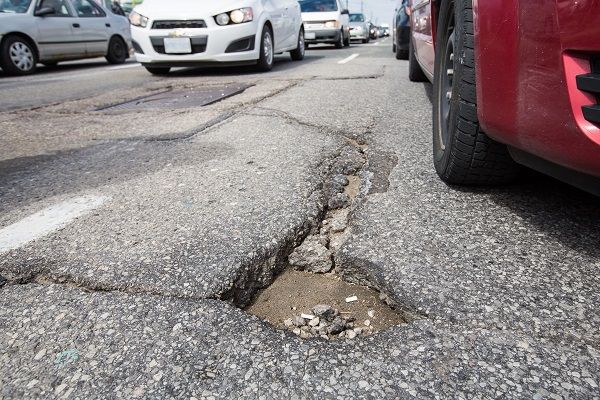
With a renewed focus on education and safety, CAA South Central Ontario (CAA SCO) is proud to announce that following a one-year hiatus due to COVID-19, the annual CAA Worst Roads Campaign is back, and voting is now open. “The campaign is a platform for all road users to highlight which roadway improvements should be prioritized by our different levels of government,” says Raymond Chan, government relations manager CAA SCO. “The campaign gives decision-makers a snapshot of what roads the public perceives are not meeting their expectations.” Over the course of the last year people have changed their transportation habits. More people are cycling or driving their vehicles instead of carpooling and using public transit. CAA believes funding for roadway improvements needs to be consistent to ensure that quality and safety is maintained. “Our roads are essential, they are the arteries used every day to keep workers, goods and services flowing and should be maintained more than ever,” adds Chan. “As people are encouraged to stay home and telework during the pandemic, governments should continue to take advantage of lighter traffic patterns as an opportunity for road repair. These efforts can also be refocused on increasingly popular modes of transportation, such as cycling and walking.” Investing in infrastructure improvements, including the proper maintenance of roads and bridges, is important to the vitality and economic recovery of local communities. CAA continues to advocate for longer-term dedicated infrastructure funding to help municipalities prepare, plan, budget and execute on repair backlogs and capital projects. The success stories over the last 17 years are a result of governments prioritizing infrastructure through multi-year capital investments. Some examples include: 1. Riverdale Drive, Washago Despite appearing on the CAA Worst Roads list for the first time in 2019, the poor road conditions of Riverdale Drive was not new to residents of Severn. After 20 years since the street’s last resurfacing, Council approved $50,000 of prep work for Riverdale Drive led by Ward 5 Councillor Sarah Valiquette. 2. Dufferin Street, Toronto Appearing on the provincial top 10 list annually since 2015, Dufferin Street between Bloor Street and Dundas Street underwent resurfacing from September to November 2018. An estimated 35,000 vehicles travel Dufferin Street daily and the number of commuters is increasing. In response to community concerns, Toronto City Council adopted a motion to expedite studies relating to pedestrian and cyclist safety along Dufferin Street, among other improvements in December 2020. 3. College Road, Windsor The intersection of Campbell and College Avenue underwent sewer, road and water main rehabilitation in May 2019. College Avenue between South Street and Brock Street was repaired in November 2019. CAA is calling on all Ontarians to vote for their Worst Roads today and join the community of drivers, cyclists, transit riders and pedestrians committed to improving Ontario’s roads. Nominations for CAA’s Worst Roads can be cast at caaworstroads.com until April 18. To encourage participants to act on their concerns, they will be entered into a grand prize draw to win free gas for a year, or one of 5 secondary prizes. Once voting closes, CAA will compile a list of the 10 Worst Roads in Ontario, along with the Worst Roads in regions across the province. The regional top five lists will help shine further light on the state of local roads in municipalities across Ontario. CAA will present the list of 2021 Worst Roads to local and provincial officials to help inform future funding and planning decisions. Here is a roundup of Ontario's Top 10 Worst Roads in 2019: 1. Eglinton Avenue East, Toronto 2. Riverdale Drive, Washago 3. Dufferin Street, Toronto 4. County Road 49, Prince Edward 5. Barton Street East, Hamilton 6. Burlington Street East, Hamilton 7. Avondale Road, Belleville 8. Sheppard Avenue East, Toronto 9. Carnegie Beach Road, Scugog 10. Bathurst Street, Toronto


Learning online honestly. Is cheating becoming part of the ‘new normal’ in education?
The emergence of COVID-19 has seen almost every segment of society and traditional institution in America have to pivot drastically to sustain and carry on, especially the educational system. And as students across America had to log on and learn remotely in the last year, occurrences of cheating are trending upwards. It’s a phenomenon that is getting a lot of attention and University of Mary Washington Psychology Professor David Rettinger, an expert on academic integrity, is getting a lot of calls from media about it. Roughly a year after college campuses were evacuated due to the COVID-19 pandemic, academic integrity remains an issue for students and professors alike. With professors struggling to curb rampant cheating during online exams and students wrestling with the often confusing and stressful realities of online learning, the college classroom has never been more tense… Teen Vogue has spoken with academics and students to learn more about what kind of cheating is happening during remote learning, and what they think should be done about it. University battles with help sites have peaked during the COVID-19 crisis, but the root of the problem has been years in the making. “I call it a game of whack-a-mole,” says David Rettinger, president emeritus of the International Center for Academic Integrity (ICAI) and director of academic integrity at the University of Mary Washington. New sites are constantly rising in popularity, he explains, making it harder for professors to prevent students from seeking answers online, especially now. March 04 – Teen Vogue And how even the most respected of institutions like West Point are handling these cases have also seen Rettinger’s expert perspective sought out to explain. “Expulsion flies in the face of everything we understand about the psychology of ethical and moral behavior,” Rettinger said. That’s partly because the section of the brain that makes you feel “icky” when you do something wrong isn’t fully developed until around age 23 to 26 — after college is over. Rettinger said rehabilitation seems in line with West Point’s mission — to instill the values of duty, honor and country. “That doesn't necessarily mean weeding people out who are imperfect, because we're all imperfect,” Rettinger said. “That means taking the best cadets we can and turning them into the best officers they can be, which means teaching them. And if there's no opportunity for redemption, what are we really teaching?” March 08 – NPR The concept of cheating and how schools are handling it is an emerging issue in America. And if you are a journalist looking to cover this subject, then let us help with your stories. Dr. David Rettinger is available to speak with media regarding this issue of cheating and academic integrity. Simply click on his icon now to arrange an interview today.


Villanova University Professor Breaks Down Wage Gaps as Equal Pay Day Approaches
March 24 marks Equal Pay Day, dedicated to public awareness of the difference in average earnings between men and women. This will be the 25th Equal Pay Day since it was created by the National Committee on Pay Equity. David Anderson, PhD, is an associate professor of analytics at the Villanova School of Business, whose academic research focuses on how companies can measure and address gender pay gaps. (Along with his doctoral advisor, Dr. Anderson also started PayAnalytics, which helps companies measure and close gender and racial pay gaps. They've worked with companies that have from 40 to 100,000 employees to help them close pay gaps.) He explains that there are two key numbers to consider regarding pay gaps: "The 'raw' or 'unadjusted' pay gap is the number when we say, 'women earn 77 cents on the dollar compared to men,'" said Dr. Anderson. "The second is the 'adjusted' pay gap, which is typically smaller, in the single digits of percentages. This is what equal pay for equal work laws usually target." Anderson notes that these divides are calculated differently: "The unadjusted pay gap is a society issue in terms of who has access to education and opportunity, who gets promoted and which types of work are paid more or less money. The adjusted pay gap is calculated within companies and measures how much less women are paid on average compared to men with similar qualifications doing similar work. These are driven by such things as access to overtime, but also this is where bias comes into play—both individual bias and systemic bias." The intersection of gender and sexuality poses additional influence on pay gaps (as well as other workplace discrepancies), and progress on addressing wage gaps is also changing due to our current world. "I think with COVID and the impact it has taken on women's careers, particularly on mothers, it is quite likely we are moving backwards right now," said Dr. Anderson. So how do we combat these gaps? Dr. Anderson believes one step is instituting company regulations. "There's a ton of work on the adjusted pay gap, but very little on the raw pay gap. This is understandable—no one company can fix the unadjusted pay gap by itself, but they can be expected to meet equal pay for equal work requirements. The adjusted pay gap is a company-level responsibility, so it is a really nice target for regulations, while the unadjusted pay gap requires broader social changes, e.g., more flexible parental leave and more access to managerial positions." For the future, Dr. Anderson predicts changes due to COVID: "I think on the domestic front the effects of COVID will definitely make things worse in the short-term. But I think equal pay is on the Biden administration's agenda, so there's probably going to be forward movement on that front on a national level as well as in states, such as California, Massachusetts and New York, that are passing and enforcing stricter laws which will start to have an impact as well," said Dr. Anderson.


What We Can Learn From Celebrating Irish-American Heritage Month
About two weeks ago, President Joseph Biden declared March 2021 Irish-American Heritage Month. In an official statement, the president said, "We owe a debt of gratitude to the Irish-American inventors and entrepreneurs who helped define America as the land of opportunity... The fabric of modern America is woven through with the green of the Emerald Isle." As the director of the Center for Irish Studies at Villanova University, an institution founded by Irish Augustinians to educate the children of Irish immigrants, Joseph Lennon, PhD, agrees. He hopes to use this presidential declaration as an opportunity to expand the conversation around what it means to be of Irish descent beyond wearing green and watching the annual St. Patrick's Day parade. The way Dr. Lennon sees it, "there is much more to Irish America than a parade and parties." With such a rich history of Irish immigrants and their descendants living in and contributing to the development of the United States, Dr. Lennon sees March 2021 as an important time to reflect on the "contributions and travails of this ethnicity" in a way that reaches beyond "silly slogans and marketing schemes." He reminds us, "there are over 30 million Irish Americans. The Irish contributed massively to the infrastructure of industrial America and later to the civil, education and business worlds—not to mention the Catholic Church." Dr. Lennon also hopes this month will help redefine the larger notion of what it looks like to be Irish and American. He notes that "38% of African Americans have Irish ancestry," but acknowledges that "this is a complicated issue," since in some cases this may stem from abuses suffered during the American practice of slavery. It is important conversations like these that Dr. Lennon wants to bring to light during Irish-American Heritage Month, and he stresses that "more research is needed into understanding this history—as well as the unions between Irish immigrants and northern-bound African Americans during the late nineteenth century." Per Dr. Lennon, these historical events are tied to our present day. He sees a need for "the level of recent racist attachments to Irishness... to be confronted with historical knowledge and anti-racist understandings." With such important issues in mind, Dr. Lennon wants to impart that "the Irish diaspora is global and diverse and Irish culture runs much more deeply and broadly in America than we might guess by just attending the St. Patrick's Day celebrations." He adds, "I'm curious to see if the conversation continues past St. Patrick's Day this year." Despite most St. Patrick’s Day events and programs being virtual in 2021, there are many opportunities to celebrate Irish-American heritage this year. At Villanova, the Center for Irish Studies is hosting a virtual St. Patrick's Day Celebration called "Links Across the Atlantic" on Wednesday, March 17, from 10:00 a.m. to 9:00 p.m. This free celebration will include live entertainment segments, from an Irish breakfast tutorial with study abroad director Mary Madec to lunchtime laughs with actor Johnny Murphy, and will culminate with a streamed Irish music fèis (or festival) in partnership with Tune Supply, featuring We Banjo 3, the Friel Sisters and One for the Foxes! For more information or to register for this event, please click here.

MEDIA RELEASE: Reforming the towing industry: CAA supports today’s provincial announcement
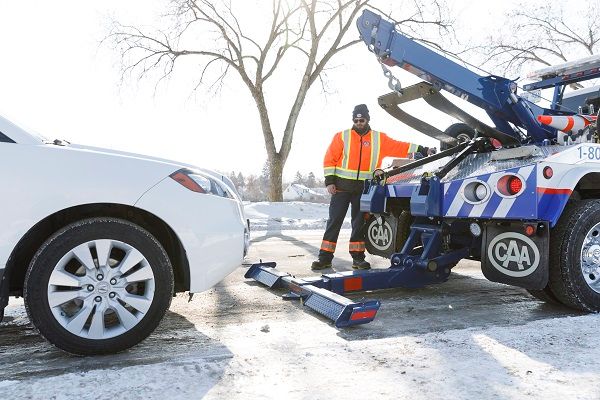
Provincial oversight of the towing industry would enhance protection for all Ontarians CAA South Central Ontario (CAA SCO) supports today’s government announcement for provincial oversight, reform and licensing of the towing industry. “Today’s announcement is an important step towards addressing the needs and challenges experienced by both consumers and the tow industry. Ontario’s motorists need to know that their tow operators are provincially licensed and qualified to perform towing services safely,” says Teresa Di Felice, assistant vice-president of government and community relations for CAA SCO. The government’s comments highlight the need for better education for the motoring public, including an introduction of a consumer bill of rights. In 2018 CAA created the Towing Bill of Rights, a glove box reference card, to help avoid any confusion when it comes to the rights of motorists when they need towing services. A CAA SCO study commissioned in 2020 revealed that only 1 out of 5 Ontario drivers feel “very protected” under the current system. The survey also identified that more than 90 per cent of Ontarians agree with tow truck licensing, certification and provincial regulation. “For over a decade CAA has been advocating for towing industry reforms and has been working towards greater consumer protection. We are pleased to see the province moving in the right direction. Consumers should have the confidence that they will be protected, regardless of where in the province they are and what kind of towing services they may require.” More information on CAA’s proposed framework for a provincial towing regulatory system can be found at www.moresafetows.ca and in our August 2020 Provincial Towing Oversight Town Hall Webinar.


Ask an Expert: What is COVID-19’s impact on the homelessness crisis?
The COVID-19 pandemic continues to impact the homeless community and homelessness crisis, including posing unique health risks to the homeless population and spurring a likely increase in homelessness due to job losses. “People experiencing homelessness are at enormous risk of exposure to the coronavirus, due to inability to self-isolate, as evidenced by outbreaks in congregate shelters,” says Marybeth Shinn, Cornelius Vanderbilt Chair and professor of human, organizational and community development at Vanderbilt Peabody College of education and human development. “With the cold weather coming, service providers are scrambling to provide food, shelter and outreach services safely, and to use rental assistance to get people into housing.” Shinn also explains that while eviction moratoriums imposed during the pandemic work to delay evictions, they do not prevent them. Arrears for rent, utilities and fees continue to accumulate when the moratorium ends, and landlords can continue to charge late fees for late payments. On the one hand, moratoriums will help keep many renters in their homes at a time when the alternatives, such as crowding in with friends and relatives or even becoming homeless, puts people’s health at risk. At the same time, landlords, especially small landlords, are also suffering. Landlords often have mortgages as well as other expenses to pay, relying on rental income to do so. In her new book with Abt Associates researcher Jill Khadduri, In the Midst of Plenty: Homelessness and What to Do About It, Shinn argues that homelessness is not a result of personal failure, but rather societal failure, as we have the knowledge and resources to end homelessness but lack the political will. As an immediate step during the pandemic, Shinn advises that Congress needs to enact relief for tenants and landlords, as well as reinstate weekly supplements to unemployment benefits to help people stay current on rent.


A lasting legacy - A gift that will touch the lives of generations
$1.48 million estate gift to Georgia Southern University Foundation funds College of Education student scholarships An extraordinary estate gift from a daughter and her husband to honor her parents will touch the lives of generations of students to come through scholarships for Georgia Southern University students working to become public school educators. The $1.48 million gift from the late Janice Sapp Castles and her late husband Charles, named for her late parents, Margaret Elizabeth and Cullen Bernice Sapp, is the second largest estate gift received to date by the Georgia Southern University Foundation. “It is inspiring when alumni, whose lives were transformed through education, give back so generously so that future students can realize the same opportunities,” said Georgia Southern President Kyle Marrero. “The Castles’ gift honors the Sapps’ legacy and their desire to help others succeed.” An alumna of then-Armstrong Junior College, Janice Castles earned an Associate of Arts degree with the financial assistance of a scholarship. That scholarship, coupled with her parents’ determination to live sacrificially to provide for educational opportunities for their children that they themselves had not experienced, allowed Sapp to begin her post-secondary academic ambitions and inspired her to give to others. Sapp continued her education at the University of Georgia earning a master’s and specialist degree in counseling as well as a doctorate in school psychology. Her longstanding education career included serving as a middle and high school teacher, guidance counselor, school counselor and adjunct professor. She also formed her own psychology practice that provided therapy and psychological assessment and diagnosis in the Atlanta area. “The generous support by the Castles family will assist in removing financial barriers for many students pursuing initial teacher preparation degrees at both the undergraduate and graduate levels at Georgia Southern for many years to come,” said College of Education Interim Dean Amy Heaston, Ed.D.. “Initial teacher preparation degrees provide students with the first step to becoming certified to teach. For many students, the Margaret Elizabeth and Cullen Bernice Sapp Memorial Scholarship will provide a needed opportunity to achieve their aspirations of teaching in their own classrooms.” If you are a journalist looking to know more about the Georgia Southern University Foundation or the College of Education -- simply reach out to Georgia Southern Director of Communications Jennifer Wise at jwise@georgiasouthern.edu to set and time and date.

Hitting all the right notes - Georgia Southern music industry degree ready to launch
Georgia Southern University’s Department of Music earned national accreditation for a new music industry degree, the final step for an innovative program that combines music, technology and entrepreneurship. Launching in the fall of 2021, the new music industry program will prepare musicians for evolving careers in music. The program curriculum combines a traditional degree with 21st-century technology and performance opportunities. Accreditation from the National Association of Schools of Music (NASM) allows the new program, Bachelor of Arts in Music with a concentration in music industry, to be offered at the Armstrong Campus in Savannah. Students will have the option of declaring an emphasis area in music technology or music business. “We could not be more excited about this program,” said Steven A. Harper, Ph.D., chair of the Department of Music. “For many years, the music program has been itching to expand its reach and regional impact. Savannah is perfectly suited for a degree of this type and we couldn’t be more pleased to have this degree come to fruition.” The music industry program includes courses in music management, live sound, recording studio techniques, digital audio workstations and music entrepreneurship. “The numerous music industries in Savannah include music manufacturers, performing organizations/venues and major music festivals. These industries can provide ample internship possibilities for hands-on experience in a chosen area,” Harper said. “We are able to reach a student body we’ve never been able to serve before. We can prepare students for a whole different set of in-demand careers and we can create ties with the music industry in Savannah in a way that’s never been possible for us until now. It’s going to be a huge boon for the department, the college, the university and the Armstrong Campus.” One professor key to the program will be Stephen Primatic, DMA, who teaches percussion, theory, jazz and music technology. His versatility is evidenced by the books he has written: two on percussion pedagogy and another on instrument maintenance and repair. “This program will be beneficial to our students, the University and the community of Savannah, offering education and training for music careers in the 21st century,” said Primatic. If you are a journalist looking to know more about the Bachelor of Arts in Music with a concentration in music industry or would like to interview Steven A. Harper, Ph.D., chair of the Department of Music or Professor Stephen Primatic -- simply reach out to Georgia Southern Director of Communications Jennifer Wise at jwise@georgiasouthern.edu to set and time and date.