
Experts Matter. Find Yours.
Connect for media, speaking, professional opportunities & more.

Designing Reflection: An Expert’s View Inside Michigan’s Japanese Garden
As public gardens increasingly become spaces for artistic expression, cultural exchange, and mindful reflection, Steven LaWarre, Senior Vice President at Frederik Meijer Gardens & Sculpture Park, recently offered his expert insight to Homes and Gardens Magazine into how world-class garden design can shape human experience, invite contemplation, and connect visitors with nature in deeply meaningful ways. With decades of experience in professional horticulture and garden planning, LaWarre has played a central role in creating and nurturing Meijer Gardens' Richard & Helen DeVos Japanese Garden, guiding its interpretive programming, and curating visitor interaction with seasonal changes and design elements. Steve LaWarre is the Senior Vice President at Frederik Meijer Gardens & Sculpture Park, where his visionary leadership and passion for botanical excellence have been instrumental in shaping the Gardens' stunning landscapes and ensuring operational excellence. He leads efforts to sustain the Gardens' exceptional standards in landscape design, sustainable gardening practices, and the care of diverse plant collections. View his profile here The Richard & Helen DeVos Japanese Garden, an eight-acre landscape inspired by centuries-old Japanese horticultural principle, has rapidly evolved into one of the Midwest’s most beloved cultural destinations. Beyond aesthetic beauty, the garden embodies philosophical traditions that encourage visitors to slow down, observe impermanence, and appreciate harmony between the human spirit and the natural world. As audiences seek spaces that offer quiet reflection, seasonal observation, and cultural resonance, LaWarre’s expertise bridges horticulture, design intention, and visitor experience. Read the Homes and Garden Magazine article 'Beyond Wild Expectations: Michigan’s Very Own Slice of Japan – Where Ancient Garden Design Provides a Deep Connection to Nature' below: Expert Insight Steven LaWarre on the Japanese Garden Experience On Winter’s Quiet Presence “It’s just beautiful covered in snow. You hear the waterfalls differently, you see ice sweep over the pond. Everything feels a bit more muffled in the winter, but it somehow puts you at ease,” LaWarre explains, highlighting how seasonal change reveals structure, silence, and contemplative calm. On Spring’s Renewal “The first flush of leaves on the trees is a joyful sight after winter. The small chartreuse green buds contrast to the dark stems,” LaWarre observes, describing the ephemeral nature of bloom and the reminder of restoration that seasonal transformation offers visitors. On Core Garden Elements “The conifers create a backbone of the garden, recognizable in all four seasons… they have been pruned and shaped over time to really create the caricature of a tree,” LaWarre notes, outlining the horticultural artistry behind traditional practices like niwaki pruning. On Cultural Immersion and Mindful Reflection LaWarre describes the garden’s traditional teahouse experience as more than cultural spectacle: “It’s a way to really quiet the senses and participate in mindful reflection, aided by the serenity of garden views… It’s an opportunity to connect with the people you’re with, but also to connect with yourself.” On Design Intent and Human Experience “It’s taught me to look at things differently. As humans, we can be focused on achieving neat lines and symmetry, but taking a moment to observe your surroundings will reveal this isn’t usually how things are in the natural world,” LaWarre reflects, capturing how garden design can subtly reshape perception. In a cultural moment where audiences increasingly seek restorative outdoor experiences, cultural depth, and mindful engagement with public spaces, LaWarre offers perspective and insight into: How garden design influences perception, supports wellness, and fosters cross-cultural appreciation How public gardens are not solely as spaces of beauty, but also living environments that shape emotional and philosophical engagement with the natural world Steve can bring this perspective for media interviews and speaking engagements.



Life Hacks in Retirement: Strategies for Aging Well
If Jean Smart can star in Hacks at 72, clearly life hacking is age-appropriate. Hacks may be a TV comedy about a sharp-tongued, aging comic, but let’s face it: retirement needs a few hacks of its own. It turns out that aging well requires more than good genes—it demands good strategy. The goal isn’t perfection. It’s progress. Progress with fewer bruises, bigger laughs, and more money left at the end of the month than freezer-burnt chicken. So here are some tried-and-true hacks in three essential areas: Money, Muscle, and Mood. Let's get you hip, fit, and financially free. Ready, Set, Go! Money Hacks: Japan Might Have Found Something In Japan, there's a charming financial custom called Kuzukai, where men hand over all their income to their wives and receive a monthly allowance. No joke—it's a thing. And it works. Japan boasts: • One of the highest household savings rates at 23% (OECD, 2023) • Low household debt per capita (World Bank) • The lowest personal bankruptcy rate in the developed world (IMF Report) • And a whopping 74% of households follow this practice (Nikkei Asia, 2021) Maybe they’ve discovered the ultimate money hack: give the money to the person most likely to use spreadsheets recreationally. But you don’t need a spouse or a sushi habit to save big. Whether you're solo or shacked up, a homeowner or a renter, here are some effectively universal money-saving tips. Everyday Money-Saving Hacks: • Cut the Hidden Fees: Banking, streaming, delivery apps—if you’re not actively using them, cancel or deactivate. Your wallet will thank you. Read your bank and investment statements carefully, as if they were love letters from your money. That $3 “maintenance fee”? It might be costing you more than you realize. • Unsubscribe to Survive: Subscriptions are like house guests—pleasant at first but staying too long and costing too much. Establish a quarterly ritual—Subscription Audit Sunday. Review auto-renewals—Netflix, meditation apps, fancy sock clubs. If it doesn’t bring you joy or serve your needs weekly, cancel it. You might find enough loose change for a weekend escape. • Shop Daily, Eat Fresh: Instead of over-buying in bulk, buy just what you need for the day. It supports spontaneity and reduces waste. (Bonus: you can honour the “I feel like chicken wings” days guilt-free.). Power Tip: Shop daily, eat fresh. Channel your inner Parisian. Shop just for today—reducing waste, adding joy, and turning dinner into a choice rather than a guilt-ridden freezer excavation. • Use Senior Discounts Like a Boss: Shoppers Drug Mart (55+), Pet Valu (60+), movie theatres, golf, bowling… but only if you ask. Ask proudly: “I dare you, card me.” Mark senior days on your calendar like paydays, because they are. • Split with a Buddy: Share groceries with a friend. Half a BBQ chicken is more realistic (and less greasy) than the whole bird, and it reduces “fridge clutter”! • Ride Together: Share Ubers or Lyft. Or better yet, plan your errands with a friend and make a day of it; it will feel more like an adventure. • Scan for Free Fun: Check local listings for subsidized classes, outdoor concerts, and "pay what you can" events. Even dress rehearsals can be hidden gems at a discount. Money Traps to Avoid: 1. Subscription Creep – Set reminders to cancel trials. They add up faster than your grocery bill in the frozen aisle. 2. Silent Statement Siphons – Monitor your monthly expenses. Cut out what doesn’t bring joy or value. 3. Lifestyle Drift – Just because you can spend, doesn’t mean you should. You don’t need another air fryer. 4. Over-Gifting – Love isn’t measured in Amazon orders. The best gift is your time, or your famous banana bread. 5. Retail Therapy – If it’s cheaper than therapy, it’s probably just a distraction. But that doesn’t mean it’s helpful therapy. 6. Impulse Upgrades – Your current phone may be a few years old—but so are you, and you’re still fabulous. Your toaster doesn’t need Bluetooth, and neither do your socks. Physical Hacks: Train Like You Really Mean It The book ‘Younger Next Year’ (thank you, Bill P. and Steven H.) offers a wake-up call: Life is a test of endurance. Prepare yourself for it. In retirement, fitness isn’t just a hobby — it’s your new full-time job. And this job offers better hours, no toxic bosses, and a dress code that includes spandex. Fitness Hacks That Work 1. Schedule it: If it’s not on the calendar, it’s not happening. Even better, set a recurring date with a friend. Accountability is appealing. 2. Make it enjoyable: Not feeling spin class? Skip it. Try Zumba, power walking, or even disco gardening. Move as if no one’s watching (even if your neighbour is). 3. Start where you are: Don’t join Advanced Pickleball if your last workout was chasing a runaway dog in 2017. 4. Make It Social: Grab a friend or make new ones—bonus points for post-sweat smoothies and commiseration. 5. Keep Commitments (Especially to Yourself): Be a “serious person,” as Logan Roy would say. If you schedule a walk, show up—even if you’re in Crocs and a hoodie. 6. Track progress, not perfection: Count steps, not pounds. Celebrate consistency. Aim for “better than yesterday,” not “six-pack by September.” Fitness Traps to Avoid: 1. Choosing Something You Hate: If you dread it, you’ll ditch it. Guaranteed. 2. Overestimating Your Ability or Availability: Planning to run a marathon in 30 days after a decade on the couch? That’s... aspirational. 3. Overpaying for Motivation: Fancy gym + guilt ≠ results. Try a budget-friendly gym, or even YouTube workouts in your living room. 4. Ignoring Recovery: If you can’t walk after leg day, you’re doing it wrong—stretch, hydrate, nap. Repeat. 5. All-or-Nothing Thinking: Missing one workout doesn’t mean the week’s a write-off. Perfection is the enemy of progress. 6. Comparing Yourself to 30-Year-Olds on Instagram: Just… don’t. Unless you want to feel bad in high def. 7. Try "Fitness Snacking" Squats while the kettle boils. Do wall push-ups before brushing your teeth. Have a dance break during Jeopardy. Movement matters. 8. Stretch Before Bed Nightly stretches improve sleep and help you wake up feeling refreshed. It’s five minutes that pay dividends. Emotional Hacks: Mindset Is Your Muscle This is the part they don’t teach in school—or even in yoga class. Emotional health is what sustains you when the stock market tanks, your golf swing falters, or the kids “forget” to call. Emotional Hacks to Try 1. Upgrade Your Self-Talk: You hear your voice more than anyone else’s. Make it kind. Make it constructive. 2. Be Your Own Biggest Fan: Self-love isn’t arrogance. It’s survival. 3. Treat Yourself Like a Dear Friend: Would you tell your best friend she’s lazy, useless, and past her prime? No? Then stop saying it to yourself. 4. Forgiveness: Begin with yourself. Write that forgiveness letter, see a therapist, cry it out. Let go. No one leaves here flawless. 5. Basic Self-Care: Feed your body with wholesome food, ensure proper rest, and maintain regular grooming. Yes, plucking your chin counts. 6. Gratitude: morning and night. Focus on one thing you’re grateful for each day. It’s better than Botox. 7. Practice "Mental Hygiene" meditation, journaling, or a walk without your phone. It's like flossing for your nervous system. 8. Try Five-Minute Journaling: “What made me smile today?” “What felt hard?” “What do I want more of tomorrow?” Answer honestly—no grammar police. Emotional Traps to Avoid 1. Negative Self-Talk: There is zero upside. Science backs this up—positive self-talk improves performance and wellbeing. Try this: “Today wasn’t my best. I was tired and snappy. I’ll apologize and do better tomorrow.” or “I know I can do this. I need to practice and be patient with myself.” 2. Not Making Yourself a Priority: The oxygen mask rule is absolute. If you don’t take care of yourself, you can’t help anyone else. 3. Self-Medicating with Booze, Bingeing, or Buying: Feel the feelings. Don’t dodge them with Chardonnay or Amazon. 4. Righteousness Addiction: Would you rather be right or be happy? Being “right” is expensive—emotionally, physically, and energetically. 5. All-or-Nothing Perfectionism: Perfection is a myth—and frankly, a boring one. Flaws are where the fun and growth live. 6. Regret. Let’s face it, regrets are a part of life. The trick is not to dwell on them. Don’t store them in Samsonite to pull out whenever we want to beat ourselves up! Ever notice that the windshield on your car is much bigger than the rearview mirror? Read that again. The Social Capital Audit You are more than your RRSP and Fitbit stats. What do you bring to the table? Your kindness? Humour? Lived wisdom? A killer lemon loaf? Whatever it is—own it. Hone it. Make it your signature. Whether you’re the neighbourhood listener, laughter-bringer, or human glue-stick, your contribution matters. What Are You Proud Of… and Is It Still Serving You? Maybe once upon a time, you were known for your hair, your legs, your singing voice, or your abs of yesteryear. But here's the truth: gravity always wins. And that’s not failure—it’s biology. So if you’re still starting sentences with “Back in my day…”, you might be overdue for a mindset update. Choose something new to feel proud of now: your resilience, your sense of humour, your garden, or your ability to FaceTime your grandkid without accidentally hanging up. Adjust the metric. Celebrate the upgrade. Some Mantras for the Journey • “Done is better than perfect.” • “I am doing the best I can, and that’s enough.” • “Every day is a fresh start (even if my back cracks getting out of bed).” • “Progress, not perfection.” • “I am not too old, and it’s not too late.” • “If not now… when?” • “Stop acting my age.” The Final Hack: Don’t Just Celebrate – Throw Confetti Practice makes progress. And progress, my friends, is where the magic lives. Every step matters. Every stumble adds a twist. Perfection is overrated. Progress is the new gold standard. And as Mel Robbins reminds us: “There will be many people who won’t appreciate your value. Make sure you’re not one of them.” You’ve spent your life caring for others. Now it’s your turn to care for yourself—thoughtfully, warmly, and with plenty of good humour. Retirement isn’t the end. It’s the ultimate reboot. Be the Jean Smart of your own story. Jean, watch your back... and Kuzukai, watch our money. Star power meets allowance power. Don’t Retire…Re-Wire! Sue


In another milestone commitment to community health, ChristianaCare today announced a $1.6 million investment in 25 local nonprofits, unveiling the recipients of its Community Investment Fund during a special celebration at The Ministry of Caring in Wilmington. Since 2019, ChristianaCare’s Community Investment Fund has provided more than $5.6 million to 64 organizations, addressing social, behavioral and environmental health factors. ”ChristianaCare is empowering and supporting our nonprofit partners so they can help meet the many needs of the people they serve, and work with us to improve patient health and create healthy communities and a healthy Delaware,” said Bettina Tweardy Riveros, chief health equity officer at ChristianaCare. This year’s recipients received funding to support health improvement initiatives in neighboring communities and address critical issues and community needs. “Each of these recipients is making a significant and positive impact by addressing critical health challenges throughout our communities, including food insecurity, housing insecurity and environmental health. At ChristianaCare, we are honored to be joining forces with these 25 organizations to provide them with more resources so that they do more for those in need. It is another way we care for our community,” she said. The funded initiatives will be implemented throughout the upcoming year and were selected based on the quality of applicants’ proposals and implementation plans, and on the alignment of their proposals with the critical issues prioritized by the community in ChristianaCare’s Community Health Needs Assessment and Community Health Implementation Plan. Recipient Spotlight: Healthy Food for Healthy Kids "The impact of ChristianaCare’s 2024 Community Investment Awards funds on Healthy Foods for Healthy Kids will be felt not only in 2025 but for years to come. This funding will expand our program to an additional school, serving over 600 more students, and support data and research for future growth." Healthy Food for Healthy Kids, Lydia Sarson, Executive Director. Recipient Spotlight: Project New Start “Approximately 85% of the justice-involved individuals served by Project New Start are housing and food insecure. With ChristianaCare’s 2024 Community Investment Fund Award to Project New Start, which began 11/01/24, we have already been able to assist 23 individuals with clothing and household goods; 20 individuals with transportation assistance; 17 individuals with food support; and 7 individuals with housing as of 12/31/24. The impact of these funds cannot be overstated as this investment by ChristianaCare provides Project New Start the means to provide the critical basic needs an individual requires to live with dignity without the trauma of worrying about where they will sleep, how they will eat and how they can sustain employment. We are so grateful to ChristianaCare for their ongoing support.” Priscilla Turgon, Founder and Executive Director of Project New Start, Inc. Recipient Spotlight: YMCA of Delaware - Central YMCA Supportive Housing Program “The Central YMCA Supportive Housing Program, in partnership with Christiana Care, serves low-income men at risk of homelessness who often face trauma, addiction, disabilities or lack of family support. Through stable housing, nutritious meals, welcome packages, rental assistance and supportive activities, the program fosters community wellbeing, improves health outcomes, prevents homelessness and empowers residents to achieve self-sufficiency.” Jimia Redden, Executive Director of Housing. This year’s Community Investment Fund recipients are: • AIDS Delaware: AIDS Delaware’s mission is to eliminate the spread and stigma of HIV/AIDS, improve the lives of those living with HIV/AIDS and promote community health through comprehensive and culturally sensitive services, education programs and advocacy. • Black Mothers in Power: Black Mothers in Power seeks to eradicate racial health disparities for Black birthing people and Black babies throughout Delaware. • Boys & Girls Club of DE: Boys & Girls Clubs of Delaware inspires and enables young people, especially those most in need, to reach their full potential as productive, responsible, caring citizens. • Children and Families First DE: Children & Families First is one of Delaware's oldest and most trusted non-profit leaders in providing the supports and services children and their families need to thrive. • Claymont Community Center - Brandywine Resource Council: Claymont Community Center is a base for a variety of community organizations supporting educational, social, recreational, cultural, personal development, financial and wellness needs. • Delaware Center for Horticulture: The Delaware Center for Horticulture cultivates greener communities by inspiring appreciation and improvement of the environment through horticulture, education and conservation. • Delaware Futures, Inc: Delaware Futures empowers at-promise high school and middle school youth across the state of Delaware by providing year-round, trauma-informed curricula tailored to students at each grade level. • Delaware Nature Society: Delaware Nature Society connects people and nature to create a healthy environment for all through education, conservation and advocacy. • Do Care Doula: Do Care Doula provides grant-funded Doula training and development, subsidized Doula support and a variety of community outreach programs. • Healthy Food for Healthy Kids: Healthy Food for Healthy Kids supports educators in Delaware, bringing life-lasting benefits of gardening and good nutrition to kids. • Jefferson Street Center: The mission of JSC is to advance community-driven priorities in Northwest Wilmington that promote the conditions necessary for all residents to thrive. • Latin American Community Center: LACC seeks to empower members to become contributing members of society through advocacy and offers programs and services to anyone ages of one to 101. • Milford Housing Development Corporation: Milford Housing Development Corporation is a value-driven, nonprofit, affordable housing developer, providing services throughout Delaware. Its mission is to provide decent, safe, affordable housing solutions to people of modest means. • Ministry of Caring: Since Brother Ronald began the ministry in 1977 with the first shelter for homeless women on the Delmarva Peninsula, the Ministry has worked ceaselessly to ease the needs and struggles of our neighbors. • ONCOR Coalition: ONCOR’s vision is to build and promote spaces that connect people to the city and each other. It promotes positive relationships through community-based educational programs and recreational opportunities. • Our Daily Bread Dining Room of MOT: ODB is the only soup kitchen in the Middletown, Odessa and Townsend region. ODB is a volunteer run organization with over 300 volunteers. Volunteers help purchase and pick up food and ingredients, prepare and serve meals and clean and maintain the facility. • Project New Start: Project New Start provides a comprehensive cognitive behavioral change/workforce development initiative for individuals transitioning out of state and federal institutions. • Ray of Hope Mission Center: Ray of Hope’s mission is to recognize and address the needs of those who are struggling within our community and assist them in their efforts to provide for themselves and their families, both physically and spiritually. • St. Patrick's Center: Serving people in Wilmington’s East Side neighborhood since 1971, St. Patrick’s Center is a nonprofit organization that operates a Senior Center, and provides meals, groceries, clothing, paratransit and social service support to the public. • The Resurrection Center: The purpose of the Resurrection Center is to spread the gospel of Jesus Christ and create a spirit-filled environment that hungers for the Gospel and to serve as liberating agents in the midst of the world. • Voices of Hope: Voices of Hope’s mission is to empower lives and foster recovery. The nonprofit is dedicated to supporting individuals and families facing substance use disorder. Through compassion, education and community engagement, Voices of Hope strives to break the chains of addiction, promoting a healthier, brighter future for all. • West End Neighborhood House: At West End Neighborhood House, staff, clients, volunteers and donors work together to resolve complex social challenges throughout Delaware. Through outcomes-driven programming, the West End Neighborhood House provide support that meets community needs in finances, housing, education, employment and family services. • Westside Family Healthcare: Westside Family Healthcare is a community-minded, non-partisan health center located in Delaware. Westside opened its doors in 1988 and has maintained status as a Federally Qualified Health Center since 1994. • Wilmington HOPE Commission Inc.: The Hope Commission is a reentry program that helps formerly incarcerated men return to their community. It offers support services that address factors known to lead to repeat offenses. • YMCA of Delaware: The Central YMCA Supportive Housing Program offers housing for men aged 18 and older. Residents benefit from dorm-style accommodations, discounted access to the fitness center and connections to a range of health and human service providers in partnership with the YMCA.



Saving the world, one yard at a time
University of Delaware professor Doug Tallamy has a simple mission: Encourage people to rid their property of invasive plants and replace them with native ones. One of the ways he's tackling it is through a concept called “Homegrown National Park,” a grassroots initiative he co-founded to offer a simple solution for the biodiversity crisis — the decline of a variety of animals, plants and numerous species. Tallamy, the TA Baker Professor of Agriculture and Natural Resources at the University of Delaware, is trying to encourage everyone to do their part to protect the planet. If invasive plants (which don’t belong in an area and can ultimately harm the ecosystem by taking away essential resources from other plants) grow out of control, then an area loses its biodiversity, the ability for multiple plant and animal species to function at once and create a rich ecosystem. Invasive species are prolific. For example, many invasive plants produce berries, which some birds eat. The birds then spread those seeds around. So, once invasive plants are in an area, they’re hard to get rid of. The idea is to replace them with native plants, which have historically belonged to a region and provide critical habitat for insects, birds and other creatures. It's an uphill climb, but Tallamy persists and is trying to save the world, one yard at a time. “Everybody has a responsibility of doing things that sustain their little piece of the earth, and there are a whole bunch of things one individual can do to help in that regard,” Tallamy said. What’s not so simple, however, is getting the Earth’s 8 billion people (or, at least, anyone with property) to do this. “We are trying to change the culture so that [replacing invasive plants with native ones] becomes the norm, not the exception,” Tallamy said. “We’re not getting rid of lawns. But we don’t need 44 million acres of them. There are now so many people on the planet that natural systems are not functioning the way they need to sustain us.” A snowball effect Much of our current plant culture revolves around colorful, aesthetically pleasing ornamental plants that don’t support the local food web. When they grow out of control, a local yard or larger region loses out on biodiversity. The natural world is all connected. For example, Tallamy said, if we lose pollinators like our native bees that transport pollen between plants, then we also lose most of our plants that produce flowers and fruits. It’s a snowball effect. “If that happens, the energy flow through our terrestrial ecosystems is almost totally disrupted, which means the food webs that support our vertebrate animals, our amphibians, our reptiles, our birds and our mammals would collapse and all those animals would disappear,” Tallamy said. “Without insect decomposers, the creatures that break down dead material, mostly plants, would rot and only bacteria and fungi would endure.” “Homegrown National Park” has generated a lot of buzz for Tallamy, who received recognition for it in October by the Massachusetts Horticultural Society. The MHS awarded Tallamy with its highest honor, the George Robert White Medal of Honor, for eminent service in the field of horticulture. Conservation in action Tallamy’s quest to “change the culture” on planting can be witnessed in the fall at UD. On a warm October afternoon, he and a group of students from the Introduction to Insect and Wildlife Field Studies (ENWC 165) course trudged out to UD Wetlands to curtail some pesky invasive plants native to Asia. Equipped with clippers, loppers and handsaws, they walked behind Worrilow Hall, part of the College of Agriculture and Natural Resources’ 350-acre campus, which includes the UD Wetlands, an area that was formerly a dairy cow pasture but transformed into wetlands in 2008 because pollution from the farm was reaching the local watershed. The wetlands were created because wetlands, by design, absorb nitrogen from runoff before it goes into waterways. They then release it as a gas into the atmosphere. But the UD Wetlands repeatedly deal with pesky invasive plants such as Porcelain-berry and Chinese elm. Over the years, UD students have stymied the species from overtaking the area. “See this? This is a good guy,” said Tallamy to the students as he held up a fallen branch. “You just want to get the Porcelain-berry off of it. They’ll grow back very well. But we want to nip [the Porcelain-berry] in the bud.” Taylor Kelly, a senior wildlife ecology and conservation major who took part in the invasive species removal, said Tallamy has helped her better understand the interconnectedness of various ecosystems. “Native plants provide so much value to our local pollinators, which add value to our local birds because they feed on pollinators, seeds, fruit and trees,” Kelly said. When native plants are in their natural environment, she added, it is a beautiful thing to see. Gardening with intention Tallamy, who began his teaching career at the University of Delaware in 1982, has published numerous research papers about entomology and written three books about native plants, insects and ecosystems, with a fourth book soon to come out. Lately, much of his career has revolved around public outreach. He often lectures across the country about native plants and their ecosystem value and is regularly quoted in outlets like The New York Times, The Washington Post and Natural History Magazine. “Dr. Tallamy is a rare scientist that is able to explain his work to everyone,” said Jake Bowman, UD professor of wildlife ecology and chair of the Department of Entomology and Wildlife Ecology. “His passion for the importance of native plants has driven a major shift in thinking.” Years ago, when Tallamy first set out to spread his messages about native plants, he anticipated a lot of pushback from horticulture enthusiasts who he thought might be resentful about being told how to choose their plants. Instead, Tallamy found that many actually embraced his ideas, including Delaware’s own Master Gardeners, a group of about 300 volunteer educators trained by UD Cooperative Extension. Among his supporters are Delaware Master Gardeners Karen Kollias, Brent Marsh and Judy Pfister, who each praised Tallamy for the impact he has had on how they garden. Kollias now “gardens with intention”— not for herself or her neighbors, but for the environment. “I was a gardener before,” she said. “Now I consider myself an ecological gardener.” After Marsh received a copy of Tallamy’s 2007 book, Bringing Nature Home, which talks about the link between native plants and native wildlife, Marsh became a Master Gardener and began planting native species in his Georgetown lawn. Today, native plants such as woodland sunflowers and oak trees adorn Marsh’s yard, and he is grateful for the value of native plants that he learned through Tallamy’s book. “Someday, maybe 20 years from now when I’m 100 years old, somebody's going to buy my house and they’re going to say, ‘Who planted all these oak trees?!’” Marsh chuckled. “Doug Tallamy changed my life.” As Tallamy has sought to simplify scientific knowledge with the general public, Pfister has utilized Tallamy’s approach to do the same. “He has a way of just making the whole thing a big circle, tying the need for a plant back to the need for a bird back to the need for a tree,” she said. Tallamy, who has been delighted by the fervor ignited by his native plants teachings, said the future of the Earth and its diverse ecosystems will in large part depend on how people treat their yards. “In the past, we asked our landscapes to do one thing, and that was, be pretty,” Tallamy said. “Now we have to ask them to do two things: be pretty and ecologically functional. That's the horticultural challenge of today.” But it’s one Tallamy believes can be achieved. Sometimes, he wishes he could speak to his 10-year-old self and tell the young boy to dig another pond for the toads to colonize. Restore. Conserve. Focus on keeping nature’s ecosystems intact, he would say. “We have to do both,” Tallamy said. “Yes, we have to conserve what’s out there, but we have to get in the mindset that we can really put a lot of it back.” Tallamy and Homegrown National Park co-founder Michelle Alfandari have created a database for people to type in their zip code and discover which native plants are best for their area.


Feeding astronauts and growing food on Mars - Take a look at what Florida Tech has to offer
Astrobiology student Hannah Blackburn is relentless about building a better future—not just for the next generation, but for all humankind. As we look to Mars in hopes of supporting human life, Hannah is developing ways to grow nutritious food on the Red Planet. As an astrobiology student, Hannah is able to take an interdisciplinary approach to her research, which is providing the building blocks for what gardening on Mars could eventually look like. Looking to know more about Florida Tech and the amazing programs like astrobiology? Let us help. Simply contact: Adam Lowenstein Director of Media Communications (321) 674-8964 adam@fit.edu

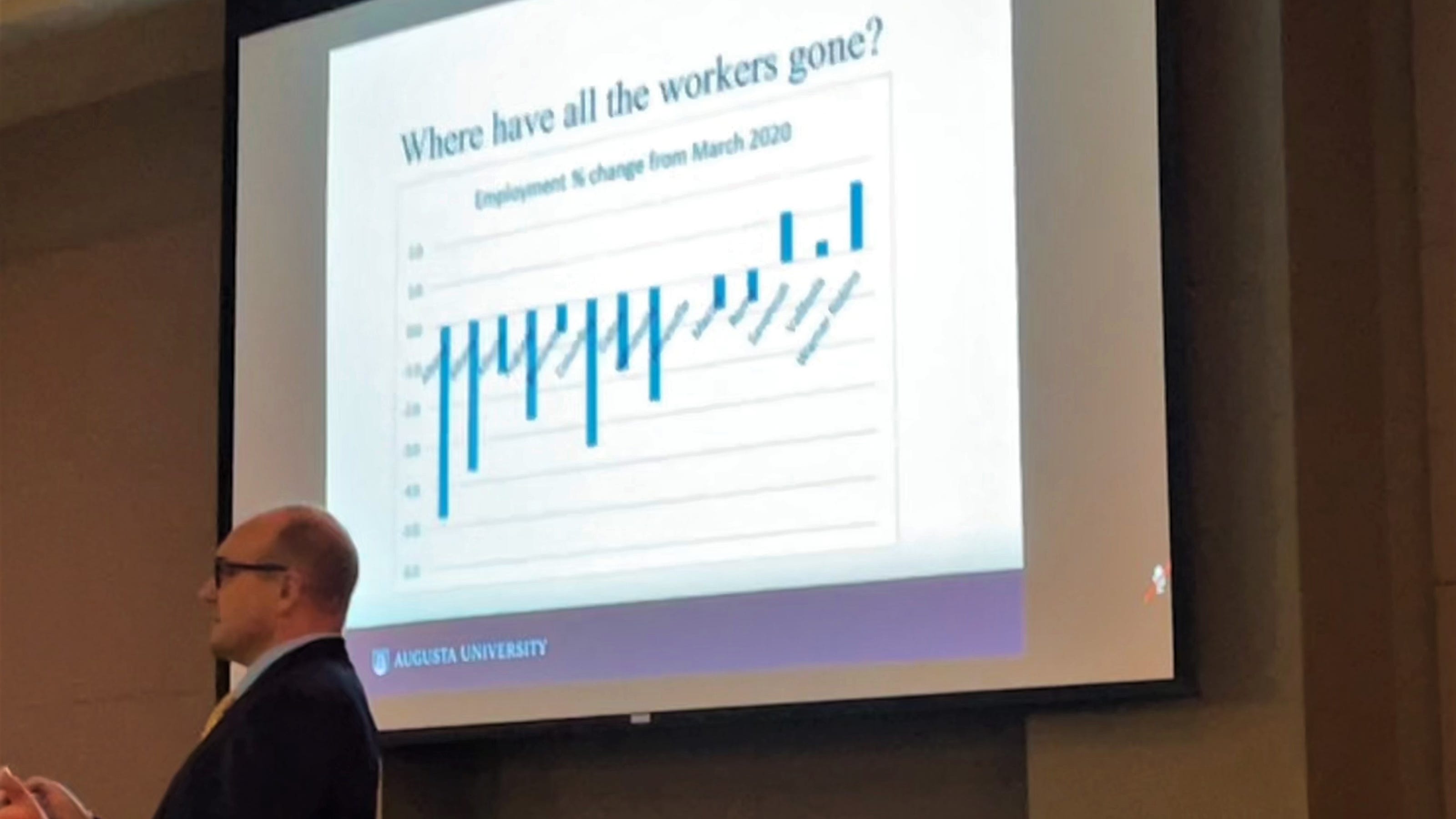
As the legendary political guru James Carville used to say, "It’s the economy, stupid." And these days with housing prices, inflation and the cost of living all pointing up in a very steep trajectory – the state of the economy is front and center for a lot of politicians, Americans and families as the year comes to a close. There’s a lot to be considered, and that’s where experts like Augusta’s Dr. Simon Medcalfe are being sought out to explain economic trends what is behind them. “U.S. retail sales are high,” explains Medcalfe “We had a lot of stimulus checks coming through the door and that’s really spurred extra spending and it’s across a whole range of retail sectors.” According to Medcalfe, household items are also seeing double-digit price increases. “What we’ve seen over the last 18 months during the pandemic, is a shift in our consumer preferences and consumer behavior.” • Furniture sales are up 29% • Used cars and cars in general are up 25-26% • Gardening and building supplies are up 14% • Electronics have seen an almost 30% increase • Clothing sales are up a whopping 50% But it’s not all good news - as the price of everything as we know is going up. “Inflation is running about 6.8% nationally,” Medcalfe explains. “It’s running about 7.2% in the south and it’s certainly a concern of policymakers and economists.” But theirs is sunshine behind those clouds as Medcalfe believes 2022 will see a return to normal. “I think next year inflation will come down. I know it won’t be at these high levels, but I still think it’ll be above the Feds target level of inflation, so look for those interest rate increases next year.” The economy and what to expect locally and nationally are hot topics – and if you are a reporter covering this topic – that’s where we can help. Dr. Simon Medcalfe is a highly regarded economics expert and the Cree Walker Chair in the Hull College of Business at Augusta University. Medcalfe is available to speak with media regarding the economy and its outlook – simply click on his icon now to arrange an interview today.


When people hear the term “assisted living,” they might think “nursing home” or “old folks’ home.” But what people don’t know is that interior designers are working hard to ensure that these facilities provide a sense of comfort and a sense of home to their residents. “Designing for assisted living environments requires careful consideration of the needs of the residents living there. But really, in that way, it is no different from designing for any population,” said Elise King, assistant professor of interior design in Baylor University’s Robbins College of Health and Human Sciences. Baby boomers would rather live at home or in a residential setting, according to SeniorLiving.org. This will require more locations to have independent and assisted living available. With the baby boomer generation transitioning into retirement, many will require additional care but don’t want to be in nursing homes like their parents. “You should always begin by understanding the users of the space and assessing their needs and requirements,” King said. “And what you’ll find is that across the lifespan, while there are different needs which must be met by various functional requirements, our innate desires are not that different.” 1. Bring outdoors inside by incorporating nature into facility design. One way designers enhance facilities is by incorporating nature into their design and bringing the outdoors inside. At Baylor, Debra Harris, Ph.D., associate professor of interior design — who has researched the impact of health care facility design on patients, families and health care workers — teaches a sustainability course that addresses some aspects of nature in design. “We reinforce all aspects of indoor environmental quality through research activities and through the entire design process,” Harris said. “For years, architects have discussed the concept of organic architecture and more recently, the term ‘biophilic design’ has been used,” King said. “And in the past 30 or so years, we’ve seen a growing body of research that supports what we’ve assumed for a long time, essentially that humans desire a connection with nature and that nature can have a positive impact on health and well-being.” She said one way this can be accomplished is by having ample windows, particularly those that look onto greenspaces or treetops. It also is important to consider that some residents will be using walkers, canes or wheelchairs. Window height should be considered so that all residents can benefit. Another way to incorporate nature into the design is by using natural materials when possible or using materials that have textures or patterns reminiscent of nature. Harris agrees that incorporating nature into a facility’s design is important and beneficial to the residents living there. “Direct access to nature, like gardening or nature walks, and indirect access to nature, through a window, provide real tangible benefits,” Harris said. 2. Access to natural light, as well as artificial light that mimics daylight, provides benefits to seniors that are associated with well-being. Harris said having access to natural light provides benefits associated with well-being, such as reinforcing our natural clock, known as circadian rhythms, which helps with the quality of sleep and may contribute to management of chronic conditions. Designing to provide access to nature through gardening and walking also can increase physical activity and social interactions, she said. Artificial lighting is also an important factor in interior design, especially for seniors. Harris said there are lighting systems that can mimic daylight, changing over the course of the day to support our circadian rhythms, which can lead to an elevated sense of well-being. This may contribute to other aspects, such as social interactions, physical activity, and satisfaction, she said. 3. Designing for all five senses is critical for making a facility feel more like home. King said it’s important to design for all the senses, not just the visual aspect of the facility. She said sound, smell and touch are other critical aspects that need to be taken into consideration to make a facility feel more like a home. “Designers have to use research to understand how we can best address the specific needs of a mature population through design,” King said. “By creating environments that value and support these innate needs — self-actualization, esteem, love and belonging, safety needs and physiological needs — we’re reinforcing a sense of place and hopefully, a sense of home.” ABOUT BAYLOR UNIVERSITY Baylor University is a private Christian University and a nationally ranked research institution. It provides a vibrant campus community for more than 17,000 students by blending interdisciplinary research with an international reputation for educational excellence and a faculty commitment to teaching and scholarship. Chartered in 1845 by the Republic of Texas through the efforts of Baptist pioneers, Baylor is the oldest continually operating University in Texas. Located in Waco, Baylor welcomes students from all 50 states and more than 90 countries to study a broad range of degrees among 12 nationally recognized academic divisions. ABOUT ROBBINS COLLEGE OF HEALTH AND HUMAN SCIENCES AT BAYLOR UNIVERSITY The Robbins College of Health and Human Sciences at Baylor University was established in 2014, a result of identified priorities for strengthening the health sciences through Baylor’s strategic vision, Pro Futuris, and the University’s Illuminate strategic plan. The anchor academic units that form Robbins College – Communication Sciences and Disorders; Family and Consumer Sciences; Health, Human Performance and Recreation; Public Health; and Division of Health Professions – share a common purpose: improving health and the quality of life. The College’s curricula promotes a team-based approach to transformational education and research that has established interdisciplinary research collaborations to advance solutions for improving quality of life for individuals, families and communities. For more information, visit www.baylor.edu/chhs.

