
Experts Matter. Find Yours.
Connect for media, speaking, professional opportunities & more.

Craig M. Harvey, Ph.D., has been selected to serve as the new dean of the Allen E. Paulson College of Engineering and Computing beginning July 1. “I am excited to welcome Dean Craig Harvey to Georgia Southern University as the next generation of leadership for the College of Engineering and Computing,” said Carl L. Reiber, Ph.D., provost and vice president for academic affairs. “Dean Harvey brings with him an understanding of what a vibrant and growing research university will need to move to the next level as our region expands in its engineering and computing needs.” Harvey comes to Georgia Southern University from Louisiana State University, where he serves as the associate dean for academic affairs of the College of Engineering, professor of Industrial Engineering and is the holder of the Donald W. Clayton University Professorship. He brings to Georgia Southern a wealth of knowledge in leadership, student growth and expansion and advanced engineering studies. “It will be a great honor to serve as the next dean of the Allen E. Paulson College of Engineering and Computing, a college that prepares graduates in engineering, construction and computing to be ready to take on the challenges facing Georgia and the country in the 21st century,” Harvey said. “I look forward to working with faculty, staff, students, alumni and industry to position the college to meet the future demands in both education and research in the state where my engineering career began.” His research interests include human computer interaction, usability engineering, human collaboration within complex environments, human factors engineering and safety engineering. Harvey worked full time as a maintenance engineer and captain at Grand Forks Air Base in North Dakota and served in the United States Air Force Reserves while earning a Ph.D. in industrial engineering from Purdue University. He holds a bachelor's in industrial engineering from Georgia Institute of Technology and a master's in industrial engineering degree from Purdue University in West Lafayette, Indiana. For more information — simply reach out to Georgia Southern Director of Communications Jennifer Wise at jwise@georgiasouthern.edu to arrange an interview today.


New data shows real value of on-campus student engagement - Georgia Southern
Students celebrate the first week of classes for the Fall 2022 semester at the Welcome to the Nest Block Party, part of programming for The Eagle Experience. Planning and attending student events on a college campus may sound like it’s all fun and games, but new data from Georgia Southern University shows there are real benefits for the students and for the university when students engage in on-campus activities. A recent analysis by Georgia Southern’s Institutional Research office of first-year students who attended at least one event during the 2021-22 school year showed that students who attended at least one event returned this year at a rate of 79.4%. That figure is more than seven percentage points higher than the University’s overall freshman retention rate of 72%. “National data has consistently shown that the more engaged a student is with the university, the greater their chance of succeeding in college. It’s very satisfying to now have data to show the value of student programming and events at Georgia Southern,” said Shay Little, Ph.D., the University’s vice president for student affairs. Student affairs has been collecting student participation data since the university launched “the Eagle Experience” in fall 2020. The following year, the program, a collaborative cross-university effort to ensure new students’ successful transition to the Georgia Southern college experience, won a 2021-22 National Association of Student Personnel Administrators (NASPA) Excellence Bronze Award. Now, data show that students are re-engaging after two COVID-influenced years that impacted many of Georgia Southern’s operations and activities. Total attendees measured at Georgia Southern events on all three campuses rose from 55,124 in fall of 2021 to 79,408 in fall of 2022. That’s a 44% increase in students who checked in during at least one of more than 1,000 events. Fall 2022, the numbers show: 1,162 total events 79,408 total attendees 370 Armstrong Campus events that attracted 13,116 attendees 662 Statesboro Campus Tagged Events that attracted 62,335 attendees 82 different departments or registered student organizations hosted events “It’s clear that we are reaching our Eagle Experience goals of engaging and retaining our students,” Little said. “We intend to foster a transformative student experience where students have fun, find a place to belong, and have opportunities to learn while enhancing their academic experience. These results are very encouraging.” Looking to know more - then let us help. Shay Little, Ph.D., is available to speak to reporters about the importance and success of student engagement. For more information or to arrange an interview - simply reach out to Georgia Southern Director of Communications Jennifer Wise at jwise@georgiasouthern.edu to arrange an interview today.
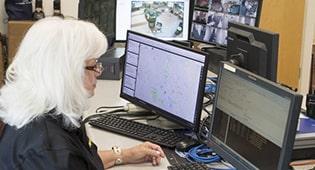
Experts in the Media: Georgia Southern investing $1.2 million to upgrade campus security cameras
Georgia Southern University is planning a major upgrade to its campus security cameras and video technology. With approximately $1.2 million budgeted, the University will upgrade the cameras in the resident halls and other buildings in Statesboro, Savannah and Hinesville to bring the current cameras from analog to a digital platform. Additionally, new cameras will be placed at entrances to theirr campuses that can tie into those from other law enforcement agencies. The end result will be an interconnected network of cameras across the region. The new technology package includes state-of-the-art Flock cameras, which are motion-activated and record license plate numbers of any vehicle that comes into the hall parking lots. Flock Safety’s “Vehicle Fingerprint” technology lets police search the video by vehicle make, color, type, license plate, state of the license plate, missing plate, covered plate, paper plate, and unique vehicle details such as roof racks, bumper stickers, and more. The cameras can be used to look for a specific suspect or a vehicle that has been entered into law enforcement databases. Additionally, the University can use Flock for investigative purposes as well by going back and looking for any cars that fit a certain profile if it was associated with a crime or if there was a gunshot detected nearby. “This upgrade allows us to add more cameras, extend our reach, add storage and searching capabilities and better integrate our cameras into other video surveillance networks in use by local law enforcement,” said Georgia Southern University Police Chief Laura McCullough. “This is a major step forward in our ongoing work to keep our campus safe.” The new equipment will add to, and augment, Georgia Southern’s network of more than 1,800 video cameras on its three campuses. The project will begin in the coming weeks and is expected to be completed by the start of the fall 2023 semester. The announcement has garnered a lot of attention, especially with local media and publications covering security. If you're a journalist looking to know more about this announcement or speak to an expert about campus security and safety - then let us help with your coverage. Georgia Southern University Police Chief Laura McCullough is available - simply reach out to Georgia Southern Director of Communications Jennifer Wise at jwise@georgiasouthern.edu to arrange an interview today.
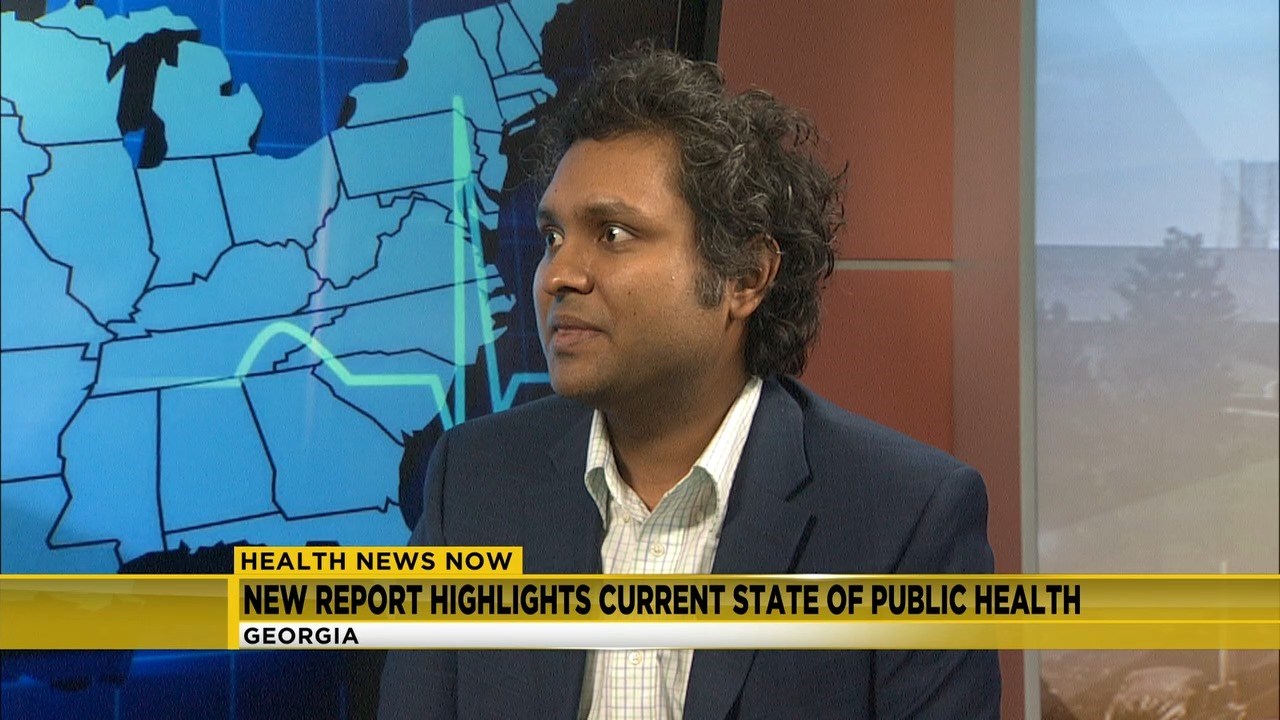
Augusta University’s second annual Healthy Georgia Report has been released, offering a snapshot of health in the Peach State as compared to not only neighboring states, but also the entire country. While Georgia’s population is doing well in some key health factors, researchers also found areas that could benefit from more awareness and public policy action. Biplab Datta, PhD, assistant professor in the Institute of Public and Preventive Health and the Medical College of Georgia’s Department of Population Health Sciences, collaborated with other IPPH faculty and staff to update the report and add new categories this year. The goal of the report is to connect with lawmakers, community leaders and researchers, stimulate conversations about public health needs and promote action, such as greater community engagement, research for informing effective policies and appraisal of required funds. “We need to make lawmakers aware of the public health situation in the state of Georgia,” said Datta. “We hope this report will help identify areas that need policy attention. It can also play an important role in bridging the gap between researchers and policymakers.” Using 2021 data from the Behavioral Risk Factor Surveillance system, the National Survey of Children’s Health, the American Community Survey and the Center for Disease Control and Prevention’s COVID Data Tracker website, the report was compiled on numerous health topics. Some categories studied include high cholesterol, hypertension, obesity, arthritis, asthma, cancer, cardiovascular diseases, alcohol consumption, diabetes and more. It also broke down each category by age, sex, race, income level and other socioeconomic indicators to get a full representation of the data. New to the study this year is an in-depth look at health insurance coverage, COVID-19 vaccinations, breastfeeding, child maltreatment, and unmet healthcare need of children. Georgia ranks 49th in the nation when it comes to health insurance coverage. That was a surprise to Datta. “I didn’t expect the numbers to be that bad, but I think it also indicates the scope of work that we need to undertake to improve insurance coverage in Georgia,” he said. Another surprise was the low rate of flu vaccination in Georgia. “We know there is a difference between whites and Blacks in the U.S. But when we look at and compare Black people in Georgia with Blacks in the rest of the southeastern states, we see the flu vaccination rate was significantly lower among Blacks in Georgia. This is an issue that warrants further research to understand the underlying causes of such disparity,” said Datta. As it was a year ago, hypertension remains a concern. There are several issues involved when talking about hypertension but there are also straightforward ways to improve the condition Datta said. “I think one of the core components of hypertension control is just changing some behavioral stuff. If we just reduced the sodium content in our daily diet, if we do regular physical exercise for a certain amount of time that will significantly improve our hypertension management. Community-level initiatives to make people aware of these things can make a real difference,” said Datta. Residents in Georgia are doing better in several areas such as obesity, cancer rates, asthma prevalence and depressive disorders. Datta said it’s important to recognize these improvements so we can learn from them. “We need to figure out where we are doing well and use that experience in areas where we are not doing so well. It will help us move toward the right direction.” He added it’s important to always be looking for ways to evolve the study, and that includes adding new categories when enough data is available. “We didn’t cover sexually transmitted diseases in this year’s report, which we would like to add when data will become available. We’d also like to add teenage pregnancy, maternal health issues, gun violence and opioid use,” he said. Looking to learn about health in the Peach State? Then let us help. Biplab Datta is available to speak with media regarding this important topic. Simply click on his icon now to arrange an interview today.



Georgia Southern University’s Staff Council Professional Development Committee, in coordination with the Office of Military and Veteran Services, will offer Green Zone Training to faculty and staff on the Statesboro and the Armstrong campuses in February. “This training will highlight our military-connected student population, military culture and experiences, and help participants recognize obstacles these students face in higher education,” said Georgia Southern Director of Military and Veteran Services George Fredrick, Ed.D. “In addition to the Georgia Southern Military Resource Center, Green Zone Training will assist in identifying other campus resources that are available for students, staff and faculty.” Georgia Southern currently has more than 3,500 military-affiliated students across its three campuses in Statesboro, Savannah and Hinesville. Jodi Middleton Kennedy, director of the Office of Leadership and Community Engagement, benefitted from last year’s session. “Green Zone Training is an amazing opportunity for staff to learn not only how we can support military-connected students, but also some of the unique obstacles they face as students navigating their educational journeys,” she stated. “It is clear that George Fredrick and his team in Military and Veteran Services are passionate about their roles, and it was amazing to be able to connect with a panel of students and hear about their personal experiences as Georgia Southern students.” University Academic Success Coach Lydia Hinkle also thought it was advantageous to participate in Green Zone Training for multiple reasons. “It is important to be aware of the different types of students we serve and what their needs are so that we can better assist them as staff members,” said Hinkle. “As staff members, we should want to do these kinds of training opportunities so that we can support these students as best as we can. Not only does it increase your value as an employee to be able to understand your students better, but it increases our appeal as a university if we, as a whole, are known to be extremely knowledgeable and supportive of this student population. “I did learn a lot about what our students from this population need and would like to see happen, and brought some information back to my department on how we can better assist these students.” During the Green Zone Training in Savannah, recipients of three Military Spouse Scholarships totaling $10,000 will also be recognized. Green Zone Training will take place on the Statesboro Campus on Thursday, Feb. 2, in the Williams Center and on the Armstrong Campus in Savannah on Feb. 9 in the Ogeechee Theatre. Both events take place from 9:30 to 11:00 a.m. For more information about Green Zone Training or to arrange an interview with Georgia Southern's Director of Military and Veteran Services George Fredrick - simply reach out to Georgia Southern Director of Communications Jennifer Wise at jwise@georgiasouthern.edu to arrange an interview today.

Georgia Southern University building ethical skills in military leaders
Georgia Southern University’s Department of Philosophy and Religious Studies recently partnered with key leaders of the U.S. Army‘s 188th Infantry Brigade from Fort Stewart for a Leadership and Professional Development session in Jenkins Hall Theater at the Armstrong Campus. Professor Leisa Schwab, a part-time member of the department and former military judge advocate, presented “Introduction to Moral Theory” to the unit’s officers and senior non-commissioned officers. The session focused on ethical leadership and communication techniques in the military. “Military leaders are people entrusted with authority in a really broad range of areas and they have difficult decisions to make,” Schwab said. “Whether in the heat of the moment or as an after-the- fact analysis, these ethical frameworks can be helpful for making sense of these decisions.” The members of the audience were introduced to three different ethical theories, which were then discussed in relation to difficult situations that leaders may encounter in the military. Schwab’s session focused on how an understanding of philosophical ethics could help leaders both make better decisions and communicate more effectively. The military is made up of countless personalities and backgrounds. Just like any other group, company or society, the leadership must find ways for everyone to work together effectively. “You may have two soldiers who have wildly different cultural backgrounds and they have deep disagreements about what is right or wrong in a certain situation,” Schwab said. “Being able to help them communicate effectively about that can help maintain that kind of functional sense of community. That’s so important.” Schwab said this was a fun opportunity to mix her love of teaching philosophy with her military background. Georgia Southern University’s Department of Philosophy and Religious Studies recently partnered with key leaders of the U.S. Army‘s 188th Infantry Brigade from Fort Stewart for a Leadership and Professional Development session in Jenkins Hall Theater at the Armstrong campus. Looking to know more - then let us help. Professor Leisa Schwab is available to speak to reporters about this important project. For more information or to arrange an interview - simply reach out to Georgia Southern Director of Communications Jennifer Wise at jwise@georgiasouthern.edu to arrange an interview today.

Approximately 30 University Police officers recognized for mental health training
Student mental health is a constant concern on a university campus. It is not uncommon for someone in distress to call 9-1-1. A police officer could be the first person to interact with a person who needs specialized attention. To help evaluate and properly handle such situations, every officer at Georgia Southern has completed Crisis Intervention Training (CIT), presented by the Georgia Public Safety Training Center in collaboration with the Georgia Department of Behavioral Health and Developmental Disabilities, and the Georgia Chapter of the National Alliance on Mental Illness. The training ensures that people with mental illnesses and other brain disorders will receive treatment in lieu of incarceration in most cases. On top of that training, the University System of Georgia offers two additional programs to law enforcement officers: QPR Suicide Prevention Training – QPR stands for Question, Persuade and Refer – the three simple steps anyone can learn to help save a life from suicide. Just as people trained in CPR and the Heimlich maneuver help save thousands of lives each year, people trained in QPR learn how to recognize the warning signs of a suicide crisis and how to question, persuade and refer someone to help. Adult Mental Health First Aid (MHFA) Training – MHFA is a skills-based training course that teaches people how to identify, understand and respond to signs of mental illness and substance use disorder. for police officers to help recognize and handle mental health issues and mental health disorders. So far, almost 30 police officers at Georgia Southern University have completed the three different training programs, earning each officer a Mental Health Initiative pin. “I am very proud of these officers, and appreciate them taking the time to better prepare for handling any situation they may encounter,” said Laura McCullough, chief of police at Georgia Southern. “The pins they now wear are a symbol of the care they invest in our community.” State and University officials lauded the officers’ achievements. “This law enforcement mental health certification program could not come at a better time for our university communities, given the state of mental health in our country and on our campuses,” said Jodi Caldwell, director of Georgia Southern’s Counseling Center. “Law enforcement personnel are increasingly the first responders to individuals experiencing mental health emergencies. It comes as no surprise to the staff of the Counseling Center that Georgia Southern’s University police department is leading the way in Georgia for law enforcement interest and willingness to become trained in recognizing and responding to individuals in mental health distress.” Caldwell spoke at a ceremony last month to present the pins and honor the officers. Also attending were Alexis Belvin, Georgia Southern’s SGA President and Chip Reese, Ed.D., former system project director for the University System of Georgia (USG) Mental Health Initiative. “The USG Mental Health Initiative was launched during COVID to allow us to focus more intentionally on the needs of our students,” Reese said. “We have expanded clinical counseling services and supported mental health and wellness resources and programming across the state. I’m particularly proud of the QPR and MHFA training and hope it will better equip the officers who are already on the first ones we call whenever someone needs help.” The following officers were awarded the Mental Health Initiative Pin: Tim Alderman, Josh Barker, Richard Bashlor, Charles Bowen, Ian Craig, Laurence Croy, Steven Cushner, Sam Derr, Christion Doyle, Bailey Dyches, Jonathan Finley, Danny Garrigus, Kenneth Glover, Clay Gracen, Sarah Grey, Lanier Griswold, Patrick Holloway, Tyrone McBride, Chris McBride, Erk McCurdy, BJ McKellar, Alex Morris, Todd Olsen, Kurt Purtee, Dexter Renfroe, Erick Riner, Lamar Stephens, and Crystal Thomas. Looking to know more - then let us help. Jodi Caldwell, director of Georgia Southern’s Counseling Center, is available to speak regarding this important topic - simply click on here icon here or simply reach out to Georgia Southern Director of Communications Jennifer Wise at jwise@georgiasouthern.edu to arrange an interview today.


Georgia Southern University’s College of Science and Mathematics has been awarded a six-year grant of $493,065 from the Howard Hughes Medical Institute (HHMI) Inclusive Excellence 3 (IE3) initiative. Georgia Southern is among a select group of 104 schools that have received an HHMI IE3 grant to support diversity, equity and inclusion. “Science is about building, witnessing and collaborating with each other, which is why Georgia Southern is so proud to receive this grant,” said Georgia Southern Provost and Vice President of Academic Affairs Carl Reiber, Ph.D. “Our inclusive initiatives are breaking down the walls that have separated science from interested students.” The HHMI IE3 initiative challenges U.S. colleges and universities to increase student participation in sciences, focusing especially on populations who have been historically underrepresented in the field. The Georgia Southern IE3 leadership team includes: Karelle Aiken, Ph.D, (program director), Tricia Muldoon Brown, Ph.D., (co-director) Sara Gremillion, Ph.D., (co-director), Checo Colón-Gaud, Ph.D., Issac Taylor and Delana Schartner, Ph.D. “The IE3 initiative is tapping into the transformative power of collaboration; the ability of a critical mass to drive cultural change. As such, an ingenious mandate of this grant is that its 104 institutional awardees work on their goals in teams of Learning Community Clusters (LCC),” said Aiken. Georgia Southern’s IE3 LCC hub, LCC4, includes 13 other institutions from across the U.S., all of whom are seeking to answer a specific challenge: How can an institution evaluate effective inclusive teaching, and then use the evaluation in the rewards system including faculty promotion and tenure? The IE3 initiative has been rolled out in two phases. The most recent award marks the beginning of the second phase and so, the work of the Georgia Southern team and their LCC4 colleagues is ongoing. At Georgia Southern, over the next six years the IE3 initiative will support training for faculty and student-leaders centered on inclusive teaching strategies and the effective evaluation of those strategies; an annual COSM IE3 Spring Speaker Series (established in 2022); the continued development of a new faculty mentorship program piloted in 2022 by Inclusive Excellence Faculty Fellows; student- and faculty-led initiatives geared toward cultivating inclusive learning environments; and more. Looking to know more - then let us help. For more information or to arrange an interview with Carl Reiber or anyone from the Georgia Southern IE3 leadership team - simply reach out to Georgia Southern Director of Communications Jennifer Wise at jwise@georgiasouthern.edu to arrange an interview today.
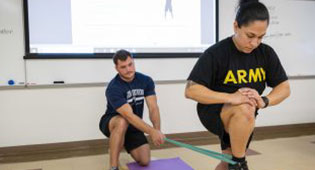
What began in 2016 as a partnership between Georgia Southern University and the Third Infantry Division at Fort Stewart has become a nationally recognized educational and research program with $5.68 million in federal funding to improve soldier health and performance to ensure force readiness. Now called the Soldier Performance and Readiness (SPAR) program, this Georgia Southern project aligns with the U.S. Army’s Holistic Health and Fitness (H2F) initiative and represents a multifaceted partnership with the Army to provide onsite training that decreases musculoskeletal injuries; deliver an online certificate program in tactical fitness for college credit; collaborate with the Army’s Research Institute for Environmental Medicine (USARIEM); and develop programs to enhance and assess cognitive performance in tactical situations. The initial partnership program to prevent musculoskeletal injuries was delivered at first to small cohorts to implement new practices in the physical training of their squads and platoons in a train-the-trainer model. Results were so encouraging, the program expanded at Fort Stewart and to training brigades at Fort Benning last year with the assistance of $1.5 million in Department of Defense funding. Studies show significant preparedness and financial benefits from reducing musculoskeletal injuries to soldiers during drilling and training exercises. In April 2020, officials determined that 58,000 soldiers (the equivalent of 13 Brigade Combat Teams) had injuries that classified them as non-deployable. In 2019, more than half of soldiers experienced a new injury, resulting in 10 million limited-duty days. Musculoskeletal injuries account for nearly 25% of all military injuries and approximately $557 million in acute patient care. Most of these injuries were associated with fitness training-related activities Georgia Southern’s online Tactical Athlete Certificate program was first offered in 2020 and is available exclusively to soldiers on active duty, in the National Guard or reserve. Through a series of three courses, the program teaches foundational exercise and biomechanical concepts, strength and conditioning principles, and rehabilitation. The coursework parallels the Army’s Master Fitness Trainer curriculum, with additional rehabilitation principles, and teaches soldiers how to develop evidence-based and well-rounded physical training programs while minimizing risk of musculoskeletal injury. Certificate completion provides soldiers with nine college credits with Georgia Southern, potential promotion opportunities in the Army, and preparation for the National Strength and Conditioning Association’s TSAC-F exam. “By sharing knowledge, expertise and experience between our faculty and doctoral students with soldiers, drill instructors, and brigade combat fitness teams to create aligned programs that improve tactical performance and force readiness, the SPAR program has become a national model of public-impact research,” said Christopher Curtis, Ph.D., Georgia Southern’s vice provost for research. “We are excited about the future of this partnership. We relish the significant support and encouragement we receive from the Army commands at Fort Stewart, Fort Benning, USARIEM, and the Training and Doctrine command (TRADOC), and we are grateful to Congressman Carter and his fellow members of the Georgia Congressional delegation who have advocated for the value of the partnership on our behalf.” The progress and continued success of this program would not have been possible without several years of support from the Georgia Congressional Delegation and especially the leadership and support of Congressman Buddy Carter, who represents Fort Stewart and the Armstrong Campus of Georgia Southern in Savannah. “Providing for our nation’s defense is the number one responsibility of the federal government. Innovation and research, which is what these dollars will fund at Georgia Southern, will improve working conditions for our brave servicemen and women by providing them with top-of-the-line training and resources,” said Rep. Buddy Carter (R-GA). “I am a proud supporter of Georgia’s military community and am happy that the federal government is investing in these necessary programs.” SPAR programming allocated in the FY23 federal budget will enable Georgia Southern to: Develop protocols and expand delivery of the onsite musculoskeletal injury prevention training and the Tactical Athlete Certificate to commands at Fort Gordon in Augusta and to the Georgia National Guard. Develop and deploy similar online certificate programs for soldiers in Cognitive Performance and Nutrition to further support the Army’s H2F program. Host a national conference on “Charting Future Readiness Needs” in partnership with the U.S. Army Training and Doctrine Command and U.S. Army Forces Command that will bring together other research universities who also work in partnership with the Army. Work with the Army commands to develop specific academic degree programs to meet the specific H2F professional workforce needs at the brigade level. Army officials estimate approximately 3,000 personnel will need graduate degrees or advanced certifications in the next six years. Develop a Tactical Performance Research Lab in Savannah to support the fundamental research and innovation activities of Georgia Southern’s Tactical Performance Group that supports the Army’s H2F program as well as translational research to apply the knowledge and practices broadly to law enforcement and other first responders. Looking to know more - then let us help. Christopher Curtis is available to speak to media - for more information simply click on his icon here or reach out to Georgia Southern Director of Communications Jennifer Wise at jwise@georgiasouthern.edu to arrange an interview today.


Combating Hate Speech in 2023 (and Beyond)
The arrival of a new year often initiates a reflection on the previous one. And according to Billie Murray, PhD, associate professor in the Department of Communication, reflecting on America’s past begins with acknowledging the country’s history of and ever-growing propensity towards hate speech. As defined by Dr. Murray in her book Combating Hate: A Framework for Direct Action, hate speech “defames, denigrates, dehumanizes and/or inspires violence against particular groups of people on the basis of their religion, ethnicity, nationality, race, gender or other identity category.” Hateful rhetoric is not restricted to the fringes of society as it once might have been. It is emerging within schools, localities and central government. Yet, as Dr. Murray points out, America’s enmeshment is not fated. Dr. Murray’s commitment to fieldwork has taken her throughout the country to protests at hate group rallies in Stone Mountain and Newnan, Georgia, Columbia, South Carolina, and Washington, D.C. At these rallies, and through the lens of a researcher, scholar and activist, Dr. Murray sought to identify oppositional tactics used by counter-protestors that succeeded in diminishing the presence and the effects of hate speech. As a result of her observations, Dr. Murray devised the Counterspeech System, a strategy based on the idea that more speech (not avoidance) is the best way to counter hate speech. And there are two successful ways of doing just that: Confrontational Tactics focus on combating hate through direct action. For example, ‘Angel Action’ is a term used for a confrontational tactic employed at funerals in which activists dress in white angel costumes, rising seven feet tall with ten-foot wing spans, to form a shield with their bodies while creating a barrier between mourners and hate groups. For non-funeral occasions, counteractive celebratory events such as public dance parties, pride celebrations and noise brigades (the drowning out of hate speech with things like kazoos or brass bands) aim to quell hate with love. Persuasive-Dialogic Tactics focus on both public and interpersonal discussions. For example, persuadable members of the general public may receive the message that hate is a problem (through media campaigns and education) and thus come to the conclusion that action must be taken to combat it. Additionally, an interpersonal dialogue with individual members of a hate group in which messaging about compassion, human dignity and mutual respect is initiated can lead to self-reflection and the use of resources such as de-radicalization support groups (like Life After Hate). It is important to acknowledge that although successful, Counterspeech System tactics do not prevent hate groups from organizing or disseminating information. More speech serves to combat existing hateful rhetoric. “Our country needs a shift in how it understands free speech and the role of police protection of hate groups, especially if we are going to continue to win this fight,” says Dr. Murray. It will take federal action coupled with a coalition of those engaging in oppositional tactics to bring about lasting change. However, despite the challenges, Dr. Murray affirms that combating hate speech is worth the fight.

