
Experts Matter. Find Yours.
Connect for media, speaking, professional opportunities & more.

Georgia Southern University expert available to provide geopolitical analysis on the Iran war
The Middle East has entered an active state of war marked by a cycle of retaliatory strikes across Iran and the Persian Gulf. Three major uncertainties now dominate the global outlook: the long-term survival of the Iranian government, the fate of Iran’s nuclear infrastructure, and the security of critical oil transit routes. Georgia Southern University Professor of Political Science and International Studies Jacek Lubecki, Ph.D., is available to speak about the military operation in Iran and its implications for regional stability and global security. Lubecki is an expert in comparative politics and military security studies, with a focus on the Middle East and Eastern Europe, particularly Poland. His research examines terrorism, counterinsurgency and military strategy. His work has been published in journals including Europe-Asia Studies, East European Politics and Societies, The Polish Review, The New Ukraine and The Armchair General. He has co-authored several books, including Globalization, Nationalism, and Imperialism: A New History of Eastern Europe (2023), which examines domestic and global security challenges, and Defending Eastern Europe: The Defense Policies of New NATO and EU Member States (2021). Lubecki speaks Polish, English, French, Russian, Spanish, Italian, German and Arabic with varying levels of fluency. Lubecki is available for interviews in person at Georgia Southern’s Statesboro Campus or virtually.



A future in pharmacy, made possible by support and mentorship
A freshman chemistry major from Hinesville, Georgia, Geovanii Pacheco already has his sights set on a career in pharmacy. His ambition is rooted not just in a love for science, but in personal experience. Growing up, his family spent countless hours navigating prescriptions and insurance coverage for his older brother, Devin, who has autism. During those moments, one pharmacist consistently stood out. This was someone who advocated for his family, helped them through paperwork and made sure Devin got the medication he needed. “It really resonated with me,” Pacheco said. “As a pharmacist, I’d like to embody what she did for us, for others as well.” That goal brought Pacheco to Georgia Southern University where he is now supported by the National Science Foundation’s S-STEM Scholarship Program Award. This is a nearly $2 million grant designed to support Pell-eligible students pursuing degrees in biochemistry, biology, chemistry, geosciences, mathematics, physics or sustainability science. For Pacheco, the program has been nothing short of life-changing. “I can say that I’m not going to college with any financial stress,” he said. “I have no money coming out-of-pocket.” Administered through Georgia Southern’s College of Science and Mathematics, the federally funded program provides last-dollar scholarships that cover remaining costs after Pell Grants and other aid are applied. In addition to financial support, the program pairs students with dedicated faculty mentors and offers structured programming aimed at retention, professional development and long-term success. Sara Gremillion, Ph.D., professor of biology and principal investigator on the grant, said the goal is to ensure that students don’t just enroll in college, but that they also thrive once they arrive. “They may not have a strong expectation about what to expect in college,” said Gremillion. “This program not only removes financial barriers, but it also surrounds students with the support they need to navigate college and plan for their future.” Pacheco has felt that impact from day one. Thanks to the program, he moved into his residence hall a week early to attend a one-week Basebamp program to jump start his college experience. There, he met fellow scholarship recipients and connected with his faculty mentor before classes even began. His mentor, Shainaz Landge, Ph.D., associate professor of chemistry, has helped connect Pacheco with opportunities from joining the Student Affiliates of the American Chemical Society to learning about upcoming pre-pharmacy organizations and undergraduate research. “Students such as Geovanii serve as prime examples of the fulfillment derived from mentorship and teaching,” said Landge. “Their growth and engagement highlight the critical role that effective mentorship plays in fostering both academic development.” That blend of mentorship and financial support is exactly what the grant was designed to provide. Over five years, the program will serve dozens of students in eligible majors such as chemistry, biology, biomedical science, biochemistry, physics, mathematics, sustainability science and geoscience. Each student receives individualized scholarship support, up to $15,000 per year, based on need, along with a faculty mentor who stays with them throughout their undergraduate journey. For Pacheco and his family, the scholarship brought immediate relief. He vividly remembers opening the acceptance email with his mother and scrolling down to see the financial aid details. “She was tickled, let me tell you,” he said. “It lifted so much stress off her shoulders. It was life-changing.” Applications to be part of the next cohort of COSM S-STEM Scholars are open until Feb. 1, 2026. Eligibility requirements, necessary documentation and other information can be found at this webpage. Looking to know more about Georgia Southern University or the National Science Foundation’s S-STEM Scholarship Program Award? Simply contact Georgia Southern's Director of Communications Jennifer Wise at jwise@georgiasouthern.edu to arrange an interview today.

Kamran Kardel, Ph.D., associate professor of manufacturing engineering in the Allen E. Paulson College of Engineering and Computing, is leading a multidisciplinary research team to help regional logistics companies increase efficiency. Funded through the college’s Remotely Operated Warehouse Services (ROWS) Laboratory, with seed money from Crider Foods Inc., the team is composed of Kardel, Ryan Florin, Ph.D, assistant professor of computer science and students. Kardel and his team are using the software to build simulations, known as “digital twins,” that replicate warehouse operations like picking, packing and shipping. The ROWS Laboratory will serve as a development site, allowing the simulations to be thoroughly tested and validated before being presented to third parties. The ultimate goal is to provide industry partners with simulation capabilities using AnyLogic Software and Internet of Things (IoT) integration. The IoT refers to a network of physical devices located within and around the warehouse, such as mobile robots, sensors and cameras, that collect and share real-time data over the internet. That ensures optimal accuracy and responsiveness. The ultimate goal is to provide industry partners with simulation capabilities using AnyLogic Software and Internet of Things (IoT) integration. This industry collaboration also provides important professional development for the students working on the project. “I have a few students, both undergraduate and graduate, who are going to be involved in this project from beginning to end,” said Kardel. “Several of them have mentioned to me that this is their first time with direct access to the industry and potential employers.” Continuing the theme of collaboration, the project could result in shared postdoctoral positions with Ireland’s South East Technological University in its Lean Industry 4.0 Lab. While still in its early stages, Kardel hopes this partnership will give this research an even larger scope. “The Lean Industry 4.0 Lab has a lot of experience in IoT,” Kardel explained. “By joining Ph.D. programs, hopefully we can work together and improve logistics here in our region and in Ireland.” Ultimately, Kardel says this research can give companies a leg up in an increasingly digitized world. “As far as automation, for companies in southeast Georgia and South Carolina, I would say it’s becoming more common,” he said. “It’s still a mixed bag, though some warehouses are fully automated, some are not. The work we are doing can help companies remain competitive.” Looking to know more about Georgia Southern University or connect with Kamran Kardel? Simply contact Georgia Southern's Director of Communications Jennifer Wise at jwise@georgiasouthern.edu to arrange an interview today.
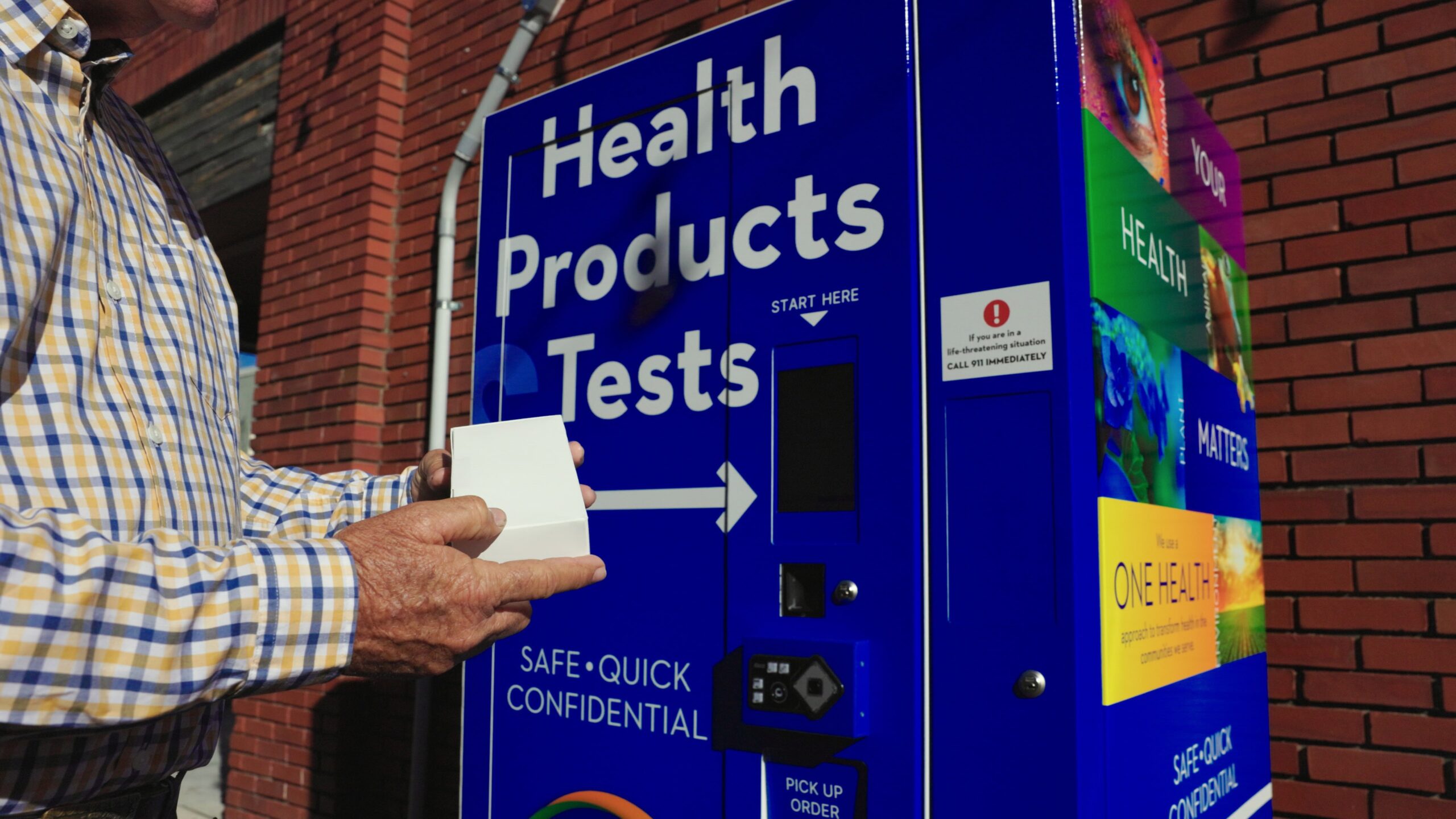
Georgia Southern University’s Institute for Health Logistics & Analytics (IHLA) has launched the Care Station project to address barriers to accessing over-the-counter health products. Care Stations are standalone kiosks open 24/7 that allow users to purchase a range of over-the-counter health products. Items can be paid for using a digital wallet on a mobile phone; cash is not accepted. The first Care Station is located in the alleyway behind Georgia Southern’s City Campus, located at 58 E. Main Street in Statesboro. The project team, led by Jennifer Drey, IHLA community outreach coordinator, and Jill Johns, project manager, prioritized the specific needs of the local population when developing the idea. “By understanding the unique needs of the community, we can offer customized health products and tests in easily accessible locations,” said Drey. Because many of the products are personal in nature, the team designed the kiosks to provide users with privacy. “These kiosks are easy to use, safe and completely confidential,” said Johns. “Whether someone is purchasing pain relievers or sexually transmitted infection tests, their privacy is protected.” To help ensure the Care Stations meet community needs, IHLA encourages Statesboro and Bulloch County residents to share anonymous feedback through an online form at bit.ly/CareStation_Statesboro. To expand access, a second Care Station will open soon in Vidalia, Georgia. Drey said the project serves as a pilot initiative, with the long-term goal of replication statewide. “Rural communities often experience difficulty accessing essential health care supplies and testing compared to their metropolitan counterparts,” she said. “We hope our pilot machines serve as a model for expansion of the program to other rural communities across Georgia.” The Care Station project builds on IHLA’s recently completed Community Health Resource Project (CHRP), which identified key health disparities across rural counties and strengthened partnerships with local stakeholders. A public ribbon-cutting ceremony will be held on Jan. 5, 2026. IHLA uses an integrated One Health approach that aims to sustainably balance and optimize the health of people, animals and ecosystems. Its mission is to transform the health and well-being of communities through applied evidence-based practices and technology integration. Products and tests currently available at the Statesboro Care Station: General Health Allergy medication Bandages Condoms Eyeglass repair kit Hand sanitizer wipes Hygiene kit Pain Relief and Wound Care Ibuprofen Urinary pain relief tablets Rinse-free bath wipes Wound care kit Children’s Health and Wellness Children’s Tylenol Diaper changing kit Menstrual Products Pads Tampons Diabetes Care Glucose tablets Testing Test My Drink sheets Pregnancy tests HIV and syphilis tests Looking to know more about Georgia Southern University's Care Station? Simply contact Georgia Southern's Director of Communications Jennifer Wise at jwise@georgiasouthern.edu to arrange an interview today.
Raised to Serve: How Georgia Southern’s Jaden Young Found His Calling to Lead
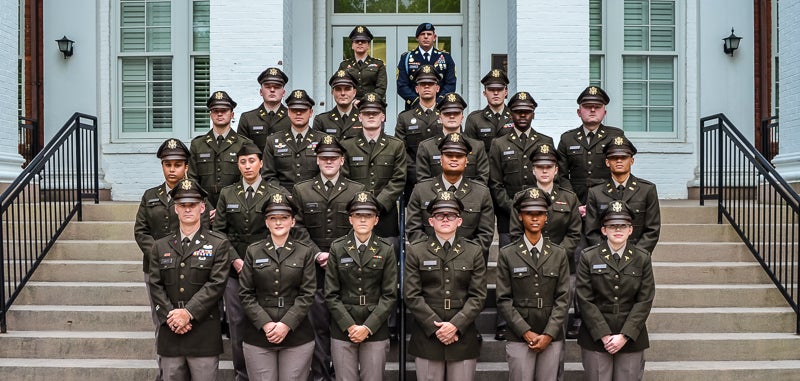
“Shoot for the stars.” That guiding mindset defines Jaden Young, a recent graduate of Georgia Southern University who has been commissioned as a second lieutenant in the United States Army. Young earned his master’s degree in professional communication and leadership at December commencement, carrying forward a lifelong connection to military service shaped by family tradition and constant movement. “If you shoot for the stars, even if you miss, you might land on the moon,” Young said, reflecting the ambition that has guided his academic and leadership journey. Raised in a military family, Young learned early how adaptability and exposure to different communities build resilience. Those lessons carried into his time in Army ROTC, where he credits the program with sharpening his discipline, confidence, and problem-solving skills. “The ROTC program instilled in me discipline, confidence and resilience… When things don’t go your way, it’s all about how you adapt and find a better solution,” he said. Young’s Georgia Southern experience also tested his perseverance beyond the classroom and training field, as he balanced graduate studies and ROTC commitments while supporting his mother through cancer treatments. Those challenges deepened his understanding of leadership as service rooted in trust, communication, and loyalty. As he prepares for the Basic Officer Leadership Course at Fort Benning, Young says he feels ready to lead soldiers with purpose—bringing together the lessons of his upbringing, education, and commitment to serve. Looking to know more about Georgia Southern University's Professional Communications and Leadership program? Simply contact Georgia Southern's Director of Communications Jennifer Wise at jwise@georgiasouthern.edu to arrange an interview today.

“Designing Her Own Future: A Georgia Southern MBA Story”
After earning her Master of Business Administration from Georgia Southern University, one graduate is charting a path that blends creativity with business discipline. With a background in dressmaking, she entered the MBA program already skilled in her craft, but looking to strengthen the operational side of her work. “So much goes into dressmaking,” she explained. “From developing the pattern to the fabric you use, getting the right measurements, and so on. You have to make sure your stitches are clean, that the zipper is sitting properly.” While her technical skills were well developed, she quickly recognized that sustaining and growing her work required more than creative talent alone. “I didn’t have that business background,” she explained. “So I wanted to find a university program that could teach me how to structure and operate my business efficiently. So I started doing my research.” That search led her to Georgia Southern’s MBA program, where she immersed herself in coursework focused on strategy, leadership, and practical decision-making. Through the program, she gained the tools to think more systematically about her business—learning how to plan, organize, and scale her operations with confidence. Her experience reflects how graduate business education can empower entrepreneurs and creatives alike, transforming passion into sustainable practice and helping graduates design futures that work both artistically and professionally. Want to learn more about Georgia Southern's Master of Business Administration program? Simply contact Georgia Southern's Director of Communications Jennifer Wise at jwise@georgiasouthern.edu to arrange an interview today.

Georgia Southern professor re-elected to board of world’s largest scientific society
Professor of chemistry and chair of the Department of Biochemistry, Chemistry and Physics Will Lynch, Ph.D., has been re-elected to the American Chemical Society’s (ACS) board of directors. This marks his second three-year term on the board. With ACS serving as the largest science organization in the world, Lynch says the society’s work impacts lives every day. “We support the scientific enterprise by advocating for everything from research funding to laboratory safety,” said Lynch. “That work strengthens scientific integrity that ACS champions and ultimately shows up in the things that people rely on daily. Bottled water, medicines, cellphones and computer screens all come from chemistry. Many people do not realize how deeply science shapes their world.” With a budget of nearly $900 million and a global community of over 200,000, planning is essential to the success of ACS. Lynch is proud to have chaired the committee that created the society’s next five-year strategic plan. He hopes that his work will continue to put the society’s vast resources to use helping advocate for scientists around the world. “My focus now is implementing ACS’ strategic plan, which envisions a world built on science and setting up the indicators to measure our success,” said Lynch. “We want to make sure we support chemists whether they are in academia, industry, government labs or retired.” Serving in a leadership role for a world-renowned scientific organization is part of Lynch’s calling to help others. He began his service with ACS over 40 years ago when he volunteered at a regional meeting while pursuing his bachelor’s degree. He started making connections immediately and grew his professional network from the local to the national level. Forming friendships in the scientific community and witnessing the ways their work changed lives inspired Lynch to continue to grow his own knowledge so he could do more for others. “Getting to do research as an undergraduate pulled me in, and I knew that chemistry was where I could make a difference. I realized I had a path to help society through science and I never looked back.” Looking to know more about Georgia Southern University or connect with Will Lynch? Simply contact Georgia Southern's Director of Communications Jennifer Wise at jwise@georgiasouthern.edu to arrange an interview today.

A Snapshot of the Local Economy: Simon Medcalfe on Growth, Risk, and What Comes Next
At Augusta University’s annual Economic Forecast Breakfast hosted by the James M. Hull College of Business, Simon Medcalfe, PhD, offered a grounded, data-driven look at how the local economy is performing — and what lies ahead. Speaking to business leaders, students and community stakeholders, Medcalfe emphasized the importance of distinguishing real economic growth from inflation-driven gains, noting that while the Augusta region continues to grow, it does so at a measured pace compared to national averages. His presentation framed the local economy as stable and resilient, but not immune to broader forces shaping the U.S. outlook. A key theme of Medcalfe’s remarks was the role of research, innovation and education in sustaining long-term economic health. He pointed to strong gains in research and development across Georgia and highlighted how university-based research directly contributes to regional economic output. According to Medcalfe, investment in knowledge creation remains one of the most reliable drivers of growth, reinforcing the value of higher education institutions as economic anchors. Simon Medcalfe, PhD, is an economist with an emphasis on sports economics, social determinants of health, and the local economy. View his profile At the same time, Medcalfe cautioned against complacency. While regional fundamentals remain solid, he stressed that uncertainty at the national level continues to pose risks. “However, uncertainty abounds in national macroeconomic policy that could negatively impact growth next year,” Medcalfe said, underscoring how unresolved fiscal decisions and policy shifts can ripple down to local economies. Still, his overall outlook balanced realism with optimism. Medcalfe concluded that the Augusta region — and Georgia more broadly — is positioned to weather uncertainty thanks to diversification, investment in early education, and continued research activity. “Overall, Augusta and Georgia are positioned well for economic growth in 2026 with a strong commitment to early childhood education, a diversified labor market and strong research and development,” he said. View the full article 'Annual Economic Forecast Breakfast offers snapshot of the local economy' here: For journalists covering regional economics, workforce development, higher education, or policy-driven growth trends, Simon Medcalfe, PhD, offers clear-eyed analysis rooted in data — and an ability to translate complex economic signals into insight that matters locally. Simon is available to speak with media - simply click on his icon now to arrange an interview today.


From Libraries to Heart Health: Marlo Vernon Takes Cardiovascular Care Into Rural Georgia
Marlo Vernon, PhD, associate professor in the Department of Health Management, Economics, and Policy at Augusta University’s School of Public Health, is leading a creative public health initiative designed to improve cardiovascular monitoring in rural Georgia. Through the university’s Rural Obese At-Risk initiative, Vernon and her team are placing blood pressure monitors in local libraries, allowing residents to check them out just like books. The effort addresses a critical access gap in rural communities where preventive health tools are often limited or difficult to obtain. Vernon’s work focuses on the realities facing communities in the South’s so-called Stroke Belt, where overlapping health conditions significantly elevate cardiovascular risk. View her profile “There are significant chronic disease risk factors in this so-called Stroke Belt. We’ve got high obesity rates. We have family history. We have high rates of diabetes and kidney disease and they all kind of feed into each other to really create this cardiovascular health need in our communities. And women, in general, are just at a higher risk for this,” said Marlo Vernon, PhD. Beyond equipment access, Vernon’s research also examines how people understand and manage their health when traditional care options are limited. The library-based model helps normalize blood pressure monitoring while reducing barriers such as travel distance, cost, and limited clinic availability. It also creates opportunities to study how community-based solutions can improve awareness, engagement, and long-term cardiovascular outcomes. For journalists covering rural health, women’s health, chronic disease prevention, or innovative public-health strategies, Vernon offers grounded, real-world insight into how trusted community spaces can play a vital role in addressing persistent health disparities. A full article on this topic is available below. To arrange an interview with Dr. Vernon simply click on her iconnow to set up a time to talk today.

Why Insomnia May Hold the Key to Treating Depression, According to MCG Research
William Vaughn McCall, MD, professor emeritus in the Department of Psychiatry and Health Behavior at the Medical College of Georgia at Augusta University, is leading a new multi-year clinical trial aimed at addressing insomnia and depression together — two conditions that frequently occur side by side. The Assessing Improvements in Mood and Sleep (AIMS) Trial, funded by the National Institutes of Health, is exploring whether treating sleep problems through psychotherapy can also reduce lingering symptoms of depression, particularly in older adults. McCall has served as professor and Case Distinguished Chairman of the Department of Psychiatry and Health Behavior at Augusta University since 2012. His research interests include depression, electroconvulsive therapy, quality of life, insomnia, and suicide. His research has been continuously funded by the National Institute of Mental Health since 1995, and he is the author of more than 400 publications, including more than 180 peer-reviewed journal articles. View his profile McCall’s work builds on decades of research examining how disrupted sleep contributes to mood disorders. While previous studies often focused on medication-based approaches, this trial takes a different direction by testing non-pharmacological therapies that target insomnia itself. The research team, which includes collaborators from multiple universities, is evaluating whether improving sleep quality can meaningfully lower depression symptoms for patients who remain symptomatic despite antidepressant treatment. “Ultimately, the hope is to find other avenues to reduce the risk for depression and depression symptoms,” McCall says. The trial is currently recruiting adults aged 55 and older who are experiencing both insomnia and depression, with options for both in-person and remote participation. For journalists covering mental health, aging, sleep science, or emerging clinical research, McCall is a key expert offering informed perspective on how sleep-focused interventions could reshape the future of depression treatment. The full article 'New MCG trial targets insomnia and depression symptoms' is available below: And if you're interested in talking with William Vaughn McCall, MD, simply click on his icon now to arrange a time for an interview today.