
Experts Matter. Find Yours.
Connect for media, speaking, professional opportunities & more.

Battling Election Fatigue? Balance It Out with Other Important Things in Life, Baylor Expert Says
It’s happening. Again. Another U.S. presidential campaign. The contentious 2018 midterm elections are barely in the mud-encrusted rear-view mirror, and the next general election is nearly two years away, but telltale campaigning has already begun as presidential hopefuls emerge to take on each other and Donald Trump, who consistently talks and tweets about Election Day 2020. Does this ubiquitous campaigning make you weary? If so, you’re not alone, said expert Patrick Flavin, Ph.D., associate professor of political science in Baylor University’s College of Arts & Sciences. “Election fatigue is real in the United States,” said Flavin, who researches the impact of politics and policies on citizens’ quality of life. “The U.S. holds more elections than just about any other country in the world: primary elections, school board elections, city council elections and more. So, it’s not unreasonable for someone to say, ‘I’m tired of voting because it seems like I’m voting all the time.’” But it’s not just the number of elections that takes a toll. The presidential election cycles are longer now than in years past. Much of that is due to the race for resources, Flavin said. Over the past few weeks, potential Democratic candidates like former Vice President Joe Biden, former San Antonio Mayor Julian Castro, U.S. Sens. Elizabeth Warren, Kamala Harris, Bernie Sanders, Kirsten Gillibrand and Amy Klobuchar have been making moves – either announcing candidacies or testing the political waters. “Right now, we’re at the start of the ‘invisible primary’ for Democratic candidates whereby they compete for staff, endorsements from other politicians and party leaders, name recognition and fundraising sources,” Flavin said. “For relatively unknown candidates, in particular, it is important to get into the race early to give yourself a head start in trying to compete for those scarce resources. In contrast, a more well-known candidate like Joe Biden can afford to wait for a while before starting his campaign – if he does decide to run.” Flavin said it’s important for citizens to know what’s happening on the national political scene, but he advises people to take a break when it becomes overwhelming. “Being an informed citizen is good and to be admired, but I don’t think it’s healthy to obsess over every single day-to-day political development – especially in the era of 24/7 news,” he said. “Balance it out with other important things in life.” And if you’re in a position (a political science professor, for example) that doesn’t often afford the time to break away, Flavin advises taking the time to approach politics as an observer. “Just like anyone else, political science professors would go crazy if they focused on politics 24/7. So, balance is important. In addition, it is healthier, I think, to approach campaigns and elections as an observer who is interested in better understanding why the candidates take the positions they do, why voters support this candidate over that candidate, etc.” Flavin also said that focusing too much on the national landscape pulls people away from critical state and local issues. “There are important decisions being made at the state and local levels that we need to be aware of,” he said. Flavin’s newest research shows that Americans are happier in states where governments spend more on public goods, such as libraries, parks, highways, natural resources and police protection. ABOUT BAYLOR UNIVERSITY Baylor University is a private Christian University and a nationally ranked research institution. The University provides a vibrant campus community for more than 17,000 students by blending interdisciplinary research with an international reputation for educational excellence and a faculty commitment to teaching and scholarship. Chartered in 1845 by the Republic of Texas through the efforts of Baptist pioneers, Baylor is the oldest continually operating University in Texas. Located in Waco, Baylor welcomes students from all 50 states and more than 80 countries to study a broad range of degrees among its 12 nationally recognized academic divisions. ABOUT BAYLOR COLLEGE OF ARTS & SCIENCES The College of Arts & Sciences is Baylor University’s oldest and largest academic division, consisting of 25 academic departments and seven academic centers and institutes. The more than 5,000 courses taught in the College span topics from art and theatre to religion, philosophy, sociology and the natural sciences. Faculty conduct research around the world, and research on the undergraduate and graduate level is prevalent throughout all disciplines. Visit www.baylor.edu/artsandsciences.



Is Washington playing Russian roulette with airline safety?
The government shutdown that is finally over had some worrying near the end and for good reason. Air traffic controllers, the very professionals who keep planes in the air and at a safe distance from each other had gone for more than four weeks without getting paid. Exhausted, demoralized and depleting ranks were probably the near-perfect storm for an imminent accident or disaster. Luckily, and thankfully, these dedicated professionals rose to the occasion and ensured safety was still the priority. Often, working even while the very equipment and technology they rely on was not being serviced. But as the shutdown takes a break for three weeks and everyone is made whole with back-wages and paychecks – does America need to rethink the potential risks and consequences to having the staff who are essential to safety across the entire country go without pay and benefits during a political dispute? The consequences of a major airline crash are huge economically and in terms of lives lost. So, can the nation’s air traffic controllers be exempt form the impacts of a government shutdown? Who would have been liable if an accident did occur? Are aviation, customs and our nation’s airports not considered essential and therefore worthy of being paid during a shutdown? And how close did we come to a disaster? While we wait and watch for a solution in Washington over the coming weeks, there are still a lot of questions to be answered, and that’s where the experts from the University of Rochester can help. David M. Primo is the Ani and Mark Gabrellian Professor and an associate professor of political science and business administration at the University of Rochester. He is an expert in airport safety and security and a professor at the University of Rochester in Rochester, New York, and can comment on airline safety and passenger impacts amid airports such as Laguardia International restricting air travel due to the government shutdown. David is available to speak with media regarding the economic effects of the shutdown – simply click on his icon to arrange an interview.



With a long road ahead, it's already a crowded field for DNC hopefuls
On Monday California Senator Kamala Harris told the nation she’s running for president against Donald Trump in 2020. Harris is now one of four females who have all but thrown in their hat including fellow Senators Elizabeth Warren and Kirsten Gillibrand along with Congresswoman Tulsi Gabbard. Also kicking the tires are Former Housing and Urban Development Secretary Julian Castro and New Jersey Congressman John Delaney. That’s five candidates, each with impressive resumes. And it is still very early. Some are expecting heavy hitters like Joe Biden, Beto O’Rourke, Cory Brooker and potentially a third try by Hillary Clinton to all take their shot against a potentially vulnerable President Trump. There’s still along way to go between now and July 2020 when the party picks its candidate, and odds are this will seem a lot more like a marathon than a sprint. However, with a strong field already, there are a lot of angles to consider: Is declaring this early an advantage or disadvantage for candidates? Just how much money will be needed to secure the nomination this time? Does a candidate like Harris risk peaking too early if declared the frontrunner this far out? Who else is lurking in the weeds that few might consider? Lastly, there’s public support and there are super-delegates. Does the candidate still need to be the party favorite to have a chance at winning? That’s where the experts from the University of Mary Washington can help. Rosalyn Cooperman, is an associate professor of political science at the University of Mary Washington and member of Gender Watch 2018, is an expert on women in politics. Dr. Stephen Farnsworth is professor of political science and international affairs at the University of Mary Washington. Author of six books on the presidential elections, the media and the presidency, he is available to speak with media regarding this issue. Simply click on either expert’s icon to arrange an interview today.




Brexit, political rancor may cause long-term damage to British economy
Sandeep Mazumder, associate professor of economics and UK native, is available to comment by phone or email on the ongoing power struggle over control of Britain’s planned exit from the European Union. “Uncertainty abounds in the United Kingdom – both in Parliament, and with regards to Brexit. At this point, there are several outcomes that could result from Theresa May's proposed deal being voted down by the UK’s Members of Parliament," Mazumder says. "As it stands, the UK could be on course for a hard Brexit in March with no deals in place with the European Union. A lack of trade deals, in particular, will likely be very damaging to the British economy." "But, a hard Brexit is not a given either. Changes in the political set-up could open doors for other outcomes as the world waits to see what will happen,” says Mazumder. For now, the uncertainty surrounding Brexit is most likely to harm markets involving British firms, he adds. Mazumder is an expert in macroeconomics, monetary policy and international finance.


Americans Are Happier in States That Spend More on Libraries, Parks and Highways
Such ‘public goods’ also are less likely to spark political conflict, Baylor researcher says Americans are happier in states where governments spend more on public goods, such as libraries, parks, highways, natural resources and police protection, a Baylor University study has found. “Public goods are things you can’t exclude people from using — and one person using them doesn’t stop another from doing so,” said researcher Patrick Flavin, Ph.D., associate professor of political science in Baylor’s College of Arts & Sciences. “They’re typically not profitable to produce in the private market, so if the government doesn’t provide them, they will either be under-provided or not at all.” Public goods spending makes communities “more livable, with more amenities,” Flavin said. “If roads are completed and kept up, so that people aren’t stuck in traffic, they have more time to do things they enjoy doing. Large parks are social spaces — and one clear finding of happiness studies is that people who are more socially connected tend to be happier.” Another benefit of spending money on public goods is that such amenities generally boost home values — and “while higher property taxes generally accompany higher home values, it seems that the good outweighs the unfortunate part about having to pay higher taxes,” Flavin said. In his study, published in the journal Social Science Research, Flavin analyzed data on respondents’ self-reported levels of happiness for 1976-2006 from the General Social Survey, a representative sample of Americans that monitors social characteristics and attitudes of Americans and is a project of the independent research organization NORC at the University of Chicago. Flavin also analyzed detailed government spending data for states from the U.S. Census Bureau for 1976-2006. Revenues to fund state public goods are raised from a combination of state taxes and transfers from the federal government to states, averaging 22.5 percent of total state revenues for that 30-year period. “We can look at the city where people live, their neighborhoods, and see how public goods spending predicts happiness after taking other important factors, such as marital status, health, education and income, into account,” Flavin said. He also found that public goods spending has broad benefits across income, education, gender and race/ethnicity lines. “Compared to a lot of the other government spending, public goods tend to be less controversial between liberals and conservatives, Democrats and Republicans, compared to poverty assistance or unemployment benefits, where there is definite disagreement between political parties,” Flavin said. “I think there is less political conflict over public goods spending simply because if they government doesn’t provide them, they won’t be provided at all.” Flavin cautioned that there is not necessarily a cause-and-effect relationship between public goods and happiness. “It could be that happier citizens self-select by moving to states that spend comparatively more on public goods,” he said. “It also is possible that happier citizens support higher spending on public goods and elect state officials to deliver on that policy.” Because some spending for public goods comes from local government, Flavin hopes to do a study linking citizens to their local city instead of only to the state. And because living a happy and satisfying life is a nearly universal human goal, he predicts that better understanding of how policies concretely impact quality of life will receive increasing attention from researchers in the years to come. ABOUT BAYLOR UNIVERSITY Baylor University is a private Christian University and a nationally ranked research institution. The University provides a vibrant campus community for more than 17,000 students by blending interdisciplinary research with an international reputation for educational excellence and a faculty commitment to teaching and scholarship. Chartered in 1845 by the Republic of Texas through the efforts of Baptist pioneers, Baylor is the oldest continually operating University in Texas. Located in Waco, Baylor welcomes students from all 50 states and more than 80 countries to study a broad range of degrees among its 12 nationally recognized academic divisions. ABOUT BAYLOR COLLEGE OF ARTS & SCIENCES The College of Arts & Sciences is Baylor University’s oldest and largest academic division, consisting of 25 academic departments and seven academic centers and institutes. The more than 5,000 courses taught in the College span topics from art and theatre to religion, philosophy, sociology and the natural sciences. Faculty conduct research around the world, and research on the undergraduate and graduate level is prevalent throughout all disciplines.

Why voters prefer moderate leaders in the face of terrorism
From 1970 to 2016, 11,176 people in Europe died from terrorist attacks. These numbers do not include those that were wounded or missing. Terrorist attacks, especially deadly ones, are likely to affect the way people vote. But what is the exact impact of terrorism on voting patterns? Following terrorist attacks, in international elections people are more likely to vote for moderate or centrist political parties as opposed to right and leftist parties, according to a study published by Augusta University researchers Dr. Lance Hunter and Dr. Martha Ginn. The study, published in “Global Policy” on Jan. 3, 2019, analyzed the effect terrorist attacks had on voting patterns for left, right and moderate political parties in elections for more than 50 democracies worldwide. The findings have several implications for public policy. First, it is clear that terrorism affects the political behavior of voters. Therefore, Hunter and Ginn recommend that governments develop and communicate sensible counterterrorism policies in effort to maintain electoral stability. Second, counterterrorism policies that are viewed as overly aggressive in nature or passive are likely to be met with skepticism by voters. This is one possible reason why more moderate and centrist parties experience an increase in votes following terrorist attacks. The party in power loses electoral support during increased terrorist activity. A possible solution to this, Hunter and Ginn said, includes developing sensible, realistic counterterrorism policies that address security concerns while avoiding reactionary policies. Finally, rightist parties suffered the most electorally and lost support following both international and domestic attacks while leftist parties lost support following domestic attacks. Hunter and Ginn suggest that parties should tailor their counterterrorism proposals and messaging depending on the type of attack.


It seemed all of America tuned in Tuesday evening at 9 PM Eastern to hear just what President Donald Trump had to say as he spoke to a nation caught in the middle of a government shutdown. With federal services all but stagnant across the country, and those employees considered essential forced to work without pay, most expected a pitch to a nation that included a solution and ideally a moderated and mature speech. After all, there is a lot at stake for every American who is either employed by, engaged with or in need of the federal government. However, that was not the case. What did come was a short speech that was long on rhetoric, blame and ultimatums instead of resolution. In the past, when addressing the nation, a President would do so to share information of national importance, like Obama’s speech about the killing of Osama Bin Laden or Ronald Reagan speaking to America about the Iran-Contra Hearings. These were big deals with a significant message. Speaking with Canada’s national broadcaster, University of Mary Washington’s Stephen Farnsworth had this observation to share. “By taking such partisan swipes from the grandeur of the Oval Office during a prime-time address, Trump runs the risk of "overexposure," or of being accused of cheapening a time-honoured tradition, said Stephen Farnsworth, a political science professor with the University of Mary Washington who specializes in presidential communications. It's not clear whether the president's speech will have any impact on the border security stalemate. But Trump's speech may even have implications for future Oval Office broadcasts, Farnsworth said.” So, what was gained by the address? Did President Trump essentially ‘cry-wolf’ and cheapen the significance of a national address? Or did it serve his purpose and support his base? And, did the Democrats blow an opportunity to effectively respond? There will be a lot of analysis of Tuesday’s TV-time and that’s where the experts from the University of Mary Washington can help. Dr. Stephen Farnsworth is professor of political science and international affairs at the University of Mary Washington. A published author and a media ‘go-to’ on U.S. politics, he is available to speak with media regarding this issue. Simply click on his icon to arrange an interview.

Big trouble in Little Taiwan? Our experts weigh in.
It won’t be just America that faces a heated and high-stakes election in 2020, the small country of Taiwan is also at political cross-roads and its future could hang in the balance. To look back, just over two years ago, the pro-independence Democratic Progressive Party (DPP) won a major victory in both the presidential and the legislative elections over the Nationalist Party or Kuomintang (KMT) in Taiwan. KMT’s pro-China approach was thoroughly rejected by voters. However, recent elections saw a serious shift back in opinions toward the KMT’s favor, delivering a severe blow to Taiwanese President Tsai Ing-wen. In a recent Financial Times piece, added her perspective. “Elizabeth Freund Larus, a Taiwan expert at the University of Mary Washington in Virginia, said China would probably seek to capitalize on a series of DPP losses in local elections in November to sow discontent among Taiwanese and boost support for the China-friendly opposition party, the Kuomintang, ahead of the 2020 presidential election. “China’s leaders are like sharks in the water: they smell blood,” she said.” Taiwan seeks to bolster international support after China threats (Financial Times) So, what lies ahead for Taiwan? Will China meddle or push for KMT support? Can it be stopped? Will there be international support against Chinese interference? How will China react? And is this a political hot potato that could play into the upcoming US primaries and elections? There’s a lot out there that just not known, and that’s where our experts can help. Elizabeth Larus is a professor of political science at the University of Mary Washington and is an #expert on China and the field of Asian studies. She is available to speak to media regarding this topic – simply click on her icon to arrange an interview.


How Technology is Changing Work as We Know It? Let Industry Experts Answer that Question
Are you interested in what the Future of Work is and how technology will impact your business and industry? Hear how the future of work will impact organizations’ culture, required skills, the way talent will be sourced and how the workspace and makeup of the workforce itself will change. Join IDC Canada and ITAC on January 30th for our annual Tech Trends Breakfast Series event to learn how technology is and will continue changing work as we know it. At this Tech Trends Breakfast event, IDC analysts, partners and industry experts from Tata Consultancy Services, Zoom.AI and ServiceNow will examine how enterprises can adapt to rapidly changing technologies and workforce ecosystems to build a competitive edge. The interactive panel will be moderated by Tony Olvet, Group Vice President of the research analyst team at IDC Canada. While there will be opportunities throughout the panel discussion to ask questions, attendees will have the opportunity to submit questions in advance to help us shape the discussion. Attendees will also have access to presentation materials following the event. The Future of Work Tech Trend Breakfast event will be on January 30th at Twenty Street, Toronto. To see full event details or to register click here. If you have any questions about this event, please contact Cristina Santander at csantander@idc.com.

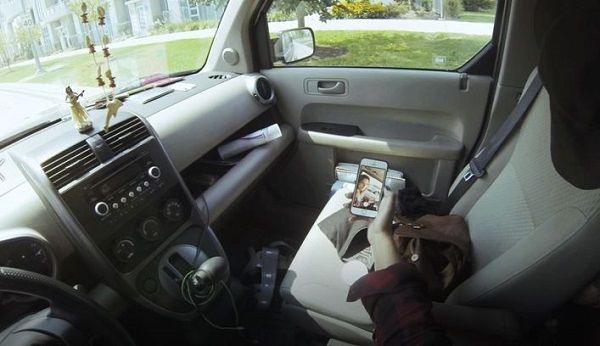
Starting January 2019, the stakes will be even higher when it comes to distracted driving in Ontario. CAA South Central Ontario (CAA SCO) is reminding Ontario drivers that strengthened distracted driving laws will take effect January 1, 2019. New additions include licence suspensions, increased demerit points and an increase to the minimum financial penalty that can be charged to those guilty of distracted driving. "CAA fully supports the increased fines and penalties that will be in place for distracted driving starting tomorrow,” said Elliott Silverstein, manager, government relations, CAA SCO. “Hopefully these new rules will encourage motorists to remain focused on the road and keep devices far from reach when operating their vehicle." Distracted driving continues to be a challenge on Ontario's roads, nearly a decade after the initial legislation banning handheld devices was passed. This new legislation is the first increase since September 2015 when demerit points were added to distracted driving convictions. Recent CAA research shows that one in three Ontario drivers claim to engage in distracted driving as a result of using a mobile device. According to the Ontario Ministry of Transportation, one person is injured in a distracted driving collision every half an hour. “The new fines and penalties are some of the strongest in the country, and they will further aid law enforcement in their continued effort to make road conditions safer for everyone,” continued Silverstein. Starting January 1, 2019, Ontario drivers can expect the following fines and penalties if caught driving distracted: The minimum financial penalty will increase from $490 to $615. A first conviction for distracted driving will now result in a three-day licence suspension, three demerit points and a minimum financial penalty of $615. A second conviction will result in a financial penalty of up to $2000 (previously up to $1000), six demerit points and a seven-day licence suspension. For third (or more) convictions, drivers will face a financial penalty of up to $3000 (previously up to $1000), six demerit points and a 30-day licence suspension. CAA recommends the following tips to reduce distractions behind the wheel: Turn off mobile devices Stow and secure loose objects Avoid eating, drinking or smoking Prepare children with everything they need Pre-set the climate control and radio Pre-program your route on GPS Allow phone calls to go to voicemail Don't text, surf the web or read emails CAA is dedicated to helping change certain rules and regulations for Ontario’s roads that will improve safety for everyone who uses them. Through its road safety efforts, CAA has been helping to educate and bring awareness about distracted driving, Slow Down, Move Over rules and cycling safety laws.

