
Experts Matter. Find Yours.
Connect for media, speaking, professional opportunities & more.

Partnership with Hims & Hers Expands In-Person Healthcare Access in Four States
Hims & Hers Health, Inc. (“Hims & Hers”, NYSE: HIMS), the trusted consumer-first platform focused on providing modern personalized health and wellness experiences to consumers, and one of the nation’s premier health systems, ChristianaCare, today announced a partnership that will expand access to healthcare services and create a more seamless care journey for patients. The partnership will benefit customers in Delaware, Maryland, New Jersey and Pennsylvania, and expands the Hims & Hers’ partnership network with providers to now include 10 states and Washington D.C. Hims & Hers offers treatments for a broad range of conditions, including those related to sexual health, hair loss, dermatology, mental health and primary care. This collaboration allows licensed medical providers on the Hims & Hers platform to connect patients with ChristianaCare’s industry leading Center for Virtual Health and extensive primary and specialty care provider network when appropriate. Referrals may occur if a patient presents with a complex medical history, requires additional in-person follow up or evaluation, or needs care for a condition that the Hims & Hers platform does not support. This collaboration advances the Hims & Hers mission to expand access to high-quality, convenient and affordable care by adding another high-quality health system to its growing network of provider relationships. “ChristianaCare stands for excellence in healthcare and is rated as one of the best hospitals in America, making them an excellent and trusted partner in ensuring a high-quality care experience throughout a consumer’s journey,” said Hims & Hers Chief Operating Officer Melissa Baird. “Healthcare consumers today want easy-to-use, on-demand access to high-quality care both digitally and in-person, so our proprietary platform, coupled with partnerships such as ChristianaCare, help them smoothly navigate more of their healthcare needs.” ChristianaCare is one of the country’s most dynamic healthcare organizations that is committed to improving health outcomes, increasing access to high-quality care and lowering the costs for patients. Its Center for Virtual Health makes health care accessible and convenient, available 24/7 through computer, tablet or smartphone. By partnering with Hims & Hers, ChristianaCare gains access to a broader patient population for its Center for Virtual Health and extensive network of primary care, outpatient services, and specialty care services, including its comprehensive stroke center and regional centers of excellence in heart and vascular care, cancer care and women’s health. “ChristianaCare is thrilled to partner with Hims & Hers to make high-quality health care available to its customers who have complex needs or need additional services that Hims & Hers does not provide,” said Sharon Anderson, MS, RN, FACHE, ChristianaCare’s chief virtual health officer and president of ChristianaCare’s Center for Virtual Health. “At ChristianaCare, our Center for Virtual Health provides personalized health care consultations that are immediate, coordinated, continuous and available 24/7, delivering value to our patients and making a positive impact on health,” she said. This partnership with ChristianaCare builds upon established relationships with other high-quality providers, including Carbon Health in California; Oschner in Louisiana; Mount Sinai Health System in New York City; and Privia in the District of Columbia, Georgia, Maryland, Texas, and Virginia. ChristianaCare will provide support to select counties within Delaware, New Jersey, Pennsylvania and Maryland.


Preacher Archives Add New Element to Baylor University’s Black Gospel Music Restoration Project
The Black Gospel Music Restoration Project at Baylor University is preserving more than just gospel music. In the past few years, Baylor journalism professor and former Billboard gospel music editor Robert Dardenand a team from the Baylor Libraries have undertaken the project of restoring and preserving recorded sermons from black preachers in addition to the gospel music. While both are equally important to preserve, finding sermons to preserve comes with a unique set of challenges. Darden said the idea for preserving sermons started about four years ago, when the BGMRP team was in contact with the daughter of the Rev. Dr. Marvin Griffin, former pastor of New Hope Baptist Church in Waco. Griffin was a renowned Civil Rights leader in Central Texas and boasts a list of significant firsts, including first black man to earn a degree from Southwestern Baptist Theological Seminary and first African-American president of the Austin Independent School District board of directors. Darden said somebody mentioned in passing that they kept Griffin’s sermons and said he ought to hear them because they are full of music. “All black preachers sing, and all black singers preach,” Darden said. “That got me thinking – nobody has been collecting the black preaching from the Civil Rights movement, other than Dr. King. All these incredible heroes who were preaching around the rest of the country, there’s not a collection of their work. So, I met with the other folks in the Black Gospel project, and we agreed that in addition to the music, we ought to be trying to collect preaching.” Many of these sermons had been recorded on vinyl, and Darden said some have even speculated that it was black preaching that started black gospel music in the 1930s. He said some records that were just a black preacher preaching for two and a half minutes on each side sold half a million copies – even during the Great Depression. Digitizing sermons from different formats When the BGMRP was founded in the Baylor Libraries in 2005, the bulk of incoming materials focused on recorded gospel music. Over the ensuing decade, the BGMRP team realized they already had hundreds of vinyl LPs from famous preachers in their collection. Shortly after, they started receiving sermons in many different formats. Darryl Stuhr, associate director of the Libraries’ digital preservation services, consulted with Darden and together they decided they needed a collection to show to preachers and their families who were not familiar with the projects, in hopes of convincing them to trust the project with their sermons long enough to digitize them. Darden worked with two in particular – the Rev. E.E. Jones in Shreveport, Louisiana, and the Rev. Clay Evans in Chicago, who is still preaching at 93-years-old. “Evans) was one of only two preachers who helped Dr. King in Chicago during those really rough times, and they had collected video cassettes of him back into the ‘70s,” Darden said. “That’s the good news. The bad news is they kept them in unairconditioned or unheated warehouses.” Darden said the BGMRP spent lots of money getting these cassettes stabilized enough to play them even just one time so they could be digitized. Using technology at the Libraries’ Riley Digitization Center, audiovisual digitization staffers Stephen Bolech, Travis Taylor and Hannah Engstrom are able to rescue the recorded sermons from other formats as well, including videocassette, film and digital audio tape. The wide range of formats the BGMRP team can work with means a greater number of sermons can be saved, Stuhr said. “They’re not all in the best condition, but they’re just thrilling because (Evans’ church) is one of the largest historic African-American churches in just full 1970s regalia. We got (Jones and Evans) and we’ve been using those to approach other preachers and their families now. This is already the largest collection in the country, and we just started,” Darden said. Recently, Darden got a call from PBS. Dr. Henry Louis Gates of the TV series “Finding Your Roots,” whom Darden quotes in his books, will have a new six-part series on the history of African-American churches in America debuting in 2020. Darden said they contacted him about providing materials for the show and contacts of people. The BGMRP already has made hundreds of copies for PBS and is communicating about how they can help. “I’m hoping they’re going to come down and do some filming here as well, because a lot of the stuff we have is old bulletins and the sheet music – we just have everything. Sure, we can digitize it, but if they came down, they could array it in such a way from an artistic standpoint,” Darden said. Search continues Darden got together with some of the “preaching folks” at Baylor and put together a top 10 wish list of influential black preachers of the past 50 years whose sermons they would like to digitize. “I just think God put me in a place where I could facilitate, rather than me initiate, and it was God’s idea apparently, because it wouldn’t have worked this well otherwise,” Darden said. Darden said new vinyls continue to come in every few days, and it is like Christmas for him to go see what is new. “I don’t mind not knowing every artist or every preacher – there’s hundreds and thousands of them,” he said. “But what scares me is when I pull a piece of vinyl out and it’s a label that I don’t know, which means there’s another whole line of that label that we’ve never heard of. So here we’re sitting 15 or so years into this project, and I don’t know if we have 1 percent of what’s out there – 10 percent? There’s no database. Nobody knows.” “It’s unlike every other kind of music. Nobody ever made a discography of gospel music,” Darden said. “So, whether we mean to or not, we’re actually putting that together as well. Trying to figure out how many Andraé Crouch albums, how many James Cleveland, how many Rosetta Tharpe, and now with preaching, it could go on forever. It’ll be going, hopefully, long after I’m gone.” For more information or to learn how to donate materials, visit the Black Gospel Music Restoration Project at www.baylor.edu/library/gospel or email digitalcollectionsinfo@baylor.edu.

Justice is Not Only Bought, it's Racist!
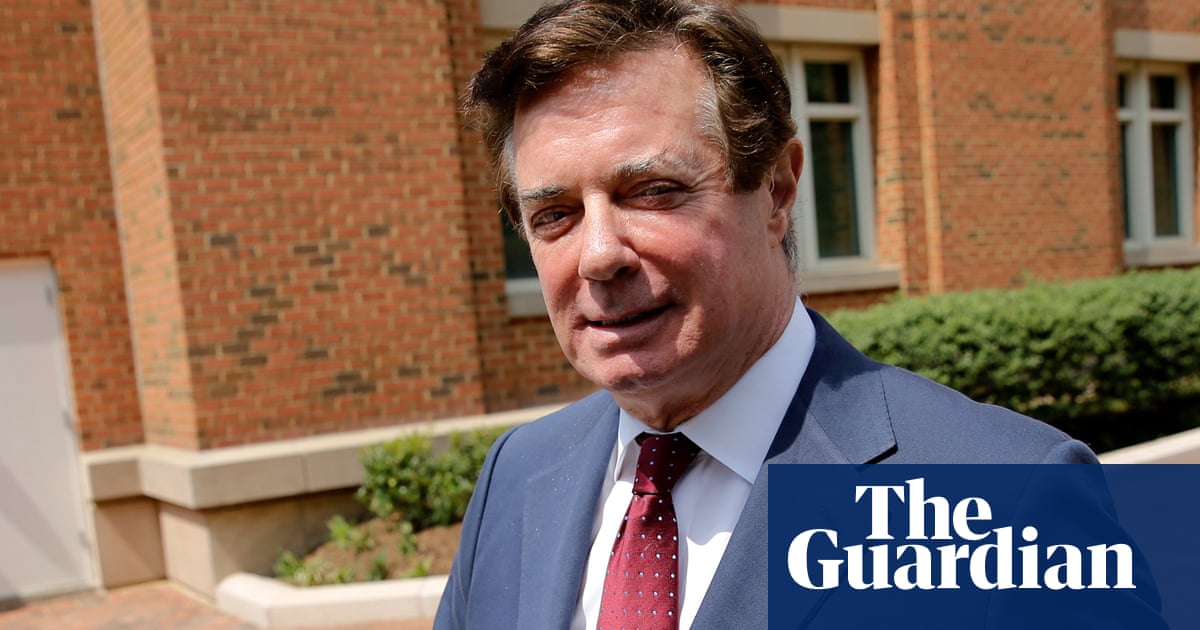
After reading pieces in the Guardian and other news outlets, I find the assumption many news analysts, reporters, and commentators are making regarding Paul Manafort's sentence tone deaf. Yes, we all know money talks. And we also know that money has the ability to influence the legal outcomes within the U.S. justice system. But what people are not talking about, and should, is that his final sentence handed down by Judge TS Ellis, was rooted in racialized bias. Ok, let's just say, it had racist undertones. I know what many will say, "Race has nothing to do with the case." Well, it actually does. First, Paul Manafort has been essentially convicted of lying to federal officials, obstruction of justice, excessive felonies. And one can not forget about the morally reprehensible acts regarding collaborating with foreign governments bent on toppling the United States. He received 47 months. On the other hand, Judge TS Ellis, in 2009, was the presiding judge in the Representative William J. Jefferson of Louisiana case. Jefferson was indicted on 16 charges of corruption and later convicted. Judge Ellis did not give him 47 months. Jefferson was initially sentenced to 13 years for bribery. At the time, it was considered the longest sentence ever handed down to a member of Congress. This includes not only for the charge of bribery but any other crime. Looking through Ellis' convictions, a trail is visible. This is an old trail that is aligned to nothing but systemic racism.
