
Experts Matter. Find Yours.
Connect for media, speaking, professional opportunities & more.
West Michigan Home to Largest Temporary Butterfly Exhibit
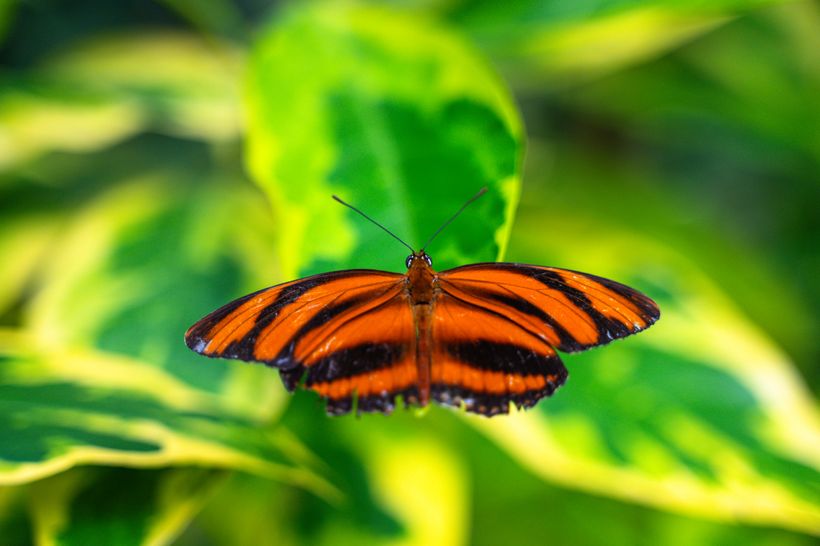
We all look for signs of spring that herald the changing of seasons – buds bursting on trees, plants pushing out of the ground, and migratory birds returning. But there is another sure sign of spring, and it takes place annually at Frederik Meijer Gardens & Sculpture Park in Grand Rapids, Michigan – Fred & Dorothy Fichter Butterflies Are Blooming (March 1-April 30). The largest temporary tropical butterfly exhibition in the United States, Butterflies Are Blooming welcomes visitors into the 80-degree, five-story, 15,000-square-foot Lena Meijer Tropical Conservatory that is a paradise for thousands of butterflies flying freely all around. More than 7,000 chrysalides representing over 60 species travel to Frederik Meijer Gardens & Sculpture Park throughout the exhibit's duration from tropical countries including Belize, Brazil, Costa Rica, Ecuador, Kenya, Malaysia, and the Philippines. Steve LaWarre is the Senior Vice President at Frederik Meijer Gardens & Sculpture Park, where his visionary leadership and passion for botanical excellence have been instrumental in shaping Meijer Gardens' stunning landscapes and ensuring operational excellence. View his profile “Butterflies at Meijer Gardens is a quintessential springtime tradition for families across West Michigan and beyond, and we look forward to ushering in the start of our fourth decade of offering this magical tradition,” said Steve LaWarre, senior vice president at Meijer Gardens. Click on the link to learn more: 7,000 butterflies from 4 continents will soon fill Frederik Meijer Gardens, MLive, Feb. 17, 2026 The exhibition also offers guests up-close experiences at butterfly feeding stations, where tropical fruit slices and nectar-rich plants attract the butterflies, and at the Observation Station, where 1,200 chrysalides arrive at Meijer Gardens each week and transform into butterflies and moths. Additionally, the exhibition features vibrant floral displays, including arches of foliage and blooms in varied hues; unique nectar plant varieties; and colorful arrangements of air plants, bromeliads, and orchids. Guests also can visit the butterfly release stations to watch newly emerged butterflies make their debut and take their first flight as the stars of the show. “Guests can partake in everything from an immersive visit to the tropical conservatory with thousands of butterflies overhead, to a butterfly-themed program such as our new Bourbon & Butterflies events this year," said LaWarre. If you are looking to cover spring-related garden stories, including about Butterflies are Blooming, connect with Steve below.


What the World Needs Now: How Art, Culture, and Nature Can Help Heal Communities in Difficult Times
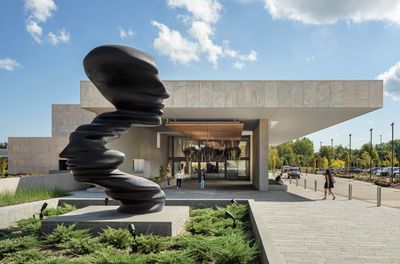
In an era marked by political division, cultural fatigue, and rapid technological change, communities are increasingly searching for places that offer connection, restoration, and shared experience. Charles Burke, President & CEO of Frederik Meijer Gardens & Sculpture Park, brings a leadership perspective shaped by decades across the arts, civic engagement, and nonprofit strategy — focused on how cultural institutions can serve as stabilizing forces in uncertain times. Through the lens of Meijer Gardens, Burke examines how art, culture, and nature can work together to restore, unite, and inspire communities, offering spaces where people can slow down, reconnect, and engage with one another beyond polarization or distraction. Charles Burke is President & CEO of Frederik Meijer Gardens & Sculpture Park. Under his direction, the organization has been recognized as Best Sculpture Park in the United States by USA Today’s 10Best Readers’ Choice Awards in 2023, 2024, and 2025, and consecutively named one of the Best Places to Work in West Michigan, solidifying its reputation as a cultural landmark of international acclaim. View his profile Why This Matters Now In an era marked by political division, cultural fatigue, and rapid technological change, communities are increasingly searching for places that offer connection, restoration, and shared experience. Charles Burke, President & CEO of Frederik Meijer Gardens & Sculpture Park, brings a leadership perspective shaped by decades across the arts, civic engagement, and nonprofit strategy — focused on how cultural institutions can serve as stabilizing forces in uncertain times. Through the lens of Meijer Gardens, Burke examines how art, culture, and nature can work together to restore, unite, and inspire communities, offering spaces where people can slow down, reconnect, and engage with one another beyond polarization or distraction. An Expert Perspective on Healing Through Experience From Burke’s leadership vantage point, institutions like Meijer Gardens demonstrate how intentional design and programming can support community well-being. Examples include: Environments that encourage mental restoration, such as forested landscapes and immersive outdoor spaces Experiences that invite reflection and emotional engagement, rather than passive consumption Programming that brings together diverse audiences around shared encounters with beauty and creativity These experiences do not attempt to solve complex societal challenges directly. Instead, they create conditions for connection, empathy, and resilience, key foundations that healthy communities depend on. Civic Spaces as “Experiential Engines” A central concept in Burke’s work is the idea of cultural institutions as experiential engines — places designed not just to display art or plants, but to generate meaning, joy, and shared memory. When thoughtfully integrated, sculpture, horticulture, architecture, and programming can transform public spaces into environments that foster belonging and inclusion. This approach positions cultural institutions as active participants in civic life, contributing to community health and cohesion rather than operating at the margins of public discourse. Technology, Humanity, and the Future of Cultural Spaces As technology continues to shape how people interact with the world, Burke’s perspective emphasizes balance. Emerging tools — including artificial intelligence — can enhance accessibility, storytelling, and personalization when used intentionally. The challenge, and opportunity, lies in ensuring that technology deepens human connection rather than distracting from it. And while AI is ideal for aggregating information and should be integrated into , it isn't inherently creative. Burke believes that cultural institutions can uniquely unlock the power of human potential in creativity. And cultural institutions that integrate innovation thoughtfully can remain relevant while staying grounded in human experience. Meijer Gardens as a Living Model Over three decades, Meijer Gardens has evolved into a nationally recognized destination where beauty, experience, and mission align. Its integration of art, nature, education, and seasonal programming offers a real-world example of how cultural institutions can grow while remaining inclusive, restorative, and community-centered. Why Journalists and Conference Organizers Should Connect Charles Burke brings informed perspective on: The role of art and nature in public healing and mental wellness Cultural responsibility during periods of division and uncertainty Designing inclusive, joyful, and interactive civic spaces Balancing technology and humanity in cultural institutions How Meijer Gardens functions as a model for innovative integration and creativity Audience fit: museum and cultural leadership forums, civic innovation conferences, mental health and wellness discussions, placemaking initiatives, higher education leadership forums, philanthropic leadership events, sustainability and design summits.


Why Nick Cave’s First Public Outdoor Sculpture Found Its Home at Meijer Gardens
The permanent installation of Amalgam (Origin), Nick Cave’s first public outdoor sculpture in the world, marks a major moment for contemporary art in the Midwest and a defining milestone for Frederik Meijer Gardens & Sculpture Park. As the curator who guided the project from concept to completion, Suzanne Ramljak offers essential insight into why this work matters now, how it fits within Cave’s evolving career, and what it signals about the growing role of public art in shaping cultural identity. The sculpture’s installation in October coincides with a pivotal period in Nick Cave’s career. On Feb. 13, he debuted “Nick Cave: Mammoth,” a monumental new body of work on view at the Smithsonian American Art Museum through Jan. 3, 2027. Not only is it Cave's first solo exhibition in Washington, D.C., but it is the museum’s largest ever single-artist commission. And this spring, the Obama Presidential Center in Chicago opens with a major, immersive installation by Cave, placing his work at the center of a national cultural moment. Against this timely backdrop, Meijer Gardens’ installation stands as a quiet but powerful first: the artist’s inaugural permanent outdoor public sculpture. Understanding the Significance of Nick Cave's Work The sculpture reflects the evolution of Nick Cave’s artistic practice, rooted in his groundbreaking Soundsuits series, a body of work first developed in response in the wake of Rodney King’s 1991 assault by police and designed to challenge viewers’ perceptions of identity, race, and community. Over decades, Cave’s work has moved from wearable performance art into public sculpture, allowing his socially engaged visual language to occupy shared civic space. The permanent presence of Amalgam (Origin) at Meijer Gardens highlights the institution’s commitment to showcasing art that resonates with broader cultural dialogues about resilience, protection, and collective identity. “Nick Cave’s art is deeply rooted - in his family, in community, in craft, and in nature. His work is also grounded in concerns of social justice. The power of Amalgam (Origin) stems from this fertile mix; a blend of the personal and communal, exceptional and traditional.” Suzanne Ramljak, Vice President of Collections & Curatorial Affairs, Frederik Meijer Gardens & Sculpture Park Suzanne Ramljak is Vice President of Collections & Curatorial Affairs at Frederik Meijer Gardens & Sculpture Park where she oversees the acquisition, siting and curation of engaging sculptural exhibitions. View her profile The timing also highlights Cave’s deep Midwest ties. He lives and works in Chicago and earned his master's degree at Cranbrook Academy of Art in Bloomfield Hills, Michigan. The Meijer Gardens installation connects those regional roots to a global artistic trajectory, reinforcing the Midwest’s influence on contemporary art at the highest level. Media Attention, Coverage and Cultural Momentum Since the installation was announced and unveiled, the sculpture has drawn significant regional, national and arts-focused media attention, underscoring its cultural weight and public resonance. Coverage has highlighted the work’s monumental scale, its distinction as Nick Cave’s first permanent outdoor public sculpture, and Meijer Gardens’ role as a national destination capable of supporting ambitious and timely contemporary art. Media narratives consistently framed the installation as both a major moment for Grand Rapids’ cultural landscape and a signal of Meijer Gardens’ growing influence within the national arts conversation. The range of coverage points to interest from music, arts, lifestyle, and cultural outlets, suggesting the installation’s appeal to a variety of audiences. That level of attention reflects not only the significance of the work itself, but also the curatorial vision guiding its placement and permanence, a process led by Suzanne Ramljak. Expert Insight: As Curator of Collections and Senior Curator of Sculpture, Ramljak brings expert perspective on: Why Meijer Gardens was the right home for Cave’s first outdoor public sculpture How this work fits within Cave’s broader artistic practice, particularly his engagement with performance, movement, and public space What permanence means in contemporary art, especially for works often associated with temporality and performance How landscape, scale, and audience interaction shape the experience of outdoor sculpture Her expertise situates the installation within both Cave’s career arc and Meijer Gardens’ long-standing commitment to presenting ambitious contemporary sculpture in dialogue with nature.


ENLIGHTENing the Holidays: How Meijer Gardens Turned Art and Nature Into a Year-Round Attraction
With the completion of its second season, ENLIGHTEN at Meijer Gardens has moved beyond the idea of a seasonal attraction to become a defining example of how cultural institutions can transform the off-season into a destination experience. The program’s exceptional year-over-year growth, combined with national recognition in only its second year, signals a turning point in how Meijer Gardens engages audiences year-round. At the center of that evolution is Carol Kendra, whose leadership perspective connects ENLIGHTEN’s creative ambition, production scale, and audience growth to a broader strategy of experiential cultural programming. As Chief Operating Officer at Frederik Meijer Gardens & Sculpture Park, Carol Kendra provides strategic oversight for daily operations, guest experience, programming and long-term planning across the organization’s 158-acre campus. It washer leadership and strategic vision helped shape ENLIGHTEN from concept to a growing cultural phenomenon. View her profile Meijer Gardens has long been active outside traditional peak seasons, regularly hosting programs such as Fall at Meijer Gardens, Spring at Meijer Gardens, and its longstanding holiday tradition University of Michigan Health-West: Christmas & Holiday Traditions. These initiatives established a foundation for shoulder-season engagement and demonstrated that audiences were willing to experience the Gardens beyond summer months. ENLIGHTEN marked a deliberate step forward, not simply another seasonal offering, but a fully immersive evening experience that invited visitors to experience Meijer Gardens in a new way during the winter months, using light, sound, and landscape to create a sense of wonder and discovery. The annual event has also garnered attention from media across the country: Taking the Experience to the Next Level What distinguishes ENLIGHTEN is its production and experiential ambition. The program was produced in collaboration with Lightswitch and Upstaging, firms recognized internationally for creating world-class immersive environments and technically sophisticated experiences. Their portfolios include large-scale botanical light installations, major theme park productions, and live and recorded projects for globally recognized, award-winning artists. That expertise elevated ENLIGHTEN into a carefully choreographed, multi-sensory journey that integrates light, sound, landscape, and movement in a way that complements — rather than overwhelms — Meijer Gardens’ art and horticulture. This approach reflects a deliberate investment in experience design, audience flow, and emotional impact. The result is an experience that: Extends engagement well beyond traditional daylight hours Encourages repeat visits across a single season Attracts audiences who may be new to Meijer Gardens ENLIGHTEN reflects how cultural institutions are responding to changing audience expectations. Visitors are increasingly seeking experiences that are immersive, emotionally resonant, and worth traveling for — even during traditionally slower seasons. By building on its history of seasonal programming and elevating it through design, technology, and collaboration, Meijer Gardens demonstrates how institutions can grow without losing authenticity. Expert Insight: As a senior leader involved in shaping Meijer Gardens’ visitor experiences and institutional strategy, Carol Kendra brings expert insight into: How ENLIGHTEN was conceived as both an artistic and operational response to seasonality Why immersive seasonal experiences resonate with broad, multigenerational audiences How art and horticulture can be activated together What measurable growth means for long-term institutional planning and cultural relevance Her perspective helps journalists and industry professionals understand ENLIGHTEN not simply as a holiday event, but as a case study in cultural innovation and audience development.


MSU researchers develop wood-based material that improves safety and life of lithium-ion batteries
For consumers worried about the risks associated with using lithium-ion batteries — which are used in everything from phones to laptops to electric vehicles — Michigan State University has discovered that a natural material found in wood can improve battery safety while also improving the battery’s life. Chengcheng Fang, assistant professor in the College of Engineering, and Mojgan Nejad, an associate professor in the College of Agriculture and Natural Resources, collaborated to engineer lignin, a natural ingredient of wood that provides support and rigidity, into a thin film separator that can be used inside lithium-ion batteries to prevent short circuits that can cause a fire. “We wanted to build a better battery,” said Fang. “But we also wanted it to be safe, efficient and sustainable.” Inside a battery, the positively charged cathode and negatively charged anode electrodes help the flow of electricity. To keep these electrodes apart, a commercial separator is typically made from polyethylene and polypropylene plastic materials, which can shrink at temperatures near 100 degrees Celsius. Without the protection of the separator, the cathode and anode sides of the battery have the potential to touch, causing an accidental short circuit and possible fire or explosion. In contrast, the lignin-based separators developed remained stable and didn’t become smaller in size up to temperatures of 300 degrees Celsius. Fang and her team tested varying thicknesses of lignin and found that films measuring 25 micrometers, which is thinner than one quarter of a human hair, were the most effective at keeping the inside of the battery stable and keeping the anode and cathode from connecting. Using the lignin film inside the battery had another benefit: the increased stability inside the battery also resulted in an improved cycle life, or how many times the battery can be charged and used. “We were surprised to see that the lignin film also improved the battery’s cycle life,” said Fang. “We increased the battery’s cycle life by 60%.” A third advantage of this research is an environmentally friendly one. The team was able to manufacture the lignin separators using a low-cost dry processing method. This meant that the team was able to produce large quantities of the lignin film, on demand, while avoiding the use of harmful solvents commonly used in traditional separator manufacturing, which can be harmful to the environment. In this case, the researchers were able to use lignin and other materials that provided a 100% raw material conversion to create a film without creating any waste or pollution. “Lignin, particularly lignosulfonate, is naturally abundant and it doesn’t need any further treatment to function in batteries,” said Fang. “This work demonstrates a new design pathway to improve both the safety and manufacturability of battery materials.” This research was published in Advanced Materials, and the technology is patent pending through the MSU Innovation Center.


Swimming in the deep: MSU research reveals sea lamprey travel patterns in Great Lakes waterways
Why this matters: Invasive sea lampreys prey on most species of large Great Lakes fish such as lake trout, brown trout, lake sturgeon, lake whitefish, ciscoes, burbot, walleye and catfish. These species are crucial to Great Lakes ecosystems and to the region’s fishing industry. Understanding how sea lampreys migrate can inform management and conservation strategies, such as developing methods to catch the invasive fish that don’t involve dams, which reduce river connectivity, or lampricide, a pesticide that some communities and groups prefer not to use. The Great Lakes fishing industry is worth $7 billion and provides 75,000 jobs to the region. Reducing the amount of sea lamprey in waters is crucial for the industry’s well-being and the economic vitality of the Great Lakes. How do you catch an invasive fish that’s solitary, nocturnal and doesn't feed on bait? Researchers in the Michigan State University College of Agriculture and Natural Resources are one step closer to figuring it out. In a study published in the Journal of Experimental Biology and funded by the Great Lakes Fishery Commission, Kandace Griffin, a fisheries and wildlife doctoral student, and Michael Wagner, professor in the MSU Department of Fisheries and Wildlife, found that sea lampreys — a parasitic fish considered an invasive species in the Great Lakes region of the U.S. — follow a clear pattern of staying in the deepest parts of a river. These findings are important for informing sea lamprey management strategies, conservation of fish species native to the Great Lakes and protecting the region’s $7 billion fishing industry and the 75,000 jobs it provides. “We wanted to know how sea lampreys are making their movement decisions when migrating,” Griffin said. “Are they guided by certain environmental cues? Are they moving through areas that are safer? How can we potentially exploit those decisions or maybe manipulate them into going somewhere that they don’t want to go, like pushing them into a trap.” The primary methods used to control sea lamprey are dams that block them from entering waterways and lampricide, a species-specific pesticide that targets lamprey larvae. “Dams create a lot of challenges for conserving river ecosystems: They block all the other fish that are moving up and down in the system. Even though lampricide is proven to be safe and effective, there are communities that are uncomfortable with its use going into the future,” Wagner said. “Figuring out the right way to fish sea lamprey would decrease its population, lower reproduction rates and provide managers with the opportunity to match their control tactics to the community’s needs.” To track lamprey movements, Griffin and Wagner used a method called acoustic telemetry, which involved using sound emitted from a surgically implanted tag to track the movement of 56 sea lampreys in the White River near Whitehall, Michigan. Griffin likened acoustic telemetry to GPS. “There’s a tag that emits sound and has a unique transmission with a unique identification code, so I know exactly which fish is going where,” she said. “The receivers are listening for that sound and then calculating the time it reaches each receiver. We used this information to triangulate the position of the sea lamprey and analyzed it to find out how they’re using the river’s environmental traits to make decisions on where to swim.” Of the 56 lampreys studied, 26 of them (46%), consistently chose the deepest quarter of the river. “For nearly 20 years we have been discovering how sea lampreys migrate along coasts and through rivers. Now, thanks to Kandace’s work, we know where their movement paths come together near a riverbank — the perfect place to install a trap or other fishing device,” Wagner said. “That knowledge can be used to find similar sites across the Great Lakes basin.” Right now, a fishing device designed to catch bottom-swimming, solitary, nonfeeding, nocturnal sea lamprey doesn’t exist. However, Wagner notes there are places around the world — including Indigenous communities in the U.S. — where people have fished migratory lampreys of various species for hundreds of years and could help inform the creation of such a mechanism. “We have recently had a proposal funded to scour the Earth in search of knowledge, both scientific and traditional, about how to capture migrating lampreys and similar fishes,” Wagner said. “We want to talk with the communities of people who have histories fishing these animals and use this information, along with other data we’ve gathered, to conceive a device that could be used to fish sea lampreys.” Griffin views the new intel on lamprey migration patterns as a way to inform fishing practices to complement some of the existing control methods. “Hopefully, we can use this as a supplemental control method to the use of the barriers or dams,” she said. “We have societal pressure to remove barriers to enhance river connectivity, and some barriers are failing. Open water trapping is another way that we could try to still combat the invasive sea lamprey problem here but also promote river connectivity and other conservation goals for other species.” Wagner shares the same perspective. “When a community, or the Great Lakes Fishery Commission, or the governments of Canada and the U.S. come in and say, ‘We’d really rather be able to control this river with something other than lampricide,’ we want to be able to be able to provide 360-degree solutions that specify where to fish, when to fish and how to fish using fully prototyped and tested equipment,” he said. “We want our science to help solve real-world problems.”

First scientific paper on 3I/ATLAS interstellar object
When the news started to spread on July 1, 2025, about a new object that was spotted from outside our solar system, only the third of its kind ever known, astronomers at Michigan State University — along with a team of international researchers — turned their telescopes to capture data on the new celestial sighting. The team rushed to write a scientific paper on what they know so far about the object, now called 3I/ATLAS, after NASA’s Asteroid Terrestrial-impact Last Alert System, or ATLAS. ATLAS consists of four telescopes — two in Hawaii, one in Chile and one in South Africa — which automatically scans the whole sky several times every night looking for moving objects. MSU’s Darryl Seligman, a member of the scientific team and an assistant professor in the College of Natural Science, took the lead on writing the paper. “I heard something about the object before I went to bed, but we didn’t have a lot of information yet,” Seligman said. “By the time I woke up around 1 a.m., my colleagues, Marco Micheli from the European Space Agency and Davide Farnocchia from NASA’s Jet Propulsion Laboratory, were emailing me that this was likely for real. I started sending messages telling everyone to turn their telescopes to look at this object and started writing the paper to document what we know to date. We have data coming in from across the globe about this object.” The discovery Larry Denneau, a member of the ATLAS team reviewed and submitted the observations from the European Southern Observatory's Very Large Telescope in Chile shortly after it was observed on the night of July 1. Denneau said that he was cautiously excited. “We have had false alarms in the past about interesting objects, so we know not to get too excited on the first day. But the incoming observations were all consistent, and late that night it looked like we had the real thing. “It is especially gratifying that we found it in the Milky Way in the direction of the galactic center, which is a very challenging place to survey for asteroids because of all the stars in the background,” Denneau said. “Most other surveys don't look there.” John Tonry, another member of ATLAS and professor at the University of Hawaii, was instrumental in design and construction of ATLAS, the survey that discovered 3I. Tonry said, “It's really gratifying every time our hard work surveying the sky discovers something new, and this comet that has been traveling for millions of years from another star system is particularly interesting.” Once 3I/ATLAS was confirmed, Seligman and Karen Meech, faculty chair for the Institute for Astronomy at the University of Hawaii, both managed the communications flow and worked on getting the data pulled together for submitting the paper. “Once 3I/ATLAS was identified as likely interstellar, we mobilized rapidly,” Meech said. “We activated observing time on major facilities like the Southern Astrophysical Research Telescope and the Gemini Observatory to capture early, high-quality data and build a foundation for detailed follow-up studies.” After confirmation of the interstellar object, institutions from around the world began sharing information about 3I/ATLAS with Seligman. What scientists know about 3I/ATLAS so far Though data is pouring in about the discovery, it’s still so far away from Earth, which leaves many unanswered questions. Here’s what the scientific team knows at this point: It is only the third interstellar (meaning from outside our solar system) object to be detected passing through our solar system. It’s potentially giving off gas like other comets do, but that needs to be confirmed. It’s moving really fast at 60 kilometers per second, or 134,000 miles per hour, relative to the sun. It’s on an orbital path that is shaped like a boomerang or hyperbola. It’s very bright. It’s on a path that will leave our solar system and not return, but scientists will be able to study it for several months before it leaves. The James Webb Space Telescope and the Hubble Space Telescope are expected to reveal more information about its size, composition, spin and how it reacts to being heated over the next few months. “We have these images of 3I/ATLAS where it’s not entirely clear and it looks fuzzier than the other stars in the same image,” said James Wray, a professor at Georgia Tech. “But the object is pretty far away and, so, we just don’t know.” Seligman and his team are specifically interested in 3I/ATLAS’s brightness because it informs us about the evolution of the coma, a cloud of dust and gas. They’ve been tracking it to see if it has been changing over time as the object moves and turns in space. They also want to monitor for sudden outburst events in which the object gets much brighter. “3I/ATLAS likely contains ices, especially below the surface, and those ices may start to activate as it nears the sun,” Seligman said. “But until we detect specific gas emissions, like H₂O, CO or CO₂, we can’t say for sure what kinds of ice or how much are there.” The discovery of 3I/ATLAS is just the beginning. For Tessa Frincke, who came to MSU in late June to begin her career as a doctoral student with Seligman, having the opportunity to analyze data from 3I/ATLAS to predict its future path could lead to her publishing a scientific paper of her own. “I’ve had to learn a lot quickly, and I was shocked at how many people were involved,” said Frincke. “Discoveries like this have a domino effect that inspires novel engineering and mission planning.” For Atsuhiro Yaginuma, a fourth-year undergraduate student on Seligman’s team, this discovery has inspired him to apply his current research to see if it is possible to launch a spacecraft from Earth to get it within hundreds of miles or kilometers to 3I/ATLAS to capture some images and learn more about the object. “The closest approach to Earth will be in December,” said Yaginuma. “It would require a lot of fuel and a lot of rapid mobilization from people here on Earth. But getting close to an interstellar object could be a once-in-a-lifetime opportunity.” “We can’t continue to do this research and experiment with new ideas from Frincke and Yaginuma without federal funding,” said Seligman, who also is a postdoctoral fellow of the National Science Foundation. Seligman and Aster Taylor, who is a former student of Seligman’s and now a doctoral candidate in astronomy and astrophysics and a 2023 Fannie and John Hertz Foundation Fellow, wrote the following: “At a critical moment, given the current congressional discussions on science funding, 3I/ATLAS also reminds us of the broader impact of astronomical research. An example like 3I is particularly important to astronomy — as a science, we are supported almost entirely by government and philanthropic funding. The fact that this science is not funded by commercial enterprise indicates that our field does not provide a financial return on investment, but instead responds to the public’s curiosity about the deep questions of the universe: Where did we come from? Are we alone? What else is out there? The curiosity of the public, as expressed by the will of the U.S. Congress and made manifest in the federal budget, is the reason that astronomy exists.” In addition to MSU, contributors to this research and paper include European Space Agency Near-Earth Objects Coordination Centre (Italy), NASA Jet Propulsion Laboratory/Caltech (USA), University of Hawaii (USA), Auburn University (USA), Universidad de Alicante (Spain), Universitat de Barcelona (Spain), European Southern Observatory (Germany), Villanova University (USA), Lowell Observatory (USA), University of Maryland (USA), Las Cumbres Observatory (USA), University of Belgrade (Serbia), Politecnico di Milano (Italy), University of Michigan (USA), University of Western Ontario (Canada), Georgia Institute of Technology (USA), Universidad Diego Portales, Santiago (Chile) and Boston University (USA).

MSU team develops scalable climate solutions for agricultural carbon markets
Why this matters: Builds trust in carbon markets. This science-based baseline system dramatically improves accuracy, helping ensure carbon credits are credible and truly reflect climate benefits. Enables real climate impact by accounting for both soil carbon and nitrous oxide emissions, the approach delivers a full, net climate assessment. Scales across millions of acres. Tested on 46 million hectares in 12 Midwest states, this approach is ready for large-scale adoption, helping farmers transition to regenerative practices with confidence and clarity. New research from Michigan State University, led by agricultural systems scientist Bruno Basso, addresses a major problem in agricultural carbon markets: how to set an accurate starting point, or “baseline,” for measuring climate benefits. Most current systems use fixed baselines that don’t account for the soil carbon changes and emissions that would occur if business-as-usual practices were maintained on fields. Such inaccuracies can distort carbon credit calculations and undermine market trust. “The choice of baseline can dramatically influence carbon credit generation; if the model is inaccurate, too many or too few credits may be issued, calling market legitimacy into question,” said Basso, a John A. Hannah Distinguished Professor in the Department of Earth and Environmental Sciences, the Department of Plant, Soil and Microbial Sciences and the W.K. Kellogg Biological Station at MSU. “Our dynamic baseline approach provides flexible scenarios that capture the comparative climate impacts of soil organic carbon, or SOC, sequestration and nitrous oxide emissions from business-as-usual practices and the new regenerative system.” The research, published in the journal Scientific Reports, covers 46 million hectares of cropland across the U.S. Midwest, provides carbon market stakeholders with a scalable, scientifically robust crediting framework. It offers both the investment-grade credibility and operational simplicity needed to expand regenerative agriculture. Regenerative agriculture and carbon markets Regenerative agriculture includes practices like cover cropping, reduced or no tillage, diversified rotations, adaptive grazing and agroforestry. These methods restore soil health, enhance biodiversity, increase system resilience and help mitigate climate change by building SOC and reducing greenhouse gas emissions. Carbon markets offer a promising financial mechanism to accelerate regenerative transitions. By compensating farmers for verified climate benefits, they can act as either offset markets (for external buyers) or inset markets (within agricultural supply chains). However, the integrity of these markets hinges on reliable, science-based measurement, reporting and verification systems that integrate modeling, field data and remote sensing. A breakthrough multi-model ensemble approach To overcome limitations in traditional modeling, the MSU scientists and colleagues from different institutions in the U.S. and Europe deployed a multi-model ensemble, or MME, framework, using eight validated crop and biogeochemical models across 40,000 locations in 934 counties spanning 12 Midwestern states. The MME avoids model selection bias, lowering uncertainty in soil carbon predictions from 99% (with single models) to just 36% (with the MME). “This is a game changer for carbon markets,” said Basso. “It delivers a level of accuracy and scalability — from individual fields to entire regions — that current systems lack.” The MME platform also enables the creation of precalculated, practice-based dynamic baselines, reducing the burden of data collection and easing participation for producers. Improved mitigation assessments Unlike many approaches that consider only SOC, the MSU lead team’s study evaluates both SOC sequestration and nitrous oxide emissions to determine net climate impact. “This comprehensive assessment ensures that carbon credits represent true climate mitigation,” said Tommaso Tadiello, postdoctoral fellow in MSU’s Department of Earth and Environmental Sciences and co-author of the study. “A practice that increases soil carbon may improve soil health,” added Basso, “but it may not deliver actual climate benefits if it simultaneously increases nitrous oxide emissions. Our method provides a full accounting of the net climate effect.” The research team found that the combination of no-till and cover cropping delivered an average net mitigation of 1.2 metric tons of carbon dioxide-equivalent per hectare annually, potentially abating 16.4 teragrams of carbon dioxide-equivalent across the study area. This research was supported by the Michigan Department of Agriculture and Rural Development, U.S. Department of Energy’s Great Lakes Bioenergy Research Center, National Science Foundation Long-Term Ecological Research, Builders Initiative, The Soil Inventory Project, Generation IM Foundation, Walton Family Foundation, Morgan Stanley Sustainable Solutions Collaborative and MSU AgBioResearch.

Meet “The Beast”: The Rare Flower That Smells Like Death and Draws Crowds
When a corpse flower, one of the world’s rarest and most extraordinary blooming plants, bursts into bloom, it’s more than a quirky spectacle. It’s a moment that invites deeper stories about plant biology, conservation, biodiversity, and the science that helps preserve rare species. Last season, Wendy Overbeck Dunham, Senior Horticulture Manager at Frederik Meijer Gardens & Sculpture Park, was interviewed by reporters from ABC News and ARC West Michigan (CBS News) covering this rare event. Wendy Overbeck Dunham is the Director of Horticulture at Frederik Meijer Gardens & Sculpture Park in Grand Rapids, Michigan. She leads the horticulture team that oversees the care and presentation of the organization’s living collections - ranging from tropical conservatories and outdoor gardens to seasonal displays - connecting guests to art, design, and the natural environment. View her profile Why This Bloom Is So Rare and Newsworthy Corpse flowers (Amorphophallus titanum) are famous for their massive size, unpredictable bloom cycles, and powerful odor that mimics rotting flesh , an evolutionary strategy for attracting specific pollinators. These blooms can take many years to develop, and their spectacular emergence - open only for a short window -attracts crowds and widespread attention. Last year, as one such plant prepared to bloom at Frederik Meijer Gardens, anticipation built across West Michigan and beyond, with extended visiting hours so the public could witness, and smell, this rare phenomenon. Wendy Overbeck Dunham offered a vivid description of what made this bloom such an unforgettable experience and also showed both the humor and educational value of the moment, a reminder that science can be fun, fascinating, and even a bit funky. “No matter how you describe it, this plant, which we've nicknamed ‘The Beast,’ is definitely going to stink here in the next few days.” Wendy Overbeck Dunham leads horticultural strategy and rare plant cultivation at Frederik Meijer Gardens & Sculpture Park. Her leadership focuses on nurturing exceptional plant specimens, interpreting botanical phenomena for the public, and providing an expert voice on topics ranging from plant biology to conservation and ecological storytelling.


For three decades, Frederik Meijer Gardens & Sculpture Park has grown from a visionary idea into one of America’s most beloved cultural destinations, a place where art, nature, community, and imagination intersect. At the heart of this evolution is Charles Burke, the President and CEO guiding the institution through its 30th anniversary year and helping shape its legacy as a transformative cultural force. Charles Burke is President & CEO of Frederik Meijer Gardens & Sculpture Park. Under his direction, the organization has been recognized as Best Sculpture Park in the United States by USA Today’s 10Best Readers’ Choice Awards in 2023, 2024, and 2025, and consecutively named one of the Best Places to Work in West Michigan, solidifying its reputation as a cultural landmark of international acclaim. View his profile “As a place where art, culture and nature come together, Meijer Gardens offers something truly special for everyone. We look forward to welcoming guests of all ages to discover the joy, beauty and inspiration that await around every corner.” — Charles Burke, President & CEO, Frederik Meijer Gardens & Sculpture Park. The park's legacy and cultural impact was highlighted in a full feature in the Grand Rapids Press and MLive. In the article, journalists conveyed that Meijer Gardens is not just a museum, not just a botanical garden, and not just a sculpture park — it is all of these at once. Since opening in 1995, it has grown into an internationally recognized cultural institution celebrated for its world-class art, immersive natural environments, dynamic programming, and vibrant community engagement. Its influence extends far beyond regional boundaries, attracting millions of visitors, inspiring artists and gardeners, and elevating public appreciation for the arts and environment. The piece underscores how Meijer Gardens has become a cultural home for diverse audiences, blending artistic expression, horticultural beauty, and community connection into a holistic experience that resonates across generations. Celebrating a Cultural Legacy Under Burke’s leadership, Meijer Gardens has: Achieved record attendance and global recognition as a destination for art and nature. Hosted nationally significant sculpture exhibitions alongside beloved botanical showcases. Fostered public access to artistic and environmental education for students, families, and lifelong learners. Created immersive experiences that bring people together — from summer music series to seasonal exhibitions — forging emotional connections to art and landscape. Charles Burke leads Frederik Meijer Gardens & Sculpture Park with a vision that combines artistic ambition and community purpose. Under his direction, the institution has expanded its cultural reach while strengthening educational mission, accessibility, and artistic excellence. His perspective helps journalists cover not just the milestone itself, but the broader significance of what a cultural institution can mean to a region, a generation, and the public imagination. Expert Insight - What Charles Burke Brings to Your News Story or Speaking Roster How the intersection of art, culture and nature builds healthy communities How Meijer Gardens has shaped community identity and regional tourism The role of art institutions in fostering lifelong learning and inclusive engagement The vision and meaning behind three decades of creative stewardship As cultural institutions navigate questions of relevance, community value, and public engagement in the 21st century, Meijer Gardens stands as a compelling example of success. Its 30-year journey, and Burke’s leadership, offers rich context for stories about how art and nature can inspire civic pride, foster cross-generational connection, and elevate the cultural fabric of a community.