
Experts Matter. Find Yours.
Connect for media, speaking, professional opportunities & more.

From Saint to Shamrocks: How St. Patrick’s Day Became the World’s Biggest Irish Party
Every March 17, cities around the world turn green as millions celebrate St. Patrick’s Day with parades, music, traditional foods, and a strong dose of Irish pride. But the origins of the holiday trace back more than 1,500 years to St. Patrick, the 5th-century missionary credited with bringing Christianity to Ireland. Over time, the feast day commemorating Ireland’s patron saint evolved into a broader celebration of Irish heritage, folklore, and culture. Many of today’s traditions, wearing green, shamrocks, lively parades, and even the association with leprechauns — developed centuries later, particularly as Irish immigrants in North America began celebrating their heritage publicly. In fact, some of the world’s biggest St. Patrick’s Day traditions, including massive parades and even dyeing rivers green, originated in the United States and Canada rather than Ireland itself. From the real history of St. Patrick to the myths, symbols, and global traditions that followed, historians and cultural experts can help unpack how this ancient religious observance transformed into one of the world’s most recognizable cultural celebrations. ExpertFile connects journalists with historians, cultural scholars, and experts in Irish heritage who can provide insight on topics including: The real story of St. Patrick and his mission in Ireland How shamrocks, leprechauns, and the color green became iconic symbols Why parades and public celebrations grew in North America How Irish immigration shaped the modern holiday The cultural and economic impact of St. Patrick’s Day celebrations worldwide Journalists looking for fresh angles on the history, traditions, and cultural significance of St. Patrick’s Day can connect with experts available through the ExpertFile platform. Our experts can help! Connect with more experts here: www.expertfile.com

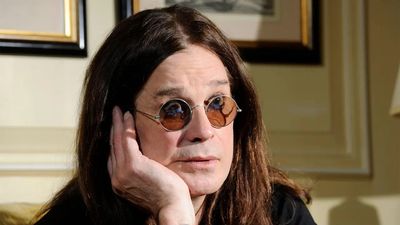
MedPage Today: Ozzy Osbourne shined a light on Parkinson’s stigma
Ozzy Osbourne was best known for two things: his shape-shifting resilience as a pioneer of heavy metal music and, most recently, his remarkable authenticity during his public journey with Parkinson's disease. Osbourne, who passed away on July 22, possessed a unique ability to connect directly with people who were suffering. He was an honest and transparent voice for what it was like to live with a neurodegenerative disease. He was willing to go where others would not, and he took on the stigma of a Parkinson's diagnosis. Stigma remains one of the most underrecognized yet pervasive challenges in Parkinson's disease. Far too often, individuals are made to feel ashamed of their visible symptoms like tremors, facial masking, or soft speech. This reality can lead to social withdrawal, depression, and even delayed medical care. Research has shown that perceived stigma is not only linked to reduced quality of life, but it also correlates with worse outcomes. That's why, when someone like Osbourne rises up and speaks out, it matters. It sends a powerful message that Parkinson's does not define a person, and that no one should suffer in silence. Many people with Parkinson's disease choose to conceal their diagnosis from those closest to them. A recent study published in Scientific Reports found that nearly 23% of participants kept their condition hidden, even from family members. Broader surveys have suggested that more than half of individuals with Parkinson's disease may conceal symptoms, mask tremors, or avoid public situations due to stigma and fear of judgment. People who hide their diagnosis frequently report lower social support, reduced engagement in physical activity, and significantly worse emotional well-being. These findings underscore how pervasive and harmful disclosure avoidance can be.



Why Nick Cave’s First Public Outdoor Sculpture Found Its Home at Meijer Gardens
The permanent installation of Amalgam (Origin), Nick Cave’s first public outdoor sculpture in the world, marks a major moment for contemporary art in the Midwest and a defining milestone for Frederik Meijer Gardens & Sculpture Park. As the curator who guided the project from concept to completion, Suzanne Ramljak offers essential insight into why this work matters now, how it fits within Cave’s evolving career, and what it signals about the growing role of public art in shaping cultural identity. The sculpture’s installation in October coincides with a pivotal period in Nick Cave’s career. On Feb. 13, he debuted “Nick Cave: Mammoth,” a monumental new body of work on view at the Smithsonian American Art Museum through Jan. 3, 2027. Not only is it Cave's first solo exhibition in Washington, D.C., but it is the museum’s largest ever single-artist commission. And this spring, the Obama Presidential Center in Chicago opens with a major, immersive installation by Cave, placing his work at the center of a national cultural moment. Against this timely backdrop, Meijer Gardens’ installation stands as a quiet but powerful first: the artist’s inaugural permanent outdoor public sculpture. Understanding the Significance of Nick Cave's Work The sculpture reflects the evolution of Nick Cave’s artistic practice, rooted in his groundbreaking Soundsuits series, a body of work first developed in response in the wake of Rodney King’s 1991 assault by police and designed to challenge viewers’ perceptions of identity, race, and community. Over decades, Cave’s work has moved from wearable performance art into public sculpture, allowing his socially engaged visual language to occupy shared civic space. The permanent presence of Amalgam (Origin) at Meijer Gardens highlights the institution’s commitment to showcasing art that resonates with broader cultural dialogues about resilience, protection, and collective identity. “Nick Cave’s art is deeply rooted - in his family, in community, in craft, and in nature. His work is also grounded in concerns of social justice. The power of Amalgam (Origin) stems from this fertile mix; a blend of the personal and communal, exceptional and traditional.” Suzanne Ramljak, Vice President of Collections & Curatorial Affairs, Frederik Meijer Gardens & Sculpture Park Suzanne Ramljak is Vice President of Collections & Curatorial Affairs at Frederik Meijer Gardens & Sculpture Park where she oversees the acquisition, siting and curation of engaging sculptural exhibitions. View her profile The timing also highlights Cave’s deep Midwest ties. He lives and works in Chicago and earned his master's degree at Cranbrook Academy of Art in Bloomfield Hills, Michigan. The Meijer Gardens installation connects those regional roots to a global artistic trajectory, reinforcing the Midwest’s influence on contemporary art at the highest level. Media Attention, Coverage and Cultural Momentum Since the installation was announced and unveiled, the sculpture has drawn significant regional, national and arts-focused media attention, underscoring its cultural weight and public resonance. Coverage has highlighted the work’s monumental scale, its distinction as Nick Cave’s first permanent outdoor public sculpture, and Meijer Gardens’ role as a national destination capable of supporting ambitious and timely contemporary art. Media narratives consistently framed the installation as both a major moment for Grand Rapids’ cultural landscape and a signal of Meijer Gardens’ growing influence within the national arts conversation. The range of coverage points to interest from music, arts, lifestyle, and cultural outlets, suggesting the installation’s appeal to a variety of audiences. That level of attention reflects not only the significance of the work itself, but also the curatorial vision guiding its placement and permanence, a process led by Suzanne Ramljak. Expert Insight: As Curator of Collections and Senior Curator of Sculpture, Ramljak brings expert perspective on: Why Meijer Gardens was the right home for Cave’s first outdoor public sculpture How this work fits within Cave’s broader artistic practice, particularly his engagement with performance, movement, and public space What permanence means in contemporary art, especially for works often associated with temporality and performance How landscape, scale, and audience interaction shape the experience of outdoor sculpture Her expertise situates the installation within both Cave’s career arc and Meijer Gardens’ long-standing commitment to presenting ambitious contemporary sculpture in dialogue with nature.



What "Super Agers" Are Teaching Us About Growing Older
When I think about aging well, I don't see a number on a birthday cake. I see capacity. The ability to think clearly. To move with confidence. To stay curious. To laugh easily. To remember where I put my keys. (Okay, that last one is still aspirational.) That's why I teach 4 fitness classes a week and pay close attention to how I fuel my body. Not because I'm chasing youth, but because I've learned, both personally and professionally, that the way we move, eat, sleep, and cope influences how we feel... and how we show up for the people we care about. I don't want to live forever. I just want to live well while I'm here. Like many Boomers, I've been interested in the growing research on longevity. And let's be honest: Boomers have never been good at accepting "no" for an answer. Why would we start now, just because it's mortality asking? We're the generation that refused to compromise. Retirement? Optional. Slowing down? Negotiable. Death? We'd like to speak to the manager. This leads us to a fascinating group of scientists known as "Super Agers." Who Are Super Agers, Really? In research terms, Super Agers are adults over 80 whose cognitive abilities, especially memory, perform at levels expected of people in their 50s or 60s (Rogalski et al., 2013). But here's what I love most: they aren't superhuman. They're not top athletes. They're not biohackers living on kale foam and cold plunges at dawn. (Though if that's your thing, carry on.). They're everyday people who never disconnected from life. A striking Canadian example is Morry Kernerman, a Toronto violinist who kept on learning, hiking, and performing well into the ripe age of 101. His story embodies the spirit of Super Aging: it's not about dodging age, it's about refusing to stop living. In a CBC interview, Maury Kernerman doesn't sound like someone "trying to live longer." He talks like someone who's still interested in living, fascinated by the world, hungry for learning, and unwilling to stand still just because he might do something imperfectly. He also admits something that matters to a lot of readers: he wasn't always an exercise person. He started taking it seriously later in life and describes it as a "rear guard action" that hasn't stopped aging, but has helped him keep his capacity. One of the most poignant lessons: when we're afraid of doing the wrong thing, afraid of failing or being embarrassed, we stop. And standing still is what really costs us. Haven't you heard? Sitting is the new Smoking!! What the Science Is Showing Us Canadian and U.S. researchers, at Western University and Northwestern University, are discovering something significant. Not a pill. Not a quick fix. A system. Angela Roberts (Western University) explained that the Canadian arm of the research isn't relying only on lab snapshots. Participants are sent home with wearable devices so researchers can monitor real-world activity patterns continuously (24 hours a day) over multi-week periods (CBC News, 2024 - https://www.cbc.ca/news/health/superager-centenarians-brain-second-opinion-9.7049411). That design matters because it turns "healthy aging" from a vague concept into measurable behaviours: how much movement you get, how intense it is, how consistent it is, and how it fits into the rhythm of normal life. Super Agers typically stay active, remain mentally sharp, maintain close relationships, handle stress effectively, sleep well, and keep a generally positive attitude (Rogalski et al., 2013 - https://doi.org/10.1162/jocn_a_00300; Sun et al., 2016 - https://doi.org/10.1523/JNEUROSCI.1492-16.2016) Their brains display thicker cortical areas linked to attention and memory, experience slower atrophy rates, have fewer Alzheimer's markers, and show stronger neuronal connections (Gefen et al., 2015 - https://doi.org/10.1523/JNEUROSCI.2998-14.2015; Harrison et al., 2012 - https://doi.org/10.1017/S1355617712000847) A Data Point Worth Remembering When It Comes to Longevity From the wearables, the research study observed that many 80-year-olds in the study, both "super agers" and the control group, were averaging about 25 to 30 minutes of exercise a day (roughly aligned with Canadian movement guidelines). The difference wasn't that super agers moved a little more. The study showed that they got about 30% more of the kind of movement that raises heart rate, what researchers call moderate-to-vigorous physical activity In plain language: it's not just steps. It's getting your engine up into that slightly breathy zone on purpose, most days. There's no single longevity switch. It's a belt-and-suspenders approach: multiple protective habits working together over decades. Let's Talk About Weight (Without Losing Our Minds) People often ask: Should Super Agers be skinny? Or a little plump? The research answer is surprisingly dull (and comforting): Neither. Super Agers come in all sizes. There is no evidence that they share a specific body weight or BMI. What matters much more than the scale is stability, strength, and body composition (Stenholm et al., 2008). Obesity Shows Up Consistently in the Research Midlife obesity is associated with an increased risk of dementia later in life. Several large studies indicate that obesity (BMI ≥30) during midlife raises dementia risk by 33 to 91% compared to individuals of normal weight (Kivipelto et al., 2005; Qizilbash et al., 2015) However, in older age, unintentional weight loss often signals frailty or illness. Weight loss in later life is linked to faster cognitive decline and higher risk of death (Diehr et al., 2008) Being underweight increases the risk of death. Studies consistently indicate that underweight older adults (BMI <20) have 2 to 3 times the all-cause mortality risk compared to those with a normal weight, with one study reporting a 34% higher risk of dementia (Diehr et al., 2008). A slightly higher BMI in later life may actually be protective, especially if muscle mass is maintained. The "obesity paradox" demonstrates that overweight and mild obesity in older adults (ages 65+) are often linked to a lower risk of mortality, particularly from non-cardiovascular diseases (Natale et al., 2023). So, the prescription is clear: avoid extremes. Not so skinny you could use a Cheerio as a hula hoop, and not so plump that tying your shoes feels like a full-contact sport. Here's What Truly Matters: Muscle Mass Strength defends the brain, maintains balance, boosts metabolism, and offers resilience during illness or stress (Peterson & Gordon, 2011) "Skinny-fat", low muscle, higher fat, is actually worse for aging than carrying a bit more weight with muscle beneath (Prado et al., 2012). Super Aging isn't about shrinking yourself. It's about supporting the structure you live in. Sleep: The Quiet Superpower If movement is the main act, sleep is the stage crew ensuring the entire show runs smoothly. Sleep isn't just one thing. It's a cycle (Walker, 2017). The Stages of Sleep (a quick, non-boring tour) Light sleep: The warm-up. Easy to wake from. Necessary, but not enough by itself. Deep sleep: The body's main repair mode. This is where physical repair occurs: muscle recovery, immune support, hormone regulation (Scullin & Bliwise, 2015) (Walker, 2017). REM sleep: The brain's spa. Memory consolidation, emotional regulation, creativity, and learning all occur here (Scullin & Bliwise, 2015) (Walker, 2017). Missing deep sleep leaves your body feeling exhausted. Missing REM causes your brain to become fragile and foggy (Mander et al., 2017). Super Agers tend to guard their sleep, though not perfectly, deliberately (Mander et al., 2016). Consistent bedtimes, morning sunlight, daily activity, and relaxing evenings appear repeatedly. For some people, slow-release melatonin or magnesium can help improve sleep maintenance (Ferracioli-Oda et al., 2013). However, the greatest benefits often come from simple routines: consistency, darkness, cooler rooms, and avoiding phone use at 10 p.m. Sleep isn't a luxury. It's essential brain maintenance (Mander et al., 2017). Stress: The Real Villain Chronic stress is like kryptonite for cognitive health (McEwen & Sapolsky, 1995). The main source of stress is not accepting what is. We argue with reality, and we lose every time. We revisit conversations. We resist change. We attempt to control others. Super Agers appear more accepting, not resignation, but realism (Sun et al., 2016) Here are some practical strategies to consider: Let them. (Thank you, Mel Robbins.) People will be people. You don't need to manage them. Save your energy for what truly matters. And remember: what people think of you... is none of your business. Calm isn't passive. Calm is protective. Gratitude also plays a role. Many Super Agers exhibit a distinct emotional tone: more grateful, less gripeful (Hill & Allemand, 2011) Life wasn't simpler; they simply didn't let bitterness steer the way. Relationships and Quality of Life: The Real Gold Standard Super Agers don't have more friends; they have deeper ones. Strong relationships are linked to better emotional regulation and preserved brain regions. (Cacioppo & Cacioppo, 2014) (Holt-Lunstad et al., 2010) And this isn't about extending life. It's about quality of life: cognitive, physical, and emotional well-being. Because no one wants a farewell-to-life party where nobody shows up because you've been miserable, bitter, or exhausting to be around (thank you, BR). Strong body. Clear mind. Warm relationships. A sense of humour that endures gravity. That's the win. 3 Practical Takeaways to Steal this Week If you want the super-ager approach without turning your life into a science experiment, here are three low-drama moves: Add intensity, not just activity. Keep your regular walk, but pick one segment to walk faster, take a hill, or add short brisk bursts. Your heart rate is the clue. Keep a learning thread running. Music, audiobooks, a class, a museum habit, a book club, anything that keeps your mind taxed in a good way and makes you feel curious again. Make "don't stand still" a rule. If you're avoiding something because you might look silly (a dance class, a new hobby, a new friend group), that's exactly the place to lean in, gently, but on purpose. Super Agers aren't chasing youth. (No one needs to see me in low-rise jeans again.) They're cultivating engagement. (Do you want to dance?) They move. They learn. They sleep well. They stay positive. They accept what is. They remain connected. They rely on the belt and suspenders. And most importantly, they don't wait for permission to live life to the fullest at any age. Yes, biology will win eventually. None of us gets out of this alive. But the real victory isn't in defeating what we can't control. It's in mastering what we can, for as long as we can, and living fully right up until biology takes its final bow. Don't Retire...ReWire! Sue Want more of this? Subscribe for weekly doses of retirement reality—no golf-cart clichés, no sunset stock photos, just straight talk about staying Hip, Fit & Financially Free.



Psychologists introduce third path to a ‘good life’ — one full of curiosity and challenge
For centuries, scholars and scientists have defined the “good life” in one of two ways: a life that is rooted in happiness, characterized by positive emotions, or one that is centered on meaning, guided by purpose and personal fulfillment. But what if there is another, equally valuable path — one that prioritizes challenge, change and curiosity? “We found that what was missing was psychological richness — experiences that challenge you, change your perspective and satisfy your curiosity.” — Erin Westgate, Ph.D., assistant professor psychology, director of the Florida Social Cognition and Emotion Lab This third dimension, which may result in a more psychologically rich life for some, is being explored in a new study — led by University of Florida psychologist Erin Westgate, Ph.D., in collaboration with Shigehiro Oishi, Ph.D., of the University of Chicago. According to their research, some people prioritize variety, novelty and intellectually stimulating experiences, even when those experiences are difficult, unpleasant or lack clear meaning. “This idea came from the question: Why do some people feel unfulfilled even when they have happy and meaningful lives?” Westgate said. “We found that what was missing was psychological richness — experiences that challenge you, change your perspective and satisfy your curiosity.” Westgate and Oishi’s research shows that a psychologically rich life is distinct from lives defined by happiness or meaning. While happiness focuses on feeling good, and meaning is about doing good, richness is about thinking deeply and seeing the world differently. And for a significant minority of people around the world, that third path is the one they would choose — even if it means giving up happiness or meaning. A new way to think about the ‘good life’ According to Westgate and Oishi, psychological richness is defined as a life filled with diverse, perspective-changing experiences — whether these are external, such as traveling or undertaking new challenges, or internal, like absorbing powerful books or pieces of music. “A psychologically rich life can come from something as simple as reading a great novel or hearing a haunting song,” Westgate said. “It doesn’t have to be about dramatic events, but it can shift the way you see the world.” Unlike happy or meaningful experiences, rich experiences are not always pleasant or purposeful. “College is a good example. It’s not always fun, and you might not always feel a deep sense of meaning, but it changes how you think,” Westgate said. “The same goes for experiences like living through a hurricane. You wouldn’t call it happy or even meaningful, but it shakes up your perspective.” Researchers in Westgate’s lab at UF have been studying how people respond to events like hurricanes, tracking students’ emotions and reactions as storms approach. The results show that many people have viewed these challenging experiences as psychologically rich — altering how they saw the world, even if they didn’t enjoy them. The roots of the idea While the study is new, the concept has been years in the making. Westgate and Oishi first introduced the term “psychologically rich life” in 2022, building on earlier research and scale development around 2015. Their latest paper expands the idea, showing that the concept resonates with people across cultures and fills a gap in how people define well-being. “In psychology and philosophy, dating back to Aristotle, there’s been a focus on hedonic versus eudaimonic well-being — happiness versus meaning,” Westgate said. “What we’re doing is saying, there’s another path that’s just as important. And for some people, it’s the one they value most.” While many people ideally want all three — happiness, meaning and richness — there are trade-offs. Rich experiences often come at the cost of comfort or clarity. “Interesting experiences aren’t always pleasant experiences,” Westgate said. “But they’re the ones that help us grow and see the world in new ways.” Westgate hopes the study will broaden how psychologists and the public think about what it means to live well. “We’re not saying happiness and meaning aren’t important,” Westgate said. “They are. But we’re also saying don’t forget about richness. Some of the most important experiences in life are the ones that challenge us, that surprise us and that make us see the world differently.”


What Time Should You Actually Turn Off Your Phone at Night?
Everyone’s heard you’re “not supposed to be on your phone before bed” but what does that actually mean in 2026? Most major sleep organizations now recommend putting devices away at least 30–60 minutes before bedtime to protect melatonin and help the brain wind down. The National Sleep Foundation and the American Academy of Sleep Medicine both advise turning off screens about an hour before bed; other experts say a 30–60 minute window is the minimum. (Advisory) Research on blue light shows that evening screen exposure suppresses melatonin and delays sleep, especially when you’re scrolling something stimulating. (Sutter Health) Psychotherapist Harshi Sritharan, MSW, RSW, who specializes in ADHD and digital dependency, puts it bluntly: “To ensure quality sleep and peak performance—whether in sports, work, or school—avoid using your phone after 11 p.m.” For teens and adults with ADHD or anxiety, she says, late-night doomscrolling is especially brutal: screens keep dopamine and stress high at exactly the time the nervous system should be powering down. Harshi says: "The quality of sleep determines your level of executive functioning the next day" She also makes an important distinction: if you are on a device in the evening, active use (choosing a show, talking to friends, looking up something specific) is less harmful than passive use: “Don’t do passive tech use — that doom scrolling, content just being thrown at you,” Sritharan says. “Be more active about your tech use.” That kind of passive feed is more likely to serve up emotionally intense content kids didn’t ask for and aren’t ready to process. You Don’t Need a Perfect Curfew to See Results The good news: the science suggests you don’t have to quit completely at night to feel a difference. A JAMA Network Open study on young adults found that reducing social media use for just one week — not going cold turkey — led to about a 24.8% drop in depression, 16.1% drop in anxiety and 14.5% improvement in insomnia symptoms. Offline.now founder Eli Singer argues that the real challenge is confidence, not willpower. Their data show 8 in 10 people want a healthier relationship with tech, but more than half feel too overwhelmed to know where to start. The platform’s behavior data also show that late afternoons and evenings are when phones dominate use and when people are actually most motivated to make changes. We have less in the tank at night, don't trust willpower to transition off. Have a system/routine of pre-decided of low-effort (potentially fun) activities to help the transition off phones. “We tell people: don’t start with a perfect 8 p.m. curfew,” Singer says. “Start with one realistic phone-off window — even 30 minutes before bed — and prove to yourself you can protect that. That first win matters more than an ideal schedule you’ll never keep.” A Simple, Science-Aligned Answer For most people, Offline.now’s experts land on a practical, high-compliance answer to the question “What time should I turn off my phone?” Aim to put your phone away 30–60 minutes before your target bedtime Make everything after that screen-free by default (books, stretching, music, talking, journaling) If you must be on a device late, keep it brief, low-drama and intentional — no infinite feeds, no emotionally loaded content It’s a small change, but in the context of a day where we’re already on screens for roughly 10 of our 16 waking hours, that last hour matters. Featured Experts Harshi Sritharan, MSW, RSW – Psychotherapist specializing in ADHD, anxiety, insomnia and digital dependency. She explains how late-night and early-morning phone use hijack dopamine, disrupt sleep and make it harder for kids and adults to function the next day. Eli Singer – Founder of Offline.now and author of Offline.now: A Practical Guide to Healthy Digital Balance. He speaks to the platform’s behavioral data on when people are most ready to change, and how 20-minute micro-experiments (like one phone-off window at night) build real confidence over time. Expert interviews can be arranged through the Offline.now media team.




Do Teens Secretly Want Phone Boundaries More Than Adults Think?
Ask a parent about phones and teens, and you’ll hear the same story: “They’re glued to that thing and don’t care.” But when you ask teens themselves, a different picture emerges. A recent Pew Research Center study found that about 95% of U.S. teens have access to a smartphone — and around 4 in 10 say they spend too much time on it. (Pew Research Center) Coverage of the same data notes that over 70% of teens say they feel happiness or peace when they’re not tethered to their device, even as they rely on it for social life. (KTUL) Psychotherapist Harshi Sritharan, MSW, RSW, who works with teens and young adults on digital dependency, sees that ambivalence every day. “I have 12- to 15-year-olds who come in and say, ‘I know I’m kind of addicted to my phone,’” she says. “When a teenager says that, I’m relieved — it means we have something to work with.” She stresses that most young people don’t actually want to be left alone with endless scrolling — they want help making sense of it. Teen Limits Work Better Than Parents Think New data suggests that reasonable limits can help and that many teens benefit when parents set them thoughtfully. A tool parents can use is collaborative problem solving. This involves parents and teens working together to come up with a plan for the best strategies that combat everyone’s concerns while compromising. A 2024 Springtide Research Institute survey of 1,112 13-year-olds found that teens whose parents limit their screen time are less likely to be heavy users: only 32% of those with limits use their phone 5+ hours a day, compared with 55%of those with unlimited time. Just 24% of teens with limits said they’d felt like they had a mental health problem, versus 32% with no limits.(Springtide Research Institute) In other words, boundaries are mildly protective, not cruel, especially when they’re explained instead of imposed. Sritharan cautions against “no phones ever” rules that ignore school and social realities: “We can’t make blanket statements of ‘no screens’,” she says. “We shape how kids use devices so they can still get things done and spend more time engaging with their family.” That might mean agreeing on tech-free windows (like family dinners or the hour before bed) and tech-friendly ones (like a 45-minute bus ride where a teen can listen to music or message friends). Teens Are Leading a Quiet “Cutback” Movement Parents often feel like the only ones craving less screen time, but surveys show Gen Z is already trying to dial things down. A global survey cited by Tech Times and ExpressVPN found that about 46% of Gen Z are actively taking steps to limit their screen time, more than older generations.(Tech Times) Another U.S. poll commissioned by ThriftBooks found half of respondents are cutting back on screens, with Gen Z and millennials leading — and 84% adopting analog habits like printed books, paper planners and board games.(New York Post) Reporting on the “board game revival” among Gen Z echoes the same trend: young people are consciously seeking offline, face-to-face ways to connect.(Woke Waves) For Offline.now experts, this adds up to a simple message: teens aren’t fighting all boundaries — they’re fighting feeling controlled or misunderstood. Parents as Co-Pilots, Not Phone Police Executive Function Coach Craig Selinger, M.S., CCC-SLP says the real leverage point isn’t just new rules; it’s how parents model and co-create them. “If you want behavior change in kids, start with the parent model,” he says. “A 12-year-old will not put their phone away at dinner if their parents won’t.” He encourages families to focus on “little moments” where phones quietly block connection — especially car rides and in-between times when kids might naturally open up: “In the car, your kid is trapped with you,” Selinger says. “That’s when they start talking. If they’re on their phone the whole time, you lose those big conversations hiding in the boring moments.” Both experts emphasize co-designing boundaries with teens: agreeing together on tech-free times and how late-night scrolling affects mood and school performance. When teens feel heard — and see adults following the same rules — boundaries feel less like punishment and more like shared protection. For journalists, the story isn’t “teens vs phones” or “parents vs teens.” It’s that both sides are quietly overwhelmed, and many young people are more open to limits than adults realize — if those limits are built with them, not against them. Featured Experts Harshi Sritharan, MSW, RSW – Psychotherapist specializing in ADHD, anxiety, insomnia and digital dependency. She helps teens and young adults understand dopamine cycles, distinguish passive vs active tech use, and build realistic phone boundaries that support sleep, school and mental health. Craig Selinger, M.S., CCC-SLP – Executive Function Coach and child development specialist (Brooklyn Letters). He focuses on how tech use shapes learning, attention and family dynamics, and how parents can model healthy habits and co-create screen rules that actually stick. (Expert interviews can be arranged through the Offline.now media team.)


CPP, OAS, and the Retirement Timing Tango — The Most Important Dance of Your Life
You’ve been contributing to it your whole life—now let’s get it right. Every retiree dreams of mastering one crucial dance: the Retirement Timing Tango. And here’s the truth—next to good health, guaranteed, predictable income (GPI) sits at the top of every retiree’s wish list, mind list, and need list. Enough income opens the door to independence, autonomy, dignity, and the most sought-after prize of all: aging in place. Not enough income? That will rob you of sleep and enjoyment, creating a non-stop loop of 3 a.m. worry sessions that no melatonin can fix. A badge of a successful retirement starts with enough income to meet all your obligations. This matters far more than leaving an inheritance or making sure your ungrateful nephew gets the cottage. But here’s the thing about this particular tango: you need proper footwear. Orthopedic dance shoes, folks. Not slippers. Not boots. And definitely not Crocs (no shade here). Think support, stability, and a sole that won’t let you down over a long retirement. Here’s the sobering reality: 61% of Canadians fear running out of money in retirement. Women experience this anxiety even more—66% compared to 56% of men (CPP Investments, 2024). Meanwhile, 57% of working Canadians feel unprepared for retirement, and 13% don’t believe they’ll ever retire at all (HOOPP, 2024). Many overlook this, but two powerful government programs—the Canada Pension Plan (CPP) and Old Age Security (OAS)—can form the foundation of retirement income. The CPP fund holds over $675 billion in assets and is expected to remain sustainable for at least 75 years. Nearly three in four Canadians depend on it. The key is timing. Get it wrong, and you could leave serious money on the dance floor. Get it right, and your decisions could result in over $100,000 more in lifetime income. That’s not small change—that’s peace of mind. Think of CPP and OAS as your retirement dance partners—two leads working together to keep you steady and confident. But timing is crucial. When you decide to claim these benefits can mean the difference between a smooth glide across the dance floor and a financial stumble. How Much Money Do OAS and CPP Pay Out? Canadian Pension Plan (CPP): The maximum CPP retirement pension at 65 is $1,433 per month, though most Canadians receive between $830 and $899 based on their contribution history. Old Age Security (OAS): Payments for OAS are up to $740 monthly for ages 65–74 and $999 monthly for those 75 and older—these benefits can support your retirement if used strategically. You cannot start OAS before age 65. How to Calculate Your OAS Monthly Benefit The maximum monthly OAS payment for someone aged 65 to 74 is around $740–$742 per month in 2026, assuming you qualify for the full amount and do not have a clawback due to high income. If you defer OAS till Age 70, the monthly payments increase. Here's the formula. For each month you defer past age 65, your monthly OAS pension increases by 0.6%. That’s 7.2% per year. Over 5 years (age 65 → 70), this adds up to a maximum increase of 36%. Note: There’s no additional benefit to waiting past age 70; the 36% maximum applies at age 70. The Monthly OAS amount you receive depends on a Number of Factors: The age you start receiving benefits (see above) Your residency history in Canada (minimum of 10 years after age 18 to qualify; to reach the full payment amount generally requires 40 years). Income can reduce or eliminate your OAS benefit, even if you defer, due to an income-related “clawback”. Please note these amounts are subject to change. For updates, check the Government of Canada website here. Let’s be crystal clear: CPP and OAS are not handouts CPP is your deferred earnings—your money, matched by your employer. OAS is your citizens’ dividend, earned through residency in Canada. As Grant Roberts, CFP, a financial planner with the accounting firm Welch LLP, says, “OAS is a security blanket. Society is better when people aren’t impoverished at the end of life.” Lose the stigma. You earned this. This is where the choreography becomes tricky. You must make lifetime decisions without knowing how long you'll live (fun, right?). According to Statistics Canada, a 65-year-old Canadian can expect to live another 20 years on average, and if you’re already 65 in good health, your personal runway might be even longer. Taking CPP at 60 lowers benefits by 36%. Waiting until 70 increases benefits by 42%. Using average benefits, deferring can result in more than $100,000 extra in lifetime income. If you live long enough. Fred Vettese, a former chief actuary of Morneau Shepell (now Telus Health) and a national thought leader on retirement issues who has published the bestseller, Retirement Income for Life (ECW Press) has some important insights to share on how age impacts these OAS and CPP payouts. Vettese explains, “Approximately 75% of people win by deferring CPP to age 70 because they live past the break-even point.” His research indicates that about 75% of retirees benefit from delaying CPP until 70, while around 25% do not. Most people underestimate their longevity, but the odds are actually in favour of living long enough for the deferral to pay off. This is where inaction becomes dangerous. As Grant Roberts warns, “Inaction isn’t neutral—it’s a decision by default. While CPP does not start automatically at 65, OAS generally does for most people. The government won’t call to ask if you want to delay OAS for a higher payment—or remind you to apply for CPP at all. You have to ask, and you have to act.” And this isn’t theoretical. Roberts has seen seniors in their 70s who had never started CPP, simply because no one told them they had to apply. We’ve spent our entire adult lives being trained to save, so it’s unreasonable to think we can just flick a switch and suddenly become confident spenders the day we retire. As Grant Roberts puts it, “We teach saving for 50 years—no one teaches spending.” So here’s the real question: what’s your money brand? Saver? Spender? A hybrid in sensible shoes? Retirement requires a rebrand. Lifelong savers often need permission to spend—on experiences, joy, and yes, even dance lessons. Lifelong spenders may need to learn how to waltz with a budget (spoiler alert: let the budget lead). Either way, retirement isn’t about changing who you are—it’s about adjusting your rhythm so your money finally works for the life you’re living now. What About OAS Clawbacks? If your income exceeds about $90,000, the OAS clawback is 15 cents for every dollar. OAS clawbacks often discourage people unnecessarily. As I always say, "don’t let a dime stand in the way of a dollar." Strategic RRSP withdrawals between ages 65 and 70 can greatly reduce future clawbacks and enhance long-term results. This is choreography, not chaos. CPP and OAS planning should begin in your 50s, not at 64½. Ask yourself whether you intend to work past 65, whether you’re healthy enough to delay, and what income sources will fill the gap. Waiting for someone else to lead this dance is a sure way to step on your own toes. Proactively Managing Your OAS and CPP Benefits While most Canadians are automatically enrolled for Old Age Security (OAS) and will receive an enrollment letter around their 64th birthday, you may need to take action if you want to delay your start date to receive higher monthly payments. If you wish to delay, change your start date, or correct any information in your enrollment letter, you'll need to contact Service Canada directly. You can manage these choices in one of three ways: Go Online: Visit "My Service Canada Account" By Telephone: Call 1-800-277-9914 In-Person: Visiting a Service Canada Centre near you Don't assume automatic enrolment means the timing is right for you—review your options carefully, as the decision to delay could significantly increase your retirement income. The Last Dance (Remember the Poorly Lit High-School Gym?) Because the Retirement Timing Tango isn’t a sprint—it’s a 30-year dance marathon, and you are both the dancer and the charity you’re raising money for. CPP and OAS, timed well, aren’t about financial flash; they’re about stamina, balance, and staying upright long after the music changes. Get the timing right and your later years won’t feel like a frantic scramble under flickering gym lights—they’ll feel like a slow, confident final song where you know the steps, trust your footing, and aren’t worried about collapsing halfway through. That’s the point. Not just surviving retirement, but staying on the floor until the very last dance—with dignity, confidence, and enough income to enjoy the moment instead of counting the minutes until it’s over. Sue Don’t Retire… ReWire! Know someone who’s about to leave serious money on the dance floor? Forward this blog before the music stops. Consider it a public service announcement disguised as friendship. And if you want regular doses of retirement clarity, confidence, and choreography (no leotards required), subscribe here.

From Ancient Rituals to Fireworks: Why New Year’s Eve Still Matters
New Year’s Eve marks humanity’s shared fascination with time, renewal, and fresh beginnings - a moment to close one chapter and open the next. The tradition dates back more than 4,000 years to ancient Mesopotamia, where the Babylonians celebrated Akitu, a multi-day festival tied to the spring harvest and the rebirth of nature. Rather than a single night of revelry, Akitu was a ritual reset: debts were settled, promises were renewed, and cosmic order was symbolically restored. The date we recognize today, January 1 - comes from ancient Rome. In 46 BCE, Julius Caesar reformed the calendar and dedicated the year’s first day to Janus, the two-faced god of doorways and transitions, who looked both backward and forward. This symbolism still defines New Year’s Eve: reflection on the past paired with hope for what’s ahead. Over centuries, as Christianity spread across Europe, the celebration evolved, blending solemn religious observances with local customs of feasting, bells, and bonfires. In modern times, New Year’s Eve has become a global cultural event, shaped by public countdowns, fireworks, music, and collective rituals. From the iconic ball drop in Times Square to family gatherings and quiet toasts at home, the night offers a shared pause, an almost universal agreement to stop, take stock, and imagine change. Traditions vary frm lucky foods, noise-making to ward off evil spirits, or first-footing to invite good fortune, but the intent is the same. At its core, celebrating New Year’s Eve is about agency and optimism. Resolutions, whether kept or not, are expressions of belief that tomorrow can be different. Across cultures and centuries, the night endures because it gives people permission to hope—to acknowledge what was, release what no longer serves, and step forward together into something new. Looking to go deeper on why New Year’s Eve resonates so powerfully around the world? Our experts can speak to the historical, cultural, and psychological reasons humans mark time this way, and why the midnight reset still matters today. Find your expert here: www.expertfile.com

Kwanzaa Explained: A Modern Celebration Rooted in Culture, Community, and Purpose
Observed from December 26 to January 1, Kwanzaa is a cultural celebration that centres on African heritage, shared values, and community renewal. While often grouped with year-end holidays, Kwanzaa is distinct in both origin and intent — designed not as a religious observance, but as a time for reflection, education, and collective responsibility. At its core, Kwanzaa asks a simple but powerful question: How do communities honour their past while shaping a stronger future? The Origins of Kwanzaa Kwanzaa was established in 1966 by scholar and activist Maulana Karenga during a period of social change in the United States. It was created to provide African Americans with a way to reconnect with African cultural traditions while reinforcing shared values that support family, community, and social progress. The name “Kwanzaa” is derived from a Swahili phrase meaning “first fruits”, reflecting harvest celebrations common across many African cultures. The Seven Principles: Nguzo Saba Each day of Kwanzaa focuses on one of the Seven Principles, known collectively as the Nguzo Saba. These principles guide the celebration and serve as a framework for reflection and action: Umoja (Unity) – Strengthening family and community bonds Kujichagulia (Self-Determination) – Defining and speaking for oneself Ujima (Collective Work and Responsibility) – Building together and solving problems collectively Ujamaa (Cooperative Economics) – Supporting and sustaining community businesses Nia (Purpose) – Contributing to the restoration and development of community Kuumba (Creativity) – Leaving communities more beautiful and beneficial than before Imani (Faith) – Belief in people, parents, teachers, leaders, and collective struggle Each evening, families light a candle on the kinara, symbolizing progress through these values. Symbols and Traditions Kwanzaa celebrations include meaningful symbols that reinforce its themes: Kinara – The candle holder representing roots and foundation Mishumaa Saba – Seven candles representing the Nguzo Saba Mkeka – A woven mat symbolizing tradition and history Mazao – Crops representing collective labour and productivity Kikombe cha Umoja – The unity cup used for communal reflection Zawadi – Gifts that emphasize creativity, learning, and cultural meaning Celebrations often include storytelling, music, poetry, shared meals, and discussions about cultural identity and social responsibility. Kwanzaa in Practice Today Kwanzaa is observed in the United States and internationally by people of African descent and others interested in African culture and values. It may be celebrated alongside religious holidays such as Christmas or Hanukkah, or on its own. Over time, Kwanzaa has become a platform for conversations about: Cultural identity Community empowerment Education and youth development Economic equity Social responsibility Story Angles for Journalists Why Kwanzaa was created — and why it still resonates today The role of culture in community resilience How Kwanzaa is celebrated across generations Education, identity, and the Nguzo Saba Kwanzaa’s place in modern multicultural societies How families blend Kwanzaa with other year-end traditions Why Kwanzaa Matters Kwanzaa offers a framework for reflection that extends beyond a single week. Its principles emphasize unity, purpose, and shared responsibility — themes that remain relevant in discussions about culture, equity, and community building. In a season often dominated by consumption and spectacle, Kwanzaa provides a values-driven pause — one rooted in heritage, intention, and collective progress. Let's get you connected to an expert! Find more experts here: www.expertfile.com