
Experts Matter. Find Yours.
Connect for media, speaking, professional opportunities & more.

Baylor Expert: Don't Lose Focus on Spiritual and Mental Well-being
Baylor Social Work professor shares tips and resources during stressful half-way mark of semester Holly Oxhandler, Ph.D., LMSW., associate dean for research and faculty development and associate professor in the Diana R. Garland School of Social Work. October marks the halfway point to the fall semester and can carry all the excitement, stress and anxiety of another academic term winding to a close. The month also typically marks one of the busiest times of the year for university counseling centers across the nation. With unique challenges in 2020 related to COVID-19, the University has acknowledged those hardships for all in the Baylor Family by taking the initiative to focus on mental health throughout October. Baylor University’s Holly Oxhandler, Ph.D., LMSW, associate dean for research and faculty development and associate professor in the Diana R. Garland School of Social Work, is an expert on mental health, primarily anxiety and depression, as well as religion and spirituality in clinical practice. In this Q&A, she shares tips and resources to students, faculty and staff who are facing all of the typical challenges of another mid-term while also navigating a global health crisis. Q: The 2020 fall semester provided challenges and obstacles never seen before in higher education. Why has COVID-19 been a uniquely stressful influence on the mental and spiritual well-being of students, faculty and staff? There are a number of reasons COVID-19 has been a uniquely stressful influence on the mental and spiritual well-being of those in higher education. First, there are the unanticipated layers and learning curves of new considerations and adjustments to course delivery, safety protocols, dining, campus activities and communication, to name a few, on top of the typical adjustments and emotions we all navigate at the beginning of each fall semester. Second, those in higher education entered fall 2020 without the “typical” summer that’s needed to reset, make adjustments and plan for the upcoming year’s activities. For example, many administrators, faculty and staff spent the summer not only planning for the usual upcoming academic year but also reconfiguring classes to be hybrid or online or simultaneously include both in-person and online students, in addition to modifying student activities and faculty research project timelines and plans. For degree programs that include internships, like social work, there have also been additional layers of consideration in order to comply with our professional accreditation standards. Third, we recognize that many students, their family members, as well as Baylor faculty and staff members’ loved ones, have been affected by the economic impact of COVID-19, adding a layer of financial stress. Fourth, many within the Baylor community – staff, faculty and students – have needed to juggle childcare and homeschooling their children as they continue to engage in their own work and/or educational expectations. Finally, the fear of contracting COVID-19, especially among the most vulnerable and high-risk populations, has been constantly present. Not only are we adjusting to this academic year with new ways of being and new protocols that keep us and one another safe, we’re also facing unexpected waves of fear and layers of grief for the missed events, opportunities and connections we had hoped to experience. As resilient as our community is, I think it’s important to remember we cannot “operate as usual” because things aren’t usual. Instead, we must allow ourselves and one another the time, margin, flexibility and grace needed to sit with and move through the rising emotions, grief, stress, loneliness, fear and uncertainty as they come. We cannot skip or bypass these emotions, but instead, must move through them, often with the support of loved ones and/or a trained mental health care provider. Q: Mental and spiritual health are challenging during even a typical semester experience. What are some of the effects and reactions you’ve witnessed to these circumstances among students, faculty and staff compared to a non-COVID-19 semester? As human beings navigating a global pandemic to the best of our ability, our mental and spiritual health have all been impacted to some degree this semester as we have individually and collectively faced a number of unexpected difficulties. I have also seen a beautiful response to the reality of this collective struggle in my interactions with Baylor faculty, staff and students that includes deep empathy for one another and an increase in valuing authenticity as we engage in the high-quality, meaningful work we each do. It has been a gift to witness Baylor community members holding space for colleagues’ and students’ vulnerability as we admit this is hard for various reasons and recognize that we cannot just push our way through this season. When we admit this isn’t easy and that we are all juggling so much to the best of our ability through thick layers of uncertainty, it gives those around us permission to admit their experiences, too. In fact, I think when we create space for that shared vulnerability and empathy in our interactions with others, we can better assess the current situation, remain present to one another and discern what steps are needed to move forward together, particularly because we’re not carrying an additional layer of effort pretending that everything is fine. That said, the Garland School of Social Work conducted a couple of well-being surveys since this summer to internally check in on how our faculty and staff are coping with this season and identify the biggest stressors they’re facing and sources of support. Our faculty and staff have also been continually checking in on our students through this season. Not only do we see many noting the same stressors that we’re all facing these days, normalizing how difficult this is for each of us, but the act of nonjudgmentally holding that space for ourselves and one another has been a tangible step of offering the care we know is uniquely woven into the Baylor experience. Q: How can individuals within the campus community tend to their spiritual health to close out the semester? I would invite readers to take a moment to pause and identify a few spiritual practices that uniquely support them well, even if that means thinking back to less stressful seasons. The key to note here is that these are practices which require regular engagement, similar to if we were to practice a new instrument or sport. Spiritual practices can vary based on our faith tradition and may include praying; meditating; centering prayer; reading our religious text; walking a labyrinth; journaling; practicing gratitude; listening to a sermon or faith-based podcast; praying over and contemplating scripture; engaging in creativity; practicing daily examen; or listening to spiritual music. Some practices may involve other individuals that can be done safely, including seeking spiritual direction, participating in a Bible or faith-based book study with others or engaging in worship (even virtually!). These practices can offer a sense of groundedness and a reminder that God is with us, including through this season. As we continue to navigate this season of uncertainty, it is critical that we intentionally weave in spiritual practices that offer rhythms, routines and a grounded faith that can support us well through the waves of difficulty. Especially on campus, I would encourage Baylor community members to follow along with Spiritual Life’s resources and events, or check out Better Together BU, a partnership supported by both Spiritual Life and Multicultural Affairs. Q: How can individuals within the campus community tend to their mental health to close out the semester? Tending to our mental health in this last stretch of the semester will be so important as we move into the stress of finals, the complex emotions tied to the holidays, grief with upcoming celebrations looking different this year (including how we celebrate holidays, who we celebrate with and the reality of many having lost loved ones to COVID-19) and the reality of seasonal affective disorder on the horizon. In fact, in a typical year, about 5% of U.S. adults have seasonal affective disorder (SAD), with another 10-20% having mild forms of it. In light of all of the added transition, uncertainty, complexity of caregiving and homeschooling while working/studying at home, layers of loneliness and grief, I do hope our Baylor students, staff and faculty will actively prioritize taking good care of their mental health and supporting others’ mental health care, too. One way I highlight this with my social work students is by recommending creating a self-care plan that pays attention to our physical health, mental health, social support and spiritual health. If we can identify some strategies to holistically care for ourselves well and be mindful of potential barriers to navigate, we may have more resilience and practices to draw from to cope with challenges and stressors that arise. Finally, although NAMI highlights that 1 in 5 of us are currently facing a mental health struggle, some studies have shown that over 80% of us will meet criteria for a mental illness by young adulthood or middle-age. Therefore, I highly recommend that anyone who is noticing any changes in their mood, diet, sleep habits, behaviors or overall well-being immediately reach out for help. Students are encouraged to reach out to Baylor’s Counseling Center, CARE team or the BARC. Faculty and staff also have resources available through Baylor’s employee assistance program. Other resources for finding a mental health provider include HelpPRO, Psychology Today, Low Cost Help or these additional resources. For those who are deeply struggling, please reach out to the Suicide Prevention Lifeline at 1-800-273-8255 or text ‘HOME’ to 741-741 for the Crisis Text Line. As part of my faith and my social work values, I believe that each of us are worth caring for ourselves, including caring for our mental health alongside our spiritual and physical health. Q: What successes or bright spots have you seen within your campus experience that offer encouragement to how the Baylor Family has handled the crisis throughout the semester? I am regularly amazed by the Baylor students, faculty and staff, the ways we have navigated the crisis together this semester, and I am especially grateful for President Livingstone’s and Provost Brickhouse’s leadership since March. This semester, some bright spots have included Dr. Deborah Birx’s reflections on Baylor’s efforts to keep everyone safe from COVID-19, the Fall Faculty meeting and Dr. Peter Hotez’s appreciation of how Baylor leaders have kept the Baylor and Waco community safe and following along when Baylor students take over Baylor’s Instagram account (like Brandon Nottingham’s takeover on World Mental Health Day!). As the Garland School of Social Work’s associate dean for research and faculty development, I have also loved learning about the ways so many Baylor faculty are offering their unique research expertise and wisdom to serve others through this difficult time, such as Dr. Emily Smith’s “Friendly Neighbor Epidemiologist” Facebook page to explain COVID-19 information. I’ve also been reminded of what a gift it is to be a part of the Garland School of Social Work (GSSW) and this community of faculty, staff and students. The resilience, creativity, love for serving others, dedication to the social work profession and care for our students is so apparent within the GSSW. I have especially seen how my faculty and staff colleagues have adapted courses and assignments, creatively considered students’ needs and juggled their research responsibilities while extending grace to themselves and one another as we navigate this season together as a school to the best of our ability. Similarly, seeing our students’ resilience, flexibility, support of one another, commitment to the profession and heart for the clients and communities they serve is truly inspiring. Finally, Dean Jon Singletary’s servant-leader heart for the GSSW and the ways he has supported our school through so much transition over the last five years has been a gift. One example of this includes the two hours of weekly well-being time he extends for all GSSW staff and faculty to use in support of our spiritual and mental health care. Q: What gives you hope for the spring semester and beyond as students continue through their academic endeavors? Truthfully, our students’ presence and their enthusiasm over the fields of study they are dedicating their lives to gives me hope. As a professor, there is nothing like watching a student become fully alive in the work they are passionate about and feel as though they were made to do. Our students’ willingness to fully participate in the transformational education that Baylor offers, especially in this difficult season of COVID-19, is an honor to witness as a professor and certainly gives me hope. Further, seeing the ways our students are empathically caring for their neighbor by following Baylor’s safety guidelines, growing in their faith, checking in on one another, understanding faculty and staff are doing their very best and continuing to demonstrate their determination to learn and grow is an inspiration. My hope and prayer for our students as well as our staff and faculty colleagues as we move through the remainder of the fall semester and into the spring is that they rest as they need to and prioritize taking good care of their mental and spiritual health. I also pray that we recognize as a community that by caring for our spiritual and mental health, by taking this season one day at a time, by trusting we are doing our best and by reaching out for help when needed, we give others permission to do the same.


ChristianaCare’s Center for Rehabilitation at Wilmington Hospital has been named to Newsweek’s 2023 list of America’s Best Physical Rehabilitation Centers. The award is presented by Newsweek and Statista Inc., the world’s leading statistics portal and industry ranking provider. The award recognized 280 leading inpatient rehabilitation facilities in 25 states and four regions. The Center for Rehabilitation at Wilmington Hospital ranked in the top 5 for the South region. Patient care at the Center for Rehabilitation at Wilmington Hospital. “We are incredibly honored to receive this recognition for the state-of-the-art and patient-centered care our inpatient rehabilitation team provides to our patients,” said Jennifer Thomas, vice president of Rehabilitation Services at ChristianaCare. “We work together with our patients to reach outstanding outcomes and meet their goals for recovery from conditions such as brain injury, spinal cord injury, strokes, trauma and joint replacement. We are so proud of the incredible work of our team and our patients as we face those challenges together and get them back to living their fullest lives.” To determine the best rehab centers, Newsweek examined three data sources: National online survey of experts with knowledge of physical rehabilitation centers (physicians, physiotherapists, doctors, clinic managers and other health care professionals). Quality metrics data published by the U.S. Centers for Medicare & Medicaid Services (CMS) Accreditation data on physical rehabilitation centers provided by the Commission on Accreditation of Rehabilitation Facilities (CARF). For over 30 years, ChristianaCare’s 40-bed rehabilitation facility has provided the highest quality rehabilitation services in the state and among the best in the region. This innovative facility includes state-of-the-art equipment, the latest therapeutic technology and techniques and real-life skill simulation environments. The Center for Rehabilitation has received CARF accreditation since 1993, ensuring it meets rigorous service, safety and quality standards. CARF-accredited specialty program area designations were first achieved and are ongoing for stroke (2007), limb loss (2010) and brain injury (2011).


American College of Surgeons Recognizes ChristianaCare for ‘Meritorious’ Surgical Outcomes
ChristianaCare has been honored as one of only 78 institutions out of 615 by the American College of Surgeons (ACS) Clinical Congress for achieving “meritorious” outcomes in surgical patient care. This is the 10th time that ChristianaCare has been recognized through the organization’s National Surgical Quality Improvement Program – also known as ACS NSQIP – which is the only nationally validated quality improvement program that measures and enhances the care of surgical patients. “Patients can be confident that when they come to ChristianaCare for surgery, they are receiving care from a team that has a long track record of national recognition for outstanding quality and safety. Receiving this recognition for the 10th time is a direct result of our commitment to excellence and providing world-class surgical care to our community,” said Matthew Rubino, MD, MBA, FACS, interim chair of ChristianaCare’s Department of Surgery. “These awards reflect the commitment to excellence by all our surgeons and caregivers within Perioperative Services. We look forward to progressing on our journey of continuous improvement, anchored by our values of love and excellence.” The award recognizes ChristianaCare’s coordinated delivery of perioperative care within the general, colorectal, neurologic, orthopaedic and oral and maxillofacial and otorhinolaryngology (ear, nose and throat) surgery specialties. It includes Christiana Hospital and Wilmington Hospital, as well as the Christiana Surgicenter in Newark, Delaware, representing a combined total of nearly 38,000 surgical procedures a year. That volume represents the 46th highest volume of surgeries among health systems nationwide. The ACS NSQIP measures actual surgical results 30 days after the operation and makes risk adjustments to compensate for differences among patient populations and acuity levels. Participating hospitals are required to track the outcomes of inpatient and outpatient surgical procedures and then analyze their results, which direct patient safety initiatives within the hospital and impact the quality of surgical care. ChristianaCare was honored with ACS NSQIP recognition for its performance in eight clinical areas: Mortality. Cardiac arrest and heart attack. Pneumonia. Unplanned intubation. Ventilator use for longer than 48 hours. Renal failure. Surgical site infections. Urinary tract infection.


Questions are flying around about airplane safety
The Boeing Corporation is the recognized pioneer in aviation and aircraft manufacturing, but now significant quality control concerns are mounting in light of recent near disasters associated with Boeing's planes. David Primo, professor of political science and business administration at the University of Rochester, is available to tackle some of the regulatory, crisis management and reputational questions related to Boeing's recent safety problems, including: 1) This is just the latest in a string of black eyes for Boeing on safety. How badly will the company’s bottom line suffer as a result? 2) Has the company learned from how it handled the initial crisis with its MAX planes resulting from the fatal Lion Air and Ethiopian Airlines crashes? 3) What does the company need to do to prevent further damage to its reputation? 4) How will this change the nature of the relationship between Boeing and its main US regulator, the FAA?



Research: Add space salad to the risks astronauts face
University of Delaware researchers grew lettuce under conditions that imitated the weightless environment aboard the International Space Station and found those plants were actually more prone to infections from Salmonella. It’s been more than three years since the National Aeronautics and Space Administration made space-grown lettuce an item on the menu for astronauts aboard the International Space Station. Alongside their space diet staples of flour tortillas and powdered coffee, astronauts can munch on a salad, grown from control chambers aboard the ISS that account for the ideal temperature, amount of water and light that plants need to mature. But as the UD researchers discovered, there is a problem. The International Space Station has a lot of pathogenic bacteria and fungi. Many of these disease-causing microbes at the ISS are very aggressive and can easily colonize the tissue of lettuce and other plants. Once people eat lettuce that’s been overrun by E. coli or Salmonella, they can get sick. With billions of dollars poured into space exploration each year by NASA and private companies like SpaceX, some researchers are concerned that a foodborne illness outbreak aboard the International Space Station could derail a mission. In the new study by UD's team, published in Scientific Reports and in npj Microgravity, researchers grew lettuce in a weightless environment similar to that found at the International Space Station. Plants are masters of sensing gravity, and they use roots to find it. The plants grown at UD were exposed to simulated microgravity by rotation. The researchers found those plants under the manufactured microgravity were actually more prone to infections from Salmonella, a human pathogen. Stomata, the tiny pores in leaves and stems that plants use to breathe, normally close to defend a plant when it senses a stressor, like bacteria, nearby, said Noah Totsline, an alumnus of UD’s Department of Plant and Soil Sciences who finished his graduate program in December. When the researchers added bacteria to lettuce under their microgravity simulation, they found the leafy greens opened their stomata wide instead of closing them. “The fact that they were remaining open when we were presenting them with what would appear to be a stress was really unexpected,” Totsline said. Totsline, the lead author of both papers, worked with plant biology professor Harsh Bais as well as microbial food safety professor Kali Kniel and Chandran Sabanayagam of the Delaware Biotechnology Institute. The research team used a device called a clinostat to rotate plants at the speed of a rotisserie chicken on a spinner. “In effect, the plant would not know which way was up or down,” Totsline said. “We were kind of confusing their response to gravity.” Additionally, Bais and other UD researchers have shown the usage of a helper bacteria called B. subtilis UD1022 in promoting plant growth and fitness against pathogens or other stressors such as drought. They added the UD1022 to the microgravity simulation that on Earth can protect plants against Salmonella, thinking it might help the plants fend off Salmonella in microgravity. Instead, they found the bacterium actually failed to protect plants in space-like conditions, which could stem from the bacteria’s inability to trigger a biochemical response that would force a plant to close its stomata. “The failure of UD1022 to close stomata under simulated microgravity is both surprising and interesting and opens another can of worms,” Bais said. “I suspect the ability of UD1022 to negate the stomata closure under microgravity simulation may overwhelm the plant and make the plant and UD1022 unable to communicate with each other, helping Salmonella invade a plant.” To contact researchers from the team, visit the profiles for Bais or Kniel and click on the contact button.


MEDIA RELEASE: CAA Manitoba releases Top 10 Tips to help Manitobans get ready for Winter Driving
Winnipeg, MB, Oct. 24, 2023 – As we anticipate winter’s blustery arrival, CAA Manitoba is asking Manitobans to take the time now to prepare their vehicle and themselves. “People often wait until the first snowfall before getting their vehicle ready to drive in winter conditions,” says Elisha Dacey, communications manager for CAA Manitoba. “Preparing now means your vehicle will be as safe as it can be when the cold weather comes,” says Dacey, “so we’ve prepared a Top 10 list to help you get started.” CAA Manitoba has a list of several things you can do to prepare yourself and your vehicle for winter driving. TOP 10 READY FOR WINTER DRIVING TIPS: Install winter tires for better traction on cold and snowy roads – Members can call CAA before Nov. 15 to have our mobile tire service change them for you at home for a fee Have your battery tested and replace it before it fails. CAA Manitoba will test Members’ batteries as part of a service call. Make sure you have an emergency kit that includes water, non-perishable food, jumper cables, blankets, a flashlight, batteries, waterproof matches, candles, a small shovel, and kitty litter. Have your brakes checked and serviced if needed. Make sure where you park your vehicle is prepared – is your outdoor plug drawing power? Is your extension cord working with no missing prongs or exposed wires? Have a family member or friend watch as you flick your vehicle and signal lights on and off to ensure they are working correctly. Top up your windshield washer fluid and any other fluids that are getting low. Get an oil change. Remove worn wiper blades and replace them with new ones. Ensure you have an ice scraper in your vehicle. While it’s important to make sure your vehicle is ready to go, it’s also important for drivers and passengers to be prepared, in case of an emergency or if you are stranded. Some additional ways to be prepared include: Have a cell phone battery bank and keep it on you, as well as a charging cable that connects your phone to your vehicle. Download and register for the CAA app and keep your CAA membership card in your wallet or vehicle so you always know how to contact CAA Manitoba if you are stranded. Consider adding extra mitts, hats and socks and footwear to your emergency kit. Check Manitoba 511.ca for road conditions and closures if you head out into a rural area. Always tell your loved ones where you plan to go and your planned route before you leave on a longer trip in your vehicle. “At CAA Manitoba, Member safety is our number one priority,” says Dacey. “There’s still time to make sure you, your loved ones and your vehicle are ready to drive safely this winter.” For more information about driving safely in winter conditions, please visit our Safe Winter Driving page at caamanitoba.com.


Winnipeg, MB, September 5, 2023 – As Manitoba students head back to class this week, parents say speeding and traffic congestion are their biggest worry when it comes to road safety near schools. A recent study by CAA Manitoba, conducted by DIG insights*, shows that 94 per cent of parents have at least one concern about safety in school zones. “We want to remind motorists that they need to be extra vigilant as students return to school this week,” says Ewald Friesen, manager of government and community relations, CAA Manitoba. “Kids will be excited to see their friends and teachers and may fail to check their surroundings before stepping out onto the street.” The top three concerns are drivers speeding (32 per cent), traffic congestion in and around school (30 per cent), and a lack of street/school parking (26 per cent). Other concerns include illegal parking or stopping, jaywalkers, distracted pedestrians and drivers, and drivers not obeying traffic signs. As a result of those concerns, many parents drive their children to school, further exacerbating traffic congestion, Friesen notes. “While there are always parents who must drive their children to school, we do encourage parents and students to try other modes of transportation to get to class,” says Friesen. “Things like walking, biking and skateboarding are great exercise and lots of fun, and fewer cars will help alleviate parents’ concerns.” The study also showed that parents would like to see additional solutions. About 26 per cent of parents want better road infrastructure in school zones and 21 per cent want to see more police enforcement. More crossing guards and road safety education for parents and students was also suggested. “Helping to keep school zones safe for everyone is the primary goal of CAA’s School Safety Patrol program,” says Friesen. “Watch for our trained patrols in bright yellow-lime vests helping people safely cross the street.” According to Stats Canada, there were about 183,000 students enrolled in about 700 K-12 schools across Manitoba in 2022. Back to School Safety Tips for Drivers: Drivers can also use the following CAA Manitoba tips to ensure they are staying safe in school zones. Slow down: Know the speed limit in your neighbourhood’s school zones and respect them. Give yourself plenty of time to drop off your kids at school to avoid rushing. Follow the rules of the road near school buses: Always stop for a stopped school bus with its upper flashing lights and stop arm activated, then wait for children to get safely on or off. Stay alert and watch for children or parents/guardians crossing the road when the bus moves on. Choose a safe spot to drop off and pick up your children from school: Follow your school’s rules and avoid double parking or stopping on crosswalks, dropping off or picking up your kids on the opposite side of the street, and stopping in moving traffic as kids rush out. Instead, use the designated drop off areas or consider a spot a bit farther away from school that is easily accessible and safe. Make eye contact with pedestrians: With the excitement of going back to school, anticipate that children may not easily see or hear your moving vehicle, so be sure to make eye contact with pedestrians crossing the road. Watch for CAA School Safety Patrollers: When travelling to and from school, watch for CAA School Safety Patrollers in their safety vests, as they play an important role in ensuring the roadway is safe before kids cross on their own. Avoid fines: Passing another vehicle in a school zone is not permitted. Passing a bus with its lights flashing and stop sign activated will result in a $673 fine and five demerits. Speeding in school zone is a minimum $200 fine and two demerits. * The study, commissioned by CCG and conducted by Dig Insights in May 2023, surveyed 613 Manitoba parents/guardians between the ages of 18 and 74 with children attending school from kindergarten to grade 8. The margin of error for a sample of this size is plus or minus 4% at the 95% confidence level.


MEDIA RELEASE: Provincial oversight of the towing industry now in effect in Ontario
The Towing and Storage Safety and Enforcement Act, 2021 (TSSEA) came into effect in Ontario yesterday, giving consumers more certainty when it comes to towing services across the province. Towing services were previously licenced at the municipal level, creating a confusing patchwork of rules and fees for consumers. Provincial oversight will help to ensure that the motoring public has a reliable, growing and reputable tow industry for years to come. “CAA has been working for over a decade with stakeholders and government officials to achieve provincial regulation of the towing industry,” said Teresa Di Felice, assistant vice president, CAA South Central Ontario. “These changes will make a big difference for drivers, providing more confidence and certainty regardless of when or where they require support.” CAA Members can still receive the same services they have come to know and trust. CAA towing services operate in compliance with the new rules in Ontario. “Public awareness of the rules that are now in place is going to be a critical element of successfully protecting drivers moving forward,” continued Di Felice. “CAA will be doing our part to help educate drivers across the province.” Some of the consumer protection requirements that will now be required for all towing services include: Every tow truck operator and vehicle storage operator (company owner) must have a Certificate to offer services in the province of Ontario. Every tow truck must clearly display their name and TSSEA certificate number on the truck. You have the right to see a copy of the certificate. You have the right to decide who can tow your vehicle and to what location unless otherwise directed by police. Tow truck drivers must obtain consent BEFORE they tow your vehicle. Without signed consent (permission to tow form), the tow operator cannot charge for towing services. Towing consent is not required for membership or roadside assistance-type services. You must be provided with an invoice BEFORE requesting payment and a receipt upon payment. This is not required for membership or roadside assistance-type services. Rates cannot exceed the maximum rates published by the Ministry of Transportation. Referrals to a business, facility or person can only be given if requested. Tow truck drivers and operators MUST disclose any benefit they receive for providing referrals to a person, business or facility. Multiple payment methods must be accepted (cash, cheque, credit card, debit). Towed vehicles must be transported via the most direct route. The tow operator or tow truck driver must notify the vehicle owner if taken to a different location from the one the vehicle owner specified. Customers must be allowed to retrieve personal property from towed vehicles at no charge. Storage operators must allow authorized persons access to retrieve personal items from vehicles during business hours or prearranged times. Tow operators must ensure every driver employed complies with TSSEA regulations, the Highway Traffic Act, and its regulations. Implementation of regulations will continue to roll out in the months ahead, and it is expected that the final phase of regulations will be implemented starting in July 2024.


In a recent survey conducted by CAA South Central Ontario (CAA SCO), alarming trends indicate a significant rise in cannabis-impaired driving, particularly involving edibles. Key findings from the 2023 survey revealed that 38 per cent of cannabis-impaired drivers in Ontario consumed edibles before driving—a 12 per cent increase from the previous year and more than double the rate in 2019. “The data shows us that while drivers primarily engage in cannabis-impaired driving after smoking a joint, the prevalence of driving under the influence of edibles is on the upswing, and that poses a greater risk to road safety,” says Michael Stewart, community relations consultant at CAA SCO. “Edibles are harder to detect and can take up to two hours for the effects to kick in.” According to the survey, 7 per cent (approximately 750,000 Ontario drivers) admit to driving after consuming some form of cannabis in the past three months. The survey also found that almost three-quarters (70 per cent) of the cannabis-impaired drivers admitted to getting behind the wheel within 3 hours of consumption, and nearly half (45 per cent) have felt high while driving. “Despite the misconception that cannabis may not impair driving ability, it affects coordination, reaction time, attention, judgment, and decision-making. We want to emphasize our commitment to public education, urging motorists to stay informed about the risks and penalties of impaired driving,” says Stewart. The consequences of impaired driving are evident, with 6 per cent of Ontario drivers admitting having ever been charged— an increase from the previous year. Collisions caused by impaired driving also rose to 6 per cent in 2023, compared to 4 per cent in the preceding year. During this holiday season, CAA reminds drivers to make alternate arrangements, such as utilizing rideshare services, to ensure a safe journey home. “While edibles may be legal, CAA emphasizes that they are incompatible with responsible driving,” adds Stewart. Dig Insights conducted an online survey on behalf of CAA SCO between June 22 to July 5, 2023, of 1,518 Ontario drivers aged 19-75 who had access to a vehicle. Based on the sample size and the confidence level (95 per cent), the margin of error for this study was +/- 2 per cent.

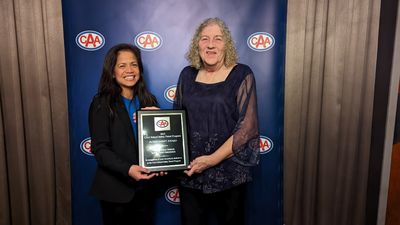
[ Left to Right: Kathryn Gratton, Elementary School Resource Coordinator and Deputy Chief Jason Saunders, Brantford Police Service. ] CAA South Central Ontario (CAA SCO) is proud to recognize two of its CAA School Safety Patrol® (SSP) program partners, the Brantford Police Service and, Windsor-Essex Schools Safety Patrol Association (WESSPA) for their outstanding contribution and dedication to the program. “CAA takes the safety of children and pedestrians very seriously and we work closely with our community and police partners to protect, educate and empower elementary school students to help keep their peers safe travelling to and from school.” says Tracy Marshall, manager of community relations at CAA SCO. “We are proud to celebrate this year’s CAA School Safety Patrol Program Achievement Award winners for their commitment to the program’s mission of keeping school zones safe,” adds Marshall. Kathryn Gratton, a civilian who works for the Brantford Police Service was recognized for going above and beyond to ensure program participants in her community were never left behind. Gratton has served her community through the CAA SSP program for four years and has trained over 2,300 Patrollers. This year, when other local regions were unable to train Patrollers, Gratton sprung into action to ensure students wouldn't miss out on the program. She continued training her schools and voluntarily offered to train other schools as well. From the 2022/23 school year alone, she has trained 26 schools and over 500 Patrollers. She also attended each school individually and had a pizza party with snacks and drinks for the Patrollers to show her appreciation for their hard work throughout the year. Through her proud involvement in the program, Gratton has clearly demonstrated the Brantford Police Service mission statement of being committed to enhancing safety for all. Brantford Police Service have been participating in the SSP program for over 50 years. [ Left to Right: Bernadette Arreola Community Program Consultant, CAA SCO and Linda Dowell, Windsor-Essex Schools Safety Patrol Association (WESSPA) ] Linda Dowell, who has been with the WESSPA for 18 years as the SSP regional partner, was recognized for her exceptional leadership that has directly impacted the program’s success. After a two-and-a-half-year hiatus due to the pandemic, the WESSPA brought back the CAA SSP program in September 2022 with 55 schools and over 1,000 Patrollers. Through Dowell’s leadership, WESSPA was able to re-integrate all their program components and incentives. This included ensuring Patrollers, bus operators and local police partners received extensive school bus safety and foot patrol training as well as hosting special events for program participants. Despite being retired, Dowell has chosen to continue serving her community through the SSP program because of her passion and commitment to school zone safety. The WESSPA have been participating in the SSP program for over 80 years. The CAA School Safety Patrol® program has helped keep students safe in school zones since the 1920s by assisting at school crossings and on school buses. Every year, approximately 900 schools in Ontario participate in the CAA SSP program and CAA SCO partners with local partners to deliver the program. For more information, visit www.caaschoolsafetypatrol.com.
