
Experts Matter. Find Yours.
Connect for media, speaking, professional opportunities & more.

STORY: National Slow Down, Move Over Day: Protect the Protectors
Every year, tow truck operators are injured or killed by passing vehicles. In 2015, CAA advocated for the government to include tow trucks in the Slow Down, Move Over legislation in Ontario. This means that when approaching an emergency vehicle or tow truck with flashing amber lights stopped on the side of the road, drivers must slow down and, where it is safe to do so, change lanes. To raise awareness, CAA National and all clubs across the federation recognizes the second Tuesday of May as National Slow Down, Move Over Day. This day acts as a reminder for drivers to slow down and move over for first responders and stopped tow trucks with flashing amber lights. This year, CAA Club Group has launched a new campaign called, Protect the Protectors. The goal of this campaign is to remind drivers that while tow truck operators are working to protect people stranded at the side of the road, we need to do our part and protect them by slowing down and moving over. Learn more: https://www.caasco.com/advocacy/road-safety/slow-down-move-over



Does medical marijuana work? Florida consortium seeks answers
By Emma Richards A consortium of nine universities in Florida, led by faculty at the University of Florida, is in the early stages of investigating the effectiveness of marijuana as a medical treatment. Almut Winterstein, a professor at the University of Florida who also serves as the director of the Consortium for Medical Marijuana Outcomes Research, says there is promising data on pain therapy and epilepsy but much still to learn about cannabis as a medical treatment. The Consortium for Medical Marijuana Outcomes Research is assessing the drug’s risks and benefits for different medical conditions and its safety and side effects when used alone or in conjunction with other prescription medications. “What I can tell you is that right now there is promising and fairly solid data that supports the use of medical marijuana as an adjuvant for pain therapy,” said Almut Winterstein, a professor in the College of Pharmacy at UF who also serves as the director of the consortium. “And there’s also evidence that supports the use for certain types of epilepsy.” As for other conditions, the impacts of medical marijuana are still unknown. The Florida State Legislature created the consortium in 2019, four years after enacting legislation that permits use of marijuana for certain clinical conditions. Currently, 37 states have a medical marijuana program, though the programs vary as far as how and to whom cannabis can be prescribed. But, Winterstein said, little is known about marijuana’s clinical safety and effectiveness. “I think that the Legislature was really forward looking in creating something that supplements the research that is currently not sufficient,” she said in an episode of the From Florida Podcast. The consortium will also gauge who is using and able to access medical marijuana and determine the benefits and drawbacks of different dosages. To do so, the group is working on three primary branches of research. The first area is a competitive grants program that funds researchers across all participating universities. The second branch is M3, or Medical Marijuana and Me, a new study that will track patients from their first use of medical marijuana for a year to assess their experiences. “That will give us ideas about what type of dosage, form and product do patients eventually end up on,” Winterstein said. “That is a very empirical approach because we have no head-to-head comparison of what works better or worse, but we can capture patients’ experiences, what they think works, what doesn't, what kind of side effects they might experience and so on.” Finally, what Winterstein calls the consortium’s “biggest baby and most important baby” is the Medical Marijuana Outcomes Research Repository, known as MEMORY. The repository will allow researchers to use de-identified dispensing data from the Department of Health to monitor health outcomes of the large population of 700,000 registered medical marijuana patients. These data will give researchers insight on cannabis safety and effects, whether positive or negative, linking to healthcare utilization, such as hospitalization or emergency department visits. The consortium is hosting the second annual Cannabis Clinical Outcomes Research Conference May, 19-20 in Orlando, where researchers will discuss the latest research on medical marijuana. “We are really trying to get people interested in this topic,” Winterstein said. “And in particular making sure that they have access to objective information that really allows them to make the right decision with respect to the use of medical marijuana.” To hear more about the consortium’s medical marijuana research, listen to the episode on From Florida at this link. Listen to other episodes in the From Florida podcast here. Read a recent article quoting Professor Winterstein here:


ChristianaCare MICU becomes first in United States to renew Beacon Award for Excellence for fifth-consecutive three-year cycle ChristianaCare’s Medical Intensive Care Unit (MICU) has earned an unprecedented honor from the American Association of Critical-Care Nurses. Among the thousands of intensive care units in the United States, ChristianaCare’s MICU is the first unit in history to earn a Beacon Award for Excellence from the association, also known as AACN, five times in a row. The Beacon Award is one of the highest achievements in nursing. The recognition lauds hospital units that employ evidence-based practices to improve patient and family outcomes. The award provides gold, silver and bronze levels of recognition to hospital units that exemplify excellence in professional practice, patient care and outcomes. Of the six Beacon Award-winning patient care units currently in the state of Delaware, five are at ChristianaCare: MICU (gold – five-time winner). Cardiovascular Critical Care Complex (gold – three-time winner). Transitional Medical Unit (silver). Surgical Critical Care Complex (silver). Transitional Surgical Unit (silver). ChristianaCare was one of 34 hospitals in the nation in 2021 with multiple units receiving Beacon Awards. Beacon Award designations are active for three years. “Through their relentless and uncompromising pursuit to deliver care that is nonpareil, the nurses of ChristianaCare’s MICU have become the paragon of what our profession can accomplish,” said Ric Cuming, EdD, MSN, RN, NEA-BC, FAAN, ChristianaCare’s chief nurse executive and president of ChristianaCare HomeHealth. “The success of our ChristianaCare MICU, even in the face of this pandemic, also has inspired our health system’s other intensive care units to achieve unprecedented gains in safety and quality that have been recognized with the AACN’s Beacon Award, the touchstone by which all critical care nursing excellence and quality are measured.” Success in caring for patients amidst COVID-19 ChristianaCare’s values of love and excellence are at the heart of the 24-bed MICU at Christiana Hospital, which holds the most Beacon Awards in Delaware. This year’s award is especially meaningful on the heels of yet another difficult surge of COVID-19. “It is a testament to our nurses and the entire care team that we continued to reach milestones in patient safety and satisfaction even during the COVID-19 pandemic,” said Carol Ritter, MSN, RN, CCRN-K, CNML, who has been nurse manager on the MICU for 10 years and a leader on the unit during all of its Beacon Award wins. “Everyone brings a level of expertise to the unit. We truly serve together.” Beacon awards celebrate the professional dedication that a nursing team demonstrates in going above and beyond to provide respectful, expert care. “Meaningful recognition takes on even greater relevance and importance as we continue to meet the challenges of the COVID-19 pandemic,” said AACN President Beth Wathen, MSN, RN, CCRN-K. “Being recognized as a Beacon unit underscores these teams’ ongoing commitment to providing safe, patient-centered and evidence-based care to patients and families. This achievement is a tremendous honor to those who have worked so hard to achieve excellence in patient care and positive patient outcomes.” ChristianaCare is one of only 152 health care institutions in the nation and the only in Delaware to have gold-level units. In 2008, the MICU was the first unit in the state to receive the Beacon Award. MICU’s culture of continuous improvement The MICU’s commitment to data-driven, evidence-based care proved especially valuable during the pandemic’s early days. Prone positioning, a technique to help patients with acute respiratory distress syndrome (ARDS) to breathe better, had been a longtime practice in ChristianaCare’s ICU. ChristianaCare critical care nurses Maureen Seckel, MSN, APRN, ACNS-BC, CCNS, FCCM, FCNS, and Dannette Mitchell, MSN, APRN, ACNS-BC, CCRN, published an article in AACN Advanced Critical Care that described ChristianaCare’s pioneering adoption of this technique, which ultimately became standard practice nationally in the treatment of patients with COVID-19 and ARDS. “On our unit, we empower the team to provide evidence-based care and have the tools to guide the practice,” Seckel said. “Because of this we were able to incorporate a highly effective, life-saving measure into COVID-19 care early in the pandemic.” Continuous improvement is a hallmark of the unit. The MICU has seven Comprehensive Unit-based Safety Program teams that follow data-collection processes to view trends and compare them to national standards to improve care and outcomes. “The whole unit is involved in collecting data to assess and make changes,” said MICU nurse Olivia Ross, BSN, RN, CCRN. Among the MICU’s accomplishments are excellent outcomes in preventing common hospital-acquired infections, even during the pandemic: Zero instances of catheter-associated urinary tract infections in three years. Zero instances of central line bloodstream infections in one year. The unit’s dedication to being exceptional today and even better tomorrow also focused inward during the pandemic. During a time of constant change, the team recognized the need for support to handle the unprecedented stress and strain of the pandemic. “To give the most vulnerable patients the highest levels of care on a consistent basis, we needed to take care of ourselves and one another too,” Ritter said. Ritter and team leaders committed to open-door policies throughout the pandemic, and they partnered with ChristianaCare’s Center for WorkLife Wellbeing to enable licensed psychologists to round on the unit, offering real-time check-ins with caregivers to provide support. The Beacon Award has been a resounding lift and reward for the MICU team members. “Having this recognition, especially during times of distress in the community and the world, signifies excellent nursing care,” said MICU nurse Paige Merring, MSN, RN, CCRN. “And to me it signifies an amazing team and great outcomes, which is the primary purpose of why we are all here.”



In new study in journal Gene Therapy, researchers at ChristianaCare’s Gene Editing Institute describe how the advance is validating the safety and efficacy of their novel approach for using CRISPR to improve lung cancer treatments A new study from scientists at ChristianaCare’s Gene Editing Institute is advancing the safety and efficacy of using CRISPR gene editing in patient treatments by demonstrating how to identify and evaluate the broad-based biological impact of gene editing on targeted tissues, where the edits are designed to fully disable or “knock out” a specific sequence of genetic code. The work, published today in the Nature journal Gene Therapy, supports the Institute’s efforts to improve lung cancer treatments by using CRISPR to disable or alter a master regulator gene to prevent it from producing a protein that blunts the impact of chemotherapy. “We found that when you use CRISPR, the edits sometimes end up altering rather than completely disabling the target gene, so we developed a process to gain a more complete understanding of what that means for patients,” said Eric Kmiec, Ph.D., executive director and chief scientific officer of ChristianaCare’s Gene Editing Institute and the principal author of the study. Dr. Kmiec said that for his team’s lung cancer work, “We discovered that even when our CRISPR-based genetic manipulation did not completely disable the targeted gene, it altered it in ways that appear to make lung cancer tumors more sensitive to chemotherapy. Validating lung cancer research using CRISPR “We were fortunate that our strategy for using CRISPR to improve lung cancer treatments has been validated once again,” he added. “But our commitment to conducting an unbiased assessment of our approach highlights the importance of examining all potential outcomes of an attempt to use CRISPR to knock out a specific gene. Specifically, anyone developing CRISPR therapies needs to be on the lookout for edits that don’t fully knock out a section of DNA code—and evaluate the potential impacts for patients. They could be positive, as they were in our case, negative or neutral, but they need to be known.” Much of the excitement around medical applications of CRISPR involves using the tool to disable harmful genes by editing or “knocking out” a specific sequence of DNA code. But there is increasing evidence that in the wake of a CRISPR edit, cells may remain that contain merely an altered form of the targeted code that allows the gene to continue to produce biologically active proteins. Scientists at the Gene Editing Institute are investigating the potential of using CRISPR to disable a gene called NRF2 to alter production of the protein that protects squamous cell carcinoma lung cancer tumors from the effects of chemotherapy or radiation. They already have shown, in studies with tumor cells and in animals, that they can selectively target the NRF2 gene without affecting normal cells, where the gene confers health benefits. In the present study they wanted to go further. They wanted to fully understand the implications of a CRISPR gene edit that allowed the NRF2 gene to retain enough DNA code to continue making a version of the protein, albeit in an altered or truncated form. The team is laying the groundwork for a clinical trial that would use CRISPR to improve the efficacy of conventional chemotherapy and radiation treatments. Dr. Kmiec said that before proceeding, he wanted his team to develop a clear process for identifying and evaluating all outcomes of CRISPR edits. Identifying and understanding the diversity of genetic outcomes produced by CRISPR-directed gene editing has been a centerpiece of the foundational research programs established by the Gene Editing Institute. Using CRISPR in a safe way “We carry out experiments in an unbiased fashion, not hoping for a particular outcome, but with patient safety and efficacy serving as the true north for our scientific endeavors,” Dr. Kmiec said. “No matter what we uncover or elucidate, the insights will help both ChristianaCare and the entire field use CRISPR in a safer and more efficacious manner.” The researchers found multiple cells where the targeted strand of DNA code in the NRF2 gene was not completely knocked out. Rather, following the CRISPR edit, cells emerged that had retained enough of the original code to continue producing a different form of the protein. Tests revealed that cancer tumor cells generating these altered proteins may be more vulnerable to chemotherapy drugs. "For the work we are doing with NRF2, the truncated proteins generated by the CRISPR edit appear to be beneficial for making tumors more sensitive to treatment,” said lead author Kelly Banas, Ph.D. “But the key point is these proteins were clearly biologically active. And that means we needed to determine their potential impact on the safety and efficacy of using CRISPR to treat lung cancer patients.” Dr. Banas noted that the study points to the limits of considering a CRISPR edit to be successful simply by testing for the absence of a targeted protein in its original form. She said by that standard, their edit was successful. The edited NRF2 genes were no longer producing the same protein. But she said if that’s all the ChristianaCare team had looked for, they would have missed the altered proteins coming from the NRF2 gene—and overlooked an important outcome that, in this case, strengthens the original hypothesis and experimental approach: that using CRISPR to target the NRF2 gene holds promise for improving outcomes for lung cancer patients. Importance of due diligence “The process we describe in this study is a template that should be followed in any effort to develop CRISPR as a medical treatment,” Dr. Kmiec said. “We’re part of a health care organization where patient safety is the top priority. We also are working at the vanguard of an exciting area of cutting-edge medicine, where a failure to conduct due diligence could cause tragic outcomes that would set back this field for decades. With this study, we have validated a process that can help this field move forward rapidly but safely.” CRISPR stands for “clustered regularly interspaced short palindromic repeats.” It is a defense mechanism found in bacteria that can recognize and slice up the DNA of invading viruses. Scientists have learned how to modify this mechanism so it can be directed to “edit” specific sequences of DNA code. About ChristianaCare’s Gene Editing Institute The Gene Editing Institute, a worldwide leader in CRISPR gene editing technology and the only institute of its kind based within a community health care system, takes a patient-first approach in all its research to improve the lives of people with life-threatening disease. Since 2015, researchers at the Gene Editing Institute have been involved in several ground-breaking firsts in the field, including the development of the first CRISPR gene editing tool to allow DNA repairs outside the human cell which will rapidly speed therapies to patients and the ExACT ™pathway of single-stranded DNA repair, which increased the on-target efficacy of CRISPR and paved the way for new CRISPR breakthroughs in precise DNA edits. Its researchers created CRISPR in a Box™, the leading educational toolkit to teach gene editing, DECODR™, recognized as the most user-friendly and precise analytical tool to understand the diversity of genetic outcomes of gene editing and are currently developing a patient trial for lung cancer using CRISPR.

MEDIA RELEASE: Voting for the CAA Worst Roads campaign is now open to all Ontarians
Tired of swerving around potholes? Worried about your safety as a cyclist or pedestrian? Voting is now open for the annual CAA Worst Roads campaign and CAA South Central Ontario (CAA SCO) is giving Ontarians the opportunity to voice their concerns about the bad roads in their community. “We know that through CAA’s research, almost three quarters (72 per cent) of Ontarians are venting about the state of our roads to either their spouses, friends or co-workers and not always to local government officials,” says Teresa Di Felice, AVP government and community relations, CAA SCO. “As we kick off another year of the CAA Worst Roads campaign, we are calling on all Ontarians to vote for their Worst Roads today and join the community of drivers, cyclists, transit riders and pedestrians committed to improving Ontario’s roads.” The campaign informs decision-makers across various levels of government which roadway improvements are top of mind for road users, and where improvements could be prioritized. Ontarians can vote on issues ranging from congestion, potholes, poor road signs and the timing of traffic lights to pedestrian and cycling safety. “The key to economic recovery is the investment in roads and supporting infrastructure because when we invest in our roads, we also create jobs,” says Di Felice. “Throughout the pandemic, our roads have been the arteries used every day to keep essential workers, goods and services flowing. Now more than ever, funding for roadway improvements and proper infrastructure needs to be consistent to ensure that quality and safety is maintained for everyone.” According to the 2019 Canadian Infrastructure Report Card, a concerning amount of municipal infrastructure is in poor or very poor condition. The report card also highlights spending $1 on pavement preservation may eliminate or delay spending $6-$10 on costly repairs later. CAA’s research also shows that more than 80 per cent of Ontarians say poor road conditions such as cracks in pavement (89 per cent) and potholes (82 per cent) are still the most common issues in their neighbourhoods. The damage to a vehicle caused by a pothole can range from $300, with some fixes topping $6,000 depending on the make and model of the car. “As the inventory of vehicles continues to remain scarce due to the global semiconductor chip shortage, more people are now trying to hold on to their cars for longer. Not only can poor roads cause damage to vehicles but they also contribute heavily to the wear and tear of tires and increased fuel consumption which is why the maintenance and quality of our roadways is so important.” added Di Felice. Kinga Surma, Ontario’s Minister of Infrastructure echos the importance of investing in quality roadways and infrastructure. “Our government has made a historic investment of an additional $1 billion over the next five years through the Ontario Community Infrastructure Fund (OCIF) that will provide stability and predictability to 424 small, rural and northern communities. This funding will allow them to repair, upgrade, and modernize their critical infrastructure so that they are safer, healthier and more reliable for all. Our government acknowledges the important role that road infrastructure plays in our province, and we recognize the work that the CAA does to engage with our communities to further strengthen Ontario’s critical infrastructure and contribute to the province’s economic growth.” Nominations for CAA’s Worst Roads can be cast at caaworstroads.com until April 19. Once voting is closed, CAA will partner with Ontario Road Builders’ Association (ORBA) to verify and compile a list of the top 10 Worst Roads in Ontario, along with the top five Worst Roads in regions across the province. The regional lists will help shine further light on the state of local roads in municipalities across Ontario. “The goal of the CAA Worst Roads campaign is to get roads repaired in a timely manner by working in partnership with government to invest in road maintenance, repair and replacement,” says Bryan Hocking, CEO, ORBA.” “The Ontario Road Builders’ Association’s role in this campaign is a technical one. We will assess each road on the list, offer a life cycle analysis, and analyze how long the road can last in its current condition and offer an explanation for its deterioration,” added Hocking. CAA will present the list of 2022 Worst Roads to local and provincial officials to help inform future funding and planning decisions.


Photo Credit: Sandy Nicholson / FUZE Reps Longing for your next adventure? Look no further because CAA South Central Ontario (CAA SCO) has unveiled a new set of luxurious travel packages designed for travellers who are ready to embark on an iconic Canadian adventure. As part of each package, travellers will be flying on a CAA chartered jet with all business class seating, offered in partnership with Air Canada. They will be joined only by those travelling on a Premier Collection tour. Itineraries are curated with affordable luxury in mind. “Our research has shown us that Canadians are looking to experience travel in a more intimate setting and at this time, are still looking to stay closer to home,” said Susan Postma, Regional Manager, CAA. “By coupling the best of Canadian culture, food and heritage, with the safety and luxury of travelling on a CAA chartered plane, we are confident that these packages will give travellers a delightful option to start exploring again.” Travellers will rediscover the nation’s greatest sights, sounds and smells on one of five journeys showcasing Canada’s unforgettable wonders and hidden gems. “For many of us, travelling again for the first time is a momentous occasion and we wanted to make that extra special by cultivating a premium experience with the utmost attention to health and safety,” said Postma. “Each destination encourages travellers to immerse themselves in every moment and create lasting memories.” Packages feature everything from stargazing to whale watching; enjoying a pancake brunch on a maple farm to World Famous “Digby Scallops” in Nova Scotia; witnessing the highest tides in the world in New Brunswick to taking in Quebec’s most breathtaking waterfall and many more unique experiences in between. “We are very pleased that CAA is recognizing our superior customer service in choosing Air Canada for its unique, luxury travel packages. Our private charter service, Air Canada Jetz, is specially designed for ultra-premium customers, such as pro athletes, celebrities and music stars, ensuring CAA’s explorers will travel in extraordinary style wherever their adventure takes them,” said Eric Bordeleau, senior director, Network Scheduling and Charters at Air Canada. Tours and dates include: Glorious Lakes and Glaciers: Banff, Jasper and Beyond (August 13-20, 2022) – 8 Days Savour Quebec: A Culinary Journey Through Quebec City, Charlevoix and Montreal (August 15 – 24, 2022) – 10 Days Rich and Enticing Quebec: Explore the Spectacular Gaspé Peninsula (August 15 – 24, 2022) – 10 Days Magical Maritimes: Acadian Culture, Delicious Flavours and Historic Charms (September 10-19, 2022) – 10 Days Platinum Journey - Mountains and Memories: Wonders of the West and Rocky Mountaineer (September 13-21, 2022) – 9 Days CAA Travel has over 50 years of experience in helping members plan and book unforgettable travel excursions around the world. CAA’s new Premier Tours Collection packages are part of CAA’s Extraordinary Explorations collection and range in price starting at $6,300 CDN. Extraordinary Explorations is CAA’s collection of unique travel adventures designed for adventurous travellers looking to embark on a luxe vacation for an affordable price. Experience one-of-a-kind destinations, intriguing itineraries and exceptional excursions. Available as escorted and hosted packages, every exploration is guaranteed to create lasting memories. The 2022 Premier Collection packages can be purchased at all CAA stores or by phone at 1-844-202-8045. Click here for more information.
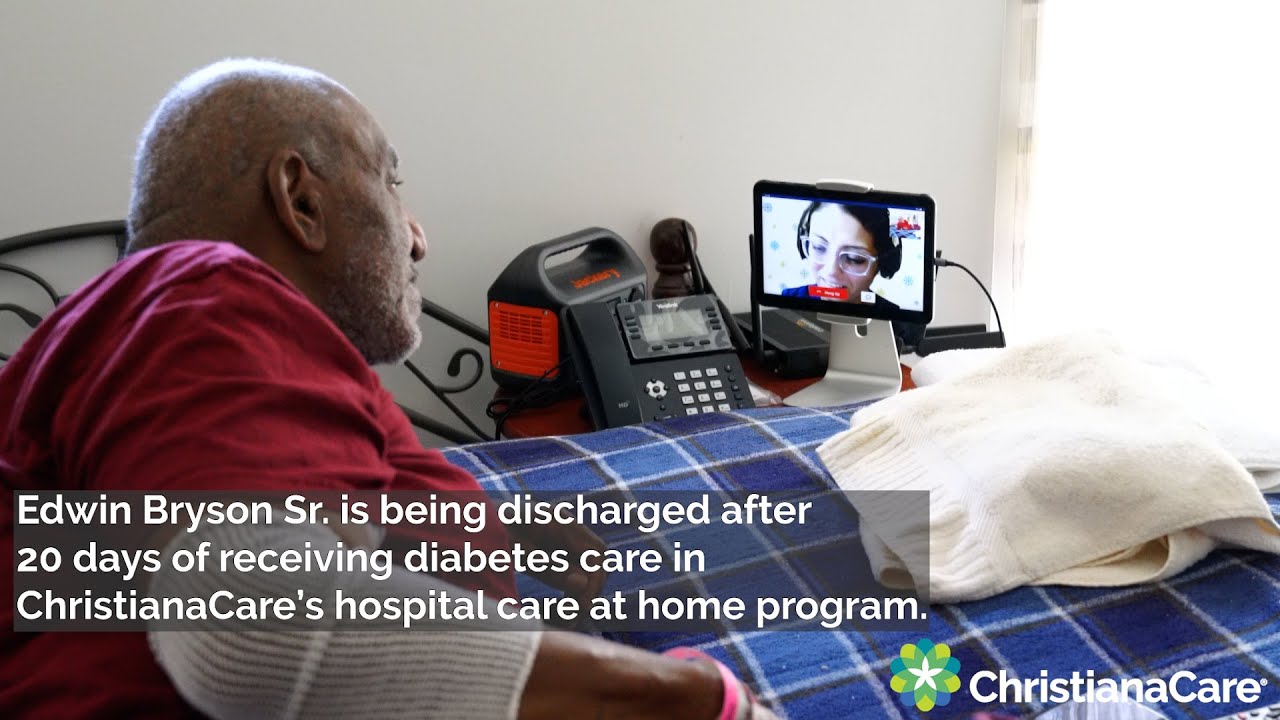
As he arrived at ChristianaCare’s emergency department because of diabetes complications that were causing excruciating pain in his left foot, Edwin Bryson Sr., 71, of Wilmington, Del., had resigned himself to what seemed inevitable—he was going to need hospitalization. But he was surprised when his care team offered him the chance to get the hospital care he needed in the place he likes best — his own apartment. For 20 days, Bryson was a patient in the ChristianaCare hospital care at home program, which offers in-home services to patients who would otherwise require inpatient hospitalization. Daily, members of his care team visited his home to take his vital signs, give him medication and assist him with getting dressed. They also helped with additional tasks to improve his overall health and safety, such as buying an extra lamp and flashlights to ensure the lighting in his home was adequate for his safety, and assisting him with ordering food. “It was a good feeling to be at home,” Bryson said. “My friends would knock on my door and make sure I was OK. My son and my nephews could stop to see me when they felt like it or had the time. They always say, ‘There’s no place like home,’ and it’s true. All I do is hit the button and a nurse comes on to assist me with anything I need and check on my vitals. It was 24-hour service here, just like I was in the hospital.” ChristianaCare has admitted and cared for more than a dozen patients in the hospital care at home program since it launched in December 2021, designed in partnership with the Medically Home Group Inc. The program, which offers the highest level of in-home acute care in Delaware, combines virtual and in-person care provided by a team of physicians, nurse practitioners, registered nurses and other providers. In-person and virtual visits from the health care team, along with mobile imaging and lab services, delivery services for meals and nutrition, and pharmacy medication and management, mean a patient doesn’t need to leave home to get better. Virtual technology and home health equipment brought into the patient’s home ensure round-the-clock monitoring and care that mirrors a traditional hospital setting. “One of the things we’ve learned in a short time about the hospital care at home program is how patient-centered this approach is and how we’re able to customize the care we deliver,” said Sarah Schenck, M.D., medical director of the program. “Most of the things we can do in the hospital we can also do at home. And it turns out patients really prefer that venue. They’re in their own home with their loved ones, their pets, sleeping in their own bed and eating their own food.” Currently, to be considered for hospital care at home, patients must live within 25 miles of Christiana and Wilmington hospitals. Patients who come to the emergency department with common chronic conditions such as congestive heart failure, respiratory ailments, diabetes complications and infections like pneumonia, are eligible for consideration. All hospital care at home patients receive a technology kit that connects them to the command center, powered by the ChristianaCare Center for Virtual Health. With a touch of a button, patients can access an expert team of ChristianaCare physicians and nurses. When patients are well enough to be discharged, the care team collaborates with the patient’s primary care physician to ensure a seamless transition. ChristianaCare joins an elite group of health systems nationwide offering at-home hospital care. Clinical research studies comparing patients in traditional hospitals with patients who received hospital-level care at home have found those who received in-home care experienced fewer readmissions, lower mortality rates, reduced falls and lower costs. “Patient satisfaction is really high with this program,” said Steaphine Taggart, director of operations for the program. “There’s more caregiver interaction with families because they are allowed to come into the home. And overall, there’s more patient-centered care and delivery because it’s in the home,” Registered nurse Mary Pat McCabe has treated patients for 17 years. Working in the hospital care at home command center, she has the opportunity to be even more personable in the virtual setting than a traditional inpatient encounter. “You get to know them and their family members and if they have a pet. You can see into their home and get more of a feel for who they are,” McCabe said. Dr. Schenck said hospital care at home is an exciting example of how new, innovative models of care can improve patient outcomes, reduce costs and transform care. “It’s really foundational for the future of health care delivery. This is our first step, but it’s definitely going to grow,” she said. For Bryson, who was recently discharged, it’s even simpler: “You get better, get back out there and get back into life again.”

ChristianaCare’s renowned Center for Heart & Vascular Health has earned the highest quality rating—three stars—from the Society of Thoracic Surgeons (STS) for its patient care and outcomes in isolated coronary artery bypass grafting (CABG) procedures. The prestigious three-star rating places ChristianaCare among the elite health care organizations for heart bypass surgery in the United States and Canada. The STS star rating system is one of the most sophisticated and highly regarded overall measures of quality in health care, rating the benchmarked outcomes of cardiothoracic surgery programs across the United States and Canada. The star rating is calculated using a combination of quality measures for specific procedures performed by an STS Adult Cardiac Surgery Database participant. “Earning a three-star rating for heart bypass surgery places us among the top heart hospitals in the nation,” said Ray Blackwell, M.D., the W. Samuel Carpenter Chief of Cardiac Surgery at ChristianaCare. “Delaware residents can be confident that they have one of the best heart surgery teams in the nation right here, close to home, at ChristianaCare.” The three-star rating from STS adds to ChristianaCare’s long list of awards for quality heart care. For the past two years, the Center for Heart & Vascular Health has earned the designation HeartCARE Center National Distinction of Excellence from the American College of Cardiology for its commitment to high quality cardiovascular care. In addition, the Center for Heart & Vascular health received the American Heart Association’s 2021 Mission: Lifeline Gold Quality Achievement Award for the treatment of patients who suffer severe heart attacks; the 2021 Get With The Guidelines NSTEMI Silver Award for patients with a less severe form of heart attack; and the 2021 Get With The Guidelines Gold Plus Award for Heart Failure. “Our Center for Heart & Vascular Health and our community have much to be proud of,” said Kirk Garratt, M.D., medical director of the Center for Heart & Vascular Health. “We provide great outcomes, and we also listen to patients and families and work to ensure that the stressful experience of surgery is as easy as it can be. That kind of commitment leads to this kind of recognition.” Heart Disease Remains a Leading Killer in the U.S. According to the American Heart Association (AHA), heart disease remains a leading killer in the nation—claiming more than 600,000 lives each year. In addition, the AHA anticipates the effects of COVID-19 are likely to influence cardiovascular health and mortality rates for many years. “February is American Heart Month, and there is no better time for us to take stock of our heart health than now,” Dr. Garratt said. “The COVID-19 pandemic has presented new challenges to people living with chronic conditions such as heart disease. People with heart conditions are at greater risk of complications from the virus and also continue to need assistance managing their heart health. If you are a heart patient, please do not postpone your regular visit with your cardiologist.” The STS is a not-for-profit organization that represents more than 7,600 surgeons, researchers and allied health care professionals worldwide who are dedicated to ensuring the best possible outcomes for surgeries of the heart, lung and esophagus, as well as other surgical procedures within the chest. The STS National Database was established in 1989 as an initiative for quality improvement and patient safety among cardiothoracic surgeons. “The Society of Thoracic Surgeons congratulates STS National Database participants who have received three-star ratings,” said David Shahian, M.D., chair of the Task Force on Quality Measurement. “Participation in the Database and public reporting demonstrates a commitment to quality improvement in health care delivery and helps provide patients and their families with meaningful information to help them make informed decisions about health care.” About the Center for Heart & Vascular Health ChristianaCare’s Center for Heart & Vascular Health is among the largest, most capable regional heart centers on the East Coast. It is one of the only centers in the region that integrates in a single location and under one roof cardiac surgery, vascular surgery, vascular interventional radiology, cardiology and interventional nephrology. Its team of experienced cardiovascular surgeons and heart experts perform nearly 700 open-heart procedures each year and treat more than 8,000 total heart and vascular cases annually. For more information, visit https://christianacare.org/services/heart/.


Free masks are coming - here's what you need to know
As stores across America prepare to receive "the largest deployment of personal protective equipment in U.S. history," UConn epidemiologist Dr. David Banach is answering the questions about N95 respirators, how they work, and how to use them properly in a new interview with Buzzfeed news: There are several different types and shapes of N95s; some look like duck bills, others like domes, and several have three panels. The main difference between nonsurgical and surgical N95s is that the latter are also fluid resistant to protect doctors and nurses from blood and other bodily fluid sprays, Dr. David Banach, an infectious disease physician and hospital epidemiologist at UConn Health of the University of Connecticut, told BuzzFeed News. ****** N95 respirators are regulated by the US with standards set by the National Institute for Occupational Safety and Health (NIOSH), while KN95s (and KF94s and others) follow international standards, meaning they also should screen out about 95% of germs and particles, but their effectiveness can vary between brands sold in the US. That’s why Banach advises extra caution if you choose to wear these masks. ****** N95 respirators do expire, Banach said, but it’s usually several years after they are made. As long as you store your N95s according to its box instructions, you’ll be fine — unless you’re saving them for the next inevitable pandemic. Dr. David Banach is an expert on infectious diseases and epidemiology and is a leading expert on COVID-19 in America. To book an interview with Dr. Banach, click on his icon today.



Research offers larger implications for health care environments Some of the most dangerous contaminants aren’t visible to the naked eye, but Georgia Southern University researchers are working to protect construction workers from this invisible danger. In the construction world, chronic exposure to crystalline silica, which is present in dust particles created from drilling, grinding and sawing on job sites, can lead to serious medical issues and preventable fatalities. Atin Adhikari, Ph.D, associate professor in Georgia Southern’s Jiann-Ping Hsu College of Public Health, has been awarded a $28,400 grant from Poma 22, LLC, to test new air curtain technology that could protect construction workers from hazardous fine dust particles. As the principal investigator (PI), Adhikari will work with co-PIs Aniruddha Mitra, Ph.D, professor of mechanical engineering, and Saman Hedjazi, Ph.D, assistant professor of civil engineering and construction management, from Georgia Southern’s Allen E. Paulson College of Engineering and Computing. “This research is important and innovative because we will test a revolutionary technology against fine dust exposure in construction sites that integrates a filtered air duct system into a hard hat, creating an air curtain or armor,” said Adhikari. “If we get a promising result, then this technology can be applied against other types of particles including bioparticles present in healthcare work environments.” Graduate research assistant Victoria Clower, who is earning a Master of Public Health in environmental health sciences, values her involvement in life-changing research. “This study of new technology on dust exposure control in construction sites will be very valuable with the quantifiable results showing the effectiveness of the air curtain technology,” she said. “As someone who is interested in occupational health, I am excited to work on a study that may provide an opportunity for other innovations for workplace safety to improve.” The U.S. Department of Labor’s Occupational and Safety Health Administration estimates roughly 2.3 million people in the U.S. are exposed to silica at work. Workers at risk can develop lung cancer, chronic obstructive pulmonary disease (COPD) and kidney disease. In addition, approximately 500 preventable silica-related deaths occur each year. As an environmental public health researcher, Adhikari has published numerous peer-reviewed studies on air quality and filtration. This project will focus on testing a newly developed respiratory protection technology, the Z Flow Pro helmet, which provides a downward draft through the front of the helmet, creating an air curtain in front of the worker’s face. Previous research has found that the air curtain is strong enough to deflect larger, visible particles. Adhikari and his team will conduct comprehensive field testing of this new technology to determine if it is also effective protection against fine particles, providing valuable information and justification on the readiness level of this product to protect construction workers. If you’re a journalist looking to cover this new testing that Georgia Southern is a major part of – then let us help. Atin Adhikari is available to answer your questions - simply reach out to Georgia Southern Director of Communications Jennifer Wise at jwise@georgiasouthern.edu to arrange an interview today.
