
Experts Matter. Find Yours.
Connect for media, speaking, professional opportunities & more.

Monitoring the migration of blackfin sharks – Florida Atlantic’s experts are in the news
Seeking the warmer waters of the south coast – it is that time again for the annual migration of the black fin shark. These majestic sharks can grow up to 8 feet and weigh in at more than 200 pounds when fully grown. They’re also listed by the International Union for Conservation of Nature (IUCN) as near threatened, mostly due to the fact it is a targeted for its meat and its fins, which are used to make shark fin soup. Recently, one of our experts was featured in the media for his efforts in ongoing research and his studies are benefiting those who live both on water and on land. “Dr. Stephen Kajiura, a researcher at Florida Atlantic University, has been tracking the migration patterns of these apex predators by air and sea. Now Kajiura's latest tool is providing thorough details about their every move. He is capturing their movements and gathering detailed information through a $5,000 reusable radio and satellite sensor attached to their dorsal fins for two to four days. Data from these "shark diaries" records information, including how often they swish their tails, at what depth they prefer to swim, and at what time of day they swim close to the beach — proving beneficial to lifeguards responsible for beach safety.” Tampa Bay Times Are you covering? Do you need to know more about sharks, the dangers they face and what researchers are learning about these amazing species of fish? Let our experts help. Stephen Kajiura, Ph.D., is a professor and researcher at Florida Atlantic University. He’s also an expert in sharks and shark behavior. Stephen is available to speak with media – simply click on his icon to arrange an interview.



Why not make Don’t Fry Day…every day the sun is shining?
Looking to get the long weekend started right? Well then before you head out, lather up and apply that sunblock. The National Council on Skin Cancer Prevention has designated the Friday before Memorial Day as “Don’t Fry Day” to encourage sun safety awareness and to remind everyone to protect their skin while enjoying the outdoors. The American Cancer Society estimates there will be more than 73,870 new cases of malignant melanoma, the most serious form of skin cancer, and more than 2 million new cases of basal cell and squamous cell skin cancers in the U.S. Fortunately, skin cancer is highly curable if found early and can be prevented. Remember to “Slip! Slop! Slap!...and Wrap” when you’re outdoors. Slip on a shirt Slop on broad spectrum sunscreen of SPF 30 or higher Slap on a wide-brimmed hat And wrap on sunglasses. The best way to detect skin cancer early is to examine your skin regularly and recognize changes in moles and skin growths. There’s a lot to know and we have an obligation to ourselves and our loved ones to make them sun-safe and cancer free. If you are covering this topic or need to know more, let one of our experts help. Dr. Jigarkumar Parikh is a medical oncologist specializing in kidney cancer, prostate cancer, bladder cancer and melanoma at the Georgia Cancer Center at Augusta University. He is available to speak with media regarding skin cancer – simply click on his icon to arrange an interview.

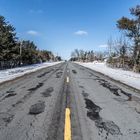
A study conducted ahead of CAA’s Worst Roads campaign underscores how Ontarians feel about the state of their roads. Seventy-one per cent of those surveyed say they are concerned about the condition of roads, while 60 per cent of respondents don’t believe that roads are being repaired in a timely manner. The data reinforces the campaign’s importance, says Raymond Chan, government relations specialist for CAA South Central Ontario (CAA SCO). “The simple act of participating in the CAA Worst Roads campaign can help various levels of government understand what roadway improvements are top of mind for road users, and where improvements could be prioritized.” The study also found that while most regularly see roads in need of repair, 67 per cent of respondents stated they took no action to get them repaired. The CAA Worst Roads campaign is designed to be an easy forum for Ontarians to engage and take action on issues that impact them. “We want to know what roads are seen as pain points for Ontarians. Whether the issue is congestion, potholes, road signage or challenges around pedestrian and cycling safety, CAA wants to hear from you," says Chan. Investing in infrastructure improvements, including the proper maintenance of roads and bridges, is important to the vitality of local communities. CAA continues to advocate for longer-term dedicated infrastructure funding to help municipalities prepare, plan, budget and execute on repair backlogs and capital projects. Repaving and repair work has been completed on many of the roads that have appeared on Ontario’s CAA Worst Roads list. Some examples include: Burlington St. E., Hamilton This Hamilton road has appeared on the annual list since 2008. It received the dubious honour of Ontario's Worst Road in both 2017 and 2018, thanks in part to potholes and crumbling pavement. A total of $3.3 million has been allocated to resurface and replace the lower part of Burlington St. E. with fresh pavement in 2018/2019. Duckworth St., Barrie This Barrie roadway claimed the third spot in the 2018 campaign. The first phase of a $10.3M reconstruction of Duckworth St. began last fall and the second phase will begin this spring. Improvements of Duckworth St. between Melrose Ave. and Bell Farm Rd. are planned for completion in 2020. Dufferin St., Toronto Topping the list from 2012 to 2014, Toronto’s Dufferin St. has continued to appear on the Top 10 list of Ontario’s Worst Roads. As part of the City of Toronto’s Capital Works Program, Dufferin St. from Dundas St. W. to Bloor St. W. was repaved and sections of damaged curb and sidewalk were replaced. CAA SCO is calling on Ontarians to vote for their Worst Road today and join the community of drivers, cyclists and pedestrians committed to improving Ontario’s roads. Nominations for CAA’s Worst Roads can be cast at caaworstroads.com until April 26. To encourage participants to act on their concerns, they will be entered into a grand prize draw to win free gas for a year, or one of 10 secondary prizes. Once voting closes, CAA will compile a list of the 10 worst roads in Ontario, along with the worst roads in regions across the province. The regional top five lists will help shine further light on the state of local roads in municipalities across Ontario. CAA will present the list of 2019 Worst Roads to local and provincial officials to help inform future funding and planning decisions. About the Survey This study was conducted online by Campaign Research between February 15-20, 2019 among a sample of 1,515 Ontario residents who were 18 years of age or older. A probability sample of this size would have a margin of error of +-2.5% 19 times out of 20. About CAA South Central As a leader and advocate for road safety and mobility, CAA South Central Ontario is a not-for-profit auto club which represents the interests of 2 million members. For over a century, CAA has collaborated with communities, police services and government to help keep drivers and their families safe while travelling on our roads.


MEDIA RELEASE: Road safety in the cannabis era
At CAA South Central Ontario, what we're focused on, day in and day out, is how to keep our roads and road users safe. One of our objectives is dispelling common myths about cannabis. This includes the claim that driving under the influence of cannabis is safer than driving after consuming alcohol or the belief that cannabis can sharpen one's ability behind the wheel. The potential for a collision increases in direct proportion to THC levels (the main intoxicant in cannabis) in our body. This means that cannabis significantly impacts the driver's cognitive and motor functions, which in turn affects decision-making and judgment. We must remember that driving is a privilege, not a right. The legal response to impairment is strict and swift. But we must also keep in mind that, much like our education around seatbelts and alcohol, it will take time to change habits. It's important to be smart with our choices and to tap into the lessons we've already learned. This includes appointing a designated driver if you're planning on using cannabis, finding an alternative to get to your destination and ensuring we have conversations around the dangers of cannabis with new drivers in our families. Communities across Ontario are working hard to keep our roads safe. Today we face tremendous opportunity to ensure we continue on that path, but our goal is only possible if we make public education key to our efforts. We hope you join us.


Is Washington playing Russian roulette with airline safety?
The government shutdown that is finally over had some worrying near the end and for good reason. Air traffic controllers, the very professionals who keep planes in the air and at a safe distance from each other had gone for more than four weeks without getting paid. Exhausted, demoralized and depleting ranks were probably the near-perfect storm for an imminent accident or disaster. Luckily, and thankfully, these dedicated professionals rose to the occasion and ensured safety was still the priority. Often, working even while the very equipment and technology they rely on was not being serviced. But as the shutdown takes a break for three weeks and everyone is made whole with back-wages and paychecks – does America need to rethink the potential risks and consequences to having the staff who are essential to safety across the entire country go without pay and benefits during a political dispute? The consequences of a major airline crash are huge economically and in terms of lives lost. So, can the nation’s air traffic controllers be exempt form the impacts of a government shutdown? Who would have been liable if an accident did occur? Are aviation, customs and our nation’s airports not considered essential and therefore worthy of being paid during a shutdown? And how close did we come to a disaster? While we wait and watch for a solution in Washington over the coming weeks, there are still a lot of questions to be answered, and that’s where the experts from the University of Rochester can help. David M. Primo is the Ani and Mark Gabrellian Professor and an associate professor of political science and business administration at the University of Rochester. He is an expert in airport safety and security and a professor at the University of Rochester in Rochester, New York, and can comment on airline safety and passenger impacts amid airports such as Laguardia International restricting air travel due to the government shutdown. David is available to speak with media regarding the economic effects of the shutdown – simply click on his icon to arrange an interview.


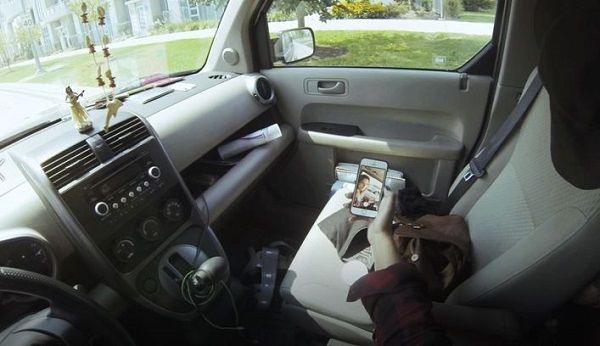
Starting January 2019, the stakes will be even higher when it comes to distracted driving in Ontario. CAA South Central Ontario (CAA SCO) is reminding Ontario drivers that strengthened distracted driving laws will take effect January 1, 2019. New additions include licence suspensions, increased demerit points and an increase to the minimum financial penalty that can be charged to those guilty of distracted driving. "CAA fully supports the increased fines and penalties that will be in place for distracted driving starting tomorrow,” said Elliott Silverstein, manager, government relations, CAA SCO. “Hopefully these new rules will encourage motorists to remain focused on the road and keep devices far from reach when operating their vehicle." Distracted driving continues to be a challenge on Ontario's roads, nearly a decade after the initial legislation banning handheld devices was passed. This new legislation is the first increase since September 2015 when demerit points were added to distracted driving convictions. Recent CAA research shows that one in three Ontario drivers claim to engage in distracted driving as a result of using a mobile device. According to the Ontario Ministry of Transportation, one person is injured in a distracted driving collision every half an hour. “The new fines and penalties are some of the strongest in the country, and they will further aid law enforcement in their continued effort to make road conditions safer for everyone,” continued Silverstein. Starting January 1, 2019, Ontario drivers can expect the following fines and penalties if caught driving distracted: The minimum financial penalty will increase from $490 to $615. A first conviction for distracted driving will now result in a three-day licence suspension, three demerit points and a minimum financial penalty of $615. A second conviction will result in a financial penalty of up to $2000 (previously up to $1000), six demerit points and a seven-day licence suspension. For third (or more) convictions, drivers will face a financial penalty of up to $3000 (previously up to $1000), six demerit points and a 30-day licence suspension. CAA recommends the following tips to reduce distractions behind the wheel: Turn off mobile devices Stow and secure loose objects Avoid eating, drinking or smoking Prepare children with everything they need Pre-set the climate control and radio Pre-program your route on GPS Allow phone calls to go to voicemail Don't text, surf the web or read emails CAA is dedicated to helping change certain rules and regulations for Ontario’s roads that will improve safety for everyone who uses them. Through its road safety efforts, CAA has been helping to educate and bring awareness about distracted driving, Slow Down, Move Over rules and cycling safety laws.

MEDIA RELEASE: CAA launches cannabis education campaign, geared towards a younger demographic
This holiday season will be the first time Ontarians will consume cannabis legally. Many of those experimenting will be young adults, who according to our research, are more likely to mix alcohol and cannabis together. In response to the new laws and research, CAA has launched a cannabis education campaign called #DontDriveHigh. The campaign is geared towards novice drivers to remind them that even though cannabis is legal, it’s not harmless, especially in situations where reaction time, motor skills and judgment are critical. Driving high is driving impaired. “Just because you think you may be able to drive while high, doesn’t mean you should,” said Teresa Di Felice, assistant vice president, government relations, CAA SCO. “It’s important to remember that if you are going to consume alcohol or cannabis, find an alternative to driving so you can arrive where you’re going safely.” CAA’s research shows that there is a gap in awareness of the effects of using cannabis, specifically, in young men. Men aged 25 to 34 are the most likely to drive under the influence of cannabis. Many are novice drivers who live in busy, urban areas. “Our research shows that many Ontario drivers believe that there is a strong need for public education around cannabis legislation,” said Teresa Di Felice. “Our campaign aims to educate young drivers with fun yet thought-provoking videos.” CAA SCO worked with The Turn Lab, to create a series of videos demonstrating the impact cannabis has on concentration, coordination, reaction time, and decision making. CAA believes that education is one of the most critical elements to help Ontarians understand the issues surrounding cannabis legislations and safety. If you are writing about cannabis and road safety – we can help. Teresa Di Felice is the Assistant Vice President of Government & Community Relations at CAA South Central Ontario (CAA SCO), Canada's largest CAA Club. She has been with CAA since 2005. She is responsible for the overall direction and execution of the organization’s advocacy strategies and programs, representing and raising awareness on relevant issues to CAA’s over 2 million Members and with policymakers in Ontario.

Overhaul of FDA's approval process for medical devices overdue, but balanced approached needed
The Food and Drug Administration has announced plans to overhaul its system for approving a certain category of medical devices, which critics have said fails to protect consumers from risky implants and medical instruments. George Ball, assistant professor of operations and decision technologies and the ArcelorMittal Supply Chain Faculty Fellow, at the Indiana University Kelley School of Business, studies the medical device industry, in particular medical device recalls. There are two primary approval pathways for medical devices. “510(k)” clearances are reserved for products that demonstrate substantial equivalence to a previously approved device. Clinical trials are normally not required and this method is much faster and cheaper than the other pathway, a “Pre-Market Approval (PMA).” PMA new product submissions are reserved for those products that are new or substantially modified from previously approved devices. Clinical trials in humans and laboratory study data are normally required to demonstrate safety and efficacy. In comparison to 510(k) clearances, PMA approval pathways are time-consuming and expensive. “The FDA’s announcement regarding an overhaul of the 510(k) approval process seems to be warranted, as medical device product approvals are currently on two ends of an extreme spectrum,” Ball said. “New PMA products can require years and millions of dollars to successfully obtain approval by the FDA. Conversely, 510(k) clearances are significantly faster and cheaper, as the manufacturer has to simply demonstrate equivalence with similar, already approved products. “As 510(k) products represent the bulk of new product approvals, they also represent the bulk of medical device recalls, unsurprisingly,” Ball said. “In the last decade, 510(k) products were recalled at a ratio of 17-to-1, compared to PMA products.” “However, the method of approval currently practiced for 510(k) products has many benefits for manufacturers as well,” he said. “Demonstrating equivalence with prior approved similar devices makes the development time exponentially faster compared to PMA product approval times. “A middle-ground here seems logical and advisable. For example, the FDA approves products using a two-pronged approach: safety and efficacy. While efficacy may be easily established by demonstrating similarity to prior products, evidence of safety for 510(k) products may require additional verifications and tests. Doing so may help ensure that new 510(k) products, which are often much more technologically advanced than the ones they are compared against for approval purposes, are also safe for patients.” Ball can be reached at 812-856-0625 or gpball@indiana.edu


With the legalization of cannabis less than two weeks away, CAA South Central Ontario (CAA SCO) is releasing new research showing that 1.9 million Ontario motorists have driven under the influence of cannabis, and over 735,000 have done so in the last three months. The statistically representative study, commissioned by CAA and conducted by Ipsos in July 2018, surveyed 1000 Ontarians over the age of 19 who own, lease or drive a vehicle and have a valid driver’s license. One of the big issues uncovered is the prevalence of ‘poly-users’, people who consume cannabis and alcohol or other mixed substances during the same time period. CAA’s research shows that 205,800 Ontario drivers admit to drinking alcohol and using cannabis before getting behind the wheel in the last 3 months. Those who have driven a car under the influence of cannabis and alcohol, tended to do so in social settings such as gatherings with family and friends and at bars/clubs/pubs. “Road safety needs to be prioritized as a leading issue as cannabis becomes legal in the coming weeks, but it’s clear that the focus can’t solely be on cannabis-impaired driving,” said Elliott Silverstein, manager, government relations, CAA SCO. “We need to take an integrated view of the dangerous behaviours that impact road safety in Ontario and focus public education and enforcement efforts accordingly.” Source:

Real solutions to the world’s refugee crisis
Just last week, the United States announced its lowest refugee cap in history. Meanwhile, for the fifth year in a row, globally, we have reached a record number of displaced people around the world whose displacement will likely last decades. Refugees are increasingly living outside of camps in middle to low-income countries where they struggle to get their footing. At the same time, the communities that host them are burdened by the influx of a needy population and the tension that can arise when aid bypasses local organizations. Recently, a panel hosted by Catholic Relief Services invited key industry leaders to discuss these challenges and how responding agencies, governments and donors can better support the local communities in ways that promote safety, dignity, and lasting solutions. Bill O'Keefe is the Vice President for Government Relations and Advocacy with Catholic Relief Services and oversees the efforts to impact U.S. foreign policy in ways that reduce poverty overseas. Bill is available to speak to media regarding refugees and how those lasting solutions can be found. Simply click on his icon to arrange an interview. Source:
