
Experts Matter. Find Yours.
Connect for media, speaking, professional opportunities & more.

Experts available to discuss vaping and new tobacco products
A host of new tobacco products, including e-cigarettes like JUULs, have entered the market in recent years, bringing new public health concerns with them. Researchers at the University of North Carolina at Chapel Hill are studying the health and societal impacts of emerging tobacco products. UNC-Chapel Hill experts are available to discuss topics including e-cigarettes’ health impacts, their failure as smoking cessation tools, the differences in how smoking and vaping affect the body, and e-cigarette explosions and the resulting chemical burn injuries. If you’d like to speak with an expert, call (919) 445-8555 or email mediarelations@unc.edu. Dr. M. Bradley Drummond is an associate professor of medicine at UNC School of Medicine and the director of the Obstructive Lung Diseases Clinical and Translational Research Center. He can discuss the health consequences of these new tobacco products and how they vary from traditional cigarettes. He can also discuss how these products exacerbate other conditions like chronic obstructive pulmonary disease, asthma and other chronic lung diseases. Dr. Adam Goldstein is a professor in the UNC department of family medicine, the director of tobacco intervention programs at UNC School of Medicine, and a member of UNC Lineberger Comprehensive Cancer Center. He can discuss the potential drawbacks versus any potential benefit of using these products as smoking cessation tools and can share evidence-based strategies to stop smoking. He can also speak to trends in teen tobacco use. Dr. Ilona Jaspers is a professor of pediatrics and microbiology & immunology, director of the Curriculum in Toxicology, and deputy director of the Center for Environmental Medicine, Asthma and Lung Biology all at the UNC School of Medicine, and professor of Environmental Sciences and Engineering at the UNC Gillings School of Global Public Health. She can discuss the current scientific understanding of the health effects of vaping or juuling, a subject on which she has published widely. Kurt Ribisl is a professor and chair of the department of health behavior at UNC Gillings School of Global Public Health and the program leader for Cancer Prevention and Control at UNC Lineberger Comprehensive Cancer Center. Ribisl specializes in tobacco policy and regulation and can speak to taxation, advertising and marketing of new tobacco products and recommendations for preventing youth access. Robert Tarran is a professor of cell biology and physiology at UNC School of Medicine, a member of UNC Marsico Lung Institute, and a member of UNC Lineberger Comprehensive Cancer Center. He can discuss the science of vaping, including how e-cigarettes impact a person’s lungs, including their genes and what happens to the lung’s immune system. He can also speak to the varying toxic effects of different e-cigarette flavors. Rebecca Williams is a research associate at UNC Lineberger Comprehensive Cancer Center. She is a leading expert on internet tobacco sales, age verification, technology and emerging tobacco products, including the wide variety of vaping devices available today. Her research has shown that online e-cigarette vendors routinely sold to minors, a finding that underscores the need for regulations requiring and enforcing age verification for the online sale of e-cigarettes. She can discuss the sales and marketing practices of websites that sell emerging tobacco products, and underage access to these online products.


Covering World No Tobacco Day – Let our experts help!
May 31 is the WHO’s World No Tobacco Day. And despite all the awareness campaigns, education and advice – people are still lighting up. In fact, according to the CDC: More than 16 million Americans are living with a disease caused by smoking. Cigarette smoking is responsible for more than 480,000 deaths per year in the United States, including more than 41,000 deaths resulting from second-hand smoke exposure. This is about one in five deaths annually, or 1,300 deaths every day. On average, smokers die 10 years earlier than non-smokers. If smoking continues at the current rate among U.S. youth, 5.6 million of today’s Americans younger than 18 years of age are expected to die prematurely from a smoking-related illness. This represents about one in every 13 Americans aged 17 years or younger who are alive today. With marketing toward youth increasing and e-cigarettes and vaping now a part of the mainstream – is the fight against big tobacco becoming even harder? There’s a lot there to cover and that’s where our experts can help. Dr. Martha Tingen is a behavioral nurse scientist targeting prevention of tobacco use in children. She is available to speak with media any time – simply click on her icon to arrange an interview.

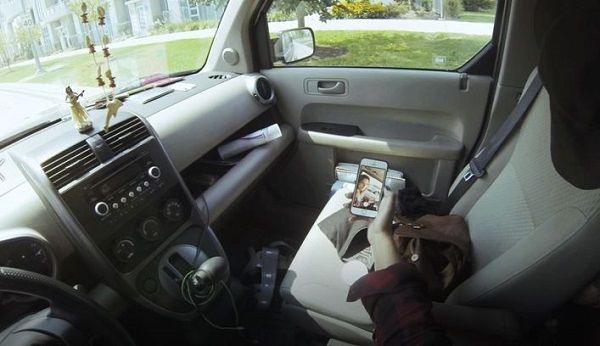
Starting January 2019, the stakes will be even higher when it comes to distracted driving in Ontario. CAA South Central Ontario (CAA SCO) is reminding Ontario drivers that strengthened distracted driving laws will take effect January 1, 2019. New additions include licence suspensions, increased demerit points and an increase to the minimum financial penalty that can be charged to those guilty of distracted driving. "CAA fully supports the increased fines and penalties that will be in place for distracted driving starting tomorrow,” said Elliott Silverstein, manager, government relations, CAA SCO. “Hopefully these new rules will encourage motorists to remain focused on the road and keep devices far from reach when operating their vehicle." Distracted driving continues to be a challenge on Ontario's roads, nearly a decade after the initial legislation banning handheld devices was passed. This new legislation is the first increase since September 2015 when demerit points were added to distracted driving convictions. Recent CAA research shows that one in three Ontario drivers claim to engage in distracted driving as a result of using a mobile device. According to the Ontario Ministry of Transportation, one person is injured in a distracted driving collision every half an hour. “The new fines and penalties are some of the strongest in the country, and they will further aid law enforcement in their continued effort to make road conditions safer for everyone,” continued Silverstein. Starting January 1, 2019, Ontario drivers can expect the following fines and penalties if caught driving distracted: The minimum financial penalty will increase from $490 to $615. A first conviction for distracted driving will now result in a three-day licence suspension, three demerit points and a minimum financial penalty of $615. A second conviction will result in a financial penalty of up to $2000 (previously up to $1000), six demerit points and a seven-day licence suspension. For third (or more) convictions, drivers will face a financial penalty of up to $3000 (previously up to $1000), six demerit points and a 30-day licence suspension. CAA recommends the following tips to reduce distractions behind the wheel: Turn off mobile devices Stow and secure loose objects Avoid eating, drinking or smoking Prepare children with everything they need Pre-set the climate control and radio Pre-program your route on GPS Allow phone calls to go to voicemail Don't text, surf the web or read emails CAA is dedicated to helping change certain rules and regulations for Ontario’s roads that will improve safety for everyone who uses them. Through its road safety efforts, CAA has been helping to educate and bring awareness about distracted driving, Slow Down, Move Over rules and cycling safety laws.

