
Experts Matter. Find Yours.
Connect for media, speaking, professional opportunities & more.
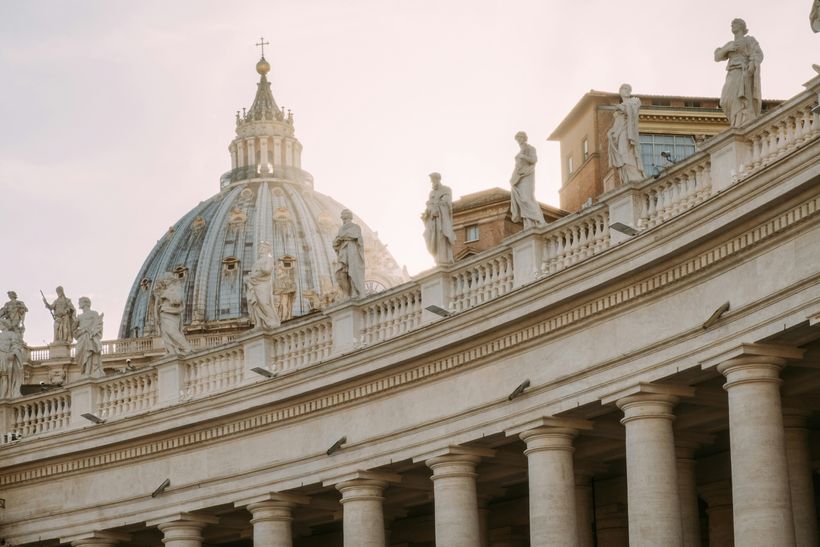
Pope Leo XIV Faces Both Historic and Novel Challenges as He Enters the Second Year of His Papacy
In his first appearance on the balcony of St. Peter’s Basilica, Pope Leo XIV shared with the world a message of hope, communion and reconciliation, emphasizing the need to “build bridges with dialogue and encounter so we can all be one people always in peace.” Throughout the last 12 months, the Pontiff has placed these values at the forefront of his work and ministry, pairing active collaboration with prayerful contemplation in his leadership of the world’s 1.4 billion Catholics. In the coming years, that emphasis is likely to continue, as the Pope addresses longstanding rifts and evolving challenges within the Church and beyond. Asked to consider the most striking aspects of his early papacy, and to reflect on the most pressing issues he currently faces, Villanova faculty members studying the pontificate had a wide variety of responses. Jaisy A. Joseph, PhD Assistant Professor of Theology and Religious Studies For Dr. Joseph, Pope Leo’s first year has been defined by a spiritual vision centered on unity, listening and shared responsibility. “From the beginning of his papacy, Leo emphasized that we are a synodal Church working towards peace and moving forward together. Leo’s Augustinian formation will absolutely leave its imprint on what Pope Francis started. While the two have distinct personalities and styles, there is a fundamental continuity with Francis that Leo has signaled. Leo stresses that at the core of the Church is a deeper desire for a spirituality of ‘we’—a Church rooted in deep listening and bold speaking. This is where the Augustinian charism makes itself known. “This unity does not erase differences. Instead, it asks, ‘How do we create friendships that are strong enough to bear the tensions of our differences?’ In a world shaped by ‘us versus them,’ Leo insists on recognizing Christ in the completely different ‘other.’ “Finally, his leadership style is marked by discernment. Listening is so critical to him, and any caution he displays is not out of fear but wanting to listen before speaking. In a noisy world, he insists that we just need silence—trusting that through shared listening, the Church can move forward together.” Luca Cottini, PhD Professor of Italian Studies For Dr. Cottini, Pope Leo’s first year has been marked by a clear effort to position the Church in active dialogue with the modern world—especially in response to emerging global challenges, migration and an increasingly interconnected faith community. He draws parallels to the priorities of Leo XIV’s namesake, Pope Leo XIII. “Catholic social doctrine is a doctrine that the Church established to address subjects that are not directly written about in the Gospel. This doctrine was important for Pope Leo XIII and is increasingly important for Leo XIV as well. ‘Leo’ is a name that relates back to Catholic social doctrine and the need to read the changing signs of the times. By choosing the name ‘Leo,’ the Pope signaled his desire to respond to contemporary issues. “Leo XIV has also harkened back to Leo XIII in his first year by viewing migration and immigration not as a plight, but rather as an opportunity to enter into contact with new worlds. This approach connects to Leo XIV’s own background and perspective, which includes both proximity to and distance from the United States, giving him both an outsider and insider perspective as well as a critical thinking lens on these issues. “Lastly, Leo XIV has used his first year to elevate this idea of a universal Church that is much needed, shaped by his global exposure and an ability to see the world through the lens of others. He sees that we can dialogue with the world, approaching modernity not as an enemy but as something to engage with.” Patrick McKinley Brennan, JD John F. Scarpa Chair in Catholic Legal Studies According to Professor Brennan, “One of the issues that is on the Pope’s radar and has been from before the conclave is the question of the traditional Latin Mass,” a cause championed by various cardinals, bishops, priests and lay faithful around the globe. As he shares, it is a matter of great interest to a small but growing number of Catholics who recall Pope Benedict XVI’s statement that the traditional Mass—the Mass as it was celebrated by most Catholics since 1570—was “never juridically abrogated” following the Second Vatican Council. “Pope John Paul II in the 1980s, and then Pope Benedict XVI in 2007, liberalized access around the world to the traditional Mass. But Pope Francis revoked most of those permissions, citing ‘facts’ that have subsequently been called into question by investigative journalists and others. Pope Francis issued a document called Traditionis custodes, which [went against] the permissions that Benedict XVI gave in a document called Summorum pontificum in July 2007. “Now, the leadership of the Society of St. Pius X [an anti-modernist priestly fraternity] have announced that they’re going to ordain new bishops, the exact thing that got some of their predecessors excommunicated in 1988, so that the traditional Mass can continue to be celebrated and other sacraments can continue to be provided to Catholics according to the traditional rites. Reading between the lines, I think the Society of St. Pius X is trying to force Pope Leo’s hand on the Latin Mass. He’s been biding his time, working out how to respond to this hard question, and I think they’ve just decided that it’s an all-or-nothing situation. “It’s an example of how Pope Leo inherited some big problems, and I think most of the cardinals who elected him thought that they had chosen someone who, because he can listen and is committed to unity, will try his very best to find a solution that remains faithful to Catholic doctrine while bringing in as many voices as possible. Ironically, Pope Francis reduced legitimate diversity in Catholic liturgy, and while Pope Leo has a chance to restore that diversity, he has to do so in a way that addresses the irregular situation of the Society of St. Pius X.” Ilia Delio, OSF, PhD Josephine C. Connelly Endowed Chair in Christian Theology Looking ahead, Sister Delio says one of the most significant social developments Pope Leo must face is the rise of advanced technologies—in particular, increasingly sophisticated artificial intelligence models. “Our theological anthropology needs a bit of updating, as it does not currently meet the needs of our very complex world today. There are a lot of discussions on artificial intelligence and advanced technology, but the problem is that these technologies are already here and rapidly advancing. “So, we have to face this reality, not by asking ‘What is happening to us?’ but ‘What are we becoming with our technologies?’ and ‘How best can we remain human in an AI world?’ I think Pope Leo is asking similar questions, considering what makes the human person the image of God, what makes us distinct and whether there are human values that cannot be downloaded or reproduced in a digital medium. “At the same time, we must ask: Can technology deepen the human spirit by enabling a new level of collective life? Can AI technology empower the Body of Christ?” To speak with any of these faculty experts, please contact mediaexperts@villanova.edu.



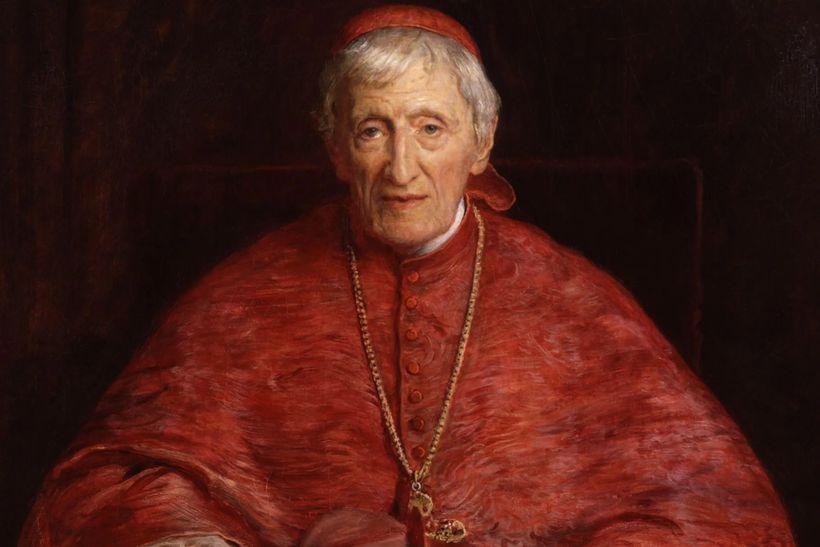
Pope Leo XIV's first year as leader of the Catholic Church was marked by observation, listening and careful communication, and was largely devoid of major doctrinal or political action. As reasonably expected of a new pontiff, he issued his first major document—the apostolic exhortation Dilexi te. He also embarked on his first international trip, traveling to Türkiye and Lebanon, where he celebrated the 1700th anniversary of the Council of Nicaea. But perhaps publicly overlooked was his elevation of a 19th-century saint to Doctor of the Church—a designation reserved for saints found to have made significant contributions to doctrine and spirituality through writings and teachings. After approving it in July 2025, Pope Leo issued that designation to St. John Henry Newman on All-Saints Day, making him only the 38th individual given the title. "The move to make St. John Henry Newman a Doctor of the Church was already underway, but Pope Leo verified it and actually carried it out, bringing Newman into a newfound kind of prominence," said Michael Moreland, PhD, professor of Law and Religion at Villanova University Charles Widger School of Law, and a scholar of St. Newman. A Bridge Between Anglican and Catholic Theology Newman, considered an influential individual in the shaping of modern Catholic theology and education, was not always Catholic. Born in England in 1801, Newman became an Anglican priest in his mid-20s. He later was a prominent leader of the Oxford Movement—one intended to recover elements of traditional Catholic heritage in Anglicanism. It led to the birth of Anglo-Catholicism and caused many Anglicans to convert to the Roman Catholic faith, including Newman himself. Newman was received into the Catholic Church in 1845 and was ordained a Catholic priest in 1847. He would go on to become an influential theologian for his contributions to the ideas of faith, conscience and doctrine. "He established what he called the 'evolution of the doctrine'—the idea that the deposit of faith is not something immobile, but something that grows in awareness over time," said Luca Cottini, PhD, professor of Italian Studies at Villanova University. "He [Newman] was also a person of the university; an intellectual," said Dr. Moreland. "He was known for his voluminous writings on all kinds of issues, including his famous book 'The Idea of a University.'" In 1878, Pope Leo XIII made then-Father Newman—who was not even a Bishop at the time—a Cardinal. Like the current Pope Leo, the elevation of Newman was one of Pope Leo XIII's first acts of government. "It's an astonishing resemblance between our current Pope and his namesake," Dr. Cottini said. "Both recognized this important theologian and his contributions to Catholicism within the first year of their papacy." Newman died in 1890 and is remembered as an influential theologian, scholar and an important bridge between Anglicanism, Catholicism and the modern world. He was beatified in 2010 by Pope Benedict XVI and canonized by Pope Francis in 2019 before Pope Leo XIV elevated him to Doctor of the Church. Newman's Promotion Shrouded in Significance Beyond its relative rarity—only five individuals have been promoted to Doctor of the Church since 1971—Newman's elevation is significant in many ways, according to Dr. Moreland. "He was an Anglican by birth who converted to Roman Catholicism," he said. "He was someone from the English-speaking world, not from continental Europe, and he was from the 19th century, which is relatively recent in this context." Newman is only the second Doctor of the Church from England, and aside from Thérèse of Lisieux, born in 1873, is the only Doctor of the Church born after 1700. Beyond the significance related to Newman himself, Pope Leo's recent action underscored a critical focus of the Church, and evidenced its personal importance to the pontiff himself. "It highlighted Newman's role in education," Dr. Moreland says. "That is something Pope Leo has been formed by in important ways: as a seminary rector, seminary professor and as part of the Order of St. Augustine, which values education highly." At the Mass elevating Newman to Doctor of the Church, Pope Leo also named Newman a co-patron saint of Catholic Education, joining 13th-century priest and theologian St. Thomas Aquinas. He then added Newman’s feast day of October 9—the day he converted to Catholicism in 1845—to the General Roman Calendar, thus bringing his memorial to the global Church. "I think Pope Leo elevating Newman to a Doctor of the Church, along with these subsequent actions, signifies the emphasis he is going to place on education during his papacy," Dr. Moreland said.


Historical Significance of the Papal Name
In the wake of the historic election of Pope Leo XIV, the first American to ascend to the papacy, scholars and observers alike are reflecting on the global, historical and theological implications of his early statements and symbolic choices. His decision to take the name Leo – a name not used for over a century – immediately evokes comparisons to both Leo XIII and Leo I (Leo the Great), popes known for their firm leadership and dynamic engagement with the world. Baylor University’s Elisabeth Rain Kincaid, J.D., Ph.D., director of the Institute for Faith and Learning and an expert on early modern theology and Catholic Social Thought, said choosing the name Leo is significant, especially in today’s world. Through his choice of name, rhetorical style and theological references, the new pope is signaling a clear vision for a Church that is simultaneously grounded in tradition and open to global dialogue, Kincaid said. Kincaid is currently at work on a monograph – “Business Ethics for a Flourishing Life: Catholic Social Thought in the Modern Workplace” – in which she argues for the continued importance of Leo XIII’s thought for modern life. If you're covering the news about Pope Leo XIV and are looking to know why Cardinal Robert Prevost chose that name - we can help. Elisabeth Rain Kincaid is an author, speaker, teacher, and theologian. She has published broadly in peer-reviewed journals and popular publications. She is a frequent speaker at conferences, churches, and professional events on topics including business ethics, virtue and character, Christian engagement with law and politics, and work and vocation. She is currently the Director for the Institute for Faith and Learning at Baylor University. In her teaching, she draws upon her years of experience as a white-collar criminal defense attorney and a private equity professional, along with her ministry experience. Elisabeth is available to speak with media about this topic - simply contact Shelby Cefaratti-Bertin, M.A., Assistant Director of Media and Public Relations at Baylor University, Shelby_Cefaratti@baylor.edu or 254-327-8012 to arrange an interview today.

An Expert Guide to the Papacy and Pope Francis
The death of Pope Francis marks a pivotal moment for the Catholic Church, ending a papacy that redefined the Church's relationship with the modern world. As the College of Cardinals prepares to gather in conclave, Catholics across the globe are closely watching to see whether the next pontiff will build upon Francis' legacy or chart a new course. The following experts are available to provide insight into a range of related topics, including Pope Francis' enduring impact and what lies ahead for the world's 1.4 billion Catholics: Massimo Faggioli, PhD Professor, Theology and Religious Studies Dr. Massimo Faggioli is a world-renowned expert on the history and administrative inner workings of the Catholic Church, with specific expertise in the papacy, Vatican II, the Roman Curia, liturgical reform, new Catholic movements and Catholicism and global politics. As quoted on NPR: "Historically, we see in different conclaves a certain swinging of the pendulum. What the conclave and the next pope cannot do is to ignore and deny the changing features of global Catholicism, which is much less European, much less white, less North American and more Global South..." Kevin Hughes, PhD Chair, Theology and Religious Studies Dr. Kevin Hughes is a leading historical theologian, offering insights into the life, legacy and impact of Pope Francis. He can also speak to the significance of the Pope in Catholicism and the influence of his teachings on the global Catholic Church. As quoted on Scripps News: "[Pope Francis' selection] was really the Church extending beyond the limits of its European imagination. His Latin American identity was really crucial to embracing a new moment within the Church and opening the door in so many ways, and I think he bore witness to that throughout his papacy." Jaisy Joseph, PhD Assistant Professor, Systematic and Constructive Theology Dr. Jaisy Joseph is a trained ecclesiologist, able to address a wide range of topics relating to the papacy, conclave process and Catholic Church. Previously, she has commented on the Church's presence in Asia and the Global South, offering expert commentary on its growth, challenges and shifting influence. As quoted by ABC News Digital: "[The election of someone from the Global South would be] a move in that direction of how to be a global church. That move from a Eurocentric church to a truly global church—I think that's what Francis really inaugurated." Patrick Brennan, JD Professor of Law; John F. Scarpa Chair in Catholic Legal Studies Professor Patrick Brennan is an expert on the conclave process and the main rules that govern it. He can also speak to topics such as the contemporary and historical importance of secrecy in the conclave, what the cardinals may be looking for in the next Pope and the factors that cause similarities and differences from one conclave to the next. As quoted on Fox 29's Good Day Philadelphia: "The purpose of the general congregation is for the cardinals, who don't know each other in some cases, to get to know each other better as they learn about the current state of the Church and together decide on the needs of the Church and priorities for the new pontificate." Brett Grainger, ThD Associate Professor, Study of Spirituality and American Religious History Dr. Brett Grainger is a go-to source for discussions of the changing face and role of modern spirituality in America. He serves as an expert on contemporary religious trends and can also speak to the broader public reaction to Pope Francis' passing, especially outside of the Catholic faith. As quoted by Courthouse News Service: "People are disaffiliating from a tradition—that doesn't necessarily mean in fact that they don't believe in God anymore...What's more important is 'Is this giving me life? Is this making my life more meaningful? Is this giving me the kind of energy and purpose that I'm looking for?' That's where religion is going." Michael Moreland, JD, PhD Professor of Law and Religion; Director, Eleanor H. McCullen Center for Law, Religion and Public Policy Dr. Michael Moreland is a renowned scholar of constitutional law, religious freedom, public policy and ethics. He can provide expert commentary on items related to the Catholic right and the state of religious politics in the United States. As featured on NBC News Digital: Michael Moreland said the mass appeal of "Conclave" captured how, even in a secular modern age, there is still pervasive intrigue around "the ancient rituals of the Catholic Church." "The significance of the theological and spiritual aspects of Catholicism and this process of electing a pope was kind of reduced into partisan politics," he said. Ilia Delio, OSF, PhD Josephine C. Connelly Endowed Chair in Christian Theology Sister Ilia Delio addresses topics in her work such as theology and evolution, technology and human becoming and understandings of Catholicity in a world of complexity. She can provide expert insight into Laudato si', Pope Francis' position on the environment, the relationship between science and religion and integral ecology. As featured in the National Catholic Reporter: "We are clearly an Earth in crisis," with a reversal necessary to secure a sustainable future, said Ilia Delio... Delio posed a series of questions: about the relationship between religion and science; what Laudato si', and Christianity more broadly, can offer ecological movements; and whether the concept of kinship or creation as family might better reflect humanity's place within nature than "care for creation." To speak with any of these faculty experts, please contact mediaexperts@villanova.edu.

Pope Francis, leader of the Roman Catholic Church, dies at 88
The world woke up to breaking news that Pope Francis had died at the age of 88. Media across the globe are scrambling to discuss a wide variety of angles ranging from the history of the papacy, the purpose and process of the conclave and the future faced by the next pope leading the Catholic Church. Bruce Morrill, a Roman Catholic priest and fellow Jesuit, is available to share his unique perspective on topics, including Pope Francis' legacy, the significance of this loss and the likely direction of the Catholic Church moving forward. Dr. Bruce Morrill focuses his theological scholarship in the area of liturgy and sacraments, drawing upon a range of interdisciplinary resources in the fields of systematic and historical theology, ritual studies, cultural anthropology, and biblical studies. His other primary and strongly related interest is in political theologies, as they investigate the problems of suffering in social contexts. Pope Francis died at the age of 88. We look back at his life, time as pope, and his legacy with Bruce Morrill, Distinguished Professor of Theology at Vanderbilt University and holds the Edward A. Malloy Chair in Roman Catholic Studies and a Jesuit priest - WWL First News


The Fatima Apparitions - Historical and Spiritual Significance
The Fatima apparitions hold profound importance for millions worldwide, representing a convergence of faith, spirituality, and historical events. This event matters to the public as it embodies themes of devotion, miracles, and the enduring power of belief. The story of Fatima offers numerous compelling angles for journalists to explore, appealing to a broad audience: The historical context and significance of the Fatima apparitions Personal testimonies and accounts of those who witnessed the events The impact of Fatima on religious practices and devotion Continuing pilgrimage and commemorative events at the Fatima shrine Interpretations and debates surrounding the messages conveyed at Fatima Cultural and societal influences of the Fatima apparitions on art, literature, and popular culture As we reflect on the Fatima apparitions, journalists have an opportunity to delve into these multifaceted narratives, uncovering the enduring legacy and spiritual resonance of this remarkable event. Connect with an Expert about the Fatima Apparitions: Timothy Matovina Chair, Department of Theology · University of Notre Dame Massimo Faggioli, PhD Professor of Theology and Religious Studies | College of Liberal Arts and Sciences · Villanova University Francis Beckwith, Ph.D. Professor of Philosophy & Church-State Studies, Affiliate Professor of Political Science · Baylor University Brett C. Hoover Associate Professor of Practical/Pastoral Theology & Graduate Director · Loyola Marymount University To search our full list of experts visit www.expertfile.com Photo Credit: Mateus Campos Felipe


Sunday is Cinco de Mayo. Do you know the history behind the day?
Celebrated annually on May 5th, Cinco de Mayo commemorates the Mexican army's victory over French forces at the Battle of Puebla in 1862. While often associated with festive gatherings and cultural celebrations, Cinco de Mayo also holds significant relevance beyond its historical origins, offering various story angles that appeal to a broad audience. Cultural significance and heritage preservation: Explore the historical context of Cinco de Mayo and its importance in Mexican culture, highlighting the traditions, food, music, and art associated with the holiday. Immigration and identity: Examine how Cinco de Mayo is celebrated in different parts of the world, particularly in the United States, and its role in shaping the Mexican-American identity and fostering cross-cultural understanding. Political implications and national pride: Investigate the political undertones of Cinco de Mayo, considering its significance in Mexican nationalism and its portrayal in international relations. Economic impact and tourism: Analyze the economic implications of Cinco de Mayo festivities, including the boost in tourism, sales of Mexican-themed products, and the commercialization of cultural heritage. Education and historical awareness: Discuss the educational value of Cinco de Mayo in schools and communities, examining how it promotes historical awareness, tolerance, and multiculturalism. Social justice and activism: Explore how Cinco de Mayo intersects with social justice movements, addressing issues such as immigration reform, cultural appropriation, and representation in media and politics. By covering these angles, journalists can provide their audiences with a deeper understanding of Cinco de Mayo beyond its surface-level festivities, fostering meaningful dialogue and engagement with the holiday's historical, cultural, and societal significance. Connect with an Expert about Cinco de Mayo: Margarita R. Ochoa Associate Professor and Associate Chair of History · Loyola Marymount University Timothy Matovina Chair, Department of Theology · University of Notre Dame Rodrigo Vargas Professor, Ecosystem Ecology and Environmental Change · University of Delaware Heather Chiero, PhD Associate Professor of History, Anthropology and Philosophy · Augusta University To search our full list of experts visit www.expertfile.com Photo Credit: Daniel Lloyd Blunk-Fernández

The Pope, Papal Politics and Apologies: Our Experts Can Help
Last month, Pope Francis made an historic trip to Canada. It was the first time in 35 years that a Pontiff had visited an Indigenous community. It was also significant because it was deemed "a penitential pilgrimage" with the purpose of apologizing for the role of the Catholic Church in the abuse of Indigenous children in residential schools. The visit was covered extensively by media from across the globe, and each story came with questions regarding papal policy, religious context and historical interpretation. That's where experts like Massimo Faggioli, PhD, a Villanova University professor who studies the history and administrative inner workings of the Catholic Church, answered the call. As quoted in The Washington Post: "Massimo Faggioli, a professor of theology at Villanova University, said the pope 'smartly framed' the issue of the Church’s role in the residential school system 'inside a wider picture that he's been working on for many years now, which he calls 'ideological colonization'... 'He believes that, as Catholics, we're part of the historical problem, but we're also part of the solution...'" Reporting on the Vatican, papal politics and the Pope requires experts—and that's where Villanova can help. Dr. Faggioli, among other University professors, is currently available to speak with media regarding the Pontiff and the Catholic Church; simply click on his icon above to arrange an interview today.

On the morning of Saturday, November 7, Joe Biden was announced by numerous media outlets as the projected winner of the 2020 U.S. presidential election. President-elect Biden will be only the second Roman Catholic to occupy the nation's highest office. Massimo Faggioli, PhD, is a professor of historical theology at Villanova University. He recently discussed the significance of Biden being only the second Catholic elected president and the work he has in front of him. "Biden is a 'Pope Francis Catholic'—much more aligned to the political culture of the pontificate than John Kerry was as a 'Pope John Paul II Catholic' in 2004, or Kennedy, a good Catholic in 1960. When Kennedy, the first Catholic president, was elected in 1960, U.S. Catholicism was much less divided and in much better relations with the Vatican compared to today," Dr. Faggioli said. "It's the first time we have a Catholic president since the return of religion in the public square." "Anti-Francis Catholicism in the U.S. goes much deeper than Trump Catholics and includes a number of U.S. bishops. It will be difficult for Biden to navigate the triangular relations between Vatican-White House-U.S. bishops," continued Dr. Faggioli. "The U.S. Conference of Catholic Bishops is paralyzed and—especially on social issues—it is difficult to take distance from a rhetoric that is very similar to the GOP, and this will show in dealing with a Biden presidency. Biden as a Catholic will have against him a powerful Catholic media system in the U.S. that makes no mystery of its fierce opposition against Biden's and Francis' Catholicism."

Public health crises such as COVID-19 — in which people may feel powerless and receive conflicting information — can lead to a flare-up of unsafe religious sentiments, says Baylor University epidemiologist Jeff Levin, Ph.D., who cites past persecution of religious and ethnic minorities who were blamed unfairly for spreading disease. While some possibly unreliable projections about COVID-19 are being spread, containment — and common sense — are key, Levin says. In addition, research shows that maintaining one’s spiritual life can help people remain strong in the face of health challenges and encourage them to reach out to help others. Levin is University Professor of Epidemiology and Population Health, director of the Program on Religion and Population Health in Baylor University’s Institute for Studies of Religion and adjunct professor of psychiatry and behavioral sciences at Duke University School of Medicine. He recently lectured at Duke about the COVID-19 outbreak, on infectious disease pandemics in general and on religious dimensions of the present crisis. In this Q&A, he speaks about these issues. Q. What do you feel is the most important message that needs to get out about the coronavirus outbreak? LEVIN: There are still folks out there saying, “Ah, this is nothing” or “It's all hype.” I'm not that guy. This is very serious. Still, I believe that some misinformation is getting out there that's scaring people, and that's not a helpful thing. I have some concerns about how the facts and nuances of this outbreak have been communicated to the public. In the past few weeks, the news and internet and social media have been inundated with some very alarming projections, some of which in my opinion may be off perhaps by an order of magnitude. This is due in part to mistaken calculations being made by people, including M.D.s who don't understand the parameters of disease transmission or the concepts that epidemiologists use to track outbreaks. This also includes some government officials who are miscommunicating issues regarding risk, pathogenesis and prognosis, and this information is then being picked up by the media and projected out to the general public. Suddenly, even laypeople people are throwing around very technical epidemiologic jargon — exposure, infectivity, case fatality, herd immunity, transmission, incubation period, flattening the curve — without knowing exactly what these words mean or how they’re used, and some faulty messages are getting out. There’s a pressing need for responsible public voices who can help separate the signal from the noise, but those voices seem to be scarce. But regardless, whatever the projections are — good, bad, or ugly — so much hinges on containment. If we manage that properly, such as through all the good advice we’ve been given about social distancing, washing our hands, disinfecting surfaces and so on, we'll get through this with minimal — a relative term — casualties. If we ignore this advice, things can go south in a hurry. It only takes one clinical case getting loose in the community to create a secondary outbreak. Noncompliance can easily create an army of “Typhoid Marys” in communities across the country. In any outbreak due to any pathogenic agent, such as the SARS-CoV-2 virus, there are things we can do, one, to break the chain of transmission and, two, to minimize the damage to ourselves. There’s a public health response and a personal response. The public health effort is focused on how to limit exposure and transmission, which is exactly what needs to happen. There are policies that we should follow as far as our own behavior and social interactions and as far as the environment we live in where the virus is circulating. We’ve all become familiar with what these things are. But there’s the other side of the coin. In epidemiologic terms, exposure does not imply infectivity. Not everyone who is exposed to the virus will become infected. Infectivity in turn does not imply pathogenicity. Not everyone who is infected, who receives a positive test, will become a clinical case, will become sick. And finally, not everyone who comes down with COVID-19 and manifests signs and symptoms of disease will have a virulent enough case that will require intensive medical care or hospitalization, and only a minority of those will lose their life. Most, we believe, will recover just fine. So the folks who are at risk of a very serious outcome are a subset of a subset of a subset of folks who are exposed to the virus. The problem right now is that we don’t have a definitive grasp on these percentages. So we all need to do everything that we can not just to limit exposure and transmission but to strengthen ourselves to withstand the natural course of infection and disease. Epidemiologists call this “host resistance.” Q. What can we do to strengthen our resistance to the infection and the disease? How does faith figure into this? LEVIN: We know from decades of research that so many things that we can do in our daily lives can help us to withstand and recover from illness. We can eat right — avoid junk food and overeating and consuming toxins. We should avoid smoking and abusing alcohol, we need to get enough sleep and manage our stress, we need to get some exercise and fresh air. We all know all of this, but in difficult times it’s easy to fall into inaction and depression, which itself can depress the immune system and impair our ability to stay healthy or to recover. One of the important things that we can do, and decades of research support this, is to maintain continuity in our spiritual life. Studies show that people with a strong ongoing faith commitment can marshal an ability to remain resilient and deal with stress and even have better medical outcomes. There is a longstanding research literature on the physical and mental health benefits of hope and optimism and positive attitudes, including in the context of one’s spiritual life, and including due to the tangible and emotional support that faith and being a part of faith communities give us. Faith matters. But this isn’t a magic bullet, and I want to be careful about overstating things. Folks who expect that by being a diligent Christian or Jew, believing in God, going to religious services — in person or online — showing strong faith, studying Scriptures regularly, that by doing all this somehow a pathogenic agent won’t enter their body or won’t cause signs or symptoms of disease — I think they’re laboring under some false expectations. They’re asking belief or faith to do things that are very difficult for me to envision. Maybe that’s just the scientist in me talking, although I too am a person of faith. On the other hand, our faith can indeed be part of keeping us strong and helping us to recover. But we ought to combine expressions of faith with careful efforts to limit our exposure and contain the outbreak, and to wisely seek medical care if we start to not feel well. The Bible encourages us with verses like “put on the full armor of God,” but at the same time if you stand out in the pouring rain you can’t sanely expect not to get rained on. Q. Will this outbreak lead to a resurgence of religious belief? Are there examples of this from history? LEVIN: Yes, there are, but not necessarily in a positive way. Times of crisis like this, especially when people feel powerless and are receiving conflicting information, can lead to a dangerous flare-up of unwholesome religious sentiments, including scapegoating. Look at the Black Plague of the 14th century. From a third to over one half of Europe perished, and the one constant in every country affected by the epidemic, besides the millions of bodies piling up, was a consistent and organized effort to massacre Jews, who were blamed for the disease. Lest we think those days are behind us, look at how we responded to the brief Ebola crisis in the U.S. in 2014, which ramped up hatred toward Mexican immigrants. Or consider the present outbreak, and the terrible animosity directed at Asian Americans. We aren’t immune to this kind of behavior, especially when we feel a sense of dread or hopelessness or a sense that our prayers to God have failed and that we are receiving a divine chastisement or punishment. It’s easy then to lash out and try to identify a “demonic” source for our travail and try to seek vengeance. There is also precedent for waves of apocalypticism, fear that the end of the world is nigh. We saw this during the 1918 influenza pandemic, and it gave rise to much of the end-times thinking that persists to the present day. So faith can sustain us, even benefit us physiologically, but it can also embitter us and make us do evil or drive us to become obsessed or crazy. Q. Are there other more positive ways that faith or spirituality come into play here? LEVIN: Sure, I can think of a few. There’s a bioethical dimension. Our faith traditions remind us of our obligations to others, especially those in grave need who lack the requisite material or social resources to care for themselves. This outbreak is a social-justice teaching moment for us as a society, and along with the medical and public health dimensions there are profound lessons in moral theology to learn and act on. Will we slip into a xenophobic fear-based response, self-absorbed with our own personal needs, or will we use this time, this enforced vacation for so many of us, to reach out to those in need? I have strong opinions about this. We have been given an opportunity to be selfless and act lovingly toward others, to represent the best of what faith has to offer. Or we can choose to reinforce the most selfish and hateful and ungodly aspects of what humans are capable of. This is a choice facing every one of us. There’s also a pastoral dimension here. Each of us, not just clergy or healthcare chaplains or pastoral counselors, has a role to play in offering consolation and reassurance to our fellow brothers and sisters. And also real, tangible assistance. Our family is Jewish, and we’re reminded in Exodus that we’ve been called to be “a nation of priests.” I think the same can be said for all of us, in our respective communities. We can also be thought of as a nation, or a community, of pastors. And in that role there is much for us to do. We can be a source of accurate information to counter the insidious memes circulating on social media. We can organize our neighbors and fellow congregants to provide help to people and families who need it. We can become leaders in our faith communities to help maintain study, prayer and worship activities while we are unable to attend church or synagogue. We can love and support those who are suffering and remind them of God’s love for us. These messages matter. Maybe it’s not realistic to expect them to cause a virus to not take hold or to become less virulent, but they can strengthen our ability to recover from this outbreak, both individually and as a community of people. ABOUT BAYLOR UNIVERSITY Baylor University is a private Christian University and a nationally ranked research institution. The University provides a vibrant campus community for more than 17,000 students by blending interdisciplinary research with an international reputation for educational excellence and a faculty commitment to teaching and scholarship. Chartered in 1845 by the Republic of Texas through efforts of Baptist pioneers, Baylor is the oldest continually operating University in Texas. Located in Waco, Baylor welcomes students from all 50 states and more than 90 countries to study a broad range of degrees among its 12 nationally recognized academic divisions.