
Experts Matter. Find Yours.
Connect for media, speaking, professional opportunities & more.

Study: Lessons learned from 20 years of snakebites
The best way to avoid getting bitten by a venomous snake is to not go looking for one in the first place. Like eating well and exercising to feel better, the avoidance approach is fully backed by science. A new study from University of Florida Health researchers analyzed 20 years of snakebites cases seen at UF Health Shands Hospital in Gainesville. “This is the first time we’ve evaluated two decades of venomous snakebites here,” said senior author and assistant professor of medicine Norman L. Beatty, M.D., FACP. Researchers analyzed 546 de-identified patient records from 2002 to 2022 and highlighted notable conclusions — for instance, that a third of the snakebites analyzed were preventable and caused by people intentionally engaging with wild snakes. “Typically, people’s experiences with getting bitten are due to an interaction that was inadvertent — they stumble upon a snake or reach for something without seeing one camouflaged,” Beatty said. “In this case, people were seeking them out. There were a few individuals who were bitten on more than one occasion.” Most (77.8%) of the snakebites occurred in adult men while they were handling wild snakes, and most of the bites were perpetrated by the diminutive pygmy rattlesnake and the cottonmouth. The latter is named for the white lining of its mouth, which it displays when threatened. “I was less surprised to see those species emerge as some of the most common ones people were bitten by, but the robust presence of other, less common species in the data — like the eastern coral snake, southern copperhead, timber rattlesnake and the eastern diamondback rattlesnake, was interesting,” Beatty said. The eastern diamondback rattlesnake is one of the most venomous snakes in North America. Most patients were bitten on their hands and fingers and around 10% of them attempted outdated self-treatments no longer recommended by doctors — like sucking out the venom. Initially, the study began as a medical student research project, thanks to a handful of medical students who worked with Beatty to review the cases. The intention was to dive deep into the circumstances of each encounter and learn more about the treatment given, as well as the outcomes. Fourth-year medical student River Grace, the paper’s first author, said the work struck a personal note. “My dad is a reptile biologist, so I’ve grown up around snakes my whole life,” Grace said. “He was bitten by a venomous snake many years ago and ended up hospitalized for multiple weeks, so it was interesting to keep that experience in mind while going over the data.” Grace noted that it typically took those bitten over an hour on average to travel from where the bite occurred to the hospital. “It seems like the reason for that was people not knowing exactly what to do once they’d been bitten, or underestimating the severity of the bite,” he said. “Some would just sit at home for hours.” Floridians share their home with a variety of scaly neighbors who don’t always welcome visitors — accidental or not. Ultimately, thanks to the timely care of providers, only three snake bites were fatal. However, antivenom is no panacea. Those who are lucky enough to receive it in time can still incur complications from the original snake bites, like tissue damage, or even a fatal allergic reaction to the antivenom itself. Consequently, researchers look toward improving the processes used to triage snake bites in the emergency room, ensuring that providers are equipped with the knowledge and the know-how to shorten time to treatment. “In the future, we think we’d love to get involved in enhancing provider education so everyone in the health care setting is confident in being able to identify and administer antivenom as quickly and safely as possible,” Grace said.


Opinion: Hey Florida! Want to go to Mars? Here’s what it will do to your body
The president is eager “to plant the stars and stripes on the planet Mars.” Would you sign up for that mission? What would happen to your body in the three years you would be gone? As the United States continues to prioritize space travel, you might wonder why anyone would want to travel to Mars and whether it’s even ethical to expose humans to such extreme physiological conditions. The world is watching as the astronauts on the Boeing Starliner remain stuck in space until at least March due to a capsule malfunction. So many questions have arisen about the impacts of people spending extended periods of time in space, and we don’t have all the answers yet. However, because I study how spaceflight affects human physiology and performance, I have some ideas. The first 10 minutes of your journey will be exciting, but it’s the next months and years we really need to worry about. We have solved some of the problems but not all. After you lift off, the high g-forces will paste your body against the crew couch as you accelerate, but there’s really not too much to fear. A typical launch results in only about half the acceleration experienced by a fighter pilot in a tight turn. You might feel lightheaded, but astronauts have dealt with this for generations. Read the full article in the Tampa Bay Times here:

STORY: CCG Raises Over $300,000 in Support of Hope
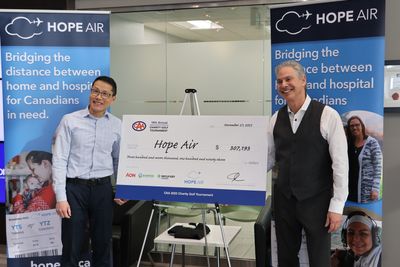
Pictured above, from left to right: Jay Woo, President and CEO of CAA Club Group of Companies & Mark Rubinstein, Chief Hope Officer of Hope Air. CAA Club Group of Companies President and CEO Jay Woo made a cheque presentation of over $300,000 to Hope Air on Thursday, November 27, 2025. The cheque presentation, which included funds raised from two golf events, the first-ever Jaunt for Hope Air and a handful of other initiatives, took place at the CAA offices in Thornhill with volunteers, board members, and several senior leaders from CCG, as well as representatives from Hope Air. "The success of these events highlights the power of collaboration,” says Jay Woo, President and CEO of CAA Club Group of Companies. "Thanks to the unwavering support of our associates and sponsors, we’re able to raise substantial funds that go directly to Hope Air, helping provide vital travel assistance to Canadians in need of medical care. This is what happens when a community unites for a common cause: we create hope, foster change, and build a legacy of compassion." CCG's support for Hope Air began when Jay started volunteering his personal time to fly patients from northern Ontario into Toronto for medical treatment. Since then, CCG has rallied behind Hope Air's lifesaving work by raising over $2.2 million, which provides direct support to over 22,000 patient families.


Self-Guided Hypnosis Significantly Reduces Menopausal Hot Flashes
Can a simple daily audio hypnosis session help women find relief from one of menopause’s most disruptive symptoms – hot flashes – without medication? A new clinical trial led by Baylor University’s Gary R. Elkins, Ph.D., professor of psychology and neuroscience and director of the Mind-Body Medicine Research Laboratory, suggests it can. By decreasing hot flash frequency and intensity by over 50%, self-guided hypnosis offers a nonhormonal option for the millions of women whose hot flashes interfere with sleep, mood and quality of life. Published in the journal JAMA Network Open, the multicenter randomized clinical trial evaluated the effectiveness of a six-week, self-administered hypnosis program compared to a sham control using white noise. The study enrolled 250 postmenopausal women experiencing frequent hot flashes, including nearly 25% with a history of breast cancer – a group often excluded from hormone-based treatments. “It is estimated that over 25 million women in the United States have hot flashes, with up to 80% of women in the general population reporting hot flashes during the menopause transition, and 96% of women with breast cancer report hot flashes soon after beginning anti-cancer therapy,” Elkins said. “While hormone replacement therapy is highly effective in reducing hot flashes, it is not a safe choice for everyone, and therefore, women need additional safe and effective alternatives.” After six weeks of daily self-hypnosis audio recordings, participants reported a 53.4% reduction in both frequency and intensity of hot flashes, and at the 3-month follow-up, hot flashes were reduced by 60.9% compared to a 40.9% reduction for women in the control group. The guided self-hypnosis intervention had an even larger treatment effect on reducing hot flashes in women with a history of breast cancer (64% reduction after six weeks). Self-guided hypnosis: A breakthrough approach The study is the first to compare self-guided hypnosis with an active control condition (i.e. sham white noise control group), allowing researchers to better understand how much of the benefit came from people’s expectations or the placebo effect. “This was a major breakthrough and innovation, as almost all prior studies of mind-body interventions have only used wait-list, psycho-education or simple relaxation to compare the active hypnotherapy intervention,” Elkins said. “Also, all sessions were self-administered hypnosis, which demonstrated that women could learn how to use hypnosis for hot flashes on their own with support and guidance. Elkins emphasized that self-hypnosis provides benefits that are easily learned and practiced using audio recordings or app-delivered hypnotherapy. “It can be practiced at home without needing to travel for doctor visits, and it is relatively inexpensive compared to in-person sessions,” Elkins said. “Once a person learns how to use self-hypnosis to reduce hot flashes and improve sleep, it can be used for other purposes such as managing anxiety, coping with pain and for stress management.” At the 12-week follow-up, participants in the self-guided hypnosis group showed a 60.9% reduction in hot flashes as well as significantly greater improvements in sleep, mood, concentration and overall quality of life. Nearly 90% of participants in the hypnosis group reported feeling better, compared to 64% in the control group. “We are very excited about the findings from this important study,” Elkins said. “Our ongoing research aims to further determine how self-hypnosis can significantly improve sleep for breast cancer survivors and women in the peri- to post-menopause transition.” Through this and other studies, Elkins and his team have been able to determine that hypnotherapy is the only behavioral intervention consistently shown to reduce the frequency and severity of hot flashes to a clinically significant amount among both post-menopausal women and breast cancer survivors.


The University of Florida’s ‘AI Queen’ is using AI technology to help prevent dementia
To help the 50 million people globally who live with dementia, the National Institute on Aging is finding researchers to develop tech-based breakthroughs that target the disease — researchers like the University of Florida’s “AI Queen.” It’s a fitting nickname for Aprinda Indahlastari Queen, Ph.D., who is applying artificial intelligence technology to study transcranial direct current stimulation, or tDCS — a technique that involves placing electrodes on the scalp to deliver a weak electrical current to the brain — as a possible way to prevent dementia. The assistant professor in the UF College of Public Health and Health Professions’ Department of Clinical and Health Psychology is using UF’s supercomputer, HiPerGator, to perform neuroimaging and machine learning analyses to study how anatomical differences may affect tDCS outcomes. “Investigating working memory in patients with mild cognitive impairment offers an opportunity to understand how cognitive processes are disrupted in the early stages of Alzheimer’s disease,” said Queen, whose study — funded by a National Institute on Aging research career development grant — integrates neuroimaging with information on brain structure that is unique to older adults and those with mild cognitive impairment. Refining the treatment with AI Using neuroimaging, Queen captures real-time changes during tDCS to the parts of the brain associated with working memory, which is the type of memory that allows humans to temporarily keep track of small amounts of information. Think of this as a mental “scratchpad.” Her study includes older adults with mild cognitive impairment as well as individuals who are cognitively healthy. In tDCS, a safe, weak electrical current passes through electrodes placed on a person’s head. The stimulation is being used in research and clinical settings for a variety of conditions and has shown partial success as a nonpharmaceutical intervention that can improve cognitive and mental health in older adults. But tDCS results can vary across individuals, and the suspected cause is both simple and complex: Everyone’s head is different. “One potential reason tDCS may not work for some individuals is the variation in head tissue anatomy, including differences in brain structure,” Queen said. “Since electrical stimulation must travel through multiple layers of tissue to reach the brain, and every individual’s anatomy is unique, these differences likely affect outcomes.” To address this further, Queen is using AI. “Artificial intelligence will play a major role in the modeling pipeline, including constructing individualized head models, conducting predictive analyses to identify which participants will respond to the stimulation, and disentangling multiple individual factors that may contribute to these outcomes,” Queen said. An estimated 10 to 20% of adults over age 65 have memory or thinking problems characterized as mild cognitive impairment. Their symptoms are not as severe as Alzheimer’s disease and other dementias, but they may be at increased risk for developing dementia. “The fact that not all individuals with mild cognitive impairment progress to Alzheimer’s disease emphasizes the need to identify effective interventions that can slow the progression to dementia,” Queen said. “This project presents an opportunity to differentiate between multiple types of mild cognitive impairment and investigate how tDCS affects the brain across these subtypes.” An AI visionary Queen, who joined the UF faculty under the university’s AI hiring initiative, is an instructor in the College of Public Health and Health Professions’ undergraduate certificate program in AI and public health and health care, and the co-chair of the college’s AI Workgroup. She is also the assistant director for computing and informatics at the UF Center for Cognitive Aging and Memory Clinical Translational Research and a member of UF’s McKnight Brain Institute. Queen received her Ph.D. training in engineering with a focus on building and running computational models to investigate medical devices. She experienced a career “a-ha” moment as a postdoc, when she was a co-investigator on a large clinical trial that paired brain stimulation with cognitive training to enhance cognition in older adults. “This experience was transformative for me. I had the chance to interact directly with participants, which was both fulfilling and eye-opening. These interactions allowed me to see the immediate, real-world implications of my work and sparked a passion for pursuing aging research,” Queen said. “I realized that, through this type of research, I could have a more direct impact on addressing age-related challenges, which prompted a shift in my career plans.” The new grant will help Queen further improve her understanding of the neurobiology and progression of Alzheimer’s disease and other dementias. “These experiences will ultimately prepare me to become a well-rounded aging investigator, capable of making meaningful contributions to the field of aging research,” Queen said. She also credits her mentors and collaborators — Ronald Cohen, Ph.D.; Adam Woods, Ph.D.; Steven DeKosky, M.D.; Ruogu Fang, Ph.D.; Joseph Gullett, Ph.D.; and Glenn Smith, Ph.D. — with supporting her as an early career scientist. “It really takes a village to get here!” Queen said.


Holiday Anxiety Is Real — Here’s How People Can Actually Stay Sane This Season
The holidays promise joy, warmth, and “quality time,” but for many people they also deliver a cocktail of stress, expectations, forced cheer, family politics, and receipts longer than a CVS bill. Between travel chaos, financial pressure, social burnout, and attempting to assemble toys designed by engineers who clearly hate humans, holiday anxiety is soaring. The good news: experts who study mental health, behaviour, and stress management say there are ways to keep your nerves intact — and maybe even enjoy yourself along the way. Why the Holidays Stress People Out (Science Says It’s Not Just You) Adults report higher levels of stress in November and December than almost any other time of year. Common triggers include: Financial expectations: gifts, gatherings, travel, meals, and the sudden belief that every present needs to be “meaningful.” Time pressure: too much to do, too few days on the calendar. Social overload: introverts, extroverts, and “I’m-just-here-for-the-food-verts” all feel it. Family dynamics: every family has at least one person who always “starts something.” Nostalgia vs. reality: the pressure to create a “perfect holiday,” despite the fact that perfect holidays only exist in movies and greeting cards. Experts note that people often skip their routines (sleep, exercise, healthy meals) and then wonder why their stress spikes. The season demands more of people while simultaneously removing their coping mechanisms. Practical Ways to Reduce Holiday Anxiety — Backed by Psychology (and Common Sense) 1. Lower the Bar: “Good Enough” Is a Holiday Gift to Yourself Researchers consistently find that perfectionism fuels anxiety. A store-bought pie, a slightly messy house, or wrapping gifts in whatever paper you can find at 11 p.m. will not derail the season. 2. Set Boundaries (Even With the Loud Relatives) Experts often emphasize that saying “no” is one of the most effective stress-management tools. Fewer events, fewer obligations, fewer emotional landmines. 3. Budget Before You Shop Financial therapists note that anxiety drops when people pre-set limits and stick to them. You don’t need a MasterCard bill that arrives in January carrying the emotional weight of a Greek tragedy. 4. Protect Your Recharge Time A short walk, fresh air, or 10 minutes of solitude is not selfish — it’s psychological maintenance. Mental-health researchers recommend intentionally scheduling downtime before the calendar fills itself. 5. Keep Expectations Realistic Not every moment will be magical. Not every conversation will be smooth. Not every plan will unfold as imagined. Experts say acceptance, not forced positivity, lowers stress significantly. 6. Focus on Meaning, Not Perfection Studies show that people feel calmer when they shift their focus toward connection, gratitude, and small moments rather than elaborate performances of holiday cheer. Holiday Angles for Journalists The psychology behind holiday anxiety — what triggers it and why it’s so universal How family systems and old patterns surface at holiday gatherings The economics of holiday stress — debt, spending pressure, and emotional spending How introverts (and extroverts) navigate holiday overload differently Why holiday nostalgia makes people emotionally sensitive Healthy boundary-setting during family events How immigrant, multicultural, and blended families are reshaping holiday expectations Let's get you connected to an expert. The holiday season is increasingly fast-paced, commercialized, and socially demanding. Many people feel pressure to present a perfect life at a time when burnout, financial strain, and mental-health challenges are higher than ever. Helping audiences understand holiday stress — and giving them practical, research-grounded strategies — can make a measurable difference in their emotional well-being. For journalists covering mental health, family dynamics, holiday culture, or stress-management trends, ExpertFile’s roster of psychologists, counsellors, behavioural scientists, and wellness experts can offer insights, interviews, and real-world advice to support your reporting. Find your expert here: www.expertfile.com


“Lake Health Under the Microscope: RPI Researcher Offers First Real-World Look at Herbicide Impact”
In a recent Rensselaer Polytechnic Institute news release “RPI Collaborates on First-of-its-Kind Research Study to Keep New York Lakes Healthy,” Dr. Kevin Rose is featured as the essential expert behind an unprecedented field study of the aquatic herbicide florpyrauxifen-benzyl (FPB / ProcellaCOR) in New York lakes. As Director of the Darrin Fresh Water Institute (DFWI) at RPI, Rose helped lead the research team that examined long-term, real-world behaviour of the herbicide—discovering that while it disappears rapidly from open water, it lingers in lake-bed sediments for over a year and even spreads beyond original treatment zones. Rose’s involvement highlights his role in translating cutting-edge freshwater science into actionable insights for lake managers, regulators and communities. “New products are occasionally introduced into ecosystems as we work to prevent harm from threats like invasive species,” says Rose. “Many of these tools can bring tangible benefits, but it’s essential to understand their long-term impacts and potential unintended consequences.” Dr. Rose’s leadership brings clarity to an issue that can easily be oversimplified in public debate. By grounding the study in real-world field data rather than controlled laboratory assumptions, he provides a more accurate picture of how aquatic herbicides travel, transform, and linger in lake systems. His work highlights why science-based lake management — informed by long-term monitoring — is critical for maintaining the health, resilience and recreational value of New York’s freshwater ecosystems. For journalists covering invasive species, lake health, climate resilience, herbicide use or the future of freshwater ecosystems, Dr. Kevin Rose is an essential source. He brings both scientific authority and real-world relevance to a topic that affects communities, policy decisions and environmental outcomes across the state. Click on his icon now to arrange an interview today.


Taking the Reins of Holiday Stress
Ho-ho-ho and a bottle of Tums? From feeding a crowd to juggling travel and schedules and managing finances during a challenging economic time, the holidays can feel like a pressure cooker. But University of Rochester psychologist Jeremy Jamieson, one of the country’s leading researchers on stress, says the pressures of the season of giving (and giving and giving and giving some more) can be mitigated by mentally reframing the stress we feel. In other words, what matters is how we interpret our stress. Jamieson’s Social Stress Lab studies a technique called "stress reappraisal": the practice of reframing stress responses as helpful rather than harmful. According to researchers, people can learn to treat their signs of stress — the racing heart, the sweaty palms, the mental sense of urgency — as tools that prepare them to meet a challenge rather than a sign that they’re falling apart. “Stress reappraisal isn’t about calming down or shutting stress off,” Jamieson says. “It’s about changing the meaning of your stress response. If you view the demands as something you can handle, your body shifts into a challenge state, which is a more adaptive, productive kind of stress.” The research behind this approach has grown considerably. In one of Jamieson’s studies, published in Journal of Experimental Psychology: General, the Social Stress Lab trained community college students to reinterpret stress as a resource. The results were striking: students experienced less anxiety, performed better on exams, procrastinated less, were more likely to stay enrolled, and approached academic challenges with healthier physiological responses. Newer findings from the lab also suggest that stress reframing can support people facing workplace pressures, caregiving responsibilities, and major life transitions. In short, stress isn’t the enemy of our well-being during the holidays. The real culprit is believing stress is dangerous. Jamieson is available for interviews and can explain how people can use stress reappraisal strategies to navigate holiday pressures — and other high-demand moments — with more confidence, better health, and better outcomes. Click on his profile to connect with him.

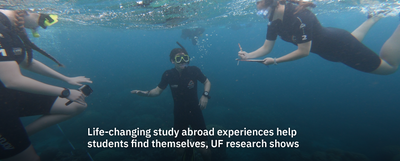
Life-changing study abroad experiences help students find themselves, UF research shows
Studying abroad is about more than just enrichment for college students; it’s often about personal transformation, UF researchers have found. Every year, UF sends nearly 2,600 students overseas to become immersed in diverse cultures, gain international perspectives, and create social bonds with fellow Gators – experiences so profound that UF researchers recently published a study about their long-term impact in Leisure Sciences. And this week, the UF International Center is hosting a Study Abroad Fair from 10 a.m. to 3 p.m. Wednesday, Jan. 29 on the Reitz North Lawn to generate even more interest in these life-changing programs. “You’ve got to look at travel as not a frivolous thing because it’s part of your life story,” said Heather Gibson, Ph.D., a professor in the UF College of Health & Human Performance’s Department of Tourism, Hospitality & Event Management, who co-authored the study. “The impact isn’t just for the semester when they return; it’s now shown to be over 20 years or more. Very few studies focus on this formative phase of adult development, and these emerging adults are very malleable to be shaped. They’re searching for different sources of identity and different directions.” Conducting this research with Gibson was Hongping (HP) Zhang, Ph.D., a UF graduate of 2020 and clinical assistant professor at the University of Tennessee, Knoxville’s Department of Retail, Hospitality, and Tourism Management. Zhang said that, in 2019, tourism literature began focusing on memory theories, but research primarily looked at memorable tourism experiences and how to better attract tourists. Zhang wanted to dive deeper into how travel memories affect a person’s development and identity. This retrospective longitudinal study examined 115 alumni who traveled as part of the College of Health & Human Performance’s South Pacific program, or the Florida Down Under Program, from 2007 to 2019. The program, led by Gibson, brings students to Australia for four weeks, New Zealand for four weeks, and/or Fiji for 10 days to study sustainability, with trips including a snorkeling expedition to the Great Barrier Reef and to Mungalla Station (a land occupied by the Nywaigi Aboriginal Land Corporation). These students’ memories of studying abroad proved to be positive and an “important building block to enhance the existing feeling of self,” Zhang said. For example, one study participant shared that reflecting on her experience in Australia was a conversation starter that sparked an initial social connection with her now husband, who had also traveled to Australia on a separate trip. Other students said the program impacted their travel behaviors such as spending money, as well as their eco-conscious behaviors like using coral-reef-friendly sunscreen. Overall, Gibson believes that experiential learning like studying abroad plays a significant role in helping students find themselves at pivotal times in their lives. In fact, research from the Consortium for Analysis of Student Success through International Education shows that students who participate in study abroad programs may earn higher grades, be more likely to graduate, and be better positioned for the global workforce. “Getting students out of the classroom and pushing them out of their comfort zone is where they learn,” Gibson said. “We need to think about the undergraduate experience as more than earning credits for a degree. Study abroad provides students with friends, experience, and direction, and that’s very crucial, especially at a large university. Study abroad allows students to find their tribe.”


Expanding Comprehensive Cancer Services to Middletown, Delaware
ChristianaCare’s Helen F. Graham Cancer Center & Research Institute is expanding access to high-quality, comprehensive cancer care for residents in Middletown and nearby communities. These services will be offered at the new Middletown Health Center, now under construction and expected to open in May 2027. “Our vision is to expand and grow our services throughout the region so that more patients can access high-quality cancer care close to home,” said Thomas Schwaab, M.D., Ph.D., Bank of America Endowed Medical Director of the Helen F. Graham Cancer Center & Research Institute. “By bringing our full cancer-care team and advanced technology to Middletown, we can provide highly precise, coordinated treatment while maintaining the same high standard of care our patients expect.” The cancer care services offered at the Middletown Health Center will reflect the same high-quality, comprehensive care provided at ChristianaCare’s Helen F. Graham Cancer Center & Research Institute in Newark. Patients will have access to specialists across all major cancer types, supported by the Graham Cancer Center’s participation in the National Cancer Institute Community Oncology Research Program (NCORP), which brings advanced treatments and clinical trials directly to the community. In Middletown, this means coordinated multidisciplinary treatment planning, advanced radiation therapy, infusion services, consultations with oncologists and surgeons, nurse navigation, supportive care, clinical trial participation and both in-person and virtual visit options. Advanced Technology Enhances Precision and Comfort When services open in Middletown, patients will have access to advanced radiation therapy using the Varian TrueBeam linear accelerator, one of the most sophisticated radiation therapy systems available. TrueBeam delivers highly precise, image-guided treatments for a wide range of cancers, allowing physicians to target tumors more accurately while minimizing radiation to healthy tissue. “The TrueBeam system represents a major step forward in how we deliver radiation therapy,” said Adam Raben, M.D., chair of Radiation Oncology at ChristianaCare. “Treatments that once took 30 minutes can now be completed in just a few minutes, with real-time imaging ensuring precision. This means better tumor control, fewer side effects and a more comfortable experience for patients.” A Growing Community with Expanding Health Care Needs Middletown is one of Delaware’s fastest-growing communities, with its population projected to rise 8% by 2029, nearly twice the statewide rate, according to the US Census Bureau. Since 1990, the town’s population has grown more than 550%, and the number of residents age 65 and older has increased 24% since 2020, driving demand for accessible, high-quality health care. With continued growth and an aging population, cancer service demand in Middletown is expected to increase by 11% over the next decade, according to health care forecasts from Sg2, a Vizient company, underscoring the need for expanded local care options. Expanding Access to Meet Future Cancer Care Demand By expanding services in Middletown, ChristianaCare is responding to both the region’s population growth and the increasing need for cancer care. The new site will help patients receive timely diagnosis and treatment while reducing travel time and improving coordination with the full Graham Cancer Center team. “As our community grows, so too does the need for locally accessible, state-of-the-art cancer services,” said Schwaab. “This expansion represents a pivotal investment in the health of the Middletown—Odessa—Townsend corridor and beyond.” $92 Million Investment in Middletown’s Health The $92.3 million Middletown Health Center reflects a deep investment in the health and vitality of the state. It is part of ChristianaCare’s larger plan, announced in July 2025, to invest more than $865 million in Delaware over the next three years. In addition to cancer care, the Middletown Health Center will offer a full range of services, including primary and specialty care, women’s health, behavioral health, cardiovascular care, pediatrics, neurology, imaging, diagnostics and lab testing. The center’s healing environment will also include walking trails and abundant natural light, making high-quality, convenient and coordinated care more accessible and welcoming for patients and families. The 87,000-square-foot Health Center will be located at 621 Middletown Odessa Road, next to ChristianaCare’s existing freestanding emergency department.
