
Experts Matter. Find Yours.
Connect for media, speaking, professional opportunities & more.

Buying local? Higher price means higher quality in consumers' minds
BLOOMINGTON, Ind. -- Why are we willing to pay much more for a six pack of craft beer, a locally produced bottle of wine or a regional brand item, often choosing them over national brands? It's because when people prefer to "buy local," they more frequently base their decisions on price as a perception of quality, according to research from the Indiana University Kelley School of Business and three other universities. The study, published in the Journal of Marketing, suggests that marketers can use this understanding of local identity versus global identity to shape consumers' price perceptions and behavior. "Consumers tend to use price to judge a product's quality when their local identity is most important to them," said Ashok Lalwani, associate professor of marketing at Kelley. "When promoting high-priced or branded products, marketers can situationally activate consumers' local identity. To accomplish this objective, businesses can encourage consumers to 'think local' or employ local cultural symbols in advertising and other promotional material. The researchers also suggested that the opposite was true for low-price products. "Discount stores, such as dollar stores, should discourage consumers from using the price of a product to infer its quality," Lalwani said. "They would be better served by temporarily making consumers' global identity more prominent. Cues in advertisements that focus on a product's global appeal would help achieve that goal." Many companies find it difficult to set and increase prices in the digital marketplace because of the pricing transparency of the internet, consumers' deal-seeking attitudes and global product availability. For their study, Lalwani and his colleagues conducted in-depth interviews, two field studies and seven experiments, and reviewed secondary data. In their interviews with 15 senior-level managers from Fortune 500 companies, they found that while the executives considered local or global communities in their pricing decisions, none knew when such strategies were effective or why. For example, an executive at a snack food maker told them, "It is important to have a reasonably high price since it communicated 'premium-ness' and then reinforce it with advertising and packaging. But we don't know for sure why such consumers prefer premium brands." A pet products manager said, "In dog sweaters, it is difficult to judge quality, so I am sure that my pet parents use price, in addition to other factors, to choose." Through the field studies, experiments and secondary data, the researchers found that when consumers choose to identify more with others around them, they perceive greater variance among brands, which increases their reliance on price as a cue to judge quality. Past research has found that consumers from more globalized countries and communities, such as the United States and its larger cities, often have a stronger global mindset because they interact with many types of people and cultures and hear news from abroad. In contrast, those living in smaller population areas or from isolated or insular nations often have a stronger local identity because they have less access to other cultures. This paper provides useful guidelines for firms to adapt strategies for different regions and address whether companies should be more locally or globally oriented. "For products to be marketed to the places where people tend to have a more local identity (such as rural areas), local flavors and ingredients can be used in the products. As these consumers are more likely to make price-quality associations, marketers may not need to allocate much ad budget to convince consumers about price-quality associations," Lalwani and his co-authors wrote. The opposite is true as well, according to the authors, indicating that in more metropolitan areas, consumers most often don't have an established connection between price and quality. For marketers, this means that putting additional effort into differentiating their brand will help consumers associate a higher price with higher quality. Lalwani is in the process of reviewing results of a large-scale national survey of the U.S. that measures which states tend to have more of a local identity versus a global one, for a follow-up study. His co-authors on the paper, "How Does Consumers' Local or Global Identity Influence Price-Perceived Quality Associations? The Role of Perceived Quality Variance," are Zhiyong Yang of the University of North Carolina, Sijie Sun of the University of Hawaii at Hilo and Narayan Janakiraman of the University of Texas at Arlington.

Social issues and boosting a brand – More companies taking a stand
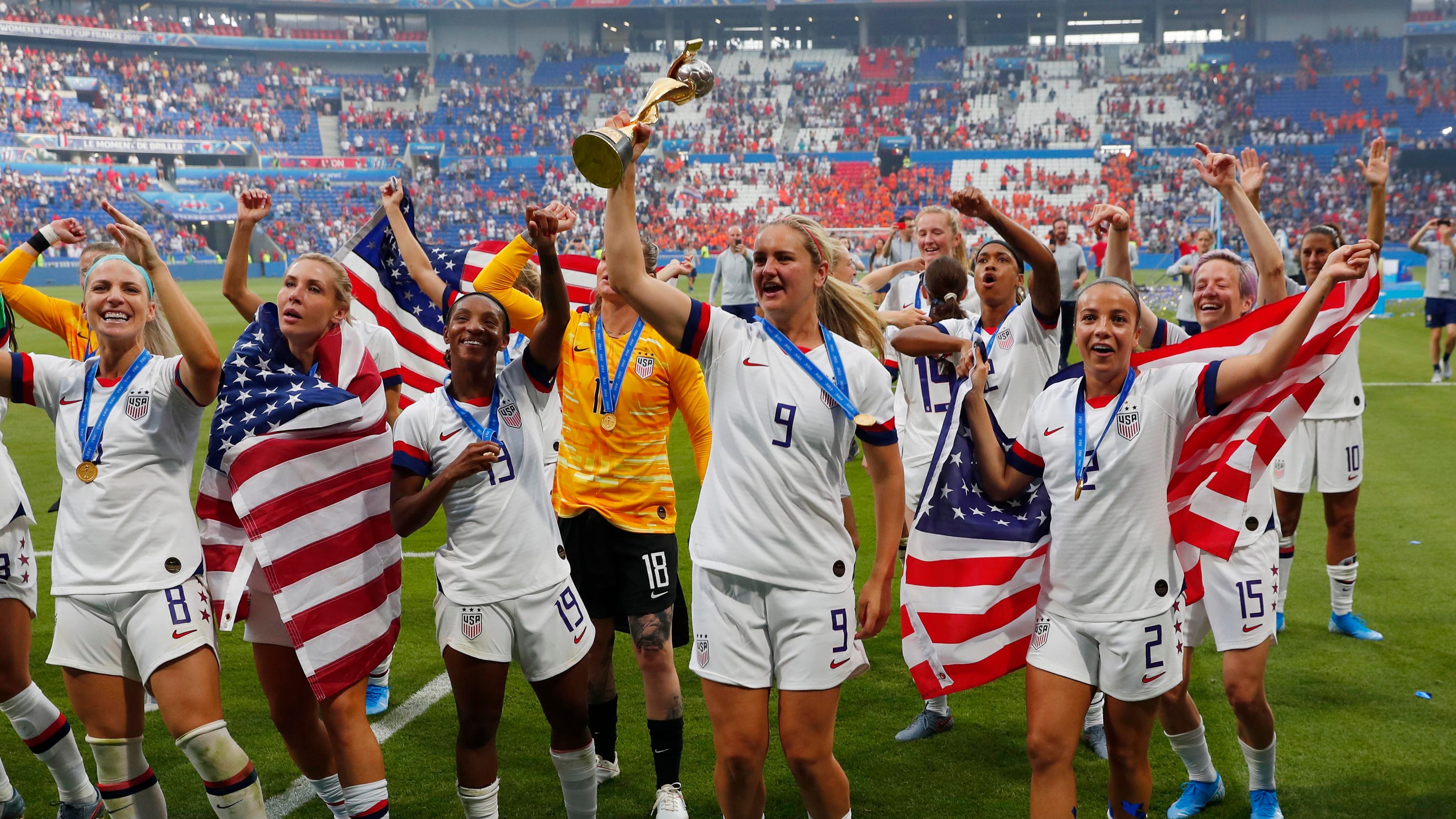
Procter & Gamble this weekend put out a full-page ad in the New York Times supporting equal pay – In fact, the company urged the US Soccer Federation to “be on the right side of history.” P & G also gave $529,000 (which equates to $23,000 for each of the 23 players on the United States Women’s National Soccer Team) to the Players Association to help close the gender pay gap. Indiana University Kelley School of Business clinical professor of marketing Kim Saxton says this is an excellent move for Secret and P & G. “This is brilliant. The Secret brand is all about being strong but 'made for a woman.' It makes sense for the brand to stand up for the very women it serves,” said Saxton. “I was a bit surprised at one level, because P & G is not typically a risk-taking brand. But as long as they stay consistent to the brand, know their target audience and what is important to that audience – which this clearly does -- It’s a brilliant move.” “We now have brands who are willing to take a stand on social issues,” Saxton continued. “In the past, brands may have steered clear of jumping into the conversation if it could offend someone. Now, brands are realizing that coming down on one side of a cause or another has worked well for Nike. Nike has taken flack for taking a stand on a number of issues, but they’ve stood strong and decided that’s what their brand’s about. If you help your target audience accomplish their goals, they will support you back, and that’s what’s happening here." Pay equity is just one issue that has come to the forefront as of late. Nike has also seen its brand benefit substantially when it decided to express its support for former NFL quarterback- turned-activist Colin Kaepernick. In fact, being on the ‘right’ side of that issue has some analysts pointing out it boosted the company’s value by close to 3 billion dollars. Social issues and marketing are emerging as a new trend. There are rewards, but there are also serious consequences as well. If you are a reporter covering this topic -- let our experts help explain. Kim Saxton is a marketing strategy professor who believes marketers should make data-driven decisions to improve their effectiveness. Kim is available to speak with media regarding this topic – simply click in her icon to arrange an interview.
A global commitment to democracy
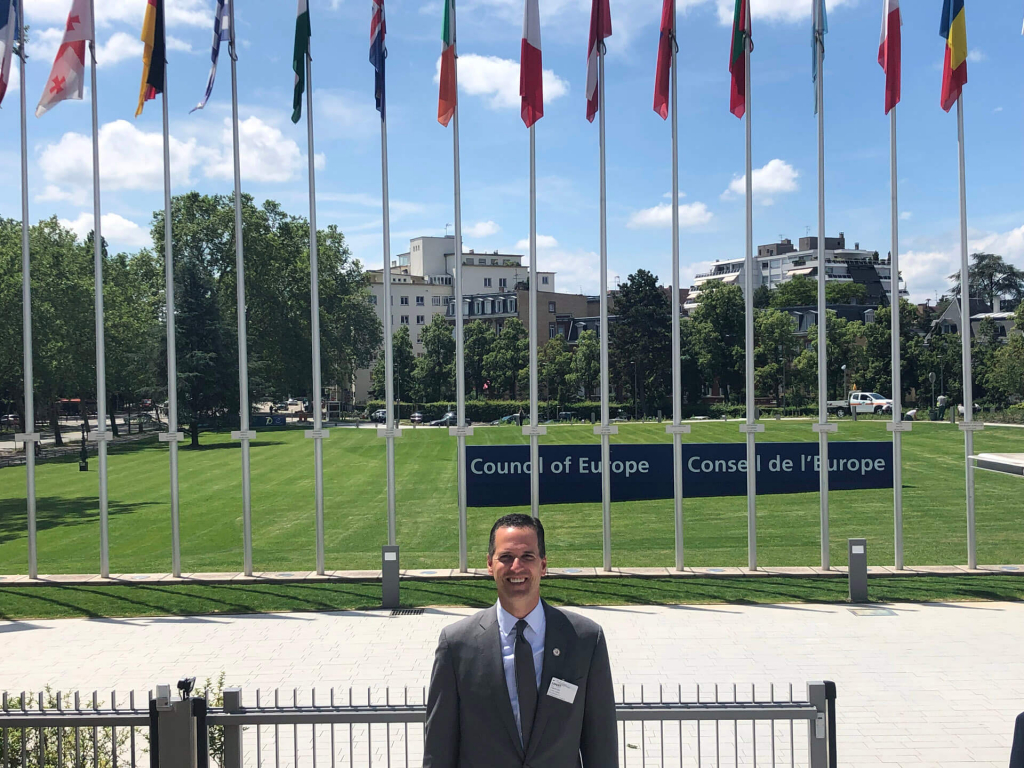
When I was invited to attend the Global Forum on Academic Freedom, Institutional Autonomy, and the Future of Democracy held this June in Strasbourg, France, I jumped at the chance. I was proud to add Otterbein’s support to a movement of global leaders committing to protecting democracy. I attended the forum along with more than 100 higher education leaders from around the world. Since its founding, Otterbein has stood for the rights of academic freedom and autonomy, as well as the freedom of speech of individuals, and we continue to stand resolute today. Otterbein believes that all voices from different walks of life must be represented, respected and valued, and we are committing to be a national and global leader in preserving democratic societies and values. The Global Forum was co-organized by the Council of Europe; the International Consortium for Higher Education, Civic Responsibility, and Democracy; the Organization of American States; and other partners, notably the International Association of Universities and the Magna Charta Observatory. It gathered higher education leaders and representatives of public authorities and NGOs from Europe and the United States, as well as smaller numbers from Australia, Asia, Africa, the Middle East and Latin America. - John Comerford Are you a journalist covering topics about democracy and how it is being threatened around the world? What role does higher education play in global democracy? And what countries or regions are the most at risk? There are a lot of questions regarding this topic – and that’s where we can help. John Comerford is an expert in higher education, regional and national topics. He is the President of Otterbein University and is available to speak with media regarding this issue and how higher-education needs to be made available to everyone in America regardless of income, family name or background. Simply click on his icon to arrange an interview.


A closer look at deepfakes. Let our experts explain if there’s a reason to worry.
Deepfakes…they’re eerie, entertaining and getting a lot of attention. Deepfake videos are made using artificial intelligence technology which can manipulate someone's face in a video to make it look like they are saying something that they didn't. It's one level up from dubbing, or lip syncing, and can appear very convincing. One example is a video that was made using footage of Mark Zuckerburg in 2017; it was doctored and falsely portrays the Facebook CEO discussing how he had stolen data. – The Sun, June 26 The new concept is all the rage and has seen people spoofed, mocked and tricked. But as once again technology outpaces legislation and with an election approaching, deepfakes have some people going off the deep end. Every day, thousands of videos are posted online, which means that any potential filtering program would need to be able to quickly and efficiently detect fake content. Even then, such media would likely be removed only after being published, meaning that the video would likely have already had an impact. For these reasons, deepfakes are expected to contribute to the upcoming 2020 election in the United States, likely acting as an agent of spreading fake news. However, Edward Delp, a Purdue University professor who developed a computer program to help detect these videos, believes deepfakes pose a bigger threat. “Deepfakes pose a threat to more than just political videos,” he said. “It can be used in making fake child pornography, revenge porn and financial bribes. Just general criminal behavior.” – The Exponent (Purdue University), June 21 As deepfakes become more common on social media and the internet, odds are they will make their way – accidentally or not – into the actual media. And as America still battles with the fake news phenomenon, will Deepfakes further erode our trust in media and our leaders? As deepfakes become more common on social media and the internet, odds are they will make their way into the actual media. So, what can be done? How will these deepfakes affect the perception of news media? What simple advice can we apply to verify if something is real or fake? And do these videos represent a threat to democracy, as some experts are saying? Dr. Gregg R. Murray, professor of political science at Augusta University, is available to talk about the implications of this new threat. Murray’s research focuses on political behavior and psychology with specific interests in voter mobilization and turnout. He is also executive director of the Association for Politics and the Life Sciences.


Caring for Patients Who Are Prescribed Medical Marijuana
With more than $10 billion in legal sales of marijuana in the United States in 2018, there’s a need to educate healthcare practitioners about how to safely treat and manage patients who are prescribed medical marijuana. According to the Centers for Disease Control, cannabis-based products such as man-made cannabinoid-based medications may help prevent and ease nausea caused by chemotherapy. And for adults with multiple sclerosis-related muscle spasms, short-term use of some man-made and cannabinoid-based medications may improve their symptoms. "Providing care for patients who use medical marijuana is a responsibility all healthcare providers share, and it is therefore imperative to encourage communication between all providers and the patient," says Evelyn Lengetti, PhD, RN, NPD-BC, Assistant Dean of the Continuing Education Program at Villanova’s M. Louise Fitzpatrick College of Nursing. To the best of her knowledge, Dr. Lengetti was the first in the Philadelphia area to host a day-long conference open to nurses, doctors, nutritionists, social workers, lawyers and pharmacists to educate them so they would have a working knowledge of what to expect when patients in their care started using medical marijuana. "Healthcare providers need to have some knowledge of medical marijuana when treating this population of patients," Dr. Lengetti says. "They need to know that cannabis is not FDA approved for any condition and that it is for investigational use only." Dr. Lengetti notes that it's beneficial for healthcare providers to know the different types of cannabis, possible side effects, nutritional challenges, and legal issues that may arise while providing care to patients who have been certified to use cannabis products.


The Increasing Tension Between the U.S. and Iran
Two oil tankers were attacked in the Gulf of Oman and an unmanned drone was shot down in the last two weeks, escalating tensions between the United States and Iran. After a last-minute bailout of a retaliatory airstrike, President Donald Trump announced additional sanctions against Iran on June 24. Lowell Gustafson, PhD, a political science professor, taught American foreign policy and a course titled "Theories of War and Peace" for several years. He says, with the talk of airstrikes and President Trump claiming there will be "obliteration like you've never seen before," Congress needs to step in. "Congress should immediately hold hearings and vote on exactly what conditions would need to be met before such an order was given. Before Congress makes an initial authorization to use force against Iran, the military should not follow any order to do so by the President. Our founders gave Congress the power to declare war since a single executive, whether monarch or president, should not have the authority to make such a weighty decision unilaterally." Dr. Gustafson noted that so far, sanctions have proven counterproductive and a "unilateral presidential decision to use force undermines American constitutional democracy." He said the president's failure to think systematically about this issue leaves us moving from tactic to tactic.


There’s no question about it – our planet has a problem with plastic. Though simple, cheap, convenient and often necessary, the reality is single use and non-reusable plastics like straws, plastic bags, wrapping and most containers are causing problems. There’s no hiding or ignoring the evidence – plastic is everywhere from landfills, to our rivers and streams and even occupying its own land mass in the ocean. Recently Canada proposed a ban on single use plastics to come in to effect in 2021. The country joined the likes of France, Germany, Italy, the U.K. and the European Union who are all implementing similar policies. The United States, however – has not. Here are some facts from the Center for Biological Diversity. Americans use 100 billion plastic bags a year, which require 12 million barrels of oil to manufacture. The average American family takes home almost 1,500 plastic shopping bags a year. According to Waste Management, only 1 percent of plastic bags are returned for recycling. That means that the average family only recycles 15 bags a year; the rest ends up in landfills as litter. Up to 80 percent of ocean plastic pollution enters the ocean from land. 100,000 marine animals are killed by plastic bags annually. One in three leatherback sea turtles have been found with plastic in their stomachs. Plastic bags are used for an average of 12 minutes. It takes 500 (or more) years for a plastic bag to degrade in a landfill. Unfortunately, the bags don't break down completely but instead photo-degrade, becoming microplastics that absorb toxins and continue to pollute the environment There is no doubt plastic is a serious problem in America – but will the country join in? What will it take from an industry point of view? Will costs outweigh the benefit? Is this a matter of regulation and do Americans have the appetite to make this a political issue? There are a lot of questions and that’s where our experts can help. Dr. Beril Toktay is Professor of Operations Management, Brady Family Chairholder and ADVANCE Professor at Georgia Tech’s Scheller College of Business. She’s the founding Faculty Director of the Ray C. Anderson Center for Sustainable Business. She’s an expert in the areas of sustainable operations and supply chain management, with a special focus on the circular economy. Beril is available to speak about this issue with media – simply click on her icon to arrange an interview.


They are incidents that are now more common than a lot of people want to admit – and research is showing that mass shootings are taking a serious psychological toll on our country’s population. UMW’s Laura Wilson’s research was recently cited in media throughout the country for her work analyzing PTSD and its affects on witnesses to these events. “PTSD estimates 28 percent of people who have witnessed a mass shooting develop post-traumatic stress disorder (PTSD) and about a third develop acute stress disorder. Laura Wilson, an assistant professor of psychology at the University of Mary Washington in Virginia conducted a meta-analysis — an examination of data from 11 studies of PTSD symptoms among more than 8,000 participants who ranged from those who'd witnessed shootings to those who just lived in the communities in a 20-year period. She found the greater the exposure — someone who was at the scene or who lost a friend or family — the greater risk of developing PTSD. But, in her work, Wilson has found other factors, too, including previous psychological symptoms and a lack of social support, also played a role in increasing the likelihood. "Mass shootings are a different type of trauma," Wilson says. "People are confronted with the idea that bad things can happen to good people. ... Most people have a hard time reconciling the idea that a young, innocent person made the good decision to go to school, was sitting there, learning and was murdered. That does not make sense to us. ... It just rattles us to our core." And yet, some people don't fully appreciate the lasting psychological wounds of those who escaped physical harm.” June 02, Associated Press Are you covering this topic, or would you like to know more? That’s where UMW can help. Laura C. Wilson is a clinical psychologist whose expertise focuses on post-trauma functioning, particularly in survivors of sexual violence or mass trauma (e.g., terrorism, mass shootings, combat). Dr. Wilson is available to discuss this topic with media – simply click on her icon to arrange an interview.



From Asthma and Tick Bites to Dengue Fever, Nurses Tackle Health Impacts of Climate Change
According to statistics compiled by the National Aeronautics and Space Administration (NASA), carbon dioxide levels are at their highest in more than 650,000 years. In addition, 18 of the 19 warmest years ever have occurred since 2001, according to NASA. The World Health Organization reports that between 2030 and 2050 climate change is expected to cause 250,000 additional deaths per year from malnutrition, malaria, diarrhea and heat stress. “Many people don’t realize how much climate change can affect their health,” says Ruth McDermott-Levy, PhD, MPH, MSN, RN, director of the Center for Global and Public Health at Villanova’s M. Louise Fitzpatrick College of Nursing. “We see increases in ground level ozone from the changes in our climate here in the United States and in Europe. And we see the impact of climate change on our patients every day.” Earlier this year, Dr. McDermott-Levy spent several months in Finland collecting nurses’ observations on the impact of climate change. “In Finland extreme cold causes deaths, but increasing heat waves have become a health risk, too. This is especially a risk for the chronically ill and the elderly. And nurses will need to consider heat-related issues when they discharge elderly patients from the hospital to their homes.” In addition to health issues related to climate change, the increasing extreme weather events that bring on flooding and wildfires also disrupt the health care delivery supply chain, making much needed medications, medical supplies, and access to health care providers a greater challenge in delivering care.


Covering World No Tobacco Day – Let our experts help!
May 31 is the WHO’s World No Tobacco Day. And despite all the awareness campaigns, education and advice – people are still lighting up. In fact, according to the CDC: More than 16 million Americans are living with a disease caused by smoking. Cigarette smoking is responsible for more than 480,000 deaths per year in the United States, including more than 41,000 deaths resulting from second-hand smoke exposure. This is about one in five deaths annually, or 1,300 deaths every day. On average, smokers die 10 years earlier than non-smokers. If smoking continues at the current rate among U.S. youth, 5.6 million of today’s Americans younger than 18 years of age are expected to die prematurely from a smoking-related illness. This represents about one in every 13 Americans aged 17 years or younger who are alive today. With marketing toward youth increasing and e-cigarettes and vaping now a part of the mainstream – is the fight against big tobacco becoming even harder? There’s a lot there to cover and that’s where our experts can help. Dr. Martha Tingen is a behavioral nurse scientist targeting prevention of tobacco use in children. She is available to speak with media any time – simply click on her icon to arrange an interview.