
Experts Matter. Find Yours.
Connect for media, speaking, professional opportunities & more.
Finding Joy Through the Holiday Season - Ways for families to feel the familiar in unfamiliar times
Sandra M. Chafouleas, Ph.D. recently wrote a piece for Psychology Today that aims to help families as we enter the holiday season: The typical holiday season can bring forth any number of emotions, from anger and sadness to joy and awe. Family traditions – those repeated and symbolically meaningful holiday rituals – play a big role in shaping your feelings throughout the season. Families traditions can buffer conflicts, boost positive feelings, and bring people closer together. The pandemic is bringing an atypical holiday season this year, presenting change in the things we do, the way we do them, and who we do them with. We may miss out on getting together in person with family and friends, traveling to cherished places, or taking part in our traditional celebrations. Forced upon us, these unfamiliar changes can evoke feelings of loss and frustration. As a very unfamiliar holiday season approaches, we can still find ways to bring familiarity and predictability — and the sense of comfort that goes with that — with some adaptations to our family traditions. In her piece, Dr. Chafouleas, a licensed psychologist and Board of Trustees Distinguished Professor in the Neag School of Education at the University of Connecticut, offers advice for ways to adapt family traditions and help restore a sense of well-being while embracing the unfamiliar — and uncomfortable —differences in the holidays this year. Dr. Chafouleas is available to speak with media regarding this subject - simply click on her icon now to arrange an interview today.


Is Georgia really seeing a 'blue wave'? Not necessarily, expert says
Though the ballots are currently being recounted, Georgia’s 16 electoral votes are expected to go to Joe Biden. The Peach State turned out to be ripe for the picking for Democratic votes, playing a pivotal role in Biden's road to winning the White House. Georgia was a lock for President Donald Trump in 2016 and has been voting Republican since 1996. However, it's a little too soon to say the state has done a complete political about-face, especially as the nation watches the upcoming runoff races for Georgia's two Senate seats. “There's no ‘blue wave’ in Georgia, or really in the nation,” says Augusta University’s Dr. Gregg Murray. “Donald Trump lost by a very small percent. Georgia's U.S. House delegation didn't change from red to blue (or even the Democrat versus Republican count, for that matter). There may be small Democratic gains in the Georgia House and Senate, but the Republicans still dominate. “It's also highly unlikely, a less than 25 percent chance, that Democrats will gain control of the U.S. Senate, as it's unlikely both of Georgia's Democratic Senate candidates will win the runoff." With the balance of power in Washington essentially resting on the outcome of the Georgia runoffs, all eyes will be on the state. Murray is a go-to expert on state politics and a regular in the media, appearing on major outlets like CNN. If you are covering this topic, then let our expert help with your story. Dr. Gregg R. Murray, professor of political science at Augusta University, is available to talk about the presidential race and election results. Murray’s research focuses on political behavior and psychology with specific interests in voter mobilization and turnout. He is also executive director of the Association for Politics and the Life Sciences. Simply click on Murray's icon now to arrange an interview today.



Georgia Southern's Continuing Education offers credentialing assistance to active-duty military
Active-duty soldiers and National Guard Reserve service members can take advantage of the certification programs offered through Georgia Southern University’s Division of Continuing Education, which is now an approved provider for the Army Credentialing Assistance (CA) program. Together with the Federal Tuition Assistance and Army Credentialing Assistance programs, soldiers can receive up to $4,000 total per fiscal year to cover costs for eligible certifications. The CA can cover the cost of training, materials, study guides, fees, textbooks and certification exams. Georgia Southern is one of the first universities approved in the country, and one of only a handful in Georgia, said Deedee Southerlin, Ed.D., manager of adult programs for Continuing Education. “This program is truly designed to enhance a soldier’s skill set for their current Military Occupational Specialty (MOS) and close the gap between relevant MOS’s and civilian certifications,” she said, noting these types of programs aren’t considered for academic credit, but rather nationally recognized certifications. “If a soldier chooses their certifications for a career post-military, it may help them secure employment quicker,” she added. “Many times when exiting the military, soldiers are really only trained on what their Army role was. These certifications can help them have more of a seamless transition into civilian life.” So far, Southerlin said these programs, which are completely online or virtual, have drawn participants from Georgia, Alaska, Korea, Maryland, Texas and Ohio, among others. In addition, spouses of service members on active-duty may take advantage of the workforce development program, My Career Advancement Account Scholarship (MyCAA), credentialing program as well. If you are a journalist looking to cover how schools like Georgia Southern University are supporting America’s military during and after they have served their duty –simply reach out to Georgia Southern Director of Communications Jennifer Wise at jwise@georgiasouthern.edu to arrange an interview today.


Savannah is drenched in history, but many of the city’s stories often go untold. Four Georgia Southern University history students aim to shed light on these untold stories as a part of their project, Savannah History Remix. The project, developed by graduate students Lauren Della Piazza Hartke, R. Dalton Bryant, Noah Prince, and Dalton Blackmon, is a series of walking tours featuring lesser-known stories of Savannah’s history. “The walking tours seemed like the safest bet and a good opportunity to learn some digital skills,” said Assistant Professor of history Alena Pirok, Ph.D., who is overseeing the project. “The tours intend to bring new and useful historical information to the city, its residents and the historical tourism industry.” When the project began, the students identified subjects not found on commercial tours of Savannah, including modern immigration, laborers, common people of Savannah and the LGBTQ community. Hartke created the tour, “A Seat at the Table: A Social History of Savannah’s Foodways,” which revolves around the culinary history of the city. “My goal for this project was to show how Savannah’s food scene today is the product of many years of input and contribution from many different subgroups of peoples,” she said. “I want people to understand how our notion of southern food is the product of English, West African and Native American foodways, combined with regional practices unique to Savannah’s economy and ecology.” Pirok said the Savannah History Remix tours have more freedom than commercial tours. “A non-profit tour like ours does not have to worry about losing customers and money,” she said. “This gives us the freedom to take more risks and to offer new, but academically sound, historical narratives that people do not find familiar or ones that might challenge their vision of the world.” Despite COVID-19, students at Georgia Southern University are combining innovation, technology and creativity to see the projects they want to fulfill come to fruition. If you’re a journalist looking to know more about the Savannah History Remix or similar projects, simply reach out to Georgia Southern Director of Communications Jennifer Wise at jwise@georgiasouthern.edu to arrange an interview today.

Lann Le, a senior in the Betty Foy Sanders Department of Art at Georgia Southern University, is drawing inspiration from public response to the COVID-19 pandemic for her senior thesis exhibition, “Good Without.” The interactive exhibition will explore what items people can live without, a choice many people have had to make due to the pandemic. Oct. 20th, a panel discussion related to the project took place over Zoom, featuring Professor of Art Rachel Green, Associate Professor of Education Katie Brkich, Ph.D., and Professor of Economics Richard McGrath, Ph.D. Audio from the discussion will be recorded and played throughout the exhibition. Le said she got the idea for the exhibition after seeing how society reacted to COVID-19 at the beginning of the pandemic in the U.S. “In March, I was told to stock up all necessities and saw shelves being emptied in hours,” she said. “I heard stories of struggles and issues associated with stores being closed, businesses paused, unemployment, stress, food shortage and boredom to name a few. I also saw some drop-off items at donation centers and also more online shopping. Here I question what we need and what we’re conditioned to need.” After getting approval from her professor, Bridget Conn, Le wanted to showcase items people believe they can live without. She approached students, professors and strangers on the internet and in person to ask what their choices would be. She also made a website and Instagram account to keep a log of images of the items. Both will continue to be updated until next August. Le’s exhibition, which will run from Nov. 9 to Dec. 4 in the Fine Arts Gallery on the Armstrong Campus, will feature physical items, photographs, audio and collages installed in an interactive environment. It has also been getting the attention of local media and was recently profiled in the Savannah Morning News. “Lann’s project is unique in that she is really embracing the practices of conceptual and interactive art,” Conn said. “This means that unlike traditional art media, where the artist is in control of making their own paintings or sculptures or the like, she is inviting strangers to direct the project by asking them to submit photographs or items that they have learned they are good without.” To learn more about the exhibition - simply visit the site below: If you are a journalist looking to learn more about this project or if you would like to arrange an interview - simply reach out to Georgia Southern Director of Communications Jennifer Wise at jwise@georgiasouthern.edu to set and time and date.

Criminals are opportunists, and the COVID-19 global onslaught has brought with it not just health threats but cybersecurity risks, too. Within weeks of the COVID-19 outbreak, hackers have already commandeered the virus to unleash cyberattacks, sending emails purporting to provide coronavirus guidance laced with cyberattack software. In one more alarming case, they appear to have attacked a hospital and forced it to cancel operations and take key systems offline. As the outbreak continues to intensify, the UK National Cyber Security Centre (NCSC) warned that the volume of these attacks will likely increase, pointing to the increased registration of coronavirus-related webpages. Criminals are opportunists, and the COVID-19 global onslaught has brought with it not just health threats but cybersecurity risks, too. As companies move to protect the health of their workforce, it’s also important to protect the systems they’re using to run their businesses. It’s especially important for hospitals to shore-up their cyber defenses. If they don’t, just as they are racing to respond to COVID-19, they could face situations like University Hospital Brno in the Czech Republic, which earlier this month was forced to divert patients and cancel planned operations while it worked to address an attack. The most likely cyber threats are email “phishing” campaigns that use the coronavirus as a lure to get the recipient to open an attachment that contains malware. According to the NCSC, such “phishing” attempts are happening on a global scale in multiple countries, which has led to both a theft of money and sensitive data. Similarly, known hacker groups have been launching websites purporting to sell masks or other safety-related measures for coronavirus, possibly to use them as another vector for cyberattacks. The NCSC has also cautioned that these attacks are “versatile and can be conducted through various media, adapted to different sectors and monetized via multiple means, including ransomware, credential theft, bitcoin or fraud.” The cybersecurity firm ProofPoint has seen a rise in these cyberattack emails with COVID-19 themes since January. Both ProofPoint and IBM’s X-Force cybersecurity unit identified a campaign that targeted users in Japan with an email masquerading as a coronavirus information email that carries with it a potent type of cybercrime software. In the US, the Secret Service recently warned of scams from online criminals posing as sellers of high-demand medical supplies to prevent coronavirus. They’ll require payment upfront and not send the products. Cyber criminals have also been posing as the World Health Organization and the US Centers for Disease Control and Prevention (CDC), sending fraudulent emails from the former and “creating domain names similar to the CDC’s web address to request passwords and even bitcoin donations to fund a vaccine” for the latter. In addition to the use of the coronavirus as a cyberattack vector, the growing need for working remotely to mitigate the spread of COVID-19 has increased companies’ exposure to cyber threats. The increase in remote work creates more opportunities for hackers to make inroads from less secure locations. Companies should also ensure they can provide adequate security when their whole workforce is remote. They should quickly work through the security implications of workers choosing to switch to insecure personal devices. With national-level pressures on home broadband, staff will also resort to mobile hotspots, which are often less secure. And enabling remote connectivity at scale, with the right security configurations, can be a challenge even with months of preparation time. A recent US Department of Homeland Security COVID-19 cybersecurity notice pointed to the importance of making sure that security measures are up to date for companies’ remote access systems. Additional measures to consider include enabling multifactor authentication—which can require two or more steps to verify a user’s identity before granting access to corporate networks. The NCSC is also working to identify malicious sites responsible for phishing and cyberattack software. A final looming cyberthreat related to Covid-19 is disinformation. The World Health Organization and other agencies have for months been combatting disinformation campaigns spreading false information about the origins of and treatments for COVID-19—reports that seed more confusion and increase risks to society. All of that means that computer virus risks are emerging as the biological virus spreads—and both are a threat to business. Cyber risk mitigation efforts should account for the different ways that a company can be affected, including impacts on the technical, operational, legal and reputational aspects of a business. Often, the reputational effects of a cyberattack are more significant than direct the business or technical impact. To mitigate all of the potential impacts of cyberattacks taking advantage of the Covid-19 outbreak, companies should: Review and update crisis and cybersecurity response plans, and ensure internal and external communications response plans are robust. Confirm that members of the crisis management team understand their roles and responsibilities. Make sure all communications channels have the latest security patches. Review and update access controls, particularly when remote access is used heavily, to make sure that only those who require access to sensitive systems to do their jobs have it. Take extra care when handling medical information. For companies managing employees who have contracted Covid-19, it’s important that personal health information is handled with strong security measures, including encryption. Educate employees about the cyber risks that may attempt to capitalize on fear of the Covid-19 virus—whether it be phishing email or disinformation. Covid-19 poses a number of short- and long-term challenges to business resilience, and the virus’s trajectory is quick and unpredictable. But it’s possible to anticipate and mitigate a number of the cyber threats that will try to ride the virus’s coattails. The companies that do will be more resilient and better positioned to withstand the direct health and operational effects of the virus.



Best-selling author Peter Singer talks with the Brunswick Review about winning the increasingly crowded and contentious war for attention What do Isis and Taylor Swift have in common? According to author and digital-security strategist Peter Singer, both the terrorist organization and pop star are fighting for your attention online and employing similar tactics to try and win it. ISIS kicked off its 2014 invasion of Mosul with the hashtag, “#AllEyesonISIS.” More recently, the terror group posted photos of its members holding cute cats in an effort to make them more relatable – tactics familiar to most celebrities and online marketers around the world. These online battles, the rules governing them, and their real-world impact are the focus of Mr. Singer’s latest book, LikeWar, which he coauthored with Emerson T. Brooking, at the time a research fellow with the Council of Foreign Relations. “A generation ago people talked about the emergence of cyber war, the hacking of networks. A ‘LikeWar’ is the flip side: the hacking of people and ideas on those networks. Power in this conflict is the command of attention,” says Mr. Singer, who in addition to his writing is also a strategist and Senior Fellow at the New America Foundation. Pretty much everyone who posts online – from governments to marketers to reality TV stars – is a combatant in this fight for virality, according to Mr. Singer. Triumph in a “LikeWar” and you command attention to your product or propaganda or personality. Lose and you cede control of the spotlight and the agenda. Mr. Singer recently spoke with Brunswick’s Siobhan Gorman about the trends he’s seeing in LikeWars around the world, and what companies can do to avoid being on the losing end. What were you most surprised by in researching LikeWar? One of the more interesting characters in the book was at one time voted TV’s greatest villain: Spencer Pratt, a reality TV star on MTV’s “The Hills.” He’s basically one of these people who became famous almost for nothing. But what Pratt figured out really early was the power of narrative, which allowed him to become famous through, as he put it, “manipulating the media.” In the same week, I interviewed both Pratt and the person at the US State Department who’s in charge of the US government’s efforts to battle ISIS online. And Pratt, this California bro who’s talking about how to manipulate the media to get attention, understood more of what was playing out online than the person at the State Department. Spencer Pratt, a reality TV star… understood more of what was playing out online than the person at the State Department.” How much have online conflicts changed the rules in the last few years? First, the internet has left adolescence. It’s only just now starting to flex its muscles and deal with some of its responsibilities. The structure of the network changes how these battles play out. So, it’s this contest of both psychological but also algorithmic manipulation. What you see go across your screen on social media is not always decided by you. The rule makers of this global fight are a handful of Silicon Valley engineers. Another aspect of it is that social media has effectively rendered secrets of any consequence almost impossible to keep. As one CIA person put it to us, “secrets now come with a half-life.” Virality matters more than veracity; the truth doesn’t always win out. In fact, the truth can be buried underneath a sea of lies and likes. And the last part is that we’re all part of it. All of our decisions as individuals shape which side gets attention, and therefore which side wins out. But you highlight that this is playing out differently in China. Exactly. There are two different models shaping the internet, and shaping people’s behavior through the internet, playing out in the West and in China. Essentially, internet activity in China is all combined. Look at WeChat, which is used for everything from social media to mobile payment; it’s Amazon meets Facebook meets Pizza Hut delivery. And you combine that with an authoritarian government that’s had a multi-decade plan for building out surveillance, and you get the social credit system, which is like Orwellian surveillance crossed with marketing. The social credit system allows both companies and the government to mine and combine all the different points of information that an online citizen in China reveals of themselves, and then use that to create a single score – think of it as your financial credit score of your “trustworthiness.” For example, if you buy diapers your score goes up, because that indicates you’re a parent and a good parent. If you play video games for longer than an hour your score goes down because you’re wasting time online. And it’s all networked. Your friends and family know your score. It creates a soft form of collective censorship; if your brother posts something that’s critical of the government, you’re the one who goes to him and says, “Knock it off ’cause you’re hurting my score.” And you do that because the score has real consequences. Already it’s being used for everything from seating on trains and job applications to online dating. Your score literally shapes your romantic prospects. So, you have this massive global competition between Chinese tech companies and other global tech companies not only for access to markets, but also for whose vision of the internet is going to win out. How can companies win a “LikeWar”? Everyone’s wondering: What are the best ways to drive your message out there and have it triumph over others? The best companies I’ve seen create a narrative, have a story and have emotion – in particular, they have emotion that provokes a reaction of some kind. It’s all about planned authenticity. That sounds like a contradiction, but it’s about acting in ways that are genuine, but are also tailored because you’re aware that the world is watching you. A good comparison here is Wendy’s versus Hillary Clinton. Wendy’s is a hamburger chain – not a real person – but it acts and comes across as “authentic” online and has developed a massive following. They’re funny, irreverent. Yet Hillary Clinton – a very real person – never felt very authentic in her online messaging. And that’s because it involved a large number of people – by one account, 11 different people – all weighing in on what should be tweeted out. Inundation and experimentation are also key. Throwing not just one message out there, but massive amounts of them. Treating each message as both a kind of weapon, but also an experiment that allows you to then learn, refine, do it again, do it again, do it again. How do you measure and gauge battles online now? Is it just volume? It all depends on what your battle is, what your end goal is. Is it driving sales? Is it getting people to vote for you, to show up to your conference? This is what the US gets wrong about Russian propaganda and its disinformation campaigns. We think they’re designed to make people love or trust a government. From its very start back in the 1920s, the goal of propaganda coming from the Soviet Union, and today Russia, has been instead to make you distrust – distrust everything, disbelieve everything. And we can see it’s been incredibly effective for them. First, we need to recognize that we’re a part of the battle. In fact, we’re a target of most of the battles. How effective have disinformation campaigns actually been in the US? What can be done? One of the scariest and maybe saddest things we discovered is that the US is now the story that other nations point to as the example of what you don’t want to have happen. There’s no silver bullet, of course. But one example was something called the Active Measures Working Group, a Cold War organization that brought together the intelligence community, diplomats and communicators to identify incoming KGB disinformation campaigns and then develop responses to them. We’re dealing with the modern, way more effective online version of something similar, and we haven’t got anything like that. There are also digital literacy programs. I find it stunning that the US supports education programs to help citizens and kids in Ukraine learn about what to do and how to think about online disinformation, but we don’t do that for our own students. What can people like you or me do? First, we need to recognize that we’re a part of the battle. In fact, we’re a target of most of the battles. And we need to better understand how the platforms work that we use all the time. A majority of people actually still don’t understand how social media companies make money. The other is to seek out the truth. How do we do that? And the best way is to remember the ancient parable of the blind man and the elephant – don’t just rely on one source, pull from multiple different sources. That’s been proven in a series of academic studies as the best way to find the facts online. It’s not exactly new, but it’s effective. Where will the next online war be fought? The cell phone in your pocket, or if we’re being futuristic, the augmented reality glasses that you wear as you walk down the street. It’ll come from the keepsake videos that you play on them. If you want to know what comes next in the internet there have always been two places to go: university research labs and the porn industry. That’s been the case with webcams, chat rooms and so on. What we’re seeing playing out now are called “deep fakes,” which use artificial intelligence to create hyper-realistic videos and images. There’s also “madcoms,” which are hyper-realistic chat bots that make it seem like you’re talking to another person online. Combine the two, and the voices, the images, the information that we’ll increasingly see online might be fake, but hyper-realistic. The tools that militaries and tech companies are using to fight back against the AI-created deep fakes are other AI. So, the future of online conflict looks like it’ll be two AIs battling back and forth. Let me give you a historic parallel, because we’ve been dealing with these issues for a very long time. The first newspaper came when a German printer figured out a way to monetize his press’s downtime by publishing a weekly collection of news and advice. And in publishing the first newspaper, he created an entire industry, a new profession that sold information itself. And it created a market for something that had never before existed – but in creating that market, truth has often fallen by the wayside. One of the very first newspapers in America about a century later was called the New England Courant. It published a series of letters by a woman named Mrs. Silence Do-good. The actual writer of the letters was a 16-year-old apprentice at the newspaper named Benjamin Franklin, making him the founding father of fake news in America. In some sense it’s always been there, using deception and marketing to persuade people to your view.

Kamala Harris Is First Woman, and Woman of Color, Elected Vice President
History was made on Saturday, November 7, when Kamala Harris was elected vice president of the United States, 100 years after women first won the right to vote. "Although our new president will look like almost all the others we have had in our history, the fact that we will have a woman of color in the second highest position in our executive branch for the first time ever has an importance that cannot be understated," says Teresa Boyer, EdD, director of the Anne Welsh McNulty Institute for Women's Leadership at Villanova University. "When it comes to our highest office, Americans have been famously resistant and behind other countries in selecting a woman for the role. Perhaps having a woman in the vice presidency could shift that barrier that we haven't seemed to get past." Dr. Boyer adds, "We will also have a record number of women in this congressional delegation. Although Democrats have historically sent the most women to Congress, this year, the Republicans are the ones who set a record, with at least 32 women in the House and Senate—two more than their previous record of 20 in 2006. Democrats still have the greater representation of women, though, with at least 102." "Themes of gender and race have been threaded throughout this election, as they underlie many of the crises we are currently facing as a nation. The tight races mixed with progress on women's representation indicate a national culture on the cusp of change—one exploring openness to diverse identities in the role of public leader. Not so much a wave as a slow inching forward—but forward nonetheless." "Many have said Biden will be a transitional president—due to his age, and his role as a party elder—but perhaps he would be better noted as a potentially transformational president, or a conduit to the diverse America reflected in our leadership."


On the morning of Saturday, November 7, Joe Biden was announced by numerous media outlets as the projected winner of the 2020 U.S. presidential election. President-elect Biden will be only the second Roman Catholic to occupy the nation's highest office. Massimo Faggioli, PhD, is a professor of historical theology at Villanova University. He recently discussed the significance of Biden being only the second Catholic elected president and the work he has in front of him. "Biden is a 'Pope Francis Catholic'—much more aligned to the political culture of the pontificate than John Kerry was as a 'Pope John Paul II Catholic' in 2004, or Kennedy, a good Catholic in 1960. When Kennedy, the first Catholic president, was elected in 1960, U.S. Catholicism was much less divided and in much better relations with the Vatican compared to today," Dr. Faggioli said. "It's the first time we have a Catholic president since the return of religion in the public square." "Anti-Francis Catholicism in the U.S. goes much deeper than Trump Catholics and includes a number of U.S. bishops. It will be difficult for Biden to navigate the triangular relations between Vatican-White House-U.S. bishops," continued Dr. Faggioli. "The U.S. Conference of Catholic Bishops is paralyzed and—especially on social issues—it is difficult to take distance from a rhetoric that is very similar to the GOP, and this will show in dealing with a Biden presidency. Biden as a Catholic will have against him a powerful Catholic media system in the U.S. that makes no mystery of its fierce opposition against Biden's and Francis' Catholicism."
Is it time to stop taking Georgia for granted? The state voted blue – let our experts explain why
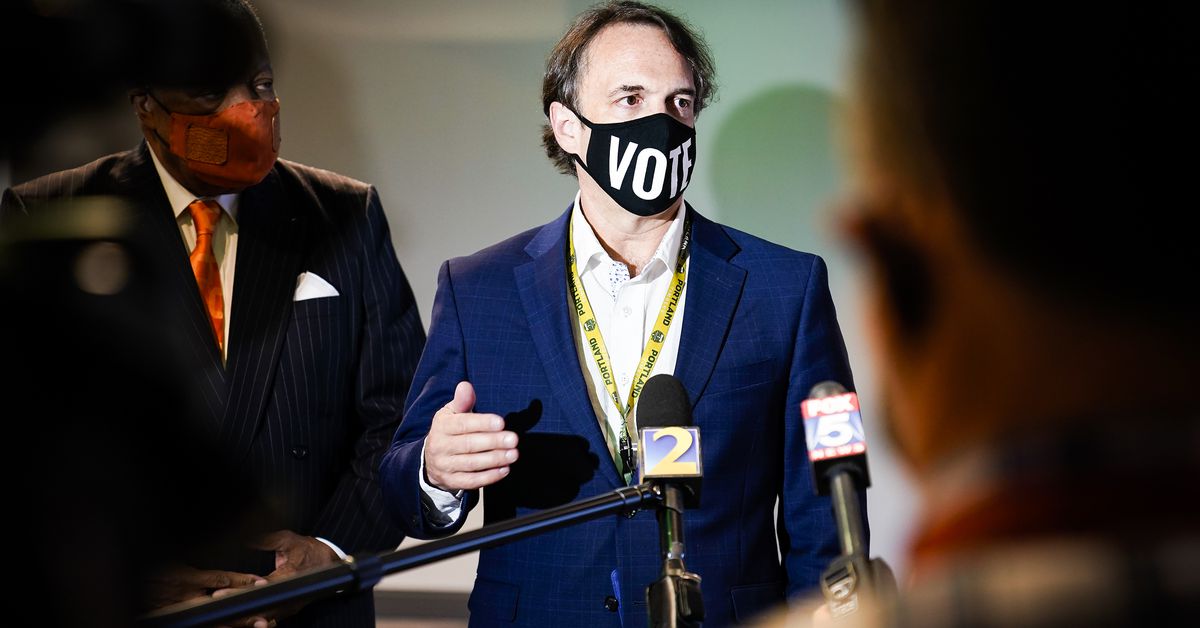
As the final few votes still remain to be counted, the state of Georgia has taken a political turn it has not seen in more than two decades. After a long stretch as a presumptively Republican stronghold, in 2020, voters in Georgia made their voices heard and likely shifted the balance of power in Washington. What has changed? Are more voters engaged and showing up to vote? Have demographics shifted? Has the population changed? Have Peach State citizens changed their outlook on issues and politics? Moving forward, few will take the state’s 16 electoral college votes for granted. Is Georgia now one of the battleground states that will shape presidential elections in the future? If you are covering this topic, then let our experts help with your story. Dr. Gregg R. Murray, professor of political science at Augusta University, is available to talk about the presidential race and election results. Murray’s research focuses on political behavior and psychology with specific interests in voter mobilization and turnout. He is also executive director of the Association for Politics and the Life Sciences. Simply click on Murray's icon now to arrange an interview today.