
Experts Matter. Find Yours.
Connect for media, speaking, professional opportunities & more.

How to Find Quality Family Time During the Coronavirus Pandemic
Planning schedules, screen time and social connectedness during the coronavirus crisis can parents and children reduce stress, be productive and create meaningful family moments With many schools closed as a measure against the spread of coronavirus, and many parents working remotely, families can incorporate a variety of activities — including educational ones — to keep kids engaged and ready to continue learning when they return to school, say family experts at Baylor University. “Life will look a little different over the next few weeks” amid the social distancing recommend by the Centers for Disease Control and Prevention, said Karen K. Melton, Ph.D., assistant professor of child and family studies in Baylor’s Robbins College of Health and Human Sciences. “For the next few weeks, we are going to get to spend extra quality time with our loved ones at home, likely resulting in more laughs and tears. “A sense of routine can help us stay calm and keep moving forward,” she said. “As we all lean into the changes that surround us, we offer three S’s for being intentional while kids are home: schedules, screen time and social connectedness.” SCHEDULES Schedules can take time and effort to create, but once established, they will help reduce stress, Melton said. “You can create a full-day schedule or just a morning/afternoon schedule when you need to get other work done. By providing a family’s schedule, you will reduce boredom and anxiety while increasing a sense of belonging and competency. Some families may allow kids to watch TV in the morning and then work through their schedule. If they complete all their activities, then they can earn additional screen time in the late afternoon.” Some schedule suggestions: Art and/or music Outdoor play Free play Learning activities/educational worksheets Reading Chores Board games Screen time SCREEN TIME “Your kids will likely have more screen time than usual,” Melton said. “For older children, limit screen time so that it does not replace physical activity, sleep or other healthy behaviors. Parents also may want to consider that all screen time is not equal, not only by the ways we interact — smartphones, tablets, computers, gaming devices and televisions — but by different categories for screen time use.” Among those: Watching educational shows versus watching entertaining shows Playing educational games versus playing entertainment games Constructive social media versus destructive social media use SOCIAL CONNECTEDNESS Apps and other technology offer ways to stay connected with those outside the home. But each day of the week also provides opportunities for meaningful moments with family at home, said Nicole McAninch, Ph.D., clinical associate professor of child and family studies at Baylor, who co-directors the Intentional Family Project at Baylor. Some ideas: Dust off the board games. Teach your kids a family recipe. Have a family dance party. Play a video game as a family. Have a family movie night. “Life will be a little crazier than usual over the next few weeks,” Melton said. “Remember, we are all in this together. We will all need to sacrifice and be more flexible. If we spend a little time being intentional with schedules, screen time and social connections, then we can look back at this time, having created meaningful moments that help our family thrive.” ABOUT BAYLOR UNIVERSITY Baylor University is a private Christian University and a nationally ranked research institution. The University provides a vibrant campus community for more than 17,000 students by blending interdisciplinary research with an international reputation for educational excellence and a faculty commitment to teaching and scholarship. Chartered in 1845 by the Republic of Texas through the efforts of Baptist pioneers, Baylor is the oldest continually operating University in Texas. Located in Waco, Baylor welcomes students from all 50 states and more than 90 countries to study a broad range of degrees among its 12 nationally recognized academic divisions.


COVID-19 disrupting supply chains across the globe
The spread of COVID-19 has disrupted supply chains across the world. Mohan Tatikonda, Indiana University Kelley School of Business professor of operations management, says if a company hasn’t felt the impact yet, it will. Tatikonda says supply chains are resilient — but only for so long. He also explains the pandemic will not only cause supply side issues, but also demand issues. For example, if people are working from home, they will consume fewer products and services in certain categories – like gasoline. This means less revenue, and in some cases, less work for workers and less income. Tatikonda is available to speak to reporters about what happens when there are supply chain disruptions -- If you would like to speak with him, please contact Teresa Mackin at tmackin@iu.edu or 317-274-2233.


COVID-19, cancellations and closings -- What do business owners need to know?
It might feel like 2008, but it’s not. “Expect coronavirus fears and behavioral changes from consumers to cause a sudden recession, but it won’t last long,” says Phil Powell, Indiana University Kelley School of Business associate dean of academic programs in Indianapolis and clinical associate professor of business economics and public policy. “I expect the economy will bounce back fairly quickly, and we could see some normalcy in the economy and the markets by May or June." Powell can speak to what business owners and consumers should know and do – and the economic impact of cancellations. If you would like to speak with Powell, please contact Teresa Mackin at tmackin@iu.edu or 317-274-2233.

Baylor University Marketing Professor Jim Roberts, Ph.D., has been studying consumer behavior and spending habits for decades. He is recognized internationally for his research and commentary on the subject. He said the consumer response during the current coronavirus pandemic -- evidenced by the frequent image of empty shelves of essentials -- is concerning and advises shoppers to refocus their actions on the good of the community. “This crisis is an ethical litmus test. I strongly suggest that people not horde essentials, but that they buy only enough for the near future. I am deeply disappointed when I see shoppers with carts full of water, Purell, toilet paper, etc. Essentially, they are saying, ‘Every man for himself,’ instead of, ‘What can we do to survive this crisis together?’ Working with each other always leads to better results. The Golden Rule should dictate at times like these as well as every day of our lives.” ABOUT JIM ROBERTS, PH.D. Jim Roberts, Ph.D., The Ben H. Williams Professor of Marketing in Baylor University’s Hankamer School of Business, is a nationally and internationally recognized expert on consumer behavior and has been quoted extensively in the media. He has appeared on CBS’ Early Show, ABC’s World News Tonight, ABC’s Good Morning America and NBC’s The Today Show. He has been quoted and/or featured in The New York Times, The Wall Street Journal, USA Today, National Public Radio, Cosmopolitan Magazine, Glamour and U.S. News and World Report, among many other newspapers, magazines, websites and television outlets.


Jon Quinn, lecturer in marketing at the Indiana University Kelley School of Business, who has served in senior marketing positions in the financial and food services industries, explains why many Americans may be unnecessarily hoarding supplies and seeking comfort through retail shopping. “The pandemic and the constant reporting of it is creating a significant threat and disruption to consumers’ perceived control over their daily lives, similar to a hurricane. This leads to a reduced feeling of security and well-being, driving us downward in our hierarchy of needs. When this happens, we rely more on our instinctive behaviors of self-preservation. We cease thinking logically and think and act more impulsively or even primitively. “As consumers, we have been conditioned to address problems and challenges by consumption-based solutions. We need to restore some sense of control and security, so we look for consumption-based solutions. In cases such as coming natural disasters or a pandemic, those solutions are everyday staples and items specific to protecting ourselves from the specific threat.” What should we do? -- “In a situation like this, retailers have to act with the greater good of society in mind. However, acting in such a way is also in their own best interest in the long-term. Putting quantity limits on products that are being purchased out of panic is the right thing to do, but retailers need to do a better job at explaining why. They can do this through social media, point-of-purchase and public relations. “This is an opportunity for retailers to build or fortify trust and loyalty and they can do that through dependability – avoiding stock outages as much as possible – as well as open and timely communication (explaining unit purchase limits) and accurately managing customer expectations (if they are out of stock, when will the items be back in stock). “Consumers should resist the natural and conditioned impulses and think logically. The greater the proportion of society that is protected, the greater the likelihood the spread will be contained and the greater the likelihood you and those close to you can remain healthy. Consumption will not make you safer. “Consumers will respond better if the media identified society-benefitting behaviors and demonstrated them by how these behaviors will benefit them personally. I have not seen such a message widely disseminated – but it needs to be.” Quinn can be reached at 614-390-1287 (m), 812-855-4671 (o) and jonquinn@iu.edu.

It truly has been a roller coaster of a month for those working in, invested in, or keeping a close eye on the financial markets this past month. It’s been the perfect winter storm of plunging oil prices, jittery investors and even a much over-due market correction. And now, with a pandemic declared, it looks like financial markets will continue on their wild ride due in part to COVID-19. If you are a journalist covering the markets and have questions about what possibly lies ahead – then let us help. W. Todd Roberson, Indiana University Kelley School of Business senior lecturer in finance, can discuss changes to financial markets, including stock markets, bond markets, interest rates and Fed policy changes. Professor Roberson can also give his thoughts and perspectives on what it means for investors and what investors should know and do in response to changing market conditions. Professor Roberson is available to speak with media, and if you would like to arrange an interview contact Teresa Mackin at tmackin@iu.edu or 317-274-2233.

Baylor Sports Marketing Expert Discusses NBA, NCAA Coronavirus Decisions
On Wednesday, the NBA took the unprecedented step to suspend its season following the revelation that one of its players tested positive for coronavirus. In addition, the NCAA announced that the March Madness basketball tournaments will be played, but without fans present. Baylor University’s Dr. Kirk Wakefield is a nationally recognized expert on sports marketing, sports psychology and fan/consumer response. He has conducted research on the sports retail market – including the NBA and all major national organizations – for more than 20 years. In this brief Q&A, he shares his thoughts about these two decisions. Q: This was an unprecedented action by the NBA to suspend the season due to coronavirus. What does this mean for the teams? A: We’ve had work stoppage before with labor lockouts. Fans were angry then, but the majority won’t be now. Most won’t blame the league or the teams. We might see even more passion for the teams as fans are anxious for play to resume. Q: Based on your understanding of the decision-making process, does this seem to be an action that was done thoughtfully? A: It was carefully considered. No one wants to be the one who could have prevented a catastrophe and didn’t take prudent steps. Just like after lockout years, the leagues will recover. Q: The NCAA tournament will be played – but without fans. What does this mean for college sports teams and the NCAA? A: Obviously, viewership will increase – which is good for sponsors with heavy broadcast and digital assets. Sponsors and venues/teams who are reliant on gate revenue will be hit the hardest. ABOUT KIRK WAKEFIELD, PH.D. Kirk Wakefield, Ph.D., is the Edwin W. Streetman Professor of Retail Marketing and executive director of Sports Sponsorship & Sales at Baylor Unviersity's Hankamer School of Business. His research on retailing covers more than two decades and focuses primarily on sports psychology, team sports marketing, entertainment marketing, and fan and consumer response to pricing and promotional tools. He has conducted fan research in almost every venue in sports including the NBA, NFL, MLB, MLS, NHL and NASCAR. ABOUT BAYLOR UNIVERSITY Baylor University is a private Christian University and a nationally ranked research institution. The University provides a vibrant campus community for more than 18,000 students by blending interdisciplinary research with an international reputation for educational excellence and a faculty commitment to teaching and scholarship. Chartered in 1845 by the Republic of Texas through the efforts of Baptist pioneers, Baylor is the oldest continually operating University in Texas. Located in Waco, Baylor welcomes students from all 50 states and more than 90 countries to study a broad range of degrees among its 12 nationally recognized academic divisions. ABOUT HANKAMER SCHOOL OF BUSINESS AT BAYLOR UNIVERSITY At Baylor University’s Hankamer School of Business, integrity stands shoulder-to-shoulder with analytic and strategic strengths. The School’s top-ranked programs combine rigorous classroom learning, hands-on experience in the real world, a solid foundation in Christian values and a global outlook. Making up approximately 25 percent of the University’s total enrollment, undergraduate students choose from 16 major areas of study. Graduate students choose from full-time, executive or online MBA or other specialized master’s programs, and Ph.D. programs in Information Systems, Entrepreneurship or Health Services Research. The Business School also has campuses located in Austin and Dallas, Texas. Visit www.baylor.edu/business and follow on Twitter at twitter.com/Baylor_Business.

Recognizable companies including Google, Twitter and Eli Lilly all are encouraging their employees to work at home to prevent spread of the coronavirus. Research on the benefits and drawbacks of “working from home is still in its infancy, but researchers have generally found that telecommuting can function as a double-edged sword, said Erik Gonzalez-Mulé, assistant professor of organizational behavior and human resources at the Indiana University Kelley School of Business. “On the one hand, telecommuting can increase productivity because it enhances employees’ feelings of control and autonomy. With the freedom to choose when and how to do their work, employees generally experience greater motivation and satisfaction,” Gonzalez-Mulé. “Of course, there is a caveat here, in that managers should take care to maintain the same performance management systems they use for ‘in-residence’ employees, such as setting specific goals, ‘checking in’ on goal progress, using regular performance evaluations, and the like. “The idea is to communicate to employees that, as long as the work gets done -- which managers can assess with performance management systems -- they can choose when and how to do it,” he added. “On the other hand, recent studies show that telecommuting can increase feelings of isolation. This is because telecommuting workers have significantly less face-to-face contact with their manager and colleagues, which can lead telecommuters to feel alone and socially disconnected. One way to ameliorate these effects is to use technologies that involve virtual face-to-face contact, like Zoom or Skype, or to have at least some ‘real’ face-to-face contact, such as some meetings that are conducted in-person.”

FAU Experts Available to Speak on Coronavirus and its Impact Worldwide
Coronavirus has now earned global attention and Florida Atlantic University experts are available to speak with media about the impact of coronavirus on areas related to this worldwide epidemic, including hospitality, tourism, employment sick leave, and politics. If you are a journalist covering the progress of this virus and how it is impacting various sectors and segments of society – then let us help with your stories, questions and ongoing coverage. LeaAnne DeRigne, Ph.D., MSW, associate professor in FAU’s Phyllis and Harvey Sandler School of Social Work LeaAnne DeRigne is an expert on paid sick leave and its impact on the health and financial security of individuals, families and public health in general. Her recent research on the importance of paid sick leave benefits has received wide press coverage,and has been cited around the country by policy makers, lobbyists, and advocates pushing cities and states to mandate sick leave coverage. Key findings from the study, which are representative of the nation, showed that regardless of income, age, race, occupation, full-time or part-time work status, health status or health insurance coverage, workers without paid sick leave were three times more likely to delay medical care than were workers with paid sick leave. She also conducts research on other workplace benefits such as flexible work, vacation time and pensions. Peter Ricci, clinical associate professor and director of the Department of Marketing and Hospitality Management in FAU’s College of Business Peter Ricci is a hospitality industry veteran with more than 20 years of managerial experience in segments including food service, lodging, incentive travel, and destination marketing. While filling the role of hotel general manager for almost a decade, Ricci served as a part-time educator before entering academia full time as both a clinical associate professor and administrator. Kevin Wagner, Ph.D., professor and chair of FAU’s Department of Political Science in the Dorothy F. Schmidt College of Arts and Letters Kevin Wagner’s research and teaching interests include presidential and judicial politics, political behavior and legislative behavior. He is also a research fellow of the FAU Business and Economics Polling Initiative (BEPI). Wagner has lectured extensively on American politics and has served as an expert in many leading newspapers including the New York Times, Boston Globe, New York Newsday, the Dallas Morning News, and the Miami Herald. He has been featured as the political analyst for CBS 12 in West Palm Beach and on national television including NBC’s “Today.” All of the experts listed above are ready and available to speak with media. To arrange an interview simply click on an expert’s profile or email Lisa Metcalf at lmetcalf@fau.edu.




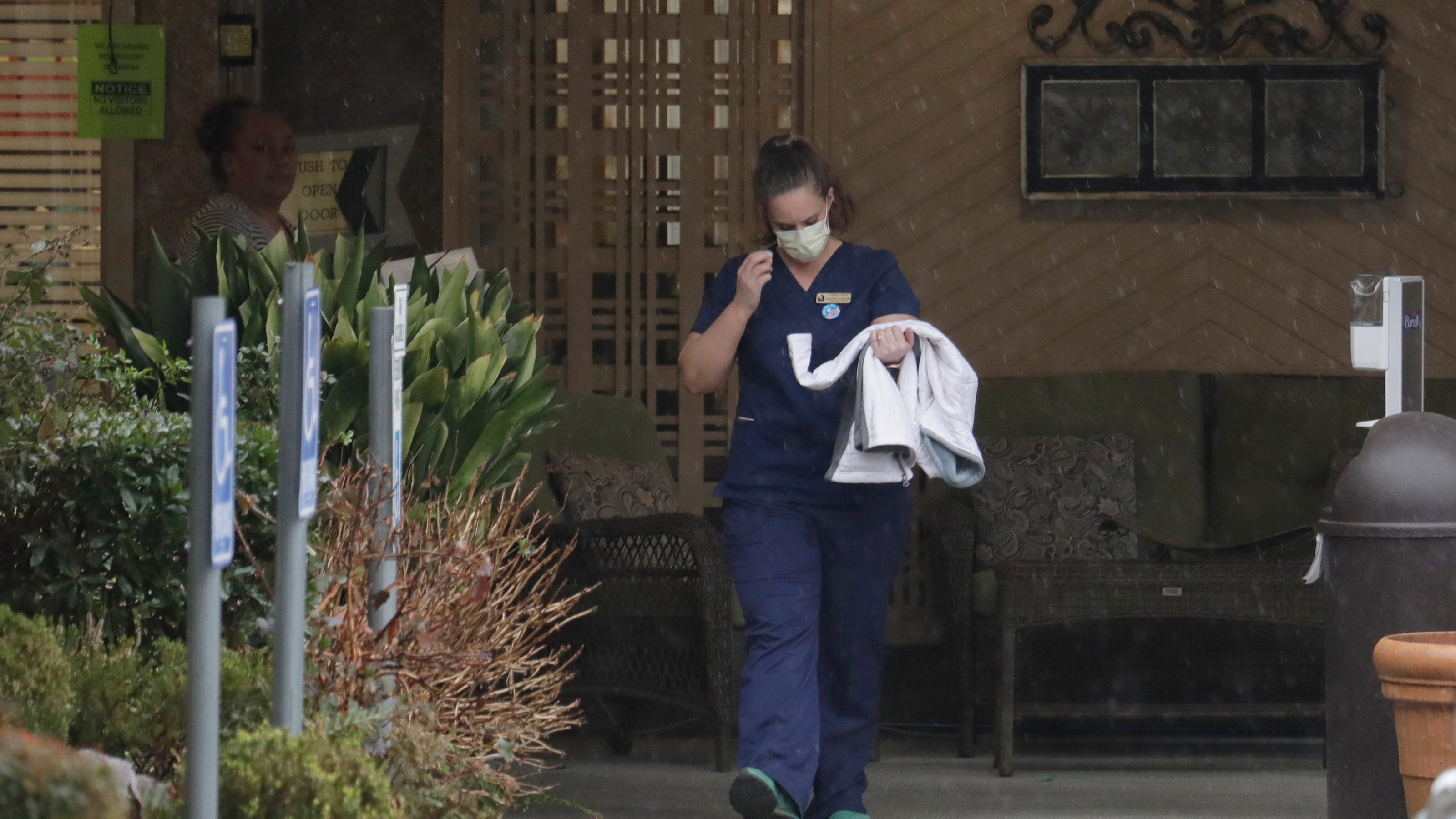
What started in China with the world watching, now has the globe’s full attention as some countries are locking down borders and advising residents to prepare for the worst. In America, leaders are urging caution and hoping to ease anxiety among the population. The number of coronavirus cases across the nation surged to more than 100 on Tuesday with six deaths blamed on the outbreak. That doesn't mean it's time to panic, said Surgeon General Jerome Adams. “Caution, preparedness, but not panic,” he said. That message was echoed at the White House, where Vice President Mike Pence confirmed "four additional fatalities" in Washington state Monday but stressed again that the risk "remains low" according to experts who are working with the Trump administration's newly formed coronavirus task force. There are more than 40 "domestic cases," mostly in California and Washington state, Pence said, and even more cases of people who came from other countries. However, as Covid-19 creeps closer to pandemic levels, there’s a lot of information out there, and not all of it is accurate. So, if you’re a journalist covering the progressing story – let Manhattanville College help ensure you get the right information and facts for your stories. Manhattanville College Professor Anna Yeung-Cheung is a biologist, virologist and infectious disease expert and has a lot of insight and experience with infectious diseases and Covid-19. When asked recently by Slate.com how Coronavirus can kill a young doctor if the risks are primarily to older people and small children, Professor Yeung Cheung said it was due to the repeated exposure because of his profession. “It’s a dosage thing,” explained Anna Yeung-Cheung to Slate.com. “Health care workers are exposed to far more people, often pretty sick people, than the average person, and therefore stand to come in contact with higher levels of the virus. A lot of virus can still overwhelm a healthy immune system.” Originally from Hong Kong, Professor Anna Yeung-Cheung received her B.S. from National Taiwan University and her M.S. and Ph.D. degrees from the University of Georgia. Dr. Yeung-Cheung is available to comment on global pandemics and where we are now with Covid-19. Simply click on her icon to arrange an interview today.
