
Experts Matter. Find Yours.
Connect for media, speaking, professional opportunities & more.

It was 400 years ago this August that the first enslaved people arrived on the shores of North America, changing forever the direction of history. “These men and women had been stolen from their homes in Africa, forced to board a ship, and sailed for months into the unknown. The first Africans in an English colony, their arrival is considered by many historians to be the beginning of a 400-year story filled with tragedy, endurance, survival, and a legacy of resilience, inequality, and oppression.” National Geographic, Aug. 13 The history of slavery and the journey from chains to freedom to equality has been a long one and there is still so much to learn and tell. Even today, how are African American communities negatively affected by this event? Is the topic taught and covered in U.S. children’s education? What role did the enslaved play in the building of our country and is that role recognized? What would America look like today without the slave trade? Do reparations work and how would they be decided? This is an important and sensitive topic – and if you are a journalist covering the history of slavery, that’s where our experts can help. Professor Seretha Williams is an expert in Africa and African diaspora, digital humanities, and digital publication. Williams is also the co-editor of Afterimages of Slavery, Essays on Appearances in Recent American Films, Literature, Television, and Other Media. She is available to speak with media regarding this historic moment – simply click on her icon to arrange an interview.


Key Environmental Quality Research Questions Identified for North America by Multidisciplinary Team
As density in cities increase along with other global megatrends, researchers are working to address environment and health challenges in collaborative ways. Using a recently pioneered process, a multidisciplinary team of North American researchers, government agencies and businesses leaders identified priority research questions for the United States, Canada and Mexico in an effort to tackle pressing environmental quality issues. In an article published in the journal of Environmental Toxicology and Chemistry, Bryan W. Brooks, Ph.D., Distinguished Professor of Environmental Science and Biomedical Studies and director of the environmental health science program at Baylor University, led the Global Horizon Scanning Project (GHSP), which focuses on identifying environmental and health issues internationally. Brooks also facilitated GHSP workshops in Africa, Australia, Central and Southeastern Asia, Europe and Latin America. “We face palpable global environment and health challenges, which require innovative understanding, tools, products and systems to prevent, diagnose and manage adverse outcomes to public health and the environment,” Brooks said. “The GHSP was initiated as part of a larger effort to identify important international research needs. It is essentially a research roadmap towards achieving more sustainable environmental quality, which is necessary to protect human health, biodiversity and ecosystem services.” As part of the study, members of the Society of Environmental Toxicology and Chemistry’s (SETAC) and the American Chemical Society’s (ACS) Environmental Chemistry and Agrochemcials Divisions submitted questions that were then synthesized during a workshop by scientists and engineers from the academic, government and business sectors. “This project is intentionally inclusive, bottom-up, multidisciplinary, multisector and transparent,” Brooks said. “Answering these priority research questions will not be easy, but strategically doing so promises to accelerate progress to address grand challenges that matter to everyone.” “This report provides a comprehensive global perspective covering some of the world’s most critical environmental challenges that will impact society for decades to come,” said Sherine Obare, Ph.D., dean and professor of the Joint School of Nanoscience and Nanoengineering at UNC Greensboro and chair elect of the American Chemical Society’s Environmental Chemistry Division. “SETAC’s ability to engage scientists from around the globe has led to forums that identify urgent challenges including, next generation 21st century analytical chemistry methods, strategies to predict chemical exposure, understanding multiple stressors and new approaches in chemical risk assessment. This project will define the scientific directions needed to transform environmental science and engineering, globally.” “The GHSP reflected in this paper has harnessed the insights of scientists not only across North America but around the world,” said Charles Menzie, Ph.D., Global Executive Director of SETAC. “Each brings tremendous experience and a strong sense of what is needed for future research. However, the distillation of these many into a set of consensus questions provides a much needed foundation for charting our direction for research to inform environmental policy. SETAC is proud to have supported this through our global meetings and now through our journal.” A related GHSP manuscript identifying priority environmental quality questions for the Australasiaregion of Oceania was also recently published in Integrated Environmental Assessment and Management. GHSP efforts from Africa and Asia are ongoing with plans to report priority research questions from these global regions in the next year. ABOUT BAYLOR UNIVERSITY Baylor University is a private Christian University and a nationally ranked research institution. The University provides a vibrant campus community for more than 17,000 students by blending interdisciplinary research with an international reputation for educational excellence and a faculty commitment to teaching and scholarship. Chartered in 1845 by the Republic of Texas through the efforts of Baptist pioneers, Baylor is the oldest continually operating University in Texas. Located in Waco, Baylor welcomes students from all 50 states and more than 80 countries to study a broad range of degrees among its 12 nationally recognized academic divisions. ABOUT BAYLOR COLLEGE OF ARTS & SCIENCES The College of Arts & Sciences is Baylor University’s oldest and largest academic division, consisting of 25 academic departments and seven academic centers and institutes. The more than 5,000 courses taught in the College span topics from art and theatre to religion, philosophy, sociology and the natural sciences. Faculty conduct research around the world, and research on the undergraduate and graduate level is prevalent throughout all disciplines.


A global commitment to democracy
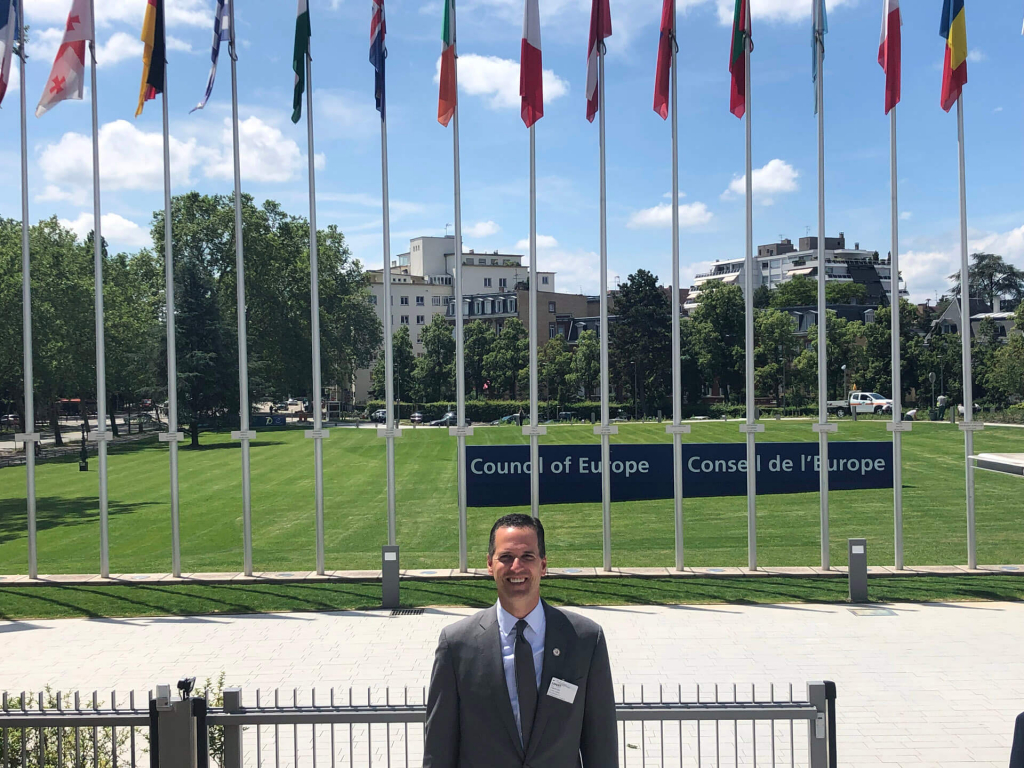
When I was invited to attend the Global Forum on Academic Freedom, Institutional Autonomy, and the Future of Democracy held this June in Strasbourg, France, I jumped at the chance. I was proud to add Otterbein’s support to a movement of global leaders committing to protecting democracy. I attended the forum along with more than 100 higher education leaders from around the world. Since its founding, Otterbein has stood for the rights of academic freedom and autonomy, as well as the freedom of speech of individuals, and we continue to stand resolute today. Otterbein believes that all voices from different walks of life must be represented, respected and valued, and we are committing to be a national and global leader in preserving democratic societies and values. The Global Forum was co-organized by the Council of Europe; the International Consortium for Higher Education, Civic Responsibility, and Democracy; the Organization of American States; and other partners, notably the International Association of Universities and the Magna Charta Observatory. It gathered higher education leaders and representatives of public authorities and NGOs from Europe and the United States, as well as smaller numbers from Australia, Asia, Africa, the Middle East and Latin America. - John Comerford Are you a journalist covering topics about democracy and how it is being threatened around the world? What role does higher education play in global democracy? And what countries or regions are the most at risk? There are a lot of questions regarding this topic – and that’s where we can help. John Comerford is an expert in higher education, regional and national topics. He is the President of Otterbein University and is available to speak with media regarding this issue and how higher-education needs to be made available to everyone in America regardless of income, family name or background. Simply click on his icon to arrange an interview.

Juneteenth: Our experts can explain the history, meaning and truth behind this historic moment
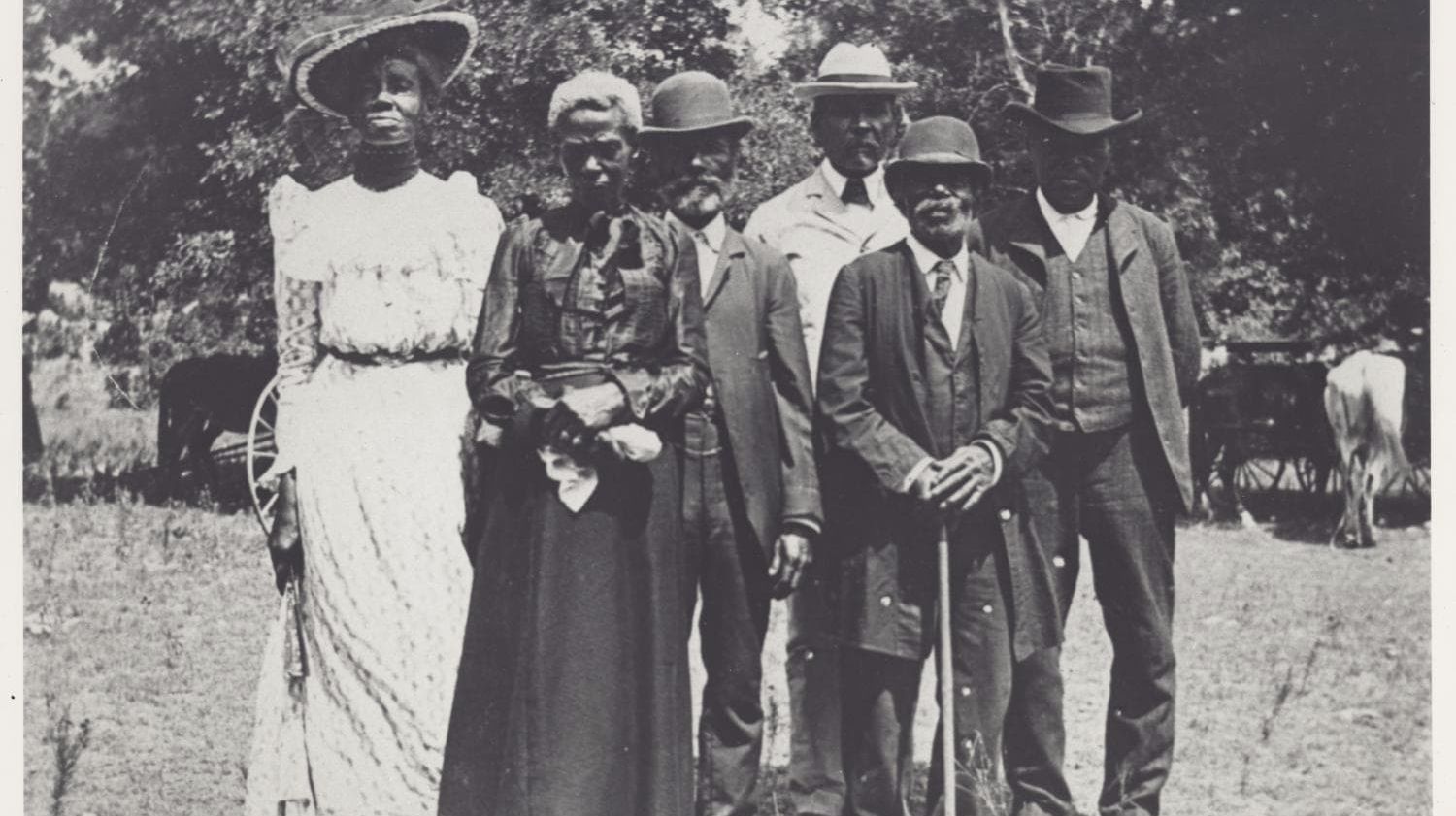
Most will know that Abraham Lincoln issued the Emancipation Proclamation on Jan. 1, 1863. It’s taught in schools and is even part of the Disney experience. But fewer know or are even taught that it took more than two and a half years before a large number of enslaved people even knew they were free. It’s an astounding and sad part of our collective history that is finally being told on a broader platform. It wasn’t until June 19, 1865, that many enslaved people were finally told they were free. What followed was by no means a celebration or easy life for those slaves who were finally broken from the bonds of their owners. They faced lynching, murder, violence and what would be more than 100 years of segregation and discrimination. Across the country, the day will be recognized with various forms of reflection and celebration. Though Texas was the first state to recognize Juneteenth as a state holiday, it meant only partial staffing was required and most government offices and agencies stayed open. Across the country, more than 40 states operate in similar fashion. As America reconciles with its past – is it time Juneteenth was given more attention? Are children taught about the hard and painful journey most African Americans had to take between now and when they were set free? Does it need to be recognized as a national holiday? What do our educators and legislators need to do to make sure Juneteenth is known on a wider scale? There are a lot of questions to be answered – and that’s where the experts from Augusta University can help. Professor Seretha Williams is an expert in Africa and African Diaspora, Digital Humanities, and Digital Publication. She is available to speak with media regarding Juneteenth – simply click on her icon to arrange an interview.

Many Americans already have enough “stuff,” and the gift-giving season sometimes adds to that collection of things we really don’t need. Instead of always receiving, how can we resolve to be more generous in the New Year? “Whatever our station, however much money or resources we have, we all have something to share and something to give,” says Andy Hogue, Ph.D., senior lecturer in Baylor’s Honors College who teaches a course on philanthropy and the public good. “I like the idea of thinking in terms of a New Year’s resolution, sort of resolving to be more generous and helping people to think in those ways.” Hogue offers four ways individuals and families can develop a spirit of generosity in the New Year. 1) Generosity starts with gratitude. “That is the very first step, just being grateful for what we have, but also realizing that to those given much, much is expected, and to begin thinking about not possessing things but stewarding things,” Hogue said. “Think of the many things we have that might benefit others, whether that is our time, our talents or our finances. There are so many things that we have at our disposal to be able to enrich communities and to help other people. Being able to think in those ways leads us down the path toward generosity and toward sharing.” 2) Generosity is more than just a transaction. “Think of philanthropy, generosity and giving as more than writing a check. Think of it as something that can be transformative and realize that there is no such thing as an unhappy generous person. It’s difficult to be unhappy when we are giving of ourselves.” 3) Generosity is a muscle you have to exercise. “If we can’t give of ourselves when we have limited means, what makes us expect that we would do it when we have more means?” Hogue said. “We all, in some way, are privileged and blessed and have resources that can be put to use for the benefit of someone else.” 4) Generosity can be creative. There are inspired ways to give birthday or Christmas gifts in honor of a family member or friend that bring about a beautiful thing Hogue likes to call the “philanthropy of collaboration.” “Imagine the many things that come together in this one simple act: you, the giver, are enriched by the series of events you set into motion while the person you honor with the gift appreciates your generosity and imagination. The beneficiary of the gift then takes your offering to enrich the lives of others,” Hogue said. It is, however, important to take cues from the person you honor and give a gift in support of the causes they hold dear. “You can go the traditional route – make a donation and give the person a piece of paper (acknowledging the gift) – or there are amazing web-based resources that can help people make very impactful gifts even with limited amounts,” Hogue said. “You give five dollars and with the magic of the Internet, the gift can go towards fighting disease in Africa, providing books for teacher’s classroom or buying someone in a poor country a goat or a cow or a pig that can be a source of generating income.” Baylor is among 19 universities that participate in the Fort Worth-based Philanthropy Lab, a hands-on philanthropy education program that sparks and expands students’ interest and participation in philanthropy. Since fall 2014, Hogue has taught a full-credit class of Baylor students, who have taken on a very tangible task: stewarding and giving away thousands of dollars – a total now more than $600,000 – in partnership with nonprofit organizations. Through this transformational undergraduate experience, Baylor students in the “Philanthropy and Public Good” class provide real funds for real needs in local, state and global communities while cultivating a philanthropic spirit and developing as innovative leaders poised for a lifetime of generosity.

Environmental scientists have identified 22 key research questions surrounding the risks associated with chemicals in the environment in Europe. Chemicals released into the environment by human activity are resulting in biodiversity loss; increased natural hazards; threats to food, water and energy security; negative impacts on human health and degradation of environmental quality. Now an international study, coordinated by scientists from the University of York, Wageningen University and Baylor University, has identified the most important research questions that need to be answered to fill the most pressing knowledge gaps over the next decade. They include questions about which chemicals we should be most concerned about and where the hotspots of key contaminants are around the globe, as well as how we can develop methods to protect biodiversity and ecosystems. The research, which resulted from a recent "big questions" exercise involving researchers from across Europe, aims to serve as a roadmap for policymakers, regulators, industry and funders and result in a more coordinated approach from the European environmental science community to chemicals in the environment. “Our research has highlighted international scientists' research priorities and our key knowledge gaps when it comes to the risks and impacts of chemicals,” said one of the lead authors of the study Alistair Boxall, Ph.D., with the University of York’s environment department. “The study aims to help focus scientific effort on the questions that really matter and inform decisions about the type of research needed to update policies and regulations.” Bryan W. Brooks, Ph.D., Distinguished Professor of Environmental Science and Biomedical Studies at Baylor University, who also coordinates a much larger global horizon scanning exercise, said the project is “intentionally transparent, inclusive of multiple sectors and multidisciplinary.” “Though this paper focuses on critical research needs for Europe, we partnered with the Society for Environmental Toxicology and Chemistry to perform similar studies in North America, Africa, Asia, Australia and Latin America,” Brooks said. “In fact, output from the Latin American study was recently published. This unprecedented exercise, which also includes a key partnership with the American Chemical Society in North America, is for the first time identifying global research priorities from academic, government and industry scientists and engineers to understand, avoid and manage adverse outcomes of chemicals in the environment.” A key suggestion in the report is that the basic and translational research is needed to advance robust assessments of chemical risks to the environment and human health. “These big research questions aim to reduce uncertainty during scientific evaluations of environmental contaminants and to advance innovation and sustainability through development of less hazardous chemicals to public health and the environment. Such research recommendations from our European colleagues are thus timely, necessary and internationally important if we are to achieve the United Nation’s Sustainable Development Goals,” Brooks said. Towards Sustainable Environmental Quality: Priority Research Questions for Europe is published in the journal Environmental Toxicology and Chemistry. It is one of six papers in a global horizon scanning study. ABOUT BAYLOR UNIVERSITY Baylor University is a private Christian University and a nationally ranked research institution. The University provides a vibrant campus community for more than 17,000 students by blending interdisciplinary research with an international reputation for educational excellence and a faculty commitment to teaching and scholarship. Chartered in 1845 by the Republic of Texas through the efforts of Baptist pioneers, Baylor is the oldest continually operating University in Texas. Located in Waco, Baylor welcomes students from all 50 states and more than 80 countries to study a broad range of degrees among its 12 nationally recognized academic divisions. ABOUT BAYLOR COLLEGE OF ARTS & SCIENCES The College of Arts & Sciences is Baylor University’s oldest and largest academic division, consisting of 25 academic departments and seven academic centers and institutes. The more than 5,000 courses taught in the College span topics from art and theatre to religion, philosophy, sociology and the natural sciences. Faculty conduct research around the world, and research on the undergraduate and graduate level is prevalent throughout all disciplines.

The next threat to election meddling? Brain Hacking
Almost 15 percent of Americans have reported changing their opinion on political or social issues because of a social media post, according to a recent Pew Research Center survey. “What if, immediately before spreading polarizing social media posts, our adversaries flashed subliminal images known to induce a type of anxiety called state anxiety? Evidence suggests people would perceive those posts in a more emotional way. Those images could, in turn, influence their voting behavior,” said Dr. Jay Heslen, an expert in intelligence and cybersecurity policy and assistant professor of political science with a joint appointment in the Katherine Reese Pamplin College of Arts, Humanities, and Social Sciences and the School of Computer and Cyber Sciences at Augusta University. “Successfully manipulating the cognition of a few thousand people in order to influence their perception of events could be enough to change the result of an election.” Heslen’s current research project focuses on whether exposure to certain visuals or sounds, including subliminal prompts, can induce a negative emotional arousal on people. He’s interested in learning whether that emotional state, called state anxiety, can then influence behavior in a specific, predefined way – a concept he calls neurocognitive hacking. Although research using subliminal prompts is not new and has had mixed results, Heslen’s approach is novel. He uses a specific kind of visuals previously shown to trigger people’s unconscious discriminatory behaviors toward outsiders. “Neurocognitive hacking could potentially be used as a weapon in cyberwarfare,” said Heslen, who worked as an intelligence officer with the Defense Intelligence Agency and the United States Air Force for more than 20 years, specializing in combatting terrorism, counterintelligence and strategic cyber intelligence. “We need to study these capabilities not only for our own understanding but to create sound policies and countermeasures to defend ourselves against others who may use them on us.” With 68 percent of Americans on Facebook and 73 percent on YouTube, according to another Pew Research Center survey, neurocognitive hacking could be a national security problem, Heslen said. “As we advance our understanding of the brain and its processes, including how to manipulate it, we will need to provide neurocognitive cybersecurity to people who use information and communication technologies,” Heslen said. “This will be especially true as we spend more time in virtual worlds.” Heslen is available to discuss: · How neurocognitive hacking can influence people’s behavior · Why neurocognitive hacking is a powerful weapon of cyberwar · What kinds of policies should the government create to protect itself and its citizens from neurocognitive hacking Heslen is a Lieutenant Colonel in the United States Air Force Reserve and has served in military operations on four continents to include humanitarian relief operations in Mozambique and South Africa as well as an operational tour in Afghanistan. In his capacity as a reservist, he is currently assigned to the National Intelligence University pursuing an advanced degree in strategic intelligence. Contact us to schedule an interview with Dr. Heslen or learn more about his expertise.


Backstage Racism is now Frontstage Racism
The disgusting and stereotypical diatribe illustrated by Carla Maloney, secretary of the Republican Committee of Beaver County, Pennsylvania is an example of blatant racism. There are no psychological or debating maneuvers one could use to arrive at any other conclusion. Comparing Black athletes to baboons and utilizing the old, "go back to Africa," make her perception of Blacks crystal clear. Picca and Feagin, in Two-Faced Racism: Whites in the Backstage and Frontstage, assert that, depending on company, Whites shift when discussing racists perceptions, ideology, jokes, and etc. Further, Whites in general feel more comfortable discussing their racist rhetoric when around other Whites. But in mixed company (racially), these tendencies almost never come to light. I argue that President's Trump's comfort to dive into historically founded racist waters has given courage to those who normally utilize backstage racism, to come forward and dive in as well. Backstage racism has now disappeared. Those normally displaying cowardly behavior are embolden to speak their unbridled true souls. Source:


Populations at risk – how the whole planet is feeling and affected by climate change
The pounding heat of this summer seems like an anomaly, but according to experts, extreme heat waves may be a new reality. The global temperature is rising and the impact of that is being felt on every continent on earth. From Pakistan, to Japan to Mexico to Paris – the rolling waves of summer heat saw temperatures soar. While for some it’s a matter of comfort, the world’s poor and vulnerable populations are going to face serious risk and consequences. For instance, high heat and erratic rainfall can exacerbate drought, and prolonged drought can lead to severe food insecurity and in some cases, famine. Desperation can lead to conflict and worse. The global threat of climate change is very real and will touch every corner of the planet. There are a lot of questions to be answered and that’s where the experts from Catholic Relief Services can help. Lori Pearson leads Catholic Relief Services’ response to the massive impact climate change is having on global agriculture and especially on the lives of smallholder farmers in Africa, Asia and Latin America. She also crafts policy and advocacy recommendations to climate change challenges and global hunger. Lori is available to speak with media regarding this topic – simply click on her icon to arrange an interview. Source:
