
Experts Matter. Find Yours.
Connect for media, speaking, professional opportunities & more.

Four Traps to Avoid When an Acquirer Comes Calling
If you are keen to sell your business and are hoping to entice buyers to offer up maximum value for your company – there are a few tips to know and traps to avoid before getting started. Once word gets out, you’ll need to be prepared and ready to impress. Recently, Ed Reilly, Managing Partner and co-founder of Freelandt Caldwell Reilly LLP published a column where he taps into his years of experience in transactions and acquisitions to offer up some sage advice to anyone who may be considering selling their business. Please see the attached article and give it a read. To contact Ed directly, simply click on his icon to arrange an appointment regarding this topic. Source:

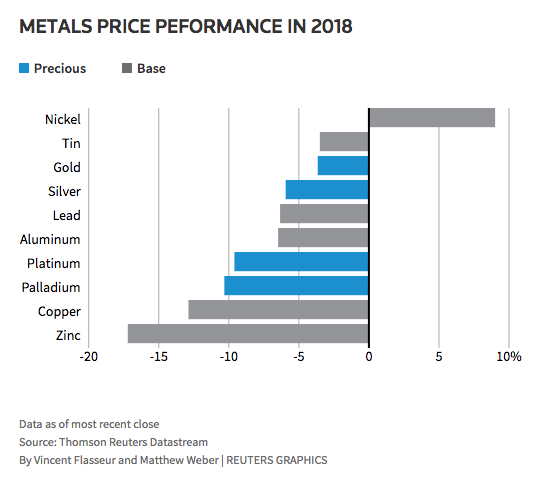
With the shine coming back on nickel – what will it mean for Ontario’s local and wider economies.
It’s boom or bust in the nickel business. From cycles, to slumps to super-cycles and even the most recent decade-long crash, it appears the time for nickel to rebound is near. The last big boom at the turn of the 21st Century saw nickel soar above 20 dollars per pound. It led to multi-billion dollar takeovers of smaller mining companies by industry giants and saw local economies flourish as bonuses skyrocketed, overtime was uncapped and investments in service, supply, innovation and industry support were elevated almost exponentially. Today, with analysts projecting the price of nickel to at least double over the next four years, what can local and provincial economies expect? After a 10-year slump can we expect the same rush to invest and spend? Will companies be more cautious and what will it mean for investors, the markets and businesses. There are a lot of questions and speculation out there about just how big of a splash there will be if nickel finally makes its comeback. And that’s where the experts from Freelandt Caldwell Reilly LLP can help. Ian Fitzpatrick is a Chartered Professional Accountant and a Chartered Business Valuator. He is an expert in advising business owners and entrepreneurs on all aspects of corporate sales, mergers, acquisitions, litigation, succession and ownership issues. To contact Ian directly, simply click on his icon to arrange an appointment regarding this topic. Source:

6 Facts We Learned Working with Migrants and Refugees Around the World Working with migrants and refugees is our business at Catholic Relief Services. CRS was founded in 1943 to assist refugees during World War II. Seventy-five years later, we are still coming to the aid of people escaping conflict, violence and natural disasters. While CRS doesn’t resettle refugees in the United States (these programs are run by the Catholic Church’s Migration and Refugee Service and Catholic Charities), our rich history has taught us valuable lessons on how to best help families fleeing crisis. 5. Adults Need Work and Income. We know from experience that people find pride and purpose in helping earn an income for their families, no matter how small. Refugees and migrants are looking for a hand-up, not a handout and being integrated with their host communities benefits everyone. Caroline Brennan is the Emergency Communications Director for Catholic Relief Services. In her role, she travels to and/or works in areas facing natural or man-made emergencies. See her contact information at the bottom. 6. The Poorest Countries House the Most Refugees and Migrants. Although media stories can give the impression that the U.S. is swamped with migrants, the reality is that 85% of the world’s refugees are in the developing world. The country with the largest refugee population is Turkey, with almost 3 million. One in 3 people in Lebanon is a refugee. The Bidi Bidi Refugee Camp in Uganda alone is home to 229,000 South Sudanese who have fled civil unrest. Richer nations like the U.S. should look at the lessons of how these countries with far fewer resources welcome and host refugees. Caroline Brennan is the Emergency Communications Director for Catholic Relief Services. In her role, she travels to and/or works in areas facing natural or man-made emergencies. See her contact information at the bottom. The experts at Catholic Relief Services are available to help with any media coverage or insight that is required regarding this ongoing news story and issue that is continuing in America. Simply click on any of their icons to arrange a time for an interview. Source:


6 Facts We Learned Working with Migrants and Refugees Around the World - Facts 3 and 4 Working with migrants and refugees is our business at Catholic Relief Services. CRS was founded in 1943 to assist refugees during World War II. Seventy-five years later, we are still coming to the aid of people escaping conflict, violence and natural disasters. While CRS doesn’t resettle refugees in the United States (these programs are run by the Catholic Church’s Migration and Refugee Service and Catholic Charities), our rich history has taught us valuable lessons on how to best help families fleeing crisis. 3. Support the Family. The family unit provides the primary support for children during the traumatic refugee experience -- whether it is witnessing violence or crossing a desert on foot. CRS focuses on keeping families together. This means housing a family together and using any services provided – from trauma counseling to income generation – to boost family cohesion. Shannon Senefeld is a global development expert at CRS. She has published and presented extensively on international children’s issues and the importance of strengthened family care for children’s development. See her contact information at the bottom. 4. Kids Need School and Play. CRS is dedicated to keeping up children’s education, to provide stability and normality and give them hope for the future so they can be productive citizens wherever they end up. Kids need to be kids, too. Whether they are in a camp or any sort of migrant or refugee holding center they need a space to play. Caroline Brennan is the Emergency Communications Director for Catholic Relief Services. In her role, she travels to and/or works in areas facing natural or man-made emergencies. See her contact information at the bottom. The experts at Catholic Relief Services are available to help with any media coverage or insight that is required regarding this ongoing news story and issue that is continuing in America. Simply click on any of their icons to arrange a time for an interview. Source:

6 Facts We Learned Working with Migrants and Refugees Around the World: Facts 1 and 2 Working with migrants and refugees is our business at Catholic Relief Services. CRS was founded in 1943 to assist refugees during World War II. Seventy-five years later, we are still coming to the aid of people escaping conflict, violence and natural disasters. While CRS doesn’t resettle refugees in the United States (these programs are run by the Catholic Church’s Migration and Refugee Service and Catholic Charities), our rich history has taught us valuable lessons on how to best help families fleeing crisis. 1. People Do Not Want to Leave Their Homes. An astonishing 1 in 110 people have been forced to flee their home (UNHCR). They only do that when they feel they have no other choice. Most people the world over give the same reason for starting their perilous journey across borders -- violence. That’s true for millions fleeing conflict in South Sudan and for tens of thousands fleeing gang violence in Central America. Most often, people flee to other parts within their country first. Only when they see no other option do people leave their country. Rick Jones is the agency's Youth and Migration Advisor in Latin America and the Caribbean. He also specializes in issues affecting Central American migration, including gang violence, poverty, and internal displacement. See his contact information at the bottom. 2. Don’t Separate Families. Based on extensive experience with refugees and migrants, CRS agrees with the criticism of the former U.S. policy of separating children from their parents. Decades of research shows that this is so traumatic for children it can lead to long-term psychological, and even physical damage. Shannon Senefeld is a global development expert at CRS. She has published and presented extensively on international children’s issues and the importance of strengthened family care for children’s development. See her contact information at the bottom. The experts at Catholic Relief Services are available to help with any media coverage or insight that is required regarding this ongoing news story and issue that is continuing in America. Simply click on any of their icons to arrange a time for an interview. Source:

Independence Day: Baylor’s Benjamin Franklin Scholars Bring Light to Complex Figure
Founding Father Benjamin Franklin was a complex man. Among his many roles, he was a businessman, entrepreneur, inventor, journalist, author, printer, editor, politician, postmaster, statesman, ambassador and signer of the Declaration of Independence. And even with a treasure trove of accomplishments, sometimes the Franklin legends are bigger than Franklin the man – and it’s taken an army of historians and scholars throughout the centuries to sort it out. As July 4 Independence Day approaches, Baylor University's two Franklin scholars share different perspectives of Franklin, his faith and his business acumen: • Thomas Kidd, Ph.D., Distinguished Professor of History and associate director of Baylor’s Institute for Studies of Religion • Blaine McCormick, Ph.D., associate professor and chair of the management department in Baylor’s Hankamer School of Business Both have penned Franklin books and both have been featured nationally for their research on the Founding Father. Kidd’s 2017 book, “Benjamin Franklin: The Religious Life of a Founding Father,” has received high marks for its analysis of Franklin’s beliefs. From his Puritan upbringing to deism, skepticism and more, the book explores the influences and evolution of faith throughout Franklin’s life. “In today’s polarized political and religious environment, some pundits seek to remake the Founding Fathers in their own image. Benjamin Franklin’s example reveals that the historical truth is often more complicated,” Kidd wrote in a column for The Wall Street Journal. McCormick, who wrote “Ben Franklin: America’s Original Entrepreneur,” discovered a passion to study the Founding Father after listening to an audiobook of Franklin’s autobiography. “Franklin could do things as a statesman, and understand things, and achieve things as a statesman, because he had achieved things in the marketplace first,” he said. “I’ve yet to find a better book for businesspeople to learn about how to run a business in the American Experiment. He wrote the autobiography to help train people in the life of business. Many of the principles are still very robust.” And the way he shared those principles (many of which have been misquoted and made into memes through the decades) is important, McCormick said. “Franklin used sentences no longer than a Tweet to train generations of colonial businesspeople,” he said. “They were short. They were memorable. They were high-impact.” Source:


Trump's Twitter Practices Unconstitutional: New Media, First Amendment Expert Weighs In
On Wednesday, a federal judge declared that President Trump's practice of blocking critics from his Twitter account is unconstitutional. The ruling was reached after several plaintiffs accused the president of violating their First Amendment rights by blocking their access to his Twitter feed. The plaintiffs argued they’d been blocked specifically because of their critical viewpoints. Trump’s 9-year-old @realdonaldtrump account has more than 50 million followers. "Yesterday’s ruling is important because it gives people freedom to consume the opinions of public figures on social media platforms. This is the same right individuals have with any other public forum such as newsprint and broadcast media," said Mia Moody- Ramirez, Ph.D., professor of journalism, public relations and new media at Baylor University. Moody-Ramirez is a nationally recognized expert in topics of new media, race, class and culture. She studies the media framing of various issues, including people of color, women and political candidates. Her book "From Blackface to Black Twitter: Critical Reflections on Black Humor, Gender, Race & Politics" will be available this summer. "Justice Department lawyers argued that it was Trump’s choice and blocking individuals should be no different from the president deciding in a room who not to listen/talk to. However, the ruling distinguishes Trump’s Twitter account — which, like public parks, is under government control. In public forums, the First Amendment protects the freedom of speech, regardless of a person’s viewpoint," Moody Ramirez explained. "Worth noting," she said, "is this ruling will not affect ordinary Twitter users who can block and follow other Twitter users. President Trump’s account @realdonaldtrump is a space operated by the government for government business, and therefore, cannot limit speech based on an individual’s viewpoints." Moody-Ramirez is the author of several books, including: * "From Blackface to Black Twitter: Critical Reflections on Black Humor, Gender, Race & Politics" (Peter Lang), summer 2018 * "The Obamas and Mass Media: Race, Gender, Religion, and Politics" (Palgrave Macmillan) with Dr. Jannette Dates, 2013 * "Black and Mainstream Press’ Framing of Racial Profiling: A Historical Perspective" (University Press of America), 2009 She is available to speak to reporters. Source:


Dell Regains Top Share in the Canadian PC Commercial Market
There’s good news today for Dell Canada. The computer company based in Round Rock, Texas posted the strongest year-on-year growth out of all the major companies in Canada - growing 11.9% and buoyed by strong performances in the public sector segments. These numbers are impressive as shipments of traditional PCs in the first quarter of 2018 totalled 1.25 million units into the Canadian Market. Though the worldwide numbers show a flat (0.0%) year-on-year growth in the first quarter, the expectations exceeded the earlier forecast of a 1.5% decline in PC sales. The Canadian market was a bright light growing 4.2% annually. But it wasn’t all good news in Canada, out of the top five leading companies that also include HP, Dell, Lenovo, Acer and Apple. It was Apple that lost its shine finishing last with a year-on-year decline in shipments of 5.8%. So, what does this mean for the industry? Are PC’s coming back against the popular tide of tablets and other competing units? What is Dell doing right to lead the way? And what’s next for developers as they look to the next generation of products. There’s a lot to more to this topic – and that’s where an expert from the International Data Corporation (IDC) can help. Tim Brunt is the Program Manager for IDC's Canadian Quarterly PC Tracker program. He is an expert in analyzing current market trends, business planning, business and consumer buyer behavior. Tim is available to speak with media, simply click on his icon to arrange an interview. https://www.linkedin.com/pulse/canadian-traditional-pc-market-grew-42-yoy-q1-2018-tim-brunt/


It’s time to invest early in your child’s financial literacy
April 20 is Teach Children to Save Day. It's an educational program established by the American Bankers Association (ABA) to encourage kids to develop good savings habit as early as possible in their financial life. But is it necessary? When kids should be playing and having fun, is getting a head start on economics a bit heavy? The reality is – a quiz about personal finances offered last year by Financial Engines saw only 6 percent of Americans pass. That means a staggering 94 percent of Americans didn't have a confident grasp on financial literacy. Bad financial choices can last a lifetime and that's why it's best to start young, and develop sound habits and wisdom as early as possible. So, what do Americans need to know and do about becoming financially literate? What are the potential consequences to not just Americans, but the country’s economy if we remain a nation that’s basically ignorant to the value of a dollar? Dr. James Philpot, certified financial planner and associate professor of finance and general business at Missouri State University, can address the costs of financial illiteracy and explain how to teach kids about money matters. Click on his icon to set up an interview with him. Source:


Order for Racism. Racism Anyone?
When I think of Starbucks, I think of fair trade and “ethnically sourced” secured coffee beans, wonderfully laid out desserts and treats that my waist line dislikes, and cool stripped down funky folky alternative music playing in the background while I drink a hot delicacy I can barely pronounce. I think of people conversing, while others around them are seeping the juices of the Internet to fuel their apple laptop latest reality game apps. I think of people completing school or professional work away from their homes and offices. Starbucks has the ability in a sense to serve as an escape. But as a person of color, especially a historically marginalized people, there is no quarter given. Two Black men in Philadelphia discussing possible business ventures in a Starbuck were reminded that within the 21st century two separate worlds for Blacks and everyone else continues to exist within our world. The denial of bathroom rights to potential paying customers, an automatic response to call the police, and consequential police engagement and arrest without legitimate legal cause are representations of 21st racism. A similar incident has recently surfaced on video caught in a Los Angles area store where onlookers observed white non-paying patrons getting access to the bathroom while Blacks were denied. These discussed incidences are the simple echoes of a system of oppression that has existed for Blacks since the first Dutch flagged slave ship arrived in Jamestown in 1619. Source:
