Experts Matter. Find Yours.
Connect for media, speaking, professional opportunities & more.

‘Internet’ Presidents and the evolving art of communicating
There’s no question the first four presidents of the internet age are different, but Bill Clinton, George W. Bush, Barack Obama and Donald Trump share one thing in common: They have emphasized their personal character to win office and to fight back against critics. In his new book Presidential Communication and Character: White House News Management from Clinton and Cable to Twitter and Trump, University of Mary Washington Political Science Professor Stephen J. Farnsworth examines how presidents sell themselves and their policies in an ever-expanding and sometimes precarious media environment. “Character conversations are ideal for a modern media system that gives rise to short-attention-span politics,” said Farnsworth, a sought-after political commentator who has spent decades researching presidential communications and the media. “They also serve the politicians’ interests, as constantly distracted news consumers may not remember when politicians said one thing yesterday and a different thing today, much less punish them for inconsistency. With the various modern media cocoons that exist today, a person may never hear a president called to account for a comment that turned out to be false.” Dr. Farnsworth is professor of political science and international affairs at the University of Mary Washington. A published author and a media ‘go-to’ on presidential politics, he is available to speak with media regarding this issue. Simply click on his icon to arrange an interview. Source:



Baylor Expert on Founding Fathers Discusses Ben Franklin's Faith in New Book
What the Founding Fathers believed about God and religion has long been a subject of debate and fascination, and Benjamin Franklin’s beliefs in particular may have the widest variety of interpretations among his peers. As multi-faceted as Franklin’s life was — he was a printer, diplomat, scientist and more — his religious beliefs were perhaps even more complex. From his Puritan upbringing to deism, skepticism and more, Thomas Kidd, Ph.D., Distinguished Professor of History at Baylor University and Associate Director of the Baylor Institute for Studies of Religion, explores the influences and evolution of faith throughout Franklin’s life in the new book: "Benjamin Franklin: The Religious Life of a Founding Father." In a column for The Wall Street Journal, Kidd wrote of Franklin: "In today’s polarized political and religious environment, some pundits seek to remake the Founding Fathers in their own image. Benjamin Franklin’s example reveals that the historical truth is often more complicated." Source:


Nanotechnology is huge - is it the way of the future?
Earlier this week, the International Nanotechnology and Conference took place in Tokyo, Japan. Thousands of researchers, scientists and academics attended from around the world to discuss advances in the field, applications and how nanotechnology is transforming and shaping our world for the future. Nanoscience and nanotechnology are the study and application of extremely small things and can be used across all the other science fields, such as chemistry, biology, physics, materials science and engineering. It's the stuff once only seen in movies and books. Science fiction is now reality. But what will it mean for the public, for academics and for business? The benefits seem extraordinary, but what are the cautions or consequences? Like stem cells, there was much ethical, moral and scientific concerns about their use. Today, science and how we approach the human body has been radically changed because of that research. Will nanotechnology transform the scientific world in the same way? As well, what are the economic benefits? Will we one day just see nanotechnology as an everyday occurrence in our regular lives? There are a lot of questions and this is where Missouri State University's experts can help. We have two experts who can speak to media regarding this very interesting field of research: Dr. Adam Wanekaya's research focuses on the fabrication, modification, characterization and application of nanoscale materials. He also works on integrating these materials into functional devices with specific applications in chemical sensing, biomedical sensing and remediation of heavy metals and other toxins from the environment. Dr. Robert Mayanovic works on investigating the physical and chemical properties of primarily nanophase materials in extreme environments. Both professors will be able to explain the field of nanotechnology and how it is shaping the future of technology, healthcare and the world we live in. Simply click on either of their icons to arrange an interview. Source:

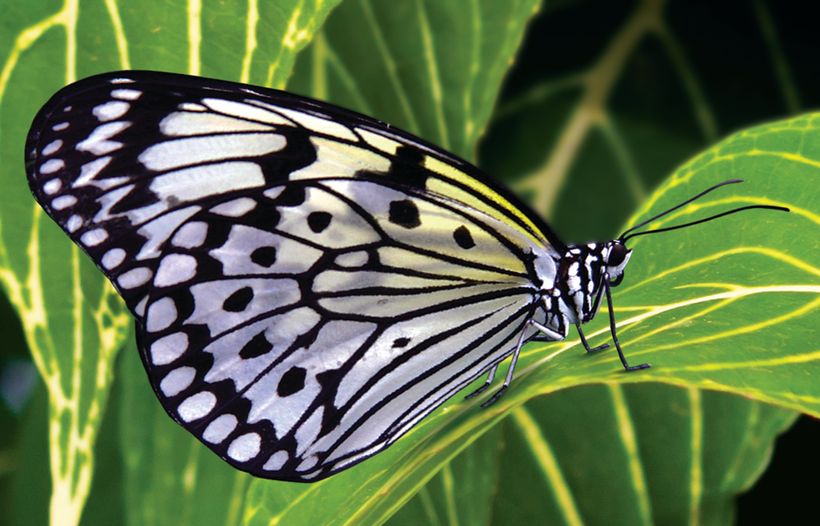
Visit the Tropics without a Flight - Largest Temporary Butterfly Exhibit a Sign of Spring
We all look for signs of spring that herald the changing of seasons – buds bursting on trees, plants pushing out of the ground, and migratory birds returning. But there is another sure sign of spring, and it takes place annually at Frederik Meijer Gardens & Sculpture Park in Grand Rapids, Michigan – Fred & Dorothy Fichter Butterflies Are Blooming (March 1-April 30). The largest temporary tropical butterfly exhibition in the United States, Butterflies Are Blooming welcomes visitors into the 80-degree, five-story, 15,000-square-foot Lena Meijer Tropical Conservatory that is a paradise for thousands of butterflies flying freely all around. More than 7,000 chrysalides representing over 60 species travel to Frederik Meijer Gardens & Sculpture Park throughout the exhibit's duration from tropical countries including Belize, Brazil, Costa Rica, Ecuador, Kenya, Malaysia, and the Philippines. Wendy Overbeck Dunham is Director of Horticulture at Frederik Meijer Gardens & Sculpture Park in Grand Rapids, Michigan. She leads the team that oversees the care and presentation of its living collections - from tropical conservatories and outdoor gardens to seasonal displays - connecting guests to art, design, and the natural environment. View her profile “Stepping into Michigan’s largest glasshouse and being bathed in warmth while thousands of butterflies swirl in vibrant color and motion is a feeling you can’t get anywhere else,” says Wendy Overbeck Dunham, Director of Horticulture. “After months of winter, that first breath of tropical air and the close-up encounters with butterflies are pure joy.” Click on the link below: Thousands of butterflies emerge at Frederik Meijer Gardens, WOOD-TV8 (NBC Grand Rapids) The exhibition also offers guests up-close experiences at butterfly feeding stations, where tropical fruit slices and nectar-rich plants attract the butterflies, and at the Observation Station, where 1,250 chrysalides arrive at Meijer Gardens each week and transform into butterflies and moths. Additionally, the exhibition features vibrant floral displays, including arches of foliage and blooms in varied hues; unique nectar plant varieties; and colorful arrangements of air plants, bromeliads, and orchids. “Most people don’t know that butterflies taste with their tiny feet,” Dunham explains. “Our feeding stations create fantastic photo ops and bring butterflies close enough to admire their intricate wing patterns and how their straw-like proboscis uncoils to feed.” Guests also can visit the butterfly release stations to watch newly emerged butterflies make their debut and take their first flight as the stars of the show. “It’s an immersive experience,” Dunham adds. “The conservatory is full of energy! As you wander, take time to pause and watch the butterflies flit, flutter and feed. Those quiet moments are what make our butterflies unforgettable.” If you are looking to cover spring-related garden stories, including about Butterflies are Blooming, connect with Wendy below.